 Primary School Profiles 2025

 Primary School Profiles 2025


| Address: | 34 Caine Road, Central, Hong Kong | |||
| Phone: | 25248301 | Email: | shcsps@shcsps.edu.hk | |
| Fax: | 25371028 | Website: | http://www.shcsps.edu.hk | |
 School Information
 | Supervisor/ Chairman of Management Committee | : | Sister Wong Pui Ling Virginia |
| School Head | : | Principal Wong Yuen Ching |
| Incorporated Management Committee been established? | : | Not Applicable |
| Percentage of School Supervisor and Managers / Chairperson and Members of School Management Committee (SMC) of Government Schools Fulfilling the Training Targets | : | Not Applicable |
| School Type | : | Private AM |
| Student Gender | : | Girls |
| Sponsoring Body | : | Daughters of Charity of the Canossian Institute |
| Religion | : | Catholicism |
| Year of Commencement of Operation | : | 1860 |
| School Motto | : | Via Veritas Vita |
| Area Occupied by the School | : | About 6500 Sq. M |
| Through-train Secondary School | : | - |
| Feeder Secondary School | : | Sacred Heart Canossian College |
| Nominated Secondary School | : | - |
| Medium of Instruction | : | Chinese |
| School Bus Service | : | School Bus; Nanny van |
| Parent-Teacher Association | : | Yes |
| Past Students' Association/Alumni Association | : | - |
| 4Rs Mental Health Charter | : | - |
| Whole School Health Programme | : | - |
 2025/2026 Annual School Charges
| School Fee | : | $53680 (in 10 instalments) |
| Tong Fai | : | - |
| PTA Fee | : | $120 |
| Approved Charges for non-standard items | : | Application Fee $150 |
| Other Charges | : | - |
 School Facilities
 | Number of Classroom(s) | : | 19 |
| Number of School Hall(s) | : | 1 |
| Number of Playground(s) | : | 1 |
| Number of Library(ies) | : | 1 |
| Special Rooms | : | 9 Rooms (Computer Room, Visual Arts Room, STEM Room, Multi-purpose Room, Activity Room, English Resources Room, Guidance Counselling Room, Student Sick Room and Parlour.) |
| Facility(ies) for Supporting Students with Special Educational Needs | : | Accessible lift and Accessible toilet. |
| Others | : | - |
 Teaching Staff Information (Including School Head) in the 2024/2025 school year
 | Number of teaching posts in the approved establishment | : | - |
| Total number of teachers in the school | : | 29 |
| Qualifications and professional training (%) | ||
| Had Received Teacher Training | : | 90% |
| Bachelor Degree | : | 100% |
| Master/ Doctorate Degree or above | : | 24% |
| Special Education Training | : | 14% |
| Years of Experience (%) | ||
| 0 - 4 years | : | 38% |
| 5 - 9 years | : | 10% |
| 10 years or above | : | 52% |
 Class Structure
 | 2024/25 school year | ||
| P1 Number of classes | : | 4 |
| P2 Number of classes | : | 3 |
| P3 Number of classes | : | 2 |
| P4 Number of classes | : | 3 |
| P5 Number of classes | : | 3 |
| P6 Number of classes | : | 3 |
| Total | : | 18 |
| 2025/26 school year | ||
| P1 Number of classes | : | 4 |
| P2 Number of classes | : | 3 |
| P3 Number of classes | : | 3 |
| P4 Number of classes | : | 2 |
| P5 Number of classes | : | 3 |
| P6 Number of classes | : | 3 |
| Total | : | 18 |
| Mode of teaching at different levels | ||
| There are 5 lessons every day and 40 minutes per lesson. | ||
| Remarks | ||
| Adopting the 6-Day Cycle System so as to have a balanced teaching schedule & curriculum for all subjects, approximately 28 cycle per scholastic year. | ||
 Performance Assessment
 | Applicable to P1 only | ||
| Number of test(s) per year | : | 2 |
| Number of exam(s) per year | : | 2 |
| Replace tests and examinations with diversified assessments in the first term of P1 | : | No |
| Applicable to P2 to P6 only | ||
| Number of test(s) per year | : | 2 |
| Number of exam(s) per year | : | 2 |
| Applicable to P1 to P6 | ||
| Formulate appropriate school-based assessment and assignment policies, inform parents of related arrangements, and collect views from teachers, students and parents regularly (at least once per school year) for ongoing review and optimisation of the school assessment and assignment policies | : | Yes |
| Upload the school-based assessment policy onto the school webpage for information of the public and stakeholders | : | Yes |
| Upload the school-based assignment policy onto the school webpage for information of the public and stakeholders | : | Yes |
| Diversified Assessment for Learning | : | Different means of assessment in all subjects: quiz, oral presentation, project, formative assessments and summative assessments (examinations). |
| Avoid arranging tests or examinations immediately after long holidays in order to let students take more rest during the holidays | : | No |
| Arrange the timetable flexibly according to the school context, with a tutorial session provided in the afternoon as far as possible for students to finish some of their homework under teachers’ guidance | : | No |
| Streaming arrangement | : | Mixed ability classes from P.1 to P.6 |
 School Life
 | Number of school days per week | : | 5.5 |
| Number of periods per day | : | 5 |
| Duration of each normal period | : | 40 |
| School starts at | : | 7:40 AM |
| School ends at | : | 12:45 PM |
| Lunch break | : | Not Applicable |
| Lunch arrangement | : | Not Applicable. |
| Healthy school life | : | - P.4 - P.6 students participate in the "School Physical Fitness Award Schemes" yearly. - Fruit Week |
| Remarks | : | - |
 Life-wide Learning
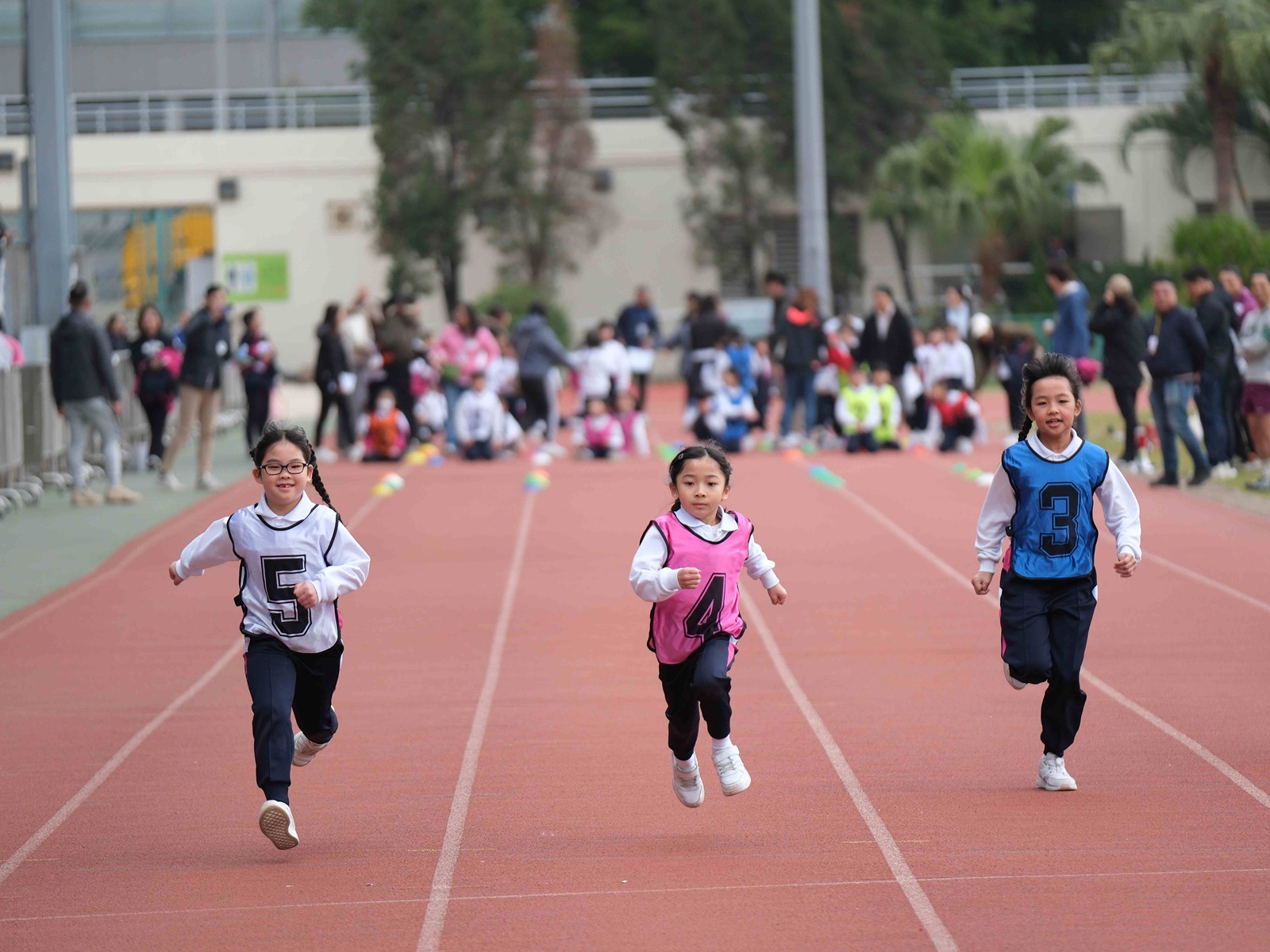
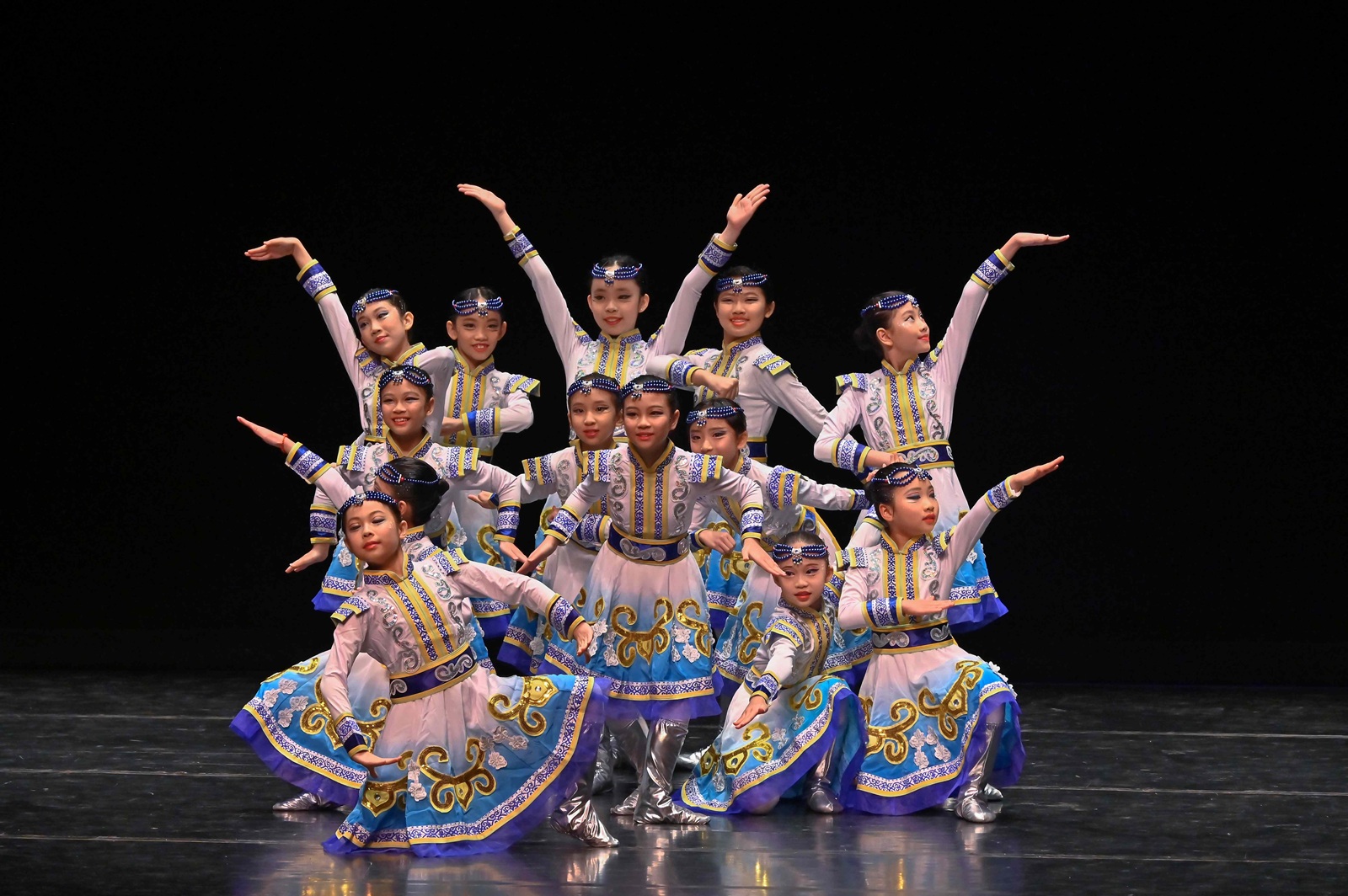
 | After school extra-curricular activities: Musical Instruments, Orchestra, Oriental Dance, Badminton, Basketball, Swimming, Rhythmic Gymnastic, Table Tennis, Athletic, Chinese Painting, Pottery and Dyeing, Chinese Debate, STEM, Mathematical Olympiad. Whole School special outdoor activities: School Picnic, visits and outings, Chinese Cultural Day, Sports Day and PTA Fundraising Walkathon. Uniform Teams: Brownies, HK Red Cross JU17, Catholic Leader, Flag-Hoisting Team. |
 School Mission
 | We give emphasis to the Formation of Heart, enabling students to acquire self-discipline, diligence, sense of responsibility and mutual respect. We promote creativity, critical thinking and concern for the less privileged among students. |
 School Characteristics
 | School Management | ||
| School Management Organisation | : | Sponsoring Body → School Management Board → Administration Team: 1. School Management and Development 2. Learning and Teaching 3. School culture and Student Support |
| Incorporated Management Committee / School Management Committee/ Management Committee | : | The school supervisor, school headmistress and four appointed members from the sponsoring body made up the School Management Committee. |
| School Green Policy | : | Actively participated in various campaigns to promote strong sense of environmental conservation among studies. |
| School's Major Concerns | : | 1. Actively develop team spirit and promote the inheritance culture in the school. 2. Cultivate students to learn independently, think critically and solve problems. 3. Provide students with opportunities for self-practice and encourage the courage to try. 4. Students know how to be grateful and cherish what they have; they are willing to live frugally, love life, and respond with loyalty. 5. Nurture positive values and attitude. |
| Learning and Teaching Plan | ||
| Learning & Teaching Strategies | : | 1. Nurture well-being through religious commitment. Emphasis on lifelong faith formation. 2. Life-wide learning: arrange various outings for all level to align with the curriculum. 3. Weekly "After School Remedial" of different levels on main subjects, student learning support team. 4. Primary Science is taught in Primary 3 to Primary 6 in English. 5. School-based curriculum used in Primary 1 to 6 English and use a higher grade English textbook. 6. Primary 1 to 3 use Putonghua for Chinese Language teaching. Starting from 2024-25, Primary 4 adopts Putonghua and Cantonese as the medium of instruction in lessons. This practice will be taken up progressively by senior classes. |
| Development of Major Renewed Emphases of the Primary Education Curriculum | : | Value Education, National Security Education, Interdisciplinary learning, Pr.1 thematic curriculum for early adaption. |
| Development of Generic Skills | : | Various projects, Life Education curriculum, diversified activities and outings help to develop generic skills among students. |
| Cultivation of Proper Values, Attitudes and Behaviours | : | Focus on developing the three Canossian Education core values: respect, gratitude, and responsibility. Integrate these values into religious education, national education, life education lessons, counseling and daily teaching to cultivate students' positive attitudes and good values. Set up award plans to match the character strengths of students so as to foster their sense of self-competence and achievement. Help students establish a positive thinking model. Develop their communication, problem-solving and collaboration skills and enhance their emotional intelligence and resilience. |
| Student Support | ||
| Whole School Approach to Catering for Learner Diversity | : | Curriculum Tailoring and Pedagogies Restructuring: Design curriculum according to students' abilities and needs during resource meetings. Small class remedial lessons are provided after school to consolidate students' learning. |
| Whole School Approach to Integrated Education | : | 1. Integrated Education: Measures are taken to screen Primary 1 students annually to identify students with special education needs at an early stage. Professional advice and referral are provided according to students' needs. 2. A social worker at school to provide counseling service and assist students' growth. |
| Curriculum Tailoring and Adaptation | : | 1. School-based curriculum applied in various subjects to enhance students' learning effectiveness. 2. Special activities and competitions for gifted students. |
| Home-school Co-operation and School Ethos | ||
| Home-School Co-operation | : | PTA actively participates in various school functions and generously sponsors teaching materials to facilitate learning and teaching at school. Seminars and workshops are arranged for parents to improve parent-child communication skills. |
| School Ethos | : | 1. Create a harmonious and caring campus atmosphere. 2. Pay attention to students' moral development and establish correct values. |
| Future Development | ||
| School Development Plan | : | 1. Professional learning community 2. Self-directed learning 3. Value education |
| Teacher Professional Training & Development | : | Professional development training workshops and seminars are held yearly to enhance professional knowledge and expertise of teachers. |
| Others | : | Active participation in the Hong Kong School Speech Festival, Dance Festival, Music Festival, Mathematics and Debate Contests and various Inter-area Sports Competitions with excellent results achieved. |
 School Map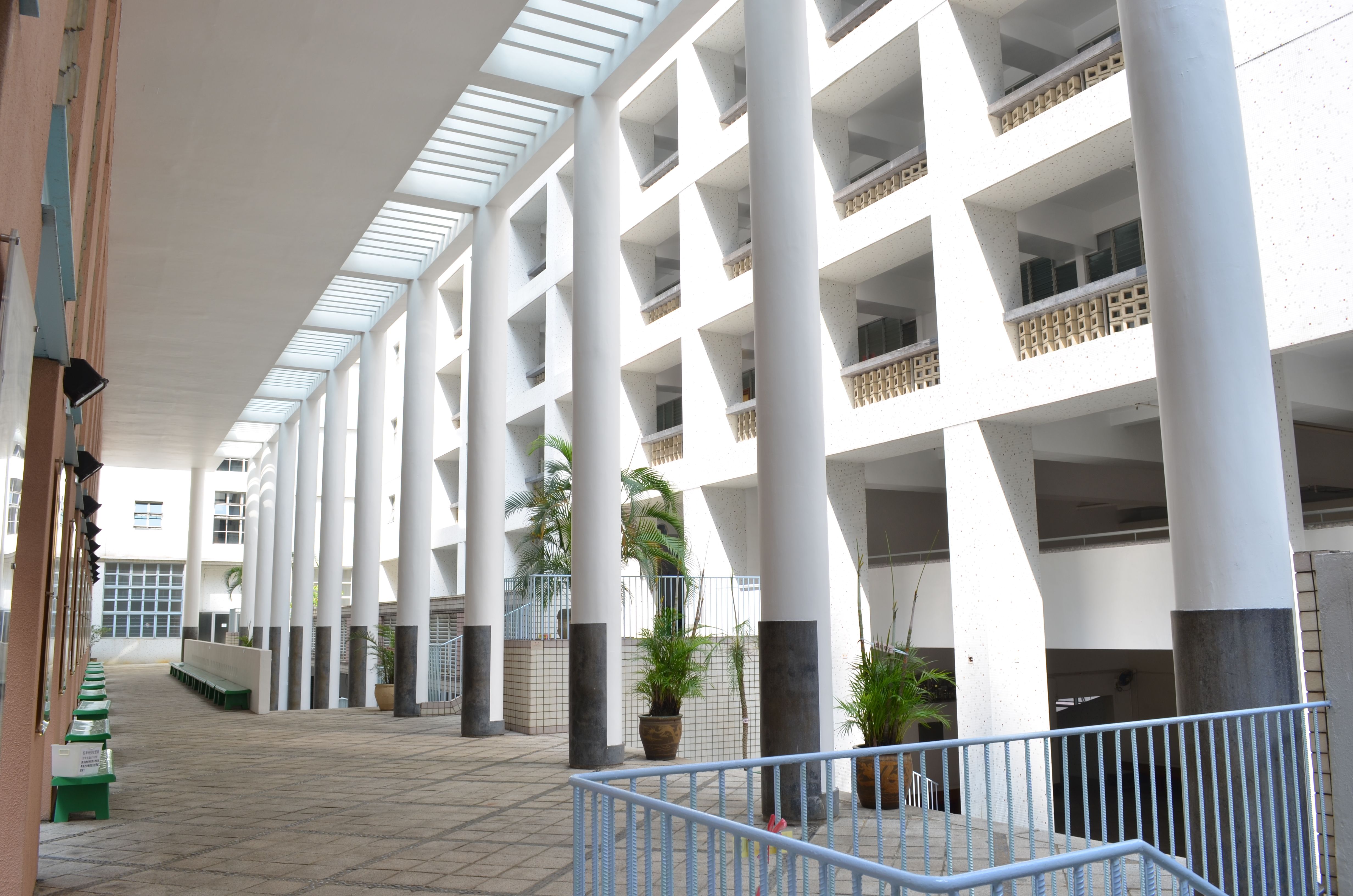

Last revision date:01 September 2025


