 Primary School Profiles 2025

 Primary School Profiles 2025


| Address: | 57 Fu Ning Street, Kowloon | |||
| Phone: | 27110928 | Email: | info@htps.edu.hk | |
| Fax: | 27153760 | Website: | http://www.htps.edu.hk | |
 School Information
 | Supervisor/ Chairman of Management Committee | : | Ms. Yin Wai Yin Juanna |
| School Head | : | Ms. Ng Fung Ting Natalie |
| Incorporated Management Committee been established? | : | Not Applicable |
| Percentage of School Supervisor and Managers / Chairperson and Members of School Management Committee (SMC) of Government Schools Fulfilling the Training Targets | : | Not Applicable |
| School Type | : | Private Whole Day |
| Student Gender | : | Co-ed |
| Sponsoring Body | : | Holy Trinity Church |
| Religion | : | Protestantism / Christianity |
| Year of Commencement of Operation | : | 1952 |
| School Motto | : | Be kind and brave. Love God and all mankind |
| Area Occupied by the School | : | About 17252 Sq. M |
| Through-train Secondary School | : | - |
| Feeder Secondary School | : | - |
| Nominated Secondary School | : | SKH Holy Trinity Church Secondary School. |
| Medium of Instruction | : | English |
| School Bus Service | : | School Bus |
| Parent-Teacher Association | : | Yes |
| Past Students' Association/Alumni Association | : | Yes |
| 4Rs Mental Health Charter | : | - |
| Whole School Health Programme | : | - |
 2025/2026 Annual School Charges
| School Fee | : | $55000 (10 instalments) |
| Tong Fai | : | - |
| PTA Fee | : | 100 |
| Approved Charges for non-standard items | : | - |
| Other Charges | : | Application Fee $100 |
 School Facilities
 | Number of Classroom(s) | : | 24 |
| Number of School Hall(s) | : | 1 |
| Number of Playground(s) | : | 2 |
| Number of Library(ies) | : | 1 |
| Special Rooms | : | Lecture Theater, Studio, Library, Computer Lab, Art Room, Music & Dancing Room, English Center, Counselling Room, Innovation and Technology Center. |
| Facility(ies) for Supporting Students with Special Educational Needs | : | Accessible lift and Accessible toilet. |
| Others | : | The school has its own kitchen and employs a chef to provide catering for students. |
 Teaching Staff Information (Including School Head) in the 2024/2025 school year
 | Number of teaching posts in the approved establishment | : | - |
| Total number of teachers in the school | : | 31 |
| Qualifications and professional training (%) | ||
| Had Received Teacher Training | : | 91% |
| Bachelor Degree | : | 100% |
| Master/ Doctorate Degree or above | : | 37% |
| Special Education Training | : | 16% |
| Years of Experience (%) | ||
| 0 - 4 years | : | 37% |
| 5 - 9 years | : | 17% |
| 10 years or above | : | 46% |
 Class Structure
 | 2024/25 school year | ||
| P1 Number of classes | : | 3 |
| P2 Number of classes | : | 3 |
| P3 Number of classes | : | 3 |
| P4 Number of classes | : | 3 |
| P5 Number of classes | : | 3 |
| P6 Number of classes | : | 3 |
| Total | : | 18 |
| 2025/26 school year | ||
| P1 Number of classes | : | 3 |
| P2 Number of classes | : | 3 |
| P3 Number of classes | : | 3 |
| P4 Number of classes | : | 3 |
| P5 Number of classes | : | 3 |
| P6 Number of classes | : | 3 |
| Total | : | 18 |
| Mode of teaching at different levels | ||
| Not more than 30 students in each class. | ||
| Remarks | ||
| Chinese language is taught in Putonghua. English materials are used for Math and the majority of General Studies topics, both of which are taught in English. | ||
 Performance Assessment
 | Applicable to P1 only | ||
| Number of test(s) per year | : | 0 |
| Number of exam(s) per year | : | 1 |
| Replace tests and examinations with diversified assessments in the first term of P1 | : | Yes |
| Applicable to P2 to P6 only | ||
| Number of test(s) per year | : | 0 |
| Number of exam(s) per year | : | 3 |
| Applicable to P1 to P6 | ||
| Formulate appropriate school-based assessment and assignment policies, inform parents of related arrangements, and collect views from teachers, students and parents regularly (at least once per school year) for ongoing review and optimisation of the school assessment and assignment policies | : | Yes |
| Upload the school-based assessment policy onto the school webpage for information of the public and stakeholders | : | Yes |
| Upload the school-based assignment policy onto the school webpage for information of the public and stakeholders | : | Yes |
| Diversified Assessment for Learning | : | 1. Continuous assessment for P.1 students. 2. Assessing students' performance through reading, writing, listening, group discussion and presentation. 3. Project learning. 4. P.1 assessment papers are read by the teachers during the assessments and reduced progressively. |
| Avoid arranging tests or examinations immediately after long holidays in order to let students take more rest during the holidays | : | Yes |
| Arrange the timetable flexibly according to the school context, with a tutorial session provided in the afternoon as far as possible for students to finish some of their homework under teachers’ guidance | : | Yes |
| Streaming arrangement | : | To stream students evenly according to their learning ability, conduct and gender. |
 School Life
 | Number of school days per week | : | 5 |
| Number of periods per day | : | 8 |
| Duration of each normal period | : | 40 |
| School starts at | : | 8:10 AM |
| School ends at | : | 3:30 PM |
| Lunch break | : | 12:15 - 1:15 |
| Lunch arrangement | : | Provided freshly everyday by the school's own kitchen or arranged by parents. |
| Healthy school life | : | Implement Physical Fitness Scheme. Encourage students to participate in different physical activities and competitions in order to train up physical fitness. Encourage students to have a balanced diet, eat more vegetables and fruit, and less fried food. |
| Remarks | : | 1. Provide fresh and nutritious lunch by the school kitchen. 2. Among the meals, pasta is served once a week while soup is served twice a week. 3. Encourage students to bring healthy snack. |
 Life-wide Learning
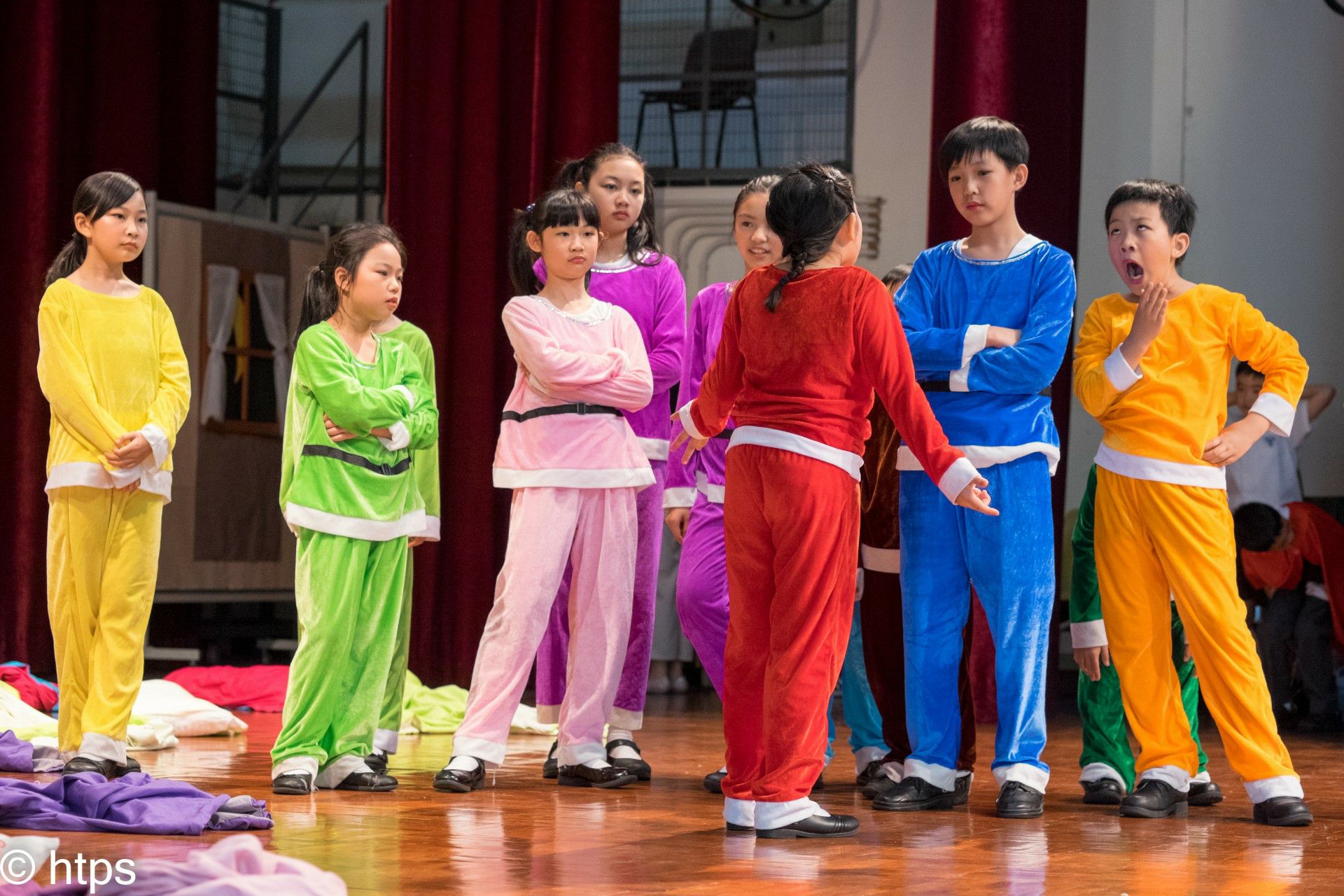
 | Religion and Disciplinary: Christian Fellowships; Sports: Basketball, Table-tennis, Badminton, Taekwondo, Swimming, Roller-skating, Football; Languages: Putonghua Drama, English Drama, Cambridge English Course, Reading Club; Music and Art: Choir, Dancing, Musical Instruments, Visual Art, French, Spanish, Japanese; Others: Campus TV etc. |
 School Mission
 | To equip young minds with the cognitive skills, Christian values and international perspectives to rise to global challenges and become proactive contributors to the societies. |
 School Characteristics
 | School Management | ||
| School Management Organisation | : | The school policy and development plans are formulated by the Management Committee and are supervised by the Supervisor. The principal is responsible for the implementation of school policy by setting up different committees. |
| Incorporated Management Committee / School Management Committee/ Management Committee | : | Holy Trinity Primary School Management Committee. |
| School Green Policy | : | To equip students with the cognitive skills to rise to challenge 1. Beverage Cartons Recycling. 2. Utilize solar energy. 3. Reuse food utensils. |
| School's Major Concerns | : | To instill students with positive Christian values, help them to realize their full potential to be responsible, respectful global citizens. |
| Learning and Teaching Plan | ||
| Learning & Teaching Strategies | : | 1. To cope with the needs of e-learning, fiber networking and touch panels are installed in our classrooms in order to sustain students' interests in learning and hence encourage self-learning. 2. Nurture good reading habits by renovating our library (completed in June 2022) in order to provide a more comfortable reading environment for our students. 3. Enrich students' abilities and exploring potentials through Multi-Intelligence Lessons on Friday afternoons. 4. Cultivate students' independent learning and social skills through organizing Overseas Study Tours and Life-Wide Learning Week. |
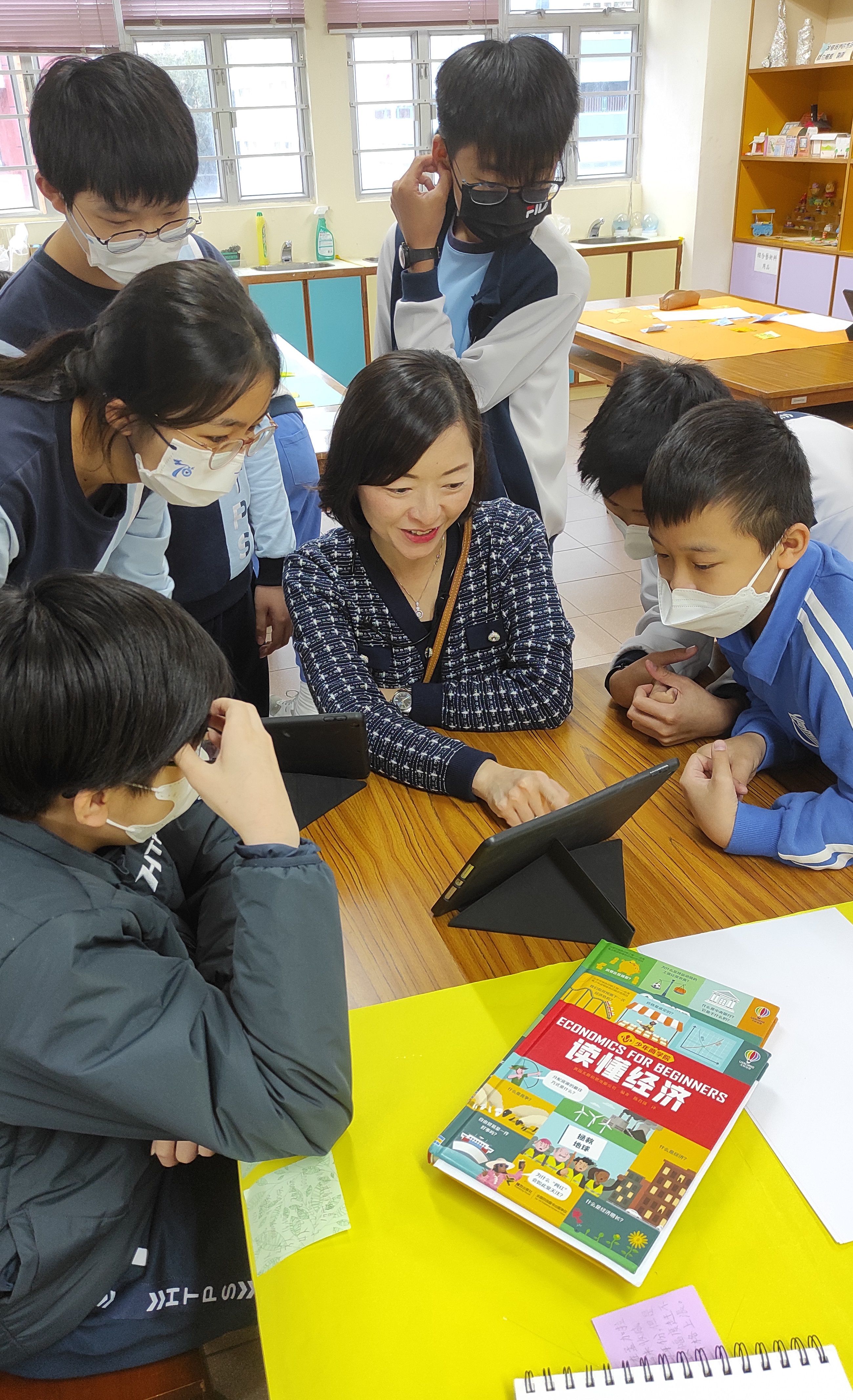
| Development of Major Renewed Emphases of the Primary Education Curriculum | : | Project-based Learning Approach |
| Development of Generic Skills | : | 1. Students learn to express themselves and respect the others' opinions through group discussion and other activities. 2. Students learn to search useful information through project-based learning and hence develop their learning interest |
| Cultivation of Proper Values, Attitudes and Behaviours | : | 1. Provide an all-rounded education that enhances the personal development of our students morally, academically, physically, socially, aesthetically, and spiritually. 2. Provide our students with a "whole person development" learning experience. 3. Develop students' collaboration skills and problem-solving skills. 4. Learn to care and serve the society with the love of Christ. |
| Student Support | ||
| Whole School Approach to Catering for Learner Diversity | : | 1. Counselling sessions for particular students. 2. Pre-secondary School Counselling Programme. 3. Bridging Programme for K3 students. |
| Whole School Approach to Integrated Education | : | Homework adaptation and assessment accommodation for those students who are diagnosed with Special Education Needs. |
| Curriculum Tailoring and Adaptation | : | 1. The amount of homework will be adjusted for the students with special learning needs. 2. Students who fail in two main subjects are required to repeat in order to build a better academic foundation. |
| Home-school Co-operation and School Ethos | ||
| Home-School Co-operation | : | 1. Parents' Fellowship and Talks are run regularly to strengthen the support between parents and provide skills for upbringing of children. 2. Recruit parent volunteers to assist school activities such as wrapping dumplings, planting water lilies, helping Sports Day, School Picnic and outings. |
| School Ethos | : | 1. Harmonious relationship among teachers, parents and students. 2. Confident and respectful students with positive attitudes. |
| Future Development | ||
| School Development Plan | : | 1. Widen students' international horizons by implementing a new subject called "International Cultures" to be taught by NETs. 2. Implement school-based subjects including Drama, International Culture, Integrated Arts and Information Technology. Our school does not only enhance students' English proficiency but also promotes positive education as well as students' ability in applying IT in their learning. 3. Start BYOD in the senior forms. 4. Implement multi-disciplinary project-based learning. |
| Teacher Professional Training & Development | : | 1. Organize Teachers' Professional Training. 2. Teachers' Self-evaluation. |
| Others | : | - |
 School Map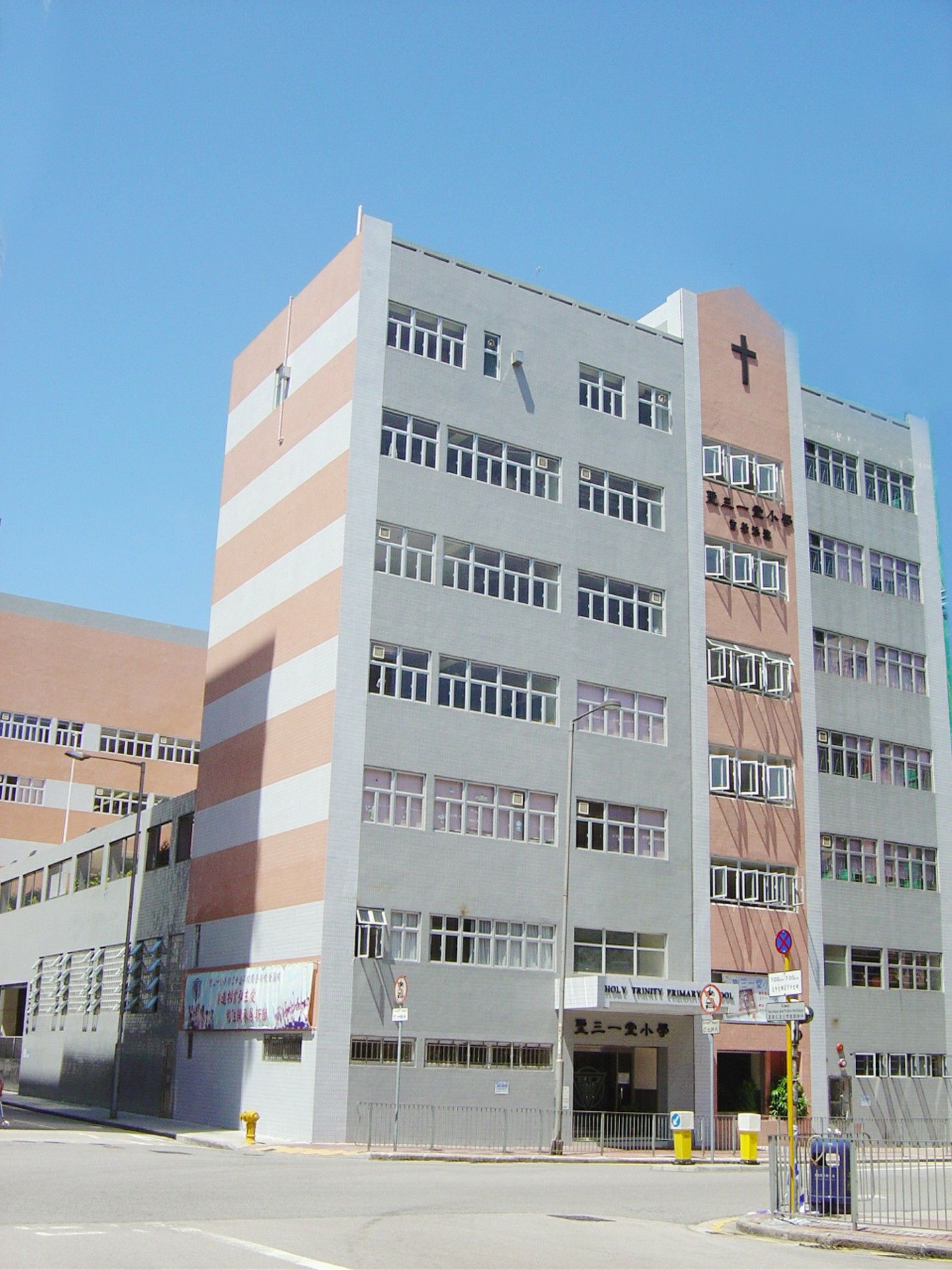
Last revision date:01 September 2025


