 Primary School Profiles 2025

 Primary School Profiles 2025


| Address: | 231 Fuk Wing Street, Shamshuipo, Kowloon | |||
| Phone: | 23869426 | Email: | fwsgps@edb.gov.hk | |
| Fax: | 27089854 | Website: | http://www.fwsgps.edu.hk | |
 School Information
 | Supervisor/ Chairman of Management Committee | : | Dr. Chan Pik Wa, Gloria |
| School Head | : | Ms. Kwan Yuk Fun |
| Incorporated Management Committee been established? | : | Not Applicable |
| Percentage of School Supervisor and Managers / Chairperson and Members of School Management Committee (SMC) of Government Schools Fulfilling the Training Targets | : | 100% |
| School Type | : | Gov't Whole Day |
| Student Gender | : | Co-ed |
| Sponsoring Body | : | Government |
| Religion | : | Not Applicable |
| Year of Commencement of Operation | : | 1958 |
| School Motto | : | Be a moral person and embrace learning |
| Area Occupied by the School | : | About 4112 Sq. M |
| Through-train Secondary School | : | - |
| Feeder Secondary School | : | - |
| Nominated Secondary School | : | Tsuen Wan Government Secondary School, Homantin Government Secondary School, Kowloon Technical Secondary School, Jockey Club Government Secondary School |
| Medium of Instruction | : | Chinese |
| School Bus Service | : |
- |
| Parent-Teacher Association | : | Yes |
| Past Students' Association/Alumni Association | : | Yes |
| 4Rs Mental Health Charter | : | Yes |
| Whole School Health Programme | : | Action School |
 2025/2026 Annual School Charges
| School Fee | : | - |
| Tong Fai | : | - |
| PTA Fee | : | - |
| Approved Charges for non-standard items | : | Learning material Fee ($60) |
| Other Charges | : | - |
 School Facilities
 | Number of Classroom(s) | : | 24 |
| Number of School Hall(s) | : | 1 |
| Number of Playground(s) | : | 1 |
| Number of Library(ies) | : | 1 |
| Special Rooms | : | English Room, Computer Room, Visual Art Room, Music Room, Counselling Room, Multi-activity Room, Multi-purpose Room, Playroom, Campus TV, STEM Room. |
| Facility(ies) for Supporting Students with Special Educational Needs | : | Ramp and Accessible restroom. |
| Others | : | Electronic blackboard, Kinesthetic learning platform, Air purifier, Lift, etc. |
 Teaching Staff Information (Including School Head) in the 2024/2025 school year
 | Number of teaching posts in the approved establishment | : | 44 |
| Total number of teachers in the school | : | 47 |
| Qualifications and professional training (%) | ||
| Had Received Teacher Training | : | 100% |
| Bachelor Degree | : | 93% |
| Master/ Doctorate Degree or above | : | 34% |
| Special Education Training | : | 72% |
| Years of Experience (%) | ||
| 0 - 4 years | : | 2% |
| 5 - 9 years | : | 18% |
| 10 years or above | : | 80% |
 Class Structure
 | 2024/25 school year | ||
| P1 Number of classes | : | 3 |
| P2 Number of classes | : | 4 |
| P3 Number of classes | : | 4 |
| P4 Number of classes | : | 4 |
| P5 Number of classes | : | 4 |
| P6 Number of classes | : | 4 |
| Total | : | 23 |
| 2025/26 school year (Based on the number of classes approved by EDB in 2025) | ||
| P1 Number of classes | : | 3 |
| P2 Number of classes | : | 3 |
| P3 Number of classes | : | 4 |
| P4 Number of classes | : | 4 |
| P5 Number of classes | : | 4 |
| P6 Number of classes | : | 4 |
| Total | : | 22 |
| Mode of teaching at different levels | ||
| Small class teaching is implemented from P.1 to P.6. Support service is provided for students with special educational needs. | ||
| Remarks | ||
| - | ||
 Performance Assessment
 | Applicable to P1 only | ||
| Number of test(s) per year | : | 0 |
| Number of exam(s) per year | : | 0 |
| Replace tests and examinations with diversified assessments in the first term of P1 | : | Yes |
| Applicable to P2 to P6 only | ||
| Number of test(s) per year | : | 0 |
| Number of exam(s) per year | : | 3 |
| Applicable to P1 to P6 | ||
| Formulate appropriate school-based assessment and assignment policies, inform parents of related arrangements, and collect views from teachers, students and parents regularly (at least once per school year) for ongoing review and optimisation of the school assessment and assignment policies | : | Yes |
| Upload the school-based assessment policy onto the school webpage for information of the public and stakeholders | : | Yes |
| Upload the school-based assignment policy onto the school webpage for information of the public and stakeholders | : | Yes |
| Diversified Assessment for Learning | : | In Primary One, there are totally three formative assessments in each academic year and no school examinations. For Primary Two to Six, there are three examinations instead. At all levels, students’ knowledge, attitudes and skills will be comprehensively assessed through a variety of assessment methods, including practical assessments, project learning, group discussions and presentations. |
| Avoid arranging tests or examinations immediately after long holidays in order to let students take more rest during the holidays | : | Yes |
| Arrange the timetable flexibly according to the school context, with a tutorial session provided in the afternoon as far as possible for students to finish some of their homework under teachers’ guidance | : | Yes |
| Streaming arrangement | : | For P.1 and P.2, mixed ability grouping is implemented. For P.3 to P.6, class streaming is based on students' academic achievement, with elite classes and enhanced study groups. |
 School Life
 | Number of school days per week | : | 5 |
| Number of periods per day | : | 9 |
| Duration of each normal period | : | 35 |
| School starts at | : | 8:15 AM |
| School ends at | : | 3:15 PM |
| Lunch break | : | 1:10 - 2:10 |
| Lunch arrangement | : | Either provided by contract supplier or arranged by parents. |
| Healthy school life | : | The school has established a healthy campus policy to allow students to develop healthy lifestyle habits. The school also participated in the “MVPA60 Award Scheme” and "EatSmartschool HK Campaign", and was again awarded the "Eat Smart School". |
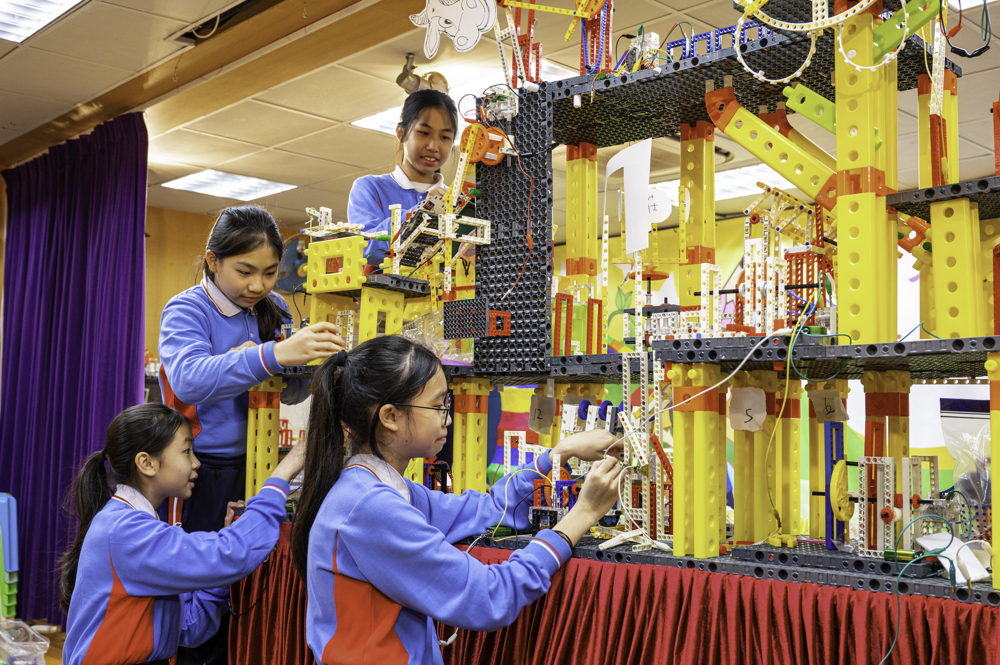
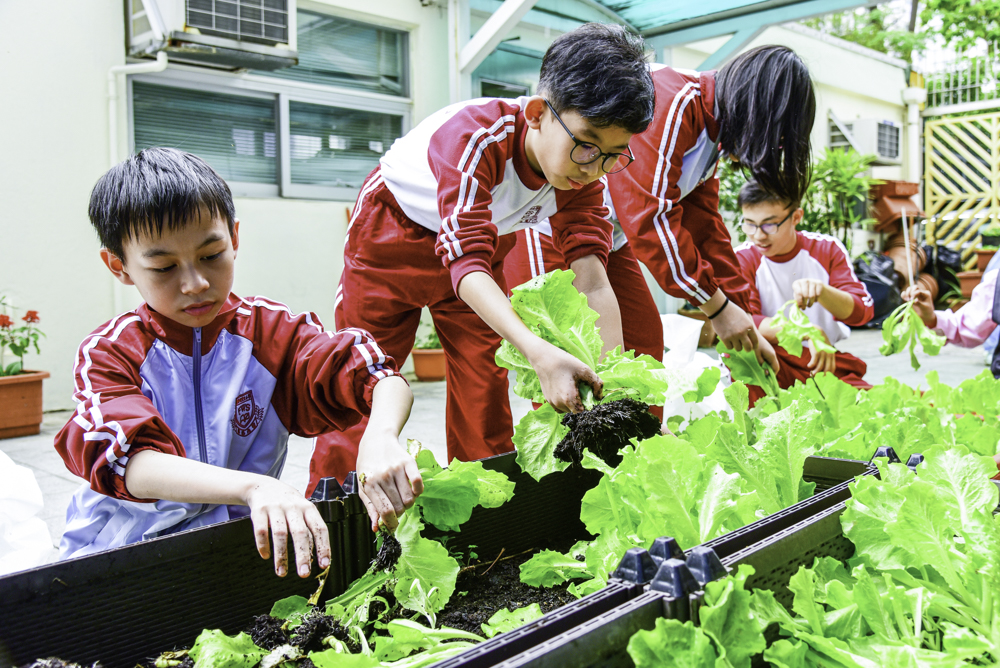
| Remarks | : | We focus on whole-person education that cultivates students' active "lifelong learning", advocates "one skill for life" and "a duty per student". Besides, constructing STEAM learning through developing "Butterfly Garden" and participating in the Green Mech Competitions are also stressed. The school also stresses on kindergartens-primary-secondary transition by launching Orientation Day and different programmes. |
 Life-wide Learning
 | Activity groups, enhancement classes and after-school art classes, covering academic, physical education, art, thinking and skill training are set up. Uniform groups include Cub Scouts, Brownies and Flag Raising Team. Featured groups include orchestra and music ensembles, Community Youth Club, Junior Police Call, Student Environmental Protection Ambassadors and Little Journalists. Other activities include Sports Day, school picnic, educational visits, education camps and overseas study tours. |
 School Mission
 | The school is devoted to providing universal education and creating a pleasant and enjoyable learning environment for whole-person education. |
 School Characteristics
 | School Management | ||
| School Management Organisation | : | The school-based management is implemented. There are two vice principals and twelve administrative streams to plan and implement school policies. |
| Incorporated Management Committee / School Management Committee/ Management Committee | : | The School Management Committee monitors and promotes school development. |
| School Green Policy | : | Pursuing green management, the school emphasizes equally on knowledge and practice. In addition to promoting environmental protection information, School Green Policy is adopted and supported by 'Greening the Campus Campaign' (e.g. setting up environmental planting area at school), energy saving programmes and recycling programmes. |
| School's Major Concerns | : | 1. Enhancing teaching and learning and continuously developing students' self-directed learning and inquiry skills. 2. Fostering a positive lifestyle and enhancing students' physical and mental well-being. |
| Learning and Teaching Plan | ||
| Learning & Teaching Strategies | : | 1. Based on the gifted teaching approach, metacognitive strategies, systematic thinking training, assessment literacy and student-oriented learning activities are implemented to enhance the effectiveness of learning and teaching. 2. To monitor students' academic progress and take appropriate follow-up actions, there are formative assessments for P.1 students (no examinations). Multi-learning assessments and examinations are given to P.2 to P.6 students. |
| Development of Major Renewed Emphases of the Primary Education Curriculum | : | The school focuses on building morality, creating space and student learning as its main directions that align with the major emphases in the Primary Education Curriculum Guide. By launching different activities and arranging class time flexibly, all subject teachings are conducted in the morning session so that more time in the afternoon can be used to carry out a variety of life-wide learning activities such as STEAM education, extensive reading and moral education to foster whole-person development. The school also attaches great importance to cultivating students' media and information literacy, enhancing their assessment literacy, taking care of the diversity of students and structurally building their healthy lifestyles. Through organic integration, natural connection and multiple strategies, key points of school curriculum are integrated into the overall curriculum planning and implemented by inside and outside classroom and whole-school participation. |
| Development of Generic Skills | : | The generic skills are developed through formal curriculum and extracurricular activities. |
| Cultivation of Proper Values, Attitudes and Behaviours | : | Introduce seminars, workshops or diversified activities on positive-values to create an optimistic atmosphere for stakeholders of the school. |
| Student Support | ||
| Whole School Approach to Catering for Learner Diversity | : | 1. Early identification of students' special educational needs. 2. School-based Educational Psychology Service and School-based Speech Therapy Service. 3. After-school learning support programme and curriculum adaptation. 4. Comprehensive Student Guidance Service. |
| Whole School Approach to Integrated Education | : | The school uses learning support grant to recruit additional teaching assistants. Teachers work with various professionals such as school social worker, school-based educational psychologist and school-based speech therapist to provide support service for students in need. Homework and assessment adaptation are provided for students with SEN. Homework tutoring classes, interest classes and off-campus learning activities are arranged. |
| Education Support for Non-Chinese Speaking(NCS) Students | : | Our school provides additional support for NCS students to facilitate their learning of Chinese: providing after-school support programmes in learning Chinese; appointing additional teacher(s)/teaching assistant(s) to support NCS students' learning of Chinese; arranging intensive Chinese learning and teaching mode(s), e.g. pull-out learning if necessary, split-class/group learning, etc; organising activities to create an inclusive learning environment in the school; and hiring additional manpower and/or translation/interpretation services to facilitate the communication with parents of NCS students. |
| Curriculum Tailoring and Adaptation | : | To address learners' diversity, curriculum adaptation and homework adjustment are implemented. |
| Home-school Co-operation and School Ethos | ||
| Home-School Co-operation | : | 1. Parents participate in school development through PTA, SMC and the Trading Operation Committee. 2. PTA Annual General Meeting, Parent-child Picnic, Parents' Interest Class, Talks/Seminars for parents and Parent-child activities are held. 3. Parents volunteer in various school activities and Parent-student paired-reading scheme. |
| School Ethos | : | The school endeavours to nurture students to exhibit self-discipline and to love one another. Programmes are run to encourage students to actualise oneself and to build up confidence. Leadership programmes are organised for potential students. By serving the others, uniform group members can develop a sense of belonging and responsibility. |
| Future Development | ||
| School Development Plan | : | 1. Strengthen the interdisciplinary learning, extensive reading and electronic literacy. 2. Universal gifted education and universal quality education. 3. Nurture students' positive values, facilitate students' diversified development and comprehensive healthy growth. 4. Enhance students' comprehensive understanding of the motherland and reinforce students' national identity. |
| Teacher Professional Training & Development | : | To align with school development plan, school-based training programmes are designed. Teachers are encouraged to attend external courses to enhance their professional development. |
| Others | : | Our school has been long-established since 1958 and has nurtured elites for the society with alumnus serving in different positions. To prepare our students for the future, we will continue to provide quality education to every student by addressing moral, intellectual, physical, social and aesthetic perspectives. |
 School Map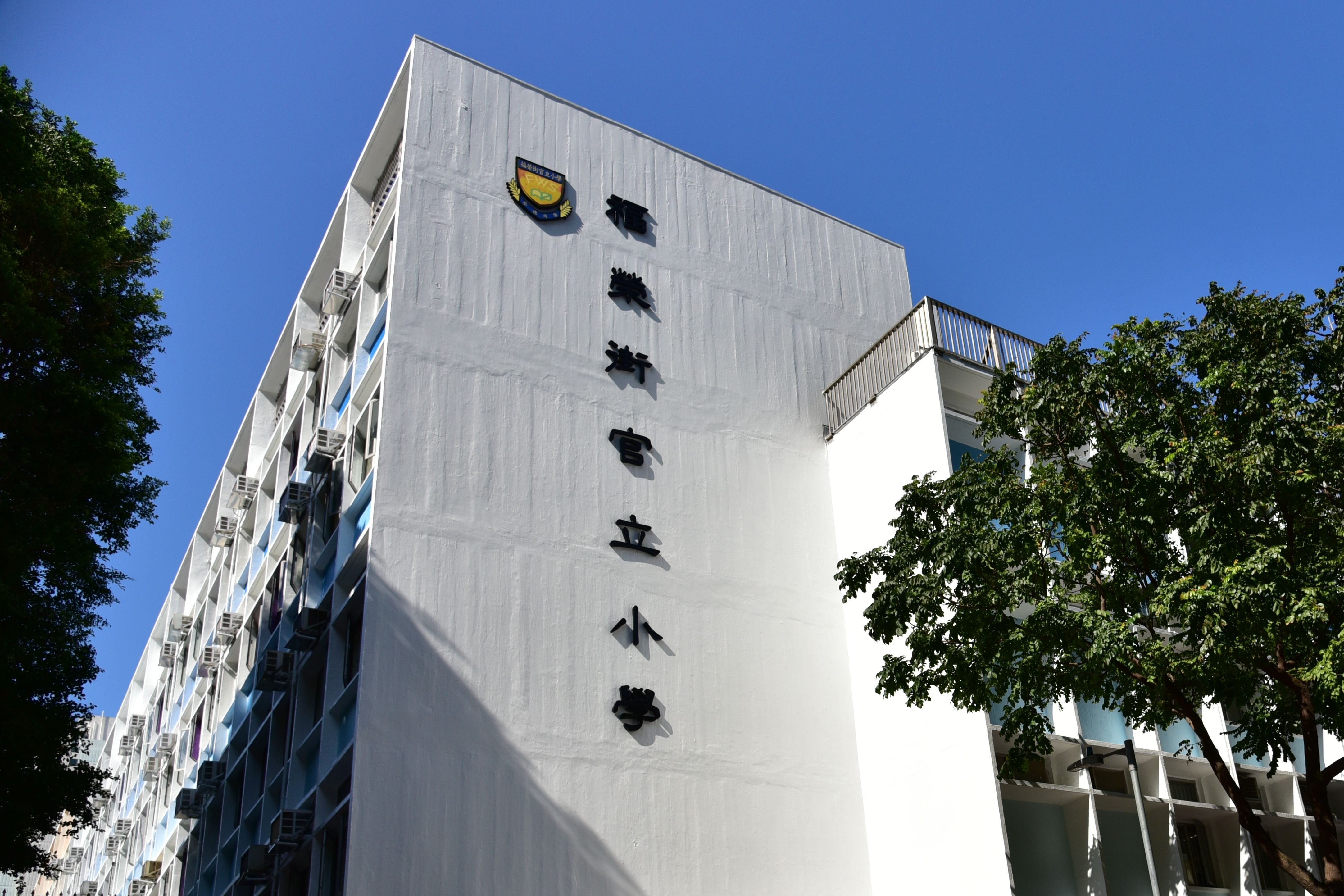

Last revision date:22 October 2025


