 Primary School Profiles 2025

 Primary School Profiles 2025


| Address: | Estate Primary School No. 2, Phase II, Butterfly Estate, Tuen Mun, N.T. | |||
| Phone: | 24636171 | Email: | info@yantak.edu.hk | |
| Fax: | 24663660 | Website: | http://www.yantak.edu.hk/ | |
 School Information
 | Supervisor/ Chairman of Management Committee | : | Mr. Ip Wai Wing |
| School Head | : | Ms. Lo Suk Ching |
| Incorporated Management Committee been established? | : | Established |
| Percentage of School Supervisor and Managers / Chairperson and Members of School Management Committee (SMC) of Government Schools Fulfilling the Training Targets | : | 100% |
| School Type | : | Aided Whole Day |
| Student Gender | : | Co-ed |
| Sponsoring Body | : | The Catholic Diocese of Hong Kong |
| Religion | : | Catholicism |
| Year of Commencement of Operation | : | 1983 |
| School Motto | : | Benevolence, Wisdom, Kindness, Virtue |
| Area Occupied by the School | : | About 3900 Sq. M |
| Through-train Secondary School | : | - |
| Feeder Secondary School | : | - |
| Nominated Secondary School | : | Tuen Mun Catholic Secondary School |
| Medium of Instruction | : | Chinese |
| School Bus Service | : | School Bus |
| Parent-Teacher Association | : | Yes |
| Past Students' Association/Alumni Association | : | Yes |
| 4Rs Mental Health Charter | : | Yes |
| Whole School Health Programme | : | Pledged School |
 2025/2026 Annual School Charges
| School Fee | : | - |
| Tong Fai | : | - |
| PTA Fee | : | $40 |
| Approved Charges for non-standard items | : | $300 (To create a diversified and comfortable learning environment for students.) |
| Other Charges | : | $20 (Replacement of student card) |
 School Facilities
 | Number of Classroom(s) | : | 24 |
| Number of School Hall(s) | : | 1 |
| Number of Playground(s) | : | 2 |
| Number of Library(ies) | : | 1 |
| Special Rooms | : | STEAM Lab, Music Room, Library, Social Workers Room, Guidance & Counselling Room, EP consulting room, English Room, YT Creative Kids Hub, Distance Video Conference Room, Chapel, Moral Education Activity Room, Comprehensive Activity Room. |
| Facility(ies) for Supporting Students with Special Educational Needs | : | Ramp, Accessible lift and Accessible toilet. |
| Others | : | All the classrooms are equipped with smartboards, computers and visualizers. All rooms and covered playgrounds in the school are air-conditioned. |
 Teaching Staff Information (Including School Head) in the 2024/2025 school year
 | Number of teaching posts in the approved establishment | : | 47 |
| Total number of teachers in the school | : | 48 |
| Qualifications and professional training (%) | ||
| Had Received Teacher Training | : | 100% |
| Bachelor Degree | : | 100% |
| Master/ Doctorate Degree or above | : | 31% |
| Special Education Training | : | 50% |
| Years of Experience (%) | ||
| 0 - 4 years | : | 12% |
| 5 - 9 years | : | 29% |
| 10 years or above | : | 59% |
 Class Structure
 | 2024/25 school year | ||
| P1 Number of classes | : | 4 |
| P2 Number of classes | : | 4 |
| P3 Number of classes | : | 4 |
| P4 Number of classes | : | 4 |
| P5 Number of classes | : | 4 |
| P6 Number of classes | : | 4 |
| Total | : | 24 |
| 2025/26 school year (Based on the number of classes approved by EDB in 2025) | ||
| P1 Number of classes | : | 4 |
| P2 Number of classes | : | 4 |
| P3 Number of classes | : | 4 |
| P4 Number of classes | : | 4 |
| P5 Number of classes | : | 4 |
| P6 Number of classes | : | 4 |
| Total | : | 24 |
| Mode of teaching at different levels | ||
| 1. Implement small class teaching, small group and ability group teaching. 2. Provide 2 class teachers from P.1 to P.6 to cater for learning adaptation between different key stages. 3. Implement brain-based learning and diversified teaching strategies to cater for learning diversities. 4. Cultivate whole person development with Life Education, WISE programmes and MI activities in the afternoon. |
||
| Remarks | ||
| 1. Adopt ability grouping in KS2 English to enhance learning effectiveness of students with different English abilities. 2. Implement whole-school approach to cater for different learning diversities. 3. Strive to enhance students' holistic development, cultivate different abilities and reach their full potential. |
||
 Performance Assessment
 | Applicable to P1 only | ||
| Number of test(s) per year | : | 0 |
| Number of exam(s) per year | : | 2 |
| Replace tests and examinations with diversified assessments in the first term of P1 | : | Yes |
| Applicable to P2 to P6 only | ||
| Number of test(s) per year | : | 0 |
| Number of exam(s) per year | : | 3 |
| Applicable to P1 to P6 | ||
| Formulate appropriate school-based assessment and assignment policies, inform parents of related arrangements, and collect views from teachers, students and parents regularly (at least once per school year) for ongoing review and optimisation of the school assessment and assignment policies | : | No |
| Upload the school-based assessment policy onto the school webpage for information of the public and stakeholders | : | No |
| Upload the school-based assignment policy onto the school webpage for information of the public and stakeholders | : | No |
| Diversified Assessment for Learning | : | 1. There are 2 exams in P.1 and P.6. 2. Diversified forms of formative assessment such as self-assessment, peer assessment and parent assessment are designed. |
| Avoid arranging tests or examinations immediately after long holidays in order to let students take more rest during the holidays | : | Yes |
| Arrange the timetable flexibly according to the school context, with a tutorial session provided in the afternoon as far as possible for students to finish some of their homework under teachers’ guidance | : | Yes |
| Streaming arrangement | : | No streaming. Students with different abilities are evenly allocated in each class. |
 School Life
 | Number of school days per week | : | 5 |
| Number of periods per day | : | 8 |
| Duration of each normal period | : | 35 |
| School starts at | : | 8:00 AM |
| School ends at | : | 3:00 PM |
| Lunch break | : | 1:00 - 2:15 |
| Lunch arrangement | : | Provided by designated supplier and arranged by parents. |
| Healthy school life | : | 1. Participate in School Physical Fitness Award Scheme. 2. Participate in Eat Smart School Accreditation Scheme. 3. Participate in 4Rs Mental Health Charter. 4. There is a running zone at school and students can join different fitness activities during recess. |
| Remarks | : | Life Education on Mondays. WISE programmes on Tuesdays and Thursdays. Multiple Intelligences activities on Wednesdays. Extra-curricular activities from Mondays to Fridays after school. Extra-curricular activities on Saturdays. |
 Life-wide Learning
 | 1. Multiple Intelligence Activities: Covering different subjects in the regular curriculum in Junior Primary levels. Launching different uniform groups or specific groups to enrich students' learning experience in Senior Primary levels. 2. Extra-Curricular Activities: Covering the categories on academic, sports, music, visual arts, performing arts, etc. to attain the aim of "whole person development". 3. Life-wide learning activities: Widen students' horizons by means of various outdoor activities. |
 School Mission
 | We adhere the church's mission in preaching the gospel, so that students can understand the principle of loving the Lord and others, and be able to practice, live out the spirit of Christ, and strive to serve others and contribute to society. |
 School Characteristics
 | School Management | ||
| School Management Organisation | : | Our school has PTA and Alumni Association to develop and monitor the development of school affairs. There are also administrative teams to help develop and implement school affairs. |
| Incorporated Management Committee / School Management Committee/ Management Committee | : | Our Incorporated Management Committee is run by the supervisor, principal, senior principals, various professionals, parents, alumnus and teachers. |
| School Green Policy | : | Our Moral and Civic Education Group organizes and participates in environmental protection activities inside and outside the school, such as Student Environmental Protection Ambassador (SEPA) Scheme. |
| School's Major Concerns | : | 1. Practise the five Catholic core values and establish positive values for students. 2. Optimize learning from reading and deepen students' independent learning. |
| Learning and Teaching Plan | ||
| Learning & Teaching Strategies | : | 1. Lessons with brain-based learning approach, picture books and SDL strategies are designed to enhance learning motivation and independent learning ability. 2. School-based Life Education curriculum based on Catholic core values is implemented to foster positive characters and whole person development. 3. Promote Primary Humanities and Primary Science and enrich content and elements to cultivate students' positive values and attitudes, general abilities and knowledge through "child-centered" experiential learning. 4. Language-rich learning environment and a comprehensive school-based language curriculum with interesting and meaningful activities is provided to strengthen language proficiency. 5. STEAM education is promoted by making good use of IT, unleashing creativity and developing the spirit of innovation, so that independent learning, problem solving, collaboration and computational thinking skills can be enhanced. |
| Development of Major Renewed Emphases of the Primary Education Curriculum | : | 1. Implement National Security Education Curriculum in various subjects under the framework of Hong Kong's National Security Education Curriculum. 2. Provide diversified learning experiences and promote students' balanced physical and mental development through curriculum adaptation, ability grouping, interdisciplinary collaboration, flexible use of timetable, etc. 3. Nurture students with a sense of care about society through design thinking and information literacy in WISE programmes. 4. Help students master research methods, higher-order thinking and independent learning ability in cross-curricular learning. 5. School-based curriculum is adopted in junior GS and examinations are replaced by multiple assessments. 6. Cancel examination in the first learning phase in P.1 and assess their learning progress by formative assessments to cater for better transition to primary schooling. 7. Cancel examination in the third learning phase in P.6 to make room for better transition to secondary schooling. |
| Development of Generic Skills | : | Cultivate students' creativity, critical thinking skills and self-learning ability collaboration and communication skills, creativity, critical thinking skills, self-learning ability and problem-solving skills through diversified and inquiry-based learning, cooperative learning, project learning and other activities. |
| Cultivation of Proper Values, Attitudes and Behaviours | : | 1. Our school upholds the five Catholic core values and believes that every child is unique, honourable and valuable. Through our school-based Life Education curriculum, students explore and reflect about themselves, the surroundings and the world using different senses. As a result, they are nurtured to be Yan Tak good children who are grateful for life, love God and the surroundings, appreciate and cherish life. 2. We organize a variety of activities to enhance students' interest in learning about topics relating to our country and their sense of national identity. |
| Student Support | ||
| Whole School Approach to Catering for Learner Diversity | : | The Student Support Team develops strategies and motivates all teachers to adopt the 3-Tier Intervention Model to cater for students' diversified learning and emotional needs. Besides daily support by the registered social workers, the school-based educational psychologist and speech therapist work closely and regularly at school to provide professional support for students and teachers. In addition to the promotion of Gifted Education that develop students' potential, we provide various activities to support students' learning needs such as different after-school support programmes, NAC programme and NCS programme, etc. |
| Whole School Approach to Integrated Education | : | The Student Support Team is led by Special Educational Needs Coordinator, identifies and supports students with learning difficulties in an early stage, provides them with adjustments in teaching, assignments and assessment, and caters for students' learning diversity through group teaching, individual and group counseling, etc. The school-based educational psychologist and school-based speech therapist visit the school regularly to provide professional support services so efficient home-school co-operation can be achieved with regular Individual Education Plan meetings with parents. Learning Support Grant and additional resources are used to provide diversified after-school support groups and appropriate support is given according to individual student's social and emotional needs. |
| Education Support for Non-Chinese Speaking(NCS) Students | : | Our school provides additional support for NCS students to facilitate their learning of Chinese: providing after-school support programmes in learning Chinese; appointing additional teacher(s)/teaching assistant(s) to support NCS students' learning of Chinese; developing school-based Chinese Language curriculum and/or adapting learning and teaching materials; and organising activities to create an inclusive learning environment in the school. We provide additional Chinese learning support according to the NCS students' needs, such as pull-out/small-group classes, learning and teaching resources, etc. |
| Curriculum Tailoring and Adaptation | : | We strengthen the catering for students' learning diversities with curriculum adaptation, tiered assignments, homework and assessment adaptation. We enhance students' learning effectiveness by arranging school-based tutoring and gifted courses. |
| Home-school Co-operation and School Ethos | ||
| Home-School Co-operation | : | The Parent-Teacher Association organizes parent education workshops, interest classes and other activities, such as parent-child trips, school uniform donations, pressure-free planting workshops, etc. We also invite parents to be volunteers and help in different events such as School's Sports Day, Reading Day, Mid-Autumn Festival activity, Chinese Culture Day, Teacher Appreciation Day, cleaning and lunch monitoring, selling flower for charity, etc. |
| School Ethos | : | 1. We implement Life Education to strengthen students' responsibility, positive attitude towards life and positive self-image through themed events, lectures and experiential learning. 2. We establish inclusive school and caring culture with caring activities such as different duties programme, Buddy programme, "You Deserve an Appreciation", etc. 3. We have Yan Tak Good Child Award Scheme. Students are praised regularly and there are increased opportunities for students to appreciate each other's achievements. Students can build up their positive image, develop a sense of responsibility and team sprit. |
| Future Development | ||
| School Development Plan | : | 1. Promote Catholic core values in various subjects continuously and optimize school-based Life Education curriculum. 2. Promote self-directed learning and enhance students’ learning effectiveness. 3. Cultivate students' reading interest and habits so that they can learn to read effectively by providing diversified reading experiences. 4. Promote National Education. |
| Teacher Professional Training & Development | : | 1. Staff Development Days and teacher training are planned according to the annual school development plan to strengthen teachers' professional capabilities. Professional support services are actively applied and participated to enhance teachers' learning and teaching capabilities and academic exchanges inside and outside school. 2. each subject provides training and peer observation according to the development focus to enhance teachers' subject-based knowledge and skills. 3. Teachers set personal learning and career ladders. |
| Others | : | 1. Overseas study tours with different themes are held every year and countries including New Zealand, Japan, Singapore, Taiwan, South Korea are visited, so that students can broaden their horizons and enrich their learning experience. 2. Exchange or study tour to the mainland is organized to help students understand the latest development of the country and improve their national identity. 3. There are different reward schemes to encourage students who have excellent performance or continuous progress in all aspects. |
 School Map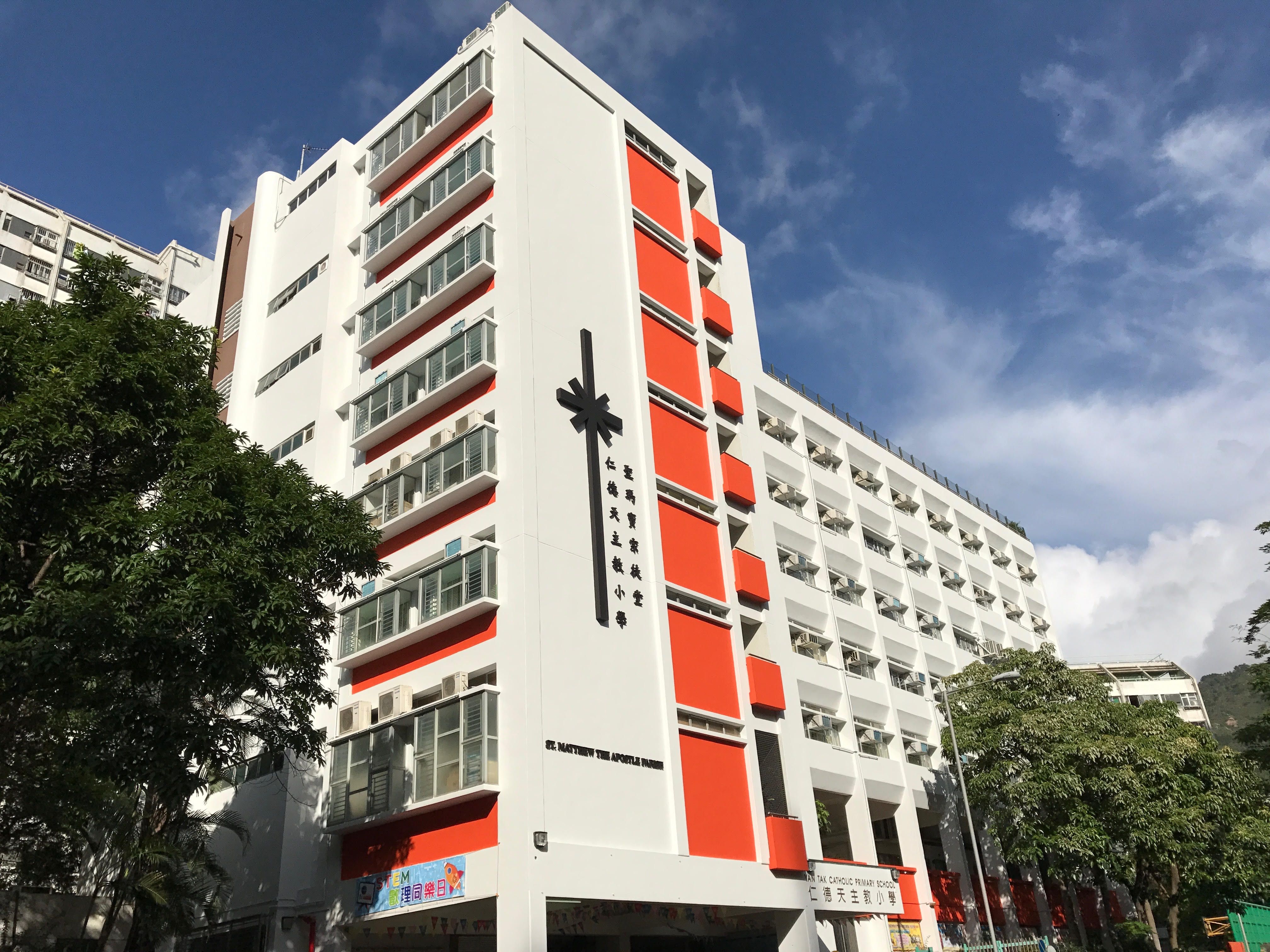

Last revision date:01 September 2025


