 Primary School Profiles 2025

 Primary School Profiles 2025

| Address: | 23 So Kwun Wat Road, Tuen Mun, N.T. | |||
| Phone: | 24411222 | Email: | email@leekamps.edu.hk | |
| Fax: | 24411282 | Website: | http://www.leekamps.edu.hk | |
 School Information
 | Supervisor/ Chairman of Management Committee | : | Mr. Cheng Kam Chiu Stewart |
| School Head | : | Ms. Lam Pui Ling |
| Incorporated Management Committee been established? | : | Established |
| Percentage of School Supervisor and Managers / Chairperson and Members of School Management Committee (SMC) of Government Schools Fulfilling the Training Targets | : | 72% |
| School Type | : | Aided Whole Day |
| Student Gender | : | Co-ed |
| Sponsoring Body | : | Shun Tak Fraternal Association |
| Religion | : | Not Applicable |
| Year of Commencement of Operation | : | 2011 |
| School Motto | : | Erudition, Propriety, Commitment, Honesty |
| Area Occupied by the School | : | About 5291 Sq. M |
| Through-train Secondary School | : | - |
| Feeder Secondary School | : | - |
| Nominated Secondary School | : | STFA Leung Kau Kui College, STFA Tam Pak Yu College |
| Medium of Instruction | : | Chinese(incl.: Putonghua) and English |
| School Bus Service | : | School Bus |
| Parent-Teacher Association | : | Yes |
| Past Students' Association/Alumni Association | : | Yes |
| 4Rs Mental Health Charter | : | Yes |
| Whole School Health Programme | : | Action School |
 2025/2026 Annual School Charges
| School Fee | : | - |
| Tong Fai | : | - |
| PTA Fee | : | - |
| Approved Charges for non-standard items | : | Charges for non-standard items $450 in total per student per annum, to be paid in two instalments. |
| Other Charges | : | - |
 School Facilities
 | Number of Classroom(s) | : | 30 |
| Number of School Hall(s) | : | 1 |
| Number of Playground(s) | : | 2 |
| Number of Library(ies) | : | 1 |
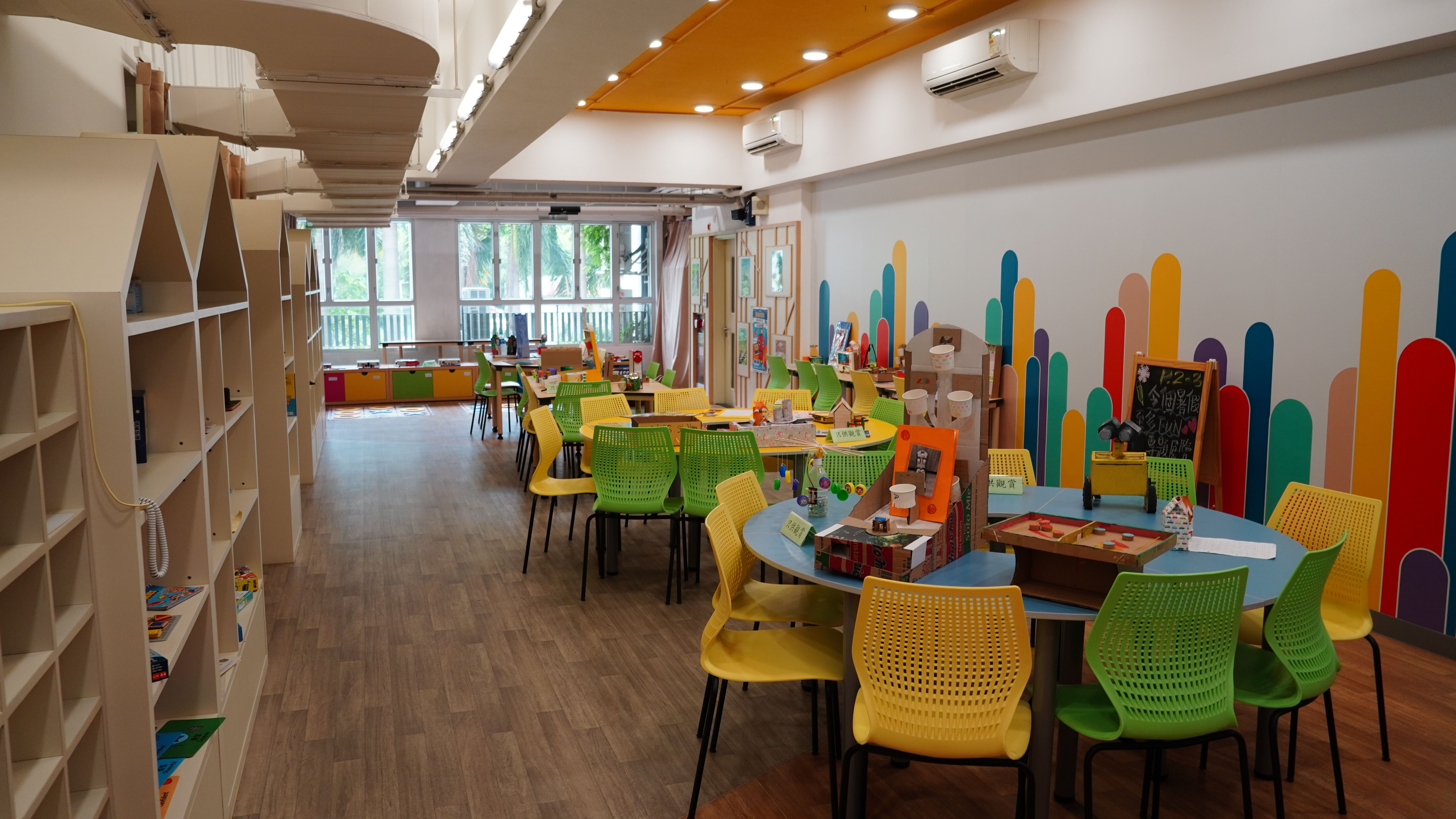
| Special Rooms | : | Dance Studio, SUPER+ AI Lab Music Room, Visual Arts Room, Maths & Science Activity Room, Campus TV, Guidance Counselling Room, Parent-Alumni Common Room, English Zone, SUPER Studio. |
| Facility(ies) for Supporting Students with Special Educational Needs | : | Ramp, Accessible lift and Accessible toilet. |
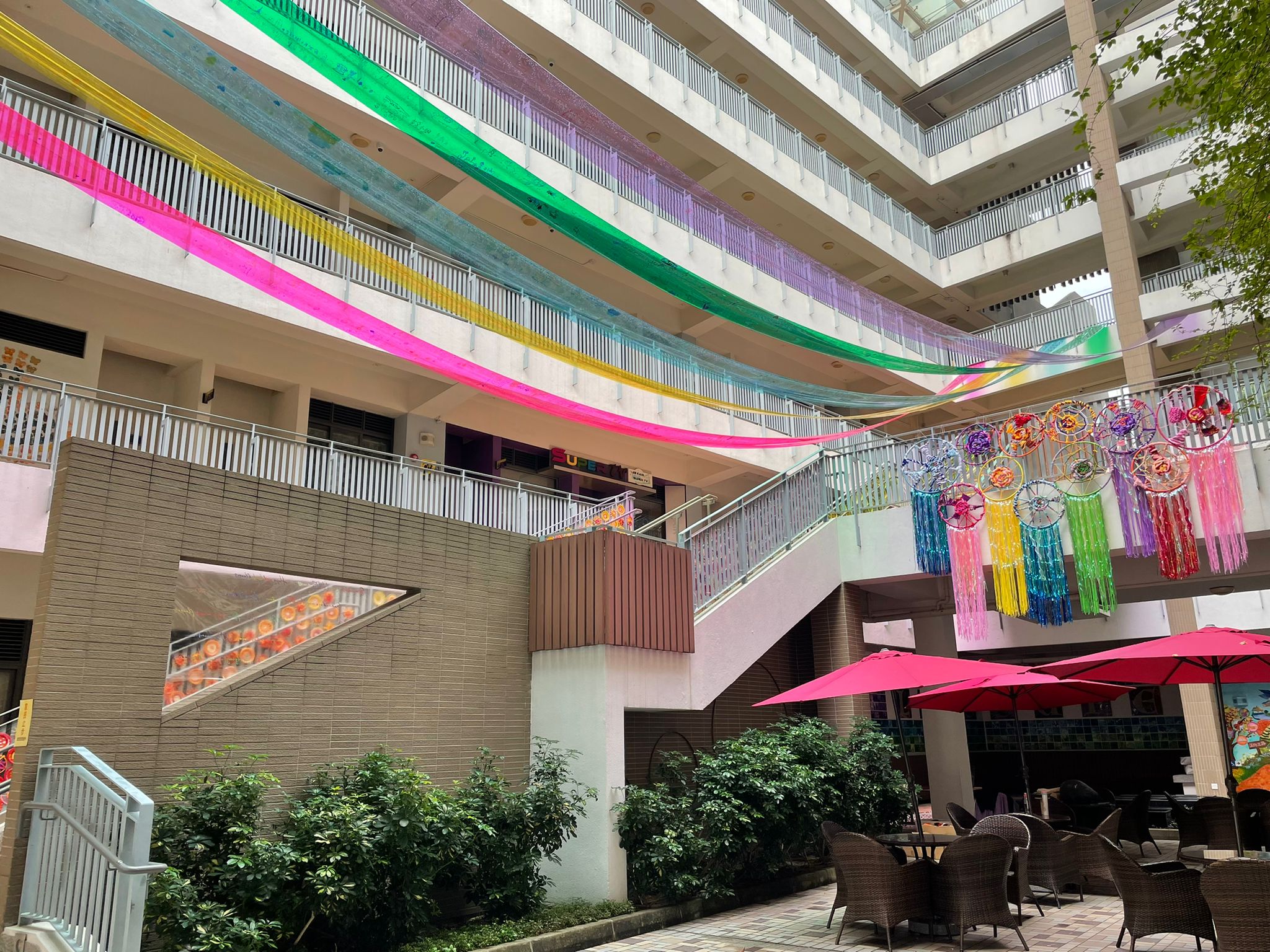
| Others | : | An open stage in 1/F is set up for pupils to show their talents. ‘SUPER+ Zone’ is set up to engage pupils in online PE and interactive activities |
 Teaching Staff Information (Including School Head) in the 2024/2025 school year
 | Number of teaching posts in the approved establishment | : | 54 |
| Total number of teachers in the school | : | 56 |
| Qualifications and professional training (%) | ||
| Had Received Teacher Training | : | 91% |
| Bachelor Degree | : | 96% |
| Master/ Doctorate Degree or above | : | 39% |
| Special Education Training | : | 70% |
| Years of Experience (%) | ||
| 0 - 4 years | : | 27% |
| 5 - 9 years | : | 27% |
| 10 years or above | : | 46% |
 Class Structure
 | 2024/25 school year | ||
| P1 Number of classes | : | 5 |
| P2 Number of classes | : | 5 |
| P3 Number of classes | : | 5 |
| P4 Number of classes | : | 5 |
| P5 Number of classes | : | 5 |
| P6 Number of classes | : | 5 |
| Total | : | 30 |
| 2025/26 school year (Based on the number of classes approved by EDB in 2025) | ||
| P1 Number of classes | : | 5 |
| P2 Number of classes | : | 5 |
| P3 Number of classes | : | 5 |
| P4 Number of classes | : | 5 |
| P5 Number of classes | : | 5 |
| P6 Number of classes | : | 5 |
| Total | : | 30 |
| Mode of teaching at different levels | ||
| - Small-class teaching is implemented. Our school values students' participation, interaction among teachers and students and high quality connections (HQC). - Our school develops students' self-directed learning capabilities and character strengths. - Putonghua is used as the medium of instruction in Chinese lessons in P.2-P.6. |
||
| Remarks | ||
| - Remedial tutorials and enrichment classes are provided to cater for learner diversity. | ||
 Performance Assessment
 | Applicable to P1 only | ||
| Number of test(s) per year | : | 2 |
| Number of exam(s) per year | : | 2 |
| Replace tests and examinations with diversified assessments in the first term of P1 | : | Yes |
| Applicable to P2 to P6 only | ||
| Number of test(s) per year | : | 2 |
| Number of exam(s) per year | : | 2 |
| Applicable to P1 to P6 | ||
| Formulate appropriate school-based assessment and assignment policies, inform parents of related arrangements, and collect views from teachers, students and parents regularly (at least once per school year) for ongoing review and optimisation of the school assessment and assignment policies | : | Yes |
| Upload the school-based assessment policy onto the school webpage for information of the public and stakeholders | : | Yes |
| Upload the school-based assignment policy onto the school webpage for information of the public and stakeholders | : | Yes |
| Diversified Assessment for Learning | : | Both formative and summative assessments are emphasis in our school to provide ongoing progress evaluation for students. Language subjects are assessed for listening, speaking, writing and reading ability. Skill-based assessments are used in Mathematics, Science and Computer Studies. Theme-based projects are assessed by teachers, parents and students. |
| Avoid arranging tests or examinations immediately after long holidays in order to let students take more rest during the holidays | : | Yes |
| Arrange the timetable flexibly according to the school context, with a tutorial session provided in the afternoon as far as possible for students to finish some of their homework under teachers’ guidance | : | Yes |
| Streaming arrangement | : | Students are distributed into classes evenly without establishing elite classes. |
 School Life
 | Number of school days per week | : | 5 |
| Number of periods per day | : | 7 |
| Duration of each normal period | : | 30 |
| School starts at | : | 8:10 AM |
| School ends at | : | 3:10 PM |
| Lunch break | : | 12:45 - 1:45 |
| Lunch arrangement | : | Provided by designated supplier and arranged by parents. |
| Healthy school life | : | Students' awareness of healthy living habits is developed through positive classroom management, SUPER+ programmes, personal growth programmes, after lunch recess and a variety of other well-being activities. Our school prioritises the development of mental and physical health. Weekly self-evaluation in the student handbook helps develop healthy living habits. |
| Remarks | : | Daily English Morning Reading Sessions are implemented for students to develop good reading habits. Chinese, English and Maths remedial lessons are also provided daily. ‘SUPER Talent Time’ provides students with different learning experiences and offers an opportunity for students to show their potential talent. Different optional training classes and activities are organised after school and on Saturdays. |
 Life-wide Learning
 | Our students have lots of opportunities for study tours including mainland study tours: Study tour in XinJiang, Sports Exchange tour, WATER Shanzhen Tour, WATER Guangdong-Jiangxi Tour, Mainland Exchange Programme and Hong Kong-Shunde Sister School Exchange Programme; and overseas study tour: English Immersion in Australia. Our school organises various learning activities such as Chinese Cultural Day, English Day, STEM Day and field trips like Trees Field Trip and museum visits for students. Other school events include educational camps and Sports Day. There are lots of extra-curricular activities in our school, such as trainings for language elites, STEM elites, sports and arts elites, and uniformed groups (Scouts in P.1-P.2). |
 School Mission
 | In accordance with our motto, 'Erudition, Propriety, Commitment and Honesty', we are dedicated to providing an all-round education that enables students to achieve a balanced development in all areas: moral, intellectual, physical, social and aesthetic. We aim to create an environment where students enjoy learning, communicate effectively, develop their sense of commitment and nurture creativity. In all, we lay the foundation for future good citizens. Our school vision is 'Love to learn, learn to love, we are SUPER.' |
 School Characteristics
 | School Management | ||
| School Management Organisation | : | Led by the Incorporated Management Committee, the school has set up the Committee of School Policy, the Committee of School Development, Self-Evaluation and School Administration, the Committee of Student Development and the Committee of Curriculum Development followed by various executive committees. Each committee holds regular meetings to review the planning, implementation and evaluation of school policies, optimize management and organisation, learning and teaching, school ethos and student supports, as well as student performance, in order to establish a strong school team that pursues excellence. |
| Incorporated Management Committee / School Management Committee/ Management Committee | : | The IMC is the school's highest leading committee. Its members include: School's Supervisor, Vice Supervisor, Sponsoring Body Managers, Independent Manager, Principal Manager, Teacher Managers, Parent Managers and Alumni Manager. |
| School Green Policy | : | Our school emphasises the sustainable development. We implement waste classification and recycling policies. Student ambassadors are trained and they help to carry out the environmental protection policies in classrooms. Students are also encouraged to participate in different environmental activities in order to enhance their environmental awareness. |
| School's Major Concerns | : | To further promote positive education and foster students' perseverance. |
| Learning and Teaching Plan | ||
| Learning & Teaching Strategies | : | 1. The main focus in KS1 is to cultivate learning motivation while in KS2 the focus is on independent learning and high-order thinking. 2. To implement 'Using Putonghua to Teach Chinese Language' and 'English Speaking School Environment' programmes to enhance students' bi-literate and tri-lingual abilities. 3. To enhance English language proficiency, a Shared Book Approach is adopted in KS1 to increase students' learning motivation and develop reading abilities, and Keys 2 Literacy Development (Keys2) is implemented in KS2 which aims at developing students' reading and writing skills progressively through exposure to different text types and various writing processes. To create a language-rich environment, English ambassadors, Lee Kam Explorers, Creative Writers Club and other activities are organised for English lovers. Students are given opportunities to publish their own English publication 'Voices'. |
| Development of Major Renewed Emphases of the Primary Education Curriculum | : | To instil pupils with positive values and attitudes, we have been devoting ourselves to Positive Education focusing on creating a positive ambience and carrying out a holistic personal development curriculum. To gain understanding of our country and develop a sense of national identity, national security education is promoted through a 'multi-pronged and co-ordinated' approach. We lay great stress on students' reading interest and abilities. Different reading programmes like 15-minute morning reading sessions, Reading Month for different subjects, inter-class reading competitions etc are arranged. We strive to achieve effective learning among pupils with a variety of e-learning platforms. General Studies serves as a framework for project study intended to hone pupils' generic skills. Life-wide learning activities are conducted to actualize students' full potential. The flexible timetable in the afternoon provides diverse learning activities and helps promote students' whole-person development. |
| Development of Generic Skills | : | 1. Our school adopts a discipline-centred and project-based approach to develop students' generic skills, through class routines and the STREAM curriculum. 2. Interactive learning enhances students' communication, collaboration, critical thinking and high-order thinking skills. |
| Cultivation of Proper Values, Attitudes and Behaviours | : | We implement the 'SUPER+ Positive Education Scheme'. Through a positive learning environment, the school curriculum, parents' education and positive classroom management etc, the school aims at fostering students' virtues and character strengths, growth mindsets and resilience; to help build pupils' positive social skills, positive emotions, sense of participation and satisfaction; to improve their mental and physical health, in order to prepare them for a meaningful life. |
| Student Support | ||
| Whole School Approach to Catering for Learner Diversity | : | 1. Professional support for students with special needs is provided by the school-based educational psychologist. 2. Two in-school social workers and a counsellor provide counselling services for students. 3. Daily tutorial lessons for the three main subjects are provided. 4. 'Understanding Growth and Adolescent Project' by EDB is implemented in P.4-P.6 to provide training on personal growth for students. 5. Students are encouraged to participate in various competitions to fully use and demonstrate their talents. 6. Enrichment courses are provided for more able and gifted students. |
| Whole School Approach to Integrated Education | : | The Student Support Team is led by the Special Educational Needs Coordinator, and consists of Special Educational Needs Support Teacher, school administrators, the members of the discipline team and counselling team, school social workers, and panel heads of the main subjects. Our school utilises Learning Support Grant to employ support teachers, teaching assistants and to buy support services. Different parties work together to nurture students with special educational needs and support them in different areas. Other support measures include school-based educational psychology service, school-based speech therapy service, remedial tutorials, and providing learning, homework and assessment adaptations, etc. |
| Education Support for Non-Chinese Speaking(NCS) Students | : | Our school provides additional support for NCS students to facilitate their learning of Chinese: providing after-school support programmes in learning Chinese; appointing additional teacher(s)/teaching assistant(s) to support NCS students' learning of Chinese; organising activities to create an inclusive learning environment in the school; and our school uses Putonghua to teach Chinese in all classes / groups at certain levels with extra support as appropriate, e.g. pull-out/small-group classes, learning and teaching resources with Pinyin, etc.. |
| Curriculum Tailoring and Adaptation | : | 1. Implement school-based curriculum with tailor-made suitable learning materials for students. 2. Provide homework and assessment adjustments for students with special learning needs. 3. Provide advice or additional assignments for more able students to enrich their learning. |
| Home-school Co-operation and School Ethos | ||
| Home-School Co-operation | : | In order to build good home-school collaboration and relations, the PTA has held activities and has set up a parent volunteer team to help with school activities. Our school organizes workshops and talks for parents to strengthen parental education and also organizes different functions such as Parents' Day, Principal-Parents Forum, Parents Lesson Observations, Primary One Parents Group Sharing Gathering and Home-School BBQ party to enhance mutual communication. |
| School Ethos | : | Our school commits to creating a positive and caring culture. Different measures and programmes are carried out such as Primary 1 Orientation Programme, Commencement Week, SUPER+ classes, Positive Classroom Management, Assemblies, Integrated Growth classes, Career and Future Planning, Personal Growth Group, Parent Group, SUPER+ Kid Growth Scheme and Understanding Adolescent Project. |
| Future Development | ||
| School Development Plan | : | School Development Plan: Student-centred; fully utilising resources; creating diversified learning experiences; equipping students for future challenges. |
| Teacher Professional Training & Development | : | 1. Well-planned professional development activities for teachers are organised according to the school's development priorities. There are seminars, workshops, lesson co-planning, meetings, lesson observations, teachers' learning circles and teaching research. 2. Teachers use the 'design, implementation, reflection, improvement' model during planning so that they can use new innovative teaching strategies to enhance students' learning with an emphasis on effectiveness of teaching. 3. We organise external teachers' learning circles (in Hong Kong and abroad), group exchange activities, and participates in international seminars to promote professional development. |
| Others | : | Our school offers the scholarship of "Erudition, Propriety, Commitment and Honesty" to award excellent students with outstanding academic or extra-curricular activities performance, assist pupils with economic needs. Please refer to our school's website for students' awards in open or inter-school competitions. |
 School Map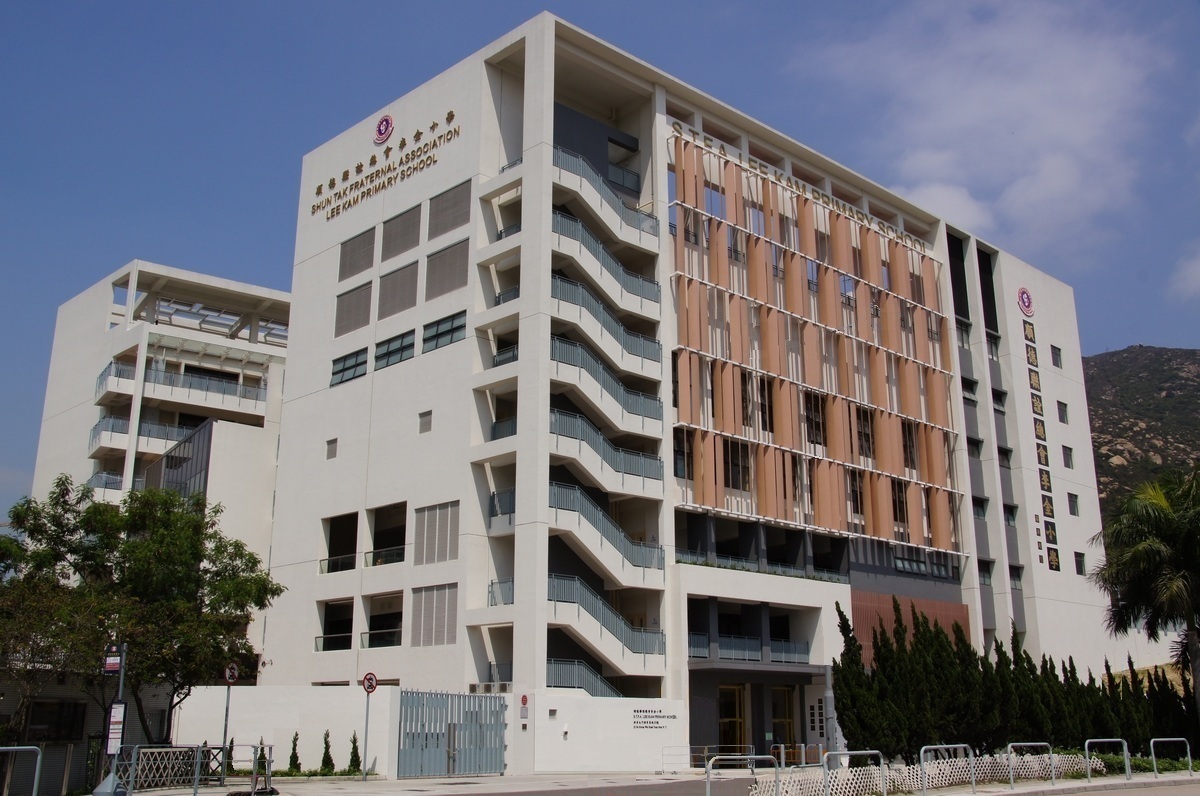
Last revision date:16 September 2025


