 Primary School Profiles 2025

 Primary School Profiles 2025


| Address: | Rutter Street, Central, Hong Kong | |||
| Phone: | 25477618 | Email: | cms@cms.edu.hk | |
| Fax: | 25591595 | Website: | http://www.cms.edu.hk | |
 School Information
 | Supervisor/ Chairman of Management Committee | : | Rev. Lam Minh Pierre |
| School Head | : | Principal Chung Oi Man |
| Incorporated Management Committee been established? | : | Established |
| Percentage of School Supervisor and Managers / Chairperson and Members of School Management Committee (SMC) of Government Schools Fulfilling the Training Targets | : | Not Applicable |
| School Type | : | Aided Whole Day |
| Student Gender | : | Co-ed |
| Sponsoring Body | : | The Catholic Diocese of Hong Kong |
| Religion | : | Catholicism |
| Year of Commencement of Operation | : | 1967 |
| School Motto | : | Reverence for Lord, Love to Others; Diligence in Study, Pursuit of Truth |
| Area Occupied by the School | : | About 6000 Sq. M |
| Through-train Secondary School | : | - |
| Feeder Secondary School | : | - |
| Nominated Secondary School | : | - |
| Medium of Instruction | : | English |
| School Bus Service | : | Nanny van |
| Parent-Teacher Association | : | Yes |
| Past Students' Association/Alumni Association | : | Yes |
| 4Rs Mental Health Charter | : | - |
| Whole School Health Programme | : | Pledged School |
 2025/2026 Annual School Charges
| School Fee | : | - |
| Tong Fai | : | - |
| PTA Fee | : | $50 |
| Approved Charges for non-standard items | : | $450 the campus cleaning, replacement and maintenance fees, other electronic appliances and digital learning software. |
| Other Charges | : | $45 (replacement of student card) |
 School Facilities
 | Number of Classroom(s) | : | 24 |
| Number of School Hall(s) | : | 1 |
| Number of Playground(s) | : | 1 |
| Number of Library(ies) | : | 1 |
| Special Rooms | : | 6 (Chinese Room, English Room, Music Room, Guidance Room, Angel Library, Makerspace). |
| Facility(ies) for Supporting Students with Special Educational Needs | : | A lift. |
| Others | : | Multi-functional room. |
 Teaching Staff Information (Including School Head) in the 2024/2025 school year
 | Number of teaching posts in the approved establishment | : | 40 |
| Total number of teachers in the school | : | 47 |
| Qualifications and professional training (%) | ||
| Had Received Teacher Training | : | 100% |
| Bachelor Degree | : | 100% |
| Master/ Doctorate Degree or above | : | 43% |
| Special Education Training | : | 25% |
| Years of Experience (%) | ||
| 0 - 4 years | : | 40% |
| 5 - 9 years | : | 26% |
| 10 years or above | : | 34% |
 Class Structure
 | 2024/25 school year | ||
| P1 Number of classes | : | 4 |
| P2 Number of classes | : | 3 |
| P3 Number of classes | : | 3 |
| P4 Number of classes | : | 3 |
| P5 Number of classes | : | 4 |
| P6 Number of classes | : | 4 |
| Total | : | 21 |
| 2025/26 school year (Based on the number of classes approved by EDB in 2025) | ||
| P1 Number of classes | : | 4 |
| P2 Number of classes | : | 4 |
| P3 Number of classes | : | 3 |
| P4 Number of classes | : | 3 |
| P5 Number of classes | : | 3 |
| P6 Number of classes | : | 4 |
| Total | : | 21 |
| Mode of teaching at different levels | ||
| Students come from local and 30 different nations. They are taught in small classes in Putonghua (Chinese) and English is the medium of instructions for most subjects; learning skills and attitude are emphasized for Primary 1-2 while consolidation of learning is the focus for Primary 3-4. The ultimate goal is to equip Primary 5-6 with better academic skills for further studies in future. | ||
| Remarks | ||
| To cater for learning uniqueness, some classes are taught in different ability groups for English, Chinese and Mathematics subjects. | ||
 Performance Assessment
 | Applicable to P1 only | ||
| Number of test(s) per year | : | 0 |
| Number of exam(s) per year | : | 0 |
| Replace tests and examinations with diversified assessments in the first term of P1 | : | Yes |
| Applicable to P2 to P6 only | ||
| Number of test(s) per year | : | 4 |
| Number of exam(s) per year | : | 0 |
| Applicable to P1 to P6 | ||
| Formulate appropriate school-based assessment and assignment policies, inform parents of related arrangements, and collect views from teachers, students and parents regularly (at least once per school year) for ongoing review and optimisation of the school assessment and assignment policies | : | Yes |
| Upload the school-based assessment policy onto the school webpage for information of the public and stakeholders | : | Yes |
| Upload the school-based assignment policy onto the school webpage for information of the public and stakeholders | : | Yes |
| Diversified Assessment for Learning | : | In order to have a whole picture of students' learning performance from time to time, practical assessments and formative assessments have been added in to different subjects. The use of Star platform, Rainbow One, ICAS and other e-learning platforms have made the assessments be more accessible, which is a good way for us to collect students' learning data quickly. |
| Avoid arranging tests or examinations immediately after long holidays in order to let students take more rest during the holidays | : | Yes |
| Arrange the timetable flexibly according to the school context, with a tutorial session provided in the afternoon as far as possible for students to finish some of their homework under teachers’ guidance | : | Yes |
| Streaming arrangement | : | Students are evenly distributed according to their academic performance. They are in different groupings when learning the major subjects, supplemented by Gifted Education programmes too. |
 School Life
 | Number of school days per week | : | 5 |
| Number of periods per day | : | 10 |
| Duration of each normal period | : | 30 |
| School starts at | : | 8:20 AM |
| School ends at | : | 3:20 PM |
| Lunch break | : | 12:35 - 1:35 |
| Lunch arrangement | : | Provided by designated supplier and arranged by parents. |
| Healthy school life | : | The school is promoting healthy diet on campus. The Parents-Teacher Association helps monitor the food and environmental hygiene. The school also joins the Joyful Fruit Month by the Department of Health, the SportACT Scheme sponsored by the Leisure and Cultural Services Department. |
| Remarks | : | There are morning assemblies, moral and civic education, STEM lessons and Other Learning Experience. The school joins the Hong Kong Eco-Healthy School Award Scheme and "Joyful Chinese Learning Programme". The School Library and Computer Room are opened at recess, lunch break and after school hours for students to learn independently. |
 Life-wide Learning
 | The extra-curricular activities including Computer Coding, Brownies, Pioneers of Christ, Chinese Lion Dance, Chinese Dance, Chinese Flute, Violin Class, Calligraphy, Cambridge Class, Swimming Training, Football, Rugby, Volleyball, Basketball, Spanish, PuTongHua, Choir, Field Orienteering, Yoga, Hip Hop dance, Cub Scouts, Chinese Kung Fu and table tennis, etc. |
 School Mission
 | To preach the gospel of God with love, acceptance and care embodied the spirit of Christ; to emphasize students' personal value and dignity, as well as their multi-cultural background with trust and respect; to provide children with sound quality education foundation. |
 School Characteristics
 | School Management | ||
| School Management Organisation | : | Incorporated Management Committee (June 2015 onwards), School Executive Committee, School Administration Committee |
| Incorporated Management Committee / School Management Committee/ Management Committee | : | Incorporated Management Committee (June 2015 onwards). |
| School Green Policy | : | School Environmental Policy Group. |
| School's Major Concerns | : | Integrate multi-cultures; broaden the global vision and establish an international campus; nurture the global talents. |
| Learning and Teaching Plan | ||
| Learning & Teaching Strategies | : | The school has been implementing small class teaching with cooperative learning approach which helps to reinforce classroom interactions and enhance students' critical thinking skills. Enquiry-based learning skills in General Studies is the key point for the practice of life-wide learning in all levels. The school aims to facilitate students' inter-discipline learning activities. For Chinese education, a joyful Chinese learning program is promoted for Primary 1 with mainly Putonghua as the medium of instructions. To maintain a language-rich environment is the mission of the English subject learning with the asset of English-speaking students. The school has been implementing the school-based literary programme in both Key Stage 1 & 2 levels. It helps develop interactive drama skills from reading to writing and enhance the Children Literature appreciation. The methodology integrating E-Learning into Mathematics and Science education is also introduced. |
| Development of Major Renewed Emphases of the Primary Education Curriculum | : | In order to cooperate with positive education, the MCE lessons not only conduct the school-based MCE curriculum and school-based personal growth curriculum, but also participate in the "Leader in me" program. Through teacher training, we aim to cultivate students' good habits and establish positive values. This year, we will apply for the Quality Education Fund-Cultural Inheritance Program to strengthen students' national identity through learning activities related to national education and national security education. The design of the overall plan is to use "tea and life" as the main line of discussion, and conduct interdisciplinary learning in MCE, GS, Languages, VA, and Mathematics. |
| Development of Generic Skills | : | With the emphasis on promoting reading; science exploration and E-learning; broadening students' views; creating interactive discussion platforms for students; promoting individual public speech sharing to strengthen students' confidence and expressiveness; recommendation for life-wide learning with students' generic skills. |
| Cultivation of Proper Values, Attitudes and Behaviours | : | Promote positive education. In addition to the positive education workshops, the training of mediators and the "Student Ambassador" program of the youth mediation program are also implemented. To enable students to express their inner feelings in an interactive way, not only allows teachers and students to understand everyone's ideas through dialogue, but also strengthens the sense of belonging and security of the class. |
| Student Support | ||
| Whole School Approach to Catering for Learner Diversity | : | Provide Early Identification and Intervention Programme for Primary One Students with Learning Difficulties; establish students talent bank to promote gifted elite programmes; provide after school tutorial class and Non-Chinese students Chinese learning supporting class. We also cater gifted students through Whole-Class Gifted Education Lesson Planning, small group learning and subject-based skip-level arrangement. For the transition of Pre-P.1 students, a bridging course is offered; reinforce P.6 students' abilities by setting up secondary school promotion programme for building up their confidence in secondary education. |
| Whole School Approach to Integrated Education | : | The Student Support Team is responsible for screening, holding meetings, compiling the student support register, arranging support services and resources according to the 3-tier support model, support teachers of students with SEN, administering assessment accommodation, arranging peer tutoring, defining success criteria, and arranging teacher's and parent's training, reviewing the effectiveness of the support measures and modifying the evaluated measures. |
| Education Support for Non-Chinese Speaking(NCS) Students | : | Our school provides additional support for NCS students to facilitate their learning of Chinese: arranging intensive Chinese learning and teaching mode(s), e.g. pull-out learning if necessary, split-class/group learning, etc; organising activities to create an inclusive learning environment in the school; and our school uses Putonghua to teach Chinese in all classes / groups at all levels with extra support as appropriate, e.g. pull-out/small-group classes, learning and teaching resources with Pinyin, etc. Additional support is provided for pull-out group learning. Pinyin is taught in grade one. In addition, after school tutorial lessons are provided. There are also Chinese tutorial classes provided for NCS students in summer. |
| Curriculum Tailoring and Adaptation | : | Flexible curriculum and enrichment programmes are tailor-made for all levels; Special arrangements or assistance of assessments or exams for special needs students; non-Chinese students are pulled out for intensive care by giving them after-school tutorials especially in their Chinese learning. |
| Home-school Co-operation and School Ethos | ||
| Home-School Co-operation | : | With the assistance of the Parent-Teacher Association, the school has been organizing more and more academic activities, parent workshops, parent-child learning programmes, Reading Mum and Dad or interest groups. The PTA also involves in handling tenders for some school matters such as school uniforms and lunch box catering services as well as monitoring the school bus services etc. |
| School Ethos | : | New parents chat-rooms; after-school tutorials; little tutor assistance scheme, Parent-child picnics and sports day; English bridging courses for new immigrant children from Mainland; transitional programmes for Pre-P.1 students including moral and civic education etc. |
| Future Development | ||
| School Development Plan | : | In the academic years of 2023-2026: Main concerns: 1. In hope and zeal we run to God. 2. In fellowship our potential turns aglow. 3. In rebuilding education we revive our convictions. 4. In the present we gear up for the time ahead. Other Concerns: 1. To use English as the main medium of instructions to keep pace with the outside world under the influence of globalization; 2. To introduce Liberal Studies and pedagogy of science knowledge in the school-based General Studies curriculum. |
| Teacher Professional Training & Development | : | With the establishment of a campus culture of "self-leadership", the school has been shaped into a harmonious, safe, warm and energetic campus, stimulated the potential of teachers, and developed into student life coaches. |
| Others | : | Every year, the PTA sponsors scholarships for the students who have outstanding performance in P.E., Art and services. The school also joins international competitions and assessments in the areas of English, Mathematics and Science conducted by an Australian organisation. In addition, the teachers lead the students to join the cross-border education exchange programmes. |
 School Map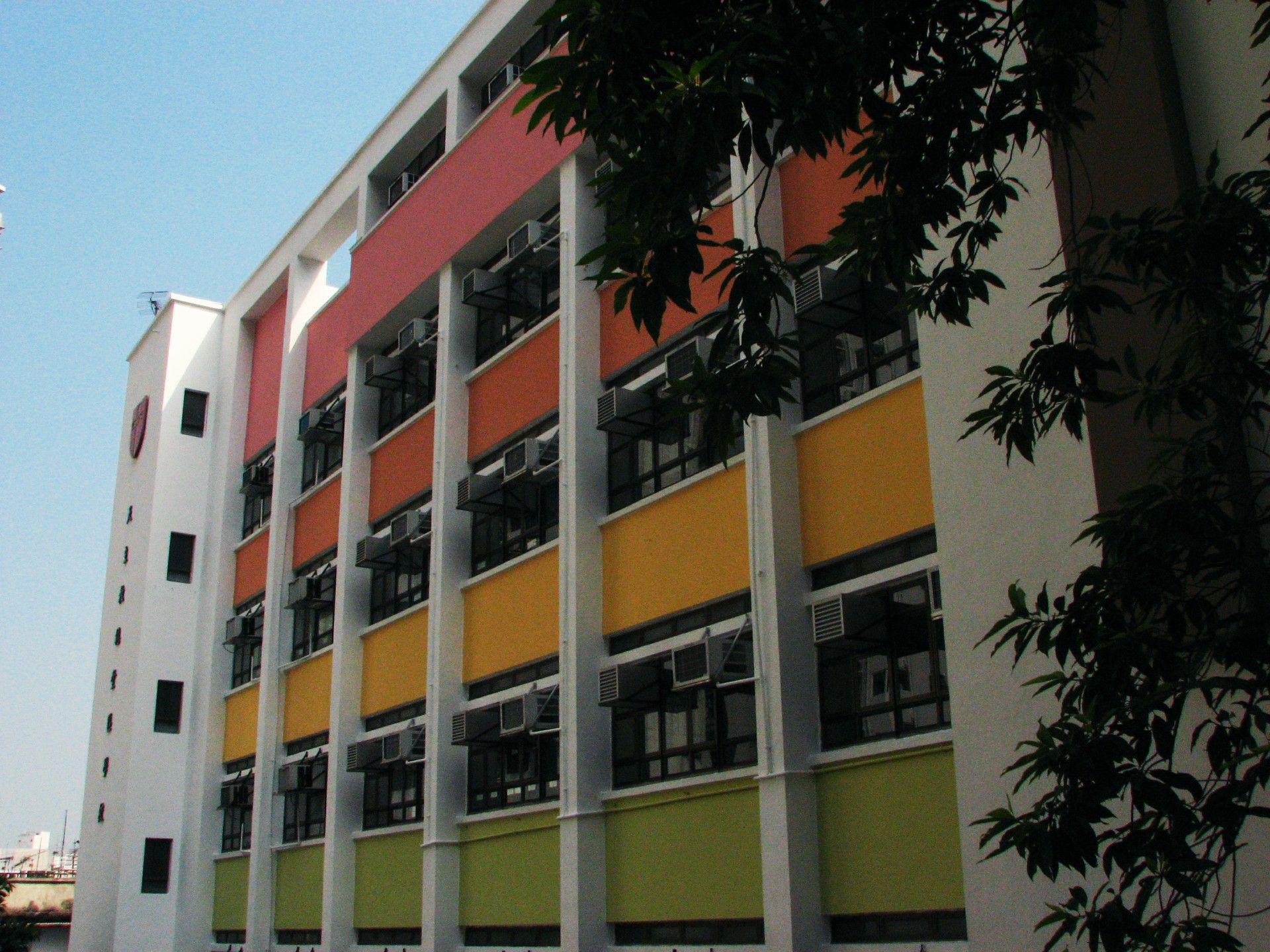
Last revision date:01 September 2025


