 Primary School Profiles 2025

 Primary School Profiles 2025


| Address: | 11 Cheung Man Road, Chai Wan, Hong Kong | |||
| Phone: | 25572244 | Email: | mtcs@mengtak.edu.hk | |
| Fax: | 25575324 | Website: | http://mengtak.edu.hk | |
 School Information
 | Supervisor/ Chairman of Management Committee | : | Rev. Tam, Paul Wing Ming |
| School Head | : | Mr. Hui Carlo |
| Incorporated Management Committee been established? | : | Established |
| Percentage of School Supervisor and Managers / Chairperson and Members of School Management Committee (SMC) of Government Schools Fulfilling the Training Targets | : | 93% |
| School Type | : | Aided Whole Day |
| Student Gender | : | Co-ed |
| Sponsoring Body | : | Hong Kong Catholic Diocese |
| Religion | : | Catholicism |
| Year of Commencement of Operation | : | 1952 |
| School Motto | : | Love others as you love yourself |
| Area Occupied by the School | : | About 5143 Sq. M |
| Through-train Secondary School | : | - |
| Feeder Secondary School | : | - |
| Nominated Secondary School | : | - |
| Medium of Instruction | : | Chinese |
| School Bus Service | : | School Bus |
| Parent-Teacher Association | : | Yes |
| Past Students' Association/Alumni Association | : | Yes |
| 4Rs Mental Health Charter | : | Yes |
| Whole School Health Programme | : | Pledged School |
 2025/2026 Annual School Charges
| School Fee | : | - |
| Tong Fai | : | - |
| PTA Fee | : | $50 |
| Approved Charges for non-standard items | : | $310 |
| Other Charges | : | - |
 School Facilities
 | Number of Classroom(s) | : | 24 |
| Number of School Hall(s) | : | 1 |
| Number of Playground(s) | : | 2 |
| Number of Library(ies) | : | 1 |
| Special Rooms | : | Computer Room, Art and Craft Room, STEM Room, Language Room, Remedial Classrooms, Music Room, Religious Activity Room, Student Counselling Room, Student Activity Room, Student Learning Room, etc. |
| Facility(ies) for Supporting Students with Special Educational Needs | : | Ramp. |
| Others | : | Electronic blackboards, Optical fiber & Wifi in classrooms; Arts Studio for display, workshops and performance; New Annex--more space for activities. |
 Teaching Staff Information (Including School Head) in the 2024/2025 school year
 | Number of teaching posts in the approved establishment | : | 46 |
| Total number of teachers in the school | : | 47 |
| Qualifications and professional training (%) | ||
| Had Received Teacher Training | : | 100% |
| Bachelor Degree | : | 98% |
| Master/ Doctorate Degree or above | : | 34% |
| Special Education Training | : | 67% |
| Years of Experience (%) | ||
| 0 - 4 years | : | 15% |
| 5 - 9 years | : | 19% |
| 10 years or above | : | 66% |
 Class Structure
 | 2024/25 school year | ||
| P1 Number of classes | : | 4 |
| P2 Number of classes | : | 4 |
| P3 Number of classes | : | 4 |
| P4 Number of classes | : | 4 |
| P5 Number of classes | : | 4 |
| P6 Number of classes | : | 4 |
| Total | : | 24 |
| 2025/26 school year (Based on the number of classes approved by EDB in 2025) | ||
| P1 Number of classes | : | 3 |
| P2 Number of classes | : | 4 |
| P3 Number of classes | : | 4 |
| P4 Number of classes | : | 4 |
| P5 Number of classes | : | 4 |
| P6 Number of classes | : | 4 |
| Total | : | 23 |
| Mode of teaching at different levels | ||
| To cater for different students' learning needs, various class modes and learning contents are adapted. Other than small-class teaching according to students' needs, elements of gifted education are integrated into daily teaching and gifted task-groups such as English Drama, Little Scientists, Filming Agents, etc. are established. | ||
| Remarks | ||
| - | ||
 Performance Assessment
 | Applicable to P1 only | ||
| Number of test(s) per year | : | 1 |
| Number of exam(s) per year | : | 1 |
| Replace tests and examinations with diversified assessments in the first term of P1 | : | Yes |
| Applicable to P2 to P6 only | ||
| Number of test(s) per year | : | 1 |
| Number of exam(s) per year | : | 2 |
| Applicable to P1 to P6 | ||
| Formulate appropriate school-based assessment and assignment policies, inform parents of related arrangements, and collect views from teachers, students and parents regularly (at least once per school year) for ongoing review and optimisation of the school assessment and assignment policies | : | Yes |
| Upload the school-based assessment policy onto the school webpage for information of the public and stakeholders | : | Yes |
| Upload the school-based assignment policy onto the school webpage for information of the public and stakeholders | : | Yes |
| Diversified Assessment for Learning | : | Different modes of assessments on students' performance in terms of knowledge, attitudes and skills. |
| Avoid arranging tests or examinations immediately after long holidays in order to let students take more rest during the holidays | : | Yes |
| Arrange the timetable flexibly according to the school context, with a tutorial session provided in the afternoon as far as possible for students to finish some of their homework under teachers’ guidance | : | Yes |
| Streaming arrangement | : | Streaming policy is implemented every year according to students' learning performance. There are elite classes from P.4 to P.6. |
 School Life
 | Number of school days per week | : | 5 |
| Number of periods per day | : | 9 |
| Duration of each normal period | : | 30 |
| School starts at | : | 8:30 AM |
| School ends at | : | 3:45 PM |
| Lunch break | : | 12:55 - 1:55 |
| Lunch arrangement | : | Provided by designated supplier and arranged by parents. |
| Healthy school life | : | We have a healthy school policy: using environmentally friendly utensils and recycling the leftovers, providing lunch according to the "Nutritional guidelines on School Lunch for Primary School Students" and arranging exercises for students regularly. |
| Remarks | : | From Mondays to Thursdays, the last lesson is assigned as a 60-minute 'Get-Set-Goal period' to facilitate the arrangement of homework guidance, students' activities and training. Every Friday is school-based 'Dress Casual Day'. |
 Life-wide Learning
 | Different kinds of activities: Young Pioneers of Christ, Cub Scouts, Brownies, Grasshoppers, Red Cross Youth Club, Choir, Brass Band, Soccer Team, Badminton Team, Table-tennis Team, Swimming Class, Taekwondo Class, Modern Dance, Rope Skipping Team, Maths Olympiad Class, Violin Class, Recorder Team, English Drama, Filming Agents, Drone Course, Leadership Class, Puppetry Team, Spike Robot Programme Designer, etc. |
 School Mission
 | To embody the Spirit of Christ, we provide love and caring for our kids. We nurture them to become self-initiated in their learning, to be civic-minded, confident and competent in serving the society. |
 School Characteristics
 | School Management | ||
| School Management Organisation | : | The Incorporated Management Committee is responsible for the management and supervision of the school's operation. |
| Incorporated Management Committee / School Management Committee/ Management Committee | : | Regular meetings are held to monitor and implement school policies. |
| School Green Policy | : | Fully utilization of the natural light, green plantations everywhere (including roof garden). |
| School's Major Concerns | : | 1. Optimize value education, cultivate students' positive values and demonstrate the typical traits of Meng Tak students. 2. Enhance students' learning abilities and integrated literacy to provide room for their all-round development. |
| Learning and Teaching Plan | ||
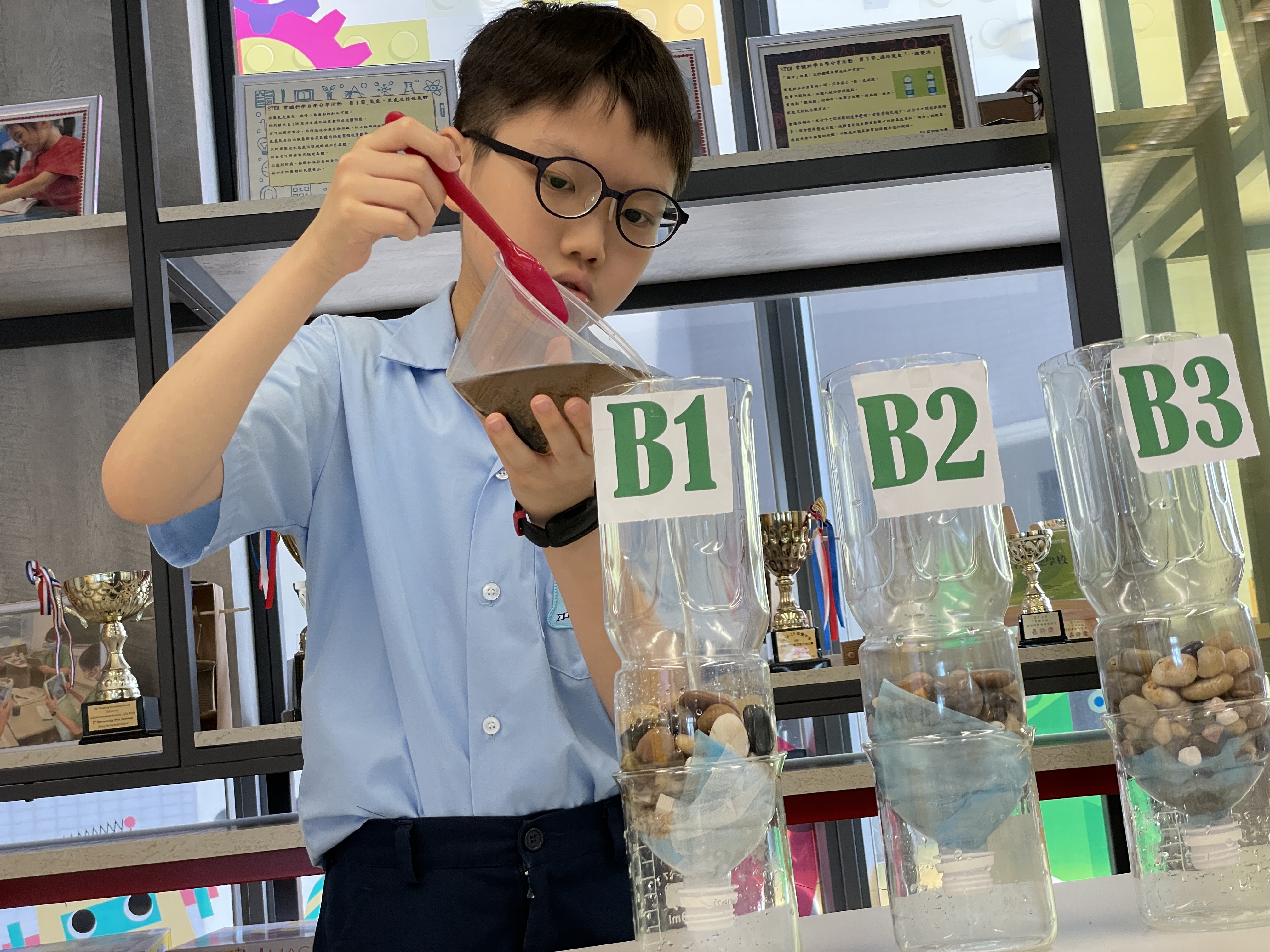
| Learning & Teaching Strategies | : | To enhance students' motivation and learning performance through STEAM education, cross-curricular learning, reading across curriculum and coding education. Daily teaching and rich learning environment including English and Putonghua (reading, speaking, listening aspects) helps enhance students' billiterate and trillingual abilities. "Bring Your Own Device Scheme" (BYOD) is implemented from P.4 to P.6 to enhance students' participation and learning effectiveness by using iPads as learning tools. |
| Development of Major Renewed Emphases of the Primary Education Curriculum | : | The school is keen on developing the school-based curriculum according to the centralized curriculum in order to facilitate students' learning by achieving the 7 renewed emphases such as strengthening values education (including life education, national education and national security education); making good use of learning time and creating space to promote a balanced physical and mental development; enriching life-wide learning experiences and promoting whole-person development; better catering for learner diversity; reinforcing, STEAM education, and nurturing students’ media and information literacy; strengthening cross-curricular learning and reading across the curriculum for developing lifelong learning capabilities; and enhancing assessment literacy for promoting learning and teaching effectiveness. |
| Development of Generic Skills | : | Enhance generic skills especially cooperative, communicative, creative, critical thinking and problem-solving skills being taught through different activities. |
| Cultivation of Proper Values, Attitudes and Behaviours | : | 1. Promote positive values and attitudes through both formal and informal curricula. The former one includes those curricula of Religious Studies and General Studies. The later one includes activities held by Moral and Civic Education group and moral messages through weekly assemblies. 2. Integrate moral education, especially core values of Catholic education, into different key learning areas. |
| Student Support | ||
| Whole School Approach to Catering for Learner Diversity | : | Other than the Pre-primary One and Pre-secondary One bridging courses, the school-based support is carried out in a whole-school approach. |
| Whole School Approach to Integrated Education | : | Establishment of student support team enables the implementation of different policies catering for students' learning diversity. The school helps students with teaching adaptation and assessment accommodation and makes use of different resources to provide students with learning groups or training teams according to their learning needs. |
| Education Support for Non-Chinese Speaking(NCS) Students | : | Our school provides additional support for NCS students to facilitate their learning of Chinese: appointing additional teacher(s)/teaching assistant(s) to support NCS students' learning of Chinese; arranging intensive Chinese learning and teaching mode(s), e.g. pull-out learning if necessary, split-class/group learning, etc; and organising activities to create an inclusive learning environment in the school. |
| Curriculum Tailoring and Adaptation | : | School-based teaching packages for English grammars, Pinyin and Maths curriculum are adopted to cater for students' learning needs. Gifted learning elements are infused into curriculum. Gifted groups and small classes are for more-able and less-able students respectively. After-school classes are for less-able students. |
| Home-school Co-operation and School Ethos | ||
| Home-School Co-operation | : | Parent-Teacher Association aims at facilitating the collaboration and co-operation between the school and parents. "Meng Tak Power", a parent-volunteer team, helps with school's daily routine and activities for students and their parents. |
| School Ethos | : | 1. Love and caring learning environment; Harmonic relationship between students and teachers; Students performing well academically and behaviorally 2. Appropriate students' bridging programmes and parents' meetings to facilitate those potential Primary-One and Secondary-One students to cope with their new learning environment. 3. Various types of activities organized to fit with students' all-round education. |
| Future Development | ||
| School Development Plan | : | 1. Optimize value education, cultivate students' positive values and demonstrate the typical traits of Meng Tak students. 2. Enhance students' learning abilities and integrated literacy to provide room for their all-round development. |
| Teacher Professional Training & Development | : | 1. Our school adopts specialized teaching in Religious Education, Chinese, English and Mathematics. 2. All language teachers comply with school-based language policy to enhance pupils' language abilities. 3. All teachers keep equipping themselves to enhance quality teaching and cope with the new trends in education such as the development of value education, STEAM education and arts education. |
| Others | : | Nurturing students according to the virtues derived from the school's acronym: Modest, Trustworthy, Conscientious and Sympathetic (MTCS). |
 School Map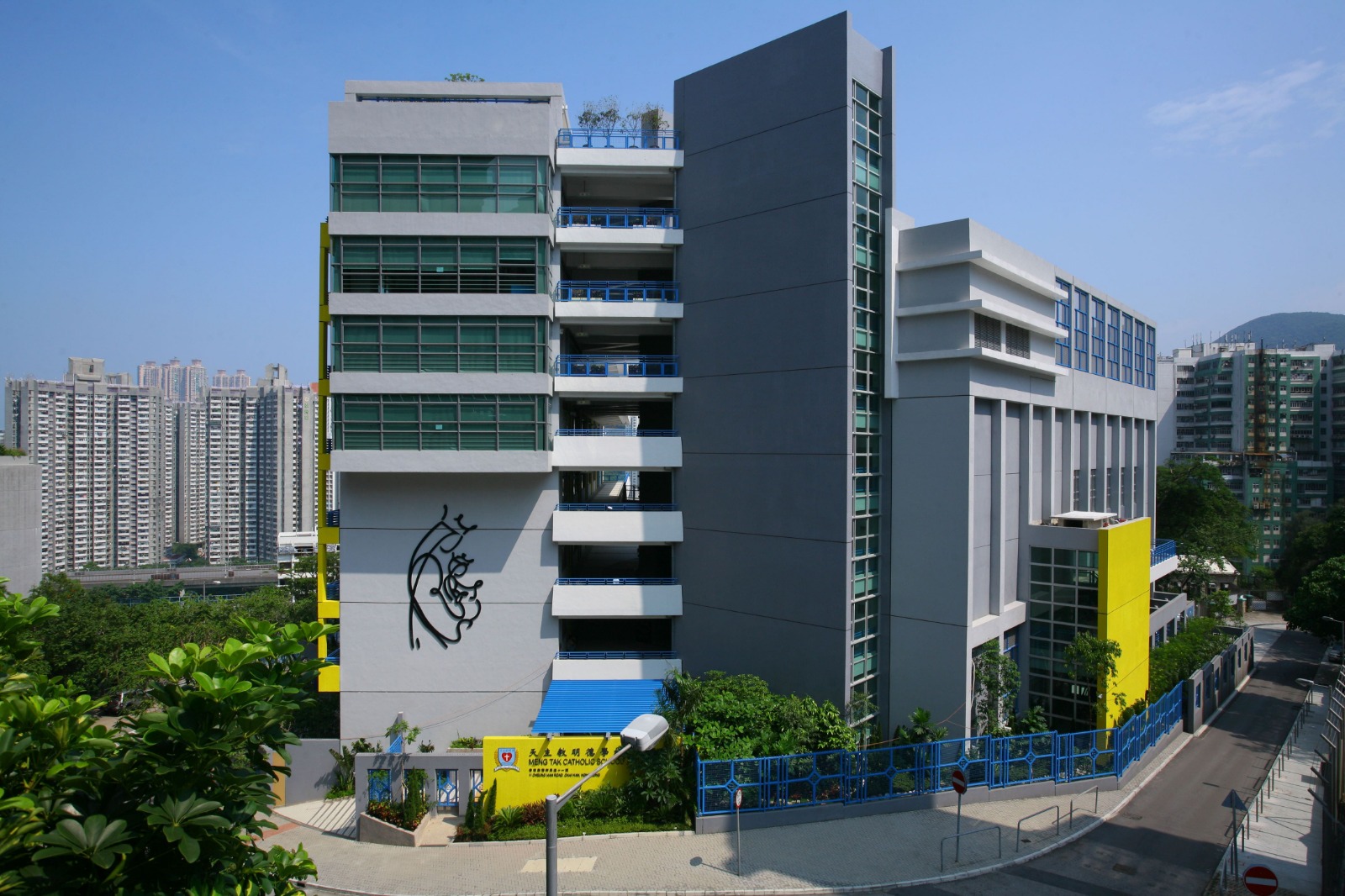
Last revision date:01 September 2025


