 Primary School Profiles 2025

 Primary School Profiles 2025

| Address: | 11 Muk Hung Street, Kowloon City, Kowloon | |||
| Phone: | 23262627 | Email: | plkshsn@plkhsn.edu.hk | |
| Fax: | 23283261 | Website: | http://www.plkhsn.edu.hk | |
 School Information
 | Supervisor/ Chairman of Management Committee | : | Ms. Lai Wai Lin |
| School Head | : | Ms. Chan Tsz Ha |
| Incorporated Management Committee been established? | : | Established |
| Percentage of School Supervisor and Managers / Chairperson and Members of School Management Committee (SMC) of Government Schools Fulfilling the Training Targets | : | 86% |
| School Type | : | Aided Whole Day |
| Student Gender | : | Co-ed |
| Sponsoring Body | : | Po Leung Kuk |
| Religion | : | Not Applicable |
| Year of Commencement of Operation | : | 1971 |
| School Motto | : | Love, Respect, Diligent, Integrity |
| Area Occupied by the School | : | About 6000 Sq. M |
| Through-train Secondary School | : | - |
| Feeder Secondary School | : | - |
| Nominated Secondary School | : | Po Leung Kuk No.1 W. H. Cheung College |
| Medium of Instruction | : | Chinese(incl.: Putonghua) and English |
| School Bus Service | : | School Bus |
| Parent-Teacher Association | : | Yes |
| Past Students' Association/Alumni Association | : | Yes |
| 4Rs Mental Health Charter | : | Yes |
| Whole School Health Programme | : | Action School |
 2025/2026 Annual School Charges
| School Fee | : | - |
| Tong Fai | : | - |
| PTA Fee | : | $30 |
| Approved Charges for non-standard items | : | $450 |
| Other Charges | : | - |
 School Facilities
 | Number of Classroom(s) | : | 30 |
| Number of School Hall(s) | : | 1 |
| Number of Playground(s) | : | 2 |
| Number of Library(ies) | : | 1 |
| Special Rooms | : | Computer Rooms, Guidance Activity Room, Innovative STEM Lab, Language Room, Student Activity Center, Multi-purpose Room, Conference Room, Reading Room, Guest Room, Music Rooms, Art Room, Campus TV Studio, etc. |
| Facility(ies) for Supporting Students with Special Educational Needs | : | Accessible lift, Accessible toilet and Tactile guide path plan. |
| Others | : | Standard Basketball Count, Standard Badminton Court, Green Landscape. |
 Teaching Staff Information (Including School Head) in the 2024/2025 school year
 | Number of teaching posts in the approved establishment | : | 58 |
| Total number of teachers in the school | : | 59 |
| Qualifications and professional training (%) | ||
| Had Received Teacher Training | : | 98% |
| Bachelor Degree | : | 98% |
| Master/ Doctorate Degree or above | : | 55% |
| Special Education Training | : | 72% |
| Years of Experience (%) | ||
| 0 - 4 years | : | 3% |
| 5 - 9 years | : | 33% |
| 10 years or above | : | 64% |
 Class Structure
 | 2024/25 school year | ||
| P1 Number of classes | : | 5 |
| P2 Number of classes | : | 5 |
| P3 Number of classes | : | 5 |
| P4 Number of classes | : | 5 |
| P5 Number of classes | : | 5 |
| P6 Number of classes | : | 5 |
| Total | : | 30 |
| 2025/26 school year (Based on the number of classes approved by EDB in 2025) | ||
| P1 Number of classes | : | 5 |
| P2 Number of classes | : | 5 |
| P3 Number of classes | : | 5 |
| P4 Number of classes | : | 5 |
| P5 Number of classes | : | 5 |
| P6 Number of classes | : | 5 |
| Total | : | 30 |
| Mode of teaching at different levels | ||
| Class streaming is adopted in P.4. For catering learners' diversities and students with special needs, teaching assistants are provided for some classes from P.1-P.6 We also provide pre-class study guidance for the main subjects of P.6. | ||
| Remarks | ||
| - | ||
 Performance Assessment
 | Applicable to P1 only | ||
| Number of test(s) per year | : | 0 |
| Number of exam(s) per year | : | 2 |
| Replace tests and examinations with diversified assessments in the first term of P1 | : | Yes |
| Applicable to P2 to P6 only | ||
| Number of test(s) per year | : | 0 |
| Number of exam(s) per year | : | 3 |
| Applicable to P1 to P6 | ||
| Formulate appropriate school-based assessment and assignment policies, inform parents of related arrangements, and collect views from teachers, students and parents regularly (at least once per school year) for ongoing review and optimisation of the school assessment and assignment policies | : | Yes |
| Upload the school-based assessment policy onto the school webpage for information of the public and stakeholders | : | Yes |
| Upload the school-based assignment policy onto the school webpage for information of the public and stakeholders | : | Yes |
| Diversified Assessment for Learning | : | Other than formative and summative assessment, project learning and diversified assessment formats are used to assess students' multi-intelligence. Additionally, a mock examination will be conducted for P.1 at the end of the first semester. |
| Avoid arranging tests or examinations immediately after long holidays in order to let students take more rest during the holidays | : | Yes |
| Arrange the timetable flexibly according to the school context, with a tutorial session provided in the afternoon as far as possible for students to finish some of their homework under teachers’ guidance | : | Yes |
| Streaming arrangement | : | In Primary 1, Chinese is taught in Cantonese. In Primary 2 to 6, Chinese is taught in either Putonghua or Cantonese. The streaming arrangement starts from Primary 4 according to students' academic performance. |
 School Life
 | Number of school days per week | : | 5 |
| Number of periods per day | : | 9 |
| Duration of each normal period | : | 35 |
| School starts at | : | 8:15 AM |
| School ends at | : | 3:30 PM |
| Lunch break | : | 12:40 - 1:45 |
| Lunch arrangement | : | Provided by designated supplier, arranged by parents and brought by students. |
| Healthy school life | : | We have joined "Joyful Fruit Month", "Bright Smiles Campus", "Po Leung Kuk Positive Education Schools" programme and "4Rs Mental Health Charter". |
| Remarks | : | Students have their lunch at school. They can enjoy programmes produced by the campus TV as well as music. During lunch recess, students participate in different activities such as Reading, Storytelling, Movie Show, National Education activities, STEAM in school (SIS) activities, Music activities and Sports, etc. |
 Life-wide Learning
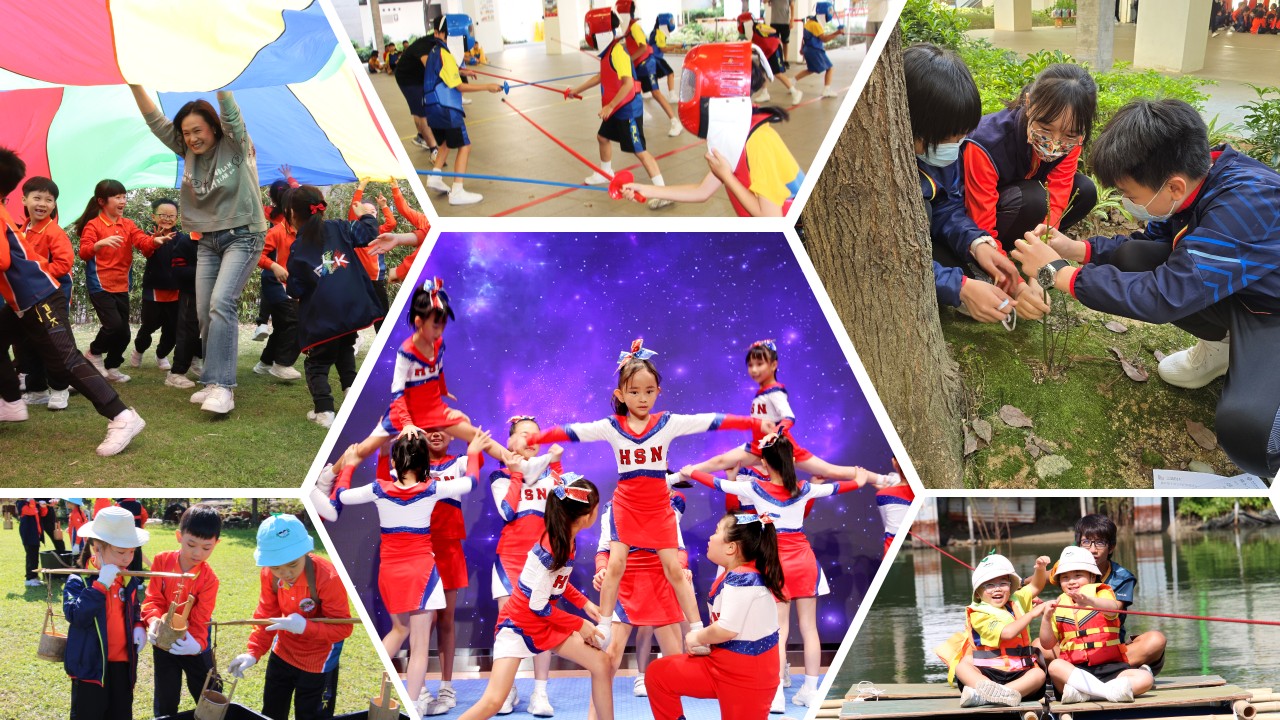
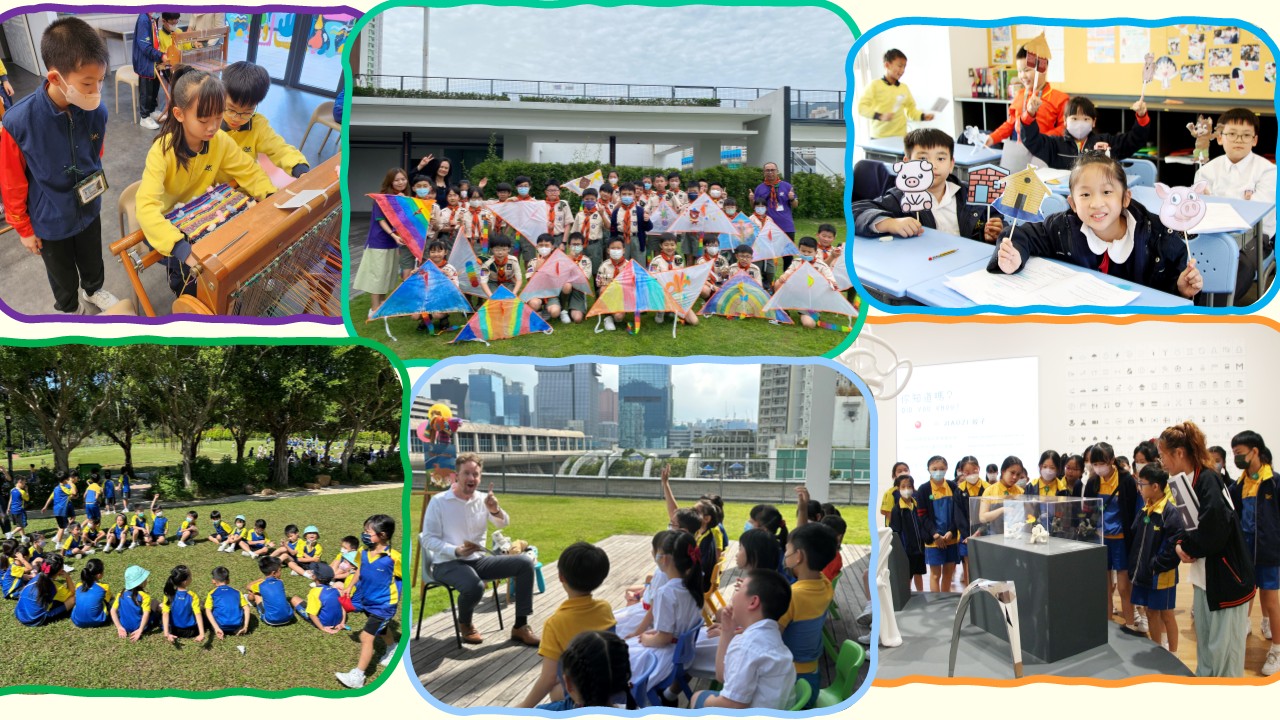
 | Mandarin Crosstalk, Orchestra, Percussion Band, Handbells, Choir, Folk Song Group, Chinese Flute, English Drama, English Puppetry, English Cantonese Opera, Hip Hop, Chinese Dancing, Unicycle, Swimming, Athletics, various Ball Games, Fencing, Scouts, Red Cross, Junior Police Call, CYC, Chinese Martial Art, Dragon dance, Cheerleading, Debate Team, Art, Coding, Drone, etc. |
 School Mission
 | Our school emphasizes on educating the young, nurturing their morality and helping them to achieve "Cognitive, Aesthetic, Social, Physical and Moral development". Our students are therefore encouraged to engage in community service which fosters their values towards their national identities as well as having open and growth mindsets. |
 School Characteristics
 | School Management | ||
| School Management Organisation | : | Incorporated management committee → Principal → Executive Team for carrying out school policy and curriculum reforms. |
| Incorporated Management Committee / School Management Committee/ Management Committee | : | An Incorporated Management Committee was set up to lead and to manage the school. |
| School Green Policy | : | The aim of our environmental education is to raise students' awareness of protecting the environment. With the support of organisations such as the Environmental Campaign Committee, Environmental Protection Department, Hong Kong Productivity Council and Vocational Training Council, our school has implemented various programmes that help to increase students' awareness. We also believe that engaging stakeholders will enhance students' learning experiences and the impact of environmental education in our school. We engage parents as volunteers in "Little Gardener" extracurricular activity. |
| School's Major Concerns | : | To optimize school-based assessment policies To create a healthy campus environment To cultivate proper values and attitudes |
| Learning and Teaching Plan | ||
| Learning & Teaching Strategies | : | We propose diversity learning. Other than systematically put multi-intelligence as part of our curriculum, we also engage students in various activities during ECA, project learning and theme-based learning. |
| Development of Major Renewed Emphases of the Primary Education Curriculum | : | Values education (including life education, national education and national security education) is integrated into the curriculum to develop student' positive attitude and national identity. Students participate in a variety of learning activities such as sports, arts, language, and innovative technology. STEAM education is also reinforced through school-based project learning and extra-curricular activities. |
| Development of Generic Skills | : | Through the use of e-learning platforms such as Google Classroom and Padlet, we cultivate students' abilities in self-directed learning and use of information technology. Through hands-on classroom activities, we cultivate students' generic skills, such as collaboration, creativity, critical thinking, problem solving and communication. |
| Cultivation of Proper Values, Attitudes and Behaviours | : | Our school focuses on cultivating the 12 core values set by the Education Bureau. Through various programs, curriculum design, moral education classes, and disciplinary activities, we strive to nurture proper character and ethical values in students. Our curriculum also incorporates national education elements to foster students' national identity. This enables them to contribute and fulfill responsibilities towards their families, communities, the nation, and the world. |
| Student Support | ||
| Whole School Approach to Catering for Learner Diversity | : | Promote all teachers to adopt a 3-tier intervention Model to take care of students with different learning styles. Adhering to the five basic principles of "early identification", "early support", "whole-school participation", "home-school cooperation" and "cross-sector collaboration", we coordinate with each other in culture, policies and measures, so students can gradually become independent, adaptable and self-taught. Teachers are regularly trained with professional knowledge. Talks and seminars are regularly conducted for parents. |
| Whole School Approach to Integrated Education | : | Our Students Support Team, which is comprised of the Special Educational Needs Coordinator, Special Educational Needs Support Teacher, Curriculum Development Leader, Guidance Leader, School-based Speech Therapist, School-based Educational Psychologist, School-based Social Worker Team and Teaching Assistants, makes use of the Learning Support Grant, School-based Speech Therapy Service and Grant for Supporting Non-Chinese Speaking Students with Special Educational Needs to implement the Whole School Approach to Integrated Education. |
| Education Support for Non-Chinese Speaking(NCS) Students | : | Our school provides additional support for NCS students to facilitate their learning of Chinese: appointing additional teacher(s)/teaching assistant(s) to support NCS students' learning of Chinese; organising activities to create an inclusive learning environment in the school; and hiring additional manpower and/or translation/interpretation services to facilitate the communication with parents of NCS students. Providing support programmes in learning Chinese during Tutorial Period. |
| Curriculum Tailoring and Adaptation | : | Through policy to cater for individual learning needs: P.1 Adaptation Course, Preparation for Secondary School Course, School-based Gifted Learners Project |
| Home-school Co-operation and School Ethos | ||
| Home-School Co-operation | : | Parents Teacher Association provides activities and workshops for our parents and students. It enhances parents' spiritual health as well as home-school communication. |
| School Ethos | : | Through diverse moral education activities, our school nurtures students' positive values and attitudes. Furthermore, we adopt a multifaceted approach to foster a positive and healthy campus atmosphere, enabling students to achieve holistic well-being and growth. |
| Future Development | ||
| School Development Plan | : | 1. To carry on having 2 classes in each level to use Putonghua as a medium of instruction when teaching Chinese Language in P.2-P.6. 2. To implement co-operative Learning Approach. 3. To promote STEAM education. 4. To promote experiential learning courses for P.1-P.6. 5. General Studies will be split into Primary Humanities and Primary Science in P.1 and 4 from 2025-26, P.2 and 5 from 2026-27, and will be fully implemented in all six grades in the 2027-28 school year. |
| Teacher Professional Training & Development | : | All English and Putonghua teachers have reached professional standards. 28% of our teachers have been awarded The Award of Po Leung Luk Contribution. 15% of our teachers got the Chief Executive's Award for Teaching Excellence. 15% of our teachers got the awards from different aspects. |
| Others | : | 1. Mainland sister school scheme (Shenzhen, Shanghai, Wuhan, Zhengzhou, Kunming, Zhuhai, Guangzhou, Heyuan), "Mainland Exchange Programme for Junior Secondary and Upper Primary Students" of EDB, overseas study tours. 2. A number of scholarships are provided to encourage students striving for the best. |
 School Map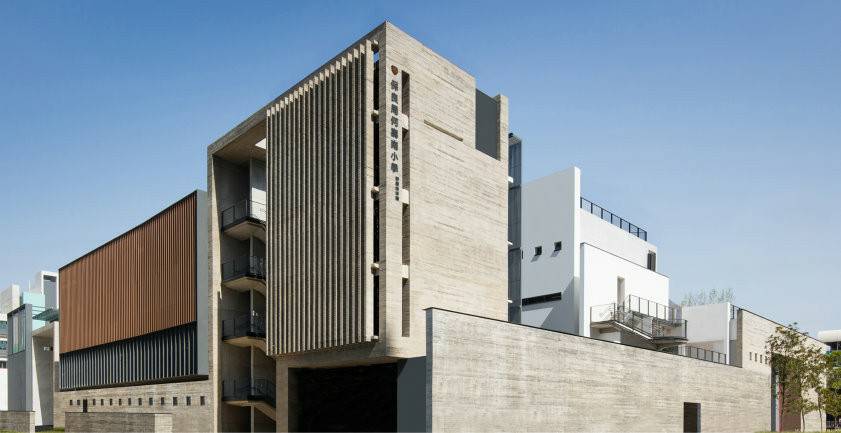
Last revision date:03 September 2025


