 Primary School Profiles 2025

 Primary School Profiles 2025

| Address: | 11 Tin Wing Road, Tin Shui Wai, Yuen Long, N.T. | |||
| Phone: | 24481011 | Email: | lskps@hkfyg.org.hk | |
| Fax: | 24481823 | Website: | http://www.lskps.edu.hk | |
 School Information
 | Supervisor/ Chairman of Management Committee | : | Ms. Lui Wai Lin |
| School Head | : | Dr. Tse Wai Lok |
| Incorporated Management Committee been established? | : | Established |
| Percentage of School Supervisor and Managers / Chairperson and Members of School Management Committee (SMC) of Government Schools Fulfilling the Training Targets | : | 86% |
| School Type | : | Aided Whole Day |
| Student Gender | : | Co-ed |
| Sponsoring Body | : | The Hong Kong Federation of Youth Groups |
| Religion | : | Not Applicable |
| Year of Commencement of Operation | : | 2000 |
| School Motto | : | Courtesy, Participation, Creativity, Love and Care |
| Area Occupied by the School | : | About 7000 Sq. M |
| Through-train Secondary School | : | - |
| Feeder Secondary School | : | - |
| Nominated Secondary School | : | - |
| Medium of Instruction | : | Chinese(incl.: Putonghua) and English |
| School Bus Service | : | Nanny van |
| Parent-Teacher Association | : | Yes |
| Past Students' Association/Alumni Association | : | Yes |
| 4Rs Mental Health Charter | : | Yes |
| Whole School Health Programme | : | Pledged School |
 2025/2026 Annual School Charges
| School Fee | : | - |
| Tong Fai | : | - |
| PTA Fee | : | $20 |
| Approved Charges for non-standard items | : | $310 equipment maintenance fee |
| Other Charges | : | - |
 School Facilities
 | Number of Classroom(s) | : | 30 |
| Number of School Hall(s) | : | 1 |
| Number of Playground(s) | : | 2 |
| Number of Library(ies) | : | 1 |
| Special Rooms | : | LEAD LAB I & II, Maker Room, Library, Reading Wonderland, General Studies Room, Music Room, Visual Arts Room, LSK STUDIO, etc. |
| Facility(ies) for Supporting Students with Special Educational Needs | : | Accessible lift, Accessible toilet, Tactile guide path and Accessible public information / service counter. |
| Others | : | All classrooms and special function rooms are equipped with air conditioners, smart TV and visualizers. |
 Teaching Staff Information (Including School Head) in the 2024/2025 school year
 | Number of teaching posts in the approved establishment | : | 56 |
| Total number of teachers in the school | : | 63 |
| Qualifications and professional training (%) | ||
| Had Received Teacher Training | : | 94% |
| Bachelor Degree | : | 98% |
| Master/ Doctorate Degree or above | : | 42% |
| Special Education Training | : | 64% |
| Years of Experience (%) | ||
| 0 - 4 years | : | 37% |
| 5 - 9 years | : | 32% |
| 10 years or above | : | 31% |
 Class Structure
 | 2024/25 school year | ||
| P1 Number of classes | : | 5 |
| P2 Number of classes | : | 5 |
| P3 Number of classes | : | 5 |
| P4 Number of classes | : | 5 |
| P5 Number of classes | : | 5 |
| P6 Number of classes | : | 5 |
| Total | : | 30 |
| 2025/26 school year (Based on the number of classes approved by EDB in 2025) | ||
| P1 Number of classes | : | 5 |
| P2 Number of classes | : | 5 |
| P3 Number of classes | : | 5 |
| P4 Number of classes | : | 5 |
| P5 Number of classes | : | 5 |
| P6 Number of classes | : | 5 |
| Total | : | 30 |
| Mode of teaching at different levels | ||
| Putonghua as the medium of instruction is implemented in some Chinese classes. Small-class teaching and Cooperative Learning are adopted to cater for learner diversity. | ||
| Remarks | ||
| Enrichment programmes and remedial courses are provided for gifted learners and students with special educational needs respectively. | ||
 Performance Assessment
 | Applicable to P1 only | ||
| Number of test(s) per year | : | 0 |
| Number of exam(s) per year | : | 0 |
| Replace tests and examinations with diversified assessments in the first term of P1 | : | Yes |
| Applicable to P2 to P6 only | ||
| Number of test(s) per year | : | 0 |
| Number of exam(s) per year | : | 2 |
| Applicable to P1 to P6 | ||
| Formulate appropriate school-based assessment and assignment policies, inform parents of related arrangements, and collect views from teachers, students and parents regularly (at least once per school year) for ongoing review and optimisation of the school assessment and assignment policies | : | Yes |
| Upload the school-based assessment policy onto the school webpage for information of the public and stakeholders | : | Yes |
| Upload the school-based assignment policy onto the school webpage for information of the public and stakeholders | : | Yes |
| Diversified Assessment for Learning | : | A variety of formative assessments, which are conducted by means of classroom activities, classwork, quizzes, presentations, academic / non-academic award schemes etc, are important means to reveal students’ performances. There are no exams or tests for P.1 and P.2 students, whereas P.3 to P.6 have two exams every year. |
| Avoid arranging tests or examinations immediately after long holidays in order to let students take more rest during the holidays | : | Yes |
| Arrange the timetable flexibly according to the school context, with a tutorial session provided in the afternoon as far as possible for students to finish some of their homework under teachers’ guidance | : | No |
| Streaming arrangement | : | Mixed-ability grouping is adopted for most of the subjects. However, a few subjects' lessons are conducted according to students' abilities. |
 School Life
 | Number of school days per week | : | 5 |
| Number of periods per day | : | 9 |
| Duration of each normal period | : | 30 |
| School starts at | : | 7:55 AM |
| School ends at | : | 3:05 PM |
| Lunch break | : | 12:15 - 1:25 |
| Lunch arrangement | : | Provided by designated supplier and arranged by parents. |
| Healthy school life | : | Implementing physical fitness plan and arranging daily physical exercise time. |
| Remarks | : | Morning assembly, reading aloud, reading, physical exercise, class building and life education are incorporated. Curriculum focuses on cultivating students' interest in learning languages, establishing solid language foundation, STEAM education and developing creativity. |
 Life-wide Learning
 | English Musical, English musical team "Little Angels", "Learning through Engineering, Drama, Art and Design" (LEAD), Robot design and computer coding, drama, painting, ball games such as handball & basketball, Chinese dance, Jazz dance, gymnastics, African drum, tone chime, choir, percussion course, rope skipping, etc. multiple intelligent activities, talent programmes, and 3-year specialized training for P.4 to P.6. |
 School Mission
 | To foster the culture of courtesy, participation, creativity, love and care at school. To integrate IT in teaching and learning. To provide opportunity for students to pursue their ideals, to grow healthily and become responsible citizens and effective leaders in the fast growing society. |
 School Characteristics
 | School Management | ||
| School Management Organisation | : | Under the IMC, the principal leads 4 administrative groups (school administration, curriculum development, student affairs and community and school environment) to facilitate school administration and development. |
| Incorporated Management Committee / School Management Committee/ Management Committee | : | School managers include university professors, experienced social workers and educators, professionals, the principal, teacher and parent representatives. |
| School Green Policy | : | The environmental education department implements green campus policy and exploit school environment for student learning. |
| School's Major Concerns | : | To provide free quality education, promote an enjoyable and effective learning atmosphere. To focus on developing students' language development and creativity. To focus on life education and STEAM education. To cultivate students' multiple intelligence and to educate them to be responsible self-directed learners. |
| Learning and Teaching Plan | ||
| Learning & Teaching Strategies | : | Cooperation with universities, emphasis on students' foundation, understanding and application. Activity approach and Cooperative Learning strategies are used. Promote life-wide learning through project learning, visits, services, competitions and performances. Using iPad, E-learning platform and multi-media materials to support students to learn, in particular to enhance students' language ability and creativity. Gifted education training and individualized education plans (IEP) are arranged for needed students. To develop students' multiple intelligence systematically, including extra-curricular activities, talent programmes and multiple intelligence training. |
| Development of Major Renewed Emphases of the Primary Education Curriculum | : | Making good use of learning time and creating space to promote a balanced physical and mental development; enriching life-wide learning experiences and promoting whole-person development; better catering for learner diversity; reinforcing, STEAM education, and nurturing students' media and information literacy; strengthening cross-curricular learning and reading across the curriculum for developing lifelong learning capabilities; and enhancing assessment literacy for promoting learning and teaching effectiveness. |
| Development of Generic Skills | : | Nurture students' 9 generic skills, focusing on communication, creativity and critical thinking through classes, multiple intelligence and specialized training and extra-curricular activities. |
| Cultivation of Proper Values, Attitudes and Behaviours | : | By implementing the school-based life education curriculum, students' development of moral values, civic awareness, attitudes and personality are facilitated aiming to raise students' initiative to care and respect for others. |
| Student Support | ||
| Whole School Approach to Catering for Learner Diversity | : | Using strategies such as cooperative learning strategies to cater for learner diversity, provides talent programmes and remedial classes for needed students, and referral of special cases for further professional services. |
| Whole School Approach to Integrated Education | : | Our school adopts the "three-tier support" model for the care of students, with the entire school participating. We design diverse teaching activities to cater for different learning needs, arrange homework and exam adjustments, and group training for students with special education needs. We also develop Individual Education Plans for individual students. Our school has SENCO coordinating relevant integration measures. We also have school-based educational psychologist and school-based speech therapist who conduct related assessments and provide support for students. |
| Education Support for Non-Chinese Speaking(NCS) Students | : | Our school provides additional support for NCS students to facilitate their learning of Chinese: providing after-school support programmes in learning Chinese; appointing additional teacher(s)/teaching assistant(s) to support NCS students' learning of Chinese; arranging intensive Chinese learning and teaching mode(s), e.g. pull-out learning if necessary, split-class/group learning, etc; and organising activities to create an inclusive learning environment in the school. Provides extra school-based learning materials and training activities for the non-Chinese speaking (NCS) students. |
| Curriculum Tailoring and Adaptation | : | There is an adaptation policy for curriculum and assessment. |
| Home-school Co-operation and School Ethos | ||
| Home-School Co-operation | : | Parent-Teacher Association, "Parent-School", Reading Mums and Dads and parent volunteers team are the means to promote home-school cooperation and strengthen communication with parents. |
| School Ethos | : | To cultivate the school cultures of Politeness, Participation, Creativity and Love and Care. Courses, systems and policies are student-centred. Emphasis on holistic development, to establish an open, positive, caring and trustworthy environment. Awarded "Caring and Loving Campus" in recent years consecutively. |
| Future Development | ||
| School Development Plan | : | To explore students' potentials, to enhance students' learning effectiveness, to nurture healthy growth of students, to develop a positive attitude towards life, to develop comprehensive school-based English curriculum. To deepen the integration of reading and writing and to use Putonghua in teaching Chinese Language. To help improving students' learning and creativity through Cooperative Learning, E-learning, etc. To pursue whole person development through multiple intelligence courses, specialised trainings and talent programmes. Interactive learning zones, which have been established like LEAD LAB 2, strengthen students' self-directed learning and integrate the fun elements in learning. |
| Teacher Professional Training & Development | : | Encourage teachers to take part in seminars and training workshops. Cooperate with tertiary institutes and EDB to enhance teachers' teaching skills by carrying out action research. Teachers learn via their own professional development plans. |
| Others | : | Over 30 key measures to support students' learning and development and HSBC Volunteer English Teaching Programme including more than 20 native English speaking volunteers to train students' oral English. |
 School Map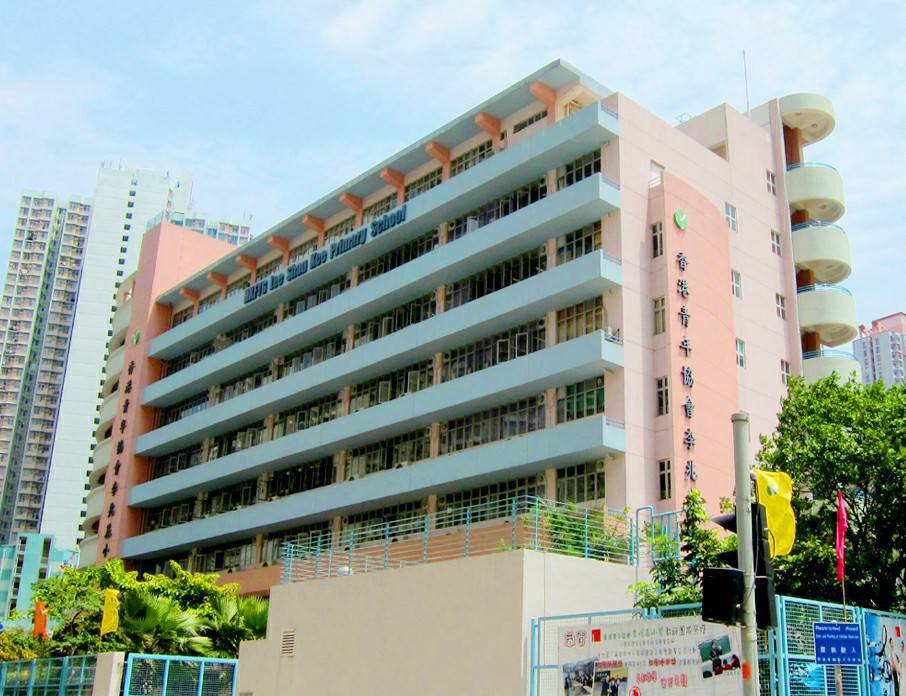

Last revision date:01 September 2025


