 Primary School Profiles 2026

 Primary School Profiles 2026
| Address: | 3 Oi King Street Hung Hom Bay, Kln | |||
| Phone: | 23638989 | Email: | mail@mtchhb.edu.hk | |
| Fax: | 27731919 | Website: | http://www.mtchhb.edu.hk | |
 School Information
 | Supervisor/ Chairman of Management Committee | : | Mr. Mr Lam Yu Hang |
| School Head | : | Ms. Ng Yim Ting Alice |
| Incorporated Management Committee been established? | : | Not Applicable |
| Percentage of School Supervisor and Managers / Chairperson and Members of School Management Committee (SMC) of Government Schools Fulfilling the Training Targets | : | 100% |
| School Type | : | Gov't Whole Day |
| Student Gender | : | Co-ed |
| Sponsoring Body | : | Government |
| Religion | : | Not Applicable |
| Year of Commencement of Operation | : | 1962 |
| School Motto | : | Happiness, Kindness, Sincerity and Faith |
| Area Occupied by the School | : | About 6400 Sq. M |
| Through-train Secondary School | : | - |
| Feeder Secondary School | : | - |
| Nominated Secondary School | : | Queen Elizabeth School, Homantin Government Secondary School, Jockey Club Government Secondary School |
| Medium of Instruction | : | Chinese |
| School Bus Service | : | School Bus |
| Parent-Teacher Association | : | Yes |
| Past Students' Association/Alumni Association | : | Yes |
| 4Rs Mental Health Charter | : | Yes |
| Whole School Health Programme | : | Action School |
 2026/2027 Annual School Charges
| School Fee | : | - |
| Tong Fai | : | - |
| PTA Fee | : | $50 |
| Approved Charges for non-standard items | : | School-based management fee $200 |
| Other Charges | : | Fees on visual arts $70 |
 School Facilities
 | Number of Classroom(s) | : | 30 |
| Number of School Hall(s) | : | 1 |
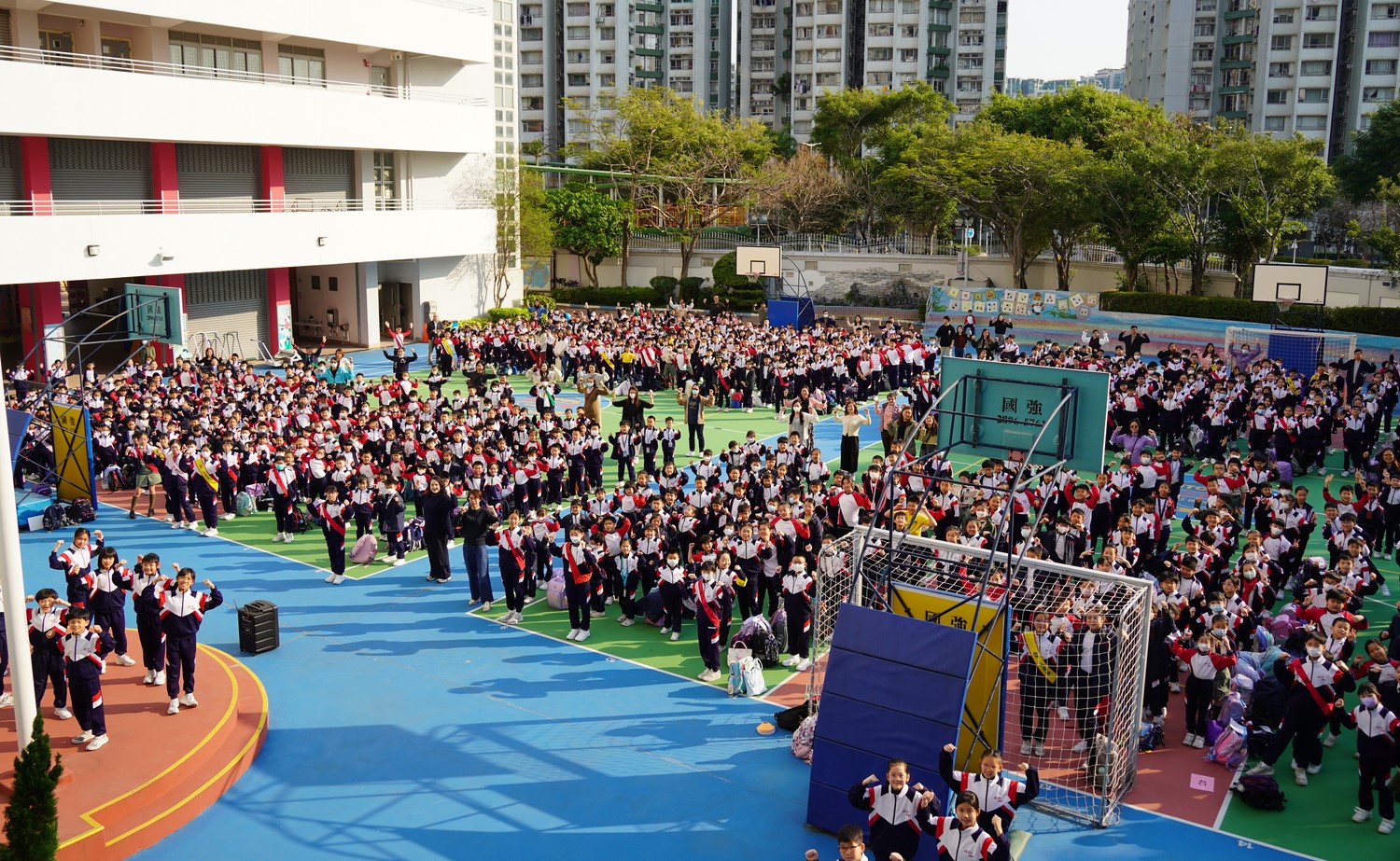
| Number of Playground(s) | : | 3 |
| Number of Library(ies) | : | 1 |
| Special Rooms | : | Medical Room, PTA Resource Room, Dancing Room, Campus TV Room, IT Rooms, English Room, STEAM Room, Music Room, Visual Arts Room. |
| Facility(ies) for Supporting Students with Special Educational Needs | : | Accessible lift and Accessible toilet. |
| Others | : | AI Sports Bar, Love Farm, School Library, Energetic Fish Pond, STEAM Corridor, School History Gallery, Art Gallery, etc. |
 Teaching Staff Information (Including School Head) in the 2025/2026 school year
 | Number of teaching posts in the approved establishment | : | 53 |
| Total number of teachers in the school | : | 54 |
| Qualifications and professional training (%) | ||
| Had Received Teacher Training | : | 100% |
| Bachelor Degree | : | 98% |
| Master/ Doctorate Degree or above | : | 30% |
| Special Education Training | : | 54% |
| Years of Experience (%) | ||
| 0 - 4 years | : | 5% |
| 5 - 9 years | : | 7% |
| 10 years or above | : | 88% |
 Class Structure
 | 2025/26 school year | ||
| P1 Number of classes | : | 5 |
| P2 Number of classes | : | 5 |
| P3 Number of classes | : | 5 |
| P4 Number of classes | : | 5 |
| P5 Number of classes | : | 5 |
| P6 Number of classes | : | 5 |
| Total | : | 30 |
| 2026/27 school year (Based on the number of classes approved by EDB in 2026) | ||
| P1 Number of classes | : | 5 |
| P2 Number of classes | : | 5 |
| P3 Number of classes | : | 5 |
| P4 Number of classes | : | 5 |
| P5 Number of classes | : | 5 |
| P6 Number of classes | : | 5 |
| Total | : | 30 |
| Mode of teaching at different levels | ||
| Small Class Teaching is carried out. Worksheets are designed and scheme of work is adjusted according to students' learning ability. Emphasis is put on encouragement and step by step teaching in the teaching programme. | ||
| Remarks | ||
| - | ||
 Performance Assessment
 | Applicable to P1 only | ||
| Number of test(s) per year | : | 0 |
| Number of exam(s) per year | : | 0 |
| Replace tests and examinations with diversified assessments in the first term of P1 | : | Yes |
| Applicable to P2 to P6 only | ||
| Number of test(s) per year | : | 0 |
| Number of exam(s) per year | : | 3 |
| Applicable to P1 to P6 | ||
| Formulate appropriate school-based assessment and assignment policies, inform parents of related arrangements, and collect views from teachers, students and parents regularly (at least once per school year) for ongoing review and optimisation of the school assessment and assignment policies | : | Yes |
| Upload the school-based assessment policy onto the school webpage for information of the public and stakeholders | : | Yes |
| Upload the school-based assignment policy onto the school webpage for information of the public and stakeholders | : | Yes |
| Diversified Assessment for Learning | : | To help P.1 students adapt to school life, no exams are scheduled for the whole year in P.1. Besides the summative assessment (i.e. Tests and Exams), a diversified processing assessment is adopted such as quiz, classroom observation, student presentation, discussion, project learning, STEAM Week, peer evaluation and parental evaluation. |
| Avoid arranging tests or examinations immediately after long holidays in order to let students take more rest during the holidays | : | Yes |
| Arrange the timetable flexibly according to the school context, with a tutorial session provided in the afternoon as far as possible for students to finish some of their homework under teachers’ guidance | : | No |
| Streaming arrangement | : | No streaming among P.1 to P.6. |
 School Life
 | Number of school days per week | : | 5 |
| Number of periods per day | : | 9 |
| Duration of each normal period | : | 35 |
| School starts at | : | 8:15 AM |
| School ends at | : | 3:10 PM |
| Lunch break | : | 12:25 - 1:25 |
| Lunch arrangement | : | Provided by designated supplier and arranged by parents. |
| Healthy school life | : | To promote a culture of mental health and a positive lifestyle, our school has introduced 'No Homework Day'. We also achieved a 'Healthy School' to encourage students to adopt healthy eating habits including eating more fruits. |
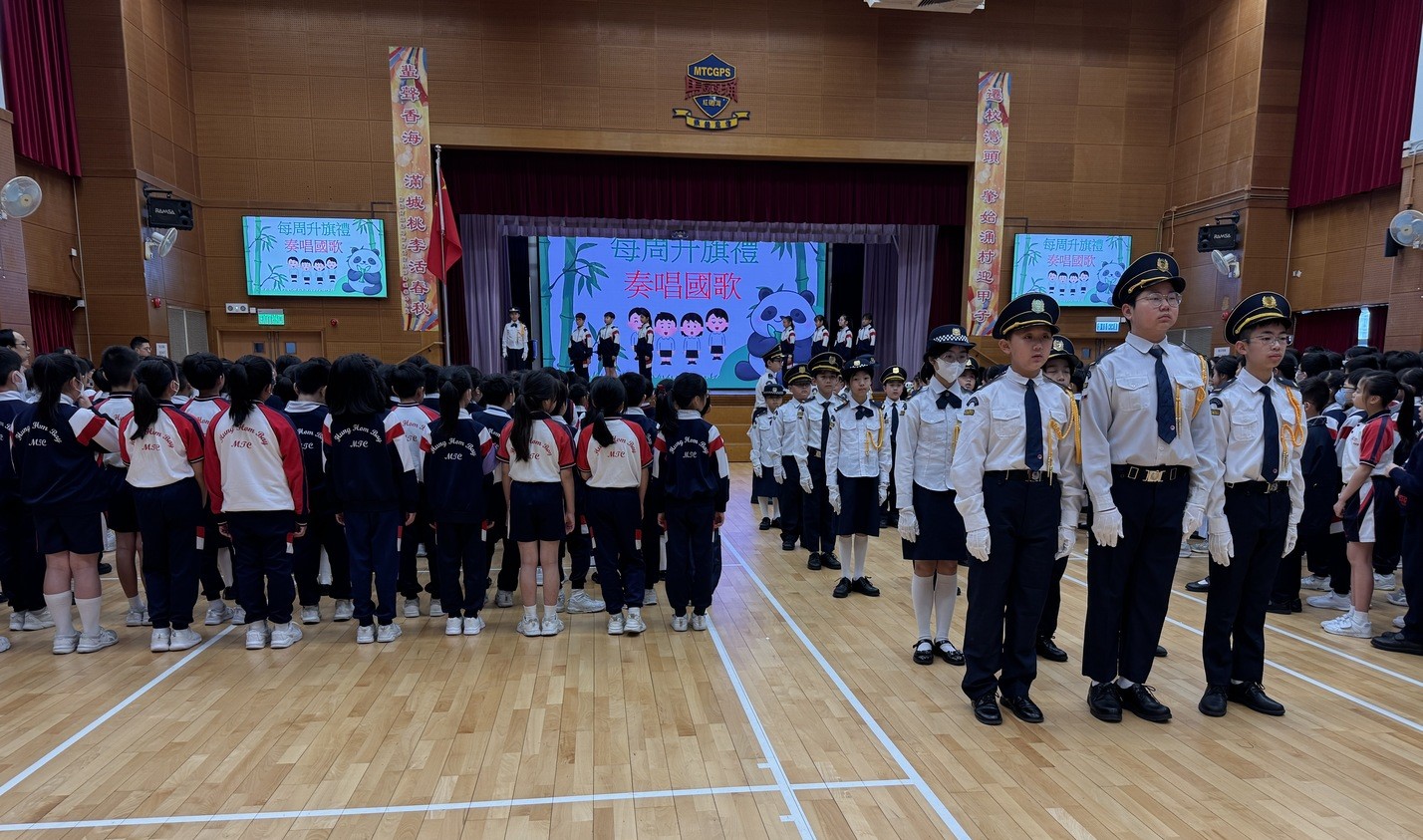
| Remarks | : | English, Putonghua, values education and environmental protection programmes are broadcast during lunchtime. Flag-raising ceremonies, speeches and national education are arranged on Tuesdays. Morning exercise and assembly are arranged on Fridays. Assemblies for values education and lessons for classroom management and civic education are always held on Wednesdays. Library lessons are also arranged. |
 Life-wide Learning
 | Aim at the development of multiple intelligences with equal focus on academics, technology, arts, sports, service and mental health. We provide a wide variety of extra-curricular activities: Chinese and English drama, STEAM activities, AI drawing, Chinese opera, Choir, Orchestra, dancing, track and field, ball games, martial arts, swimming, Maths Olympiad, debate team, verse speaking, service teams and voluntary teams. |
 School Mission
 | We create a well-catered learning environment and enable pupils to learn proactively. We always support pupils' moral, intellectual, aesthetic, social and physical development and encourage them to play a positive role in society and become good citizen. |
 School Characteristics
 | School Management | ||
| School Management Organisation | : | There is School Management Committee. The representatives of parents, alumni and professionals are invited. |
| Incorporated Management Committee / School Management Committee/ Management Committee | : | Chairman: Mr. LAM Yu-hang, Desmond Principal: Ms. NG Yim-ting, Alice Independent members: Dr. CHIU Shiu-siu tam, Dr LEUNG king-man Teacher members: Ms. CHAN Ka-man, Ms. HAU Yik-ling Parent members: Mr. LO Chin-fung, Ms YAU Kai-yi Alumni members: Mr. WAN Ka-wai |
| School Green Policy | : | Save energy and paper, collect recyclable items, make school green are also available. |
| School's Major Concerns | : | 1. Enhance school curriculum leadership and planning to promote diverse and holistic learning experiences for students. Promote digital education and focus on improving students' effectiveness in innovative learning. 2. Strengthen mental health education, build a healthy campus, and enhance students' sense of well-being. 3. Continuously and actively promote national security education, raise students' awareness of safeguarding national security, and establish patriotic values. |
| Learning and Teaching Plan | ||
| Learning & Teaching Strategies | : | Our lesson design emphasizes interaction and promotes cooperative learning, encouraging students to participate and share their learning outcomes actively. High-rank thinking skills are integrated into the lessons, focusing on developing students' abilities and cultivating their interest in learning, ultimately achieving the goal of self-directed learning. Learning activities are mainly conducted in groups with mixed abilities, and tiered assignments are designed to address individual differences among students. To help P.1 students adapt to school life, no exams are scheduled for the entire year. Instead, formative assessments are used to evaluate students' learning outcomes. We adopt diversified assessments to provide appropriate feedback to students. Additionally, students are taught strategies for learning how to learn, enhancing their overall learning effectiveness. |
| Development of Major Renewed Emphases of the Primary Education Curriculum | : | Seven major renewed emphases to enhance the whole-school curriculum, and develop distinctive school-based curriculum with reference to the central curriculum framework, in order to help students achieve the updated seven learning goals: 1. Strengthening values education (including life education, national education and national security education); 2. Making good use of learning time and creating space to promote a balanced physical and mental development; 3. Enriching life-wide learning experiences and promoting whole-person development; 4. Better catering for learner diversity; 5. Reinforcing STEAM education, and nurturing students' media and information literacy; 6. Strengthening cross-curricular learning and reading across the curriculum for developing lifelong learning capabilities; 7. Enhancing assessment literacy for promoting learning and teaching effectiveness. For details, please refer to the Primary Education Curriculum Guide (Pilot Version) (https://www.edb.gov.hk/pecg). |
| Development of Generic Skills | : | Students' nine generic skills are developed and cultivated through cross-curriculum co-ordination, project learning and STEAM activities. |
| Cultivation of Proper Values, Attitudes and Behaviours | : | Promote moral and civic education through formal curriculums; positive values and attitudes are instilled in students through non-formal courses, such as flag-raising ceremony, morning assemblies, weekly seminars, moral and civic lessons, afternoon broadcasts, thematic displays and seminars. |
| Student Support | ||
| Whole School Approach to Catering for Learner Diversity | : | Student Support Team sets up appropriate teaching and remedial strategies, to encourage teachers to join the related training. We identify the students with special educational needs and set up the individual education plan. We also offer suitable resources for advanced students. |
| Whole School Approach to Integrated Education | : | Our school implements the Whole School Approach (WSA) to integrated education (IE) based on five underlying principles, such as early identification and early intervention. With utilisation of the Learning Support Grant, we employ teaching assistants and provide outsourced professional support; teachers are arranged to attend relevant training courses to enhance the support for students with special educational needs (SEN) effectively. Our school provides the following services: School-based Educational Psychology Service, Enhanced School-based Speech Therapy Service, learning support groups, homework adaptation, social communication groups, and individual education plans. |
| Education Support for Non-Chinese Speaking(NCS) Students | : | Our school provides additional support for NCS students to facilitate their learning of Chinese: appointing additional teacher(s)/teaching assistant(s) to support NCS students' learning of Chinese; organising activities to create an inclusive learning environment in the school; and our school uses Putonghua to teach Chinese in all classes / groups at certain levels with extra support as appropriate, e.g. pull-out/small-group classes, learning and teaching resources with Pinyin, etc. Our school provides additional support for NCS students to facilitate their learning of Chinese: providing after-school support programmes in learning Chinese and after-school activities to consolidate what NCS students have learnt during the Chinese Language lessons. The activities include Chinese language skills training, peer collaboration, Chinese culture appreciation, etc. Teacher assistants will assist students during Chinese writing classes. |
| Curriculum Tailoring and Adaptation | : | To cater the needs of students, we provide enriched or tailored courses. We also have tutorial classes, and elite programmes These initiatives provide appropriate learning and ECA to enhance learning capabilities, and boost self-confidence. |
| Home-school Co-operation and School Ethos | ||
| Home-School Co-operation | : | To strengthen the communication between parents and children, our Parent-Teacher Association helps school organize different activities e.g. PTA picnic, Parent-Child activity class and graduation dinner. We also arrange other educational talks, parental interests classes and workshops. |
| School Ethos | : | Learn joyfully, live happily. Be friendly and communicative. Be loyal to our country, be responsible to our families. Keep our faith and promises. |
| Future Development | ||
| School Development Plan | : | 1. Enhance curriculum leadership and planning, promote digital education, and advance the development of STEM education. 2. Strengthen mental health education to enhance students' well-being and happiness. 3. Strengthen teachers' professional development and enhance the safeguarding of national security. |
| Teacher Professional Training & Development | : | School-based professional training and development are adopted. EDB colleagues and Professional Experts are also invited to provide in-service training. |
| Others | : | - |
 School Map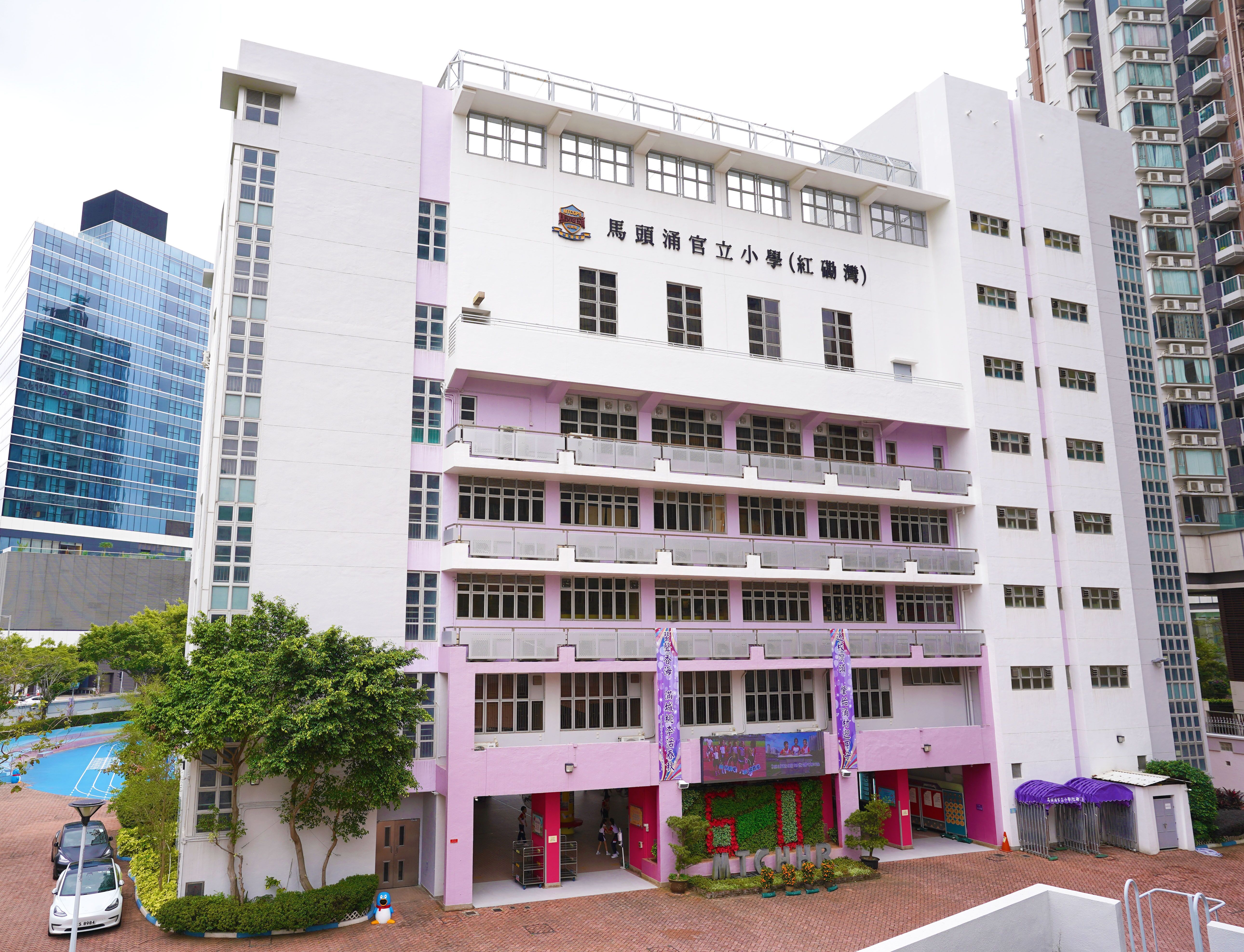
Last revision date:01 September 2026


