 Primary School Profiles 2026

 Primary School Profiles 2026

| Address: | 6 Tim Fuk Road, Kowloon Tong, Kowloon | |||
| Phone: | 23360991 | Email: | klntgps@edb.gov.hk | |
| Fax: | 23374673 | Website: | http://www.klntong.edu.hk | |
 School Information
 | Supervisor/ Chairman of Management Committee | : | Mr. Ngan Man Kit, Andrew |
| School Head | : | Mr. Chan Yuk Hing Michael |
| Incorporated Management Committee been established? | : | Not Applicable |
| Percentage of School Supervisor and Managers / Chairperson and Members of School Management Committee (SMC) of Government Schools Fulfilling the Training Targets | : | 100% |
| School Type | : | Gov't Whole Day |
| Student Gender | : | Co-ed |
| Sponsoring Body | : | Government |
| Religion | : | Not Applicable |
| Year of Commencement of Operation | : | 1956 |
| School Motto | : | Cultivating moral and intellectual attributes |
| Area Occupied by the School | : | About 4500 Sq. M |
| Through-train Secondary School | : | - |
| Feeder Secondary School | : | - |
| Nominated Secondary School | : | Queen Elizabeth School, Homantin Government Secondary School, Jockey Club Government Secondary School |
| Medium of Instruction | : | Chinese |
| School Bus Service | : | School Bus |
| Parent-Teacher Association | : | Yes |
| Past Students' Association/Alumni Association | : | Yes |
| 4Rs Mental Health Charter | : | Yes |
| Whole School Health Programme | : | Pledged School |
 2026/2027 Annual School Charges
| School Fee | : | - |
| Tong Fai | : | - |
| PTA Fee | : | $30 |
| Approved Charges for non-standard items | : | Visual Art Fee $70 |
| Other Charges | : | School-based Management Fee $200 |
 School Facilities
 | Number of Classroom(s) | : | 24 |
| Number of School Hall(s) | : | 1 |
| Number of Playground(s) | : | 2 |
| Number of Library(ies) | : | 1 |
| Special Rooms | : | 14 rooms including Library, TV campus, Activity Room, Music Rooms, Remedial Teaching Rooms, Visual Art Room, STEM Lab, Computer Room, Reading Room, Conference Room, etc. |
| Facility(ies) for Supporting Students with Special Educational Needs | : | Accessible lift, Accessible toilet, Accessible public information / service counter and Visual fire alarm system. |
| Others | : | Air-conditioners, air purifiers and computers with projectors in all classrooms. |
 Teaching Staff Information (Including School Head) in the 2025/2026 school year
 | Number of teaching posts in the approved establishment | : | 44 |
| Total number of teachers in the school | : | 45 |
| Qualifications and professional training (%) | ||
| Had Received Teacher Training | : | 100% |
| Bachelor Degree | : | 98% |
| Master/ Doctorate Degree or above | : | 41% |
| Special Education Training | : | 81% |
| Years of Experience (%) | ||
| 0 - 4 years | : | 11% |
| 5 - 9 years | : | 13% |
| 10 years or above | : | 76% |
 Class Structure
 | 2025/26 school year | ||
| P1 Number of classes | : | 4 |
| P2 Number of classes | : | 4 |
| P3 Number of classes | : | 4 |
| P4 Number of classes | : | 4 |
| P5 Number of classes | : | 4 |
| P6 Number of classes | : | 4 |
| Total | : | 24 |
| 2026/27 school year (Based on the number of classes approved by EDB in 2026) | ||
| P1 Number of classes | : | 4 |
| P2 Number of classes | : | 4 |
| P3 Number of classes | : | 4 |
| P4 Number of classes | : | 4 |
| P5 Number of classes | : | 4 |
| P6 Number of classes | : | 4 |
| Total | : | 24 |
| Mode of teaching at different levels | ||
| We adopt the 'Activity Approach' at different levels. Remedial Teaching is provided for pupils with learning difficulties in Chinese Language, English and Mathematics. | ||
| Remarks | ||
| - | ||
 Performance Assessment
 | Applicable to P1 only | ||
| Number of test(s) per year | : | 0 |
| Number of exam(s) per year | : | 0 |
| Replace tests and examinations with diversified assessments in the first term of P1 | : | Yes |
| Applicable to P2 to P6 only | ||
| Number of test(s) per year | : | 2 |
| Number of exam(s) per year | : | 2 |
| Applicable to P1 to P6 | ||
| Formulate appropriate school-based assessment and assignment policies, inform parents of related arrangements, and collect views from teachers, students and parents regularly (at least once per school year) for ongoing review and optimisation of the school assessment and assignment policies | : | Yes |
| Upload the school-based assessment policy onto the school webpage for information of the public and stakeholders | : | Yes |
| Upload the school-based assignment policy onto the school webpage for information of the public and stakeholders | : | Yes |
| Diversified Assessment for Learning | : | 1. There are two formative assessments in each semester for P.1 students. 2. Formative assessments are conducted in Chinese, English, Mathematics, General Studies, and Primary Humanities for P.2 to P.6 students. 3. The nine generic skills are constantly assessed through daily classroom activities, presentations, discussions, project-based learning, overseas exchanges, peer evaluations and etc. |
| Avoid arranging tests or examinations immediately after long holidays in order to let students take more rest during the holidays | : | Yes |
| Arrange the timetable flexibly according to the school context, with a tutorial session provided in the afternoon as far as possible for students to finish some of their homework under teachers’ guidance | : | Yes |
| Streaming arrangement | : | 1. P.1 to P.3 pupils will be allocated to different classes randomly. 2. P.4 to P.6 pupils of better academic results will be allocated to A and B classes, the rest are evenly distributed in classes C and D. |
 School Life
 | Number of school days per week | : | 5 |
| Number of periods per day | : | 9 |
| Duration of each normal period | : | 35 |
| School starts at | : | 8:10 AM |
| School ends at | : | 3:15 PM |
| Lunch break | : | 12:30 - 1:30 |
| Lunch arrangement | : | Provided by designated supplier and arranged by parents. |
| Healthy school life | : | 1. To promote healthy eating habits, we have participated in the School "Nutri-Agent" Project. 2. To promote "MVPA60" and there are Sports Day, swimming gala, educational camp and ball games competitions every year. |
| Remarks | : | Pupils must stay in school for lunch. Pupils are welcome to participate in our lunch program which is catered by our lunch supplier, or they bring their own lunch boxes. |
 Life-wide Learning
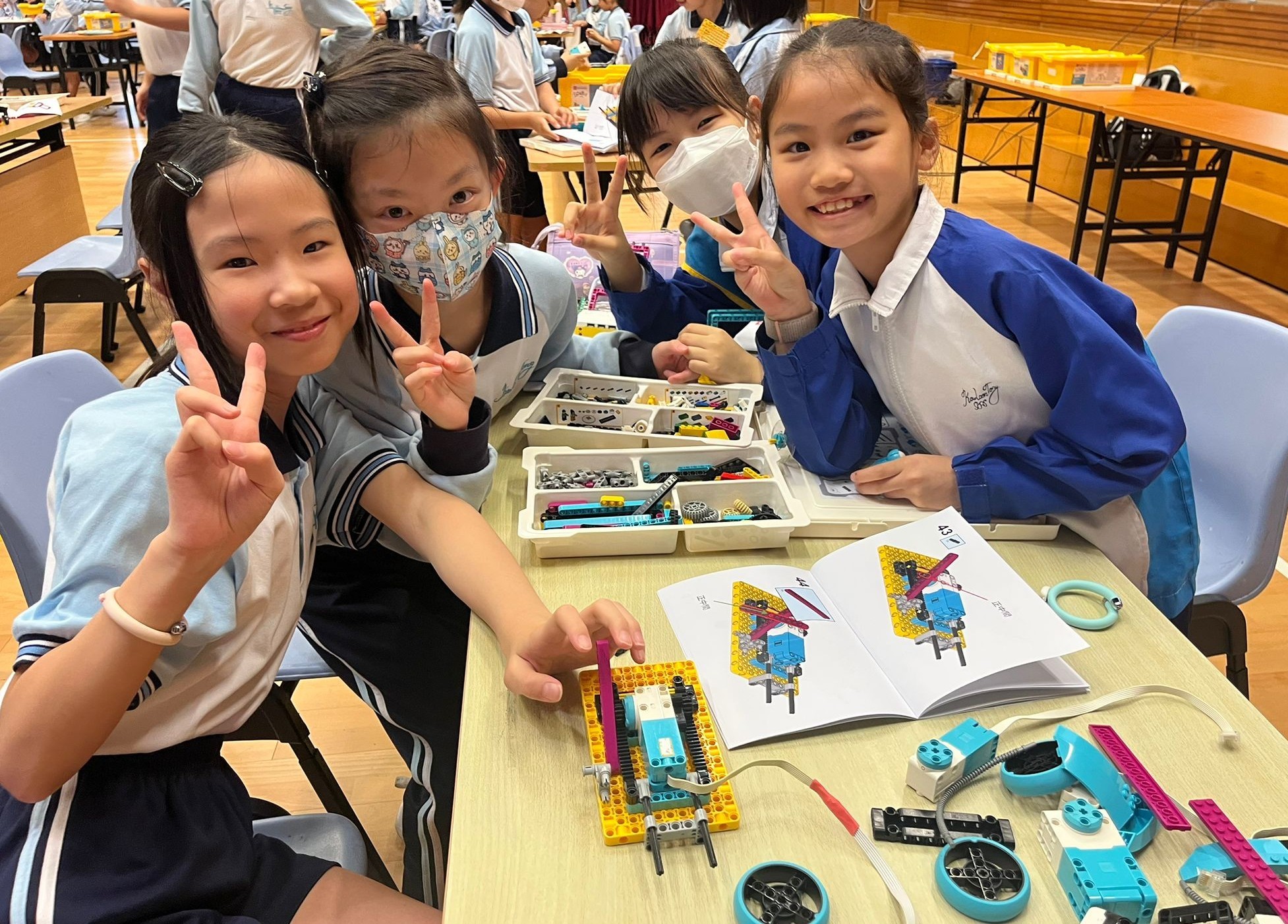
 | Our school offers a comprehensive and diverse range of extracurricular activities, primarily scheduled on Friday afternoons through a combination of fixed and rotational programs. Students have the opportunity to engage in academic and physical pursuits, including Science activities, coding classes, and specialized sports training for both athletics and various ball games. To foster artistic development, we provide the programs of choirs, drama groups and instrumental music training classes. Interest groups that meet after school or on weekends are arranged to cater to specific student passions, i.e. school orchestra, Chinese musical instrument classes, swimming sessions, and coding programmes. Our academic year is punctuated by annual events, i.e. Concert, Sports Day and Swimming Gala. |
 School Mission
 | We endeavour to create the best learning environment with equal emphasis on moral, civic and national education, intellectual growth, physical education, social and aesthetic development. We provide students with quality education which prepares them to become citizens with outstanding performance in both academic and behavioral spheres. |
 School Characteristics
 | School Management | ||
| School Management Organisation | : | Under the School Management Committee, there are Principal, deputy heads, senior teachers and teachers. School Executive Officer, clerical staff and teaching assistants support with the administrative work for the teaching staff. |
| Incorporated Management Committee / School Management Committee/ Management Committee | : | The School Management Committee members include the Chairman, the Principal, 2 teacher members, 2 parent members, 1 alumni member and 2 independent members. |
| School Green Policy | : | Promote environmental education and organize recycling activities. |
| School's Major Concerns | : | 1. Establish a healthy lifestyle through strengthening positive education, national and national security education. 2. Enhance the development of science popularization to increase students' interest and ability in scientific inquiry. 3. Enhance students' biliterate and trilingual communication skills through cultivating their interest and habits in proactive and extensive reading. |
| Learning and Teaching Plan | ||
| Learning & Teaching Strategies | : | Learning tasks are designed through teachers' co-planning and based on the pupils' abilities and characteristics, aiming at providing sufficient learning opportunities. With the use of teaching strategies like self-directed learning and co-operative learning, teacher-student interaction is maximized and pupils can learn through a personal experiencing, self-motivated way. |
| Development of Major Renewed Emphases of the Primary Education Curriculum | : | - Strengthening values education - Making good use of learning time and creating space to promote a balanced physical and mental development. - Enriching life-wide learning experiences and promoting whole-person development. - Better catering for learner diversity - Reinforcing STEAM education and nurturing students’ media and information literacy. - Strengthening cross-curricular learning and reading across the curriculum for developing lifelong learning capabilities. - Enhancing assessment literacy for promoting learning and teaching effectiveness. |
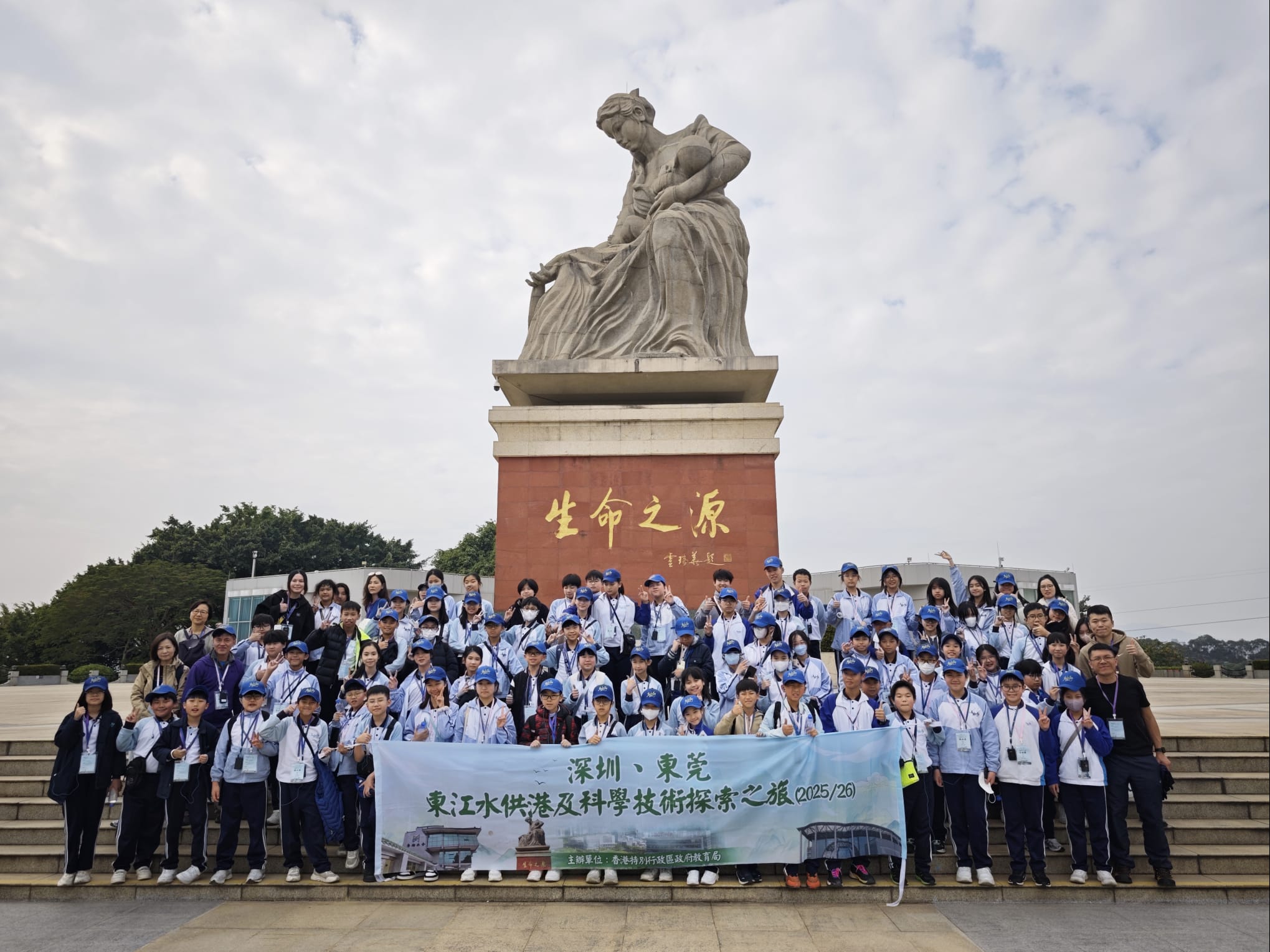
| Development of Generic Skills | : | Except the teacher-student interaction in the normal class teaching, the generic skills are cultivated through project learning, educational talks, visits and competitions, cross-border educational activities, especially in collaborative, communicative, creativity, critical thinking skills, etc. |
| Cultivation of Proper Values, Attitudes and Behaviours | : | Taking cultivation of positive values and attitudes as the direction, we make use of everyday life events to strengthen the coordination of learning activities, and enhance the connection, among various cross-curricular domains in values education, including moral and ethical education, civic education, Constitution education and Basic Law education, national education, life education, sex education, etc. so as to provide students with all-round learning experience conducive to their whole-person development. |
| Student Support | ||
| Whole School Approach to Catering for Learner Diversity | : | 1. To cater to students with diverse needs, support measures are provided such as the implementation of small class teaching and after school tuition classes. Professional advice is offered to help students with SEN as well as their parents according to their needs. 2. Graded tasks and worksheets are designed to suit different learning abilities in the same class level. |
| Whole School Approach to Integrated Education | : | A Whole School Approach and Person Centred Approaches have been adopted to cater for learner differences. Our school adopts a 3-tier support model to provide students with SEN. Resources are deployed to provide appropriate and diversified support to these students so as to enhance their learning and adjustment to school life. |
| Education Support for Non-Chinese Speaking(NCS) Students | : | Our school provides additional support for NCS students to facilitate their learning of Chinese: providing after-school support programmes in learning Chinese; appointing additional teacher(s)/teaching assistant(s) to support NCS students' learning of Chinese; and organising activities to create an inclusive learning environment in the school. |
| Curriculum Tailoring and Adaptation | : | We have our school-based curriculum design in the core subjects. Teachers design the learning tasks and activities in line with the teaching objectives but with adaptation according to the different learning abilities in the same class level, in order to promote students' learning. |
| Home-school Co-operation and School Ethos | ||
| Home-School Co-operation | : | Strengthen the home-school co-operation through Parents' Day and various activities held by the Parent-Teacher Association like family activities, educational talks for parents and visits to secondary schools. Parents are also invited to help in various school functions. |
| School Ethos | : | We cultivate a caring and learning atmosphere, put great emphasis on moral education and self-cultivation. Through adventure-based education program, pupils learn to tackle problems when facing adversities. |
| Future Development | ||
| School Development Plan | : | 1. Establish a healthy lifestyle through strengthening positive education, national and national security education. 2. Enhance the development of science popularization to increase students' interest and ability in scientific inquiry. 3. Enhance students' biliterate and trilingual communication skills through cultivating their interest and habits in proactive and extensive reading. |
| Teacher Professional Training & Development | : | To enhance the effectiveness of teaching and learning, teachers actively take part in teacher professional development seminars after school, as well as collaborative teaching preparation, lesson observation and sharing. Furthermore, the school collaborates with local universities and EDB to enhance learning and teaching effectiveness. |
| Others | : | 1.Gifted education to develop students' potential. 2.Participate in the School-based After School Care Service Scheme (Expanded Programme) |
 School Map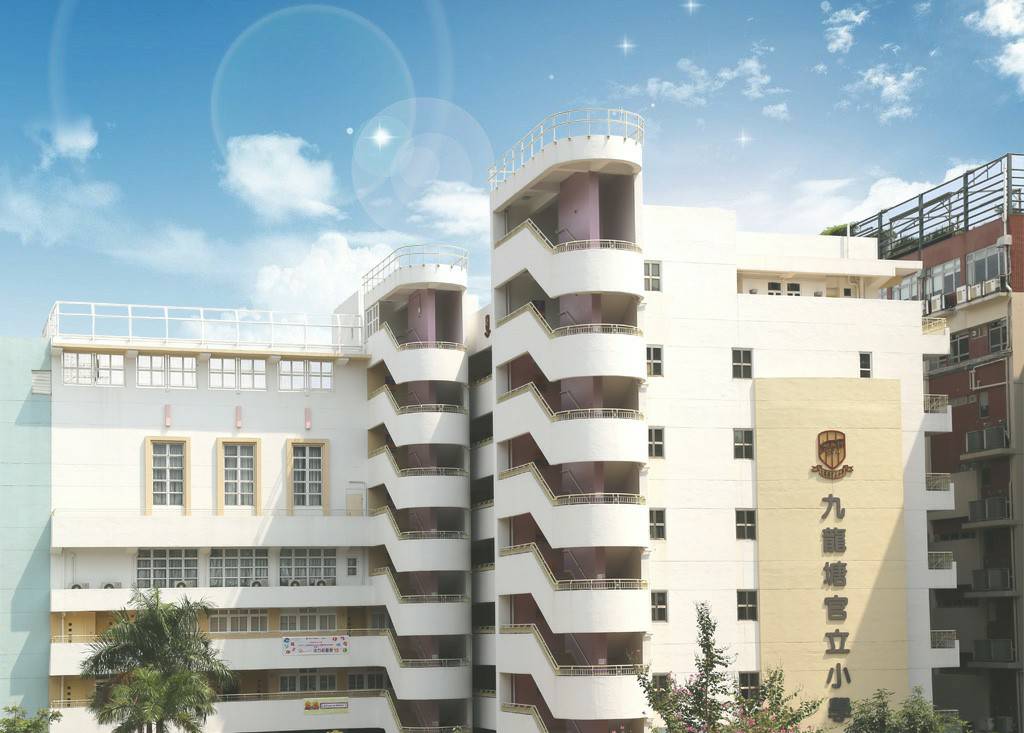
Last revision date:01 September 2026


