 Primary School Profiles 2026

 Primary School Profiles 2026

| Address: | 33 Park Road, Hong Kong | |||
| Phone: | 25405088 | Email: | info@ssgps.edu.hk | |
| Fax: | 25414723 | Website: | http://www.ssgps.edu.hk | |
 School Information
 | Supervisor/ Chairman of Management Committee | : | Rev. Canon KOON Ho Ming Peter Douglas |
| School Head | : | Ms. Or Ching Yu |
| Incorporated Management Committee been established? | : | Not yet established |
| Percentage of School Supervisor and Managers / Chairperson and Members of School Management Committee (SMC) of Government Schools Fulfilling the Training Targets | : | Not Applicable |
| School Type | : | Aided Whole Day |
| Student Gender | : | Girls |
| Sponsoring Body | : | St. Stephen's Girls' College School Council |
| Religion | : | Protestantism / Christianity |
| Year of Commencement of Operation | : | 1906 |
| School Motto | : | In Faith Go Forward |
| Area Occupied by the School | : | About 1196 Sq. M |
| Through-train Secondary School | : | - |
| Feeder Secondary School | : | St. Stephen's Girls' College |
| Nominated Secondary School | : | - |
| Medium of Instruction | : | Chinese |
| School Bus Service | : | School Bus; Nanny van |
| Parent-Teacher Association | : | Yes |
| Past Students' Association/Alumni Association | : | Yes |
| 4Rs Mental Health Charter | : | - |
| Whole School Health Programme | : | - |
 2026/2027 Annual School Charges
| School Fee | : | - |
| Tong Fai | : | - |
| PTA Fee | : | $200 |
| Approved Charges for non-standard items | : | $400 (For daily operation expenses, e.g. printing fees) |
| Other Charges | : | - |
 School Facilities
 | Number of Classroom(s) | : | 24 |
| Number of School Hall(s) | : | 1 |
| Number of Playground(s) | : | 3 |
| Number of Library(ies) | : | 1 |
| Special Rooms | : | STEM Room, Student Activity Centre, Visual Arts Room, English Room, Putonghua Room, Music Room, Multi-purpose Room, Computer Room, etc. |
| Facility(ies) for Supporting Students with Special Educational Needs | : | Accessible lift and Accessible toilet. |
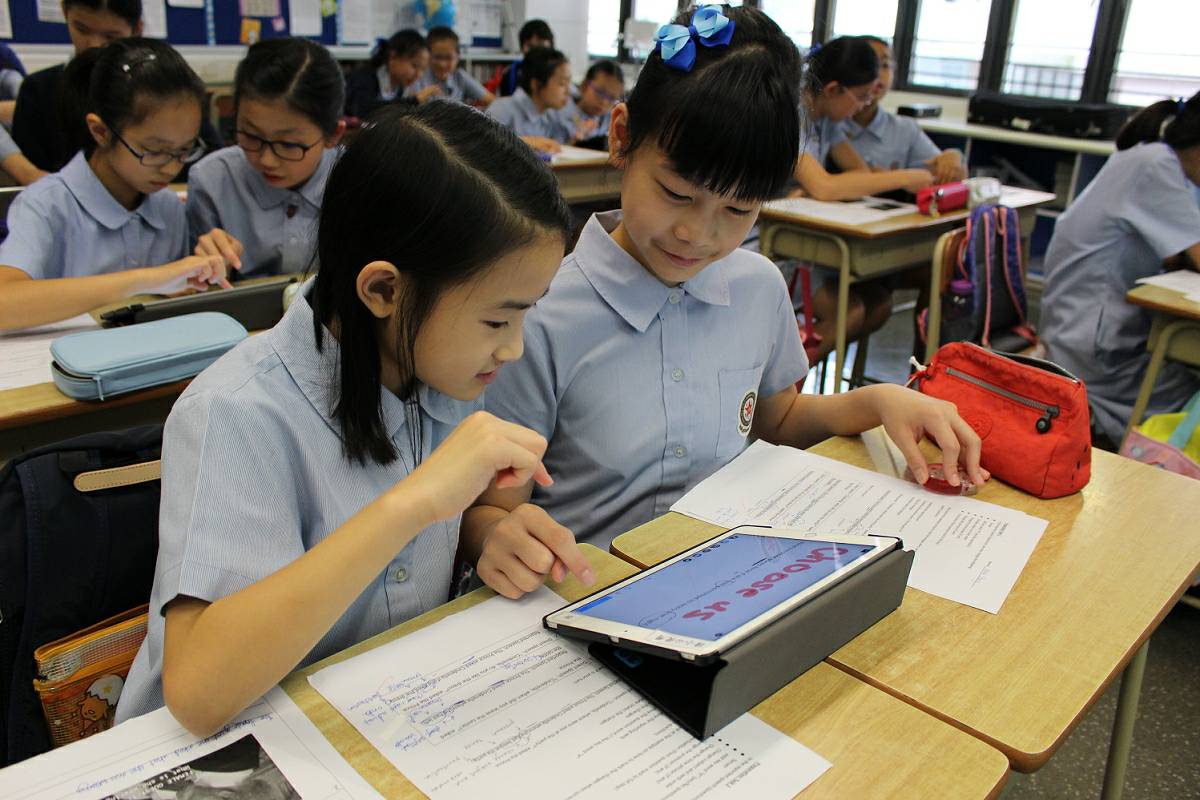
| Others | : | - Infrared body temperature monitoring system: installed at the school entrance - Interactive whiteboards: installed in classrooms and special rooms |
 Teaching Staff Information (Including School Head) in the 2025/2026 school year
 | Number of teaching posts in the approved establishment | : | 44 |
| Total number of teachers in the school | : | 47 |
| Qualifications and professional training (%) | ||
| Had Received Teacher Training | : | 100% |
| Bachelor Degree | : | 100% |
| Master/ Doctorate Degree or above | : | 66% |
| Special Education Training | : | 63% |
| Years of Experience (%) | ||
| 0 - 4 years | : | 9% |
| 5 - 9 years | : | 18% |
| 10 years or above | : | 73% |
 Class Structure
 | 2025/26 school year | ||
| P1 Number of classes | : | 4 |
| P2 Number of classes | : | 4 |
| P3 Number of classes | : | 4 |
| P4 Number of classes | : | 4 |
| P5 Number of classes | : | 4 |
| P6 Number of classes | : | 4 |
| Total | : | 24 |
| 2026/27 school year (Based on the number of classes approved by EDB in 2026) | ||
| P1 Number of classes | : | 4 |
| P2 Number of classes | : | 4 |
| P3 Number of classes | : | 4 |
| P4 Number of classes | : | 4 |
| P5 Number of classes | : | 4 |
| P6 Number of classes | : | 4 |
| Total | : | 24 |
| Mode of teaching at different levels | ||
| Activity approach is adopted. Small class teaching is implemented from P.1 to P.6. Teacher assistants are arranged to help in the classrooms. Special programmes are organized for students with special education needs. | ||
| Remarks | ||
| - | ||
 Performance Assessment
 | Applicable to P1 only | ||
| Number of test(s) per year | : | 0 |
| Number of exam(s) per year | : | 0 |
| Replace tests and examinations with diversified assessments in the first term of P1 | : | Yes |
| Applicable to P2 to P6 only | ||
| Number of test(s) per year | : | 2 |
| Number of exam(s) per year | : | 2 |
| Applicable to P1 to P6 | ||
| Formulate appropriate school-based assessment and assignment policies, inform parents of related arrangements, and collect views from teachers, students and parents regularly (at least once per school year) for ongoing review and optimisation of the school assessment and assignment policies | : | Yes |
| Upload the school-based assessment policy onto the school webpage for information of the public and stakeholders | : | Yes |
| Upload the school-based assignment policy onto the school webpage for information of the public and stakeholders | : | Yes |
| Diversified Assessment for Learning | : | 1. P.1: Formative assessments; observation and assignments are used to assess the acquisition of various skills. 2. P.2-P.6: Apart from tests and exams, pupils' lesson performance and their assignments are assessed to provide feedback to learning. |
| Avoid arranging tests or examinations immediately after long holidays in order to let students take more rest during the holidays | : | Yes |
| Arrange the timetable flexibly according to the school context, with a tutorial session provided in the afternoon as far as possible for students to finish some of their homework under teachers’ guidance | : | Yes |
| Streaming arrangement | : | Random |
 School Life
 | Number of school days per week | : | 5 |
| Number of periods per day | : | 10 |
| Duration of each normal period | : | 30 |
| School starts at | : | 8:00 AM |
| School ends at | : | 3:00 PM |
| Lunch break | : | 12:45 - 1:45 |
| Lunch arrangement | : | Provided by designated supplier and arranged by parents. |
| Healthy school life | : | • Encourage students to have healthy snacks. • Request lunch suppliers to design menus based on the 'Healthy Eating Pyramid'. • Participate in the "Joyful Fruit Month" event organized by the Department of Health, and organize the "Healthy Fruit Day" to help students build a habit of eating fruit regularly. • Organize mental health-related activities for students, parents, and teachers. |
| Remarks | : | - |
 Life-wide Learning
 | Choir, Orchestra, Enhancement Classes for Chinese, English, Mathematics and Science, Debating School Teams, Brownies, Christian Fellowship, Cantonese Opera Group, Chinese Calligraphy Class, Home Economics Class, Magician Workshop, Coding, STEAM Class, Aquaponics, Spanish, Gymnastics, Dance School Team, Swimming Team and School Teams for ball games etc. |
 School Mission
 | St. Stephen's Girls' Primary School is a Christian school which holds the mission to provide Whole-person Education in Christian faith, and to nurture pupils' physical, mental as well as spiritual development in a balanced way. It aims to help students develop their potentials and guide them towards a perfect character. |
 School Characteristics
 | School Management | ||
| School Management Organisation | : | The School Council oversees the operation of the school. There are different functional groups which are responsible for school self-evaluation, discipline, counselling, curriculum development, extra-curricular activities, etc. |
| Incorporated Management Committee / School Management Committee/ Management Committee | : | St. Stephen's Girls' Primary School is under the supervision of the St. Stephen's Girls' College School Council. Its members include representatives from Hong Kong Sheng Kung Hui, St. John's College and St. Stephen's Church, the Principal of St. Stephen's Girls' College, chairperson of the Parent-Teacher Association, chairperson of the Alumnae Association and independent entities. |
| School Green Policy | : | 1. To nurture the awareness of environmental protection among pupils and encourage them to put it into actions in daily life. Activities include: 'Earth Hour', school uniform recycling, storybooks recycling, food-waste recycling activity, etc. 2. To support environmental protection and reduce the use of paper, the school uses e-notices to communicate with parents. |
| School's Major Concerns | : | A. To enhance pupils' understanding of our country and strengthen their sense of national identity. B. To foster pupils' physical, mental and spiritual well-being by reinforcing Values Education. |
| Learning and Teaching Plan | ||
| Learning & Teaching Strategies | : | Our school aims at providing a balanced curriculum which develops pupils morally, intellectually, kinesthetically, interpersonally, aesthetically and spiritually. High emphasis is put on the development of problem-solving skills and creative thinking skills. We also emphasize the development of bi-literacy and tri-lingualism. Various activities are introduced to develop reading habits and reading enjoyment among pupils. We believe that each pupil is unique. We aim at developing pupils' strengths and stretching their potentials. We make flexible use of the afternoon to arrange reading lessons and cross-curricular activities for pupils. |
| Development of Major Renewed Emphases of the Primary Education Curriculum | : | 1.National Education and Values Education are our major concerns in 2024/25-2026/27. 2.Establish a working group to implement and supervise activities related to National Education. 3.Make good use of learning time and create space for learning: Flipped Classroom 4.Enrich life-wide learning experiences: sustain the development of Extra-curricular Activities Within School Hours and After-school Activities 5.Cater for learner diversity: Programmes for more able students and the less able ones 6.Reinforce STEAM education: infuse 'Engineering Design Process' in Science and General Studies curriculum and organize activities like 'Science Day' 7.Nurture students' media and information literacy: infuse in computer lessons and organize talks for pupils 8.Strengthen cross-curricular and reading across curriculum for developing lifelong learning capabilities: Cross-curricular project and reading 9.Enhance assessment literacy for promoting learning and teaching effectiveness: Multiple modes of assessment |
| Development of Generic Skills | : | Generic skills are developed in classroom activities and life-wide learning activities of different subjects. |
| Cultivation of Proper Values, Attitudes and Behaviours | : | 1. To incorporate into all subjects the learning elements that can nurture positive values and attitudes among pupils. 2. Class teachers conduct Life Education period weekly. 3. To implement school-based Value Education activities with themes including courtesy, responsibility, self-discipline, respect, honesty and caring for others. 4. To provide professional training for teachers, so as to help them act as role models for students in respect of values, attitudes and behaviours by walking the talk. They also give timely positive feedback for pupils to make improvements. 5. To organize parent education activities and encourage parents to maintain quality communications with their children so that they are able to provide suitable guidance to their children and hold hands with the school to nurture positive values among children. |
| Student Support | ||
| Whole School Approach to Catering for Learner Diversity | : | The school provides after-school enhancement activities for those who have special potential in languages, Mathematics and Science. We also nominate them to join various competition to stretch their potentials. Early-intervention classes and various guidance activities are provided. Pupils' learning diversity is also catered for through classroom activities and learning tasks. |
| Whole School Approach to Integrated Education | : | Our Student Support Team consists of SENCO, teachers, the school-based speech therapist, the school social worker and teacher assistants. We make use of the 'Learning Support Grant' to deploy teacher assistants to guide pupils in morning reading and provide in-class support. The grant is also used for buying services for afternoon small group activities and purchasing teaching resources. Related measures for pupils with special learning needs include adjustments on homework and assessment, and implementing 'Individual Education Plan'. |
| Education Support for Non-Chinese Speaking(NCS) Students | : | Our school provides additional support for NCS students to facilitate their learning of Chinese: providing after-school support programmes in learning Chinese; appointing additional teacher(s)/teaching assistant(s) to support NCS students' learning of Chinese; arranging intensive Chinese learning and teaching mode(s), e.g. pull-out learning if necessary, split-class/group learning, etc; organising activities to create an inclusive learning environment in the school; hiring additional manpower and/or translation/interpretation services to facilitate the communication with parents of NCS students; and our school uses Putonghua to teach Chinese in all classes / groups at certain levels with extra support as appropriate, e.g. pull-out/small-group classes, learning and teaching resources with Pinyin, etc. |
| Curriculum Tailoring and Adaptation | : | Pupils with higher abilities are provided with enhancement programmes in Chinese, English, Mathematics and General Studies. Enhancement classes and remedial classes are arranged for pupils. |
| Home-school Co-operation and School Ethos | ||
| Home-School Co-operation | : | The school has a long established Parent Teacher Association. It enhances communication between the school and parents. It has also provided an interface for working towards the common goal of promoting school development. |
| School Ethos | : | Our pupils are obedient, polite and caring. They are confident, enjoy learning and are willing to communicate and collaborate with others. Our parents are supportive to their daughters and school policies. Apart from being parent helpers, they participate actively in various school functions. We have a strongly bond alumni who contribute tremendously to various aspects of school development. There is a close collaboration among the college, the primary school and the kindergarten. We organize activities for pupils of the three sections regularly to help them adapt to the different stages of schooling. |
| Future Development | ||
| School Development Plan | : | A. To enhance pupils' understanding of our country and strengthen their sense of national identity. B. To foster pupils' physical, mental and spiritual well-being by reinforcing Values Education. |
| Teacher Professional Training & Development | : | Teachers participate actively in various professional development activities for professional advancement. To cultivate a culture of sharing and learning, teachers take part in co-planning, peer lesson observation and sharing sessions regularly. |
| Others | : | 1. The school offers various scholarships for those who have outstanding performance in academic subjects, services, music, sports and visual arts. 2. Pupils are encouraged to join different inter-schools competitions. 3. The school arranges upper primary pupils to join exchange programmes organized by the EDB to broaden pupils' horizons. |
 School Map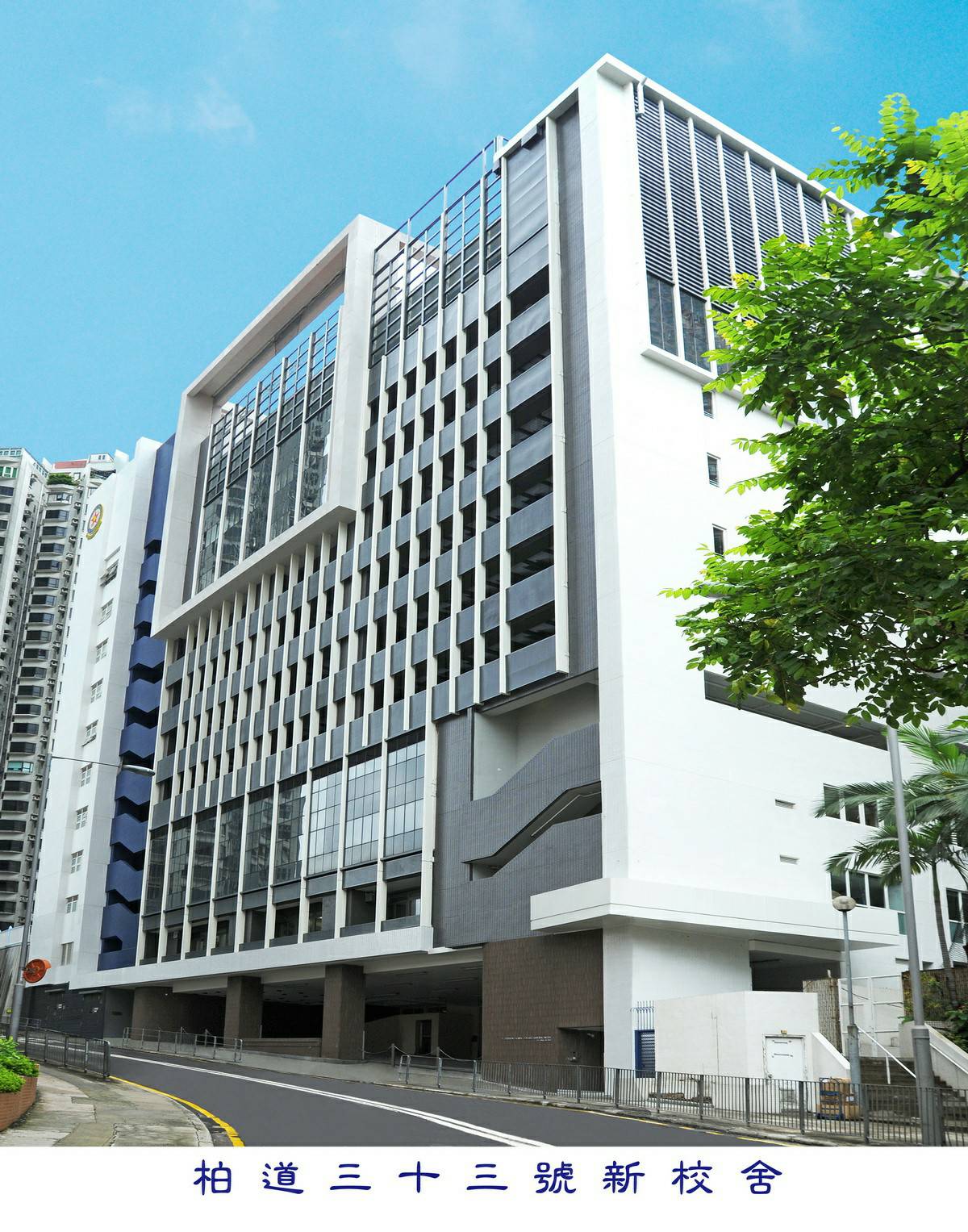
Last revision date:01 September 2026


