 Primary School Profiles 2026


 Primary School Profiles 2026
| Address: | 23 Kai Yip Road, Kwun Tong, Kowloon | |||
| Phone: | 23432311 | Email: | sch@kbsjb.edu.hk | |
| Fax: | 23433011 | Website: | http://www.kbsjb.edu.hk | |
 School Information
| Supervisor/ Chairman of Management Committee | : | Fr. Dhos Johnson |
| School Head | : | Ms. Ko Tsui Ping Michelle |
| Incorporated Management Committee been established? | : | Established |
| Percentage of School Supervisor and Managers / Chairperson and Members of School Management Committee (SMC) of Government Schools Fulfilling the Training Targets | : | 50% |
| School Type | : | Aided Whole Day |
| Student Gender | : | Co-ed |
| Sponsoring Body | : | The Catholic Diocese of Hong Kong |
| Religion | : | Catholicism |
| Year of Commencement of Operation | : | 2003 |
| School Motto | : | Be Strong and Seek the Truth. |
| Area Occupied by the School | : | About 7285 Sq. M |
| Through-train Secondary School | : | - |
| Feeder Secondary School | : | - |
| Nominated Secondary School | : | - |
| Medium of Instruction | : | Chinese |
| School Bus Service | : | School Bus |
| Parent-Teacher Association | : | Yes |
| Past Students' Association/Alumni Association | : | Yes |
| 4Rs Mental Health Charter | : | Yes |
| Whole School Health Programme | : | Action School |
 2026/2027 Annual School Charges
| School Fee | : | - |
| Tong Fai | : | - |
| PTA Fee | : | $50 |
| Approved Charges for non-standard items | : | $300 |
| Other Charges | : | - |
 School Facilities
| Number of Classroom(s) | : | 30 |
| Number of School Hall(s) | : | 1 |
| Number of Playground(s) | : | 2 |
| Number of Library(ies) | : | 1 |
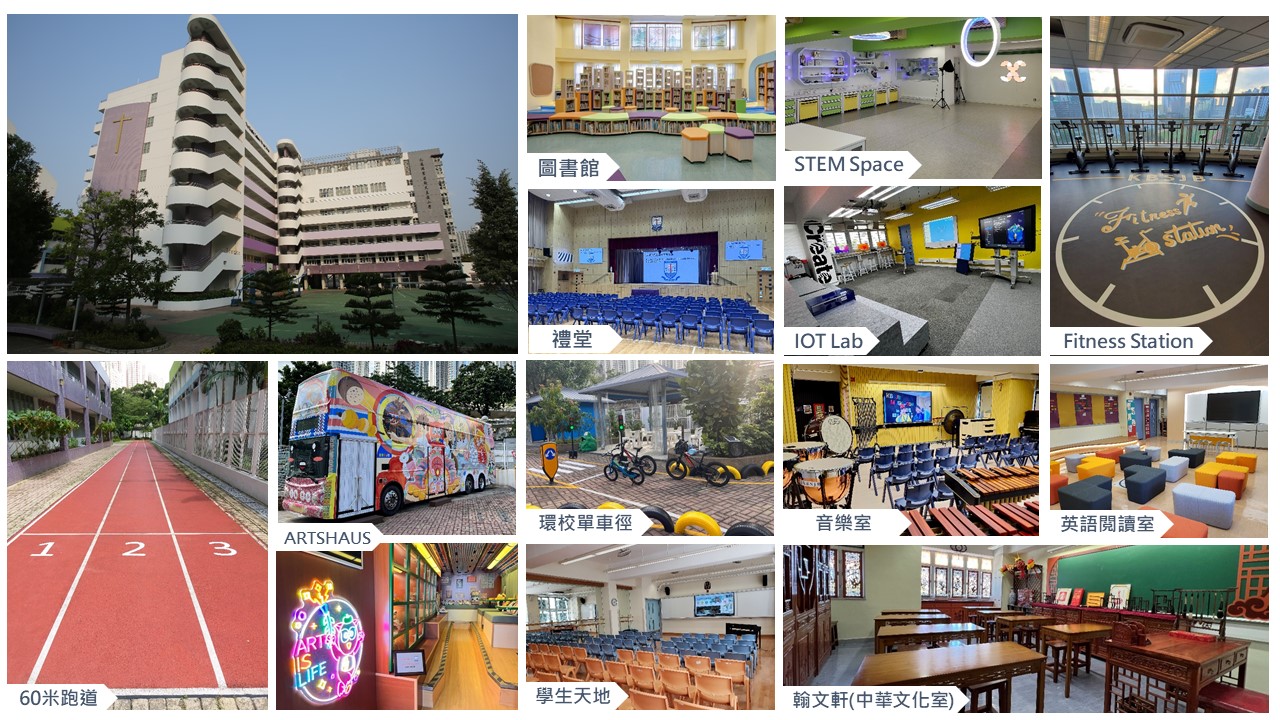
| Special Rooms | : | Prayer Room, Activity Room, English Reading Room, STEM SPACE, General Studies Room, Computer Room, Chinese Culture Room, Visual Arts Room and Music Room. |
| Facility(ies) for Supporting Students with Special Educational Needs | : | Accessible lift, Accessible toilet, Tactile guide path and Visual fire alarm system. |
| Others | : | 60mTrack, Reading Corner, Organic Farm, Virgin Mary Shrine, ArtsHaus (Art Bus), School History Room, Fitness Station, Campus Cycling Path. |
 Teaching Staff Information (Including School Head) in the 2025/2026 school year
| Number of teaching posts in the approved establishment | : | 54 |
| Total number of teachers in the school | : | 57 |
| Qualifications and professional training (%) | ||
| Had Received Teacher Training | : | 93% |
| Bachelor Degree | : | 100% |
| Master/ Doctorate Degree or above | : | 28% |
| Special Education Training | : | 81% |
| Years of Experience (%) | ||
| 0 - 4 years | : | 18% |
| 5 - 9 years | : | 27% |
| 10 years or above | : | 55% |
 Class Structure
| 2025/26 school year | ||
| P1 Number of classes | : | 5 |
| P2 Number of classes | : | 5 |
| P3 Number of classes | : | 5 |
| P4 Number of classes | : | 5 |
| P5 Number of classes | : | 5 |
| P6 Number of classes | : | 5 |
| Total | : | 30 |
| 2026/27 school year (Based on the number of classes approved by EDB in 2026) | ||
| P1 Number of classes | : | 5 |
| P2 Number of classes | : | 5 |
| P3 Number of classes | : | 5 |
| P4 Number of classes | : | 5 |
| P5 Number of classes | : | 5 |
| P6 Number of classes | : | 5 |
| Total | : | 30 |
| Mode of teaching at different levels | ||
| Adopt small class teaching. | ||
| Remarks | ||
| - | ||
 Performance Assessment
| Applicable to P1 only | ||
| Number of test(s) per year | : | 0 |
| Number of exam(s) per year | : | 3 |
| Replace tests and examinations with diversified assessments in the first term of P1 | : | No |
| Applicable to P2 to P6 only | ||
| Number of test(s) per year | : | 0 |
| Number of exam(s) per year | : | 3 |
| Applicable to P1 to P6 | ||
| Formulate appropriate school-based assessment and assignment policies, inform parents of related arrangements, and collect views from teachers, students and parents regularly (at least once per school year) for ongoing review and optimisation of the school assessment and assignment policies | : | Yes |
| Upload the school-based assessment policy onto the school webpage for information of the public and stakeholders | : | Yes |
| Upload the school-based assignment policy onto the school webpage for information of the public and stakeholders | : | Yes |
| Diversified Assessment for Learning | : | Besides written assessments, various modes of assessments will be conducted, e.g. projects, school-based booklets, in-class learning activities, self-evaluation, presentations, performance assessments, formative assessments, etc. |
| Avoid arranging tests or examinations immediately after long holidays in order to let students take more rest during the holidays | : | Yes |
| Arrange the timetable flexibly according to the school context, with a tutorial session provided in the afternoon as far as possible for students to finish some of their homework under teachers’ guidance | : | Yes |
| Streaming arrangement | : | Mixed ability classes from P.1 to P.6. |
 School Life
| Number of school days per week | : | 5 |
| Number of periods per day | : | 9 |
| Duration of each normal period | : | 35 |
| School starts at | : | 8:00 AM |
| School ends at | : | 3:10 PM |
| Lunch break | : | 12:55 - 1:45 |
| Lunch arrangement | : | Provided by designated supplier, arranged by parents and brought by students. |
| Healthy school life | : | Our Healthy Campus policy fosters students’ physical, mental and spiritual wellbeing and the guidelines help establish healthy eating habits. We regularly hold activities so that students can practise a healthy lifestyle in a fun atmosphere. We prioritise students' mental wellbeing by encouraging mindfulness, developing their self-awareness and emotional management skills to foster inner calm, physical and mental balance, and spiritual growth. |
| Remarks | : | Creating an environment for learning, promoting all round development: 1st-7th lessons: Cycle mode (Day 1-6) subject learning. 8th lesson: Fixed mode (Monday to Friday) Assembly, Multiple-intelligence activities, Values education, Reading session, Study groups, ECA Friday. 9th lesson: Homework lesson. |
 Life-wide Learning
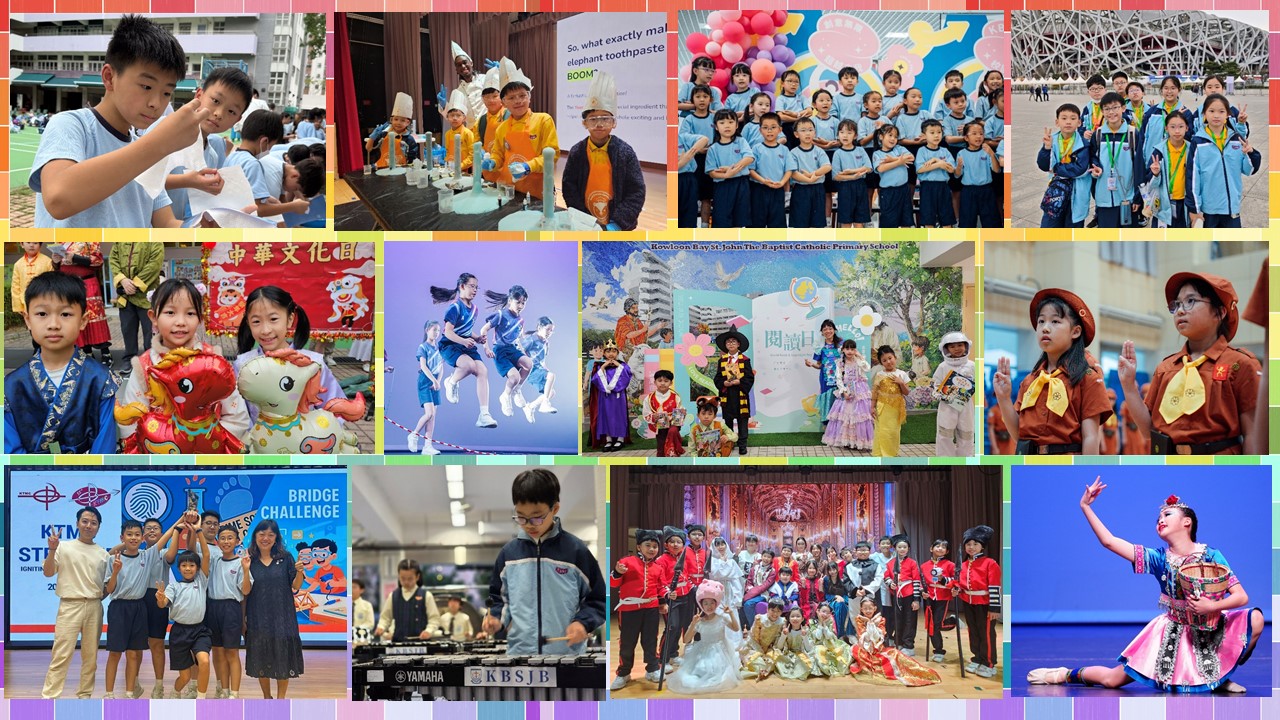
| Our school is committed to nurturing students’ diverse talents and providing a wide range of learning opportunities. After-school activities include uniformed teams, such as Cub Scouts, Brownies, Pandas, Chinese dance, English Drama Club, PE, Visual Arts, Choirs, Musical instrument groups, STEM, and top-tier programs for biliteracy and trilingualism are provided for students to enhance their multiple-intelligence. Fun Fun Saturdays further focus on developing students’ interests in areas such as PE, Arts, English Language, and STREAM. |
 School Mission
| Our mission is to aid the development of our students' moral, intellectual, physical, social, aesthetic and spiritual values and encourage them to: Follow the teachings of St. John the Baptist and spread the gospel. Show care and concern for others and help to build a just and compassionate society. Love their country and appreciate their culture. Learn how to learn and become life-long learners. Enjoy life and learning. |
 School Characteristics
| School Management | ||
| School Management Organisation | : | The school is managed by a sponsoring body - The Catholic Diocese of Hong Kong, and operated by an Incorporated Management Committee (IMC). The Supervisor, Principal and Deputy Principal lead the school administration committee and teaching affairs team to manage school affairs. Staff is subdivided into four domains, namely "Management and Organisation", "Learning and Teaching", "Student Support and School Ethos" and "Student Performance and Activities". |
| Incorporated Management Committee / School Management Committee/ Management Committee | : | Our IMC committee members included eight nominees from The Catholic Diocese of Hong Kong, one independent committee member, two teacher representatives, two parent representatives, one representative from School Alumni Association and our school head. All of us will work together to enhance our school management. |
| School Green Policy | : | Our school implements an environmental protection policy and follows the "BEAM Plus" framework, to build a sustainable "green campus". The campus environment is comfortable and pleasant. Through eco-related activities, teachers encourage students to put the "Four R's of Sustainability" into practice, so as to achieve harmony and co-existence between people and nature. Solar photovoltaic systems have been installed on the rooftops of our school building to generate clean electricity, which directly powers the entire campus. This initiative promotes low-carbon living and contributes to sustainable development. |
| School's Major Concerns | : | 1. To nurture the application of digital education and enhance reading literacy in students, so as to promote their lifelong learning. 2. To nurture Chinese traditional virtues deeply for enlightening the growth of students’ Mind, Body and Spirit, for promoting mental well-being in school and putting into action the aspirations of leading a positive and healthy life. |
| Learning and Teaching Plan | ||
| Learning & Teaching Strategies | : | 1. Leverage AI education platforms to optimize teaching and activities in accordance with subject-specific characteristics and student needs, thereby enhancing students' digital learning capabilities. 2. Construct an Information Literacy curriculum framework to promote the effective, ethical use of information and a truth-seeking attitude. 3. Optimize reading schedules and school-based reading award schemes to increase reading volume and help students establish consistent reading habits. 4. Launch diverse reading activities to create a school-wide reading culture, boosting students' interest in reading and their ability to engage in self-directed learning through reading. 5. Utilize language subjects as the backbone to continuously promote cross-curricular reading across different levels and themes. This aims to strengthen connections between learning areas, improve students' strategies for handling various reading materials, broaden their horizons, and cultivate lifelong learning. |
| Development of Major Renewed Emphases of the Primary Education Curriculum | : | 1. To implement the school-based Values Education curriculum and cultivate a positive atmosphere for nurturing the ten priority values and attitudes, a sense of belonging and national identity in students. 2. To make good use of learning time to create a self-directed learning environment for students to strengthen STREAM education and cultivate media and information literacy. To foster whole-person development by providing learning activities across different learning areas to enrich students’ learning experiences. |
| Development of Generic Skills | : | Through the implementation of Project-based Learning and STREAM education, we aim to nurture students’ generic skills. Therefore, students can master and build knowledge, enabling them to apply the skills learnt, to solve daily life problems. |
| Cultivation of Proper Values, Attitudes and Behaviours | : | Our school upholds the spirit of Catholic benevolence. Through religious and spiritual education, as well as values education, we guide students to understand the five core values of Catholic education: Truth, Justice, Love, Life, and Family. Students deepen their understanding of Chinese traditional virtues and core values through assemblies, values education lesson and diverse class activities. These experiences help cultivate students’ compassion, sense of responsibility, and the ability to distinguish right from wrong. We value holistic development of the whole person - body, mind, and spirit. By supporting students in building positive values and attitudes, we work together to create a campus filled with love and truth. |
| Student Support | ||
| Whole School Approach to Catering for Learner Diversity | : | 1. To tailor to individual needs: Enrichment programmes are offered to foster skills and abilities in gifted and talented students while individual or group remedial lessons are provided to cater for learner diversity. 2. To design group-learning activities in class: Teachers develop diversified school-based booklets for students to accommodate their needs. 3. To broach professional support: Staff include social workers, a School-based Educational Psychologist, a School-based Speech Therapist and other professionals. 4. To provide appropriate support for students in need through bringing in community resources. |
| Whole School Approach to Integrated Education | : | The Student Support Team uses resources to provide workshops or remedial learning groups to SEN students. In addition, teaching is adapted and accommodations made in homework and assessments for the SEN students, to help ease and overcome the difficulties in studying. |
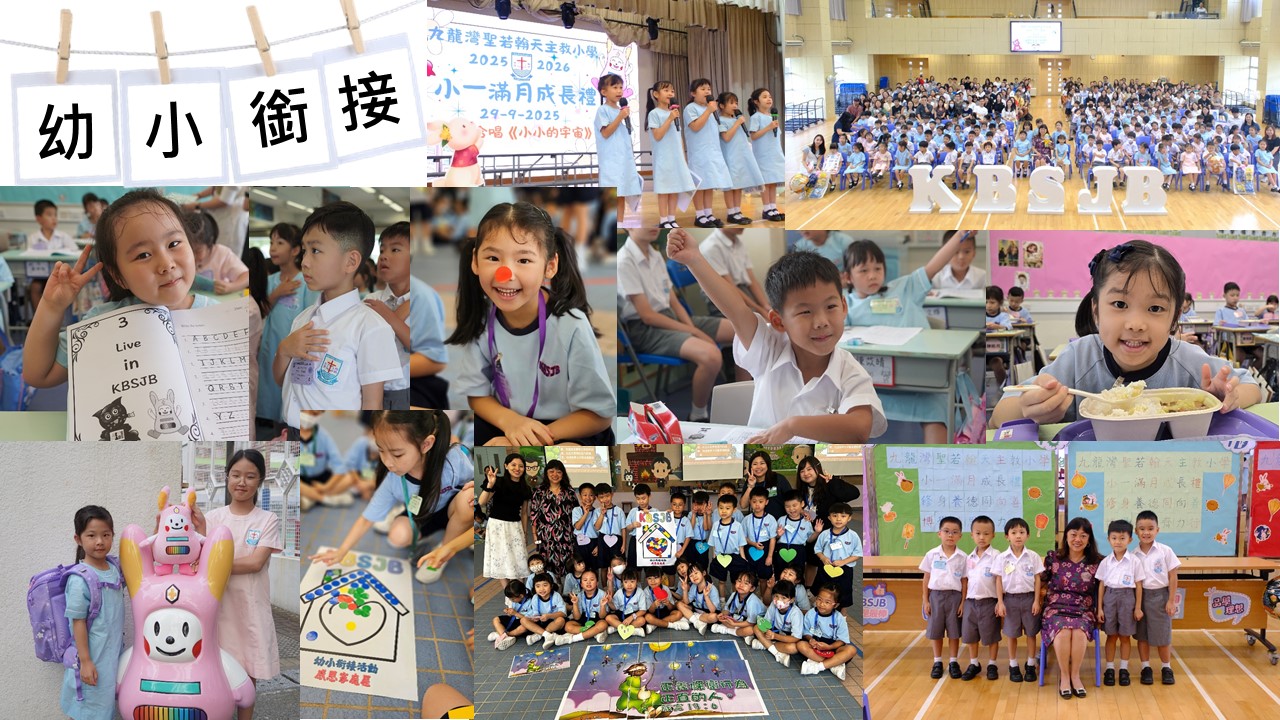
| Curriculum Tailoring and Adaptation | : | Curriculum tailoring and accommodation for students with special education needs: 1. A bridging course is provided for P.1 students to help prepare them towards adapting to primary schooling. The course enables students and parents to know more about the campus environment, characteristics of the school curriculum and assignments. Theme-based learning is based on the students' needs to integrate the school-based curriculum for enrichment. 2. Providing enrichment programmes for gifted students, recommending them to participate in off-campus programmes and open assessments. |
| Home-school Co-operation and School Ethos | ||
| Home-School Co-operation | : | We encourage a high level of involvement from parents. Parents can take on the role of parent managers. They can join the PTA and participate in voluntary work at school. We unite our beliefs for building a harmonious and delightful learning environment to reach the concentric aims of teachers and parents. We provide supporting services to the parents such as the Parent Education Programme, to provide chances for parents to participate in school-based parenting education and diversified physical, mental and spiritual activities. We hope parents can build the ability to assist their children and help raise the next generation with positive and healthy values. |
| School Ethos | : | 1. We strive to cultivate and encourage students to be responsible citizens who are loving and eager to seek the truth. 2. We place importance on our students' moral development. In an atmosphere imbued with values of Catholicism, our students are polite and grateful. 3. Our students exhibit the Students' Ten Exempla Virtues: Practising the love of God, passionate about life, responsible, open and gregarious, confident, creative, technologically literate, self-disciplined, self-motivated and seekers of virtual and academic excellence. |
| Future Development | ||
| School Development Plan | : | 1. Perpetuate development and optimization of the school-based curriculum; tighten the linkage across subjects and promote cross-curricular learning. 2. Systematically implement STREAM-based thinking training within the curriculum, and develop students’ abilities in digital learning, in order to enhance the effectiveness of teaching and learning. 3. Provide students with diverse learning experiences to stimulate their innovative thinking and spirit of inquiry, thereby promoting Self-directed Learning. 4. Cultivate students to become good citizens who love God, love others, and are patriotic and vigorous. |
| Teacher Professional Training & Development | : | 1. Recognize the five core values of Catholic education, and foster teachers’ physical and mental well-being and spiritual health. 2. Conduct regular co-planning meetings; leverage digital empowerment to optimize teaching strategies and enhance the effectiveness of teaching and learning. 3. In line with the school’s areas of concern and development priorities, encourage teachers to continue professional development to promote growth in expertise. 4. Actively seek and secure external resources and collaborate with external organizations to enhance teachers’ professional competencies and skills. |
| Others | : | Students who have brilliant academic achievements and talent in sports and arts, can receive prizes from Rev Bro. Paul Sun Education Foundation, who is one of the patrons. PTA and School Alumni Association also provide prizes to students who learn proactively, showing academic and moral character improvement. To broaden horizons, students have chances to join different school excursions outside HK, which can deepen their learning experiences, strengthen collaborative effort, teamwork and communication skills. Students perform well in academic and moral conduct. They also do well in other areas, such as, STEAM, Maths, P.E., Chinese Dance, etc. Students always get prizes in HK and in international competitions. |
 School Map
Last revision date:01 September 2026


