 Primary School Profiles 2026


 Primary School Profiles 2026
| Address: | 69A Pokfulam Road, Hong Kong | |||
| Phone: | 25466263 | Email: | stanthonys@stanthonys.edu.hk | |
| Fax: | 25405908 | Website: | http://www.stanthonys.edu.hk | |
 School Information
| Supervisor/ Chairman of Management Committee | : | Father Ng Dor Lok Peter |
| School Head | : | Mr. Ma Kar Kin |
| Incorporated Management Committee been established? | : | Established |
| Percentage of School Supervisor and Managers / Chairperson and Members of School Management Committee (SMC) of Government Schools Fulfilling the Training Targets | : | 87% |
| School Type | : | Aided Whole Day |
| Student Gender | : | Co-ed |
| Sponsoring Body | : | Society of St. Francis De Sales |
| Religion | : | Catholicism |
| Year of Commencement of Operation | : | 1963 |
| School Motto | : | Sincerity, faith, compassion and love |
| Area Occupied by the School | : | About 4500 Sq. M |
| Through-train Secondary School | : | - |
| Feeder Secondary School | : | - |
| Nominated Secondary School | : | - |
| Medium of Instruction | : | Chinese(incl.: Putonghua) and English |
| School Bus Service | : | School Bus |
| Parent-Teacher Association | : | Yes |
| Past Students' Association/Alumni Association | : | Yes |
| 4Rs Mental Health Charter | : | Yes |
| Whole School Health Programme | : | Action School |
 2026/2027 Annual School Charges
| School Fee | : | - |
| Tong Fai | : | - |
| PTA Fee | : | 50 |
| Approved Charges for non-standard items | : | $300 |
| Other Charges | : | - |
 School Facilities
| Number of Classroom(s) | : | 18 |
| Number of School Hall(s) | : | 1 |
| Number of Playground(s) | : | 2 |
| Number of Library(ies) | : | 1 |
| Special Rooms | : | 8 rooms (2 staff rooms, INNOSPACE, music room, counselling room, speech therapy room, MAKER SPACE, meeting room) |
| Facility(ies) for Supporting Students with Special Educational Needs | : | - |
| Others | : | - |
 Teaching Staff Information (Including School Head) in the 2025/2026 school year
| Number of teaching posts in the approved establishment | : | 37 |
| Total number of teachers in the school | : | 42 |
| Qualifications and professional training (%) | ||
| Had Received Teacher Training | : | 100% |
| Bachelor Degree | : | 100% |
| Master/ Doctorate Degree or above | : | 47% |
| Special Education Training | : | 78% |
| Years of Experience (%) | ||
| 0 - 4 years | : | 22% |
| 5 - 9 years | : | 24% |
| 10 years or above | : | 54% |
 Class Structure
| 2025/26 school year | ||
| P1 Number of classes | : | 3 |
| P2 Number of classes | : | 3 |
| P3 Number of classes | : | 3 |
| P4 Number of classes | : | 3 |
| P5 Number of classes | : | 3 |
| P6 Number of classes | : | 3 |
| Total | : | 18 |
| 2026/27 school year (Based on the number of classes approved by EDB in 2026) | ||
| P1 Number of classes | : | 3 |
| P2 Number of classes | : | 3 |
| P3 Number of classes | : | 3 |
| P4 Number of classes | : | 3 |
| P5 Number of classes | : | 3 |
| P6 Number of classes | : | 3 |
| Total | : | 18 |
| Mode of teaching at different levels | ||
| Our school adopts a 'cooperative learning' model from Primary 1 to 6 to strengthen students' thinking skills. Through student collaboration in groups, the effectiveness of teaching and learning is enhanced. The Native English Teacher conducts activity-based learning during English lessons and in their free time to improve students’ English speaking skills. | ||
| Remarks | ||
| - | ||
 Performance Assessment
| Applicable to P1 only | ||
| Number of test(s) per year | : | 0 |
| Number of exam(s) per year | : | 3 |
| Replace tests and examinations with diversified assessments in the first term of P1 | : | Yes |
| Applicable to P2 to P6 only | ||
| Number of test(s) per year | : | 0 |
| Number of exam(s) per year | : | 3 |
| Applicable to P1 to P6 | ||
| Formulate appropriate school-based assessment and assignment policies, inform parents of related arrangements, and collect views from teachers, students and parents regularly (at least once per school year) for ongoing review and optimisation of the school assessment and assignment policies | : | Yes |
| Upload the school-based assessment policy onto the school webpage for information of the public and stakeholders | : | Yes |
| Upload the school-based assignment policy onto the school webpage for information of the public and stakeholders | : | Yes |
| Diversified Assessment for Learning | : | 1. Three summative written exams are conducted in a school year. 2. Through ongoing formative assessments and project-based learning, students’ knowledge, attitudes, and skills are evaluated. 3. Life-wide learning activities are utilised to assess students’ ability to apply their knowledge. |
| Avoid arranging tests or examinations immediately after long holidays in order to let students take more rest during the holidays | : | Yes |
| Arrange the timetable flexibly according to the school context, with a tutorial session provided in the afternoon as far as possible for students to finish some of their homework under teachers’ guidance | : | Yes |
| Streaming arrangement | : | 1. Students are streamed according to their academic results, to better cater to their individual aptitudes. 2. Teachers adjust the learning content to meet the needs of each class, better addressing the diverse learning needs of students. |
 School Life
| Number of school days per week | : | 5 |
| Number of periods per day | : | 9 |
| Duration of each normal period | : | 35 |
| School starts at | : | 7:45 AM |
| School ends at | : | 3:00 PM |
| Lunch break | : | 12:45 - 1:45 |
| Lunch arrangement | : | Provided by designated supplier and arranged by parents. |
| Healthy school life | : | The school promotes a healthy lifestyle by requiring our catering provider to provide fruits and ample vegetables. The P.E. department implements the Physical Fitness Award Scheme to enhance students’ physical abilities. Special morning exercise time is held to cultivate the habit of exercising. Designated sports zones are set up in the playgrounds to encourage students to be more active. |
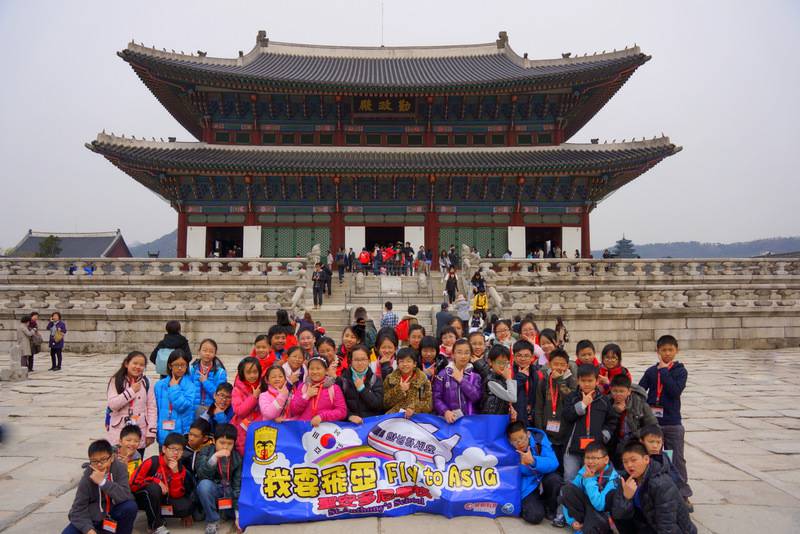
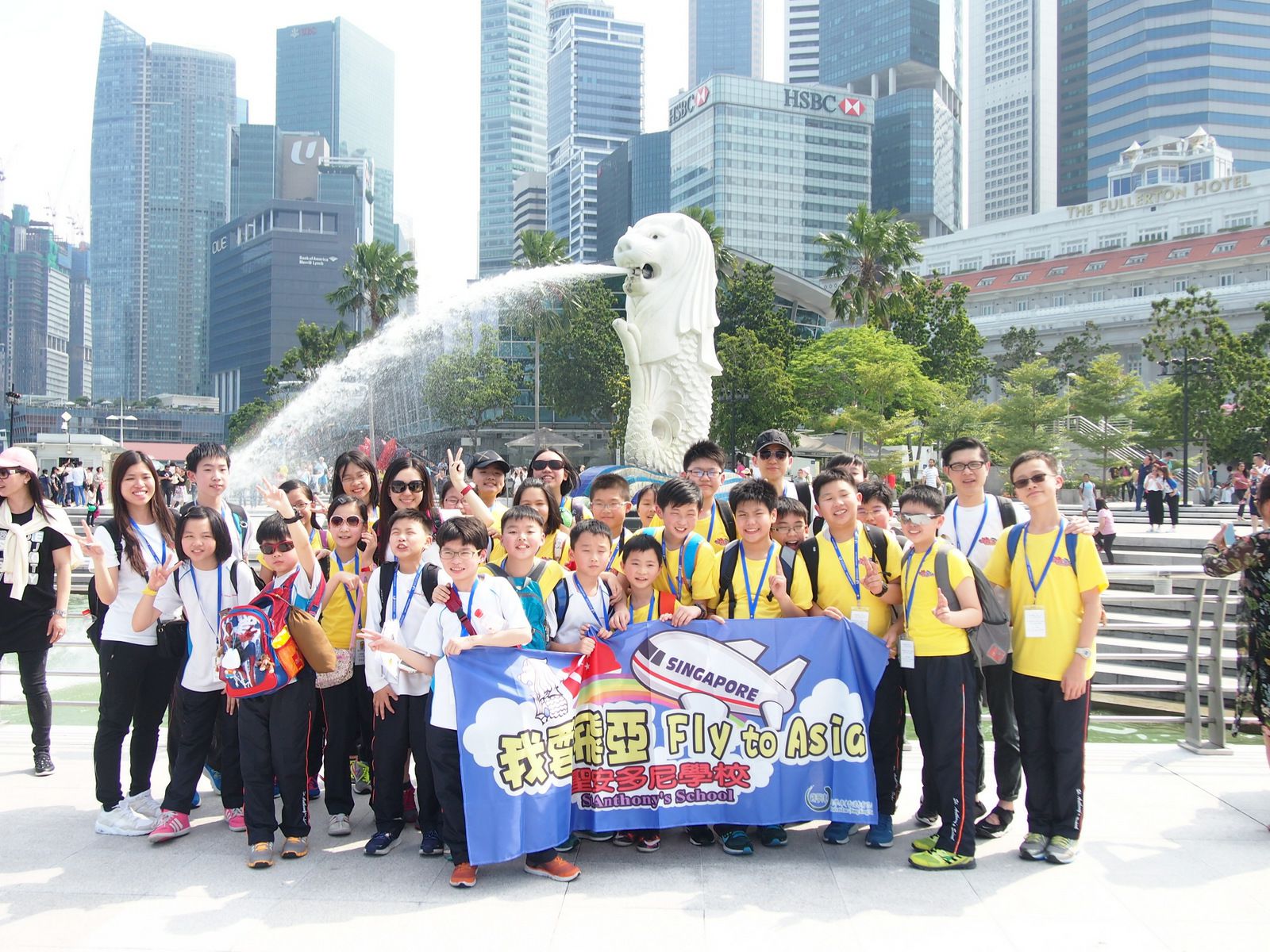
| Remarks | : | We cultivate reading habits with three reading sessions in a cycle and boost learning interest through activities like Life-wide Learning, Putonghua Day, and English Week. We also emphasise moral development and enrich student experiences with study tours to destinations like Huzhou, South Korea, and Singapore. |
 Life-wide Learning
| Our school designs various learning activities to enrich students' life experiences, such as visits to major museums, film appreciation, and study tours. Current extracurricular activities include: rope skipping, roller skating, fencing, swimming, table tennis, football, basketball, squash, track and field, violin, harmonica, African drums, choir, programming, face painting, magic, Olympiad mathematics, Go, dance, Boy Scouts, and Young Pioneers of Christ. |
 School Mission
| The school's motto is ‘With Faith and Love’, guiding students to understand how to revere God and care for others, aligning with the holistic development of moral, intellectual, physical, social, aesthetic, and spiritual aspects. The school adopts the ‘Preventive System’ of its founder, Father John Bosco, based on religion, reason, and loving-kindness. Teachers are present and accompany students in their school life, aiming to allow children to learn in an autonomous, joyful, open, trusting, and inclusive environment. |
 School Characteristics
| School Management | ||
| School Management Organisation | : | The school is governed by the Incorporated Management Committee (IMC), which comprises Salesian Fathers, parents, alumni, teachers and other representatives. All members maintain a keen interest in and are supportive of school development, and they trust the principal’s leadership. The IMC examines and approves the Annual School Plan and School Report. It also facilitates student learning and supports religious education by reflecting diverse opinions expressed by its stakeholders. |
| Incorporated Management Committee / School Management Committee/ Management Committee | : | Our IMC was established on 19 March 2014. |
| School Green Policy | : | Our school responds to the call for environmental protection by participating in various activities, such as the ‘Good Climate Monthly’ initiative, Earth Hour, and campus greening projects. |
| School's Major Concerns | : | 1. Enrich students' diverse learning experiences and broaden their horizons. 2. Practice the 'Life' core value in Catholic Education, leading to a healthy and positive life (physical, mental, and spiritual well-being). |
| Learning and Teaching Plan | ||
| Learning & Teaching Strategies | : | 1. Timetable is in cycles to increase lesson time of core subjects. 2. Adopt the cooperative learning model to encourage student interactions. 3. Life-wide Learning activities enable students to experience learning differently outside the classroom setting. 4. Gifted Education: P.1-P.6 5. Emphasise biliteracy and trilingualism. 6. Use a ‘synthetic approach’ in phonics; utilizes segmenting and blending techniques to facilitate reading. 7. Adopt a school-based writing programme in Chinese Language curriculum. 8. Foster development of a school-based Mathematics curriculum through implementing multifarious activities, nurturing inquiry, expression and problem-solving skills. 9. Cultivate students' generic skills, deepen values education and focus on STREAM education in General Studies, Humanities and Science. 10. Use information technology tools to facilitate learning assessments effectively. 11. Develops reading interest, breadth, and depth via cross-curricular reading. |
| Development of Major Renewed Emphases of the Primary Education Curriculum | : | 1. Strengthening values education (including life education, national education and national security education). 2. Optimising learning time and create opportunities to promote students’ balanced physical and mental development. 3. Catering for learner diversity. 4. Reinforcing STREAM education, and nurturing students' media and information literacy. 5. Strengthening cross-curricular learning and reading across the Curriculum for developing lifelong learning capabilities. 6. Enhancing assessment literacy for promoting learning and teaching effectiveness. 7. Science and Humanities subjects are offered in Primary One, Two, Four and Five to cultivate students' overall competencies and foster their abilities in different fields. |
| Development of Generic Skills | : | Through project learning and cross-curricular STREAM activities, students develop their abilities in collaboration, problem-solving, and critical thinking. These activities also foster their creativity and guide them towards autonomous learning. |
| Cultivation of Proper Values, Attitudes and Behaviours | : | 1. Use the Salesian Preventive System to nurture students to love God and all those around them, and to help students develop positive values and attitudes towards life. 2. Through school-based Positive Education activities and events, regular religious and moral education seminars, the school inspires, guides and nurtures students' moral character. |
| Student Support | ||
| Whole School Approach to Catering for Learner Diversity | : | 1. To cater to student diversity, we provide after-school gifted classes for high-achieving students and remedial classes for those who are academically weaker. 2. Coordinated by the Student Support Team, our school-based Educational Psychologist, Speech Therapist, and Student Guidance Officer collaborate to plan, implement, and evaluate individualised support plans for students with special educational needs. |
| Whole School Approach to Integrated Education | : | The Student Support Team coordinates a ‘Whole School Approach' to Integrated Education to support students with special educational needs. It provides appropriate and diverse support services, incorporating professional help from experts and external organisations, to enhance students' learning effectiveness and assist them in integrating into school life. |
| Education Support for Non-Chinese Speaking(NCS) Students | : | Our school provides additional support for NCS students to facilitate their learning of Chinese: providing after-school support programmes in learning Chinese; appointing additional teacher(s)/teaching assistant(s) to support NCS students' learning of Chinese; and organising activities to create an inclusive learning environment in the school. |
| Curriculum Tailoring and Adaptation | : | The Chinese, English and Mathematics subjects adopt school-based curricula to enhance student learning abilities. |
| Home-school Co-operation and School Ethos | ||
| Home-School Co-operation | : | The Parent-Teacher Association (PTA) promotes communication between the school and parents. It regularly organises parent seminars on various topics, parent academies, parent-child interest classes, and family trips. The PTA also publishes a newsletter and assists with school activities. Through these initiatives, the PTA creates more opportunities for home-school collaboration to support the holistic development of our students. |
| School Ethos | : | The school ethos is one of simplicity and integrity, and students are courteous and well-disciplined. Through the 'Preventive System' and moral education activities, we encourage students to realise their full potential. |
| Future Development | ||
| School Development Plan | : | 1. To make gifted education universal, discovering the talents of every student. 2. To promote life-wide learning, with an emphasis on students' learning experiences; and 3. To encourage reading and enhance students' self-directed learning abilities through various strategies. |
| Teacher Professional Training & Development | : | Three of our teachers have been seconded to the Education Bureau’s Curriculum Development Institute and the Hong Kong Examinations and Assessment Authority. Teachers have also been repeatedly invited by the Education Bureau to serve as guest speakers and focus group members, contributing to curriculum development in Hong Kong. |
| Others | : | Our school's Parent-Teacher Association (PTA) and Alumni Association award scholarships in the form of book vouchers to students with outstanding academic performance and those who have made great progress. |
 School Map
Last revision date:01 September 2026


