 Primary School Profiles 2026

 Primary School Profiles 2026

| Address: | 16 Fai Ming Road, Fanling, N.T. | |||
| Phone: | 26795626 | Email: | info@pylfps.edu.hk | |
| Fax: | 26765434 | Website: | http://www.pylfps.edu.hk | |
 School Information
 | Supervisor/ Chairman of Management Committee | : | Mr. Wong Tat Keung Timothy |
| School Head | : | Ms. Sit Wing Sze |
| Incorporated Management Committee been established? | : | Established |
| Percentage of School Supervisor and Managers / Chairperson and Members of School Management Committee (SMC) of Government Schools Fulfilling the Training Targets | : | 92% |
| School Type | : | Aided Whole Day |
| Student Gender | : | Co-ed |
| Sponsoring Body | : | Kowloon Pentecostal Church |
| Religion | : | Protestantism / Christianity |
| Year of Commencement of Operation | : | 1999 |
| School Motto | : | Faith, Hope, Love |
| Area Occupied by the School | : | About 7000 Sq. M |
| Through-train Secondary School | : | - |
| Feeder Secondary School | : | - |
| Nominated Secondary School | : | - |
| Medium of Instruction | : | Chinese(incl.: Putonghua) and English |
| School Bus Service | : | School Bus; Nanny van |
| Parent-Teacher Association | : | Yes |
| Past Students' Association/Alumni Association | : | Yes |
| 4Rs Mental Health Charter | : | Yes |
| Whole School Health Programme | : | Action School |
 2026/2027 Annual School Charges
| School Fee | : | - |
| Tong Fai | : | - |
| PTA Fee | : | $40 |
| Approved Charges for non-standard items | : | Special fees: $470 |
| Other Charges | : | - |
 School Facilities
 | Number of Classroom(s) | : | 30 |
| Number of School Hall(s) | : | 2 |
| Number of Playground(s) | : | 4 |
| Number of Library(ies) | : | 1 |
| Special Rooms | : | We have different functional rooms , including STEAM Room, Innovative Lab, Computer Room, PLPR Room (language room), Visual Arts Room, Pottery Studio, Music Room, Conference Room, Multi-purpose Room, Bio-eco Corner, Butterfly Garden, Rainbow Corner, Biblical Garden,Climbing Wall and Library. |
| Facility(ies) for Supporting Students with Special Educational Needs | : | Accessible lift and Accessible toilet. |
| Others | : | 4 sets of 3D printers, 190 iPads and 90 notebooks; all classrooms with computers, visualisers, interactive white boards and air conditioning. |
 Teaching Staff Information (Including School Head) in the 2025/2026 school year
 | Number of teaching posts in the approved establishment | : | 55 |
| Total number of teachers in the school | : | 60 |
| Qualifications and professional training (%) | ||
| Had Received Teacher Training | : | 100% |
| Bachelor Degree | : | 100% |
| Master/ Doctorate Degree or above | : | 35% |
| Special Education Training | : | 76% |
| Years of Experience (%) | ||
| 0 - 4 years | : | 25% |
| 5 - 9 years | : | 13% |
| 10 years or above | : | 62% |
 Class Structure
 | 2025/26 school year | ||
| P1 Number of classes | : | 5 |
| P2 Number of classes | : | 5 |
| P3 Number of classes | : | 5 |
| P4 Number of classes | : | 5 |
| P5 Number of classes | : | 5 |
| P6 Number of classes | : | 5 |
| Total | : | 30 |
| 2026/27 school year (Based on the number of classes approved by EDB in 2026) | ||
| P1 Number of classes | : | 5 |
| P2 Number of classes | : | 5 |
| P3 Number of classes | : | 5 |
| P4 Number of classes | : | 5 |
| P5 Number of classes | : | 5 |
| P6 Number of classes | : | 5 |
| Total | : | 30 |
| Mode of teaching at different levels | ||
| Our school provides remedial classes for less able students and those with special educational needs. Teachers use different modes of teaching including small group teaching, co-operative learning and brain based learning to strengthen teacher-student interaction, arouse students' learning interests, cater for wide students' diversities and ensure student learning effectiveness. | ||
| Remarks | ||
| We have set up a total of 19 classes for Chinese, English and Mathematics tutoring to support students' learning and two NET teachers jointly train two groups of outstanding English learners. After school hours, our school provides 14 multi-talented and elite classes to develop students' potential. | ||
 Performance Assessment
 | Applicable to P1 only | ||
| Number of test(s) per year | : | 1 |
| Number of exam(s) per year | : | 1 |
| Replace tests and examinations with diversified assessments in the first term of P1 | : | Yes |
| Applicable to P2 to P6 only | ||
| Number of test(s) per year | : | 1 |
| Number of exam(s) per year | : | 2 |
| Applicable to P1 to P6 | ||
| Formulate appropriate school-based assessment and assignment policies, inform parents of related arrangements, and collect views from teachers, students and parents regularly (at least once per school year) for ongoing review and optimisation of the school assessment and assignment policies | : | Yes |
| Upload the school-based assessment policy onto the school webpage for information of the public and stakeholders | : | Yes |
| Upload the school-based assignment policy onto the school webpage for information of the public and stakeholders | : | Yes |
| Diversified Assessment for Learning | : | For Chinese, English, Mathematics, General Studies, Humanities and Science, there will be one test and two exams per year for grade two to six, and one test and one exam per year for grade one. Progressive assessments will be conducted regularly for Chinese, English, and Mathematics, while Science will undergo diversified assessments to review and follow up on student learning outcomes. |
| Avoid arranging tests or examinations immediately after long holidays in order to let students take more rest during the holidays | : | Yes |
| Arrange the timetable flexibly according to the school context, with a tutorial session provided in the afternoon as far as possible for students to finish some of their homework under teachers’ guidance | : | Yes |
| Streaming arrangement | : | P.2-P.6 pupils are arranged into one advanced class demonstrating high academic performance. Other classes are of mixed abilities. In addition, we have set up 3 classes through pull-out classes within the school at different levels to enhance students' learning and motivation. |
 School Life
 | Number of school days per week | : | 5 |
| Number of periods per day | : | 9 |
| Duration of each normal period | : | 35 |
| School starts at | : | 8:00 AM |
| School ends at | : | 3:10 PM |
| Lunch break | : | 12:40 - 1:40 |
| Lunch arrangement | : | students. Rice heating machines are available. |
| Healthy school life | : | We have joined the Joyful Fruit Month program, which is organized by the Department of Health to nurture pupils' good eating habits. We have joined the "Green Monday School Program" to encourage students to choose a vegetarian lunch on Monday. School regularly sets up Happy Days to allow students to learn in a relaxed and happy environment through various activities.We promote a variety of sports programs and experiential activities too. |
| Remarks | : | Our school day finishes at 2:10 p.m. on Wednesdays. Students can make good use of their time to join extra-curricular activities. Teachers conduct co-plan meetings, professional sharing, teacher training and prayer groups during that period of time. |
 Life-wide Learning
 | Our school provides students with a wide range of activities to achieve whole-person development and to maximize the opportunity to develop students' multiple intelligences. We organize various after-school activities such as visual arts, school team training, interest classes and uniform groups after school and on Saturdays. |
 School Mission
 | With the Invitational Education (IE) philosophy complementing our school's Christian belief, we provide a comprehensive range of quality education which aims towards the moral, intellectual, physical, social, aesthetic and spiritual development of our students. |
 School Characteristics
 | School Management | ||
| School Management Organisation | : | The School Development Committee sets effective school strategies and gives support to the development of administrative affairs. We have various teams and departments to launch school policies co-operatively. |
| Incorporated Management Committee / School Management Committee/ Management Committee | : | The IMC conducts meetings periodically to discuss the important issues of school development and offer assistance if necessary. |
| School Green Policy | : | With funding given by the government, CLP Education Fund and the support of Green Power respectively, our school was provided with a green dining hall, four eco- friendly bicycles and a butterfly garden to enhance students' environmental awareness and to improve their health. There is also a campus planting and bio-eco corner to provide a variety of activities and to promote green education. We were honoured to receive the 18th Green School Gold Award (Primary). |
| School's Major Concerns | : | 1. Healthy Living, Living Christ. 2. Digital Education,Smart Start. |
| Learning and Teaching Plan | ||
| Learning & Teaching Strategies | : | In addition to regular classes, our school has weekly assemblies, moral and civic education, library lessons and co-curricular activities. We adopt different strategies to cater for learner diversity in lessons. We are determined to strengthen students' reflective ability. Brain-based learning strategies are also implemented. Diversified learning modes are adopted in life-wide learning and integrated lessons. Moreover, cross-curricular integration is enhanced through thematic teaching and project learning. In order to foster biliteracy and trilingualism, we have one advanced class from each level (P.2 to P.5) which demonstrates high academic performance. We conduct the Primary Literacy Programme-Reading & Writing from P.1 to P.3 and Extensive Reading Workshops for P.4 to P.6 students. |
| Development of Major Renewed Emphases of the Primary Education Curriculum | : | 1. Strengthening values education (including life education, national education and national security education). 2. Enhancing cross-curricular learning and reading across the curriculum for developing lifelong learning capabilities. 3. Reinforcing STEAM education and strong then digital education to nurture students' media and information literacy and to launch AI education. 4. Enriching life-wide learning experiences and promoting whole-person development. 5. Making good use of learning time and creating space to promote balanced physical and mental development. |
| Development of Generic Skills | : | Generic skills are integrated and implemented into different subjects. We equip our students with different generic skills including communication, problem-solving, creativity, critical thinking and study skills through different learning activities. |
| Cultivation of Proper Values, Attitudes and Behaviours | : | Our school runs different programmes to nurture pupils' positive life values with a focus on enhancing responsibility, care and respect. We cultivate the character of the students with correct values based on Biblical truth. |
| Student Support | ||
| Whole School Approach to Catering for Learner Diversity | : | Our school is dedicated to fostering an inclusive and caring campus, adopting a "Whole School Approach" to cater for learner diversity and provide comprehensive support for students with special educational needs (SEN). The Student Support Team, led by the Special Educational Needs Coordinator (SENCO), includes a school social worker, a school-based educational psychologist, a school-based speech therapist, and an SEN student counselor. The team collaborates with other subject panels and committees to plan and implement various support measures. We offer a range of after-school classes designed to enhance students' focus, learning strategies, social communication, and emotional well-being. To address academic challenges, we also provide small group teaching, as well as Remedial Program classes. |
| Whole School Approach to Integrated Education | : | Adopting the 3-tier Intervention Model to optimize curriculum and academic work, making good use of our learning support grant and school-based speech therapy service by providing extra support to students with special educational needs, setting up English and Chinese extraction groups, providing after-school learning groups and setting up "Individual Education Plans" for students are the measures to provide support for students' with special educational needs. Furthermore, the school maintains good communication with parents through interviews and parents day to better understand the needs of students and to cooperate with each other. |
| Curriculum Tailoring and Adaptation | : | Curriculum tailoring and adaptations are made according to students' interests, needs and abilities. Differentiated tasks are designed for diverse learners. |
| Home-school Co-operation and School Ethos | ||
| Home-School Co-operation | : | Parents are supportive, innovative, caring and helpful. Most of the parents are members of the Parent-Teacher Association (PTA) and they serve as volunteers in school daily routines and different activities such as 'Reading Mum and Dad' in reading programs and Project Learning Week. We have set up Parent Academy and held different kinds of educational workshops and activities for parents to enhance their sense of belonging to the school community. |
| School Ethos | : | 1. With the Invitational Education (IE) philosophy complementing our school's Christian belief, we provide a comprehensive range of quality education which aims towards the moral, intellectual, physical, social, aesthetic and spiritual development for our students. 2. Based on the teaching of the Bible, the school adopts an Integrated Guidance and Discipline Approach. We aim to build up harmonious relationships between teachers, parents and students through different school-based guidance activities. 3. Through the collaboration of teachers, students and parents, the school intends to establish correct values to foster students' resilience and to facilitate students' all-round development. |
| Future Development | ||
| School Development Plan | : | 1. Proactively foster healthy habits to promote holistic physical, mental, and spiritual development. 2. Cultivate a Christ-centered spiritual life while inheriting and preserving Chinese culture. 3. Fully advance digital education to enhance self-directed learning capabilities. 4. Continuously promote cross-curricular reading to instill positive values. |
| Teacher Professional Training & Development | : | Organising seminars and talks on how to nurture students' behaviour, holding National Security Education Talks, developing a school based 'Reading across the Curriculum' Programme, STEAM and AI education using life-wide learning to cater for learner diversity. |
| Others | : | 1. Promoting excellence in students' learning through different learning platforms in order to improve the learning effectiveness of the students and enhance their self learning capabilities. e.g. Graded Reading World, i-learner, Oxford Owl, Math self learning platform, Fireflies Read Online Program, etc. 2. The school promotes school-based counseling activities through a school-wide participation model. These activities, including birthday casual wear days, themed weekly assemblies, 'Happy Day' events (no homework days, school-wide casual wear days, extended recess), and other diverse campus experiences, cultivate positive values and create a caring and harmonious campus atmosphere. |
 School Map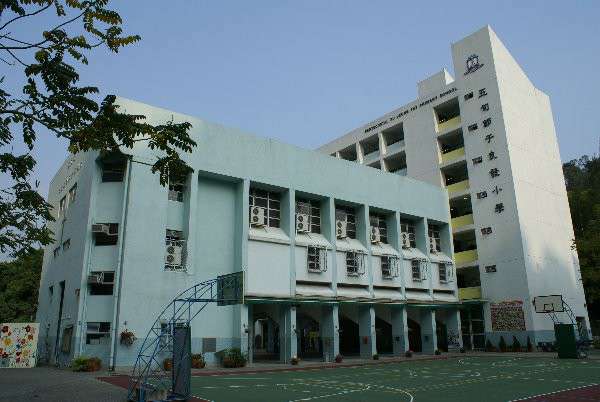
Last revision date:01 September 2026


