 Primary School Profiles 2026


 Primary School Profiles 2026

| Address: | 2 Wo Muk Road, Luen Wo Hui, Fanling, N.T. | |||
| Phone: | 26702257 | Email: | apsmail@apsss.edu.hk | |
| Fax: | 26685357 | Website: | https://www.apsss.edu.hk/rIndex | |
 School Information
| Supervisor/ Chairman of Management Committee | : | Mr. Choy Kin Chung Gary |
| School Head | : | Ms. Au Wing Yan Samantha |
| Incorporated Management Committee been established? | : | Established |
| Percentage of School Supervisor and Managers / Chairperson and Members of School Management Committee (SMC) of Government Schools Fulfilling the Training Targets | : | 53% |
| School Type | : | Aided Whole Day |
| Student Gender | : | Co-ed |
| Sponsoring Body | : | Kowloon Tong Church of the C.C. & M.A. |
| Religion | : | Protestantism / Christianity |
| Year of Commencement of Operation | : | 1961 |
| School Motto | : | The fear of the LORD is the beginning of wisdom, and knowledge of the Holy One is understanding. --Proverb 9:10 |
| Area Occupied by the School | : | About 3932 Sq. M |
| Through-train Secondary School | : | - |
| Feeder Secondary School | : | - |
| Nominated Secondary School | : | - |
| Medium of Instruction | : | Chinese & English |
| School Bus Service | : | Nanny van |
| Parent-Teacher Association | : | Yes |
| Past Students' Association/Alumni Association | : | Yes |
| 4Rs Mental Health Charter | : | Yes |
| Whole School Health Programme | : | Action School |
 2026/2027 Annual School Charges
| School Fee | : | - |
| Tong Fai | : | - |
| PTA Fee | : | 30 |
| Approved Charges for non-standard items | : | $470 (water dispenser maintenance, anti-epidemic supplies, Student electronic platform maintenance) |
| Other Charges | : | - |
 School Facilities
| Number of Classroom(s) | : | 18 |
| Number of School Hall(s) | : | 1 |
| Number of Playground(s) | : | 1 |
| Number of Library(ies) | : | 1 |
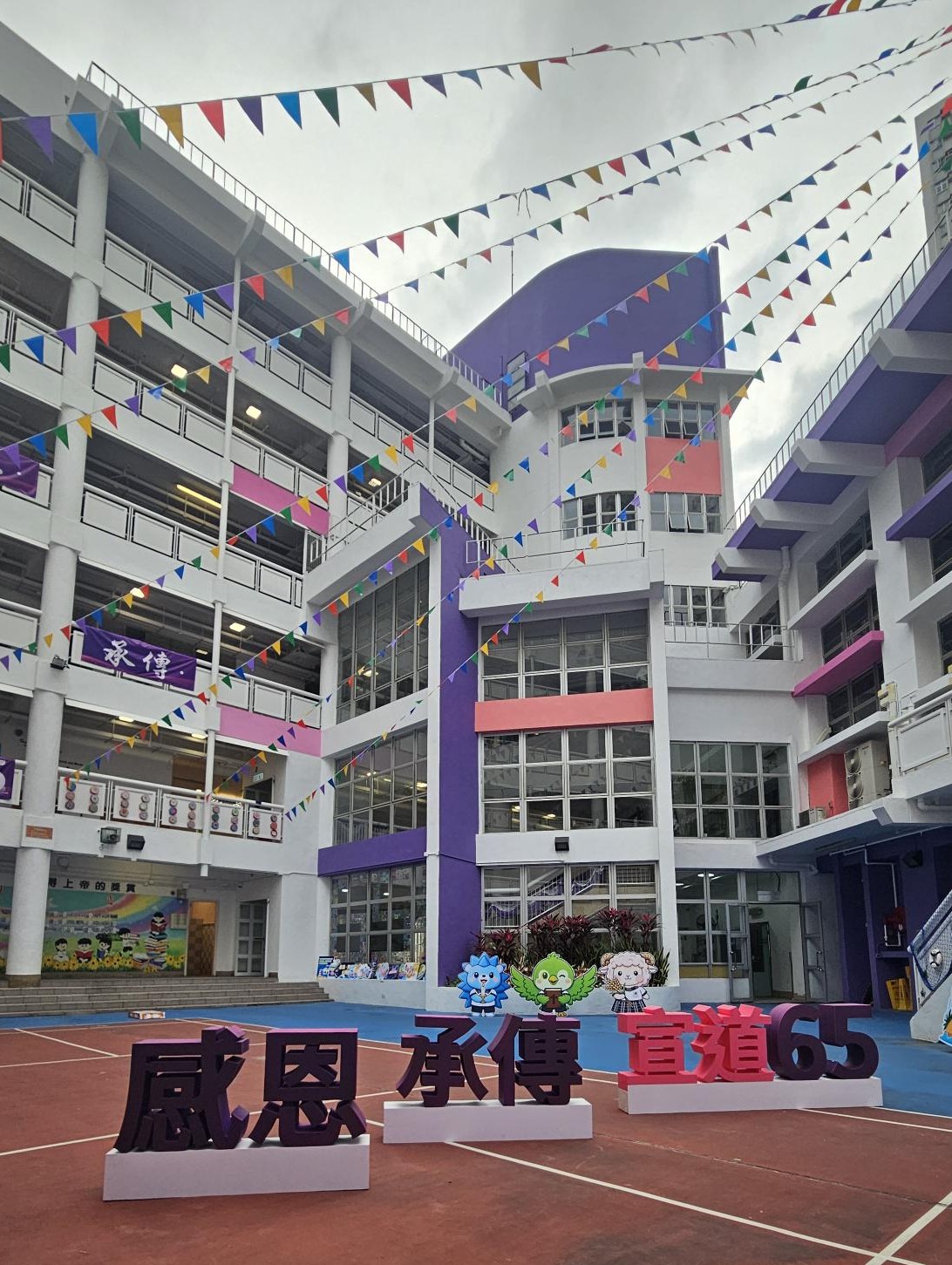
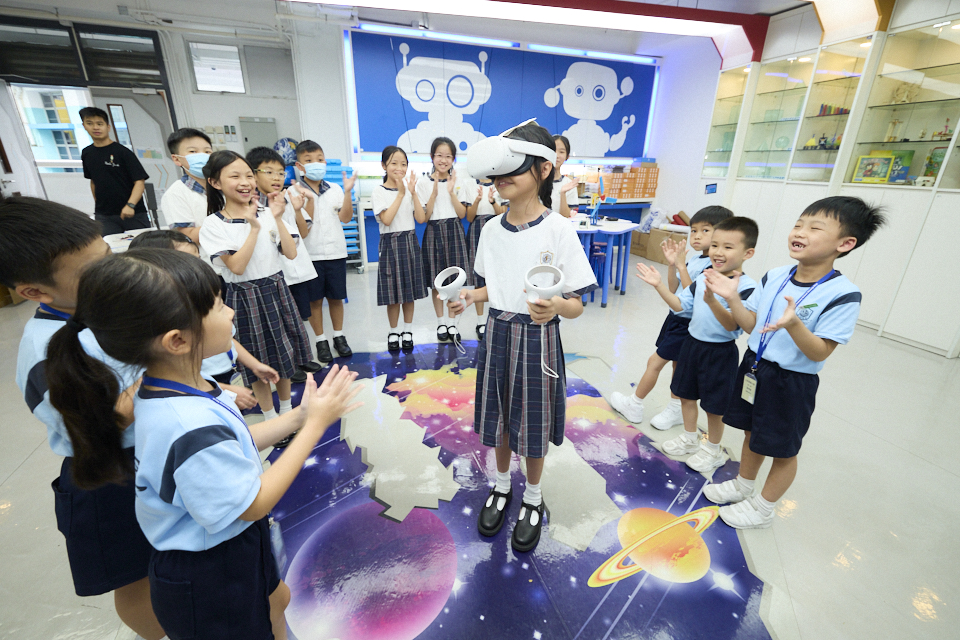
| Special Rooms | : | The school provides a Computer Room, Music Room, Technology Exploration Room, Visual Arts Room, Language Room, Counselling Activity Room and Dance Room to support a diverse curriculum and unleash students’ creativity and potential. |
| Facility(ies) for Supporting Students with Special Educational Needs | : | Ramp, Accessible lift and Accessible toilet. |
| Others | : | Additional facilities include a Multi-purpose Activity Room, Spiritual Garden, Student Running Track, Small-group Teaching Rooms and Parent Resource Centre, fostering a caring and inclusive campus. |
 Teaching Staff Information (Including School Head) in the 2025/2026 school year
| Number of teaching posts in the approved establishment | : | 37 |
| Total number of teachers in the school | : | 38 |
| Qualifications and professional training (%) | ||
| Had Received Teacher Training | : | 100% |
| Bachelor Degree | : | 100% |
| Master/ Doctorate Degree or above | : | 39% |
| Special Education Training | : | 83% |
| Years of Experience (%) | ||
| 0 - 4 years | : | 5% |
| 5 - 9 years | : | 21% |
| 10 years or above | : | 74% |
 Class Structure
| 2025/26 school year | ||
| P1 Number of classes | : | 3 |
| P2 Number of classes | : | 3 |
| P3 Number of classes | : | 3 |
| P4 Number of classes | : | 3 |
| P5 Number of classes | : | 3 |
| P6 Number of classes | : | 3 |
| Total | : | 18 |
| 2026/27 school year (Based on the number of classes approved by EDB in 2026) | ||
| P1 Number of classes | : | 3 |
| P2 Number of classes | : | 3 |
| P3 Number of classes | : | 3 |
| P4 Number of classes | : | 3 |
| P5 Number of classes | : | 3 |
| P6 Number of classes | : | 3 |
| Total | : | 18 |
| Mode of teaching at different levels | ||
| 1) We implement small-class, activity-based learning. Students from P1 to P6 are evenly distributed by ability to ensure balanced support. 2) Through cooperative learning and interactive group work, we cultivate communication, collaboration and problem-solving skills. 3) We promote Learning by Doing to build knowledge and enhance understanding and application. |
||
| Remarks | ||
| 1) A dual class teacher system in P1, with grade teams and guidance staff, supports students’ growth. 2) SMART (P1) and APLUS (P5–P6) programmes ensure smooth transitions. 3) We adopt a stretch-and-support approach with gifted and remedial provision. 4)Christian Life Education fosters positive values and character. |
||
 Performance Assessment
| Applicable to P1 only | ||
| Number of test(s) per year | : | 0 |
| Number of exam(s) per year | : | 0 |
| Replace tests and examinations with diversified assessments in the first term of P1 | : | Yes |
| Applicable to P2 to P6 only | ||
| Number of test(s) per year | : | 0 |
| Number of exam(s) per year | : | 2 |
| Applicable to P1 to P6 | ||
| Formulate appropriate school-based assessment and assignment policies, inform parents of related arrangements, and collect views from teachers, students and parents regularly (at least once per school year) for ongoing review and optimisation of the school assessment and assignment policies | : | Yes |
| Upload the school-based assessment policy onto the school webpage for information of the public and stakeholders | : | Yes |
| Upload the school-based assignment policy onto the school webpage for information of the public and stakeholders | : | Yes |
| Diversified Assessment for Learning | : | We emphasise continuous assessment, with formative tasks in Chinese, English and Mathematics to track progress. Diversified modes, including self and peer assessment and presentations, are adopted with accommodations. There are no exams in P1; P2–P6 have two summative assessments yearly. |
| Avoid arranging tests or examinations immediately after long holidays in order to let students take more rest during the holidays | : | Yes |
| Arrange the timetable flexibly according to the school context, with a tutorial session provided in the afternoon as far as possible for students to finish some of their homework under teachers’ guidance | : | Yes |
| Streaming arrangement | : | Students from P1 to P6 are evenly distributed across classes based on ability. No elite classes are set, avoiding labelling and fostering a caring and inclusive learning environment where every child receives balanced support and equal opportunities to thrive. |
 School Life
| Number of school days per week | : | 5 |
| Number of periods per day | : | 9 |
| Duration of each normal period | : | 35 |
| School starts at | : | 8:10 AM |
| School ends at | : | 3:30 PM |
| Lunch break | : | 12:40 - 1:30 |
| Lunch arrangement | : | Provided by designated supplier, arranged by parents and brought from home by students.. |
| Healthy school life | : | Healthy Breakfast Week and Fruit Week are organised to cultivate good eating habits. The school participates in the EatSmart School Accreditation Scheme to promote healthy diets. Sports zones and fitness activities encourage regular exercise. Mental wellness programmes support students’ emotional needs, fostering physical, social and spiritual well-being and a positive attitude towards life. |
| Remarks | : | Our school upholds Christian values and is committed to nurturing positive character. Core values such as faith, hope and love are integrated into the school-based curriculum and Chinese cultural education to create meaningful learning experiences. To support whole-person development, students are dismissed at 1:30 pm on Fridays to join school team training and co-curricular activities, while teachers engage in lesson preparation, professional development and collaborative exchange. |
 Life-wide Learning
| 1) We are committed to whole-person development through a broad and balanced curriculum. Through Key Learning Areas, Life-wide Learning, service learning and co-curricular activities, students gain five essential learning experiences across academic, arts, sports and service domains. Outdoor learning and overseas exchanges broaden horizons. 2) Students excel in external competitions, showcasing their all-round potential. |
 School Mission
| Upholding the spirit of Christianity, the school implements whole-person education through balanced development in spiritual, moral, intellectual, physical, social, and aesthetic aspects. Through sharing the Gospel, we guide students to live rich and fulfilling lives. |
 School Characteristics
| School Management | ||
| School Management Organisation | : | Our school is one of the affiliated schools of the Kowloon Tong Church of the Chinese Christian and Missionary Alliance in Hong Kong. It is governed by the Incorporated Management Committee. Under the leadership of the Principal, the School Development and Administrative Teams, together with the Subject Panels, work collaboratively to formulate and implement the School Development Plan. |
| Incorporated Management Committee / School Management Committee/ Management Committee | : | The members of the Incorporated Management Committee include representatives of the sponsoring body, the Principal, elected representatives of teaching staff, parents, alumni, and independent members of the community. |
| School Green Policy | : | Our school is committed to promoting environmental education and sustainable living. An Environmental Protection Team coordinates school policies, with Student Environmental Ambassadors assisting in promotion and encouraging participation. We organize a variety of activities, including Recycling Campaigns, the “One Person, One Flower” Planting Programme, the “Little Farmers” Service Team, “Hong Kong No Air-Con Night,” and the “Earth Hour” Lights-off Campaign, to nurture students’ awareness and foster a caring attitude toward the environment. The school also implements e-notices, paperless meetings, and energy- and water-saving measures to reduce paper use and conserve resources. Recycling facilities are provided to promote waste separation and reuse. Through these initiatives, we encourage students to cherish resources, reduce waste, and work together to build a green and sustainable campus. |
| School's Major Concerns | : | Upholding Positive Values • Living a Healthy Life. Fostering Inquiry-Based Learning • Enhancing Communication and Interaction Skills. |
| Learning and Teaching Plan | ||
| Learning & Teaching Strategies | : | 1) Our school promotes diversified and whole-person development through cooperative learning, creativity training, and higher-order thinking to unlock students’ potential. 2) A BYOD e-learning programme is implemented in Primary 4 to 6 to enhance learning effectiveness and foster self-directed learning. 3) Each subject incorporates structured learning strategies, including note-taking, mind mapping, and thinking tools. Mathematics, Humanities, and Science emphasize critical thinking, creativity, and problem-solving through inquiry-based learning and pre-lesson tasks. 4) Chinese and English lessons strengthen students’ biliterate and trilingual proficiency, with a NET teacher and Putonghua classes to enhance students’ language application skills. |
| Development of Major Renewed Emphases of the Primary Education Curriculum | : | Through daily lessons, life education lessons, national security education activities and competitions, etc., students are encouraged to uphold positive values. After the homework tutorial period, students may participate in ECAs which promote a balanced physical and mental development. Life-wide learning activities, including Project Learning and STEAM Week are arranged to enrich students' learning experience in real-world situations. Students can broaden their knowledge base, improve overall literacy, and build up interdisciplinary thinking skills by including cross-curricular reading and project-based learning. Promote RaC to enhance students' interdisciplinary learning ability and reading literacy. Students' interest and ability in science, technology and IT; creative thinking and pioneering and innovative spirit are cultivated through STEAM learning activities inside and outside the classroom. |
| Development of Generic Skills | : | Generic skills are developed in different subject-based key learning areas. Students develop generic skills including communication, collaboration, critical thinking and higher-order thinking skills are equipped through learning activities. |
| Cultivation of Proper Values, Attitudes and Behaviours | : | Through religious, moral, civic, and national education, we cultivate students’ core values, including perseverance, respect for others, responsibility, national identity, commitment, integrity, benevolence, law-abidingness, empathy, diligence, unity, and filial piety. By enhancing their resilience, we empower students to build a positive and healthy life. The school also emphasizes developing students' independent thinking and self-directed learning abilities, enabling them to make objective analyses and sound judgments to navigate future life challenges. |
| Student Support | ||
| Whole School Approach to Catering for Learner Diversity | : | 1) The school actively develops a wide range of gifted programmes to nurture and enhance students’ diverse talents. 2) Homework tutorial classes are provided for students who need additional academic support. 3) Students with special educational needs are supported through literacy classes, reading and writing skills training, as well as social skills and attention training programmes. 4) An After-school Care Programme is implemented to provide supervision, homework guidance and activities for students in need, supporting working parents. |
| Whole School Approach to Integrated Education | : | The Student Support Team, comprising the SBEP, SchoolSocial Worker, SENCO and SENSTs, works with teaching assistants under a Whole School Approach. We provide Enhanced School-based Speech Therapy Service, learning and assessment accommodations, and parent education programmes. |
| Curriculum Tailoring and Adaptation | : | Elements of gifted education are included in regular teaching. Off-site support is reinforced. School-based acceleration (assessment) policy, and task & assessment adaptation are set for students with SEN. |
| Home-school Co-operation and School Ethos | ||
| Home-School Co-operation | : | Organize activities such as parent workshops, parent-child classes, family adventures, family outings, charity sales, teacher appreciation events, etc to honor parents. Additionally, establish a parent volunteer team to assist in school events such as Chinese Cultural Day, Sports Day, and Reading Day. These initiatives foster home-school collaboration, enhances parent-child and teacher-student relationships, and strengthens parents' and students' sense of belonging to the school. |
| School Ethos | : | Teachers and social workers are Christians with educational ideals who care deeply for students and foster a campus of care, mutual support, and love. Through a systematic Christian Life Education curriculum, students learn Biblical truths and come to recognize, appreciate, and respect the value of life. The school also provides a fair, harmonious, and caring learning environment, encouraging students to put values into practice and creating a conducive setting for nurturing positive values and attitudes, while working together to promote a healthy school ethos. |
| Future Development | ||
| School Development Plan | : | Student Development Goals: 1. Establishing Healthy Lifestyle Habits in Students. 2. Nurturing Harmonious Interpersonal Relationships. 3. Cultivating Responsible Citizenship. Academic Excellence Goals: 1. Enhancing Students’ Core Learning Competencies. 2. Strengthening Interdisciplinary Knowledge and Skills Integration. 3. Empowering Teaching Staff Through Professional Development. |
| Teacher Professional Training & Development | : | Teachers enhance teaching quality through lesson study, collaborative planning and peer observation, supported by the Education Bureau and experts. They engage in professional workshops, including inquiry learning and AI in education, to strengthen practice. |
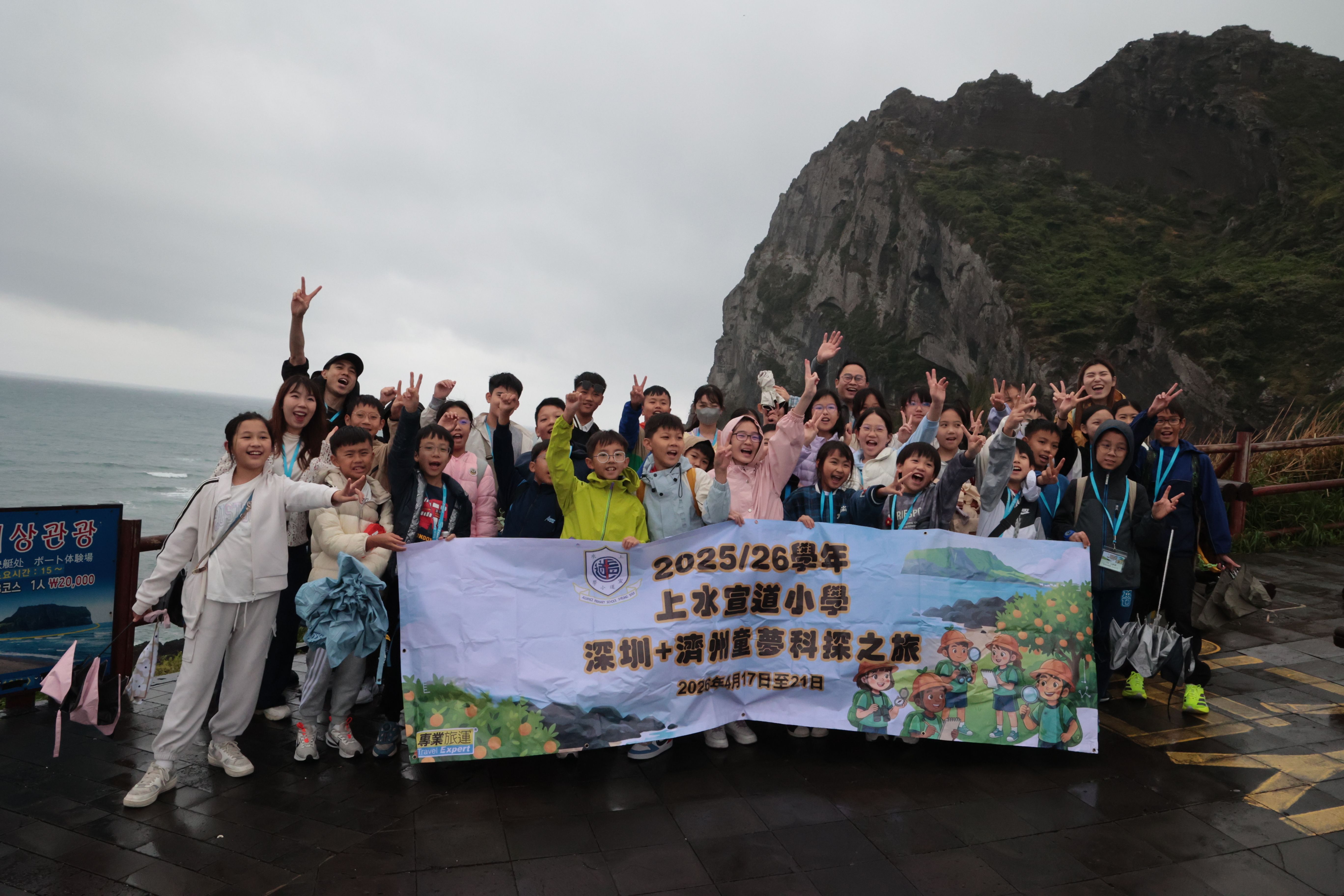
| Others | : | Numerous scholarships are available to support studying and life-wide learning. Awards and prizes are provided to recognize excellence and outstanding achievements.Establish the "Self-Learning Advancement Incentive Program" to promote students' progress and advancement in various fields such as spirituality, intellect, physical fitness, and aesthetics through electronic recording and diversified rewards. Exchange programmes and study tours are held annually. |
 School Map

Last revision date:01 September 2026


