 Primary School Profiles 2026

 Primary School Profiles 2026

| Address: | 7 Choi Ming Street, Choi Ming Court, Tseung Kwan O, N.T. | |||
| Phone: | 31294294 | Email: | mtps@hkmlc-mtps.edu.hk | |
| Fax: | 31294194 | Website: | http://www.hkmlc-mtps.edu.hk | |
 School Information
 | Supervisor/ Chairman of Management Committee | : | Ms. Cheung Ngai |
| School Head | : | Miss Chan Man Fong Noel |
| Incorporated Management Committee been established? | : | Established |
| Percentage of School Supervisor and Managers / Chairperson and Members of School Management Committee (SMC) of Government Schools Fulfilling the Training Targets | : | 90% |
| School Type | : | Aided Whole Day |
| Student Gender | : | Co-ed |
| Sponsoring Body | : | Hong Kong & Macau Lutheran Church Ltd. |
| Religion | : | Protestantism / Christianity |
| Year of Commencement of Operation | : | 1992 |
| School Motto | : | Growth in Body, Mind, Faith and Love |
| Area Occupied by the School | : | About 12000 Sq. M |
| Through-train Secondary School | : | - |
| Feeder Secondary School | : | - |
| Nominated Secondary School | : | HKMLC Queen Maud Secondary School |
| Medium of Instruction | : | Chinese |
| School Bus Service | : | School Bus |
| Parent-Teacher Association | : | Yes |
| Past Students' Association/Alumni Association | : | Yes |
| 4Rs Mental Health Charter | : | Yes |
| Whole School Health Programme | : | Action School |
 2026/2027 Annual School Charges
| School Fee | : | - |
| Tong Fai | : | - |
| PTA Fee | : | $40 |
| Approved Charges for non-standard items | : | $300 |
| Other Charges | : | - |
 School Facilities
 | Number of Classroom(s) | : | 30 |
| Number of School Hall(s) | : | 1 |
| Number of Playground(s) | : | 4 |
| Number of Library(ies) | : | 1 |
| Special Rooms | : | Music Rooms, Science Lab, Activity Room, Athletic Track, Computer Room, STEAM Room, Campus TV, Aero Space, English Room, Visual Art Room, Game Therapy Centre, PTA Resource Centre, Speech Therapy Centre. |
| Facility(ies) for Supporting Students with Special Educational Needs | : | Accessible lift. |
| Others | : | Basketball Courts, Art Gallery. |
 Teaching Staff Information (Including School Head) in the 2025/2026 school year
 | Number of teaching posts in the approved establishment | : | 56 |
| Total number of teachers in the school | : | 56 |
| Qualifications and professional training (%) | ||
| Had Received Teacher Training | : | 100% |
| Bachelor Degree | : | 100% |
| Master/ Doctorate Degree or above | : | 48% |
| Special Education Training | : | 75% |
| Years of Experience (%) | ||
| 0 - 4 years | : | 48% |
| 5 - 9 years | : | 14% |
| 10 years or above | : | 38% |
 Class Structure
 | 2025/26 school year | ||
| P1 Number of classes | : | 5 |
| P2 Number of classes | : | 5 |
| P3 Number of classes | : | 5 |
| P4 Number of classes | : | 5 |
| P5 Number of classes | : | 5 |
| P6 Number of classes | : | 5 |
| Total | : | 30 |
| 2026/27 school year (Based on the number of classes approved by EDB in 2026) | ||
| P1 Number of classes | : | 5 |
| P2 Number of classes | : | 5 |
| P3 Number of classes | : | 5 |
| P4 Number of classes | : | 5 |
| P5 Number of classes | : | 5 |
| P6 Number of classes | : | 5 |
| Total | : | 30 |
| Mode of teaching at different levels | ||
| Implement effective strategies of small class teaching (P.1-P.6) and co-operative learning. | ||
| Remarks | ||
| - | ||
 Performance Assessment
 | Applicable to P1 only | ||
| Number of test(s) per year | : | 0 |
| Number of exam(s) per year | : | 1 |
| Replace tests and examinations with diversified assessments in the first term of P1 | : | Yes |
| Applicable to P2 to P6 only | ||
| Number of test(s) per year | : | 0 |
| Number of exam(s) per year | : | 3 |
| Applicable to P1 to P6 | ||
| Formulate appropriate school-based assessment and assignment policies, inform parents of related arrangements, and collect views from teachers, students and parents regularly (at least once per school year) for ongoing review and optimisation of the school assessment and assignment policies | : | No |
| Upload the school-based assessment policy onto the school webpage for information of the public and stakeholders | : | No |
| Upload the school-based assignment policy onto the school webpage for information of the public and stakeholders | : | No |
| Diversified Assessment for Learning | : | Primary 1 Term 1: No exams. Chinese, English and Mathematics are assessed through diversified tasks. Term 2: Mock exams for Chinese, English and Mathematics. Term 3: Formal exams are conducted. Ongoing: Diversified assessments for Humanities and Science are conducted every term. Primary 2–6 Each term consists of one examination and two formative assessments for Chinese, English and Mathematics. |
| Avoid arranging tests or examinations immediately after long holidays in order to let students take more rest during the holidays | : | Yes |
| Arrange the timetable flexibly according to the school context, with a tutorial session provided in the afternoon as far as possible for students to finish some of their homework under teachers’ guidance | : | Yes |
| Streaming arrangement | : | P.1-P.2 mixed mode, P.4-P.6 based on academic achievements. |
 School Life
 | Number of school days per week | : | 5 |
| Number of periods per day | : | 8 |
| Duration of each normal period | : | 35 |
| School starts at | : | 8:00 AM |
| School ends at | : | 3:15 PM |
| Lunch break | : | 12:35 - 1:30 |
| Lunch arrangement | : | Provided by designated supplier, arranged by parents and students can bring their own lunch boxes. |
| Healthy school life | : | Morning-assembly activities include storytelling, Hymn sharing, Positive action, reading, Chill for 5 minutes, Recess PE activities, Campus TV, etc. Lunch activities include a variety of after-lunch activities, Soul Recharge Station, Happy ""Fun Zone"" Activities etc. |
| Remarks | : | 1. Provide a variety of after-lunch activities for students to enjoy and perform. 2. Implement Happy Friday for Learning for Fun activities and other interest classes. |
 Life-wide Learning
 | Kin-Ball, athletics, roller skating, English musical, Simulated flight training, Drone training, Young reporter, fellowship, Taekwondo, Ballet, Street Dancing, Scouts, English eloquence classes, Cambridge English, Scrabble, solo and choral speaking, Math Olympiad, choirs, science and invention classes, VEX Robotic, Hand-Bells Classes, percussion classes, artistic activities, Drone Technology and Gifted Education Program. |
 School Mission
 | We are committed to providing high-quality education with the spirit of Christ, cultivating students' balanced development in morality, intelligence, physical fitness, social skills, aesthetics, and spiritual growth, enabling them to pursue a fulfilling life. |
 School Characteristics
 | School Management | ||
| School Management Organisation | : | The School Management Organisation consists of the following components: Management and organization, learning and teaching, School culture and student support. The School Development Committee is responsible for giving advice to the Administration Board on school issues. The Administration Board consists of 17 members, including the Principal, Deputy Head, Student Guidance Officer, etc. |
| Incorporated Management Committee / School Management Committee/ Management Committee | : | The Incorporated Management Committee (IMC) consists of 7 members: the Principal, one Teacher Manager and one Alternate Teacher Manager, one Parent Manager and one Alternate Parent Manager, one Alumni Manager. |
| School Green Policy | : | To develop and enhance students' eco-awareness through environmental education with different activities. |
| School's Major Concerns | : | 1. Practice truth, communicate with goodwill, and unlock potential. 2. Equip children, dare to challenge, and embrace the future. |
| Learning and Teaching Plan | ||
| Learning & Teaching Strategies | : | 1. Optimize the school-based reading schemes and establish a book-loving culture. 2. To enhance motivation, self-directed learning and generic skills with the flexible arrangement of lessons (35minutes) and different learning activities. 3. Cater for learner diversity and different learning styles to enhance learning effectiveness. 4. Make good use of e-learning tools to meet the learning needs and abilities of students. 5. Inspire potential and build self-confidence by participating in a variety of activities and competitions. 6. Continuously optimize the assessment mechanism to help students understand their strengths and weaknesses and establish an independent atmosphere of diligence. 7. Through participation in the University Partner Assistance Program, support teachers to form "Professional Learning Communities" to promote continuous school development. |
| Development of Major Renewed Emphases of the Primary Education Curriculum | : | 1. Strengthening values education 2. Making good use of learning time and creating space to promote a balanced physical and mental development 3. Reinforcing, STEAM education 4. Developing students' media and AI literacy and skills. 5. Strengthening cross-curricular learning and reading across the curriculum for developing lifelong learning capabilities |
| Development of Generic Skills | : | Build students' common abilities through school-based curriculum, thematic learning, and diverse activities in the learning domain. |
| Cultivation of Proper Values, Attitudes and Behaviours | : | Our school is rooted in Christian education, fostering students' positive values through the three levels of learning (cognition, affection and action) across both formal and informal curricula. We implement thematic months on values education and school-based Life education, connecting various groups and engaging the entire school community. We provide opportunities for students to practice positive attitudes and behaviours, collectively cultivating a constructive campus atmosphere. Our ultimate goal is for students to embody the qualities of the fruits of the Spirit. |
| Student Support | ||
| Whole School Approach to Catering for Learner Diversity | : | We fully implement "Enrichment and Remediation" programs, offering gifted education curricula and extracurricular activities to nurture elite and high-potential students. We also cater to students' developmental and learning needs through potential development classes, advancement classes, various support groups, homework tutorials, and after-school care, providing comprehensive support for individual learning differences. |
| Whole School Approach to Integrated Education | : | Use the Learning Support Grant of the Education Bureau to enhance students' learning effectiveness and help them integrate into school life. The "Student Support Team" of our school is led by the Special Educational Needs Coordinator. Members include school-based educational psychologist, school-based speech therapist, Special Educational Needs Support Teachers and teaching assistants, and provide comprehensive support to students with special educational needs, including various types of support groups, teaching adaptation, homework and assessment accommodation, etc. |
| Curriculum Tailoring and Adaptation | : | Provide differentiated assignments, enrichment courses and special arrangements on assessment and exam. |
| Home-school Co-operation and School Ethos | ||
| Home-School Co-operation | : | 1. Invite parent representatives to join the school board. 2. Establish parent day, parent communication channels to maintain regular contact with parents. 3. Recruit parent volunteers to assist in organizing activities. 4. Hold regular parent-focused events such as specialized lectures, family trips, and storytelling sessions to enhance home-school partnerships to promote students' holistic development. 5. Set up a parent resource center to provide a dedicated space for volunteers to meet and work. |
| School Ethos | : | 1. The school is committed to promote compassionate school culture, where students learn "compassionate communication" and "social emotional learning" from an early age, with a strong emphasis on their physical, mental, and spiritual well-being. 2. The school upholds a simple and virtuous ethos, focusing on cultivating students' character development. 3. A class culture programme is implemented to foster positive teacher-student relationships through effective class management. 4. A well-structured discipline and guidance system is in place to nurture students' self-discipline and adherence to rules. Through a reward and penalty scheme, the school reinforces positive attitudes and behaviours among students. |
| Future Development | ||
| School Development Plan | : | 1. Embrace Christian core values as our guiding principles, deepen positive values education, and practice the spirit of faith, hope, and love. 2. Foster a empathetic and positive campus culture, nurturing students towards a happy and fulfilling life. 3. Enhance school-based counseling curriculum and activities to promote holistic student development. 4. Equip students with 21st-century and STEAM (Science, Technology, Engineering, Arts, Mathematics) skills, utilizing information technology and AI to enhance learning effectiveness. 5. Cultivate students' reading habits, fostering a self-learning spirit through reading. 6. Foster students to establish learning goals and healthy lifestyles, enabling them to accept challenges and build self-confidence. |
| Teacher Professional Training & Development | : | Promote professional development with collaborative design of teaching, applications of Artificial Intelligence (AI), experience sharing and lesson observation. |
| Others | : | - |
 School Map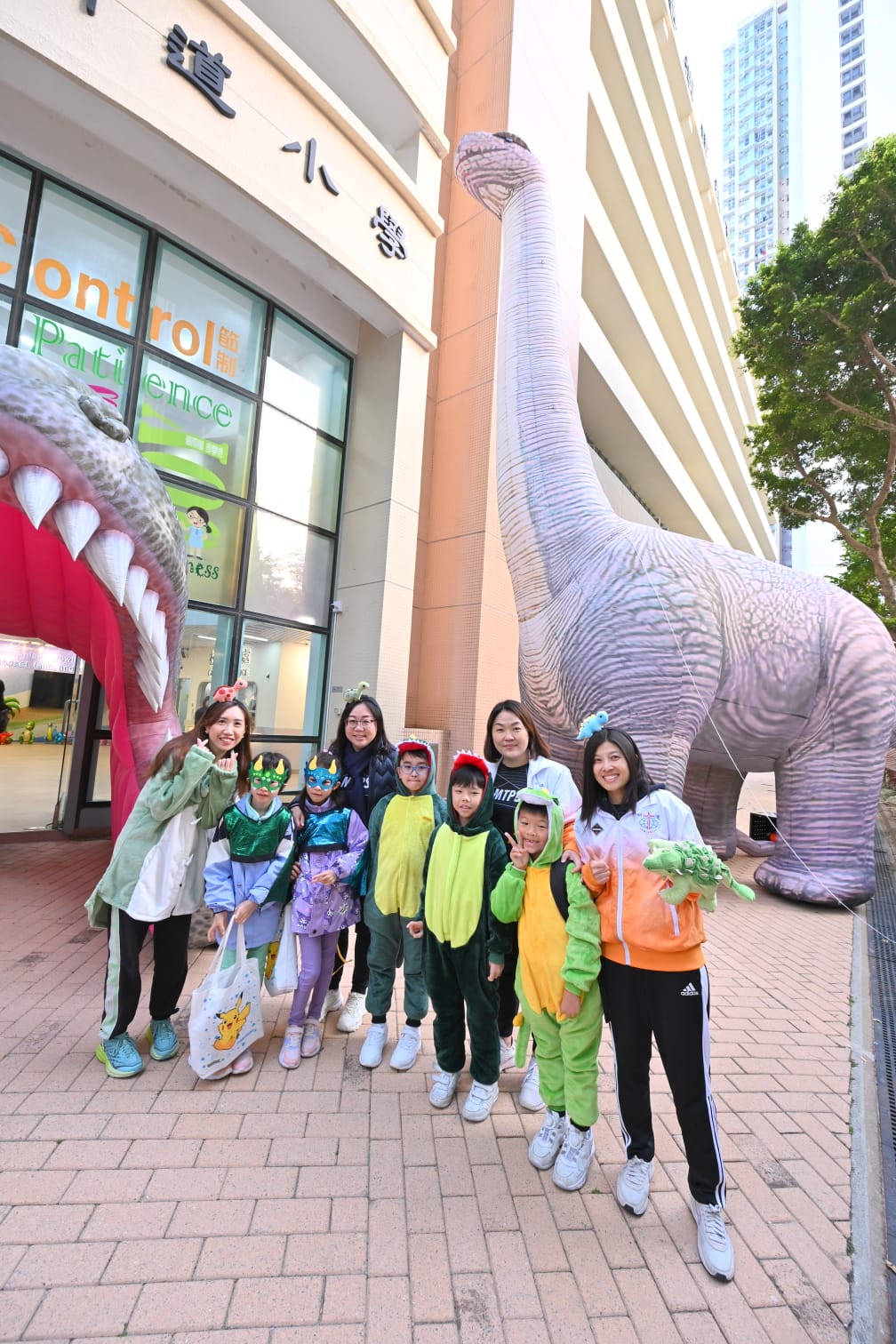

Last revision date:01 September 2026


