 Primary School Profiles 2026


 Primary School Profiles 2026

| Address: | 2 Tong Yin Street, Tseung Kwan O, N.T. | |||
| Phone: | 21770050 | Email: | info@plkwws.edu.hk | |
| Fax: | 21770406 | Website: | http://www.plkwws.edu.hk | |
 School Information
| Supervisor/ Chairman of Management Committee | : | Mr. Ho Arnaldo Yau Heng |
| School Head | : | Mr. Chan Shui Leung |
| Incorporated Management Committee been established? | : | Established |
| Percentage of School Supervisor and Managers / Chairperson and Members of School Management Committee (SMC) of Government Schools Fulfilling the Training Targets | : | 64% |
| School Type | : | Aided Whole Day |
| Student Gender | : | Co-ed |
| Sponsoring Body | : | Po Leung Kuk |
| Religion | : | Not Applicable |
| Year of Commencement of Operation | : | 1999 |
| School Motto | : | Affection, Respect, Diligence, Honesty |
| Area Occupied by the School | : | About 7000 Sq. M |
| Through-train Secondary School | : | - |
| Feeder Secondary School | : | - |
| Nominated Secondary School | : | - |
| Medium of Instruction | : | Chinese |
| School Bus Service | : | School Bus; Nanny van |
| Parent-Teacher Association | : | Yes |
| Past Students' Association/Alumni Association | : | Yes |
| 4Rs Mental Health Charter | : | Yes |
| Whole School Health Programme | : | Advanced School |
 2026/2027 Annual School Charges
| School Fee | : | - |
| Tong Fai | : | - |
| PTA Fee | : | $20 |
| Approved Charges for non-standard items | : | $400 |
| Other Charges | : | - |
 School Facilities
| Number of Classroom(s) | : | 30 |
| Number of School Hall(s) | : | 1 |
| Number of Playground(s) | : | 2 |
| Number of Library(ies) | : | 1 |
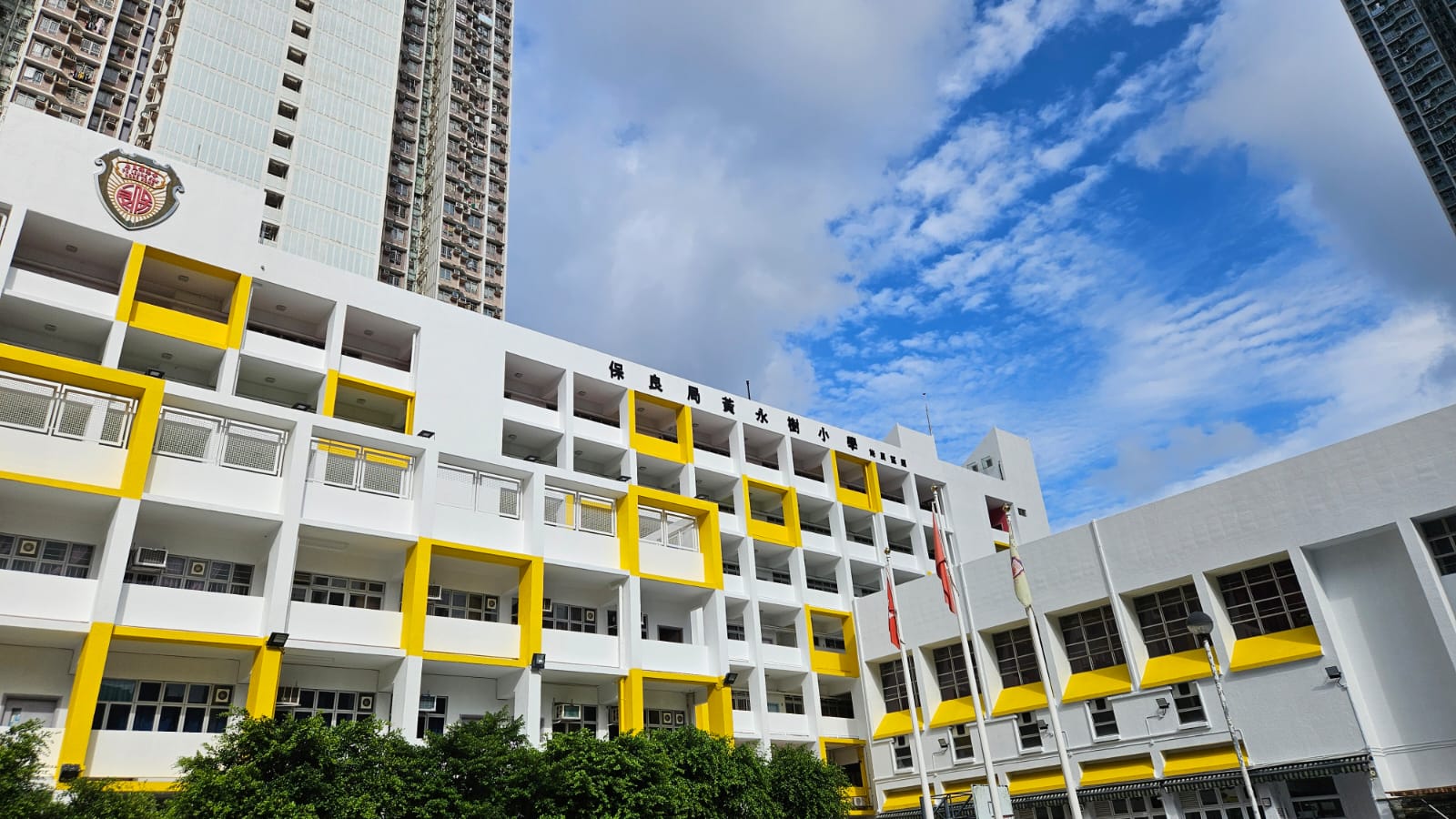
| Special Rooms | : | Library, Music Room, 2 Computer Room, Visual Art Room, Student Activity Centre, Science Lab, Swimming Pool. |
| Facility(ies) for Supporting Students with Special Educational Needs | : | Accessible lift and Accessible toilet. |
| Others | : | Installation of wireless LAN network in whole school and interactive touch digital screen and visualizer in each classroom. |
 Teaching Staff Information (Including School Head) in the 2025/2026 school year
| Number of teaching posts in the approved establishment | : | 54 |
| Total number of teachers in the school | : | 56 |
| Qualifications and professional training (%) | ||
| Had Received Teacher Training | : | 100% |
| Bachelor Degree | : | 100% |
| Master/ Doctorate Degree or above | : | 14% |
| Special Education Training | : | 45% |
| Years of Experience (%) | ||
| 0 - 4 years | : | 16% |
| 5 - 9 years | : | 27% |
| 10 years or above | : | 57% |
 Class Structure
| 2025/26 school year | ||
| P1 Number of classes | : | 5 |
| P2 Number of classes | : | 5 |
| P3 Number of classes | : | 5 |
| P4 Number of classes | : | 5 |
| P5 Number of classes | : | 5 |
| P6 Number of classes | : | 5 |
| Total | : | 30 |
| 2026/27 school year (Based on the number of classes approved by EDB in 2026) | ||
| P1 Number of classes | : | 5 |
| P2 Number of classes | : | 5 |
| P3 Number of classes | : | 5 |
| P4 Number of classes | : | 5 |
| P5 Number of classes | : | 5 |
| P6 Number of classes | : | 5 |
| Total | : | 30 |
| Mode of teaching at different levels | ||
| Small class teaching is implemented for whole school. Appropriate tiered curriculum focusing on catering for learner differences and group learning are provided for different abilities of students. | ||
| Remarks | ||
| - | ||
 Performance Assessment
| Applicable to P1 only | ||
| Number of test(s) per year | : | 0 |
| Number of exam(s) per year | : | 2 |
| Replace tests and examinations with diversified assessments in the first term of P1 | : | Yes |
| Applicable to P2 to P6 only | ||
| Number of test(s) per year | : | 0 |
| Number of exam(s) per year | : | 3 |
| Applicable to P1 to P6 | ||
| Formulate appropriate school-based assessment and assignment policies, inform parents of related arrangements, and collect views from teachers, students and parents regularly (at least once per school year) for ongoing review and optimisation of the school assessment and assignment policies | : | Yes |
| Upload the school-based assessment policy onto the school webpage for information of the public and stakeholders | : | Yes |
| Upload the school-based assignment policy onto the school webpage for information of the public and stakeholders | : | Yes |
| Diversified Assessment for Learning | : | 1. There are three examinations throughout the school year to evaluate the progress of students' abilities and act as useful feedback for teachers. 2. Besides written assessments, there are different types of assessments such as project learning, group discussion, presentation, classroom performances, implementation assessments and parent assessments. |
| Avoid arranging tests or examinations immediately after long holidays in order to let students take more rest during the holidays | : | Yes |
| Arrange the timetable flexibly according to the school context, with a tutorial session provided in the afternoon as far as possible for students to finish some of their homework under teachers’ guidance | : | Yes |
| Streaming arrangement | : | 1. The arrangement of P.1 classes is based on proportion of boys and girls. 2. For P.2-P.6, two of the classes are elite classes. |
 School Life
| Number of school days per week | : | 5 |
| Number of periods per day | : | 9 |
| Duration of each normal period | : | 35 |
| School starts at | : | 8:00 AM |
| School ends at | : | 3:15 PM |
| Lunch break | : | 12:30 - 1:30 |
| Lunch arrangement | : | Provided by designated supplier, arranged by parents and students. |
| Healthy school life | : | 1. Morning exercise sessions are available. 2. Promote healthy diet culture to cultivate students' healthy eating habits. |
| Remarks | : | - |
 Life-wide Learning
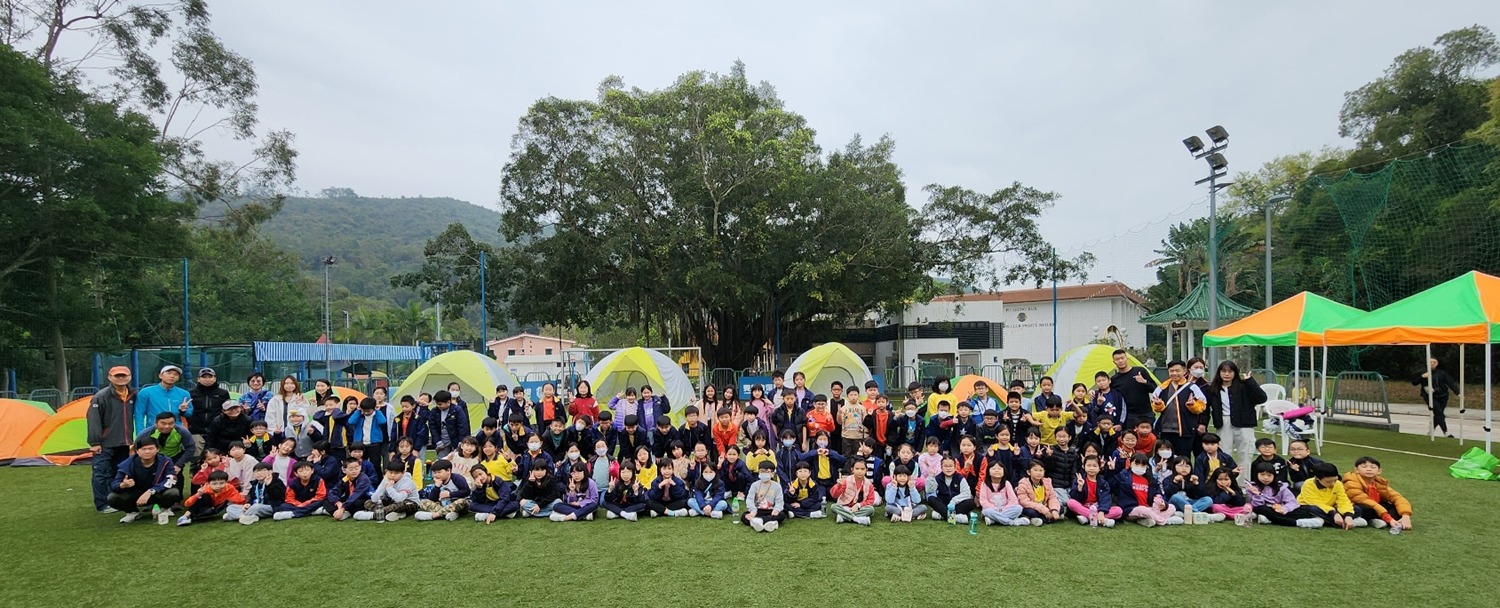
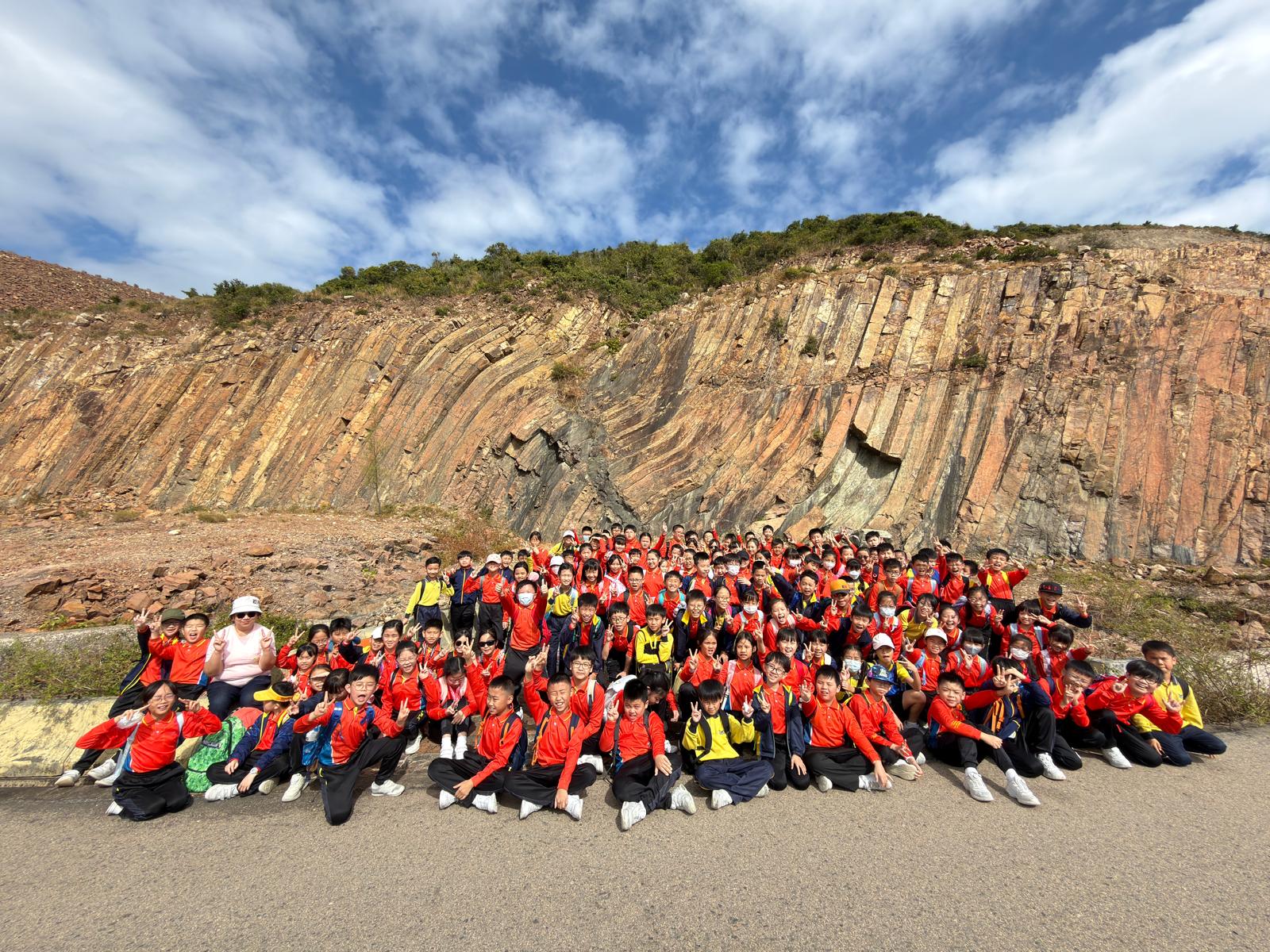
| Swimming Team, School Choir, Elite Mathematics Training, STEAM class, Musical Instrument Class, Chinese Drum Team; Pop Live Band, Dancing Team, Rope Skipping Team, Rugby Team, Lion Dance Team, Flag Twirlers, Debate Team, Drama Clubs, Scout Group, Brownie Team, Little artists, Road Safety Team etc., over 60 kinds of activities. |
 School Mission
| Encourage students to remember 'Affection', 'Respect', 'Diligence', 'Honesty' as our school mottos and promote the 'Education Quality Circle Scheme' so that students make all-round progress in the areas of moral, intellectual, physical, social and aesthetic development. They will be healthy, energetic, caring for society, responsible, law-abiding and will become life-long pursuers of self improvement through learning. |
 School Characteristics
| School Management | ||
| School Management Organisation | : | The school has set up Po Leung Kuk Incorporated Management Committee. For daily operation, the Principal leads each administrative group curriculum development group and student growth group to promote and implement the affairs in each aspect as well as Invitational Education. |
| Incorporated Management Committee / School Management Committee/ Management Committee | : | Incorporated Management Committee was set up in 2012. Members include Supervisor, Director, Principal Manager, Independent Manager, Teacher Manager, Parent Manager and Alumni Manager. |
| School Green Policy | : | Formulate school environmental policy including education, energy saving, emission reduction, recycling and purchase. Students are educated from different angles to foster awareness and concern for environmental protection in order to lead a green life. |
| School's Major Concerns | : | 1. Promote values education and foster students' humanistic and technological literacy. 2. Create a well-being campus and cultivate a new generation with physical, mental and mental health. |
| Learning and Teaching Plan | ||
| Learning & Teaching Strategies | : | 1. There is continual development of school-based curriculum reform. School-based curriculum is tailor-made for students based on their needs so as to enhance their lesson participation and facilitate self-directed learning ability. 2. Making use of e-learning and AI tools for teaching and learning, initiating life-wide learning periods and cross-curricular learning activities provides students with a deep and broad range of learning styles and all-round development opportunities. In turn, this will enable students to develop generic skills through different learning contexts. |
| Development of Major Renewed Emphases of the Primary Education Curriculum | : | Our school is planning cross-curricular theme learning with a whole school approach for the development of a school-based values education curriculum, life education, national education and national security education. This will utilize the school vision of the sponsoring bodies, from which STEAM elements and cross-curricular reading are infiltrated. Healthy living habits that facilitate balanced physical and mental development are also connected so as to develop a specific school-based curriculum. In addition, each subject integrates differentiated teaching into the curriculum as well as the cycle of learning and teaching to encourage the diversity of students. In order to create school-based teaching characteristics, teachers use blended learning both inside and outside the classroom to integrate multi-participation and diversified assessment literacy into regular teaching, so as to develop students' lifelong learning abilities. |
| Development of Generic Skills | : | With the use of cooperative learning in small class teaching strategies in lessons, students' collaborative and communicative abilities are developed. Through multi-faceted learning experiences which include creative design thinking curriculum, gifted education, STEAM curriculum, coding course and robot-making curriculum, students' understanding, creativity, problem-solving, communication and collaboration skills are enhanced. |
| Cultivation of Proper Values, Attitudes and Behaviours | : | 1. Set up moral education and growth classes every week to instill core values; 2. Implement interdisciplinary thematic learning across all levels, integrating a school-based curriculum that embodies the sponsoring body’s ethos and school motto |
| Student Support | ||
| Whole School Approach to Catering for Learner Diversity | : | 1. Provide 'Student Support Team' and use 'Whole school Approach' mode to take care of students with Special Educational Needs. 2. SENCO takes charge of each inclusive measure to provide the Three-Tier Intervention Model for the needy. |
| Whole School Approach to Integrated Education | : | 1. Provide 'Student Support Team' and use 'Whole school Approach' mode to take care of students with Special Educational Needs. 2. SENCO takes charge of each inclusive measure to provide the Three-Tier Intervention Model for the needy. 3. Emphasize cooperation between parents and school, establish communication mechanism and through various channels discuss with parents about student support strategies. |
| Education Support for Non-Chinese Speaking(NCS) Students | : | Our school provides additional support for NCS students to facilitate their learning of Chinese: appointing additional teacher(s)/teaching assistant(s) to support NCS students' learning of Chinese; and organising activities to create an inclusive learning environment in the school. |
| Curriculum Tailoring and Adaptation | : | 1. Through pedagogical research, design curriculum continually to cater for students' needs. 2. Provide pull-out tutorial sessions and expand cognitive teaching by providing various types of courses and support to gifted students. 3. Promote whole-level school-based Gifted Education Curriculum and set up a pool of gifted students to systematically make a record of their strengths in order to provide them with a performance platform and develop their talents. |
| Home-school Co-operation and School Ethos | ||
| Home-School Co-operation | : | 1. Many parents' talks are organized every year and activities are co-organized with the PTA to ensure frequent communication. 2. IMC has parent manager to let parents take part in school administrative affairs. 3. Provide parental courses to assist parents with their children's learning. |
| School Ethos | : | 1. Our school attaches great importance to class management and building a positive campus culture. 2. The school attaches great importance to moral education, academic cultivation and the cultivation of multiple intelligences and practising of holistic education. 3. School-based social workers, speech therapists and school-based educational psychologists provide timely support to students and families in need. |
| Future Development | ||
| School Development Plan | : | 1. The integration of information communication technology and artificial intelligence systems into the daily learning and teaching process based on high participation and multi-interaction. 2. The creation of diverse growth experiences and cultivation of students with core character values, gratitude and knowledge. |
| Teacher Professional Training & Development | : | Apply information communication technology and integrate it into daily teaching. Integrate values education into school-based curriculum and teaching and learning. |
| Others | : | 1. Promote a positive school culture. 2. Utilize generative AI to support Chinese writing learning. 3. School-based swimming program. |
 School Map
Last revision date:01 September 2026


