 Primary School Profiles 2026

 Primary School Profiles 2026
| Address: | 2 Mau Tai Road, Tseung Kwan O, N.T. | |||
| Phone: | 26233628 | Email: | stfalkwps@lkw.edu.hk | |
| Fax: | 26233618 | Website: | http://www.lkw.edu.hk | |
 School Information
 | Supervisor/ Chairman of Management Committee | : | Mr. Lo Ying Ming Thomas |
| School Head | : | Ms. Wun Siu Kam |
| Incorporated Management Committee been established? | : | Established |
| Percentage of School Supervisor and Managers / Chairperson and Members of School Management Committee (SMC) of Government Schools Fulfilling the Training Targets | : | 90% |
| School Type | : | Aided Whole Day |
| Student Gender | : | Co-ed |
| Sponsoring Body | : | Shun Tak Fraternal Association |
| Religion | : | Not Applicable |
| Year of Commencement of Operation | : | 1996 |
| School Motto | : | Erudition, Propriety, Commitment, Honesty |
| Area Occupied by the School | : | About 5250 Sq. M |
| Through-train Secondary School | : | - |
| Feeder Secondary School | : | - |
| Nominated Secondary School | : | - |
| Medium of Instruction | : | Chinese |
| School Bus Service | : | School Bus; Nanny van |
| Parent-Teacher Association | : | Yes |
| Past Students' Association/Alumni Association | : | Yes |
| 4Rs Mental Health Charter | : | Yes |
| Whole School Health Programme | : | Action School |
 2026/2027 Annual School Charges
| School Fee | : | - |
| Tong Fai | : | - |
| PTA Fee | : | - |
| Approved Charges for non-standard items | : | $300 (maintenance of computer equipment and cleaning supplies) |
| Other Charges | : | $20 (student smart card) |
 School Facilities
 | Number of Classroom(s) | : | 30 |
| Number of School Hall(s) | : | 1 |
| Number of Playground(s) | : | 3 |
| Number of Library(ies) | : | 1 |
| Special Rooms | : | Computer Rooms, Multi-purpose Rooms, Chinese Activity Room, English Activity Rooms, Mathematics Activity Room, General Studies Laboratory, Gymnastics Room, Dance Rooms, Music Rooms, Art Room, Games Room, STEAM Room. |
| Facility(ies) for Supporting Students with Special Educational Needs | : | Ramp, Accessible lift and Accessible toilet. |
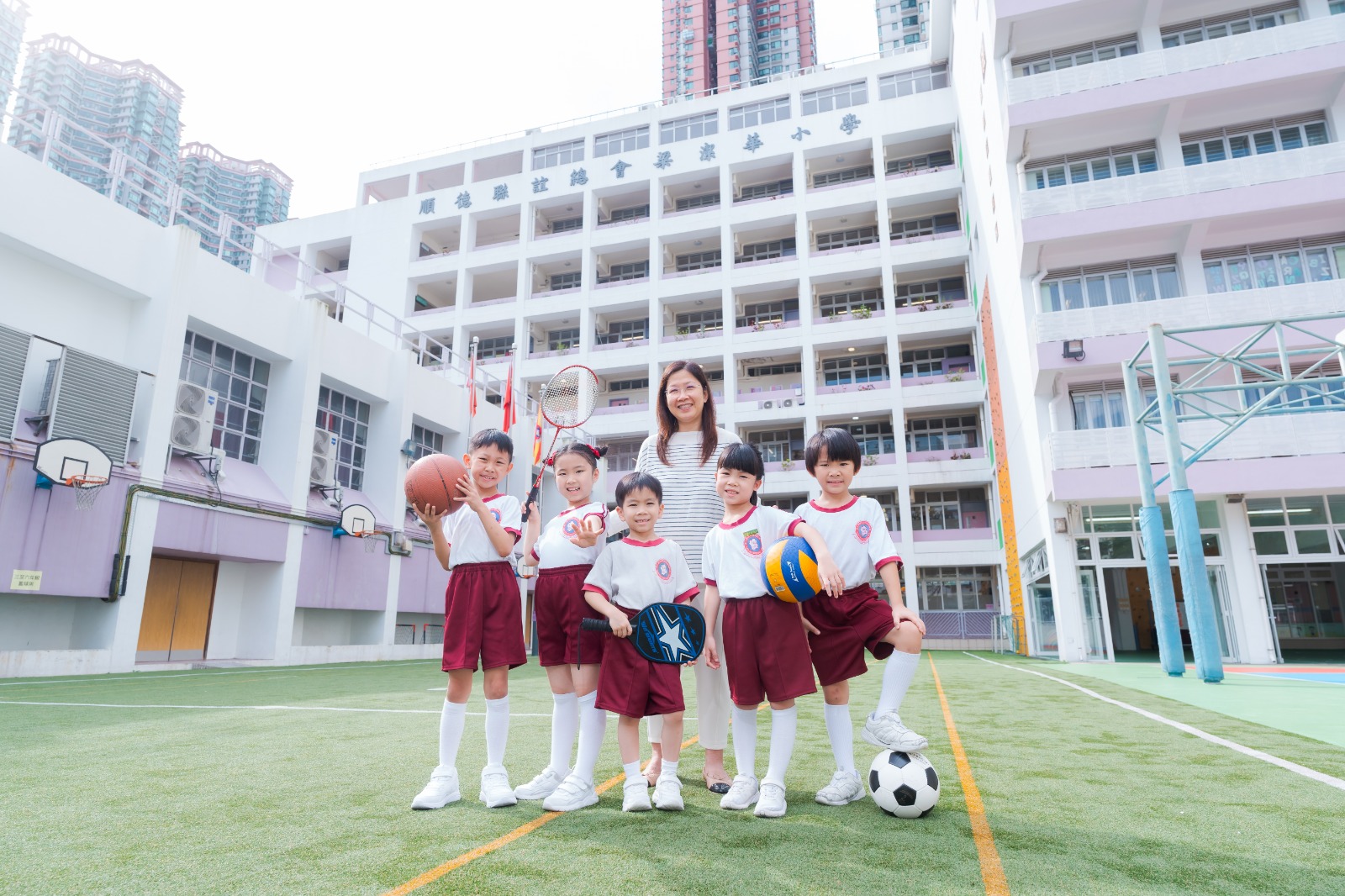
| Others | : | There is an artificial turf and learning commons for students to participate in different varieties of activities. |
 Teaching Staff Information (Including School Head) in the 2025/2026 school year
 | Number of teaching posts in the approved establishment | : | 55 |
| Total number of teachers in the school | : | 55 |
| Qualifications and professional training (%) | ||
| Had Received Teacher Training | : | 100% |
| Bachelor Degree | : | 100% |
| Master/ Doctorate Degree or above | : | 44% |
| Special Education Training | : | 35% |
| Years of Experience (%) | ||
| 0 - 4 years | : | 9% |
| 5 - 9 years | : | 31% |
| 10 years or above | : | 60% |
 Class Structure
 | 2025/26 school year | ||
| P1 Number of classes | : | 5 |
| P2 Number of classes | : | 5 |
| P3 Number of classes | : | 5 |
| P4 Number of classes | : | 5 |
| P5 Number of classes | : | 5 |
| P6 Number of classes | : | 5 |
| Total | : | 30 |
| 2026/27 school year (Based on the number of classes approved by EDB in 2026) | ||
| P1 Number of classes | : | 5 |
| P2 Number of classes | : | 5 |
| P3 Number of classes | : | 5 |
| P4 Number of classes | : | 5 |
| P5 Number of classes | : | 5 |
| P6 Number of classes | : | 5 |
| Total | : | 30 |
| Mode of teaching at different levels | ||
| "Small Class Teaching Scheme" is implemented and there are 5 classes in each level with about 25 students per class. Small classes facilitate the use of various teaching strategies. Group activities are designed to stimulate students' interest in learning. We aim at developing students' self-directed learning and inquiring skills so as to encourage students to become lifelong learners. | ||
| Remarks | ||
| From P.1-P.3, the medium of instruction of Chinese Language is Putonghua. From P.4-P.6 the school implements 2 media of instruction in teaching Chinese Language. Mandarin is used as the MOI in 2 classes while Cantonese is used in the others. | ||
 Performance Assessment
 | Applicable to P1 only | ||
| Number of test(s) per year | : | 0 |
| Number of exam(s) per year | : | 2 |
| Replace tests and examinations with diversified assessments in the first term of P1 | : | Yes |
| Applicable to P2 to P6 only | ||
| Number of test(s) per year | : | 0 |
| Number of exam(s) per year | : | 3 |
| Applicable to P1 to P6 | ||
| Formulate appropriate school-based assessment and assignment policies, inform parents of related arrangements, and collect views from teachers, students and parents regularly (at least once per school year) for ongoing review and optimisation of the school assessment and assignment policies | : | Yes |
| Upload the school-based assessment policy onto the school webpage for information of the public and stakeholders | : | Yes |
| Upload the school-based assignment policy onto the school webpage for information of the public and stakeholders | : | Yes |
| Diversified Assessment for Learning | : | Wide range of formative assessments: 4 language skills are assessed in Chinese and English. 'Hands-on' and logical-thinking questions are included in Maths assessments. Assessments on news and performing life skills are adopted for General Studies. Students' knowledge, skill and attitude are evaluated in Computer Studies, Music, Visual Arts and P.E. No assessment for P.1 in the 1st term. |
| Avoid arranging tests or examinations immediately after long holidays in order to let students take more rest during the holidays | : | Yes |
| Arrange the timetable flexibly according to the school context, with a tutorial session provided in the afternoon as far as possible for students to finish some of their homework under teachers’ guidance | : | Yes |
| Streaming arrangement | : | P.1 to P.3 are mixed ability classes. P.4 to P.6 students are streamed into different classes according to their language proficiency and mathematical / scientific mind. |
 School Life
 | Number of school days per week | : | 5 |
| Number of periods per day | : | 7 |
| Duration of each normal period | : | 35 |
| School starts at | : | 8:30 AM |
| School ends at | : | 3:30 PM |
| Lunch break | : | 12:45 - 1:35 |
| Lunch arrangement | : | Provided by designated supplier and arranged by parents. |
| Healthy school life | : | Our school aims to create a healthy and enjoyable learning environment for building up healthy lifestyles, positive values and proactive attitudes among students. |
| Remarks | : | It is compulsory for students to have lunch at school. Parents may choose to order lunch boxes provided by the catering service supplier or drop off packed lunch or take-away lunch boxes at school before the designated collection time. To ensure a safe and hygienic dining environment, teachers and parents are assigned to monitor the whole lunch-serving process. |
 Life-wide Learning
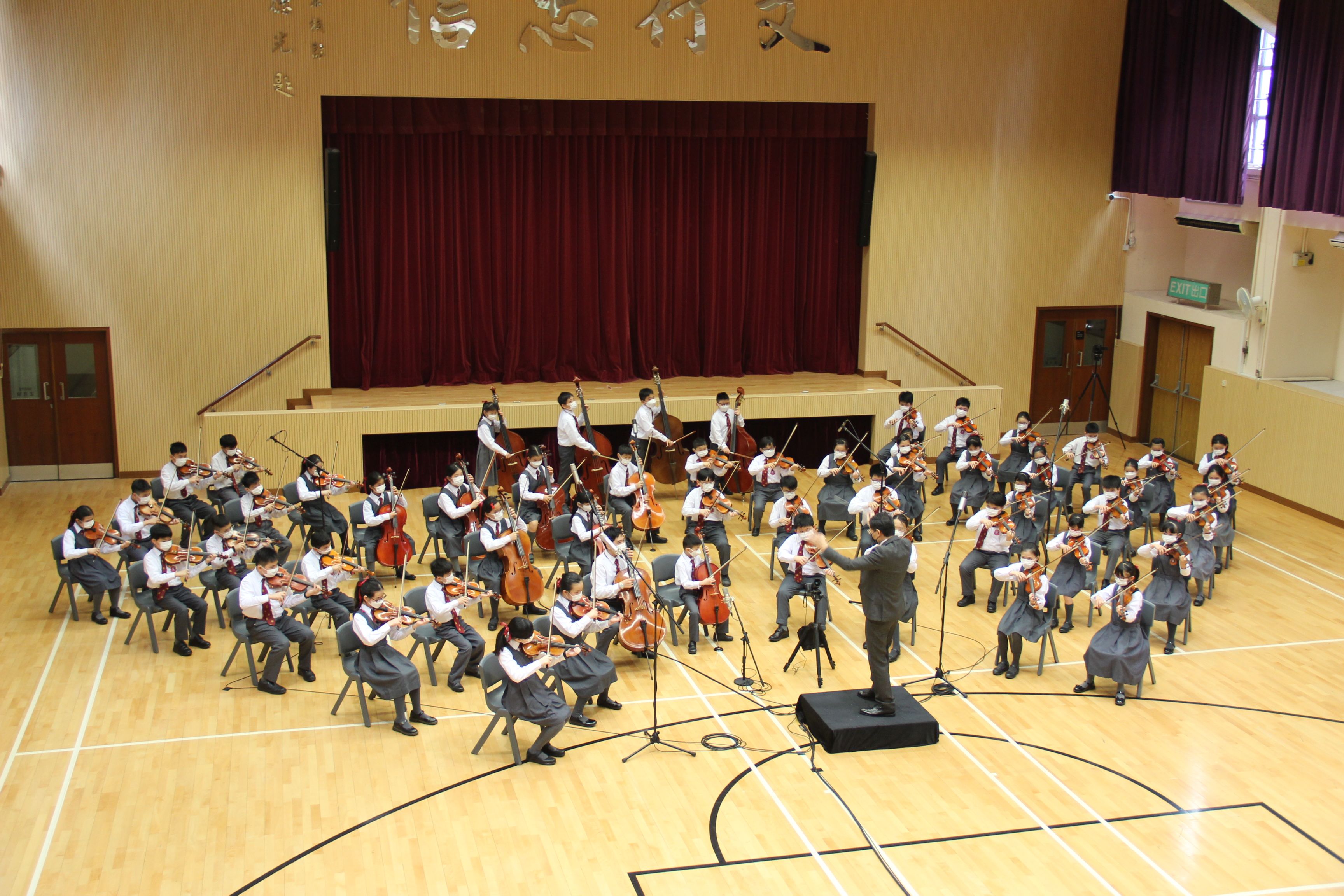
 | 1. The experiential activities organized for the Key Learning Areas. 2. A series of whole-school events (e.g. Sports Day, school picnic) and some theme-based activities specifically for certain levels (e.g. P.4 Self-care Camp, P.5 Overseas Exchange Tour, P.6 Graduation Camp) are also organized. 3. School teams and interest groups including orchestra, choir, choral speaking, debate, athletics (such as track and field, rope skipping, dancing, gymnastics, martial arts, lion dance, taekwondo, badminton, table tennis, football, volleyball, basketball, tennis, mini-tennis), Mathematical Olympiad, abacus, drawing, ceramics, musical instruments, etc. |
 School Mission
 | The school is committed to providing quality primary education. We are committed to creating a learning environment filled with mutual respect, acceptance and care. Curriculum that advances with the times and diversified learning opportunities are provided to foster students' moral, intellectual, physical, social and aesthetic development. We also endeavour to nurture students as compassionate, confident, caring and gregarious citizens who will contribute to the society. |
 School Characteristics
 | School Management | ||
| School Management Organisation | : | The school consists of different departments: Administration, Curriculum Development and different functional groups. Their duties include planning, implementing, monitoring and evaluating various school affairs. |
| Incorporated Management Committee / School Management Committee/ Management Committee | : | Incorporated Management Committee was founded in 2005. |
| School Green Policy | : | A wide array of activities are organized to promote green initiatives and environmental protection so as to raise students' awareness on these world issues. |
| School's Major Concerns | : | 1. Cultivate students' positive morals and values. 2. Emphasize both academic excellence and development in physical education, music and visual arts. |
| Learning and Teaching Plan | ||
| Learning & Teaching Strategies | : | 1. Promoting Self-Directed Learning: Leveraging Life-wide Learning strategies to inspire a spirit of inquiry and foster a proactive learning attitude among students. 2. Language Teaching Characteristics: Implementation of the Space Town Literacy Programme and "Big Book" approach in Key Stage 1 to create a language-rich environment and lay a solid foundation for literacy. 3. Gifted and Enrichment Programs: Implementation of tiered instruction based on student potential, providing specialized enrichment in Languages, Mathematics, and Science for high-achieving upper primary students. 4. Seamless Curriculum Transition: Aligning with the EDB’s curriculum reform, "Humanities" and "Science" subjects are fully implemented in P.1, P.2, P.4, and P.5; school-based General Studies is specialized into split-subject modules for P.3 and P.6 to enhance academic rigor. |
| Development of Major Renewed Emphases of the Primary Education Curriculum | : | 1. Positive School Culture: Deepening Positive Education to instill core values and strengthen students' sense of national identity. 2. Diversified Learning Experiences: Adopting a student-centered approach through group discussions, field trips, and inquiry-based activities to enhance learning motivation and lifelong learning capabilities. 3. STEAM and Digital Literacy: Popularizing STEAM education to inspire innovative thinking and comprehensively upgrade students' media and digital literacy. 4. Interdisciplinary Integration: Organizing regular cross-curricular activities, such as Chinese Culture Day, Healthy School initiatives and Reading Days, to enrich students' learning portfolios. 5. Learner Diversity: Establishing Academic Talent Enrichment Programs and Sports & Arts Talent Development Schemes; regular level coordination meetings to ensure precise support for student needs. 6. Broadening Horizons: Overseas exchanges, leadership training, and service learning to practice life education. |
| Development of Generic Skills | : | Natural Interdisciplinary Infusion: The curriculum design organically integrates various Key Learning Areas (KLAs), naturally embedding generic skills—such as communication, collaboration, and critical thinking—into teaching to enhance students’ overall qualities. |
| Cultivation of Proper Values, Attitudes and Behaviours | : | Positive Life Education: Sustaining the implementation of Positive Education within the P.1–P.6 Values Education curriculum to discover students' potential and character strengths, equipping them to embrace life’s challenges with optimism. |
| Student Support | ||
| Whole School Approach to Catering for Learner Diversity | : | 1. Students' potentials are well identified and developed through the enrichment courses of different subjects and the Sports and Aesthetic Development Scheme. 2. The regular meetings among the subject teachers facilitate the communication between the teachers, which enables teachers to understand and cater for each students' learning needs. 3. The Discipline and Counselling and the social workers meet periodically to evaluate students' performance and help students with their holistic development. |
| Whole School Approach to Integrated Education | : | 1. The Student Support Team is set up to take care of students with different learning needs. 2. Learning and examination adjustment are provided for students with special educational needs (SEN) according to their special learning needs. 3. A School-based Educational Psychologist and a School-based Speech Therapist, together with the SENCO, are providing professional support for students with SEN. |
| Education Support for Non-Chinese Speaking(NCS) Students | : | Our school provides additional support for NCS students to facilitate their learning of Chinese: providing after-school support programmes in learning Chinese; appointing additional teacher(s)/teaching assistant(s) to support NCS students' learning of Chinese; organising activities to create an inclusive learning environment in the school; hiring additional manpower and/or translation/interpretation services to facilitate the communication with parents of NCS students; and our school uses Putonghua to teach Chinese in all classes / groups at certain levels with extra support as appropriate, e.g. pull-out/small-group classes, learning and teaching resources with Pinyin, etc. Translating major school circulars. |
| Curriculum Tailoring and Adaptation | : | 1. Different levels of support is provided to students with different abilities so that they can develop their interest and potential. 2. Enrichment courses in language and science are designed for more capable students. 3. A homework session is timetabled for students to do homework at school on school days. It develops students' good homework habits. |
| Home-school Co-operation and School Ethos | ||
| Home-School Co-operation | : | The Parent-Teacher Association was established in 1998. Parent Managers are invited to join the Incorporated Management Committees. Besides, over a hundred of parent volunteers in supporting various school activities. Parents are invited by the principal to give their opinions on various school matters periodically. To establish a close and mutual relationship with parents, class teachers contact parents regularly to inform them about their children's performance at school. |
| School Ethos | : | We adopt an award system to cultivate a harmonious learning environment. Students show optimism and self-confidence under this approach. The school strongly advocates the development of a 'Love and Caring' atmosphere. |
| Future Development | ||
| School Development Plan | : | 1. For sustainable self-improvement and development, school helps students cultivate mutual love and respect and develop a sense of commitment. 2. Enhance the effectiveness of learning and teaching upon curriculum integration. 3. Foster students' self-directed learning capabilities through adopting e-learning. |
| Teacher Professional Training & Development | : | We stress the importance of the professional development of teachers. Continuous training is provided for teachers on all subject matters in line with the school's Major and Key Concerns, the development of subjects-taught and the changes in the society. |
| Others | : | Our students' passion and outstanding performance in music and sports has become one of the school's greatest traditions. |
 School Map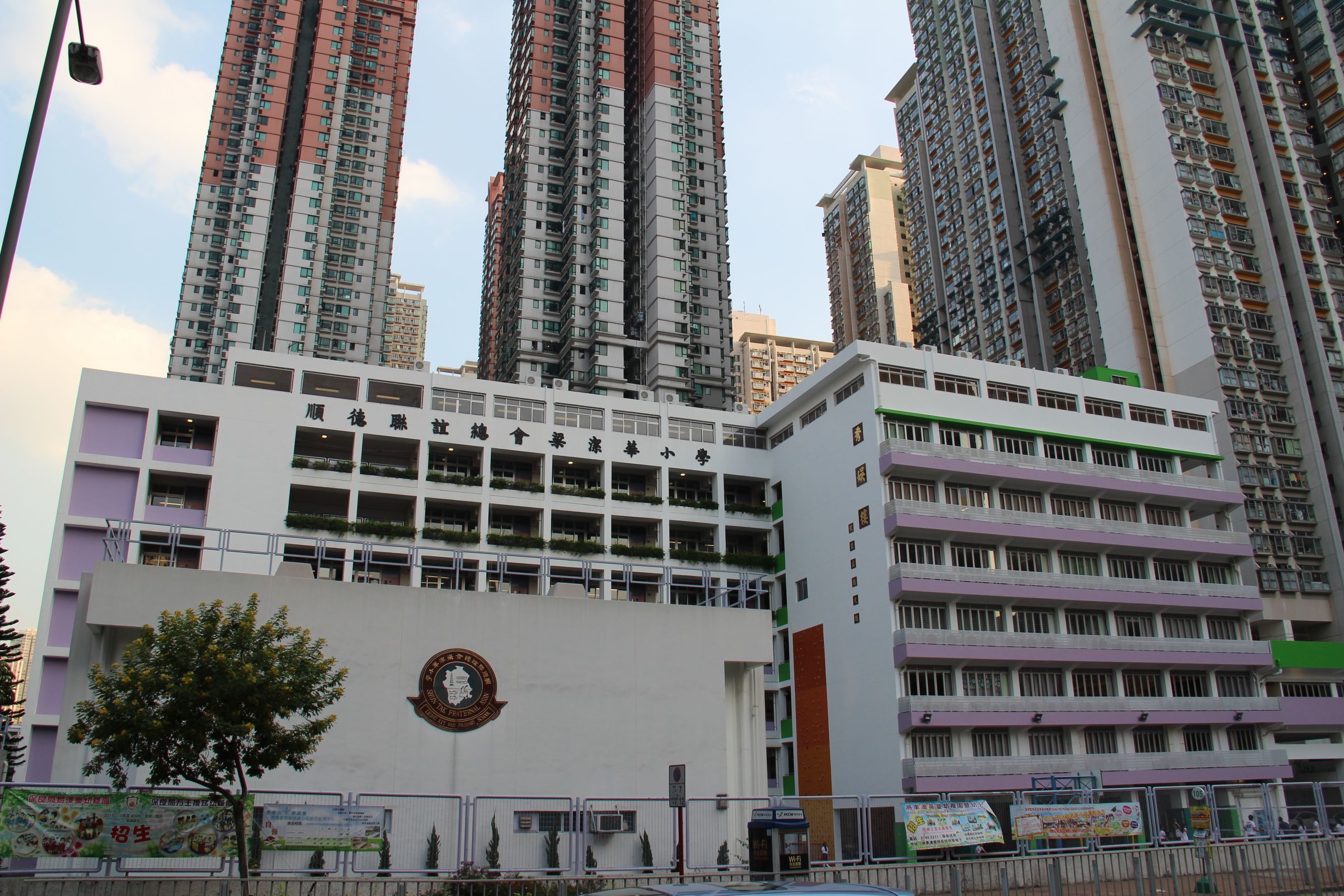
Last revision date:01 September 2026


