 Primary School Profiles 2026

 Primary School Profiles 2026

| Address: | 1 Tong Chun Street, Tseung Kwan O, N.T. | |||
| Phone: | 22463959 | Email: | office@chilinbps.edu.hk | |
| Fax: | 22463972 | Website: | http://www.chilinbps.edu.hk | |
 School Information
 | Supervisor/ Chairman of Management Committee | : | Ven. Sik Wei Che |
| School Head | : | Mr. Law Kam Yuen |
| Incorporated Management Committee been established? | : | Established |
| Percentage of School Supervisor and Managers / Chairperson and Members of School Management Committee (SMC) of Government Schools Fulfilling the Training Targets | : | 78% |
| School Type | : | Aided Whole Day |
| Student Gender | : | Co-ed |
| Sponsoring Body | : | Chi Lin Nunnery |
| Religion | : | Buddhism |
| Year of Commencement of Operation | : | 1999 |
| School Motto | : | Be faithful, discover learning diligently, and become an all-rounded individual in preparation for tomorrow's world |
| Area Occupied by the School | : | About 6311 Sq. M |
| Through-train Secondary School | : | - |
| Feeder Secondary School | : | - |
| Nominated Secondary School | : | - |
| Medium of Instruction | : | Chinese |
| School Bus Service | : | Nanny van |
| Parent-Teacher Association | : | Yes |
| Past Students' Association/Alumni Association | : | Yes |
| 4Rs Mental Health Charter | : | Yes |
| Whole School Health Programme | : | Action School |
 2026/2027 Annual School Charges
| School Fee | : | - |
| Tong Fai | : | - |
| PTA Fee | : | $20 |
| Approved Charges for non-standard items | : | - |
| Other Charges | : | Miscellaneous fees |
 School Facilities
 | Number of Classroom(s) | : | 31 |
| Number of School Hall(s) | : | 1 |
| Number of Playground(s) | : | 4 |
| Number of Library(ies) | : | 1 |
| Special Rooms | : | 14 special rooms, including STEAM Room, Student Activity Room, Visual Arts Room, two Music Rooms, Student Guidance Room, two IT Rooms, two Tutorial Rooms, Mindfulness Room, Buddhist Education Room, Science Room, and Multi-purpose Activity Room, etc. |
| Facility(ies) for Supporting Students with Special Educational Needs | : | Accessible lift and Accessible toilet. |
| Others | : | English Corner, Reading Corner, School-wide Wi-Fi, Electronic Whiteboards in all classrooms, and Climbing Wall. |
 Teaching Staff Information (Including School Head) in the 2025/2026 school year
 | Number of teaching posts in the approved establishment | : | 44 |
| Total number of teachers in the school | : | 45 |
| Qualifications and professional training (%) | ||
| Had Received Teacher Training | : | 100% |
| Bachelor Degree | : | 100% |
| Master/ Doctorate Degree or above | : | 31% |
| Special Education Training | : | 86% |
| Years of Experience (%) | ||
| 0 - 4 years | : | 33% |
| 5 - 9 years | : | 42% |
| 10 years or above | : | 25% |
 Class Structure
 | 2025/26 school year | ||
| P1 Number of classes | : | 3 |
| P2 Number of classes | : | 3 |
| P3 Number of classes | : | 3 |
| P4 Number of classes | : | 4 |
| P5 Number of classes | : | 4 |
| P6 Number of classes | : | 5 |
| Total | : | 22 |
| 2026/27 school year (Based on the number of classes approved by EDB in 2026) | ||
| P1 Number of classes | : | 2 |
| P2 Number of classes | : | 3 |
| P3 Number of classes | : | 3 |
| P4 Number of classes | : | 3 |
| P5 Number of classes | : | 4 |
| P6 Number of classes | : | 4 |
| Total | : | 19 |
| Mode of teaching at different levels | ||
| We adopt activity-based teaching with group seating across the whole school. Through cooperative learning, gifted education, small-step teaching, and knowledge construction, we cultivate students’ 21st-century competencies. | ||
| Remarks | ||
| - | ||
 Performance Assessment
 | Applicable to P1 only | ||
| Number of test(s) per year | : | 0 |
| Number of exam(s) per year | : | 1 |
| Replace tests and examinations with diversified assessments in the first term of P1 | : | Yes |
| Applicable to P2 to P6 only | ||
| Number of test(s) per year | : | 0 |
| Number of exam(s) per year | : | 3 |
| Applicable to P1 to P6 | ||
| Formulate appropriate school-based assessment and assignment policies, inform parents of related arrangements, and collect views from teachers, students and parents regularly (at least once per school year) for ongoing review and optimisation of the school assessment and assignment policies | : | Yes |
| Upload the school-based assessment policy onto the school webpage for information of the public and stakeholders | : | Yes |
| Upload the school-based assignment policy onto the school webpage for information of the public and stakeholders | : | Yes |
| Diversified Assessment for Learning | : | 1. P.1: No exam in 1st term, one in 2nd term. Progressive assessments ease transition to P.2. 2. P.2–P.6: Three exams per year. 3. Hands-on practical assessments in Humanities and Science. 4. Small-step assessments encourage self-revision; no standalone dictation. 5. Cross-curricular themes, projects, and peer assessment. |
| Avoid arranging tests or examinations immediately after long holidays in order to let students take more rest during the holidays | : | Yes |
| Arrange the timetable flexibly according to the school context, with a tutorial session provided in the afternoon as far as possible for students to finish some of their homework under teachers’ guidance | : | Yes |
| Streaming arrangement | : | P.4 and P.5 each have one Electronic Schoolbag class. P.6 English lessons are streamed by ability for differentiated teaching. All other classes are mixed-ability grouped. |
 School Life
 | Number of school days per week | : | 5 |
| Number of periods per day | : | 8 |
| Duration of each normal period | : | 35 |
| School starts at | : | 8:00 AM |
| School ends at | : | 3:20 PM |
| Lunch break | : | 1:00 - 2:00 |
| Lunch arrangement | : | Provided by designated supplier, arranged by parents and Vegetarian lunch provided by the designated supplier, vegetarian lunch arranged and brought from hom. |
| Healthy school life | : | 1. Informal curriculum is designed to foster all-round development. 2. Vegetarian lunchboxes are designed by a nutritionist. 3. Building a happy campus through peer support and teacher-student relationship. 4. Moral and Religious Education is integrated into lessons to cultivate a caring atmosphere. 5. Sports activities are promoted in the morning assemblies and at recess. |
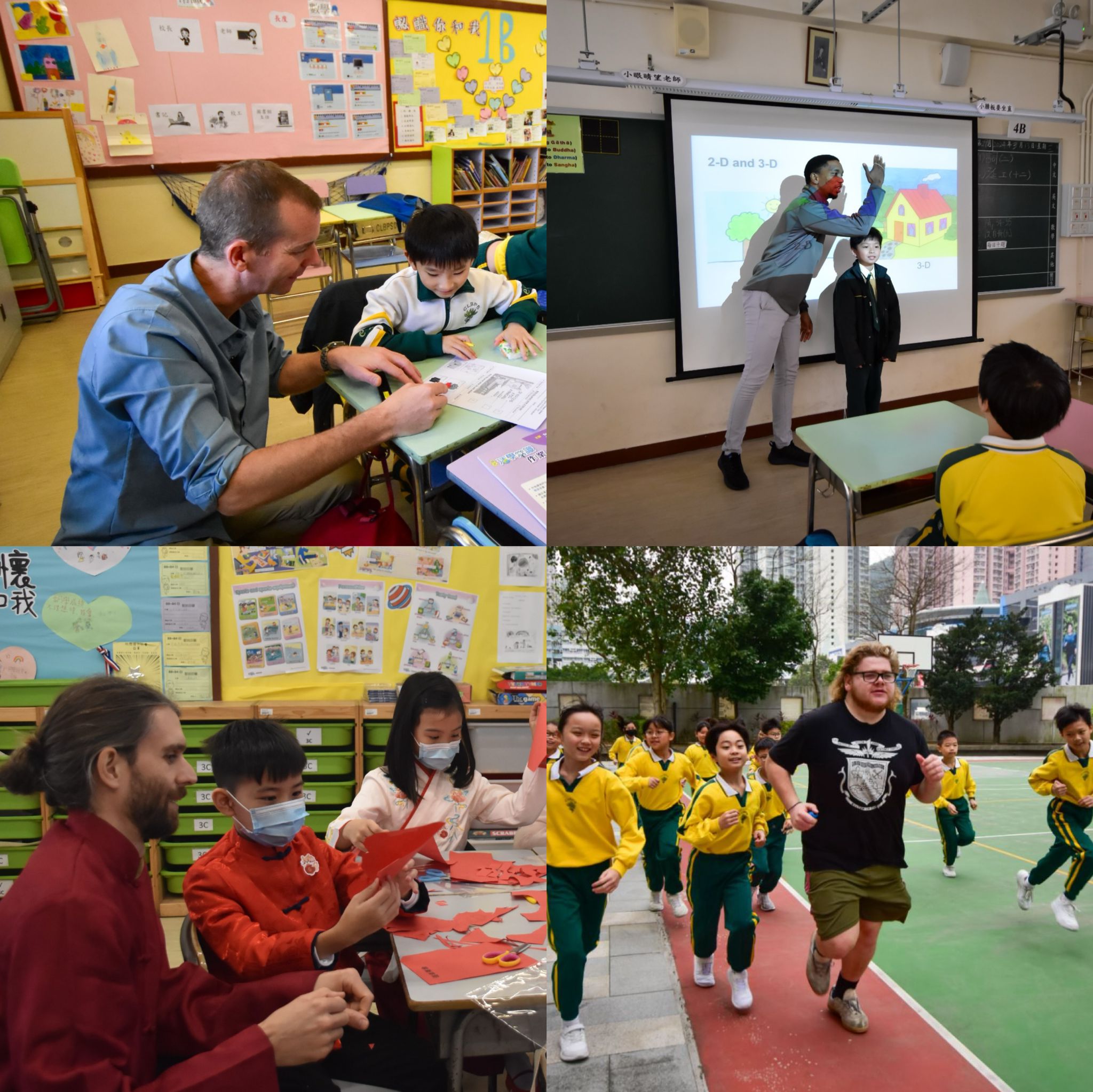
| Remarks | : | Our school's signature "Wild Child Programme" breaks classroom boundaries through experiential learning, guiding active exploration. It includes swimming, sport climbing, self-care training, and community tours to build physical fitness, independence, resilience, and empathy. We also offer "Learning from Failure" courses and various after-school activities like school teams, gifted classes, interest clubs, leadership training, and service learning. |
 Life-wide Learning
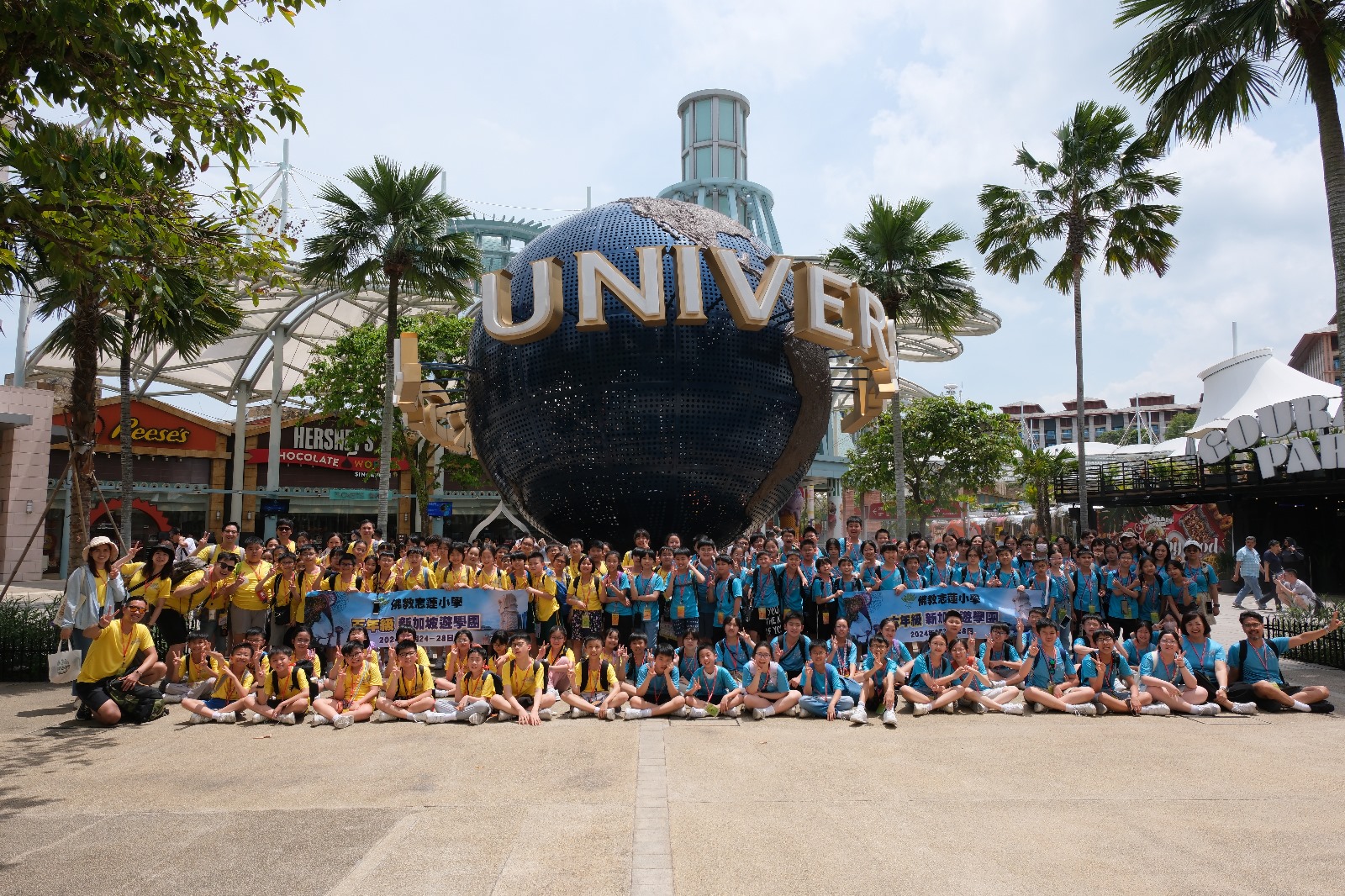
 | Our school is dedicated to creating a diverse experience for students of all grades. For P.1 and P.2 students, a 3-day on-campus day camp is arranged. P.3, P.4, and P6 students will participate in a 3-day camping training. The entire P.5 will go on a study tour in Singapore, and the entire P.6 will go on a study tour in Beijing. There are over 50 activities in the school team's top-notch classes and interest classes, covering subject expansion, ball games, dance, swimming, STEAM, etc. |
 School Mission
 | Adhering to the Buddhist spirit of compassion, equality and care, and upholding the core values of “Everything for Students” and “Never Give Up on Any Child”, we provide high-quality holistic education. Guided by the school motto “Faith, Understanding, Practice and Realisation”, our school-based curriculum cultivates students’ 21st-century competencies to nurture future talents for society. |
 School Characteristics
 | School Management | ||
| School Management Organisation | : | Under the Incorporated Management Committee (IMC), the following committees have been established: School Administration and Management Committee Learning, Teaching and Curriculum Development Committee School Ethos and Student Support Committee |
| Incorporated Management Committee / School Management Committee/ Management Committee | : | We have established an Incorporated Management Committee (IMC) comprising representatives from the sponsoring body, independent members, teachers, and parents. |
| School Green Policy | : | We promote environmental initiatives to raise students’ eco-awareness and implement vegetarian lunches to foster healthy lifestyles among students. |
| School's Major Concerns | : | 1. Cultivate students to become proactive, lifelong learners with a passion for exploration. 2. Foster students’ sense of satisfaction, belonging, and happiness. |
| Learning and Teaching Plan | ||
| Learning & Teaching Strategies | : | 1. AI in Education: Teachers use AI tools to analyse student data, identify learning gaps precisely, and provide personalised support to help every student overcome difficulties and stay motivated. 2. AI Inquiry Learning: Combining problem-based learning with AI-assisted projects, students solve real problems, develop autonomy, AI literacy, critical thinking, and 21st-century skills. 3. Home-School Partnership: Principal's workshops equip parents with AI knowledge to support their children's learning at home. 4. Community Showcase: Students turn learning outcomes into real-world solutions, building confidence and a sense of service to the community. 5. Global Perspective: Through OLC courses and overseas exchanges, students broaden their horizons and apply learning to the world. |
| Development of Major Renewed Emphases of the Primary Education Curriculum | : | Through AI-enhanced teaching, regular classes, and the Wild Child Programme, students learn experientially by integrating diverse learning experiences. They grow by learning from mistakes and failures, which enhances their sense of satisfaction, belonging, and happiness while cultivating positive values and attitudes. |
| Development of Generic Skills | : | AI Inquiry Learning, Finnish education, experiential learning, Wild Child Programme, Learning from Failure courses, diversified teaching strategies, Other Learning Curriculum (OLC), experience-based learning, STEAM education, and cross-curricular thematic learning, etc., to cultivate students’ generic competencies and 21st-century skills. |
| Cultivation of Proper Values, Attitudes and Behaviours | : | Through the whole school’s personal practice and leading by example, we cultivate students' moral character and positive values. |
| Student Support | ||
| Whole School Approach to Catering for Learner Diversity | : | To cater for gifted students and those needing extra support, the school offers enrichment classes, remedial groups, and curriculum adjustments. These programmes aim to enhance students’ abilities while providing timely assistance to students with weaker performance or special educational needs. To facilitate a smooth kindergarten-to-primary transition, we implement the “Positive Energy” Programme to help students with homework. Additional support includes the School-based After-school Learning Support Programme, On-site After-school Care Service, and paid tutorial classes organised by the Parent-Teacher Association (including English classes) to boost students’ learning effectiveness. |
| Whole School Approach to Integrated Education | : | The school adopts a “Whole School Approach” that integrates learning and teaching to provide assessment accommodations for students. The support team comprises the SEN Coordinator, SEN Support Teachers, Student Counsellors, and Teaching Assistants. We also offer after-school training groups, including social skills training, attention training, executive function training, and Individual Education Plans (IEP). In addition, the school provides school-based speech therapy, educational psychology services, and homework adjustment policies to support students with special educational needs. The school values student diversity and implements the Whole School Approach to ensure every student can grow and flourish in a caring and inclusive environment. |
| Education Support for Non-Chinese Speaking(NCS) Students | : | Our school provides additional support for NCS students to facilitate their learning of Chinese: providing after-school support programmes in learning Chinese; organising activities to create an inclusive learning environment in the school; and hiring additional manpower and/or translation/interpretation services to facilitate the communication with parents of NCS students. |
| Curriculum Tailoring and Adaptation | : | 1. School-based optimisation plan for Chinese, English, Mathematics and General Studies lessons. Chinese lessons include a school-based literacy programme for P.1–P.2. English lessons feature the Mother Goose Club (P.1–P.2) to enhance students’ phonics, reading and writing skills. 2. Lessons incorporate varied learning activities to cater for individual differences. 3. Assessment, formative evaluation and homework adjustments are provided for students in need. |
| Home-school Co-operation and School Ethos | ||
| Home-School Co-operation | : | The Parent-Teacher Association (PTA) assists the school in planning and organising activities, recruits parent volunteers, and supports the building of a caring school culture. Teachers conduct home visits every year, and English classes are offered for parents of lower primary students. |
| School Ethos | : | The school uses mixed-ability grouping across all levels to cultivate a spirit of mutual help that benefits both self and others. We place strong emphasis on developing students’ interpersonal skills, self-care abilities, and good moral character. |
| Future Development | ||
| School Development Plan | : | 1. Establish a school environment guided by "Policy Leadership + Environmental Support + Continuous Motivation", enabling students to actively explore and providing platforms for them to do so. 2. Equip teachers with the ability to stimulate students' higher-order thinking, empowering them to become effective facilitators of students' active exploration. 3. Help students master active exploration methods (thinking tools + self-directed learning) and apply them in real-life contexts. |
| Teacher Professional Training & Development | : | 1. Dedicated teacher development sessions are scheduled to promote professional exchange and school-based training. 2. We foster a culture of mutual trust among teachers by establishing Teaching Quality Circles. Through classroom research, teachers enhance teaching and learning effectiveness. 3. Each subject conducts weekly collaborative lesson planning and regular experience-sharing sessions to encourage mutual learning and exchange. 4. The school participates annually in professional support programmes organised by the Education Bureau, enabling teachers to improve teaching effectiveness through practice. |
| Others | : | The school places great emphasis on broadening students’ horizons and organises a wide range of overseas exchange and study tours. All P.5 students participate in a study tour to Singapore to experience its advanced education and multicultural society. All P.6 students join a study tour to Mainland to appreciate the country’s rich history and modern vitality. |
 School Map
Last revision date:01 September 2026


