 Primary School Profiles 2026

 Primary School Profiles 2026

| Address: | Blocks F & G Ancillary Block, Po Tung Road, Sai Kung, N.T. | |||
| Phone: | 27922246 | Email: | info@stcps.edu.hk | |
| Fax: | 27926448 | Website: | http://www.stcps.edu.hk | |
 School Information
 | Supervisor/ Chairman of Management Committee | : | Rev. Duggimpudi Raja Ratna Reddy |
| School Head | : | Ms. Lee Ka Man |
| Incorporated Management Committee been established? | : | Established |
| Percentage of School Supervisor and Managers / Chairperson and Members of School Management Committee (SMC) of Government Schools Fulfilling the Training Targets | : | 93% |
| School Type | : | Aided Whole Day |
| Student Gender | : | Co-ed |
| Sponsoring Body | : | Catholic Diocese of Hong Kong |
| Religion | : | Catholicism |
| Year of Commencement of Operation | : | 1924 |
| School Motto | : | Modesty, Love, Diligence, Honesty |
| Area Occupied by the School | : | About 15000 Sq. M |
| Through-train Secondary School | : | Sai Kung Sung Tsun Catholic School (Secondary Section) |
| Feeder Secondary School | : | - |
| Nominated Secondary School | : | - |
| Medium of Instruction | : | Chinese(incl.: Putonghua) and English |
| School Bus Service | : | Nanny van |
| Parent-Teacher Association | : | Yes |
| Past Students' Association/Alumni Association | : | Yes |
| 4Rs Mental Health Charter | : | Yes |
| Whole School Health Programme | : | Pledged School |
 2026/2027 Annual School Charges
| School Fee | : | - |
| Tong Fai | : | - |
| PTA Fee | : | $50 |
| Approved Charges for non-standard items | : | $400 |
| Other Charges | : | - |
 School Facilities
 | Number of Classroom(s) | : | 16 |
| Number of School Hall(s) | : | 1 |
| Number of Playground(s) | : | 1 |
| Number of Library(ies) | : | 1 |
| Special Rooms | : | Library, STEAM Room, Science Room, Religious Room, Reptiles House, Tutorial Room, Activity Room and Multipurpose Room. |
| Facility(ies) for Supporting Students with Special Educational Needs | : | Ramp, Accessible lift, Accessible toilet and Tactile guide path plan. |
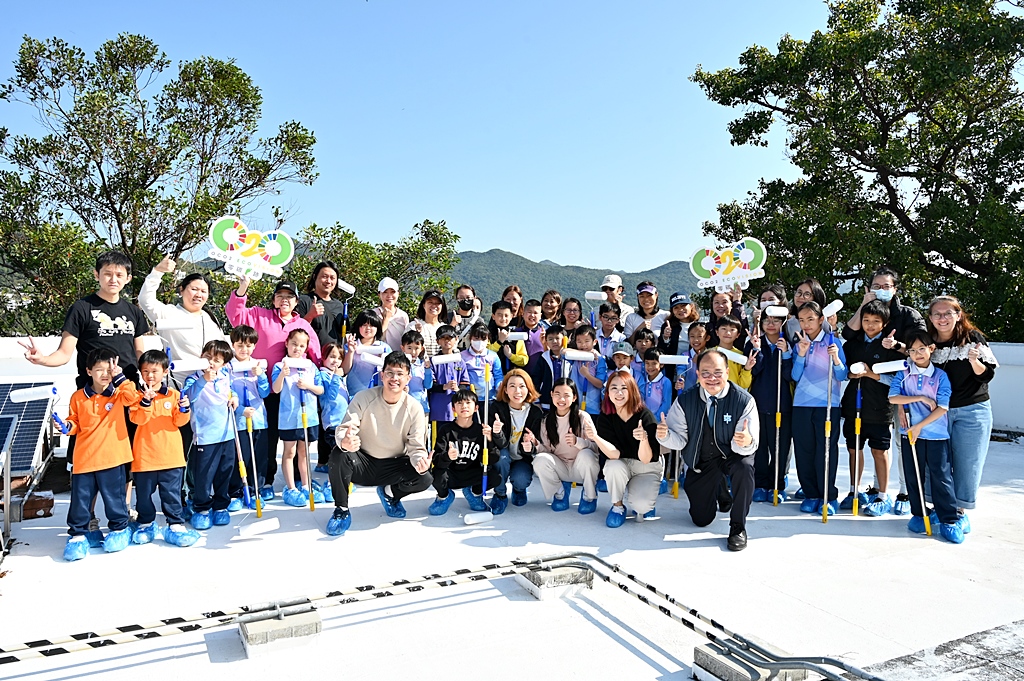
| Others | : | Sacred Heart Church, The Prayer Rock of Mother Mary, Environmental Controlled Greenhouse, Smart IoT Garden, Eco-Rooftop and Conference Room. |
 Teaching Staff Information (Including School Head) in the 2025/2026 school year
 | Number of teaching posts in the approved establishment | : | 27 |
| Total number of teachers in the school | : | 31 |
| Qualifications and professional training (%) | ||
| Had Received Teacher Training | : | 93% |
| Bachelor Degree | : | 100% |
| Master/ Doctorate Degree or above | : | 40% |
| Special Education Training | : | 88% |
| Years of Experience (%) | ||
| 0 - 4 years | : | 30% |
| 5 - 9 years | : | 19% |
| 10 years or above | : | 51% |
 Class Structure
 | 2025/26 school year | ||
| P1 Number of classes | : | 3 |
| P2 Number of classes | : | 2 |
| P3 Number of classes | : | 2 |
| P4 Number of classes | : | 2 |
| P5 Number of classes | : | 2 |
| P6 Number of classes | : | 2 |
| Total | : | 13 |
| 2026/27 school year (Based on the number of classes approved by EDB in 2026) | ||
| P1 Number of classes | : | 2 |
| P2 Number of classes | : | 3 |
| P3 Number of classes | : | 2 |
| P4 Number of classes | : | 2 |
| P5 Number of classes | : | 2 |
| P6 Number of classes | : | 2 |
| Total | : | 13 |
| Mode of teaching at different levels | ||
| Small class teaching is adopted to cater for learners' diversity. We are implementing "Bring Your Own Device" (BYOD) policy for allowing students to bring their own mobile devices to schools for eLearning and STEM activities, so that personalized and student-centered learning facilitate students' 21st century skills effectively. | ||
| Remarks | ||
| - | ||
 Performance Assessment
 | Applicable to P1 only | ||
| Number of test(s) per year | : | 0 |
| Number of exam(s) per year | : | 0 |
| Replace tests and examinations with diversified assessments in the first term of P1 | : | Yes |
| Applicable to P2 to P6 only | ||
| Number of test(s) per year | : | 0 |
| Number of exam(s) per year | : | 3 |
| Applicable to P1 to P6 | ||
| Formulate appropriate school-based assessment and assignment policies, inform parents of related arrangements, and collect views from teachers, students and parents regularly (at least once per school year) for ongoing review and optimisation of the school assessment and assignment policies | : | Yes |
| Upload the school-based assessment policy onto the school webpage for information of the public and stakeholders | : | Yes |
| Upload the school-based assignment policy onto the school webpage for information of the public and stakeholders | : | Yes |
| Diversified Assessment for Learning | : | 1. There are three summative assessments for Primary 2 to 6 (No summative assessment in Primary 1) with analysis and follow-up after each assessment. 2. Teachers can assess students' learning progress and adjust teaching content through the adaptive learning system. 3. Students are provided with different learning experiences through project learning and excursions in different subjects. |
| Avoid arranging tests or examinations immediately after long holidays in order to let students take more rest during the holidays | : | Yes |
| Arrange the timetable flexibly according to the school context, with a tutorial session provided in the afternoon as far as possible for students to finish some of their homework under teachers’ guidance | : | Yes |
| Streaming arrangement | : | Class by average abilities. |
 School Life
 | Number of school days per week | : | 5 |
| Number of periods per day | : | 10 |
| Duration of each normal period | : | 35 |
| School starts at | : | 7:55 AM |
| School ends at | : | 3:20 PM |
| Lunch break | : | 12:50 - 1:40 |
| Lunch arrangement | : | Provided by designated supplier and arranged by parents. |
| Healthy school life | : | 1. To cultivate students' interests and habits of doing sports, we arrange Sports Paradise in each cycle. 2. Organize different sports activities in recess, to cultivate students' habit of continuous exercise. 3. To promote newly emerged sports, e.g. Padel, Kinball, helping students to explore their different potentials. |
| Remarks | : | 1. Personal Evaluation Portfolio sessions are set for both students and teachers to share their growth in life. 2. The whole school promotes gifted and gifted courses such as: International Mathematical Olympiad, Green Mech, Art training, Tiptop ball games and emerging sports, etc. 3. English drama and musical lessons are conducted each week to enhance our students' language proficiency. |
 Life-wide Learning
 | Provide multiple interest classes such as padel, fencing, kinball, speed staking, athletics, rugby, basketball, football, fancy skipping, taekwondo, harp, ukulele, Chinese dance and lion dance; provide multiple intelligence lessons and project-based excursions; set up school uniform teams, including Scouts, Brownies, the Young Pioneers of Christ, Volunteer Team Road Safety Patrol, and Community Youth Club. |
 School Mission
 | Upholding Catholic parochial schools' beliefs, our school is devoted to proclaiming the Gospel, and encouraging students to experience the Christ spirit in a practical way. With the motto of Modesty, Love, Diligence and Honesty, we aim to cultivate our students' ability of self-study, self-development and self-realization. Meanwhile, we get our students ready to serve our community, to know our country and to embrace the world. Our students are guided to understand the importance of five core values of Catholic schools: Truth, Justice, Love, Life and Family. |
 School Characteristics
 | School Management | ||
| School Management Organisation | : | Under the leadership of the Principal, four key areas are led by respective coordinators/heads. Through the active participation of all teachers, the school development plan is implemented collaboratively. |
| Incorporated Management Committee / School Management Committee/ Management Committee | : | Sai Kung Sung Tsun Catholic School (Primary Section) Incorporated Management Committee |
| School Green Policy | : | 1. Our school advocates green canteen 2. School-Wide Ecological Education courses: Our school is participating in the "Seahorse Club" established by the Ocean Park Conservation Alliance. To encourage students to advocate for conservation and develop eco-friendly habits through Service- learning. 3. Reptile Pavilion: To cultivate students' appreciation for the precious value of life education, we have specially set up a Reptile Pavilion. This allows all students to experience interaction with reptiles first hand and increase their awareness of caring for and protecting animals. |
| School's Major Concerns | : | (I) Cultivate students to uphold values, helping them become a new generation that is committed to society, possesses national awareness, and has an international perspective. (II) Enhance students’ learning abilities and cultivate them to become confident lifelong learners who can adapt to different changes. |
| Learning and Teaching Plan | ||
| Learning & Teaching Strategies | : | 1. Use Putonghua to teach Chinese Language subject, cooperating with reading, literacy and writing programme in order to prompt the awareness of using written Chinese. 2. Adopt 'Big Book approach' in Primary One in order to enhance students' abilities in using vocabulary, sentence and grammar; sets up eLearning for teaching core subjects. 3. Focus on teaching problem-solving skills in Mathematics and provide support for non-Chinese-speaking students to learn mathematics in English. 4. Teach Science Subject through science experiments, field trips and ecological learning activities. 5. Develop BYOD project to cooperate with online classrooms to enable students to make good use of I.T. to assist learning. |
| Development of Major Renewed Emphases of the Primary Education Curriculum | : | Guided by the aim of cultivating students’ positive values and attitudes, we use life-oriented themes to integrate moral and religious education, civic education, national education, life education, digital education, and information literacy education. Through diverse learning activities, we provide students with comprehensive learning experiences that inspire them to achieve their full potential. To optimize learning time, the "RACE Curriculum" was introduced in the second term of the 2025–2026 academic year. This curriculum includes Reading, National Security and Culture, Innovation and Technology, and Life Education, all designed to promote students’ whole-person development. |
| Development of Generic Skills | : | Implementing the Theory of Multiple Intelligences and multisensory learning approaches in the classroom to cultivate students’ generic skills, including communication, collaboration, creativity, critical thinking, problem-solving, self-management, self-directed learning, mathematical thinking, and information technology skills. |
| Cultivation of Proper Values, Attitudes and Behaviours | : | Our school participates in the "Religious Education Support Program" organized by the Catholic Education Office. This promotes a school-based values education curriculum combined with comprehensive student counseling services. Focusing on character strengths from positive mindset, we aim to cultivate students' appreciation for themselves and others. Through volunteer services, students enhance their understanding of different communities and develop a sense of responsibility towards society, promoting positive life qualities and building resilience. |
| Student Support | ||
| Whole School Approach to Catering for Learner Diversity | : | 1. Offer bridging courses and after-school support for Primary One students. 2. Extend special training and activities to gifted students and allow students to perform their full potential. 3. Organize 'Understanding Adolescent Project', emotional counselling group and other counselling group to support students who are in need. |
| Whole School Approach to Integrated Education | : | Our school fosters an inclusive and caring environment, supporting students with special educational needs (SEN) through a whole-school approach and tailored services. The Student Support Team includes the Vice Principal, SENCo, teachers, social workers, teaching assistants, and school-based educational psychologists. We use the Learning Support Grant to employ additional staff and engage professionals, enabling specialized services like attention training and dyslexia support. Personalized accommodations for learning, homework, and assessments are provided, along with IEPs. Peer mentoring and regular parent communication further support student integration. |
| Education Support for Non-Chinese Speaking(NCS) Students | : | Our school provides additional support for NCS students to facilitate their learning of Chinese: providing after-school support programmes in learning Chinese; appointing additional teacher(s)/teaching assistant(s) to support NCS students' learning of Chinese; arranging intensive Chinese learning and teaching mode(s), e.g. pull-out learning if necessary, split-class/group learning, etc; organising activities to create an inclusive learning environment in the school; and our school uses Putonghua to teach Chinese in all classes / groups at all levels with extra support as appropriate, e.g. pull-out/small-group classes, learning and teaching resources with Pinyin, etc. The course of "Learning Chinese by Playing Board Games” is organized to allow non-Chinese speaking students to learn and apply Chinese vocabulary through games. |
| Curriculum Tailoring and Adaptation | : | Set up personalized timetable in the afternoon in order to help students to finish their homework or take gifted courses. 'No Homework Day' on Wednesday to ensure students have sufficient time to revise for Chinese and English dictation or assessment. There is a revision period before the summative assessments. There is no summative assessment for primary One. |
| Home-school Co-operation and School Ethos | ||
| Home-School Co-operation | : | 1. Set up parents' voluntary team to assist students' indoor and outdoor school activities. 2. Organize parents' workshop, parent-child trip and summer courses. |
| School Ethos | : | 1. Implement 'Positive Attitude Award Scheme' to appreciate students' good behaviors and self-discipline attitude. 2. Focus on students' spiritual development and practice love in life. 3. School social worker support by identifying students' academic, social or emotional problems. 4. Organize parents' talk regularly; set up "School Parents Mobile App" for parents to get the latest information and circular. |
| Future Development | ||
| School Development Plan | : | Our school continuously develops innovation and technology (I&T) education, value education and a diversified curriculum to broaden students’ horizons, enrich their knowledge, help them plan their future pathways, and inspire them to contribute to the nation and society. |
| Teacher Professional Training & Development | : | The school is dedicated to advancing teachers’ professional development and encourages all teaching staff to engage in continuous professional learning to enhance teaching quality. By organising regular internal seminars and participating in major education programmes — such as the Jockey Club Innovative Education Empowerment Programme, the Jockey Club Exploring Science Pioneer Teacher Training Programme, and the Jockey Club Artificial Intelligence Education Programme (Phase One) — the school aims to comprehensively improve teaching standards and drive sustainable school development. |
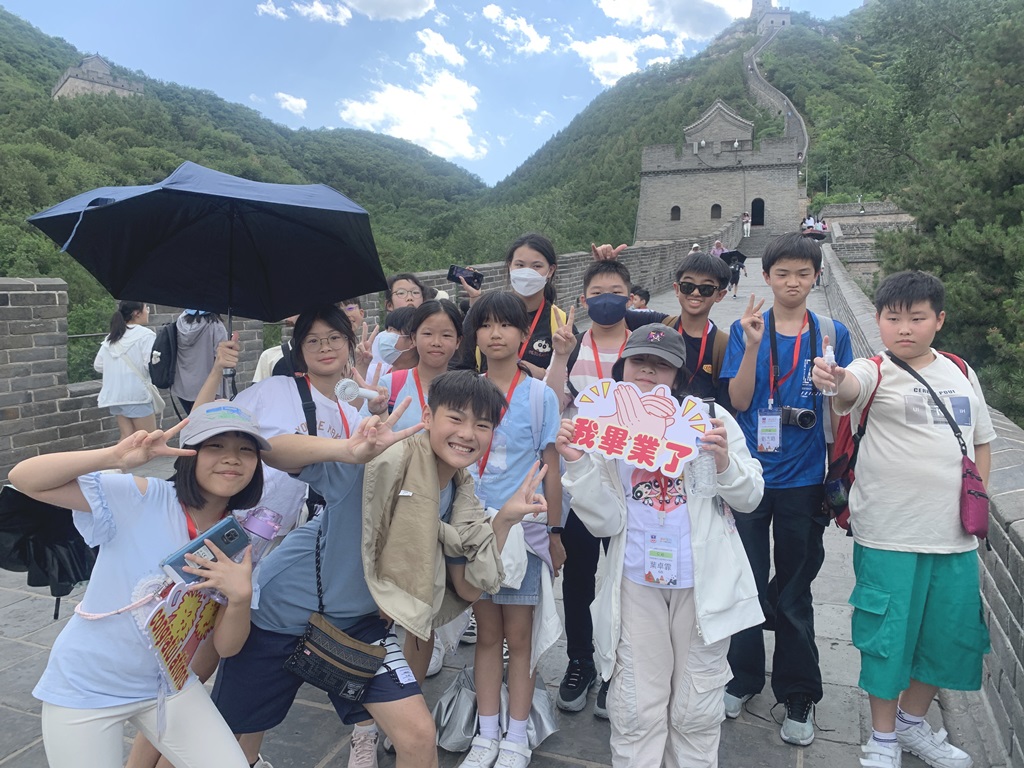
| Others | : | 1. To provide students with rich performing and learning experiences, the school participates every year in the School Drama Festival, the School Music Festival, and various arts and sports training programmes. 2. The school also recommends well-rounded students who have excelled in both conduct and academics to take part in Outstanding Student Recognition activities, in order to acknowledge and honour their exceptional performance. 3. All students are involved in service learning, including visits to senior citizens, volunteering, and environmental conservation activities. 4. Study Tours: Students in Primary 4 to 6 take part in exchange and learning programmes. They travel to the Mainland (e.g., Beijing and Guangzhou) as well as overseas destinations (e.g., Japan and the UK) to broaden their perspectives. |
 School Map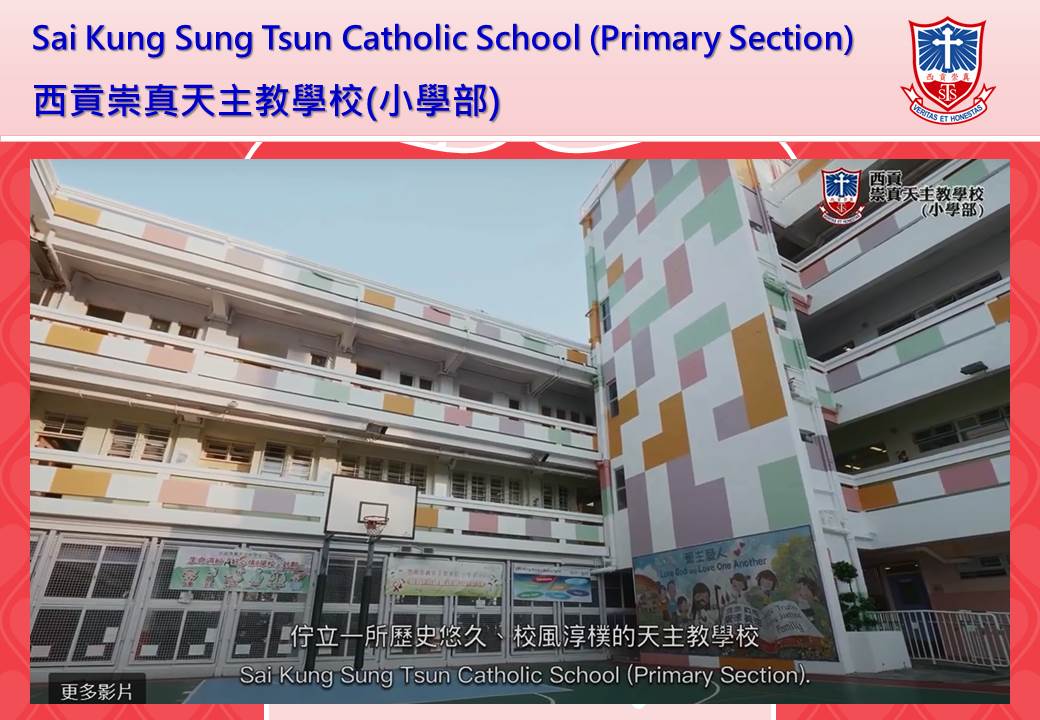
Last revision date:01 September 2026


