 Primary School Profiles 2026

 Primary School Profiles 2026

| Address: | 16 Chai Wan Road, Shaukeiwan, Hong Kong | |||
| Phone: | 28850032 | Email: | mail@salesian.edu.hk | |
| Fax: | 25689450 | Website: | http://salesian.edu.hk | |
 School Information
 | Supervisor/ Chairman of Management Committee | : | Fr. Lam Chung Wai |
| School Head | : | Ms. Hsu Kim Yuen |
| Incorporated Management Committee been established? | : | Established |
| Percentage of School Supervisor and Managers / Chairperson and Members of School Management Committee (SMC) of Government Schools Fulfilling the Training Targets | : | 100% |
| School Type | : | Aided Whole Day |
| Student Gender | : | Co-ed |
| Sponsoring Body | : | Salesian Society of Don Bosco |
| Religion | : | Catholicism |
| Year of Commencement of Operation | : | 1951 |
| School Motto | : | Keep the flame burning and light up the others. |
| Area Occupied by the School | : | About 5800 Sq. M |
| Through-train Secondary School | : | - |
| Feeder Secondary School | : | Salesian English School |
| Nominated Secondary School | : | - |
| Medium of Instruction | : | Chinese(incl.: Putonghua) and English |
| School Bus Service | : | School Bus |
| Parent-Teacher Association | : | Yes |
| Past Students' Association/Alumni Association | : | Yes |
| 4Rs Mental Health Charter | : | Yes |
| Whole School Health Programme | : | Action School |
 2026/2027 Annual School Charges
| School Fee | : | - |
| Tong Fai | : | - |
| PTA Fee | : | $50 |
| Approved Charges for non-standard items | : | - |
| Other Charges | : | School-based Management Fee: $300 per year. |
 School Facilities
 | Number of Classroom(s) | : | 19 |
| Number of School Hall(s) | : | 1 |
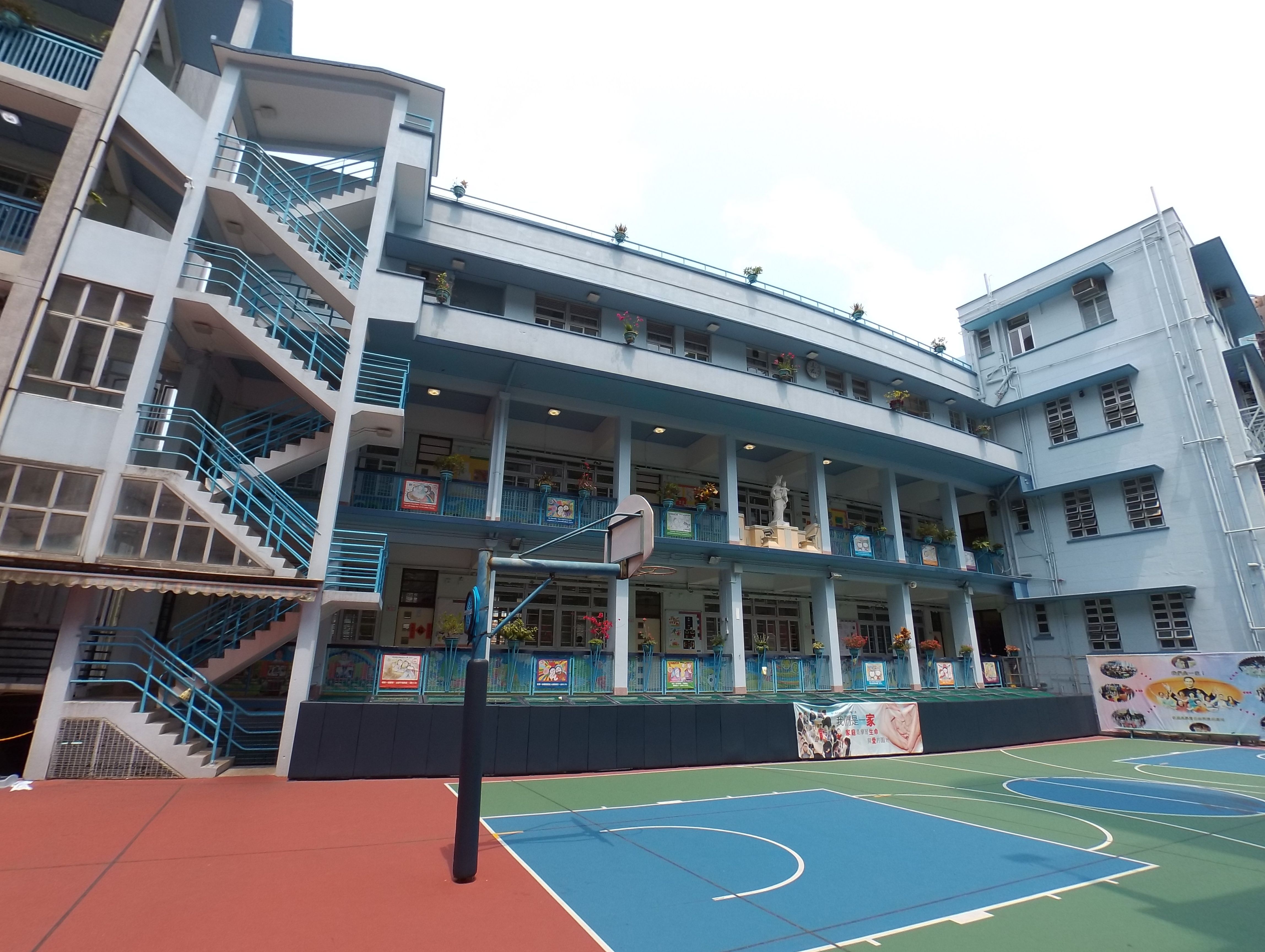
| Number of Playground(s) | : | 1 |
| Number of Library(ies) | : | 1 |
| Special Rooms | : | Computer Room, STEM Room, Library, Music Room, Art Room, English Room, PE Room, Sensory Integration Room, Religious Room and Counselling Room. |
| Facility(ies) for Supporting Students with Special Educational Needs | : | Accessible lift, Accessible toilet and Visual fire alarm system. |
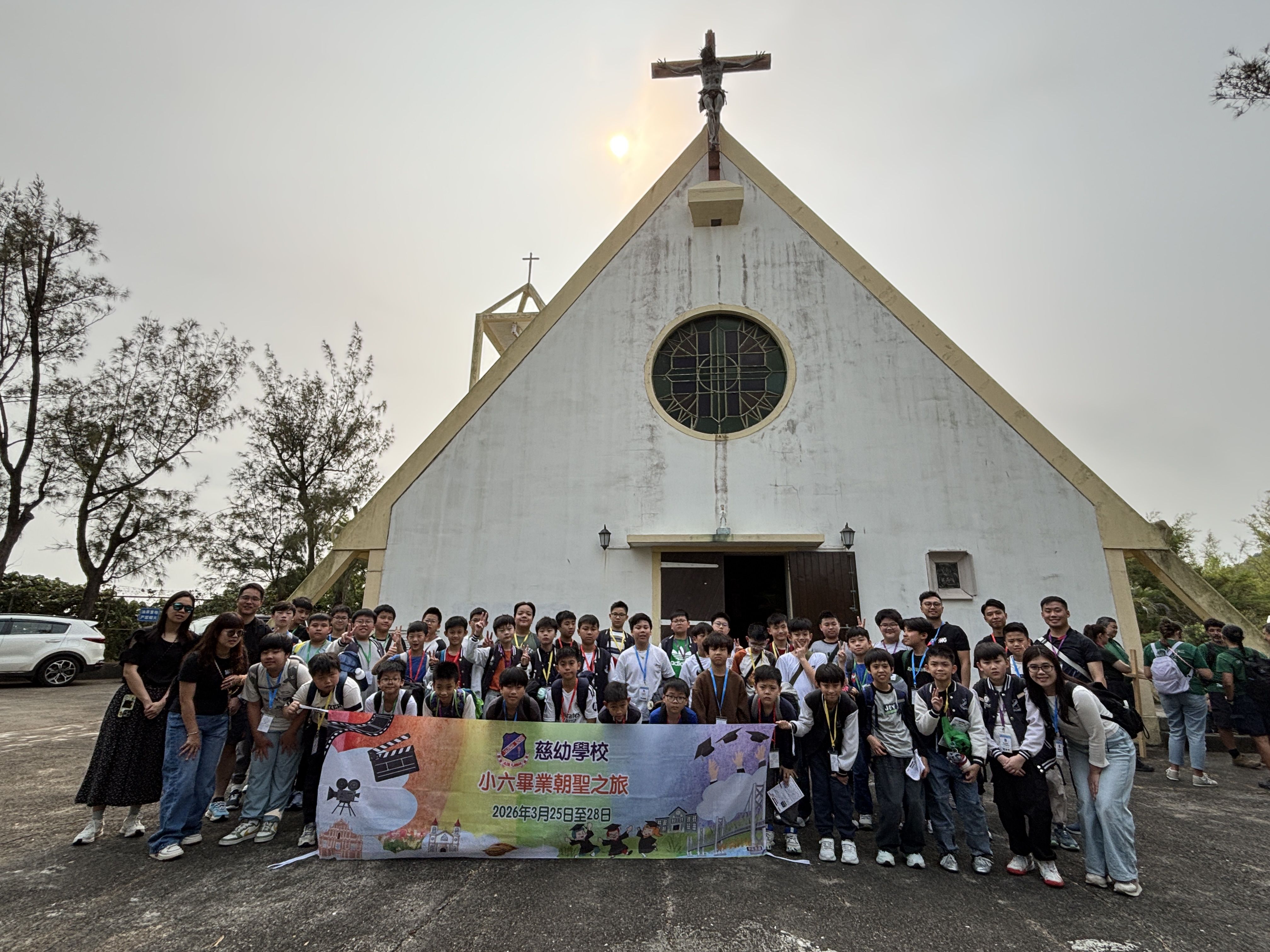
| Others | : | Chapel, tuck shop and table football corner. |
 Teaching Staff Information (Including School Head) in the 2025/2026 school year
 | Number of teaching posts in the approved establishment | : | 22 |
| Total number of teachers in the school | : | 27 |
| Qualifications and professional training (%) | ||
| Had Received Teacher Training | : | 93% |
| Bachelor Degree | : | 100% |
| Master/ Doctorate Degree or above | : | 43% |
| Special Education Training | : | 81% |
| Years of Experience (%) | ||
| 0 - 4 years | : | 29% |
| 5 - 9 years | : | 15% |
| 10 years or above | : | 56% |
 Class Structure
 | 2025/26 school year | ||
| P1 Number of classes | : | 2 |
| P2 Number of classes | : | 1 |
| P3 Number of classes | : | 1 |
| P4 Number of classes | : | 1 |
| P5 Number of classes | : | 2 |
| P6 Number of classes | : | 2 |
| Total | : | 9 |
| 2026/27 school year (Based on the number of classes approved by EDB in 2026) | ||
| P1 Number of classes | : | 1 |
| P2 Number of classes | : | 2 |
| P3 Number of classes | : | 1 |
| P4 Number of classes | : | 1 |
| P5 Number of classes | : | 1 |
| P6 Number of classes | : | 2 |
| Total | : | 8 |
| Mode of teaching at different levels | ||
| E-Learning has been fully promoted. E-learning and AI tools are used to enhance interactive learning and teaching. The school promotes cross-curricular and STEM projects to promote collaborative learning. The school implements iTeach platform to trace and analyze students' learning progress. Co-teaching and pull-out approach are implemented to support SEN students. | ||
| Remarks | ||
| P.1: English programme conducted collaboratively by native and local English teachers; P.2: Phonics course by native English teacher; P.3: Phonics course and speaking lessons by native English teacher ; P.4-P.6: Speaking lessons by native English teacher; P.1-P.6: School-based 'Reading to Writing' online platform | ||
 Performance Assessment
 | Applicable to P1 only | ||
| Number of test(s) per year | : | 0 |
| Number of exam(s) per year | : | 0 |
| Replace tests and examinations with diversified assessments in the first term of P1 | : | Yes |
| Applicable to P2 to P6 only | ||
| Number of test(s) per year | : | 0 |
| Number of exam(s) per year | : | 2 |
| Applicable to P1 to P6 | ||
| Formulate appropriate school-based assessment and assignment policies, inform parents of related arrangements, and collect views from teachers, students and parents regularly (at least once per school year) for ongoing review and optimisation of the school assessment and assignment policies | : | Yes |
| Upload the school-based assessment policy onto the school webpage for information of the public and stakeholders | : | Yes |
| Upload the school-based assignment policy onto the school webpage for information of the public and stakeholders | : | Yes |
| Diversified Assessment for Learning | : | 1. Formative assessments: students' performance in classroom and students' work, module summary, skills assessments, online assessments; 2. Summative assessments; 3. Project learning; 4. Self-evaluations, peer evaluations, teachers' and parents’ quality feedback; 5. Effective assignments: Reading aloud, online assessments, reading reports, etc. |
| Avoid arranging tests or examinations immediately after long holidays in order to let students take more rest during the holidays | : | Yes |
| Arrange the timetable flexibly according to the school context, with a tutorial session provided in the afternoon as far as possible for students to finish some of their homework under teachers’ guidance | : | Yes |
| Streaming arrangement | : | Mixed-ability mode is adopted in all classes to enhance students' learning through collaboration. For upper primary, students are streamed into ability groups in Chinese, English and Mathematics lessons. |
 School Life
 | Number of school days per week | : | 5 |
| Number of periods per day | : | 7 |
| Duration of each normal period | : | 35 |
| School starts at | : | 7:50 AM |
| School ends at | : | 3:00 PM |
| Lunch break | : | 12:50 - 2:00 |
| Lunch arrangement | : | Provided by designated supplier and arranged by parents. |
| Healthy school life | : | 1. Through "School Physical Fitness Award Scheme", the school enhances students' health awareness and encourage them to participate in physical activities. 2. The school organizes weekly "Fruit Day" in order to strengthen students' awareness of a balanced diet. 3. By participating in "Understanding Adolescent Project", we enhance students' ability in coping adversities. |
| Remarks | : | Through religious formation we care for our students' spiritual healthiness. By participating in community activities and service learning, we help build our students' positive values. |
 Life-wide Learning
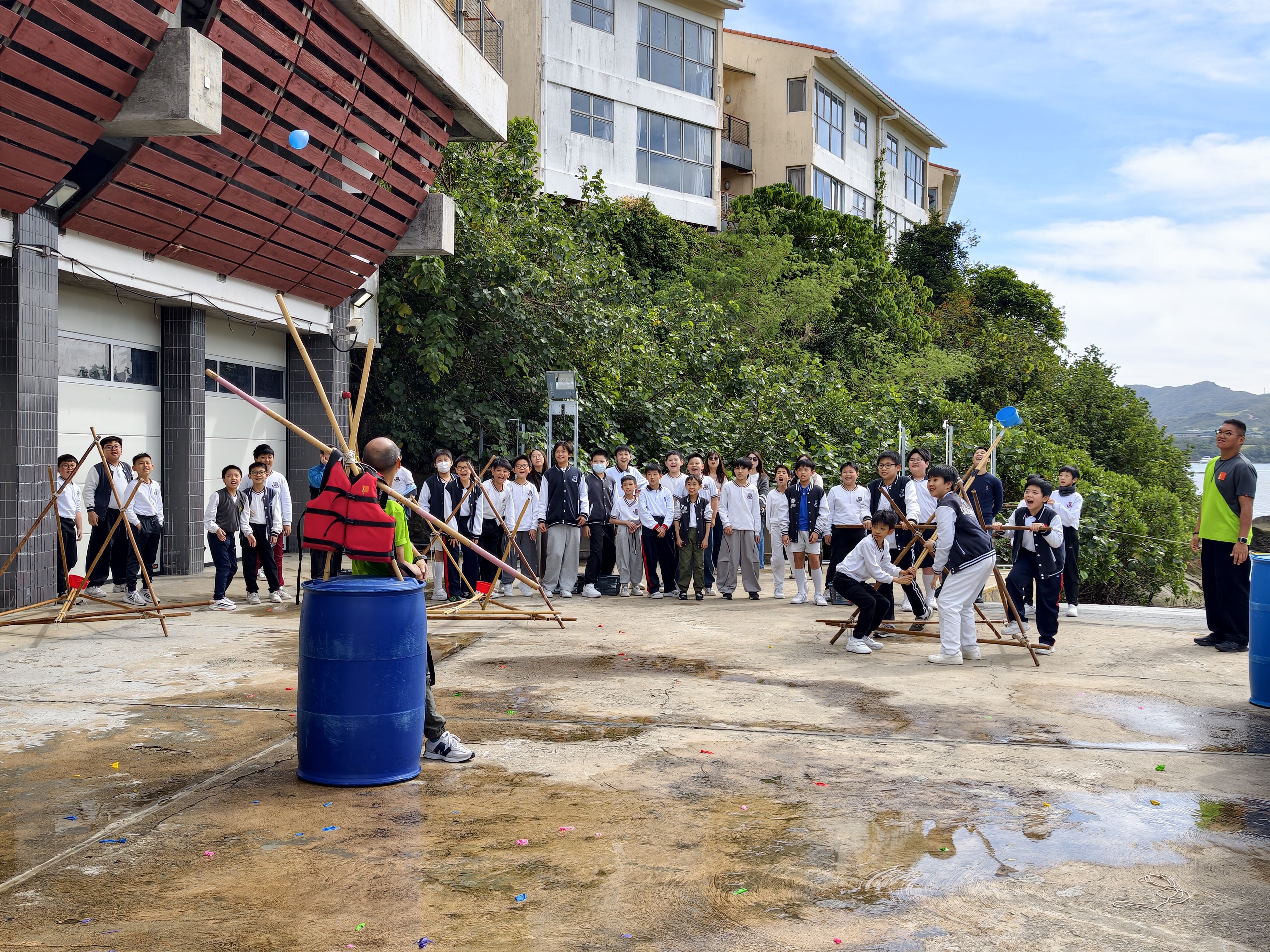
 | Our school provides a wide range of extra-curricular activities which involves academic, sports and aesthetic activities and community services. Multiple intelligence lessons include: dancing, juggling, hand chimes, Scientists, fancy rope-skipping, etc. For Potential Realization Programme, the following trainings are provided: English Ambassadors, Environment Ambassadors, STEM, drama, media production, etc. As for after-school classes, we offer English singing and dancing class, interview class, Go Chess class, table tennis class, etc. Moreover, various seminars, overseas trips and visits are also provided. |
 School Mission
 | Our school carries on the pedagogy of St. John Bosco, the founder of the Salesian Society, who has possessed the belief, conviction and experience to invite priests, educators, parents and the people concerned to join in the nurturing of young people as a family. They will recognise reason, loving kindness, and religion as inflexible need to make their presence felt, and cultivate them in different environment and activities. Each pupil shall feel they are guided and loved by knowledge and morality with equilibrium in personal growth as a member in God's family. |
 School Characteristics
 | School Management | ||
| School Management Organisation | : | Managed by Incorporated Management Committee, our school has different subject panels and administrative groups. Members of subject panels and administrative groups work closely together to build team spirit and shape the school culture as a school community to promote school development. |
| Incorporated Management Committee / School Management Committee/ Management Committee | : | Incorporated Management Committee members include supervisor, priests and brothers, principals and outsiders from educational and other fields. |
| School Green Policy | : | 1. We use e-Notice and GRWTH electronic communication platform to communicate with our parents. 2. We run "School Uniform Recycling Project" and "Books Recycling Programme" in order to elevate our students' awareness of the importance of environmental protection. Reduction of photocopies and the use of recycling paper have been implemented. 3. Solar panels were installed on our school's rooftop to promote environmental education. Through collaboration with the General Studies curriculum, students can experience the generation of renewable energy and gain knowledge of environmental protection. 4. Reward scheme is promoted so students can learn to reduce food waste and cherish food. |
| School's Major Concerns | : | 1. Through technology-assisted teaching, students can enjoy learning. 2. Construct positive school culture and hence nurture students' positive mindset. 3. Strengthen the religious atmosphere in school, deepen faith cultivation, and enable school stakeholders to embody Salesian spirit. |
| Learning and Teaching Plan | ||
| Learning & Teaching Strategies | : | Based on the core curriculum, a school-based curriculum has been established for students according to their abilities, interests and needs. Through various learning and teaching strategies, such as collaborative learning, e-Learning and differentiated questioning skills, students construct knowledge, develop high-order thinking skills, nurture generic skills and establish positive values and attitudes through interactive group activities. Eventually, students can obtain the three characteristics of Salesian students- to be unique, friendly and optimistic. Small class teaching is implemented from P.1 to P.6. For upper primary, students are streamed into ability groups in Chinese, English and Mathematics lessons. These policies allow teachers to cater for students' learning diversities. In some lessons, extra resources and teachers are available for co-teaching or pull-out programmes. |
| Development of Major Renewed Emphases of the Primary Education Curriculum | : | Enhancing whole-school curriculum planning reinforces STEAM education and AI in education. Through various learning activities, students are able to broaden their scope of learning and horizons to achieve whole-person development and establish a solid foundation for lifelong learning. |
| Development of Generic Skills | : | Students' generic skills in different areas are nurtured through systematically arranged learning experiences, such as theme-based learning, outdoor learning and service learning activities, etc. The school provides a wide range of extra-curricular and after school activities, such as sports and art, computing, drama and language learning. Students are encouraged to take part in intramural and interschool competitions and performances. |
| Cultivation of Proper Values, Attitudes and Behaviours | : | Through the teaching of various subject courses and a variety of learning experiences, students are fostered with positive values and attitudes to achieve holistic education. |
| Student Support | ||
| Whole School Approach to Catering for Learner Diversity | : | 1. The "Student Support Team" is established while school-based speech therapist and school-based educational psychologist provide support services for students, parents and teachers in a multi-disciplinary support model. 2. Training is provided for teachers to enhance the teaching support strategies in classrooms. 3. Special services provide group training for students. 4. Homework and assessment adjustments are provided for individual students with special learning needs. 5. Different multi-intelligent activities are arranged to cater for students' learning diversity. |
| Whole School Approach to Integrated Education | : | Ability grouping enables teachers to arrange appropriate learning modes, multiple intelligence activities and group training according to each student's interest and ability. In a suitable learning environment, the gap between each learner can be narrowed, and to create a decent integrated educational environment. |
| Education Support for Non-Chinese Speaking(NCS) Students | : | Our school provides additional support for NCS students to facilitate their learning of Chinese: providing after-school support programmes in learning Chinese; appointing additional teacher(s)/teaching assistant(s) to support NCS students' learning of Chinese; arranging intensive Chinese learning and teaching mode(s), e.g. pull-out learning if necessary, split-class/group learning, etc; developing school-based Chinese Language curriculum and/or adapting learning and teaching materials; organising activities to create an inclusive learning environment in the school; and our school uses Putonghua to teach Chinese in all classes / groups at all levels with extra support as appropriate, e.g. pull-out/small-group classes, learning and teaching resources with Pinyin, etc. |
| Curriculum Tailoring and Adaptation | : | We design different levels of learning tasks according to our students' ability and develop the most suitable school-based curriculum based on our students' needs, which fosters an all-round development of our students. |
| Home-school Co-operation and School Ethos | ||
| Home-School Co-operation | : | GRWTH electronic communication platform is in use to inform parents the school's information in real time and effectively promote home-school communication. Different home-school activities, such as Parents’ Day, seminars, parent-child trips, parent-child games, etc., strengthen the connection between parents and the school. Parents make efforts to equip themselves by actively participating in different training courses provided by the school, such as parent workshops, story-telling seminars, etc. |
| School Ethos | : | With our virtuous school ethos, our students are polite and helpful as they are nurtured in a profound religious atmosphere and positive values, which create a caring culture in our school. |
| Future Development | ||
| School Development Plan | : | 1. Through technology-assisted teaching, students can enjoy learning. 2. Construct positive school culture and hence nurture students' positive mindset. 3. Strengthen the religious atmosphere in school, deepen faith cultivation, and enable school stakeholders to embody Salesian spirit. |
| Teacher Professional Training & Development | : | Professional development activities such as staff development days, team planning sessions, peer observations, teacher sharing, etc. are held every year and have established a "learning circle" to elevate the quality of teaching and learning. Teachers are encouraged to participate in development courses (CPD) in various professional aspects related to our school's areas of concern and subjects' development so as to acquire the latest educational trend. |
| Others | : | 1. 2025-2026 Hong Kong Island East Area Inter-Primary Schools Athletics Competition Boys C Group 60m Champion/ Boys B Group 60m Champion/ Boys A Group Softball Throw 1st runner-up/ Boys A Group 200m 2nd runner-up 2. 77th Hong Kong Schools Speech Festival (Solo Verse) English: 2nd runner-up 3. Eastern District Age Group Athletic Meet 2025 Men's Youth E Group 4x100m Relay: 1st runner-up 4. Central & Western District Tennis Competition 2025 Boy's Youth Doubles: 3rd runner-up; 5. 62nd Hong Kong Schools Dance Festival: Commended Award 6. Central & Western District Age Group Athletic Meet 2025 Men's Youth E Group 4x100m Relay: Champion |
 School Map
Last revision date:01 September 2026


