 Primary School Profiles 2026

 Primary School Profiles 2026

| Address: | 3 Chi Fu Close, Chi Fu Fa Yuen, Hong Kong | |||
| Phone: | 25504004 | Email: | info@skhcfcn.edu.hk | |
| Fax: | 25510495 | Website: | http://www.skhcfcn.edu.hk/ | |
 School Information
 | Supervisor/ Chairman of Management Committee | : | Prof. Yeung Law Koon Chui |
| School Head | : | Ms. Sung Man Yue |
| Incorporated Management Committee been established? | : | Established |
| Percentage of School Supervisor and Managers / Chairperson and Members of School Management Committee (SMC) of Government Schools Fulfilling the Training Targets | : | 100% |
| School Type | : | Aided Whole Day |
| Student Gender | : | Co-ed |
| Sponsoring Body | : | Anglican (Hong Kong) Primary Schools Council Limited |
| Religion | : | Protestantism / Christianity |
| Year of Commencement of Operation | : | 1957 |
| School Motto | : | Not to be served but to serve |
| Area Occupied by the School | : | About 2835 Sq. M |
| Through-train Secondary School | : | - |
| Feeder Secondary School | : | - |
| Nominated Secondary School | : | - |
| Medium of Instruction | : | Chinese |
| School Bus Service | : | School Bus; Nanny van |
| Parent-Teacher Association | : | Yes |
| Past Students' Association/Alumni Association | : | Yes |
| 4Rs Mental Health Charter | : | Yes |
| Whole School Health Programme | : | Action School |
 2026/2027 Annual School Charges
| School Fee | : | - |
| Tong Fai | : | - |
| PTA Fee | : | $50 |
| Approved Charges for non-standard items | : | School Development Fund $310 |
| Other Charges | : | Reissue student transcript $25 |
 School Facilities
 | Number of Classroom(s) | : | 24 |
| Number of School Hall(s) | : | 1 |
| Number of Playground(s) | : | 3 |
| Number of Library(ies) | : | 1 |
| Special Rooms | : | Science Reading Room, STEM Lab, English Activity Room, IT Room, Medical Room, Music Room, Art Room, Remedial-teaching Classroom, Campus TV, Counselling Room , Green Garden, Conference Room and Chinese Culture Room. |
| Facility(ies) for Supporting Students with Special Educational Needs | : | Ramp, Accessible lift and Accessible toilet. |
| Others | : | Dome Observatory, 5G Observatory, Star Kaleidoscope, Rock Climbing Wall, Green House, AI Sport Station, Smart bike. |
 Teaching Staff Information (Including School Head) in the 2025/2026 school year
 | Number of teaching posts in the approved establishment | : | 30 |
| Total number of teachers in the school | : | 38 |
| Qualifications and professional training (%) | ||
| Had Received Teacher Training | : | 97% |
| Bachelor Degree | : | 100% |
| Master/ Doctorate Degree or above | : | 41% |
| Special Education Training | : | 82% |
| Years of Experience (%) | ||
| 0 - 4 years | : | 21% |
| 5 - 9 years | : | 23% |
| 10 years or above | : | 56% |
 Class Structure
 | 2025/26 school year | ||
| P1 Number of classes | : | 2 |
| P2 Number of classes | : | 1 |
| P3 Number of classes | : | 2 |
| P4 Number of classes | : | 2 |
| P5 Number of classes | : | 4 |
| P6 Number of classes | : | 3 |
| Total | : | 14 |
| 2026/27 school year (Based on the number of classes approved by EDB in 2026) | ||
| P1 Number of classes | : | 1 |
| P2 Number of classes | : | 2 |
| P3 Number of classes | : | 1 |
| P4 Number of classes | : | 2 |
| P5 Number of classes | : | 2 |
| P6 Number of classes | : | 4 |
| Total | : | 12 |
| Mode of teaching at different levels | ||
| Remedial classes before and after school. | ||
| Remarks | ||
| - | ||
 Performance Assessment
 | Applicable to P1 only | ||
| Number of test(s) per year | : | 0 |
| Number of exam(s) per year | : | 0 |
| Replace tests and examinations with diversified assessments in the first term of P1 | : | Yes |
| Applicable to P2 to P6 only | ||
| Number of test(s) per year | : | 0 |
| Number of exam(s) per year | : | 3 |
| Applicable to P1 to P6 | ||
| Formulate appropriate school-based assessment and assignment policies, inform parents of related arrangements, and collect views from teachers, students and parents regularly (at least once per school year) for ongoing review and optimisation of the school assessment and assignment policies | : | Yes |
| Upload the school-based assessment policy onto the school webpage for information of the public and stakeholders | : | Yes |
| Upload the school-based assignment policy onto the school webpage for information of the public and stakeholders | : | Yes |
| Diversified Assessment for Learning | : | Formative and summative assessments including theme-based projects, Science and Technology Exploration, oral and self-discipline competencies are implemented. Students' self and peers evaluation and cross-curriculum learning evaluation is used as feedback for learning and teaching. |
| Avoid arranging tests or examinations immediately after long holidays in order to let students take more rest during the holidays | : | Yes |
| Arrange the timetable flexibly according to the school context, with a tutorial session provided in the afternoon as far as possible for students to finish some of their homework under teachers’ guidance | : | Yes |
| Streaming arrangement | : | Streaming from P.6 is based on students' academic result, behaviour, performance, and learning needs. |
 School Life
 | Number of school days per week | : | 5 |
| Number of periods per day | : | 10 |
| Duration of each normal period | : | 30 |
| School starts at | : | 8:00 AM |
| School ends at | : | 3:15 PM |
| Lunch break | : | 12:45 - 1:45 |
| Lunch arrangement | : | Provided by designated supplier and arranged by parents. |
| Healthy school life | : | The luncheon menu is in line with the "3 High 1 Low" healthy diet policy. We are also launching "Healthy snack" and "Fruit-day" to promote well-balanced eating habit. |
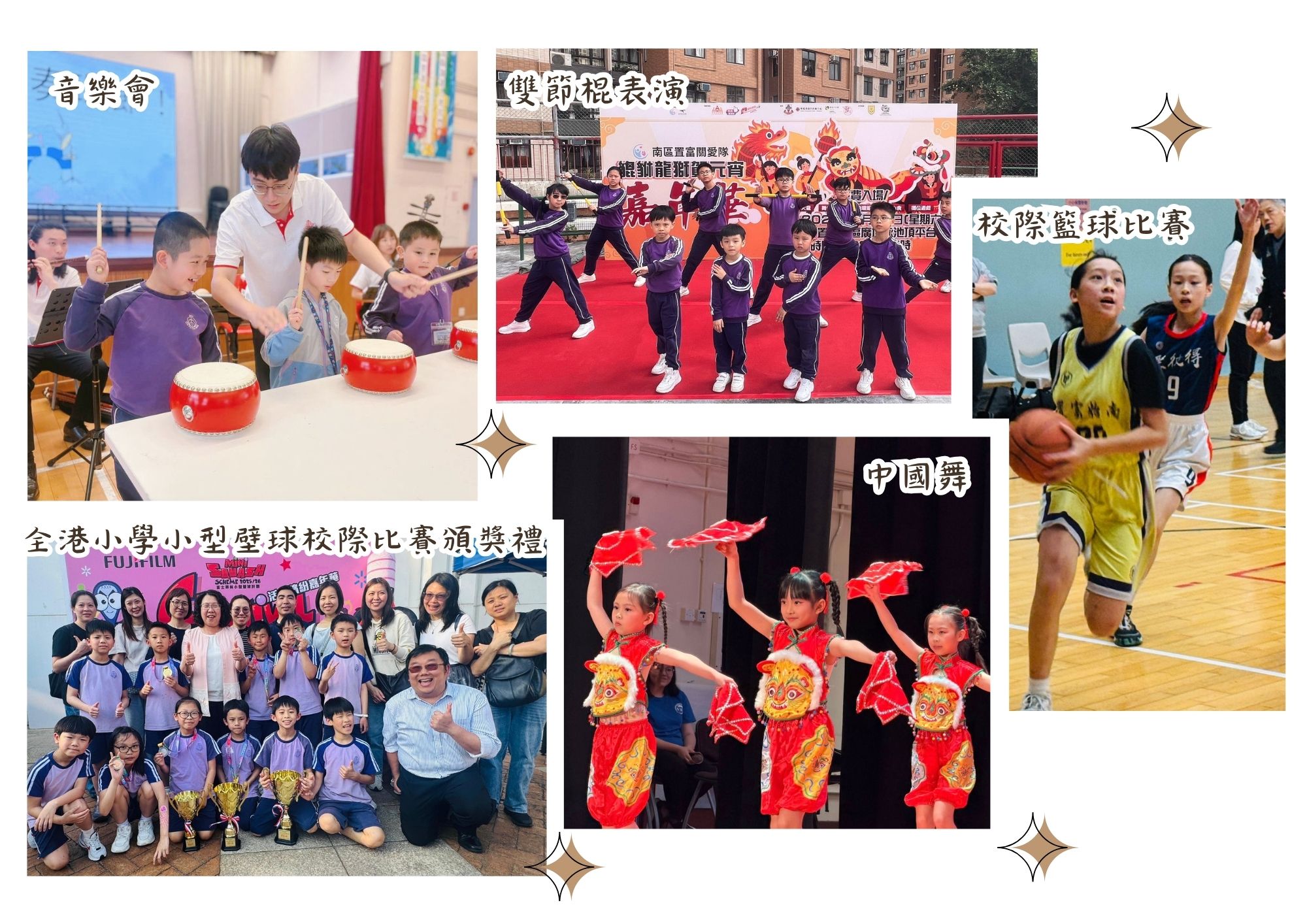
| Remarks | : | Students will participate in multiple intelligence learning activities on Monday and Thursday afternoons; Assemblies and Life Growth classes on Tuesday afternoons; students will have subject enrichment classes on Wednesday afternoons. Teachers' professional development on Fridays. We train students to participate in competitions covering STEAM, programming, music, choral speaking, visual arts, mathematics, etc. and are committed to developing students' potential. |
 Life-wide Learning
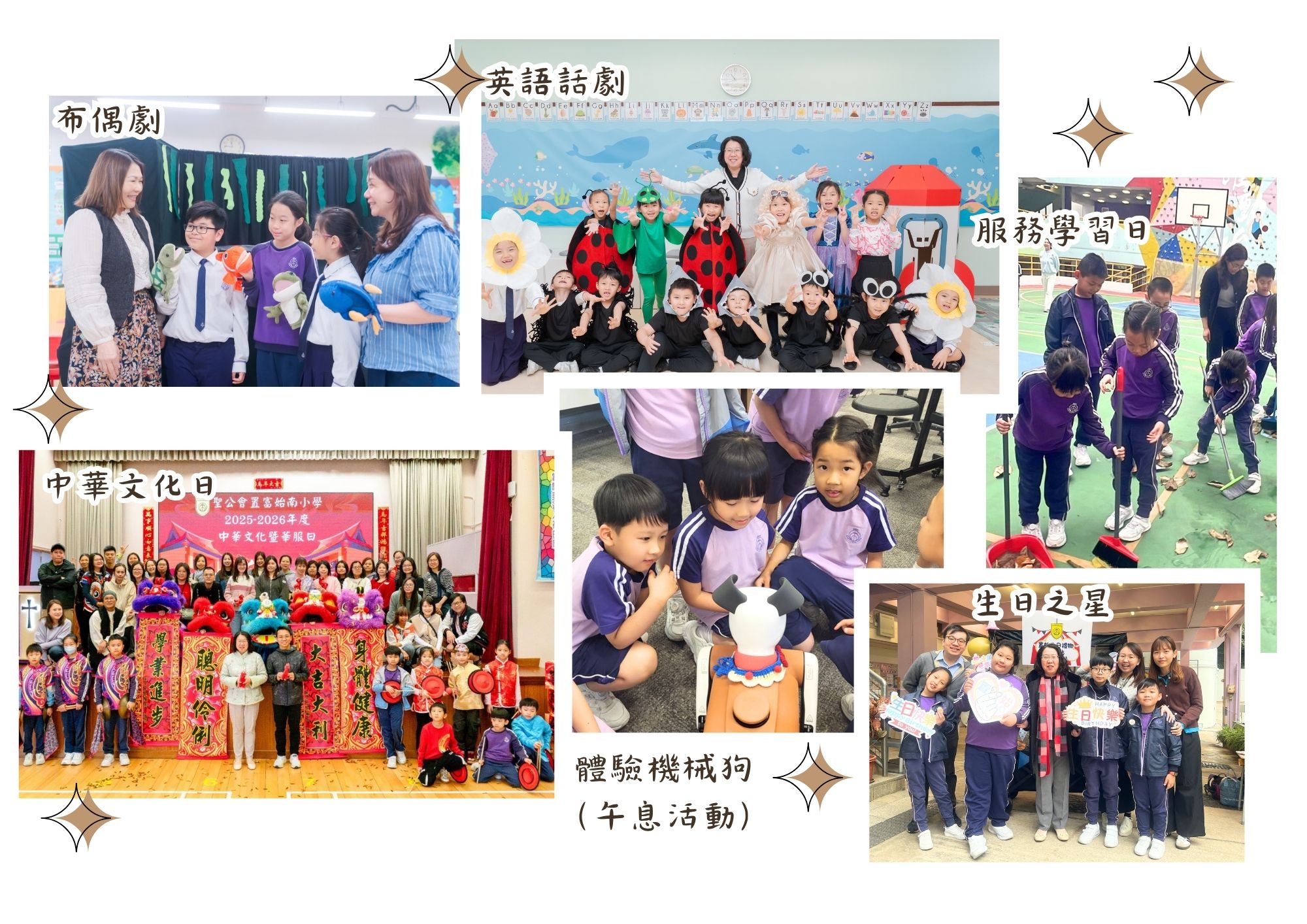
 | Assemblies are held weekly for national and moral education, religion, English, etc. Life growth classes are held every week to nurture students' positive thinking and attitude. Students are encouraged to participate in various extra-curricular competitions, covering STEAM, programming, music, choral-speaking, visual arts, Mathematical Olympiad Team, creative writing, English Drama, Flag-raising team, Lion Dance Team etc. to highlight students' talents and potential. |
 School Mission
 | In pursuing the truth of gospel, our school aims to develop students to the full based on Christian principles. It aims to provide an ideal environment for students to grow in love and care, to learn effectively, to develop positive ways of life, as well as to instill in every student the proper values and attitudes. |
 School Characteristics
 | School Management | ||
| School Management Organisation | : | 1. Incorporated Management Committee 2. Administration Team 3. Teaching and Learning Team, Curriculum Team, Students' Affairs Team, Student Guidance and Discipline Team, Moral and National Education Team, Life-wide Learning Activity Team and School Promotion Team. |
| Incorporated Management Committee / School Management Committee/ Management Committee | : | The Incorporated Management Committee consists of 15 members including the Principal and other appointed members (e.g. teachers parents and alumni). |
| School Green Policy | : | Energy saving policy includes recycling boxes, regulations of using air-conditioner (e.g. temperature settings, operating hours). |
| School's Major Concerns | : | 1. Cultivate student reading habit by enriching the reading environment. Equip them with the self-directed learning. To enhance one's reading capacity learning to life-long learning and empower own's national identity. 2. Nurture students' positive values and attitudes. Be capable of enhancing self-management skill, leading a healthy and self-confident life. |
| Learning and Teaching Plan | ||
| Learning & Teaching Strategies | : | Promote elicit curriculum to enhance students potential, i.e. study tours and competitive. Implement co-operative learning and self-directed learning strategies to develop different generic skills and acquire knowledge. Incorporating questioning techniques to motivate and stimulate high order thinking in learning. With good use of various educational and school platforms to enhance self and habitual learning ability. Organize thematic interdisciplinary learning to integrate and consolidate what students have learned. |
| Development of Major Renewed Emphases of the Primary Education Curriculum | : | National Education, STEAM Education, Values Education, Information Literacy |
| Development of Generic Skills | : | Through cross-curricular project learning and high order thinking question technique to nurture students' communication, collaboration, problem-solving and critical thinking skills. |
| Cultivation of Proper Values, Attitudes and Behaviours | : | Life education curriculum is adopted to nurture the core values of positive life beliefs and promote reflection through picture books, experiential activities and teachers' sharing. We also use the 24 character strengths as training themes, such as the 'Appreciation' activity helps students learn to appreciate the strengths of other students. Through morning assemblies, counseling activities, and theme activities, we promote and convey core values such as national identity, diligence, integrity, and benevolence. |
| Student Support | ||
| Whole School Approach to Catering for Learner Diversity | : | Provide learning groups for gifted students to develop their potential, arrange students with different learning needs to participate in different types of group activities and provide appropriate assistance in response to students' different talents. A 3-tiered intervention model is adopted to provide appropriate support according to the needs of students. Strategies for catering for learning differences: Provide assessment accommodation and offer more support to less able students. Inviting expertise to conduct seminars for teachers regarding the teaching strategies and skills of the students with special educational needs. |
| Whole School Approach to Integrated Education | : | In the whole-school approach, we support students with special educational needs. Utilizing the Learning Support Grant, we implement a tiered support framework between the Student Support Team and teaching staff. In-class strategies include differentiated instruction and co-teaching support, complemented by after-school training groups for Chinese and English reading and writing. Enhanced school-based speech therapy service, assessment accommodations, and tailored teaching materials further enhance learning outcomes. Beyond academics, we cultivate social-emotional growth through experiential, adventure-based activities and social skills groups. A structured parent-school collaboration mechanism ensures regular case conferences to review and dynamically adjust support strategies aligned with student development stages, fostering an inclusive campus community. |
| Education Support for Non-Chinese Speaking(NCS) Students | : | Our school provides additional support for NCS students to facilitate their learning of Chinese: providing after-school support programmes in learning Chinese; appointing additional teacher(s)/teaching assistant(s) to support NCS students' learning of Chinese; organising activities to create an inclusive learning environment in the school; and hiring additional manpower and/or translation/interpretation services to facilitate the communication with parents of NCS students. |
| Curriculum Tailoring and Adaptation | : | There are adaptation measures for P.1-P.6 students in worksheet, dictation and assessment. Support strategies also encompass small-class cooperative learning and peer buddy programmes. |
| Home-school Co-operation and School Ethos | ||
| Home-School Co-operation | : | Set up a system for parents to share their suggestions through the Parents' Teacher Association. Mobile apps are used to deliver school development updates. Members of the Parents' Teacher Association and Parents Volunteer Team participated in organizing school activities including Sports Day, The Parents-Also-Appreciate-Teachers programme, graduation lunch, theme talk, district service programme. They also monitor the school bus service and lunch provider. |
| School Ethos | : | Promote love, caring and serving culture in school. Value moral development. Establish adaptation measures for P.1 students before and during the school year, P.1 Cross curricular "CFCN Accompanying my growth" and "Star of Chi Fu Chi Nam Awarding Scheme", to develop a sense of belonging and ownership in school. |
| Future Development | ||
| School Development Plan | : | Develop school-based curriculum through school-based curriculum development support services; actively promote STEAM education, value education and physical and artistic development in line with curriculum policies and school-based student needs; strengthen the cultivation of students' independent learning ability, promote reading habits, increase students' curiosity, and cultivate students' positive life. |
| Teacher Professional Training & Development | : | 1. AI in Education 2. Diversified teaching strategies and pedagogies 3. Teachers' positive teaching language 4. STEAM Education Development |
| Others | : | Scholarship for academic achievers and outstanding achievement in multiple-intelligences Award. |
 School Map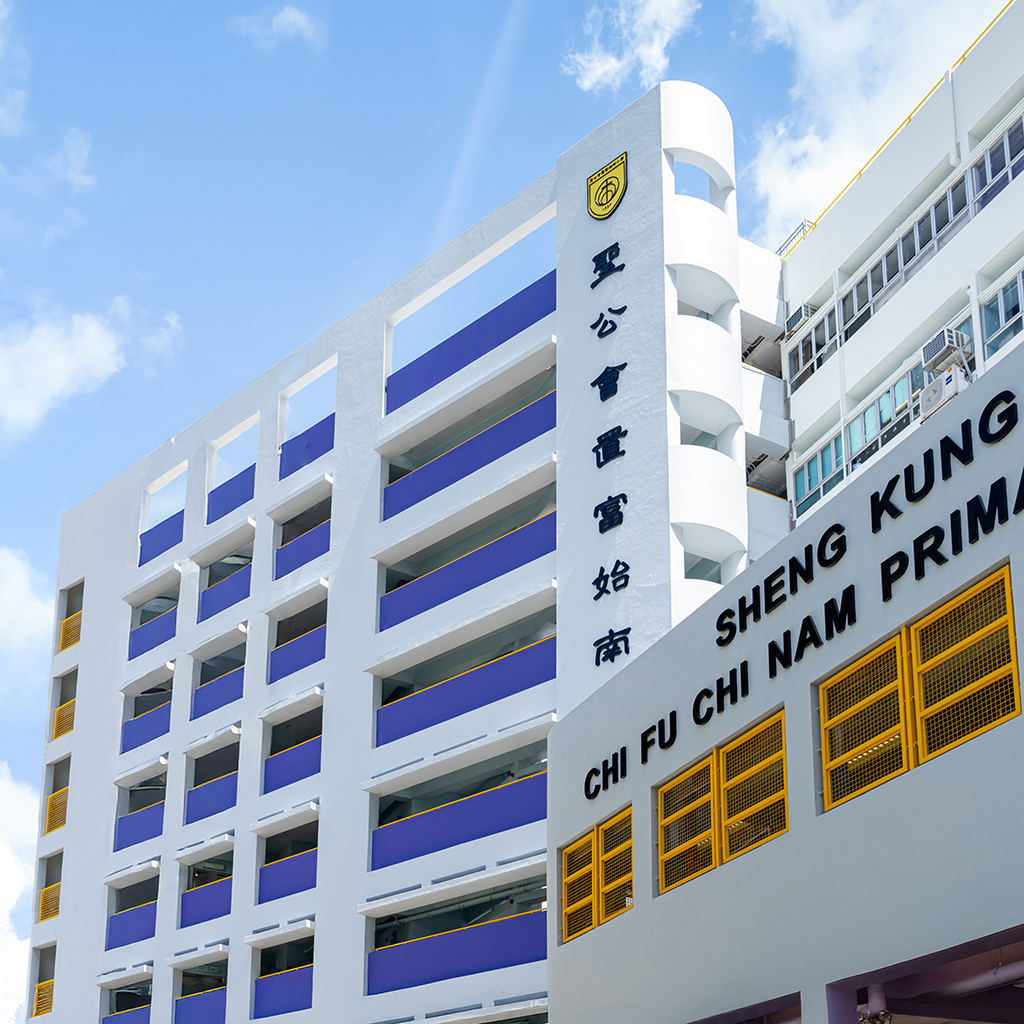
Last revision date:25 September 2026


