 Primary School Profiles 2026

 Primary School Profiles 2026

| Address: | 325 Apleichau Bridge Road, Apleichau, Hong Kong | |||
| Phone: | 25510030 | Email: | hksdgps@edb.gov.hk | |
| Fax: | 25517793 | Website: | http://www.hksdgps.edu.hk | |
 School Information
 | Supervisor/ Chairman of Management Committee | : | Miss Miss Lam Si Hang, Yvonne |
| School Head | : | Ms. Leung Wai Kwan |
| Incorporated Management Committee been established? | : | Not Applicable |
| Percentage of School Supervisor and Managers / Chairperson and Members of School Management Committee (SMC) of Government Schools Fulfilling the Training Targets | : | 100% |
| School Type | : | Gov't Whole Day |
| Student Gender | : | Co-ed |
| Sponsoring Body | : | Government |
| Religion | : | Not Applicable |
| Year of Commencement of Operation | : | 2000 |
| School Motto | : | We live with passion and we do our very best. |
| Area Occupied by the School | : | About 4840 Sq. M |
| Through-train Secondary School | : | - |
| Feeder Secondary School | : | - |
| Nominated Secondary School | : | King's College, Belilios Public School, Clementi Secondary School, Tang Shiu Kin Victoria Government School |
| Medium of Instruction | : | Chinese |
| School Bus Service | : | School Bus |
| Parent-Teacher Association | : | Yes |
| Past Students' Association/Alumni Association | : | Yes |
| 4Rs Mental Health Charter | : | Yes |
| Whole School Health Programme | : | Action School |
 2026/2027 Annual School Charges
| School Fee | : | - |
| Tong Fai | : | - |
| PTA Fee | : | $50 |
| Approved Charges for non-standard items | : | $270 |
| Other Charges | : | - |
 School Facilities
 | Number of Classroom(s) | : | 24 |
| Number of School Hall(s) | : | 1 |
| Number of Playground(s) | : | 2 |
| Number of Library(ies) | : | 1 |
| Special Rooms | : | English Room, General Studies Room, Music Room, Visual Arts Room, Computer Room, STEM Room, Dancing Room, School Campus TV. |
| Facility(ies) for Supporting Students with Special Educational Needs | : | Accessible lift and Accessible toilet. |
| Others | : | Play Counselling Room, Parents-Teachers Association Room, Medical Room, AI Sports Zone. |
 Teaching Staff Information (Including School Head) in the 2025/2026 school year
 | Number of teaching posts in the approved establishment | : | 44 |
| Total number of teachers in the school | : | 45 |
| Qualifications and professional training (%) | ||
| Had Received Teacher Training | : | 100% |
| Bachelor Degree | : | 100% |
| Master/ Doctorate Degree or above | : | 42% |
| Special Education Training | : | 76% |
| Years of Experience (%) | ||
| 0 - 4 years | : | 4% |
| 5 - 9 years | : | 18% |
| 10 years or above | : | 78% |
 Class Structure
 | 2025/26 school year | ||
| P1 Number of classes | : | 4 |
| P2 Number of classes | : | 4 |
| P3 Number of classes | : | 4 |
| P4 Number of classes | : | 4 |
| P5 Number of classes | : | 4 |
| P6 Number of classes | : | 4 |
| Total | : | 24 |
| 2026/27 school year (Based on the number of classes approved by EDB in 2026) | ||
| P1 Number of classes | : | 4 |
| P2 Number of classes | : | 4 |
| P3 Number of classes | : | 4 |
| P4 Number of classes | : | 4 |
| P5 Number of classes | : | 4 |
| P6 Number of classes | : | 4 |
| Total | : | 24 |
| Mode of teaching at different levels | ||
| 1. Streaming according to students' abilities (P.3-P.6). 2. Small class teaching. 3. Intensive Remedial Teaching and learning support programmes are provided to students with special needs. |
||
| Remarks | ||
| - | ||
 Performance Assessment
 | Applicable to P1 only | ||
| Number of test(s) per year | : | 0 |
| Number of exam(s) per year | : | 2 |
| Replace tests and examinations with diversified assessments in the first term of P1 | : | Yes |
| Applicable to P2 to P6 only | ||
| Number of test(s) per year | : | 0 |
| Number of exam(s) per year | : | 3 |
| Applicable to P1 to P6 | ||
| Formulate appropriate school-based assessment and assignment policies, inform parents of related arrangements, and collect views from teachers, students and parents regularly (at least once per school year) for ongoing review and optimisation of the school assessment and assignment policies | : | Yes |
| Upload the school-based assessment policy onto the school webpage for information of the public and stakeholders | : | Yes |
| Upload the school-based assignment policy onto the school webpage for information of the public and stakeholders | : | Yes |
| Diversified Assessment for Learning | : | Formative and summative assessment (oral evaluation, practical evaluation, life study skill and project learning) are adopted to improve students' learning. The scope of assessment is wide-ranging. The level of difficulty suits the students needs and abilities. |
| Avoid arranging tests or examinations immediately after long holidays in order to let students take more rest during the holidays | : | Yes |
| Arrange the timetable flexibly according to the school context, with a tutorial session provided in the afternoon as far as possible for students to finish some of their homework under teachers’ guidance | : | Yes |
| Streaming arrangement | : | Streaming according to students' abilities (P.3 - P.6). |
 School Life
 | Number of school days per week | : | 5 |
| Number of periods per day | : | 9 |
| Duration of each normal period | : | 35 |
| School starts at | : | 8:20 AM |
| School ends at | : | 3:25 PM |
| Lunch break | : | 12:40 - 1:40 |
| Lunch arrangement | : | Provided by designated supplier, arranged by parents and brought by students. |
| Healthy school life | : | 1. To promote healthy eating habits, we have participated in the School ""Nutri-Agent"" Project. 2. Morning exercise and recess activities are being provided for students to maintain a habit of exercising. |
| Remarks | : | Apart from the formal curriculum, we advocate for morning reading sessions, library classes, moral education, tutorial classes, extracurricular activities, and comprehensive multiple intelligence courses. There are enrichment classes in Chinese, English, and Mathematics, along with after-school options like Olympiad Math and subject tutoring. During recess, students can enjoy various vitality activities. |
 Life-wide Learning
 | There are various interest groups in extracurricular activities: Drama, Gardening, Junior Journalists, Technology Activities, Sports Activities, Handicrafts, Board Games and Chess, Chinese Orchestra, Handbell Ensemble, and Choir. After-class activities include Oriental Dance, Jazz Dance, Hip-Hop, Martial Arts, Rope Skipping, Taekwondo and various sports. Language enrichment is available through Cambridge English classes, while cultural appreciation and performance skills are nurtured in the Lion Dance Team and Academic Enrichment Classes. The service team includes Juvenile Police, CYC, Scout and School Flag Guards. |
 School Mission
 | The mission of our school is to impart a quality well-rounded education to our students and we treat all classes with equal importance. We strive to educate students in areas of moral, intellectual, physical, social, aesthetic and emotional development. This process takes place in an environment conducive to learning and will nurture our students to become good citizens. |
 School Characteristics
 | School Management | ||
| School Management Organisation | : | The school management under the school management committee is composed of principal, deputy principals and various administrative groups. It is responsible for formulating and supervising the operation of all school affairs and assisting in the implementation of various school affairs. |
| Incorporated Management Committee / School Management Committee/ Management Committee | : | The chairperson of our School Management Committee is appointed by EDB. Other members include the school headmaster, representatives from each of the four parties of stakeholders, namely teachers, alumni, parents and independent members. Regular meetings are held to discuss school development policy so as to enhance learning and teaching. |
| School Green Policy | : | Through various inter and outer school green activities to establish the pupils' concept and attitude of protecting the environment. Train kids as environmental ambassadors to carry out 'Save Energy and Resources' campaign. |
| School's Major Concerns | : | 1. Promote innovative teaching methodologies, foster student-centred learning, enrich diverse learning experiences, enhance students' self-confidence, and prepare them for the future. 2. Broaden students' horizons, cultivate a positive life attitude, and nurture students to become responsible citizens of the new generation. |
| Learning and Teaching Plan | ||
| Learning & Teaching Strategies | : | 1. Use cooperative learning to enhance students' collaborative ability. 2. Through the training of self-learning skills and high-order thinking, and the implementation of e-learning to enhance students' self-learning ability. 3. Implement life-wide learning, such as visits, competitions and overseas exchanges to develop commonality among students' abilities. 4. Introduce STEAM elements into various subjects to enhance students' inquiry ability. 5. Actively participate in learning support programmes to improve learning and teaching effectiveness continuously. |
| Development of Major Renewed Emphases of the Primary Education Curriculum | : | The major renewed emphases include: 1. Strengthening values education, national education and national security education. 2. Making good use of learning time and creating space to promote a balanced physical and mental development. 3. Enriching life-wide learning experiences and promoting whole-person development. 4. Better catering for learner diversity. 5. Reinforcing STEAM education, and nurturing students' media and information literacy. 6. Strengthening cross-curricular learning and reading across the curriculum for developing lifelong learning capabilities. 7. Enhancing assessment literacy for promoting learning and teaching effectiveness. |
| Development of Generic Skills | : | 1. Cultivation of common ability: Integrate the cultivation of skills in various fields of study and develop students' common skills in analysis, problem-solving, creativity, and communication. 2. Students combine the knowledge and abilities of related subjects to carry out inquiry learning and develop students' generic skills by project learning. |
| Cultivation of Proper Values, Attitudes and Behaviours | : | The school attaches great importance to the cultivation of student moral character, and integrates moral education from formal and informal courses. In the formal curriculum, moral education is infiltrated in the teaching of various subjects, while in the informal curriculum, life education courses, school-based counselling activities and theme lectures are provided to cultivate students 'good character and positive outlook on life. |
| Student Support | ||
| Whole School Approach to Catering for Learner Diversity | : | 1. Through different education programmes to cater for individual differences; 2. School-based small class teaching, after-school educational support, school-based educational psychology service, and school-based speech therapy service. 3. We also offer a P.1 orientation for our newcomers to experience and adapt to primary school life. |
| Whole School Approach to Integrated Education | : | The school has implemented a whole-school approach to Integrated Education. Our school uses the learning support grant and enhanced school-based speech therapy services to provide appropriate support to students with special educational needs, such as remedial learning groups, teaching adaptation and assessment accommodation, speech therapy services and individual education plans. |
| Education Support for Non-Chinese Speaking(NCS) Students | : | Our school provides additional support for NCS students to facilitate their learning of Chinese: providing after-school support programmes in learning Chinese; appointing additional teacher(s)/teaching assistant(s) to support NCS students' learning of Chinese; and organising activities to create an inclusive learning environment in the school. |
| Curriculum Tailoring and Adaptation | : | The school provides appropriate support tailored to the diverse needs of students, including small-class teaching, after-school group counselling, as well as curriculum and examination adjustments. |
| Home-school Co-operation and School Ethos | ||
| Home-School Co-operation | : | The school keeps close contact with parents, and builds mutual trust through adequate communication. Activities and seminars for parents are frequently organised by The PTA. The PTA supports the development of the school and jointly creates a quality learning environment for children. |
| School Ethos | : | We create a safe, caring environment in which all children are respected and respect others. We are proud of our school and everyone's contribution is valued. Our expectations of behaviour are high and our code of conduct binds us as a whole school community. We have high expectations for all our children, academically, physically and in a wide range of creative activities. Through creative teaching and learning we aim to inspire and challenge children of all abilities. |
| Future Development | ||
| School Development Plan | : | 1. Strategic deployment of various funding resources to enhance and upgrade teaching facilities and equipment. 2. Actively promote STEAM education to enhance students' inquisitive and problem-solving capabilities. 3. Continue to promote e-learning and incorporate AI-assisted teaching to enhance students' IT competency and learning effectiveness. |
| Teacher Professional Training & Development | : | 1. Set up peer lesson preparation and peer observation lessons to strengthen teachers' professional exchanges. 2. Regularly arrange lectures, workshops and other training activities for teachers to enhance teachers' teaching effectiveness. 3. Actively participate in learning support programme and professional exchange activities to optimize classroom teaching. 4. Arrange teachers' professional training. |
| Others | : | 1. P.1 students are exempted from taking 1st term examination. 2. Gifted education to develop students' potential. |
 School Map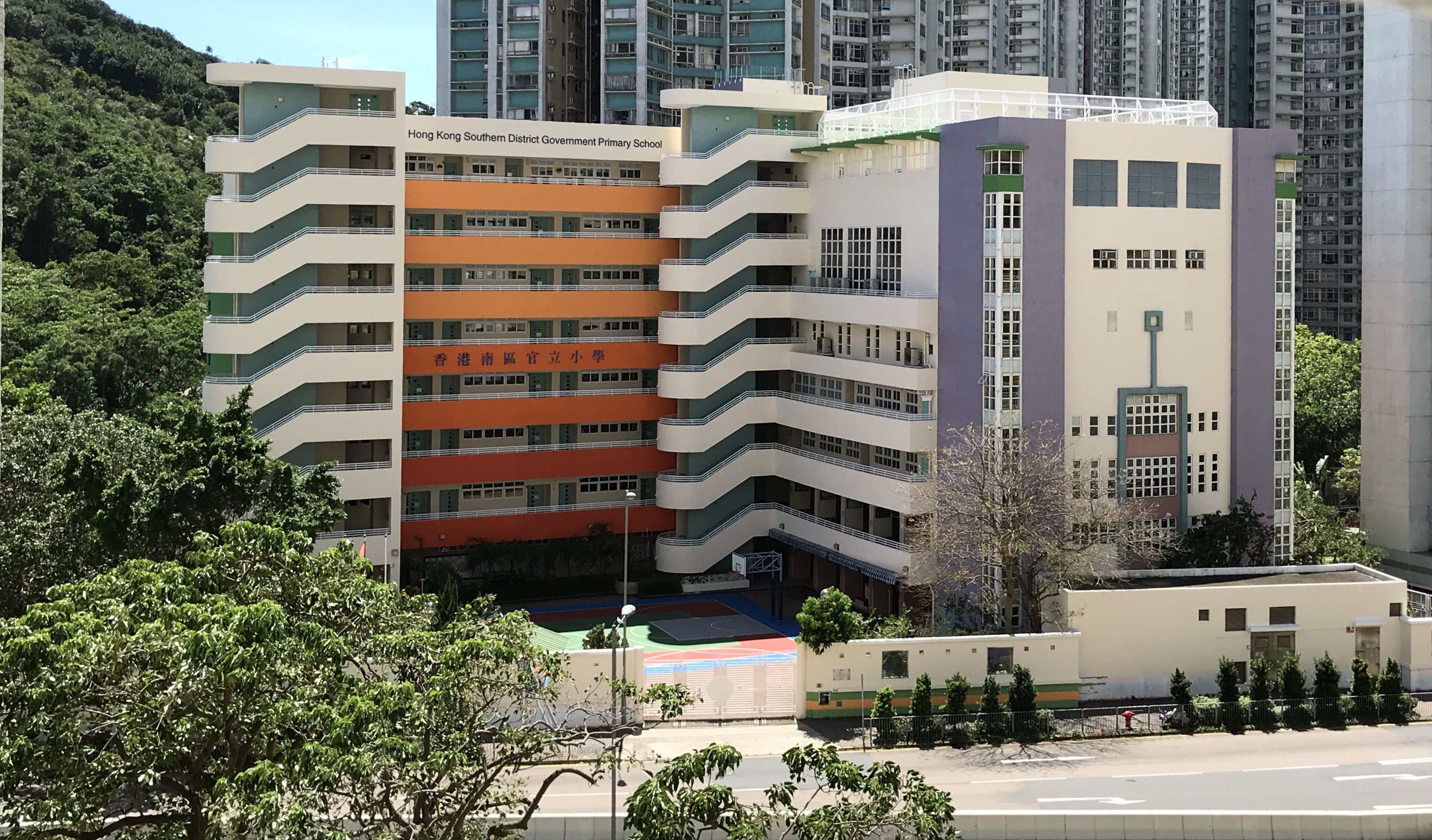

Last revision date:01 September 2026


