 Primary School Profiles 2026

 Primary School Profiles 2026

| Address: | 101 Sham Mong Road, Sham Shui Po, Kowloon | |||
| Phone: | 29590555 | Email: | email@sspgps.edu.hk | |
| Fax: | 29590566 | Website: | http://www.sspgps.edu.hk | |
 School Information
 | Supervisor/ Chairman of Management Committee | : | Dr. Dr Chan Pik Wa, Gloria |
| School Head | : | Ms. Wong Lai Sheung |
| Incorporated Management Committee been established? | : | Not Applicable |
| Percentage of School Supervisor and Managers / Chairperson and Members of School Management Committee (SMC) of Government Schools Fulfilling the Training Targets | : | - |
| School Type | : | Gov't Whole Day |
| Student Gender | : | Co-ed |
| Sponsoring Body | : | Government |
| Religion | : | Not Applicable |
| Year of Commencement of Operation | : | 2002 |
| School Motto | : | Strive for Success and Perfection |
| Area Occupied by the School | : | About 5679 Sq. M |
| Through-train Secondary School | : | - |
| Feeder Secondary School | : | - |
| Nominated Secondary School | : | Tsuen Wan Government Secondary School, Homantin Government Secondary School, Jockey Club Government Secondary School, Kowloon Technical School |
| Medium of Instruction | : | Chinese |
| School Bus Service | : | School Bus |
| Parent-Teacher Association | : | Yes |
| Past Students' Association/Alumni Association | : | - |
| 4Rs Mental Health Charter | : | Yes |
| Whole School Health Programme | : | Action School |
 2026/2027 Annual School Charges
| School Fee | : | - |
| Tong Fai | : | - |
| PTA Fee | : | - |
| Approved Charges for non-standard items | : | $150 per year for School-based Management Fee |
| Other Charges | : | About $30per term for Visual Arts Fee |
 School Facilities
 | Number of Classroom(s) | : | 30 |
| Number of School Hall(s) | : | 1 |
| Number of Playground(s) | : | 2 |
| Number of Library(ies) | : | 1 |
| Special Rooms | : | Computer Room, Steam Room, Activity Room, English Reading Room, Visual Arts Room, Music Room, Inclusive Education Centre, PTA Resource Centre, Medical Inspection Room, etc. |
| Facility(ies) for Supporting Students with Special Educational Needs | : | Ramp, Accessible lift and Accessible toilet. |
| Others | : | Football Field, Basketball Field, Open-air Theatre, Garden, Broadcast Room. |
 Teaching Staff Information (Including School Head) in the 2025/2026 school year
 | Number of teaching posts in the approved establishment | : | 47 |
| Total number of teachers in the school | : | 49 |
| Qualifications and professional training (%) | ||
| Had Received Teacher Training | : | 100% |
| Bachelor Degree | : | 100% |
| Master/ Doctorate Degree or above | : | 44% |
| Special Education Training | : | 90% |
| Years of Experience (%) | ||
| 0 - 4 years | : | 46% |
| 5 - 9 years | : | 33% |
| 10 years or above | : | 21% |
 Class Structure
 | 2025/26 school year | ||
| P1 Number of classes | : | 2 |
| P2 Number of classes | : | 4 |
| P3 Number of classes | : | 5 |
| P4 Number of classes | : | 4 |
| P5 Number of classes | : | 5 |
| P6 Number of classes | : | 5 |
| Total | : | 25 |
| 2026/27 school year (Based on the number of classes approved by EDB in 2026) | ||
| P1 Number of classes | : | 2 |
| P2 Number of classes | : | 2 |
| P3 Number of classes | : | 4 |
| P4 Number of classes | : | 5 |
| P5 Number of classes | : | 4 |
| P6 Number of classes | : | 5 |
| Total | : | 22 |
| Mode of teaching at different levels | ||
| Small class teaching is implemented from P.1-P.6. A whole school approach is adopted to cater for learner diversity. Learning support programmes such as small group support programmes and after-school homework tutorial programme are provided. | ||
| Remarks | ||
| - | ||
 Performance Assessment
 | Applicable to P1 only | ||
| Number of test(s) per year | : | 0 |
| Number of exam(s) per year | : | 0 |
| Replace tests and examinations with diversified assessments in the first term of P1 | : | Yes |
| Applicable to P2 to P6 only | ||
| Number of test(s) per year | : | 2 |
| Number of exam(s) per year | : | 2 |
| Applicable to P1 to P6 | ||
| Formulate appropriate school-based assessment and assignment policies, inform parents of related arrangements, and collect views from teachers, students and parents regularly (at least once per school year) for ongoing review and optimisation of the school assessment and assignment policies | : | Yes |
| Upload the school-based assessment policy onto the school webpage for information of the public and stakeholders | : | Yes |
| Upload the school-based assignment policy onto the school webpage for information of the public and stakeholders | : | Yes |
| Diversified Assessment for Learning | : | Apart from taking tests and examinations (except P.1), formative assessments, project learning, lesson observation, self-evaluation, APASO, etc are also adopted to assess students' learning ability, value judgement and attitude. |
| Avoid arranging tests or examinations immediately after long holidays in order to let students take more rest during the holidays | : | Yes |
| Arrange the timetable flexibly according to the school context, with a tutorial session provided in the afternoon as far as possible for students to finish some of their homework under teachers’ guidance | : | Yes |
| Streaming arrangement | : | P.1-P.2 mixed abilities classes. P.3-P.6 streamed classes according to academic performance. |
 School Life
 | Number of school days per week | : | 5 |
| Number of periods per day | : | 9 |
| Duration of each normal period | : | 35 |
| School starts at | : | 8:10 AM |
| School ends at | : | 3:05 PM |
| Lunch break | : | 12:20 - 1:20 |
| Lunch arrangement | : | Provided by designated supplier and arranged by parents. |
| Healthy school life | : | Good Academic and Behavior Award Programme, Student Fitness Programme, Morning Reading Programme, EatSmart School Accreditation Scheme, School Teams, Service Teams, Leadership Programme, Whole Person Development Award Programme. |
| Remarks | : | - |
 Life-wide Learning
 | Football, Badminton, Table Tennis, Basketball, Volleyball, Track and Field Athletics, Lion Dance, Martial Arts, Taekwondo, Chinese Orchestra, Choir, Chinese Drum, Chinese Dance, Ballet, English Puppetry Team, Choral Speaking, Chinese Water Colour Painting, Art & Crafts, Programming, Scouts, Road Safety Team, CYC, JPC, Volunteer Helper Team etc. |
 School Mission
 | Develop pupil's potentials fully. Equip them with life-long learning skills. Cultivate position values. Strengthen the understanding of the motherland. Help them develop a global outlook. |
 School Characteristics
 | School Management | ||
| School Management Organisation | : | The school-based management is implemented. There are different administrative streams to plan for and implement various school policies. |
| Incorporated Management Committee / School Management Committee/ Management Committee | : | The School Management Committee monitors and promotes school development. It composes a representative from the Education Bureau and eight other members including the school head, 2 teacher representatives, 2 parent representatives and 3 independent members. |
| School Green Policy | : | The Green Ambassadors assist to promote Green activities. |
| School's Major Concerns | : | Adaptive class structures and teaching modes for learners' diversity, self-learning, cultivate position values, mental health and wide-ranging development programmes for holistic growth. |
| Learning and Teaching Plan | ||
| Learning & Teaching Strategies | : | Promote digital education and student-centred pedagogical learning strategies such as Chinese (Poetic and picturesque & Read to Write); English taught by NET and local teachers; Mathematics (Activity-based Learning and STEAM Interdisciplinary Studies) and General Studies (Project Learning and Creativity and Science Discovery Learning).The Science Department implements a school-based interdisciplinary engineering design curriculum, while the Humanities Department integrates AI and AR elements into its curriculum. |
| Development of Major Renewed Emphases of the Primary Education Curriculum | : | Strengthening values education and national security education, Better catering for learners' diversity, Reinforcing STEAM education, Enriching life-wide learning experiences and promoting whole-person development. |
| Development of Generic Skills | : | Project learning, group discussion, homework and extra-curricular activities cultivate students' communicative, creative and higher level thinking skills. |
| Cultivation of Proper Values, Attitudes and Behaviours | : | Positive education activities have been implemented to enhance students' character strengths, help students build positive emotions and happiness, and thus lead students to a successful life. To achieve these aims, a series of positive education activities have been launched and a positive atmosphere has been created throughout the campus. Such activities include Moral and Civic Education activities, Personal Social Education, Moral Education in monthly assemblies and morning assemblies, Flag Raising Ceremony, campus TV, seminars, dramas, discipline training activities and Good Behaviour Award Scheme. |
| Student Support | ||
| Whole School Approach to Catering for Learner Diversity | : | Organize Support Programmes focusing upon individual needs and competencies. Develop Students Support Team to assist less able students to solve problems. |
| Whole School Approach to Integrated Education | : | Student Support Team has been set up. The members include headmistress, deputy head, Special Educational Needs Coordinator (SENCO), Special Educational Needs Support Teachers (SENST) and School Social Workers. Various funding, allowances and external resources have been used to set up different study groups such as social networking, focus groups class, emotional management, Enhanced School-based Speech Therapy Service, and Individual Education Plans (IEPs). Parents' talks and tea gatherings have also been organized to strengthen home-school communication so as to cater for students with special educational needs (SEN). |
| Education Support for Non-Chinese Speaking(NCS) Students | : | Our school provides additional support for NCS students to facilitate their learning of Chinese: providing after-school support programmes in learning Chinese; appointing additional teacher(s)/teaching assistant(s) to support NCS students' learning of Chinese; arranging intensive Chinese learning and teaching mode(s), e.g. pull-out learning if necessary, split-class/group learning, etc; and organising activities to create an inclusive learning environment in the school. |
| Curriculum Tailoring and Adaptation | : | Promotes reading strategies in Chinese, Phonics in English; Problem-solving skills in Mathematics. |
| Home-school Co-operation and School Ethos | ||
| Home-School Co-operation | : | Parent Teacher Association arranges activities regularly such as picnics, workshops, meetings, interest groups for parents and educational seminars. It also encourages effective communication and home support through active involvement in school activities. This would include active recruitment of parent volunteers. |
| School Ethos | : | Develop different promotional schemes to build up the culture of self-discipline, caring and appreciation. |
| Future Development | ||
| School Development Plan | : | To promote digital education and nurture I&T talents. To create independent learners who are capable of working in cross-curricular settings; To establish a framework for students to learn life-long learning skills; To enhance pupils' innovative spirit; To instil pupils' positive values; To enhance pupils' national security education and national identity. |
| Teacher Professional Training & Development | : | Put an emphasis on teachers' professional skills, special educational needs and master of updated teaching demands. |
| Others | : | Various scholarships are awarded to students with distinctive academic achievements. |
 School Map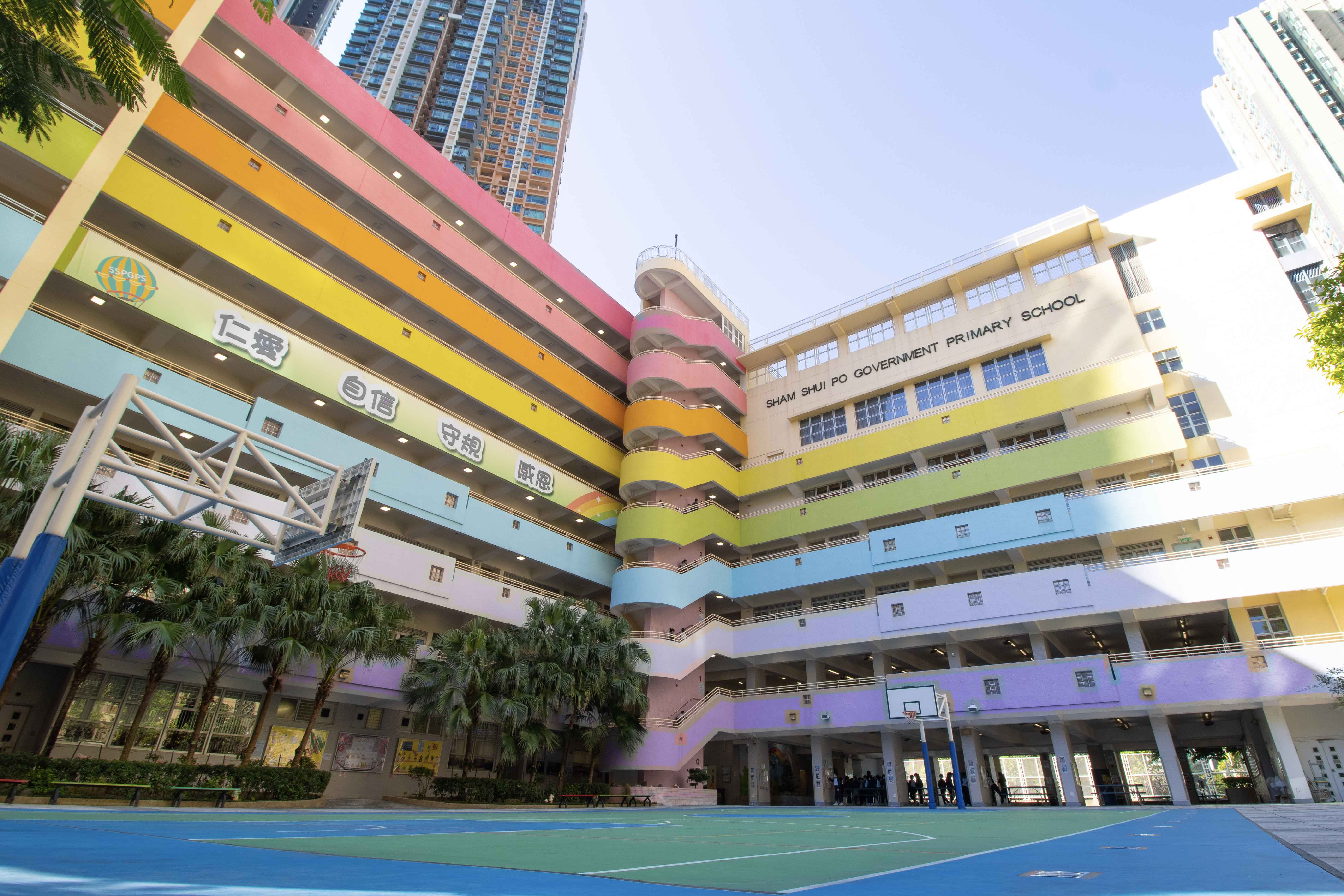


Last revision date:11 September 2026


