| School Management |
| School Management Organisation |
:
| The school is managed by the Incorporated Management Committee under the Church of England (Hong Kong) Primary School. It has a hierarchical administrative structure that includes four domains: management and organization, teaching and learning, student and learning support, and student performance. Additionally, each subject and working group collaborates to promote school development and support the needs of students. |
| Incorporated Management Committee / School Management Committee/ Management Committee |
:
| The Incorporated Management Committee was set up on 31st August, 2015. |
| School Green Policy |
:
| The school has implemented an environmental and green policy, collaborating with various organizations to arrange for environmental initiatives and recycling programs. This includes the PTA assisting in finding new owners for old school uniforms, book circulation and waste recycling. The school also promotes energy conservation among students, encouraging them to bring their own handkerchiefs and water bottles, as well as to use eco-friendly utensils, thereby practicing a low-carbon campus lifestyle. |
| School's Major Concerns |
:
| 1. Optimize learning and teaching, cultivate comprehensive literacy and become learners who pursue excellence.
2. Promote values education, live a healthy life, and become a global-minded citizen. |
| Learning and Teaching Plan |
| Learning & Teaching Strategies |
:
| 1. To align with new curriculum development and students' learning needs, our school has established "Inspiration Period" learning sessions to enhance the effectiveness of study time. 2. The curriculum is "student-centered" and promotes life-wide learning, emphasizing values education and the development of multiple intelligence. 3. By deepening autonomous learning, applying learning strategies, and developing common competencies, active learning and interactive learning processes are implemented. 4. Through cross-curricular reading, project-based learning, advanced thinking, and innovative teaching, students' learning motivation is enhanced, promoting multi-perspective thinking. 5. Promote collaborative learning and differentiated instruction, providing an environment for small class and group learning. 6. Implementation of BYOD in P.4 to P.6. |
| Development of Major Renewed Emphases of the Primary Education Curriculum |
:
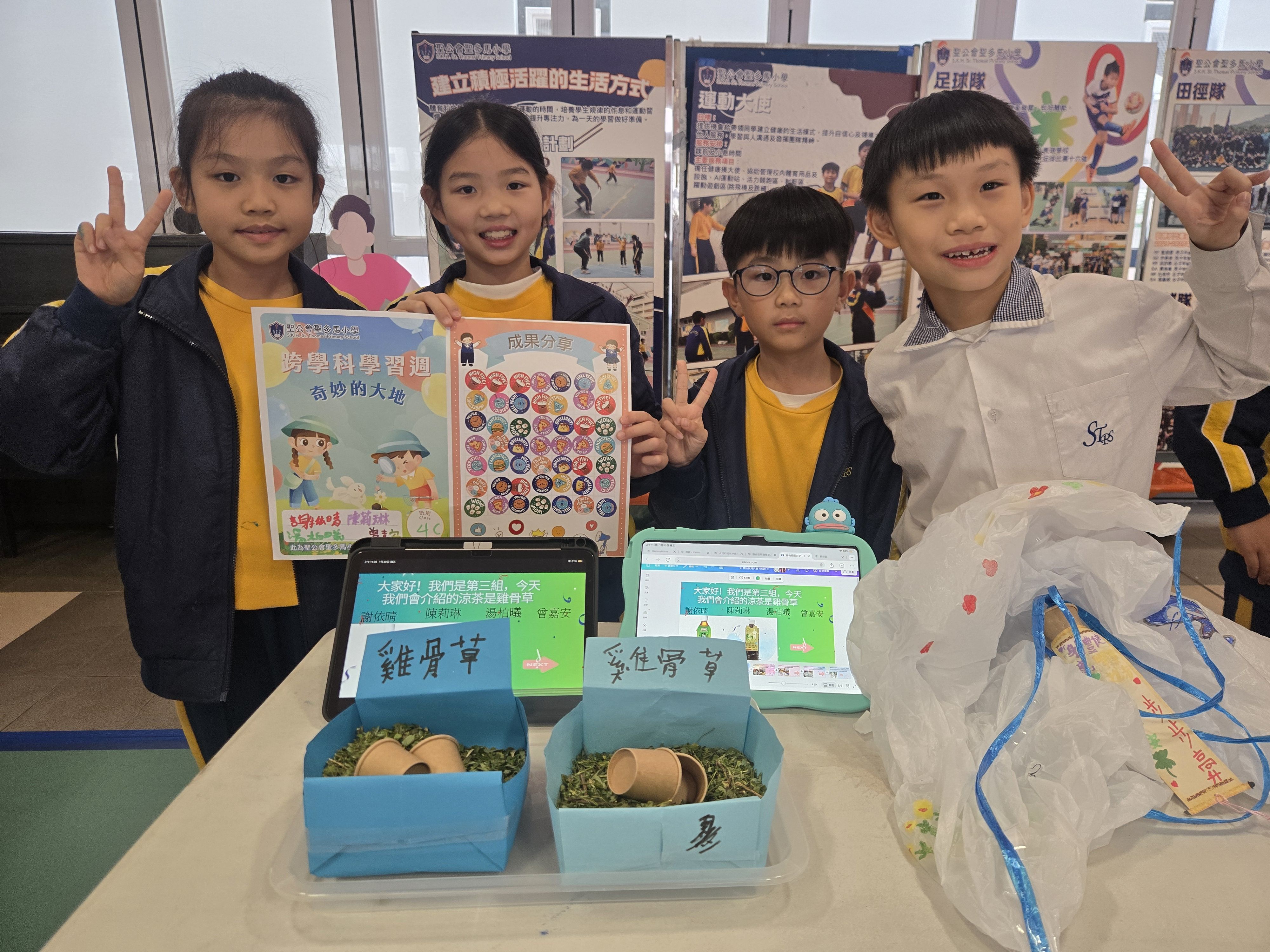
| 1.Promote cross-curricular reading, enhance reading habits and abilities through early reading sessions, theme reading and reward programs. 2.Utilize e-learning to enhance STEAM teaching effectiveness, fostering self-learning supported by online platforms and AI. 3.Optimize religious, values, life, sex education and health programs for holistic development. 4.Implement diverse learning activities and discussions to strengthen students' understanding of the rule of law and national identity. |
| Development of Generic Skills |
:
| Our school cultivates students' problem-solving and generic skills through diverse learning tasks and experiences across various subjects. By encouraging classroom questioning and utilizing open-ended questions with higher-order thinking strategies, we enhance learning quality and effectiveness. |
| Cultivation of Proper Values, Attitudes and Behaviours |
:
| The school incorporates positive values and attitudes into teaching and learning, along with diverse learning experiences (such as situational teaching, current events discussions, and service learning) and a positive environmental atmosphere, creating spaces for sharing and reflection. Students recognize their strengths and weaknesses, effectively utilize LBD (Learning by Doing) and the 4F learning approach to overcome difficulties, they learn to face challenges with a positive mindset, leverage their individual strengths and potential, and actively confront pressure and challenges. Through their growth experiences, they learn from both successes and failures, challenge themselves and move towards success and happiness. |
| Student Support |
| Whole School Approach to Catering for Learner Diversity |
:
| 1. Our supporting team establishes students' ability to show resilience and develop a sense of competence. 2. Different groups and projects cater for students with different educational needs, including NCS students in learning Chinese. 3. To develop gifted education and support the gifted students through different kinds of courses. |
| Whole School Approach to Integrated Education |
:
| A Student Support Team has been formed and its members include the Principal, SENCO, PSMCD and SENST. Different kinds of teams are formed for promoting students development. For individual students' needs, we enhance home-school co-operation and make teaching adaptations. We also arrange special examinations and assessments, as well as strengthen our liaison with professionals and make good use of community resources for enhancing the learning effectiveness of students. |
| Education Support for Non-Chinese Speaking(NCS) Students |
:
|
Our school provides additional support for NCS students to facilitate their learning of Chinese: providing after-school support programmes in learning Chinese; appointing additional teacher(s)/teaching assistant(s) to support NCS students' learning of Chinese; organising activities to create an inclusive learning environment in the school; and our school uses Putonghua to teach Chinese in all classes / groups at certain levels with extra support as appropriate, e.g. pull-out/small-group classes, learning and teaching resources with Pinyin, etc.
|
| Curriculum Tailoring and Adaptation |
:
| Our school implements differentiated instruction tailored to students' learning needs. We adapt teaching methods, assignments and assessments to accommodate diverse learning styles and abilities. After-school enrichment programs are offered across various disciplines to nurture gifted students' potential. |
| Home-school Co-operation and School Ethos |
| Home-School Co-operation |
:
| Through diversified parent volunteer and family activities organized by the PTA, along with school initiatives like parent groups and seminars, we maintain excellent communication with families. These efforts - combined with our Positive Reward Scheme and Parent Corner (HOME CUBE) - foster strong, collaborative partnerships between school and home. |
| School Ethos |
:
| Our school embodies a simple and genuine ethos, practicing the school motto "Not to be served, but to serve," following the spirit of Christ in serving others, and nurturing future servant leaders. The school is committed to developing students' characteristics as St. Thomas' students, including the courage to take responsibility, the ability to strengthen oneself despite adversity, the habit of positive thinking, an independent and confident temperament, a spirit of lifelong learning, and the ambition to pursue excellence, all of which have garnered strong support from parents. |
| Future Development |
| School Development Plan |
:
| Learning and Teaching:
1. Make effective use of language learning environments and English-medium instruction to enhance students' bilingual and trilingual abilities. 2. Optimize the school-based curriculum (mathematics, science, STEAM, arts, etc.) to develop students' collaborative skills and inquiry-based thinking. 3. Deepen autonomous learning to cultivate students' independent and proactive learning attitudes. 4. Promote interdisciplinary and thematic reading to foster students' habits of independent and extensive reading. 5. Implement BYOD (Bring Your Own Device) to enable students to use IT and artificial intelligence in a disciplined and responsible manner.
Values Education:
1. Strengthen national awareness and cultivate correct values, attitudes and national identity through values and positive education within the curriculum. 2. Promote the establishment of healthy lifestyles among students, develop personal interests and potential, and achieve balanced physical and mental development. 3. Utilize the eight intelligences to unleash students' diverse potentials. |
| Teacher Professional Training & Development |
:
| 1. Through subject specialization, new curriculum implementation, collaborative lesson planning and peer classroom observations, we enhance teaching and learning effectiveness. 2. Our teaching team designs professional development programs aligned with school development goals and student needs, in accordance with the Education Bureau's teacher continuing professional development policy. 3. We collaborate with the Education Bureau and external educational organizations to conduct school-based programs, increasing teachers' exchange opportunities. 4. Our teachers actively share successful experiences in language education, Mathematics & STEAM education, and AI-powered physical activities with the education community. |
| Others |
:
| 1. The Outstanding Achievement Awards, Dr. Yiu Sing Nam Scholarship (Academic Excellence, Most Improved & STEM Potential), alumnus Mr. Siu Wai Yip Scholarship (Extraordinary Achievement) and Dr. Chi Chung Chai Scholarship (Sports & Arts), etc. to recognize outstanding achievements in academics, conduct, innovation, and talents. 2. Students participate in district-wide and inter-school competitions across various disciplines. 3. Our school actively organizes exchange programmes in the mainland and overseas to broaden students' horizons and enrich their learning experiences. 4. We provide a Primary One adaptation programme and various kindergarten-to-primary transition activities to help Primary One students adapt to primary school life. |
 Primary School Profiles 2026



 School Information
 2026/2027 Annual School Charges
 School Facilities
 Teaching Staff Information (Including School Head) in the 2025/2026 school year
 Class Structure
 Performance Assessment
 School Life
 Life-wide Learning
 School Mission
 School Characteristics
 School Map