| School Management |
| School Management Organisation |
:
| Under the leadership of principal, a total of 3 vice principals and the panel heads of 15 committees: academic affairs, discipline and guidance, extracurricular activities, school affairs, curriculum, student affairs, moral civic education, national education, student support, subject based curriculums and STEAM are responsible for the teaching and administrative work. Besides, other teachers are allocated to different committees to assist the work of the panel heads and general teaching. |
| Incorporated Management Committee / School Management Committee/ Management Committee |
:
| Our School Management Committee was established in 1999 to implement school management. The chairman of School Management Committee is a directorate officer from the Education Bureau. Other members include the school head, representatives from the teachers and the parents, alumni as well as community members. Meetings are held regularly to discuss school policies and to enhance school quality. |
| School Green Policy |
:
| The school promotes environmental protection messages through various channels and by organizing different activities. At the same time, there is also a green manager to promote environmental protection messages to students. There is regular evaluation of the effects of environmental protection measures. |
| School's Major Concerns |
:
| 1. To help students attain healthy and flourishing lives.
2. To foster students' potential, creativity, inquiry and problem-solving abilities through all round learning.
3. To nurture students' positive values so that they can become good citizens who are responsible, committed and able to contribute. |
| Learning and Teaching Plan |
| Learning & Teaching Strategies |
:
| Enhancing students' communication skills and problem-solving skills through developing their High Order Thinking Skills. Enriching students' learning experience through diversified learning activities like educational visits. Planning annual learning activities with cross-curricular themes and encouraging students to read so as to facilitate students' knowledge building through inquiry-based and group learning. To keep pace with the times, information technology skills, collaborative skills and self-directed learning ability are developed to enhance students' interest in learning and teaching effectiveness. |
| Development of Major Renewed Emphases of the Primary Education Curriculum |
:
| Providing sufficient class hours and learning hours to foster students' time management, multi-comprehensive ability, personal accomplishment and social skills so that they can become good citizens who can distinguish right from wrong. |
| Development of Generic Skills |
:
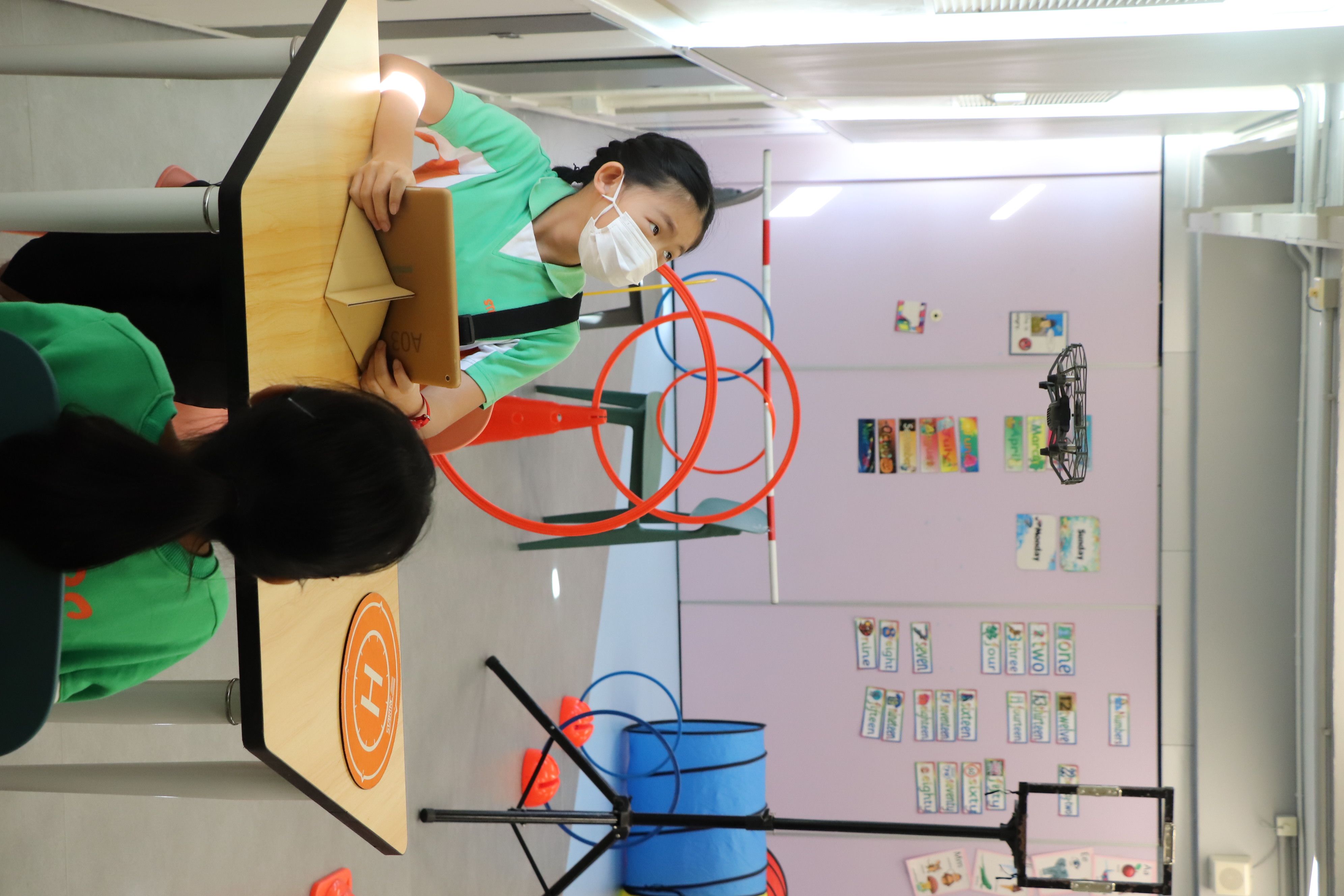
| Implementing project learning and STEAM activities to develop students' generic skills and foster their independent learning ability and scientific inquiry spirit are implemented through daily lessons. Coding and Scratch learning are implemented in P.1-P.6 Computer Studies to develop students' mathematical thinking skills. |
| Cultivation of Proper Values, Attitudes and Behaviours |
:
| To promote positive values and National Security Education based on a whole school approach through establishing the campus environment, setting up a school-wide participation rewards program, production of campus TV programmes and various activities. The elements of positive values and National Security Education are incorporated into different subject activities, personal growth lessons and parent education to create a positive learning atmosphere and promote students' sense of national identity. |
| Student Support |
| Whole School Approach to Catering for Learner Diversity |
:
| To help students with SEN, 3-Tier Support Model and Early Identification and Intervention are adopted to cope with students' learning. Strategic plans are designed to cater for individual learning needs so as to enhance students learning in Chinese, English and Mathematics. |
| Whole School Approach to Integrated Education |
:
| Learning Support Grant (LSG) and various school resources are pooled together to provide students with special educational needs (SEN) with support services flexibly and strategically. Professional advice will also be given to parents in meetings if necessary. Students with weaker learning abilities are provided with extra support through remedial classes before and after school, co-teaching schemes, peer tutoring programmes, school-based speech therapy service and support provided by teaching assistants in our school. |
| Curriculum Tailoring and Adaptation |
:
| Curriculum tailoring and adaptation enhance students' learning and show their learning outcomes. Interesting and challenging learning activities are designed for students with higher learning abilities before and after lessons. For example, Olympiad Mathematics Classes, scientific inquiry tasks, and sports training programs are provided for the gifted student to stretch their abilities and potential. |
| Home-school Co-operation and School Ethos |
| Home-School Co-operation |
:
| Through various home-school programmes and activities, our school promotes a cooperative home school environment, which facilitates a good learning environment for our pupils. Organizing parent-teacher gatherings in all the levels to encourage effective communication among parents and teachers. Through regular periodicals, circulars and pamphlets to foster effective information flow between school and parents. Intimate connection between school management committee and PTA committee, maintaining good home school cooperation. |
| School Ethos |
:
| Our Discipline and Guidance Committee designs and organizes personal growth programmes for the whole school, cultivating a caring and harmonious school culture. Encouraging pupils to participate in various uniform groups and voluntary service groups, to cultivate good moral values and school ethos. Primary One adaptation programme is organized each year to allow smooth transition of our pupils to their primary school life. Implementing peer tutoring programme to enable senior students to assist juniors in their studies. |
| Future Development |
| School Development Plan |
:
| 2024-2027 major concerns:
1. Cultivate students' mental health literacy and jointly build a healthy and happy campus.
2. Promote STEAM education, strengthen students' computational thinking, and improve their problem-solving skills. |
| Teacher Professional Training & Development |
:
| To enhance teaching effectiveness, teachers are given regular sessions for collaborative lesson preparation and lesson observation. The school invites scholars to give talks for teachers on teaching-related issues. Outside-school visits and interflows are also organized for teachers. |
| Others |
:
| 'Outstanding Student Election' reward learning, service, physical education and art aspects of student excellence.
"Self-Challenge Award Scheme", "Ms Tse Lai-wah (Headmistress) Scholarship" and "Alumni Association Scholarship" reward academic excellence and disciplines of student progress and services. |
 Primary School Profiles 2026



 School Information
  2026/2027 Annual School Charges
 School Facilities
  Teaching Staff Information (Including School Head) in the 2025/2026 school year
  Class Structure
  Performance Assessment
  School Life
  Life-wide Learning
  School Mission
  School Characteristics
  School Map