 Primary School Profiles 2026

 Primary School Profiles 2026
| Address: | 2 Hong Yue Street, Quarry Bay, Hong Kong | |||
| Phone: | 28844115 | Email: | info@bcwkps.edu.hk | |
| Fax: | 25679897 | Website: | http://www.bcwkps.edu.hk | |
 School Information
 | Supervisor/ Chairman of Management Committee | : | Ven. Sik Yin Chi |
| School Head | : | Mr. Ma Chung Tsun |
| Incorporated Management Committee been established? | : | Established |
| Percentage of School Supervisor and Managers / Chairperson and Members of School Management Committee (SMC) of Government Schools Fulfilling the Training Targets | : | Not Applicable |
| School Type | : | Aided Whole Day |
| Student Gender | : | Co-ed |
| Sponsoring Body | : | The Hong Kong Buddhist Association |
| Religion | : | Buddhism |
| Year of Commencement of Operation | : | 1945 |
| School Motto | : | Realizing equilibrium, Sensing compassion |
| Area Occupied by the School | : | About 4500 Sq. M |
| Through-train Secondary School | : | - |
| Feeder Secondary School | : | - |
| Nominated Secondary School | : | - |
| Medium of Instruction | : | Chinese |
| School Bus Service | : | School Bus; Nanny van |
| Parent-Teacher Association | : | Yes |
| Past Students' Association/Alumni Association | : | Yes |
| 4Rs Mental Health Charter | : | Yes |
| Whole School Health Programme | : | Action School |
 2026/2027 Annual School Charges
| School Fee | : | - |
| Tong Fai | : | - |
| PTA Fee | : | $30 |
| Approved Charges for non-standard items | : | $450 |
| Other Charges | : | - |
 School Facilities
 | Number of Classroom(s) | : | 26 |
| Number of School Hall(s) | : | 1 |
| Number of Playground(s) | : | 3 |
| Number of Library(ies) | : | 1 |
| Special Rooms | : | English Room, Library, Multi-intelligent Activity Centre (Bus), Kornhill Broadcasting Room, Kornhill TV Campus, Visual Arts Room, Musical Instrument Training Centre, Numeracy Lab, Meditation Room, Chinese Culture Room, IT LAB, Humanities Study Room, Climbing Wall. |
| Facility(ies) for Supporting Students with Special Educational Needs | : | - |
| Others | : | Touch screen monitors and computers have been installed in learning rooms. Wifi covers all classrooms, multi-functional rooms and the whole school. |
 Teaching Staff Information (Including School Head) in the 2025/2026 school year
 | Number of teaching posts in the approved establishment | : | 39 |
| Total number of teachers in the school | : | 49 |
| Qualifications and professional training (%) | ||
| Had Received Teacher Training | : | 100% |
| Bachelor Degree | : | 47% |
| Master/ Doctorate Degree or above | : | 53% |
| Special Education Training | : | 82% |
| Years of Experience (%) | ||
| 0 - 4 years | : | 11% |
| 5 - 9 years | : | 8% |
| 10 years or above | : | 81% |
 Class Structure
 | 2025/26 school year | ||
| P1 Number of classes | : | 3 |
| P2 Number of classes | : | 2 |
| P3 Number of classes | : | 4 |
| P4 Number of classes | : | 2 |
| P5 Number of classes | : | 4 |
| P6 Number of classes | : | 4 |
| Total | : | 19 |
| 2026/27 school year (Based on the number of classes approved by EDB in 2026) | ||
| P1 Number of classes | : | 2 |
| P2 Number of classes | : | 3 |
| P3 Number of classes | : | 2 |
| P4 Number of classes | : | 4 |
| P5 Number of classes | : | 2 |
| P6 Number of classes | : | 4 |
| Total | : | 17 |
| Mode of teaching at different levels | ||
| Small-class teaching is implemented. Remedial classes of Chinese, English and Mathematics, elite classes and after-school homework tutorial are provided to cater for learner diversity. | ||
| Remarks | ||
| - | ||
 Performance Assessment
 | Applicable to P1 only | ||
| Number of test(s) per year | : | 0 |
| Number of exam(s) per year | : | 0 |
| Replace tests and examinations with diversified assessments in the first term of P1 | : | Yes |
| Applicable to P2 to P6 only | ||
| Number of test(s) per year | : | 1 |
| Number of exam(s) per year | : | 2 |
| Applicable to P1 to P6 | ||
| Formulate appropriate school-based assessment and assignment policies, inform parents of related arrangements, and collect views from teachers, students and parents regularly (at least once per school year) for ongoing review and optimisation of the school assessment and assignment policies | : | Yes |
| Upload the school-based assessment policy onto the school webpage for information of the public and stakeholders | : | Yes |
| Upload the school-based assignment policy onto the school webpage for information of the public and stakeholders | : | Yes |
| Diversified Assessment for Learning | : | Assessments are progressive and diversified. General Studies includes life skills, project-based learning and self/peer evaluations. Subjects like Putonghua, Buddhist Ethics, Values Education and VA assess students’ attitude. Chinese, English, Mathematics, Primary Humanities and Science utilise formative assessments to track academic performance. |
| Avoid arranging tests or examinations immediately after long holidays in order to let students take more rest during the holidays | : | Yes |
| Arrange the timetable flexibly according to the school context, with a tutorial session provided in the afternoon as far as possible for students to finish some of their homework under teachers’ guidance | : | Yes |
| Streaming arrangement | : | According to students' learning needs. |
 School Life
 | Number of school days per week | : | 5 |
| Number of periods per day | : | 11 |
| Duration of each normal period | : | 25 |
| School starts at | : | 8:15 AM |
| School ends at | : | 3:30 PM |
| Lunch break | : | 12:40 - 1:40 |
| Lunch arrangement | : | Provided by designated supplier or arranged by parents. |
| Healthy school life | : | We have been awarded the honour of "Caring Campus" and "Harmonious Campus" for years. We encourage pupils to take part in various activities during lunch break. |
| Remarks | : | To promote a reading culture among both students and teachers, DEAR TIME sessions are regularly scheduled. Personal growth lessons are held weekly to support students' emotional and social development. Additionally, enhancement training programmes for gifted students and remedial programmes for those with special educational needs are conducted before and after school. |
 Life-wide Learning
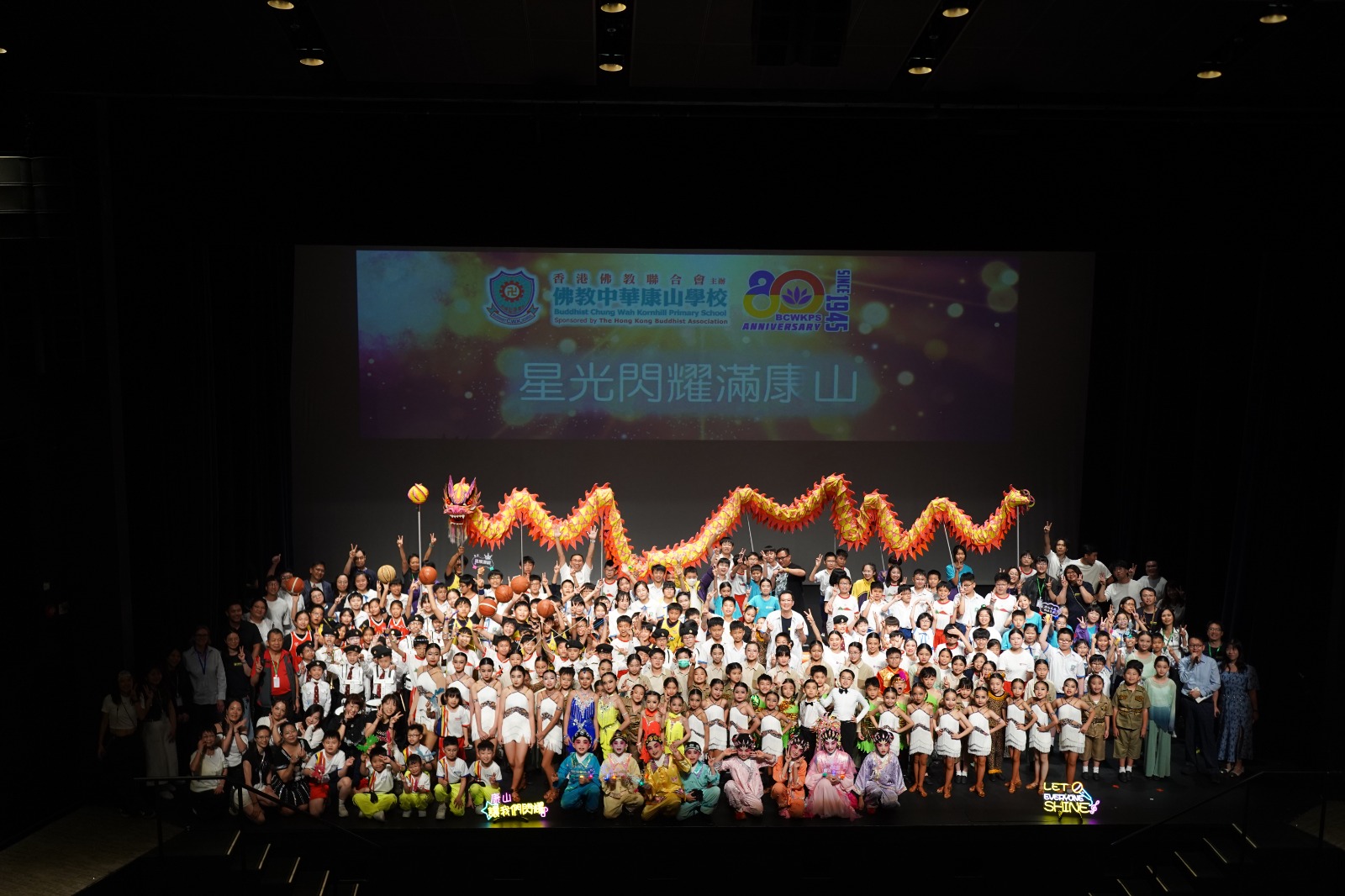
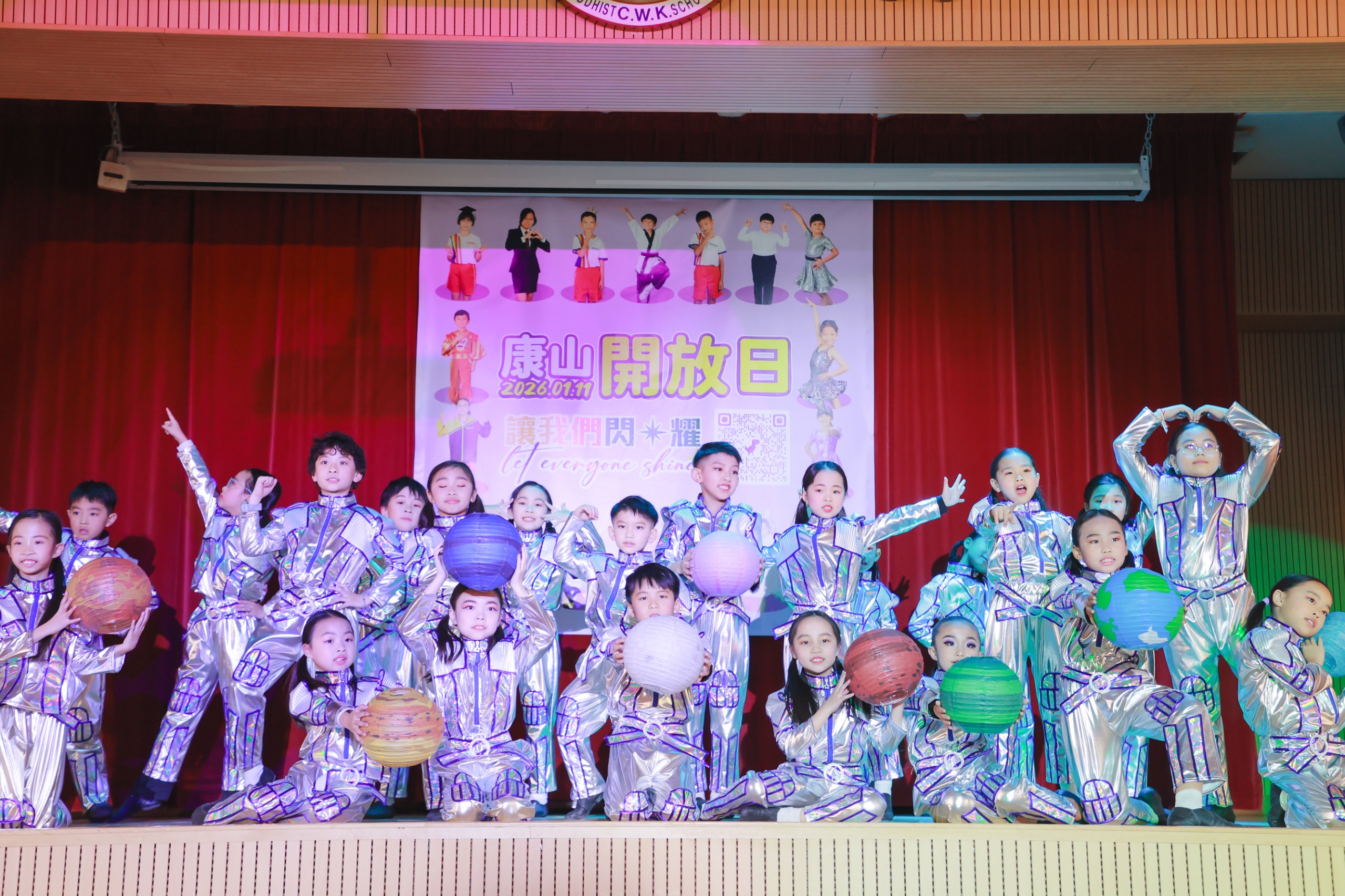
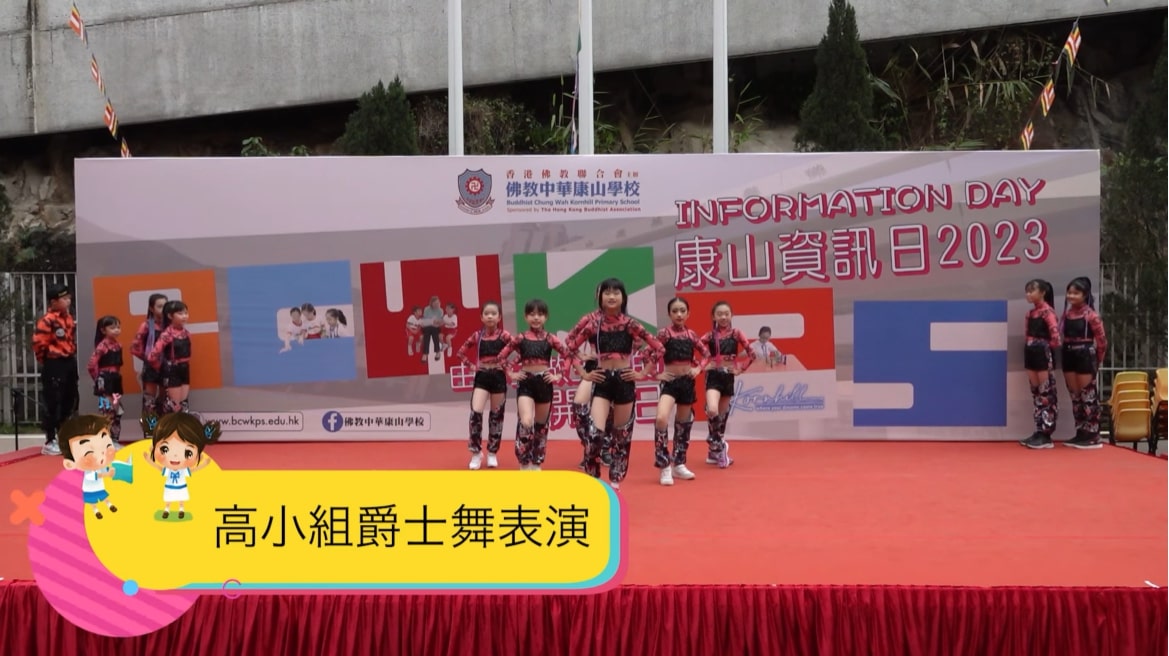
 | The school broadens students’ horizons through study tours, overseas exchanges, and other learning activities; promotes ‘One Student, Multi-Sports and Art’ with its Jazz dance, Latin dance, Chess team, and Dragon and Lion dance teams winning numerous awards. We offer as many as 150 extracurricular activities, including STEAM, Orchestral groups, Basketball, Football, Freestyle jump rope, and Arts and Crafts club. |
 School Mission
 | To nurture students' moral virtues through Buddhist Education; to promote holistic education and all rounded development of students; to establish positive attitudes in students. |
 School Characteristics
 | School Management | ||
| School Management Organisation | : | Through school-based management, an effective and responsible management system has been developed to ensure the quality of teaching and learning. |
| Incorporated Management Committee / School Management Committee/ Management Committee | : | The Incorporated Management Committee is established to enhance the transparency and accountability of school governance. Teachers, parents and alumni are invited to be the School Management Committee through election. |
| School Green Policy | : | To initiate a sense of nature ecology, we establish "Butterfly Garden". and join the "One person, one flower" Scheme. To enhance students' sense of environmental protection, we encourage students using less air conditioning and paper. We provide Floorstand Water Dispenser and set up Roof-top solar system to highlight the issue of environmental protection. |
| School's Major Concerns | : | 1. Enrich students' learning experience and unleash their potential. 2. Deepen value education and live a healthy life. |
| Learning and Teaching Plan | ||
| Learning & Teaching Strategies | : | All P.1 students take English proficiency assessments to track their learning progress. Upper primary students join HKAGE academic, sports and arts programmes. The NETs co-taught EDB Space Town curriculum (P.1–P.3) and school-based writing programme (P.3–P.6). A variety of activities like STEAM Day, Talent Showcase and visits nurture students' multi-intelligence. Chinese use picture books to teach reading strategies. Mathematics uses AI to boost problem-solving and numerical sense. |
| Development of Major Renewed Emphases of the Primary Education Curriculum | : | Our school fosters resilience and values through 'Butterfly Metamorphosis', 'Compassion as the Foundation' and 'Gratitude Education'. We strengthen national identity through Chinese Culture Day and mainland exchange programs. We guide students to be law-abiding citizens via growth classes and character weeks. We promote technology through STEAM and AI. Combined with the 'Star-reaching Programme' and multi-intelligence courses, we explore students' full potential and interests. |
| Development of Generic Skills | : | Develop students' generic skills through cross-curriculum project learning, Reading Across Curriculum programme and high order thinking strategies. |
| Cultivation of Proper Values, Attitudes and Behaviours | : | Our school aims to foster students' positive values and attitudes through both the formal and informal curriculum, as well as a variety of learning experiences such as personal growth lessons, the Adventure Ship programme, the Failure Experience activity and life planning education. On this foundation, we strive to develop students' ability to identify underlying values, analyse situations objectively, and make sound judgments on the various issues they may encounter at different stages of development. This, in turn, empowers them to take appropriate action and effectively navigate the challenges they may face in the future. |
| Student Support | ||
| Whole School Approach to Catering for Learner Diversity | : | 1. We offer support teacher to co-teach and help students during lessons. Pull-out mode is also implemented for some students needed. 2. We offer various opportunities for talented children, e.g. Multi-intelligence Class for Gifted children, The Hong Kong Academy for Gifted Education and individual portfolio for students. |
| Whole School Approach to Integrated Education | : | Our Student Support Team organises various remedial programmes to meet students' different learning needs, such as Jockey Club Keen and Active Kids Project and EDB AIM Project, Attention Group, Social Skills Groups, Dyslexia Group, Reading and writing class, Remedial class, Homework Tutorial Groups, Learning and writing training Groups. School-based speech therapist and school-based educational psychologist provides professional services. |
| Education Support for Non-Chinese Speaking(NCS) Students | : | Our school provides additional support for NCS students to facilitate their learning of Chinese: providing after-school support programmes in learning Chinese; appointing additional teacher(s)/teaching assistant(s) to support NCS students' learning of Chinese; arranging intensive Chinese learning and teaching mode(s), e.g. pull-out learning if necessary, split-class/group learning, etc; and organising activities to create an inclusive learning environment in the school. Before-lesson Chinese Class, Reading and Writing Class, Remedial Class and after-school homework tutorial classes are provided for NCS Students. |
| Curriculum Tailoring and Adaptation | : | Individualized Education Programme (IEP) is designed for pupils with special educational needs. Moreover, some support measures are adopted, e.g. reducing the quantity of homework, extending the examinations' time limit, adapting Dictation contents and scoring methods, adapting Dictation contents and scoring methods and other small group trainings etc. The New Arrival Adaptation Group offers Cantonese and English groups. The Cantonese group, led by teachers and social workers, uses interactive activities and outdoor tasks to help participants learn about Hong Kong culture and traditional/simplified Chinese characters. The English group, led by native English teachers and English subject teachers, enhances English proficiency in flexible ways. |
| Home-school Co-operation and School Ethos | ||
| Home-School Co-operation | : | PTA is well-organised and various activities such as parent talk, parent-child picnic, parent-child interest classes are held regularly to enhance the communications between teachers and parents. A team of parent volunteers also help in various school activities. |
| School Ethos | : | 1. Good school ethos and rapport teacher-student relationship. 2. Emphasizing self-discipline and caring culture. Students learn joyfully in an environment which is full of encouragement and love. |
| Future Development | ||
| School Development Plan | : | 1. Develop artificial intelligence education and cultivate students' information literacy. 2. Promote a positive campus culture and create a caring, harmonious, and enjoyable campus atmosphere. 3. Strengthen students' national identity. |
| Teacher Professional Training & Development | : | 1. Enhance teachers' ability to use artificial intelligence in teaching and administrative tasks. 2. Enhance teachers' professional teaching abilities in Primary Humanities and Primary Science. 3. Enhance teaching practice skills through participation in collaborative projects or learning communities. |
| Others | : | Establish a 'Happy Wednesday' no-homework day to create space and encourage students to read more and engage in parent-child activities, promoting their healthy physical and mental development. |
 School Map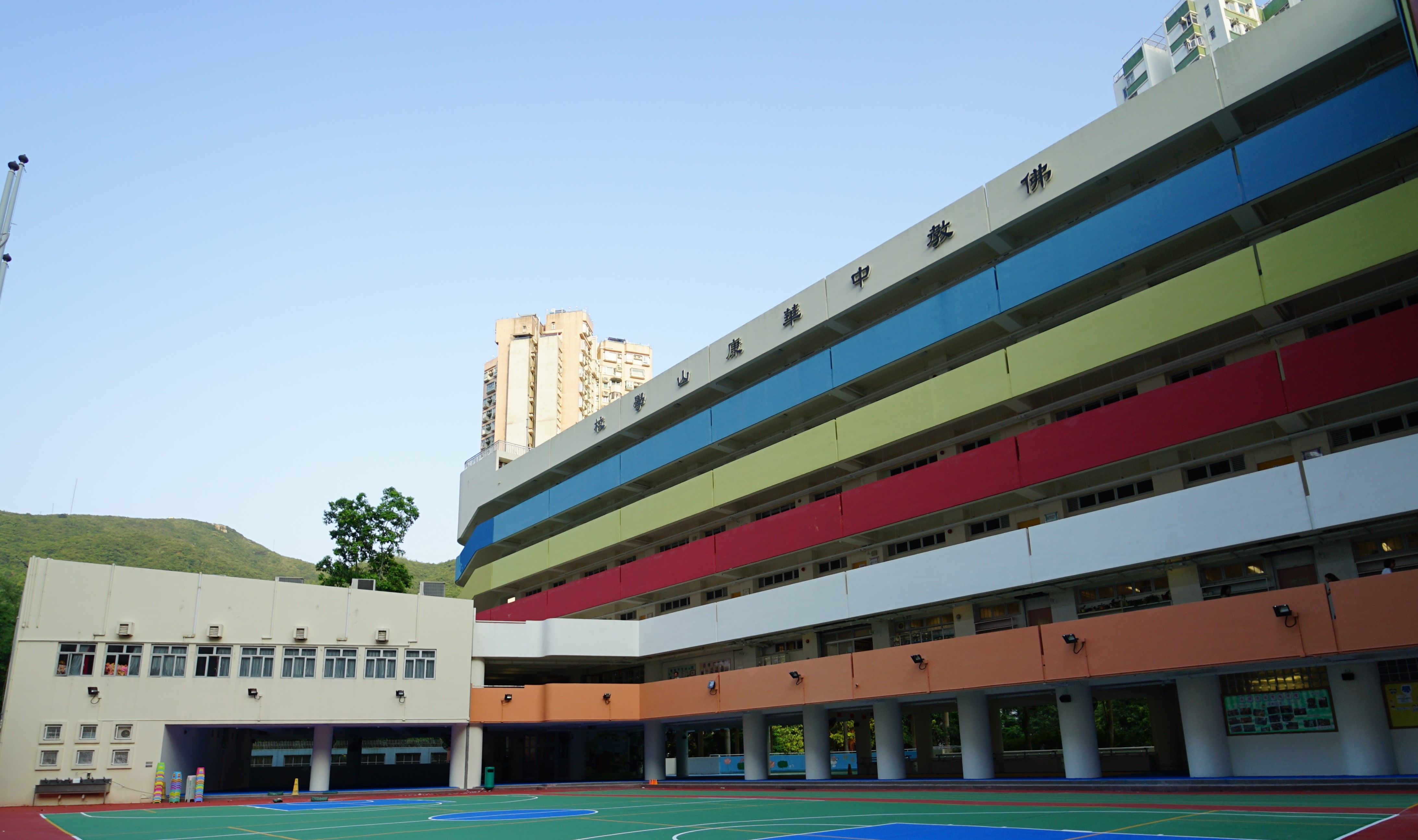
Last revision date:01 September 2026


