 Primary School Profiles 2026


 Primary School Profiles 2026
| Address: | Chung On Estate, Ma On Shan, Shatin, N.T. | |||
| Phone: | 26339277 | Email: | mail@catshcc.edu.hk | |
| Fax: | 26339080 | Website: | https://www.catshcc.edu.hk | |
 School Information
| Supervisor/ Chairman of Management Committee | : | Ms. Wong So Chun |
| School Head | : | Ms. Yuen Wai Sze |
| Incorporated Management Committee been established? | : | Established |
| Percentage of School Supervisor and Managers / Chairperson and Members of School Management Committee (SMC) of Government Schools Fulfilling the Training Targets | : | 93% |
| School Type | : | Aided Whole Day |
| Student Gender | : | Co-ed |
| Sponsoring Body | : | Kowloon Tong Church of The Chinese Christian And Missionary Alliance |
| Religion | : | Protestantism / Christianity |
| Year of Commencement of Operation | : | 1984 |
| School Motto | : | The fear of the LORD is the beginning of wisdom: and the knowledge of the Holy One is understanding. Proverbs 9:10 |
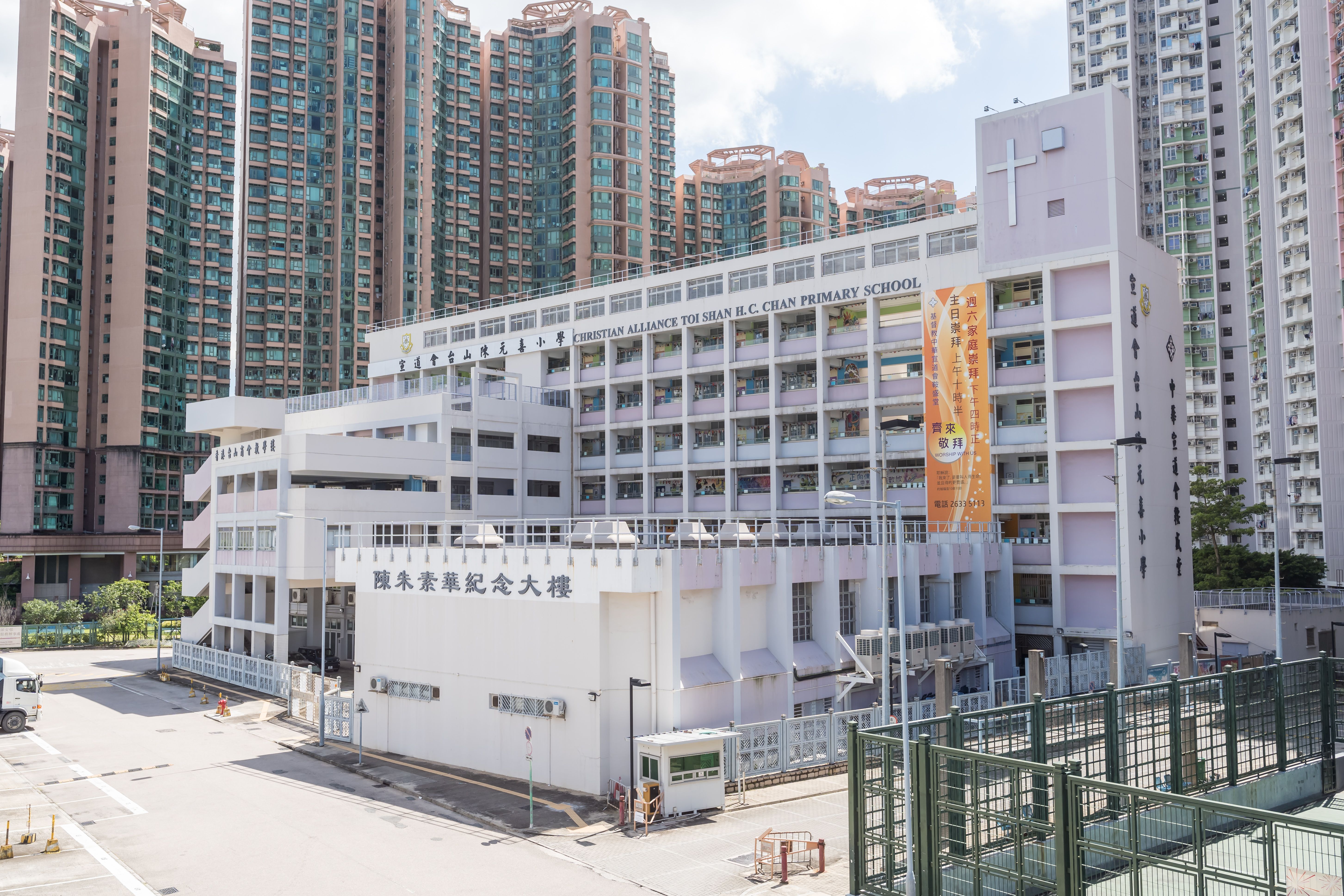
| Area Occupied by the School | : | About 4000 Sq. M |
| Through-train Secondary School | : | - |
| Feeder Secondary School | : | - |
| Nominated Secondary School | : | - |
| Medium of Instruction | : | Chinese |
| School Bus Service | : | School Bus |
| Parent-Teacher Association | : | Yes |
| Past Students' Association/Alumni Association | : | Yes |
| 4Rs Mental Health Charter | : | Yes |
| Whole School Health Programme | : | Action School |
 2026/2027 Annual School Charges
| School Fee | : | - |
| Tong Fai | : | - |
| PTA Fee | : | $30 |
| Approved Charges for non-standard items | : | $470 (6 NETs, teaching facilities, support of learning activities, maintenance of special rooms and facilities) |
| Other Charges | : | $20 (Replacement of student card) |
 School Facilities
| Number of Classroom(s) | : | 30 |
| Number of School Hall(s) | : | 1 |
| Number of Playground(s) | : | 3 |
| Number of Library(ies) | : | 1 |
| Special Rooms | : | Immersive Learning XR Zone, 2 STEAM Rooms, 1 Computer Room, Student Activity Room, English Reading Room, Music Room, Art Room, Library, Reading Zone, Learning Corner, Parent Resource Centre, Soundproof Cabin. |
| Facility(ies) for Supporting Students with Special Educational Needs | : | Ramp, Accessible lift, Accessible toilet, Accessible public information / service counter and Visual fire alarm system. |
| Others | : | Each classroom has air-conditioning and is equipped with a computer, audio-visual equipment and an interactive touch panel. |
 Teaching Staff Information (Including School Head) in the 2025/2026 school year
| Number of teaching posts in the approved establishment | : | 56 |
| Total number of teachers in the school | : | 66 |
| Qualifications and professional training (%) | ||
| Had Received Teacher Training | : | 100% |
| Bachelor Degree | : | 98% |
| Master/ Doctorate Degree or above | : | 20% |
| Special Education Training | : | 66% |
| Years of Experience (%) | ||
| 0 - 4 years | : | 30% |
| 5 - 9 years | : | 29% |
| 10 years or above | : | 41% |
 Class Structure
| 2025/26 school year | ||
| P1 Number of classes | : | 5 |
| P2 Number of classes | : | 5 |
| P3 Number of classes | : | 5 |
| P4 Number of classes | : | 5 |
| P5 Number of classes | : | 5 |
| P6 Number of classes | : | 5 |
| Total | : | 30 |
| 2026/27 school year (Based on the number of classes approved by EDB in 2026) | ||
| P1 Number of classes | : | 5 |
| P2 Number of classes | : | 5 |
| P3 Number of classes | : | 5 |
| P4 Number of classes | : | 5 |
| P5 Number of classes | : | 5 |
| P6 Number of classes | : | 5 |
| Total | : | 30 |
| Mode of teaching at different levels | ||
| Small class teaching with collaborative learning strategies are adopted for all classes. Starting from P.3, students are streamed according to their academic performance. Life-wide joint-class learning activities, multiple intelligence activities and various value education programmes are organized to nurture students' intellectual and physical development. | ||
| Remarks | ||
| - | ||
 Performance Assessment
| Applicable to P1 only | ||
| Number of test(s) per year | : | 0 |
| Number of exam(s) per year | : | 2 |
| Replace tests and examinations with diversified assessments in the first term of P1 | : | Yes |
| Applicable to P2 to P6 only | ||
| Number of test(s) per year | : | 0 |
| Number of exam(s) per year | : | 3 |
| Applicable to P1 to P6 | ||
| Formulate appropriate school-based assessment and assignment policies, inform parents of related arrangements, and collect views from teachers, students and parents regularly (at least once per school year) for ongoing review and optimisation of the school assessment and assignment policies | : | Yes |
| Upload the school-based assessment policy onto the school webpage for information of the public and stakeholders | : | Yes |
| Upload the school-based assignment policy onto the school webpage for information of the public and stakeholders | : | Yes |
| Diversified Assessment for Learning | : | Self and peer assessment, observation, presentation and performance are implemented. Formative assessment is emphasized to promote students' learning effectiveness and summative assessment is adopted to reflect students' performance. |
| Avoid arranging tests or examinations immediately after long holidays in order to let students take more rest during the holidays | : | Yes |
| Arrange the timetable flexibly according to the school context, with a tutorial session provided in the afternoon as far as possible for students to finish some of their homework under teachers’ guidance | : | Yes |
| Streaming arrangement | : | P.1 and P.2 are not streamed.P.3-6 are streamed based on learning ability and are adjusted annually. Students from P1-3 learn Chinese mainly through Cantonese while naturally integrating Putonghua reading and phonetic knowledge to gradually enhance their Putonghua proficiency. |
 School Life
| Number of school days per week | : | 5 |
| Number of periods per day | : | 7 |
| Duration of each normal period | : | 35 |
| School starts at | : | 8:10 AM |
| School ends at | : | 3:30 PM |
| Lunch break | : | 12:40 - 1:35 |
| Lunch arrangement | : | Provided by designated supplier and Parents can also send the lunch boxes to the students. |
| Healthy school life | : | 1.Encourage balanced nutrition with more vegetables and less meat to develop healthy eating habits. 2.Provide 2 long breaks for exercise and 2 short breaks for relaxation. 3.Implement "Power-up Tuesday" for students to do exercise. 4.Organize morning and afternoon exercise everyday. 5.A no-homework day each month to encourage parent-child activities. 6.Weekly “Classroom Chat” is arranged to foster emotional expression and attentive listening. |
| Remarks | : | School ends at 2:15 p.m. on Fridays. |
 Life-wide Learning
| Solo and Choral Speaking (including Cantonese, English and PTH speech), Musical, Chinese Dance, Ballet, Skipping, Basketball, Badminton, Football, Handball, Track and Field Events, Taekwondo, Gymnastics, Martial Arts, Brownie, Cub Scout, Gardening, Community Youth Club, Visual Arts, Music training includes Choir, Rhythm Band, Chinese drums, Violin, STEAM Team, Coding Team, Japanese & Korean Classes, study tours and self-care camp. |
 School Mission
| The School is committed to providing a quality, all-round liberal education based on Christian principles and values. We believe that 'Train a child in the way he should go, and when he is old he will not turn from it.' (Proverbs 22:6) We love children and truly believe their experiences at our school should be full of God's Word, His love and lots of fun. It is our purpose to equip our children to build a strong foundation with our Lord Jesus Christ! |
 School Characteristics
| School Management | ||
| School Management Organisation | : | Our school is led by the IMC. The administrative groups, subject panels and different functional groups work under the Principal's leadership. |
| Incorporated Management Committee / School Management Committee/ Management Committee | : | Incorporated Management Committee established on 30th August, 2008. |
| School Green Policy | : | 1. 'One Person, One Flower Scheme' aims to promote a green culture and learn to care for plants. 2. Promote environmental protection by recycling old school uniforms and second-hand textbooks. 3. Establish a green pastoral place, let students participate in organic farming. 4. Electronic notices and no paper meetings. 5. solar photovoltaic system. |
| School's Major Concerns | : | 1. Implement values education based on the Bible through multiple pathways and collaborative efforts. 2. Promote self-directed learning with whole-school participation and diverse strategies centered around the four learning approaches. |
| Learning and Teaching Plan | ||
| Learning & Teaching Strategies | : | Small class sizes are used with differentiated assignments to address individual differences. Cross-curricular reading elements are integrated into lessons to enhance students' reading skills and train them to learn from texts. Cross-curricular learning is promoted by connecting different subjects through a common theme, making learning more relevant to real life. For P.4 to 6, a "Bring Your Own Device" (BYOD) programme is implemented, utilizing multimedia for interactive learning. Other levels also use electronic software and platforms for online assessments, providing immediate feedback and showcasing learning outcomes. A life-wide learning approach is adopted to broaden various learning experiences and develop students' generic skills. After-school activities offer diverse opportunities to nurture the diverse potentials of students. |
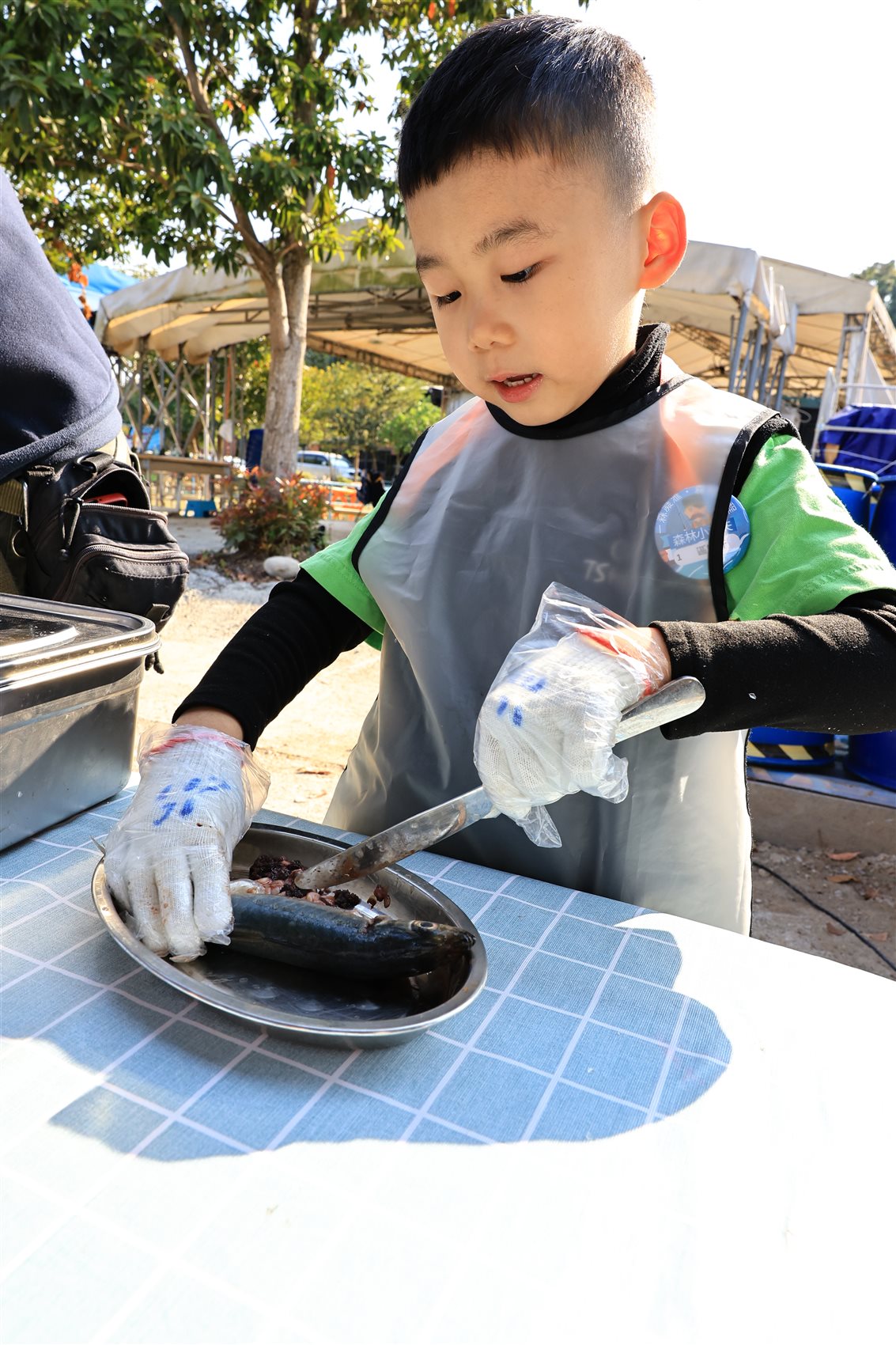
| Development of Major Renewed Emphases of the Primary Education Curriculum | : | 1.6 Native English teachers ensure a 1:6 teacher-student ratio to boost students' English speaking skills and confidence. 2.Design lessons and enhance students' self-learning ability through self-learning, co-learning, mutual learning and guided learning. 3.No homework, assessments, or exams in P.1 1st Term to reduce students' and parents' pressure and ease the kindergarten-to-primary transition. 4.Each level includes Forest Run Curriculum to enhance experiential learning. 5.Weekly flag-raising ceremonies and assemblies reinforce education on national identity and security. 6.Students will be taught reading strategies to promote extended reading, strengthening their language skills and self-learning abilities. 7.P1-P6 STEAM courses, in conjunction with GS and Computer Studies, to develop students' critical thinking & problem-solving skills, also to cultivate information literacy. |
| Development of Generic Skills | : | Through STEAM activities, outdoor learning, study tours, e-learning and cross-curricular learning, students develop communication, problem-solving, collaboration, creativity, and self-directed learning skills. By employing coloured thinking skills, students are encouraged to think from multiple perspectives, fostering creativity and critical thinking. Various classroom activities enhance students' information literacy, enabling them to apply and cultivate these generic skills. |
| Cultivation of Proper Values, Attitudes and Behaviours | : | Through moral and civic education, life education and personal growth lessons, life skills curriculum, Forest Run Curriculum, religious activities, various subject curricula and diverse learning experiences, students are nurtured in twelve priority values and attitudes. This helps them approach issues related to personal, family, societal, national, and global contexts with a framework for judgment, empowering them to practise and take responsibility. |
| Student Support | ||
| Whole School Approach to Catering for Learner Diversity | : | 1.Character Education: Foster a culture of mutual appreciation and acceptance. 2.Affective Teaching: Cultivate students' optimistic attitudes and beliefs. 3.Gifted Programmes: Implement enrichment courses to enhance higher-order thinking and train sports and arts teams. 4.Support Measures: Homework tutoring sessions and training groups for students with special educational needs. |
| Whole School Approach to Integrated Education | : | We adopt the Whole School Approach which addresses the diverse learning needs of students, fostering a caring and supportive campus life. The school provides School-based Educational Psychology Service, School-based Speech Therapy Service, and various after-school training groups. This is implemented under a 3-tier Support Model to ensure students receive appropriate care. |
| Education Support for Non-Chinese Speaking(NCS) Students | : | Our school provides additional support for NCS students to facilitate their learning of Chinese: providing after-school support programmes in learning Chinese; appointing additional teacher(s)/teaching assistant(s) to support NCS students' learning of Chinese; arranging intensive Chinese learning and teaching mode(s), e.g. pull-out learning if necessary, split-class/group learning, etc; and organising activities to create an inclusive learning environment in the school. |
| Curriculum Tailoring and Adaptation | : | 1. School-Based Curriculum: Chinese "Lower Primary Tiered Teaching Support Programme," English RWI Phonics Programme, Mathematics visual problem-solving, General Studies Exploratory Programme, Six-Coloured Thinking Skills Programme, and STEAM Programme. 2. Gifted Students Training Groups. 3. Support Plans tailored to individual students' special educational needs. 4. School-Based "Life Growth" Curriculum. |
| Home-school Co-operation and School Ethos | ||
| Home-School Co-operation | : | Each year, we hold Parents' Day, Parent-child Sports Day, Parent-child school picnic and home visits. The Parent-Teacher Association's Parent-child reading groups and Parent Volunteer Team assist and support the school's life-wide learning activities. Various monitoring committees oversee the quality of services from suppliers for lunch, uniforms, school buses, and textbooks. The Parent-Teacher Association also co-organizes parent classes each year, teaching parents how to nurture their children academically, morally, and spiritually, while allowing them to share and support one another. |
| School Ethos | : | 1. Integrated approach to spirit, discipline and guidance, caring campus: To love God, oneself and others by cultivating good characters and positive values based on the truth and teaching in the bible. To promote inter-house activities to foster relationships among students of different levels. To help and love one another, to grow in the love of God and develop a harmonious and caring culture. 2. Learning without borders: Diversified and life-wide learning experiences are provided. Students are motivated to join various activities and social services. 3. To serve with love: To train leaders and set up role models; to integrate resources and give back to the community and the society. |
| Future Development | ||
| School Development Plan | : | Multiple Pathways and Collaboration to Implement Values Education Based on the Bible 1. Construct and design a school-based values education framework grounded in biblical principles. 2. Through various subjects, groups, cross-curricular and diverse learning activities, cultivate students' knowledge, emotion, thought and action to practise values education. 3. Collaborate with families to establish twelve priority values and attitudes for students. 4. Promote national education to help students understand national conditions. Whole-School Participation and Diverse Strategies to Promote Self-directed Learning with Four Learning Approaches as the Core 1. Design lessons using the four learning approaches (self-directed, collaborative, co-learning, and guided learning). 2. Develop a cross-curricular reading (RAC) framework. 3. Plan to establish an "AI Self-directed Learning Space," equipped with robots, enabling students to interact with AI to enhance their Mandarin and English speaking skills. |
| Teacher Professional Training & Development | : | 1. Establishing Learning Communities: Facilitate systematic and high-quality collective lesson planning, classroom observation, open class, and evaluation through teacher collaboration, sharing, and observation to enhance professional exchange and improve teaching and learning effectiveness. 2. Meeting Social Needs and Keeping Up with the Times: Provide training for new teachers, subject knowledge and teaching skills development, and professional conduct training. Engage in exchanges and sharing with external organizations and partner schools to promote professional development and growth. |
| Others | : | Each year, students in P.4 to P.6 participate in overseas study tours to engage in overseas exchange and learning. P.3 life education camp aims at enhancing students' self-management, collaboration, and leadership skills. P.1 to P.6 life skills curriculum and Forest Run Programme help train students in problem-solving, independence, and caring for nature. Additionally, life education and personal growth lessons for P.1 to P.6 cover topics such as self-awareness, self-worth, respect and care for others, harmonious coexistence with nature, and valuing life. The virtual reality learning room is also available to enrich students' learning experiences and enhance teaching effectiveness. |
 School Map


Last revision date:01 September 2026


