 Primary School Profiles 2026

 Primary School Profiles 2026

| Address: | Sun Chui Estate, Shatin, N.T. | |||
| Phone: | 25163000 | Email: | cwwps@cwwps.edu.hk | |
| Fax: | 26020490 | Website: | http://www.cwwps.edu.hk | |
 School Information
 | Supervisor/ Chairman of Management Committee | : | Mr. Lai Wai Kuen |
| School Head | : | Principal Leung Wai Kay Ricky |
| Incorporated Management Committee been established? | : | Established |
| Percentage of School Supervisor and Managers / Chairperson and Members of School Management Committee (SMC) of Government Schools Fulfilling the Training Targets | : | 100% |
| School Type | : | Aided Whole Day |
| Student Gender | : | Co-ed |
| Sponsoring Body | : | General Chamber of Commerce & Industry of The Tung Kun District |
| Religion | : | Not Applicable |
| Year of Commencement of Operation | : | 1984 |
| School Motto | : | Knowledge and Virtue with Vigour |
| Area Occupied by the School | : | About 7000 Sq. M |
| Through-train Secondary School | : | - |
| Feeder Secondary School | : | - |
| Nominated Secondary School | : | G.C.C.I.T.K.D. Lau Pak Lok Secondary School |
| Medium of Instruction | : | Chinese |
| School Bus Service | : | School Bus |
| Parent-Teacher Association | : | Yes |
| Past Students' Association/Alumni Association | : | Yes |
| 4Rs Mental Health Charter | : | Yes |
| Whole School Health Programme | : | Action School |
 2026/2027 Annual School Charges
| School Fee | : | - |
| Tong Fai | : | - |
| PTA Fee | : | $150 (one-off) |
| Approved Charges for non-standard items | : | Fees for specific purposes: $470 (for school development and new facilities) |
| Other Charges | : | - |
 School Facilities
 | Number of Classroom(s) | : | 27 |
| Number of School Hall(s) | : | 1 |
| Number of Playground(s) | : | 3 |
| Number of Library(ies) | : | 1 |
| Special Rooms | : | 15 rooms (Including English Activity Room, Dancing Room, Table Tennis Room, General Studies Room (CoolThink Studio), Music Room, Steam Room, Game Room, Campus TV Studio and Visual Art Room, etc.) |
| Facility(ies) for Supporting Students with Special Educational Needs | : | Ramp, Accessible lift and Accessible toilet. |
| Others | : | All classrooms are equipped with IT facilities, including smart whiteboards, Apple TVs and iPads to support e-Learning implementation. |
 Teaching Staff Information (Including School Head) in the 2025/2026 school year
 | Number of teaching posts in the approved establishment | : | 39 |
| Total number of teachers in the school | : | 45 |
| Qualifications and professional training (%) | ||
| Had Received Teacher Training | : | 100% |
| Bachelor Degree | : | 63% |
| Master/ Doctorate Degree or above | : | 33% |
| Special Education Training | : | 71% |
| Years of Experience (%) | ||
| 0 - 4 years | : | 5% |
| 5 - 9 years | : | 15% |
| 10 years or above | : | 80% |
 Class Structure
 | 2025/26 school year | ||
| P1 Number of classes | : | 2 |
| P2 Number of classes | : | 2 |
| P3 Number of classes | : | 3 |
| P4 Number of classes | : | 4 |
| P5 Number of classes | : | 4 |
| P6 Number of classes | : | 4 |
| Total | : | 19 |
| 2026/27 school year (Based on the number of classes approved by EDB in 2026) | ||
| P1 Number of classes | : | 2 |
| P2 Number of classes | : | 2 |
| P3 Number of classes | : | 2 |
| P4 Number of classes | : | 3 |
| P5 Number of classes | : | 4 |
| P6 Number of classes | : | 4 |
| Total | : | 17 |
| Mode of teaching at different levels | ||
| Small class teaching (P.1 - P.6), using Putonghua as a medium of instruction in Chinese Language (selected classes from P.5 to P.6). | ||
| Remarks | ||
| The Space Town Literacy Programme for lower primary levels (P.1 - P.3). | ||
 Performance Assessment
 | Applicable to P1 only | ||
| Number of test(s) per year | : | 0 |
| Number of exam(s) per year | : | 0 |
| Replace tests and examinations with diversified assessments in the first term of P1 | : | Yes |
| Applicable to P2 to P6 only | ||
| Number of test(s) per year | : | 0 |
| Number of exam(s) per year | : | 2 |
| Applicable to P1 to P6 | ||
| Formulate appropriate school-based assessment and assignment policies, inform parents of related arrangements, and collect views from teachers, students and parents regularly (at least once per school year) for ongoing review and optimisation of the school assessment and assignment policies | : | Yes |
| Upload the school-based assessment policy onto the school webpage for information of the public and stakeholders | : | Yes |
| Upload the school-based assignment policy onto the school webpage for information of the public and stakeholders | : | Yes |
| Diversified Assessment for Learning | : | We use diverse assessment methods for holistic student growth. Traditional approaches mix with creative techniques like video projects, presentations, and digital assessments. This engages students, promotes ongoing learning, and suits various learning styles. We accommodate special needs. Our strategy enhances learning, sparks creativity, and evaluates progress across multiple skills. |
| Avoid arranging tests or examinations immediately after long holidays in order to let students take more rest during the holidays | : | Yes |
| Arrange the timetable flexibly according to the school context, with a tutorial session provided in the afternoon as far as possible for students to finish some of their homework under teachers’ guidance | : | Yes |
| Streaming arrangement | : | Small class teaching without elite classes, all students are put into small classes through co-operative learning for better individual attention. Using Putonghua as a medium of instruction in Chinese Language (One class in each level from P.5 to P.6). |
 School Life
 | Number of school days per week | : | 5 |
| Number of periods per day | : | 9 |
| Duration of each normal period | : | 35 |
| School starts at | : | 8:15 AM |
| School ends at | : | 3:25 PM |
| Lunch break | : | 12:15 - 1:15 |
| Lunch arrangement | : | Provided by designated supplier and arranged by parents. |
| Healthy school life | : | Eat smart, student nutrition, physical health, Eat Smart School Accreditation Scheme, SportACT Scheme, 4Rs Mental Health Charter, school sports programs from Leisure and Cultural Services Department, etc. |
| Remarks | : | 1. Homework tutorial periods are arranged to help and support students who have difficulty completing their homework. 2. "School ends at 2:15 p.m. on Fridays, and various kinds of extracurricular activities are provided for students. 3. Focusing on students’ mental health, the school has introduced “No Homework Days” and “Relax After Exams Days” to ease academic pressure and increase parent-child time. |
 Life-wide Learning
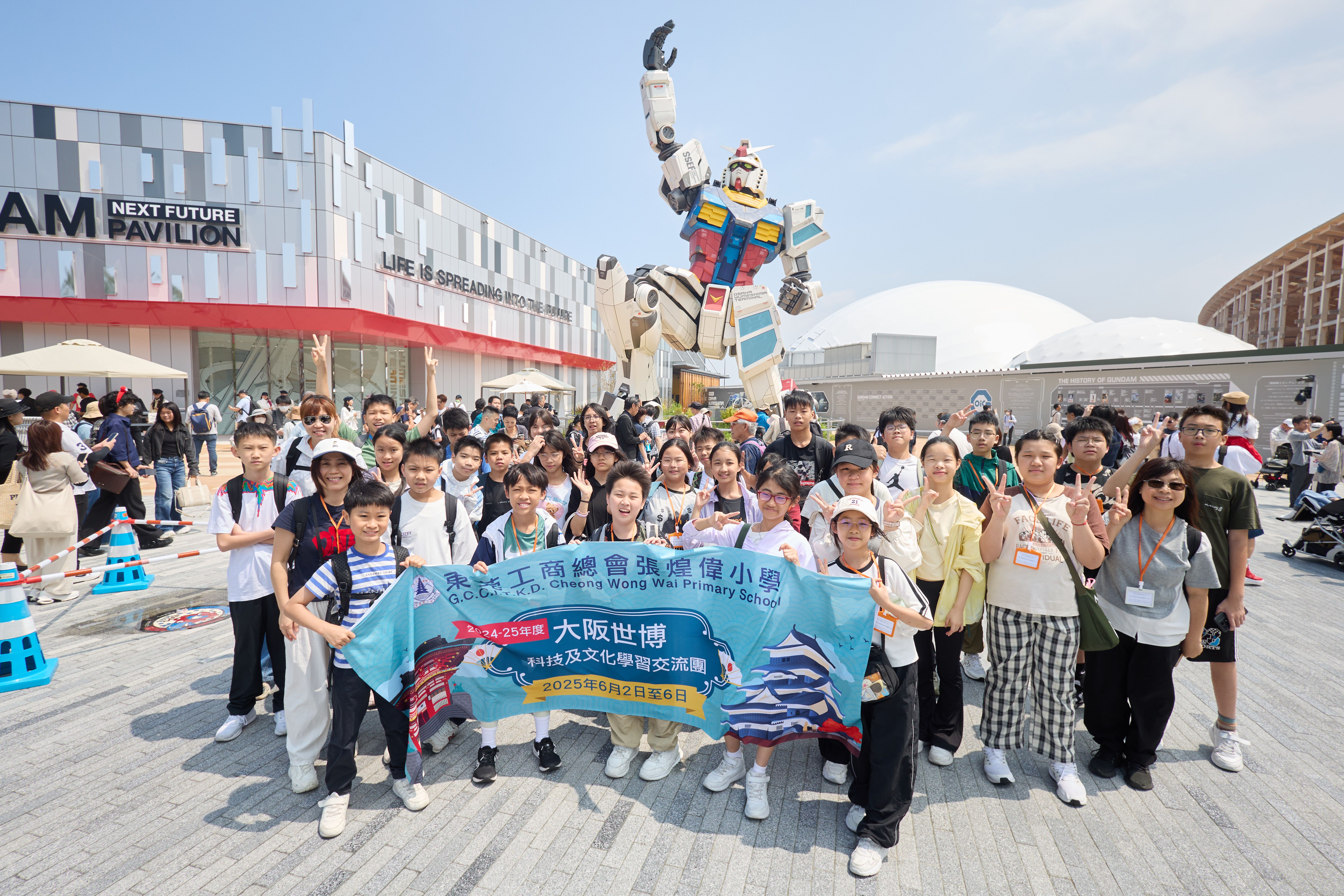
 | In addition to arranging visits, trips, and educational camps, the school also organizes a wide range of extracurricular activities, including: drama, English phonics, mathematics (Olympiad), track and field, basketball, football, table tennis, dodgeball (frisbee), jump rope, dance, painting, sand art, dragon dance (arts), guzheng, drum and percussion, Cantonese opera, shepherd’s flute, choir, Chinese music ensemble, pop bands, youth uniformed groups, reaction lights, lion dance, pickleball, and more. |
 School Mission
 | We are committed to providing our students with the best learning environment, enabling them to achieve all-round development in ethics, intellect, physique, social skills, and aesthetics based on their individual attributes. Additionally, we aim to instill in each student a sense of service towards the people of our country and the world. |
 School Characteristics
 | School Management | ||
| School Management Organisation | : | Our school is led by the Incorporated Management Committee. We have 14 administrative groups, 10 subject panels as well as different functional groups. |
| Incorporated Management Committee / School Management Committee/ Management Committee | : | The Incorporated Management Committee consists of 14 members including the Supervisor and 13 registered managers from the commercial and educational sectors. |
| School Green Policy | : | Education on Environmental Protection is emphasized. We arrange different kinds of exhibitions and recycling activities in order to arouse students' awareness of the environmental protection. The school rooftop has been equipped with solar panels, which not only reduce greenhouse gas emissions but also serve as a practical example for students to learn about renewable energy. |
| School's Major Concerns | : | 1. Establish students’ proper values and attitudes, helping students develop into good nationals. 2. Enriching students' learning experiences through learning by doing, allowing students to develop their potential. |
| Learning and Teaching Plan | ||
| Learning & Teaching Strategies | : | We use innovative pedagogy, such as Co-operative Learning, Live-wide Learning and Digital Education to enhance the teaching and learning effectiveness of our school. We introduce project-learning to students in order to help them learn better and develop their generic skills. |
| Development of Major Renewed Emphases of the Primary Education Curriculum | : | Strengthening values education (including life education, national education and national security education); Making good use of learning time and creating space to promote a balanced physical and mental development; Enriching life-wide learning experiences and promoting whole-person development; Better catering for learner diversity; Reinforcing STEAM education, and nurturing students' media and information literacy; Strengthening cross-curricular learning and reading across the curriculum for developing lifelong learning capabilities. |
| Development of Generic Skills | : | We aim at developing students' 9 generic skills, namely, Creativity, Communication Skills, Critical Thinking Skills, Collaboration Skills, Information Technology Skills, Numeracy Skills, Problem Solving Skills, Self-management Skills and Study Skills. |
| Cultivation of Proper Values, Attitudes and Behaviours | : | We promote Values Education through nurturing in our students the twelve priority values and attitudes: "Perseverance", "Respect for Others", "Responsibility", "National Identity", "Commitment", "Integrity", "Benevolence", "Law-abidingness", "Empathy", "Diligence", "Unity" and “Filial Piety”. In addition, we strengthen the connection among learning activities of values education in various cross-curricular domains, such as national education and national security education, life education, media education, sex education, etc. with a view to providing students with holistic learning experiences, and facilitating their whole-person development. |
| Student Support | ||
| Whole School Approach to Catering for Learner Diversity | : | We have student support team to cater for the diverse learning needs of students through the 3-Tier Intervention Model. Tier-1: Optimize classroom teaching to assist students with mild learning difficulties. Tier-2: Provide "supplementary" guidance for students with special educational needs, such as small group learning and pull-out support. Tier-3: Offer enhanced individual support for students with severe learning difficulties, for example, designing "Individual Education Plans" (IEPs). |
| Whole School Approach to Integrated Education | : | The main members of the Student Support Team include: the Vice-Principal, the Special Educational Needs Coordinator (SENCO), the Curriculum Leader, Subject Heads, Special Educational Needs Support Teachers (SENSTs), the School Social Worker, the School-based Speech Therapist, and the School-based Educational Psychologist. Utilizing the additional funding from the Education Bureau (e.g. the Learning Support Grant), to employ teaching/counseling assistants to support students with special educational needs. The support measures include: co-teaching, adaptations to teaching and assessment, counseling groups, social skills training groups, and Individual Education Plans (IEPs). |
| Education Support for Non-Chinese Speaking(NCS) Students | : | Our school provides additional support for NCS students to facilitate their learning of Chinese: providing after-school support programmes in learning Chinese; appointing additional teacher(s)/teaching assistant(s) to support NCS students' learning of Chinese; arranging intensive Chinese learning and teaching mode(s), e.g. pull-out learning if necessary, split-class/group learning, etc; developing school-based Chinese Language curriculum and/or adapting learning and teaching materials; organising activities to create an inclusive learning environment in the school; and hiring additional manpower and/or translation/interpretation services to facilitate the communication with parents of NCS students. The non-Chinese speaking buddy reading program aims to have local Chinese-speaking students read books together with NCS students. |
| Curriculum Tailoring and Adaptation | : | We provide suitable adjustment on homework and arrangement of examination for the students with special educational needs. |
| Home-school Co-operation and School Ethos | ||
| Home-School Co-operation | : | PTA meetings and activities are organised regularly. We have established the parent volunteer team to enhance home-school co-operation. Enhancement of parents' understanding and acceptance of learner difference, arrangement of activities for parents of students with special educational needs and establishment of parent support network. |
| School Ethos | : | In strengthening the culture of love and care, we have taken part in the Understanding Adolescent Project. School-based counseling projects are launched to help students foster good virtues. Our school has been awarded the 'Caring School Award' for seventeen consecutive years and the '10-Year' Grand Prize. We have also received the 'Outstanding Caring School' awards for themes such as “Creating Hope,” “Advocating Justice,” and “Promoting Life Education,” as well as the “Interconnected Care—Caring Showcased” theme award (for the primary school division). These achievements highlight the recognition we have received and the deep-rooted culture of care in our campus over the years. |
| Future Development | ||
| School Development Plan | : | 1. Strengthen values education (especially life education, citizenship and national security education). 2. Promote balanced physical and mental development of students. 3. Cater to student diversity. 4. Implementing a student-centered cycle of learning, teaching, and assessment. 5. Continuously promote STEAM education. 6. Strengthen students’ media and information literacy by using AI in teaching. 7. Develop humanities and science subjects. 8. Strengthen the effectiveness of assessment and learning. 9. Developing career and life planning education. 10. Strengthen the articulation between different learning stages. |
| Teacher Professional Training & Development | : | By participating in programs organized by the Education Bureau and various organizations, engaging in lesson preparation, peer observation, collaborative teaching, various seminars, and educational lectures, the school arranges teacher training aligned with key development areas and new educational trends to support teacher development and promote professional growth. |
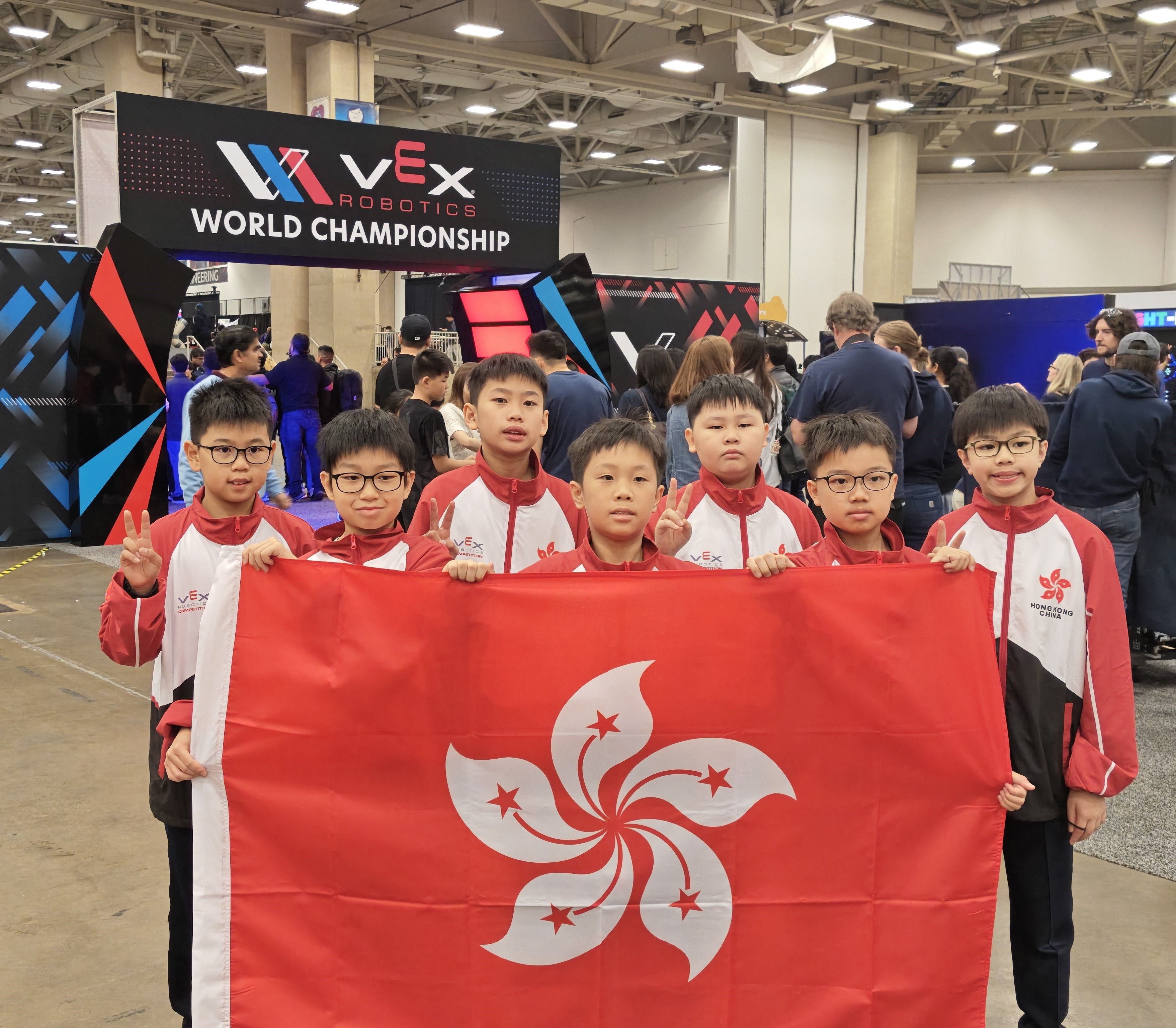
| Others | : | 1. Our students have performed exceptionally well. For three consecutive years, they have received the “Top 10 Outstanding Primary School Students in the Sha Tin District” award, and in the 2024–25 academic year, they also earned the “Top 10 Outstanding Primary School Students in the Hong Kong Special Administrative Region” recognition. 2. Accruing accolades in basketball, dance, and STEAM competitions, earning qualifications to represent Hong Kong in exchange competitions in Mainland and the United States. |
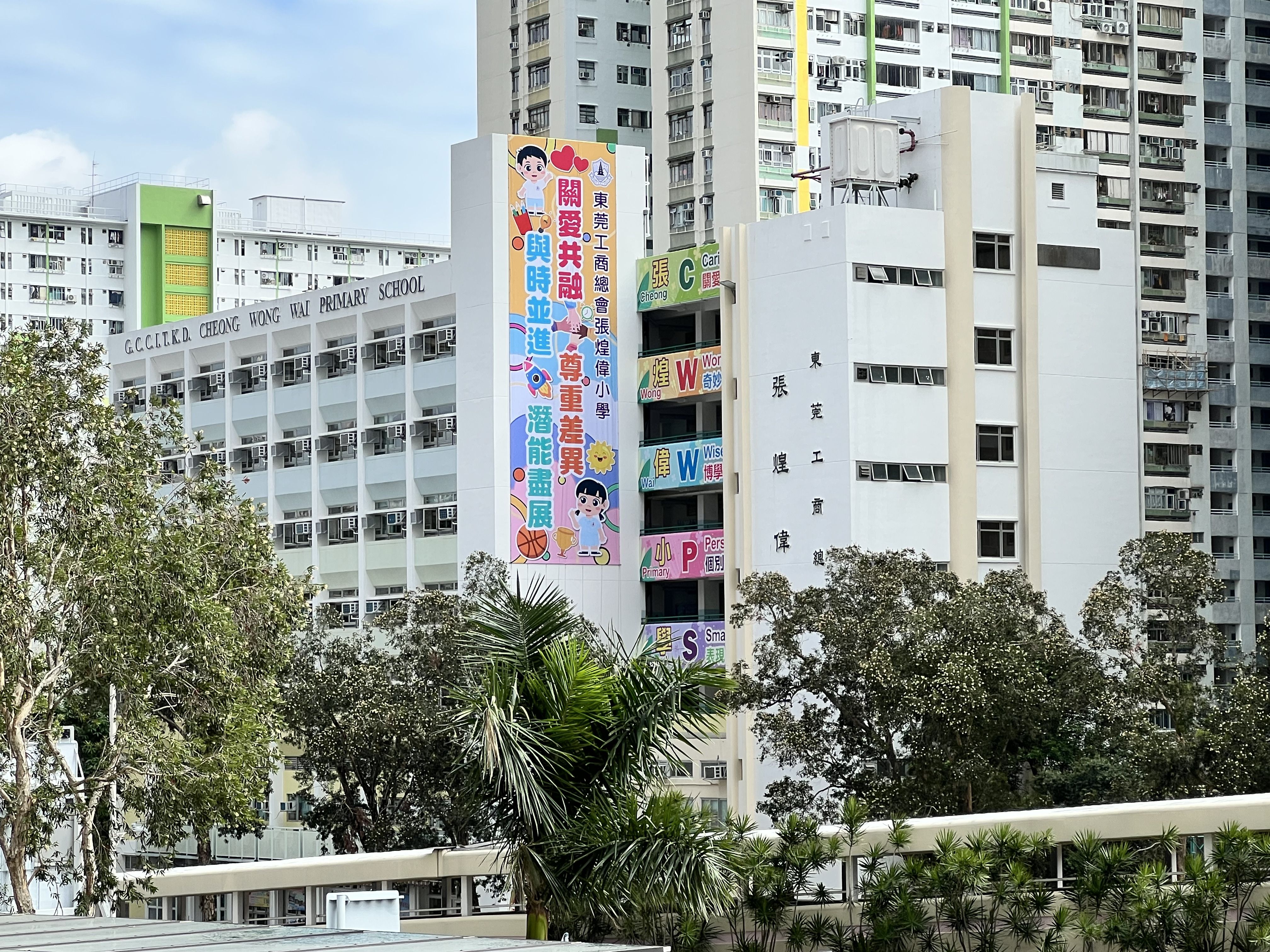
 School Map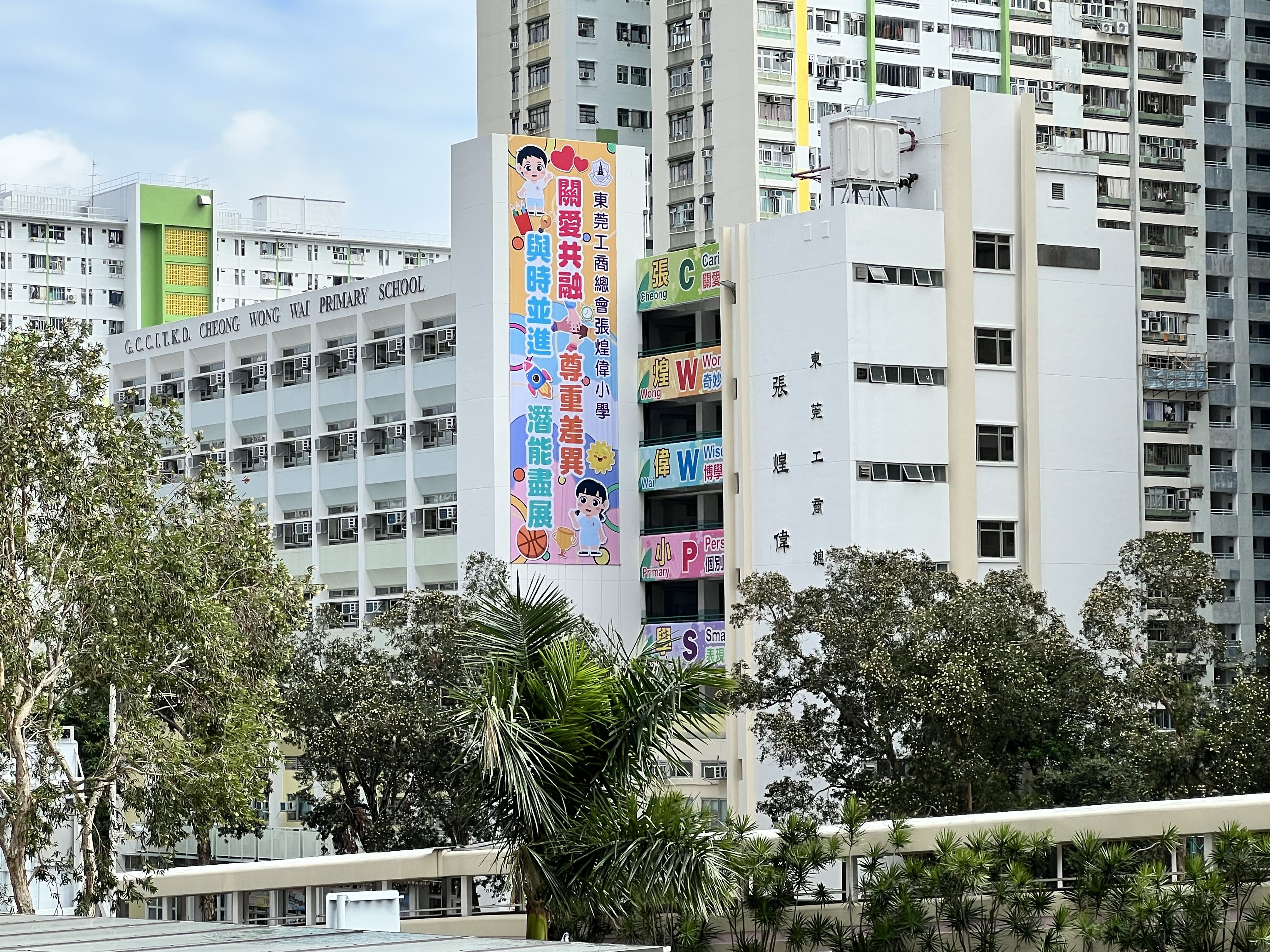
Last revision date:01 September 2026


