 Primary School Profiles 2026

 Primary School Profiles 2026

| Address: | 1 Yuen Cheong Lane, Shatin, N.T. | |||
| Phone: | 26486834 | Email: | info@chihong.edu.hk | |
| Fax: | 26364129 | Website: | https://www.chihong.edu.hk | |
 School Information
 | Supervisor/ Chairman of Management Committee | : | Ms. Aw Sian Sally |
| School Head | : | Ms. Yeung Tung Mui |
| Incorporated Management Committee been established? | : | Established |
| Percentage of School Supervisor and Managers / Chairperson and Members of School Management Committee (SMC) of Government Schools Fulfilling the Training Targets | : | 79% |
| School Type | : | Aided Whole Day |
| Student Gender | : | Co-ed |
| Sponsoring Body | : | Chi Hong Ching Yuen Ltd |
| Religion | : | Buddhism |
| Year of Commencement of Operation | : | 1952 |
| School Motto | : | Wisdom Radiates Compassion |
| Area Occupied by the School | : | About 8000 Sq. M |
| Through-train Secondary School | : | - |
| Feeder Secondary School | : | - |
| Nominated Secondary School | : | - |
| Medium of Instruction | : | Chinese |
| School Bus Service | : | School Bus |
| Parent-Teacher Association | : | Yes |
| Past Students' Association/Alumni Association | : | Yes |
| 4Rs Mental Health Charter | : | Yes |
| Whole School Health Programme | : | Pledged School |
 2026/2027 Annual School Charges
| School Fee | : | - |
| Tong Fai | : | - |
| PTA Fee | : | $40 |
| Approved Charges for non-standard items | : | $300 (Miscellaneous Fees) |
| Other Charges | : | - |
 School Facilities
 | Number of Classroom(s) | : | 28 |
| Number of School Hall(s) | : | 1 |
| Number of Playground(s) | : | 2 |
| Number of Library(ies) | : | 1 |
| Special Rooms | : | Chinese Cultural Learning Centre, CoLab (Innovation and Technology Center), Flight Academy Room, CoSpace, Ng Pui Wing Library, Music Room, Visual Art Room, English Room, Meditation Room, Counselling Room. |
| Facility(ies) for Supporting Students with Special Educational Needs | : | Ramp, Accessible lift and Accessible toilet. |
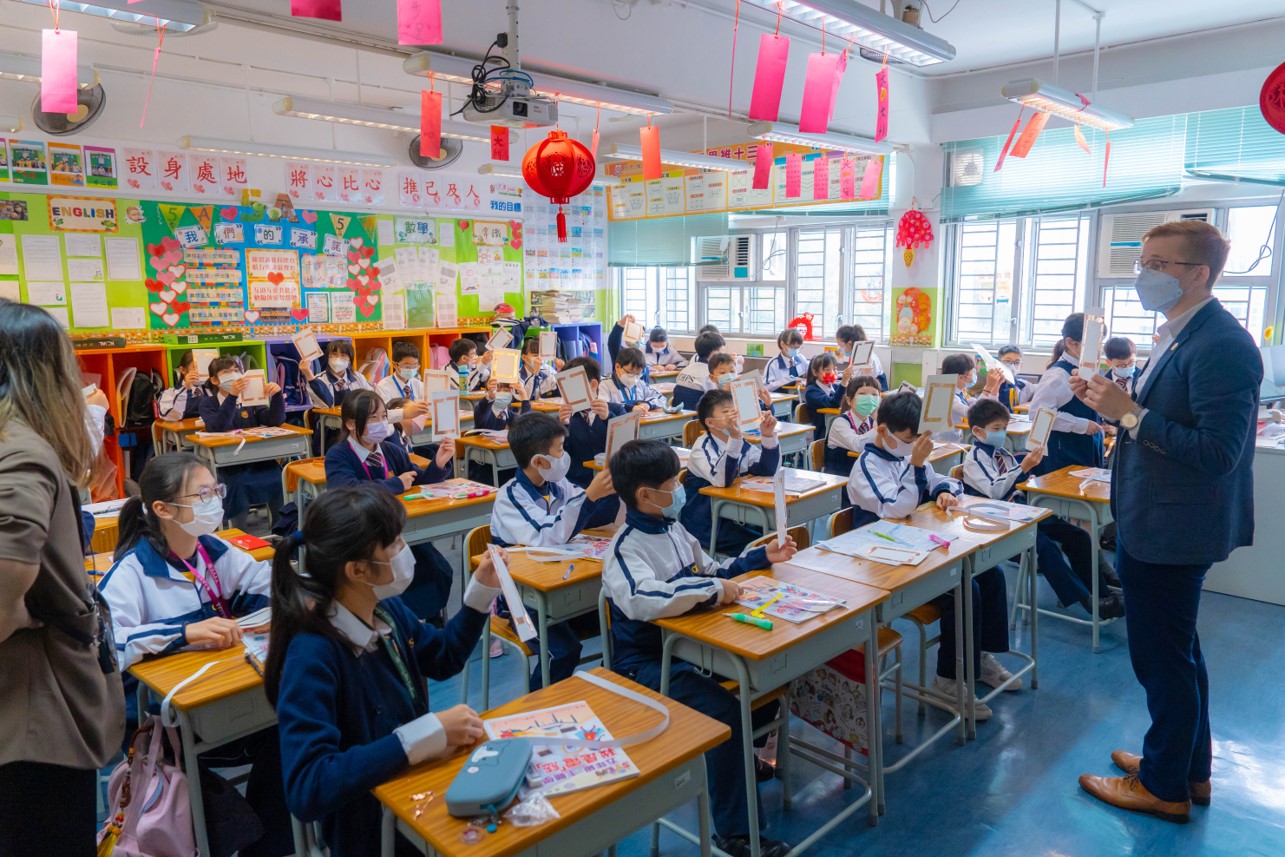
| Others | : | Meditation Gallery, Reading Café and Corner, Student Garden, Five Senses Garden, and Basketball Court; all classrooms are equipped with interactive electronic whiteboards, AirPlay, and air-con. |
 Teaching Staff Information (Including School Head) in the 2025/2026 school year
 | Number of teaching posts in the approved establishment | : | 48 |
| Total number of teachers in the school | : | 54 |
| Qualifications and professional training (%) | ||
| Had Received Teacher Training | : | 95% |
| Bachelor Degree | : | 100% |
| Master/ Doctorate Degree or above | : | 45% |
| Special Education Training | : | 66% |
| Years of Experience (%) | ||
| 0 - 4 years | : | 22% |
| 5 - 9 years | : | 26% |
| 10 years or above | : | 52% |
 Class Structure
 | 2025/26 school year | ||
| P1 Number of classes | : | 3 |
| P2 Number of classes | : | 3 |
| P3 Number of classes | : | 5 |
| P4 Number of classes | : | 4 |
| P5 Number of classes | : | 5 |
| P6 Number of classes | : | 5 |
| Total | : | 25 |
| 2026/27 school year (Based on the number of classes approved by EDB in 2026) | ||
| P1 Number of classes | : | 3 |
| P2 Number of classes | : | 3 |
| P3 Number of classes | : | 3 |
| P4 Number of classes | : | 5 |
| P5 Number of classes | : | 4 |
| P6 Number of classes | : | 5 |
| Total | : | 23 |
| Mode of teaching at different levels | ||
| 1) Two class teachers are arranged for each P.1 class. 2) P.4, P.5 and P.6 students are grouped into classes according to their diverse learning needs. 3) Five Native-speaking English Teachers (NETs) are employed to co-teach in classrooms, striving to create an English learning atmosphere. 4) Gifted education and talent pool. |
||
| Remarks | ||
| - | ||
 Performance Assessment
 | Applicable to P1 only | ||
| Number of test(s) per year | : | 0 |
| Number of exam(s) per year | : | 1 |
| Replace tests and examinations with diversified assessments in the first term of P1 | : | Yes |
| Applicable to P2 to P6 only | ||
| Number of test(s) per year | : | 0 |
| Number of exam(s) per year | : | 3 |
| Applicable to P1 to P6 | ||
| Formulate appropriate school-based assessment and assignment policies, inform parents of related arrangements, and collect views from teachers, students and parents regularly (at least once per school year) for ongoing review and optimisation of the school assessment and assignment policies | : | Yes |
| Upload the school-based assessment policy onto the school webpage for information of the public and stakeholders | : | Yes |
| Upload the school-based assignment policy onto the school webpage for information of the public and stakeholders | : | Yes |
| Diversified Assessment for Learning | : | Apart from written assessments, the School uses formative assessments, a students' physical fitness scheme, life skills, project learning, Mathematics performance assessments and Chinese and English listening and speaking assessments to assess pupils' knowledge, skills and attitude. Data obtained from diversified assessments for different subjects is also used to enhance students' learning. |
| Avoid arranging tests or examinations immediately after long holidays in order to let students take more rest during the holidays | : | Yes |
| Arrange the timetable flexibly according to the school context, with a tutorial session provided in the afternoon as far as possible for students to finish some of their homework under teachers’ guidance | : | Yes |
| Streaming arrangement | : | P.4, P.5 and P.6 students are grouped into classes according to their diverse learning needs. |
 School Life
 | Number of school days per week | : | 5 |
| Number of periods per day | : | 9 |
| Duration of each normal period | : | 30 |
| School starts at | : | 7:55 AM |
| School ends at | : | 3:15 PM |
| Lunch break | : | 1:10 - 2:10 |
| Lunch arrangement | : | Provided by designated supplier and arranged by parents. |
| Healthy school life | : | 1) Implement meditation activities to enhance concentration. 2) Promote the "MVPA60 Programme" and "sportACT Award Scheme" to build independent exercise habits. 3) Participate in the "4Rs Mental Health Charter", setting a monthly "No Homework Day" and hosting a Mental Health Day after assessments. |
| Remarks | : | 1) Implement meditation activities to enhance students' concentration. 2) Set Wednesday STEAM, PE, music, and visual arts cycle periods to cultivate lifelong development in sports and arts. 3) Provide self-study and after-school care classes to alleviate caregiving pressure on working parents. 4) Provide a school-based educational psychologist, speech therapist, and social workers for students' needs. 5) Provide two rounds of school bus services. |
 Life-wide Learning
 | Over 60 activities: PictoBlox AI, Coding Class, Aviation Class, Micro:bit, English Musical, Drama, English Puppetry, English Creative Writing, Chinese and English Debate Classes, Little MC Training Class, Flag-raising Team, Brownies, Dance, Lion Dance, Rugby, Basketball, Track and Field, Handchimes, Chinese Drum, Chinese Orchestra, Ink Painting, Visual Arts Club, and Mathematics Club etc. |
 School Mission
 | Following the school motto 'Wisdom Radiates Compassion', we are committed to preaching the teachings of the Buddha and providing our students with a learning environment where ethical, intellectual, physical, social, aesthetic values are stressed so that students are trained to be good and competent citizens with moral values. |
 School Characteristics
 | School Management | ||
| School Management Organisation | : | The Incorporated Management Committee, Parent-Teacher Association, Alumni Association and a number of administrative committees are established. |
| Incorporated Management Committee / School Management Committee/ Management Committee | : | Members include the sponsoring body managers, parent managers, teacher managers, the independent managers, the alumni manager and the principal. |
| School Green Policy | : | The School has set up the Sensory Garden and eco-ambassadors; arranged environmental talks, various recycling programs, field trips, hydroponic courses, and small garden planting activities to educate students on the importance of environmental protection and energy conservation. |
| School's Major Concerns | : | 1) Providing diversified learning experiences, strengthen the effectiveness of learning, enhance students' confidence. 2) Optimizing values education, continued promotion of "Three-Good Children". |
| Learning and Teaching Plan | ||
| Learning & Teaching Strategies | : | 1) Cultivate good morals in students through a variety of measures, including Chinese Studies that emphasise the connection between education and daily life, the promotion of various activities that centre on different themes in moral education and the arrangement of practical learning experiences such as the Primary One Hundred Day Celebration, various service teams, and more. In this way, students can maintain positive values for life. 2) Improve students' biliteracy and trilingualism by using Putonghua as the medium of instruction for Chinese in lower primary forms, the provision of five native-speaking English teachers, and the use of a school-based English phonics programme and Reading Programme. 3) Promote innovative technology learning: Enhance students' creativity and problem-solving skills through interdisciplinary STREAM learning. |
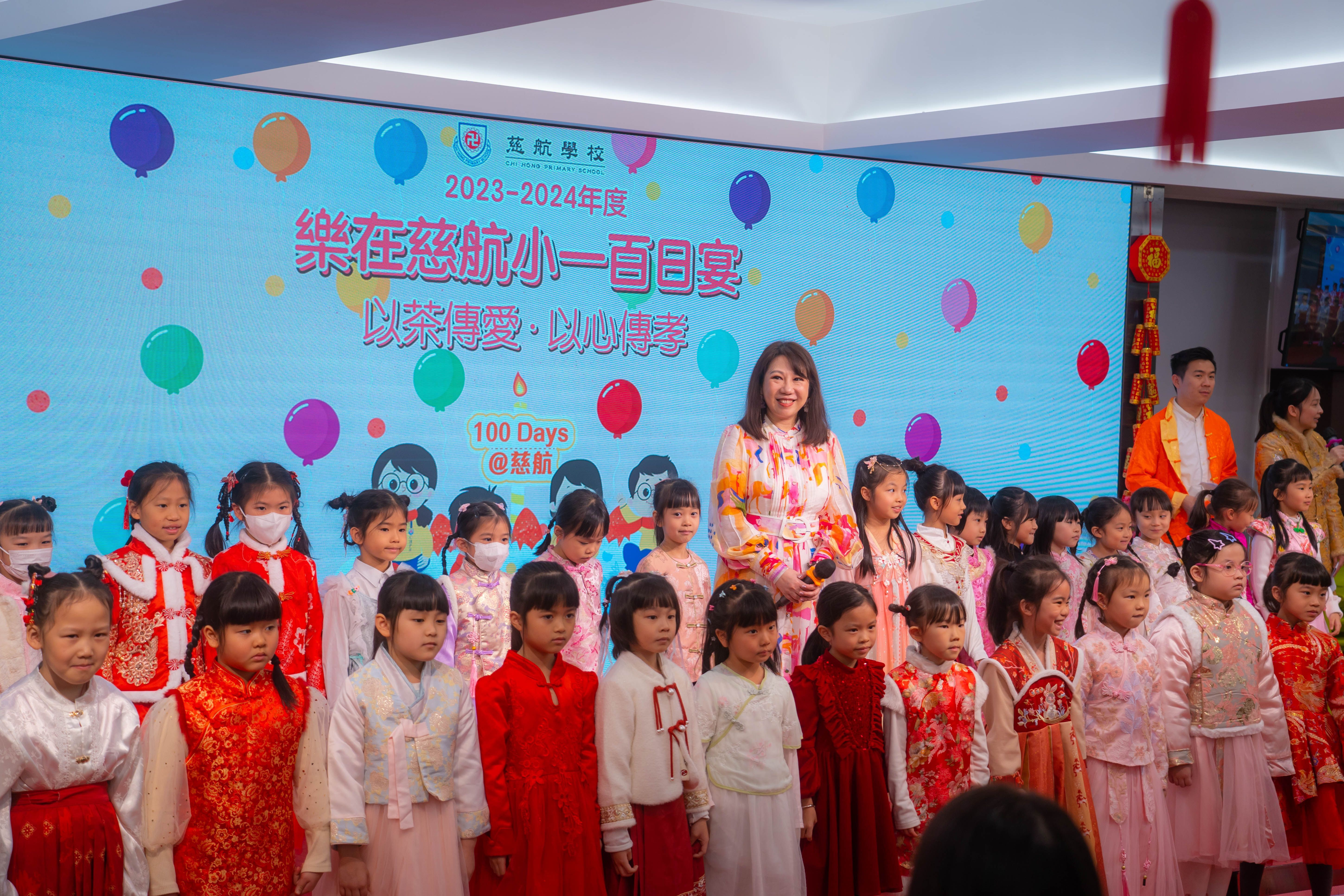
| Development of Major Renewed Emphases of the Primary Education Curriculum | : | 1) Reading to learn: Implement afternoon reading, library classes, school-based reading award schemes, parent-child reading, cross-curricular reading, English online reading platforms (iLearner), HyRead, and compulsory reading books, etc. 2) Interactive IT learning: The whole school is equipped with optical fiber and Wi-Fi networks, utilizing various e-learning software (such as Jamboard, Padlet, Seesaw, etc.) for learning. 3) Project learning: Systematically set project learning skills for each grade level, allowing students to learn different research methods. 4) Values education: Enhance students' civic qualities and responsibilities through the core curriculum, Chinese Culture classes, afternoon assemblies, talks, values education classes, personal growth classes, cross-curricular learning, talks under the national flag, the Hundred Days Banquet, and Chinese Culture Day. |
| Development of Generic Skills | : | The school aims to develop students' generic skills through diversified teaching and learning, and with holistic activities such as Interdisciplinary Theme-based Learning, Project-based Learning, science and technology activities and overseas exchange trips. The school also aims to help students become lifelong learners by emphasising self-directed learning, and encouraging them to engage in pre-class preparation, to use reference books, or to take notes. |
| Cultivation of Proper Values, Attitudes and Behaviours | : | The school has built a campus environment with a positive atmosphere, such as setting up a Meditation Gallery, Teacher-Student Appointments, and more, display students' excellent works and exemplary student posters on campus, to help students establish correct values, respect others, honour their parents and cherish life. The school also nurtures students to become "Three Good Children" who practise good deeds, good words and good intentions through 'all-round student guidance services', including school-based guidance activities, value education classes, growth lessons, "Three-Good Children" award programs, service learning, and more. |
| Student Support | ||
| Whole School Approach to Catering for Learner Diversity | : | 1) The student support team systematically records students' educational needs and calls meetings with teachers, parents, the school-based education psychologist, speech therapist and school social workers to devise adjustment plans. Diversified teaching strategies are adopted and adjustment measures are made on assignments and assessments. Early Intervention Programmes and Individual Education Plans are provided. 2) Establish a gifted talent pool and set up multiple after-school gifted education groups, small-scale talent performance activities, etc. |
| Whole School Approach to Integrated Education | : | 1) Taking reference from the 3-tier support model, the Student Support Team, led by the Special Educational Needs Coordinator, uses different resources to enhance integrated education. 2) Diverse support groups, student training workshops, teacher training seminars and parent education talks with school-based educational psychologist (SBEP), school-based speech therapist, school social worker and NGOs are provided. 3) Implement early intervention, Individual Education Plans (IEP), peer support schemes, parent paired reading, and the Mentorship Program (Teacher-Mentor Support Scheme). 4) Class support meetings, EP evaluation and consultation meetings are arranged. |
| Education Support for Non-Chinese Speaking(NCS) Students | : | Our school provides additional support for NCS students to facilitate their learning of Chinese: providing after-school support programmes in learning Chinese; arranging intensive Chinese learning and teaching mode(s), e.g. pull-out learning if necessary, split-class/group learning, etc; organising activities to create an inclusive learning environment in the school; and our school uses Putonghua to teach Chinese in all classes / groups at certain levels with extra support as appropriate, e.g. pull-out/small-group classes, learning and teaching resources with Pinyin, etc. |
| Curriculum Tailoring and Adaptation | : | 1) Individual adaptation measures including adaptations for curriculum, modified teaching strategies and special assessment arrangements are offered. 2) Students are supported in a variety of ways, including peer support, adjusted curricula, individual counselling, parent support and more, so they can develop in their learning, social and emotional wellbeing and integration. As such students' physical and psychological needs are met and a happy school campus is created. |
| Home-school Co-operation and School Ethos | ||
| Home-School Co-operation | : | 1) The PTA and parent volunteer team have been established. 2) Organize Primary One Orientation Day, Storytelling Parents, parent seminars, parent talks, parent support groups, Parents' Day, PTA trips, Chinese New Year gathering, Teacher Appreciation activities, P1 Hundred Days Banquet, Graduation Dinner, Parent-Child Sports Day, and parent interest classes. |
| School Ethos | : | 1) A simple and honest school spirit, harmonious student-teacher relationships, and a caring campus. 2) Discipline and counselling work complement each other. All staff members work hand in hand to foster good morals in students. Through school-based counselling work, the "Three-Good Children" reward scheme, and value education, students can maintain positive values that manifest themselves in their attitude and behavior. |
| Future Development | ||
| School Development Plan | : | 1) Providing diversified learning experiences, strengthening the effectiveness of learning, and fostering greater self-confidence in students. 2) Continued promotion of "Three-Good Children", nurturing students to develop positive values education. |
| Teacher Professional Training & Development | : | To align the objectives of teachers' professional development with the school development and key concerns. To achieve teaching effectiveness by means of collaborative lesson planning, learning community, teachers' sharing sessions, participation in the Education Bureau's school-based support programs, aim to optimize classroom teaching. |
| Others | : | 1) Providing diverse opportunities to boost students' confidence: English musicals, campus TV, "Little Stage" events, opportunities to MC events, various performance and competitions, etc. 2) Broadening horizons: Participating in territory-wide and overseas competitions, as well as exchange programs with different regions. 3) Recognizing achievements: Annual award ceremony and a "Student Hall of Fame" to celebrate excellent students. |
 School Map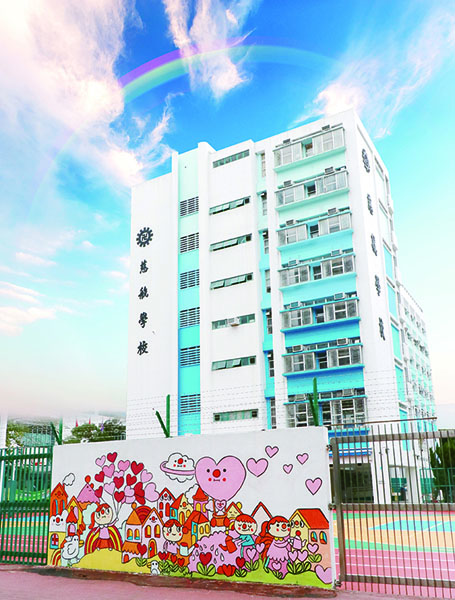
Last revision date:01 September 2026


