 Primary School Profiles 2026

 Primary School Profiles 2026

| Address: | Standard Primary School at Area 43, Lok Ha Square, Fo Tan, Shatin, N.T. | |||
| Phone: | 26025353 | Email: | admin@pooikei.edu.hk | |
| Fax: | 26973808 | Website: | http://www.pooikei.edu.hk | |
 School Information
 | Supervisor/ Chairman of Management Committee | : | Ms. Pang Chau Sheung Rosa |
| School Head | : | Ms. Yim Wai Yee |
| Incorporated Management Committee been established? | : | Established |
| Percentage of School Supervisor and Managers / Chairperson and Members of School Management Committee (SMC) of Government Schools Fulfilling the Training Targets | : | 93% |
| School Type | : | Aided Whole Day |
| Student Gender | : | Co-ed |
| Sponsoring Body | : | Stewards |
| Religion | : | Protestantism / Christianity |
| Year of Commencement of Operation | : | 1990 |
| School Motto | : | Faith, Hope, Love, Honesty Bible: Ephesians 5:15-17 |
| Area Occupied by the School | : | About 5700 Sq. M |
| Through-train Secondary School | : | - |
| Feeder Secondary School | : | - |
| Nominated Secondary School | : | - |
| Medium of Instruction | : | Chinese(incl.: Putonghua) and English |
| School Bus Service | : | School Bus; Nanny van |
| Parent-Teacher Association | : | Yes |
| Past Students' Association/Alumni Association | : | Yes |
| 4Rs Mental Health Charter | : | Yes |
| Whole School Health Programme | : | Action School |
 2026/2027 Annual School Charges
| School Fee | : | - |
| Tong Fai | : | - |
| PTA Fee | : | $80 |
| Approved Charges for non-standard items | : | - |
| Other Charges | : | Two additional, non-EDB-funded full-time NET teachers: around $1,120 annually (on voluntary basis) |
 School Facilities
 | Number of Classroom(s) | : | 24 |
| Number of School Hall(s) | : | 1 |
| Number of Playground(s) | : | 3 |
| Number of Library(ies) | : | 1 |
| Special Rooms | : | 1 computer room, 1 STEAM Room, 1 Lego Room, 1 visual art room, 2 music rooms, 1 library, 1 versatility chamber, 1 supportive education room, 1 guidance room, 1 language room and 2 multi-purpose rooms. |
| Facility(ies) for Supporting Students with Special Educational Needs | : | Ramp, Accessible lift and Accessible toilet. |
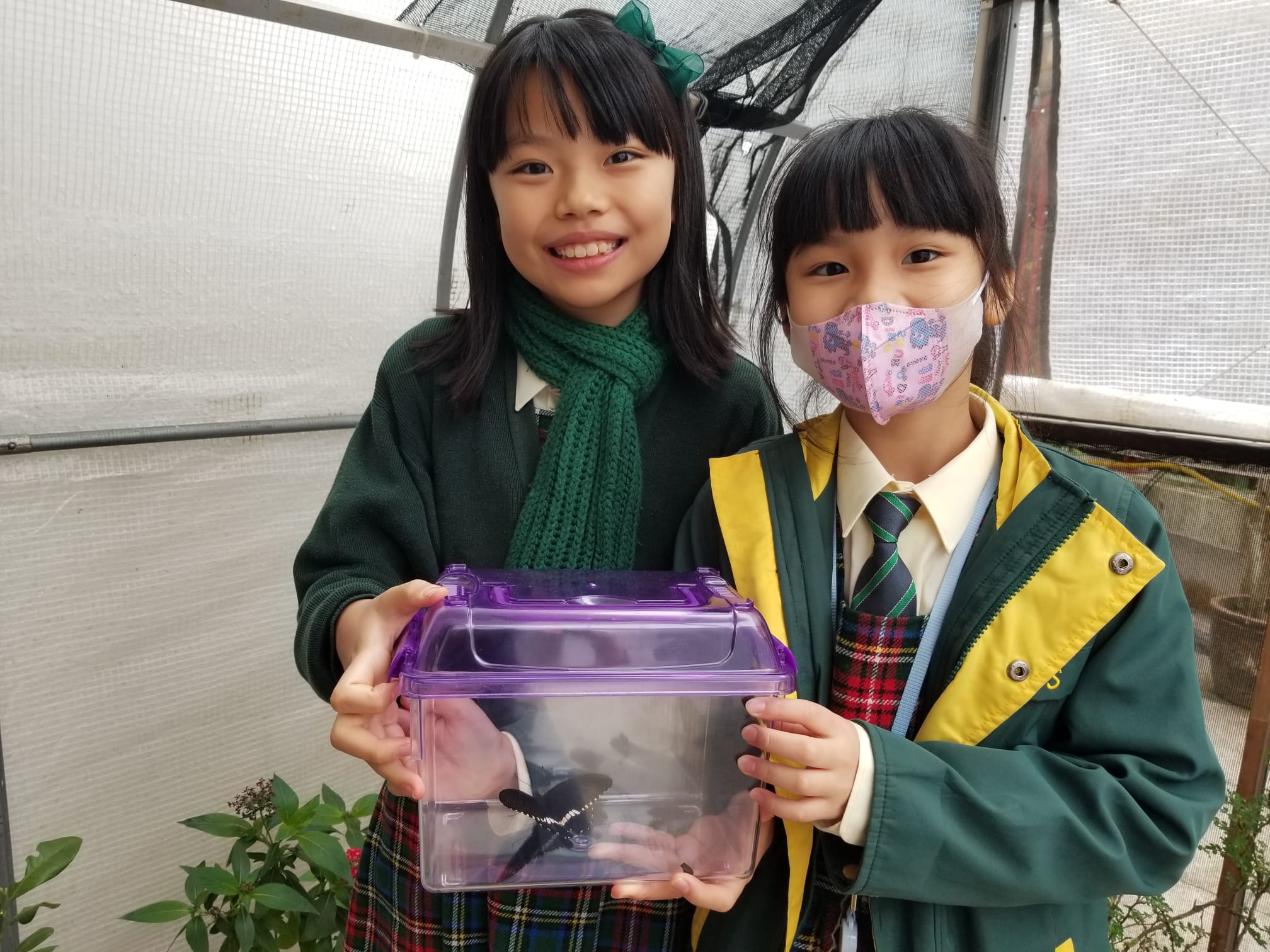
| Others | : | Eco-garden (1 stream + 2 ponds), renewable energy facilities (solar panels (3 sets)), Butterfly Garden, mini weather station (1 set) and HPRS (1 set) |
 Teaching Staff Information (Including School Head) in the 2025/2026 school year
 | Number of teaching posts in the approved establishment | : | 48 |
| Total number of teachers in the school | : | 56 |
| Qualifications and professional training (%) | ||
| Had Received Teacher Training | : | 96% |
| Bachelor Degree | : | 100% |
| Master/ Doctorate Degree or above | : | 34% |
| Special Education Training | : | 67% |
| Years of Experience (%) | ||
| 0 - 4 years | : | 48% |
| 5 - 9 years | : | 7% |
| 10 years or above | : | 45% |
 Class Structure
 | 2025/26 school year | ||
| P1 Number of classes | : | 4 |
| P2 Number of classes | : | 4 |
| P3 Number of classes | : | 4 |
| P4 Number of classes | : | 4 |
| P5 Number of classes | : | 4 |
| P6 Number of classes | : | 4 |
| Total | : | 24 |
| 2026/27 school year (Based on the number of classes approved by EDB in 2026) | ||
| P1 Number of classes | : | 4 |
| P2 Number of classes | : | 4 |
| P3 Number of classes | : | 4 |
| P4 Number of classes | : | 4 |
| P5 Number of classes | : | 4 |
| P6 Number of classes | : | 4 |
| Total | : | 24 |
| Mode of teaching at different levels | ||
| The school adopts average class placement, uses "cooperative learning" as the main teaching mode. English is used as a supplementary medium of instruction for Mathematics and Science, while Chinese lessons are conducted in Putonghua. |
||
| Remarks | ||
| There are two class teachers for each Primary 1 class. | ||
 Performance Assessment
 | Applicable to P1 only | ||
| Number of test(s) per year | : | 1 |
| Number of exam(s) per year | : | 1 |
| Replace tests and examinations with diversified assessments in the first term of P1 | : | Yes |
| Applicable to P2 to P6 only | ||
| Number of test(s) per year | : | 1 |
| Number of exam(s) per year | : | 2 |
| Applicable to P1 to P6 | ||
| Formulate appropriate school-based assessment and assignment policies, inform parents of related arrangements, and collect views from teachers, students and parents regularly (at least once per school year) for ongoing review and optimisation of the school assessment and assignment policies | : | Yes |
| Upload the school-based assessment policy onto the school webpage for information of the public and stakeholders | : | Yes |
| Upload the school-based assignment policy onto the school webpage for information of the public and stakeholders | : | Yes |
| Diversified Assessment for Learning | : | Parallel with self, peer and parent assessments, the school adopts formative assessments (paper and electronic), summative assessments, project-learning and performance tasks so as to enhance the concepts of 'assessment for learning', 'assessment of learning' and 'assessment as learning'. |
| Avoid arranging tests or examinations immediately after long holidays in order to let students take more rest during the holidays | : | Yes |
| Arrange the timetable flexibly according to the school context, with a tutorial session provided in the afternoon as far as possible for students to finish some of their homework under teachers’ guidance | : | Yes |
| Streaming arrangement | : | P.4–P.6 Maths: Five groups per level, including two small-group sets grouped by ability. P.5–P.6 Streaming: One elite class and three mixed-ability classes per level. |
 School Life
 | Number of school days per week | : | 5 |
| Number of periods per day | : | 8 |
| Duration of each normal period | : | 35 |
| School starts at | : | 8:00 AM |
| School ends at | : | 3:10 PM |
| Lunch break | : | 1:00 - 1:50 |
| Lunch arrangement | : | Provided by designated supplier and Provided by designated supplier, arranged by parents or bring their own packed lunch. |
| Healthy school life | : | To nourish students' habits of doing exercise. morning exercise and afternoon activities sessions are set and ECA are encouraged. To encourage students to eat healthily, healthy food activities are promoted. Health talks, vaccination campaigns and involvement in research programmes help establish a healthy living style. |
| Remarks | : | There is a nap time and tutorial session (1:50 p.m. - 2:15 p.m.) where students may take a nap, read books or take part in other non-learning/teaching activities. |
 Life-wide Learning
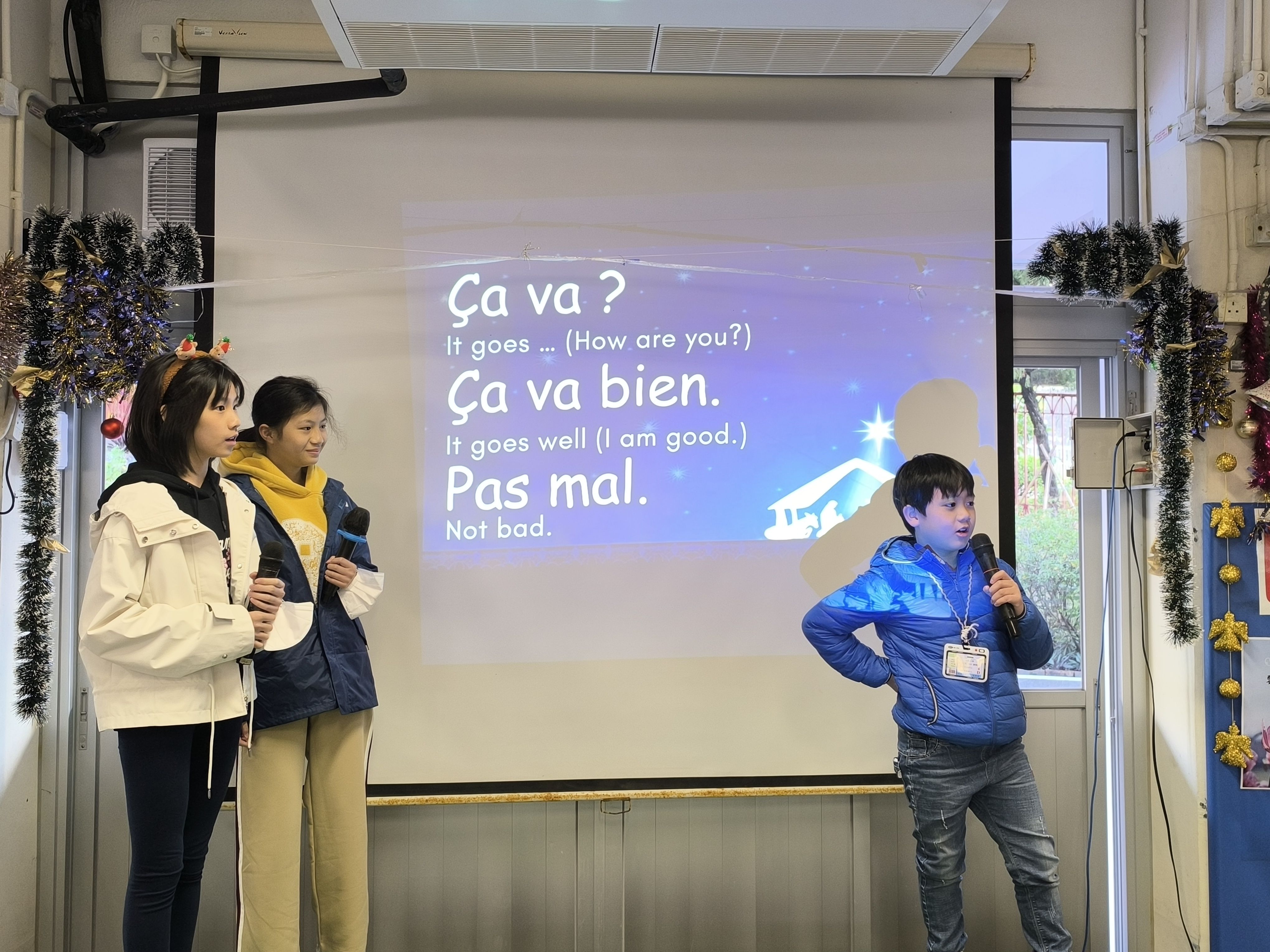
 | French Class; Cub Scouts, Brownies, Girls’ Brigade; Debate Team (Chinese and English); Performance (Dancing, Puppetry, English Drama); Music (Violin, hand chime, Ensemble); PE (Badminton, Table tennis, Wushu, Fencing, Football, Track and field, Basketball, Swimming etc.); STEAM (Coding, Butterfly Ambassadors, Lego Robotic); Overseas and Mainland Learning Exchange. |
 School Mission
 | In accordance with the school motto: Faith, Hope, Love and Honesty, our mission is to provide a well designed curriculum and environment that enables students to enjoy rich, pleasant and meaningful school lives. Develop students' potential in various aspects with emphasis on the abilities of independent thinking and creativity. Equip students with the appropriate knowledge, skills and attitude that lead them to become contributive members of the society. |
 School Characteristics
 | School Management | ||
| School Management Organisation | : | Under the leadership of the Incorporated Management Committee, the headmaster and senior teachers are responsible for leading the 12 administrative committees and their functional committees. The school has also established the Parent-Teacher Association and Alumni Association, which act as a bridge for communication between the school and the stakeholders of parents and alumni. |
| Incorporated Management Committee / School Management Committee/ Management Committee | : | The Incorporated Management Committee was established in 2008. The IMC is composed of members of the sponsoring body, independent individuals, parent representatives, alumni representative and teacher representatives. |
| School Green Policy | : | An Eco-Garden with a pond has been established on the strip of the government land adjoining the school premises. Solar panels are also installed on the roof. The food waste composters are also used to decompose food waste into organic fertilizer. All these green plans are integrated into the current science curriculum. Planting strategically on the school campus so as to be a habitat for butterflies, to nurture students to enjoy and cherish the beauty of the nature through observation of the butterflies' life cycle. The Hydropower Recycle System is installed to collect neglected hydropower for electricity generation and to promote renewable energy. |
| School's Major Concerns | : | 1. Make good use of diverse teaching strategies and assessment results to enhance the effectiveness of students' learning. a. Optimise teaching design to enhance students' proactive learning attitudes and learning skills. b. Make good use of assessment data, cultivate reflective abilities. 2. Through cross-curricular collaboration, foster positive and correct values in students, to nurture a healthy body, mind and spirit. |
| Learning and Teaching Plan | ||
| Learning & Teaching Strategies | : | 1. Teach students different learning strategies and thinking tools progressively; tiered assignments are designed to enhance analysing, evaluating and creating skills. 2. With the application of electronic apps and platforms, teachers design diverse learning activities and tasks to elicit students' interests in learning. 3. Organise whole-school subject-based activities and outdoor learning activities to enrich students' learning experiences. 4. In line with national development, incorporate elements of national education, along with practical activities, into various subjects. |
| Development of Major Renewed Emphases of the Primary Education Curriculum | : | 1. The morning classes are conducted in a 6-day cycle mode, while the afternoon classes are in a 5-day weekly schedule. This arrangement is beneficial for distributing the learning time evenly and increasing the time for non-textbook teaching and activities. 2. On Friday afternoons, students can choose to stay at school for activities or leave the campus. This arrangement is beneficial for increasing the time for non-classroom teaching and teachers' professional development. 3. Values education (including positive education, national education and national security education), assessment literacy, STEAM education and life-wide learning |
| Development of Generic Skills | : | Enhance students' generic skills with the introduction of different learning activities in different Key Learning Areas. The school also promotes project learning and cross-curricular thematic teaching to enhance students' generic skills, such as project learning, collaboration and critical thinking. |
| Cultivation of Proper Values, Attitudes and Behaviours | : | Based on the six areas of positive education, related topics are elaborated on within the main subjects. Regarding to school-wide disciplinary activities, "Classroom Management" and "One Person, One Job" etc. are implemented. The growth and counseling groups promote students' psychiatric and mental health. Through Christian education, students are taught to develop positive thinking in the Word of God. Moral education lessons are based on twelve primary values and attitudes. Positive values are indoctrinated to students through stories, case analysis and life-wide learning activities. |
| Student Support | ||
| Whole School Approach to Catering for Learner Diversity | : | In order to help students with different learning diversity to explore their individual strengths, the concept and elements of 'universal gifted education' are included in classroom teaching. Meanwhile, in order to further enhance students' potential and talents, the school provides special learning opportunities to students with different abilities. These learning opportunities include remedial, elite, small group learning and after-school learning and support programmes. |
| Whole School Approach to Integrated Education | : | With the help of the SENCO, SENST and the Student Support Team, the school helps students with special educational needs (SEN) to extend their competence by providing various learning and teaching strategies, as well as after-school support to enhance their learning effectiveness. |
| Education Support for Non-Chinese Speaking(NCS) Students | : | Our school provides additional support for NCS students to facilitate their learning of Chinese: providing after-school support programmes in learning Chinese; appointing additional teacher(s)/teaching assistant(s) to support NCS students' learning of Chinese; organising activities to create an inclusive learning environment in the school; and our school uses Putonghua to teach Chinese in all classes / groups at all levels with extra support as appropriate, e.g. pull-out/small-group classes, learning and teaching resources with Pinyin, etc. |
| Curriculum Tailoring and Adaptation | : | Conduct small group learning outside the regular classroom for teachers to design more appropriate teaching activities and schedule. |
| Home-school Co-operation and School Ethos | ||
| Home-School Co-operation | : | Parents are the school's important partners. The school provides parent education and parent-kids activities to support our parents. The PTA regularly holds joint activities and talks with the school. Parents participate enthusiastically in different voluntary services. |
| School Ethos | : | By adopting the Integrated Approach to Discipline and Guidance, teachers and the school social worker foster students' positive values and inculcate them to be able to have self-discipline and to love one another. Based on the Biblical teaching, our school introduces students to Jesus Christ through different activities. We also nourish our students in accordance with our school motto, 'Faith, Hope, Love and Honesty'. |
| Future Development | ||
| School Development Plan | : | 1. Enhance the assessment literacy of teachers and students. 2. Refine classroom teaching and develop multiple assessment methods. 3. Promote Technology Education (Butterfly, STEAM, Building Block Coding, the Internet of Things (IoT), Blockchain Technology, AI). 4. Foster positive values and attitudes in students and deepen their knowledge of national development through experiential learning. |
| Teacher Professional Training & Development | : | Apart from the collaborative lesson planning, teachers' professional development workshops, the school invites teaching experts (Chinese, English, Maths, GS and Science) from the local tertiary institutions to conduct co-plan, lesson observation and evaluation for our teachers. The school also strategically sends teachers of different disciplines to different professional institutions so as to facilitate professional sharing with teachers of other schools. |
| Others | : | Awards obtained last school year included: Hong Kong Schools Speech and Music Festival – 5 champions, 1 first runner-up, 8 second runners-up; Inter-school competitions (Shatin Basketball Competition – the third runner-up, Chinese Debate Competition: advanced to the finals; Hong Kong Science Fair Bronze Award (Primary Section); Hong Kong Park Green Hunt Champion; Best Green Education Initiative Award; Ocean Park Conservation Alliance Champion School Distinguished Innovative Award; Primary STEAM Primary Exhibition 2 Outstanding Awards; Wushu Competitions - 5 champions, 1 first runner-up and 1 second runner-up and 1 Champion of the World Youth Wushu Competition; Time To Talk Public Speaking Competition Second Prize) |
 School Map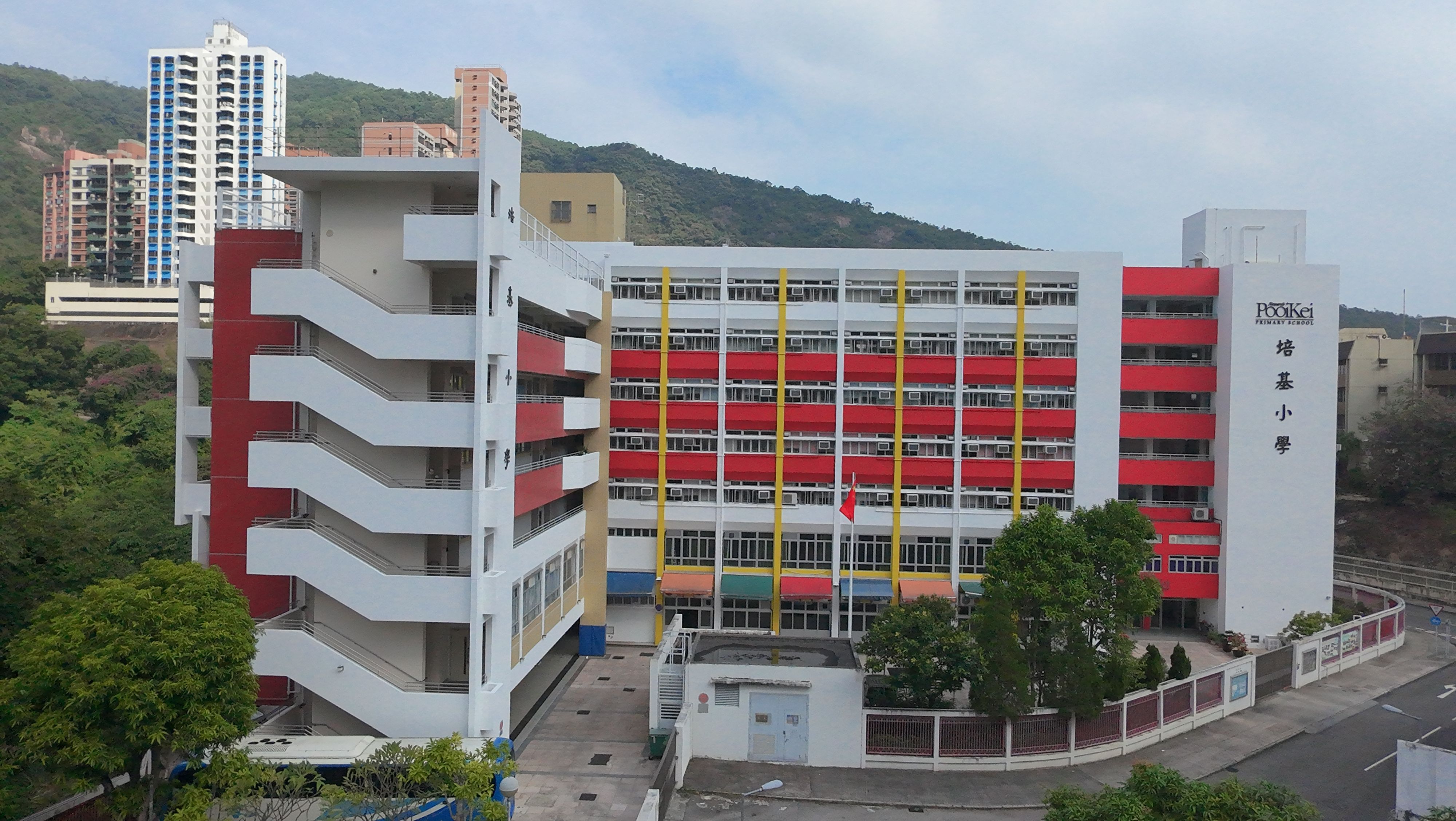
Last revision date:29 September 2026


