 Primary School Profiles 2026

 Primary School Profiles 2026
| Address: | No. 1, Wu Fai Street, Wu King Estate, Tuen Mun, N.T. | |||
| Phone: | 24678107 | Email: | plklcskoffice@plklcsk.edu.hk | |
| Fax: | 24633321 | Website: | http://www.plklcsk.edu.hk | |
 School Information
 | Supervisor/ Chairman of Management Committee | : | Ms. Tung Helena Ching Yee |
| School Head | : | Ms. Ng Mei Wah |
| Incorporated Management Committee been established? | : | Established |
| Percentage of School Supervisor and Managers / Chairperson and Members of School Management Committee (SMC) of Government Schools Fulfilling the Training Targets | : | 91% |
| School Type | : | Aided Whole Day |
| Student Gender | : | Co-ed |
| Sponsoring Body | : | Po Leung Kuk |
| Religion | : | Not Applicable |
| Year of Commencement of Operation | : | 1984 |
| School Motto | : | Love, Respect, Diligence, Sincerity |
| Area Occupied by the School | : | About 2500 Sq. M |
| Through-train Secondary School | : | - |
| Feeder Secondary School | : | - |
| Nominated Secondary School | : | PLK Centenary Li Shiu Chung Memorial College, PLK Tang Yuk Tien College |
| Medium of Instruction | : | Chinese |
| School Bus Service | : | School Bus |
| Parent-Teacher Association | : | Yes |
| Past Students' Association/Alumni Association | : | Yes |
| 4Rs Mental Health Charter | : | Yes |
| Whole School Health Programme | : | Pledged School |
 2026/2027 Annual School Charges
| School Fee | : | - |
| Tong Fai | : | - |
| PTA Fee | : | $40 |
| Approved Charges for non-standard items | : | - |
| Other Charges | : | - |
 School Facilities
 | Number of Classroom(s) | : | 30 |
| Number of School Hall(s) | : | 1 |
| Number of Playground(s) | : | 2 |
| Number of Library(ies) | : | 1 |
| Special Rooms | : | Music room, English room, Dance music room, computer room, STEAM room, Speech Therapy Room. |
| Facility(ies) for Supporting Students with Special Educational Needs | : | Ramp and Accessible lift. |
| Others | : | 4 group remedial teaching classrooms. |
 Teaching Staff Information (Including School Head) in the 2025/2026 school year
 | Number of teaching posts in the approved establishment | : | 56 |
| Total number of teachers in the school | : | 58 |
| Qualifications and professional training (%) | ||
| Had Received Teacher Training | : | 98% |
| Bachelor Degree | : | 100% |
| Master/ Doctorate Degree or above | : | 41% |
| Special Education Training | : | 73% |
| Years of Experience (%) | ||
| 0 - 4 years | : | 7% |
| 5 - 9 years | : | 16% |
| 10 years or above | : | 77% |
 Class Structure
 | 2025/26 school year | ||
| P1 Number of classes | : | 5 |
| P2 Number of classes | : | 5 |
| P3 Number of classes | : | 5 |
| P4 Number of classes | : | 5 |
| P5 Number of classes | : | 5 |
| P6 Number of classes | : | 5 |
| Total | : | 30 |
| 2026/27 school year (Based on the number of classes approved by EDB in 2026) | ||
| P1 Number of classes | : | 5 |
| P2 Number of classes | : | 5 |
| P3 Number of classes | : | 5 |
| P4 Number of classes | : | 5 |
| P5 Number of classes | : | 5 |
| P6 Number of classes | : | 5 |
| Total | : | 30 |
| Mode of teaching at different levels | ||
| Underperforming / less able P.2 to P.4 students are put into eighteen remedial groups. | ||
| Remarks | ||
| Gifted learners/More able students are identified and placed on the School-based Enrichment Program which incorporates a range of fun and inspiring multiple intelligence activities to enhance their creativity, critical thinking skills and abilities to solve problems by applying different creative thinking strategies. | ||
 Performance Assessment
 | Applicable to P1 only | ||
| Number of test(s) per year | : | 0 |
| Number of exam(s) per year | : | 2 |
| Replace tests and examinations with diversified assessments in the first term of P1 | : | Yes |
| Applicable to P2 to P6 only | ||
| Number of test(s) per year | : | 0 |
| Number of exam(s) per year | : | 4 |
| Applicable to P1 to P6 | ||
| Formulate appropriate school-based assessment and assignment policies, inform parents of related arrangements, and collect views from teachers, students and parents regularly (at least once per school year) for ongoing review and optimisation of the school assessment and assignment policies | : | Yes |
| Upload the school-based assessment policy onto the school webpage for information of the public and stakeholders | : | Yes |
| Upload the school-based assignment policy onto the school webpage for information of the public and stakeholders | : | Yes |
| Diversified Assessment for Learning | : | In addition to summative assessments, the school has introduced diverse assessment modes, such as science journals, to assess students’ performance in different generic skills. Formative assessments are conducted in PE and VA to evaluate students' daily learning performance. Peer and self-assessment are conducted regularly to help students understand their performance from different perspectives. |
| Avoid arranging tests or examinations immediately after long holidays in order to let students take more rest during the holidays | : | Yes |
| Arrange the timetable flexibly according to the school context, with a tutorial session provided in the afternoon as far as possible for students to finish some of their homework under teachers’ guidance | : | No |
| Streaming arrangement | : | Students of P.3-P.6 are streamed based on academic results of Chinese Language, English Language and Mathematics. |
 School Life
 | Number of school days per week | : | 5 |
| Number of periods per day | : | 9 |
| Duration of each normal period | : | 35 |
| School starts at | : | 7:45 AM |
| School ends at | : | 2:35 PM |
| Lunch break | : | 12:35 - 1:25 |
| Lunch arrangement | : | Provided by designated supplier and arranged by parents. |
| Healthy school life | : | Lunch Monitoring Committee has been set up to look into the quality and hygiene of food provided by the supplier. Various activities of multi-strategies are implemented to foster students' healthy growth and development in physical, psychological and social aspects. |
| Remarks | : | School commences at 7:35a.m. followed by a morning assembly at 7:45a.m. There are three break-times including two midmorning recessed of 15 minutes and a midday lunch break of 50 minutes. During recess, students are allowed to freely access special rooms and amenities. Healthy snacks and lunch which meet the nutrient needs of students are provided; reading time is arranged at lunchtime period. |
 Life-wide Learning
 | Various extra-curricular activities such as Cambridge English, musical instrumental classes, caricature drawing, arts and crafts, Chinese painting, competitive cheerleading, badminton, football, swimming, taekwondo, rope skipping, STEAM related interest classes and fencing are held after school in order to develop students' potentials. |
 School Mission
 | The school upholds the motto, 'Love, Respect, Diligence, Sincerity' and the concept of 'Whole person development'. We attach great importance to the five aspects of development (i.e. moral, intellectual, and physical, social and aesthetic) in an effort to create a harmonious and caring learning environment, cultivate positive value and attitudes in students and unlock their potentials. |
 School Characteristics
 | School Management | ||
| School Management Organisation | : | The School is superintended by the Incorporated Management Committee (IMC), the Administrative Panel and the Academic Affairs Committee. |
| Incorporated Management Committee / School Management Committee/ Management Committee | : | The IMC is led by the Chairman of Po Leung Kuk. Other positions of the IMC are taken up by two Directors, the Chief Education Officer, the Chief Executive Officer and the Chief Financial Officer of Po Leung Kuk. |
| School Green Policy | : | Engage students in various activities to increase their awareness of the environment. |
| School's Major Concerns | : | 1. School Development 2. Curriculum Development 3. Student Development |
| Learning and Teaching Plan | ||
| Learning & Teaching Strategies | : | The school has implemented a comprehensive curriculum in the cover of such subjects as Chinese Language, English Language, Mathematics, General Studies (P.3 & P.6), Primary Humanities & Science (P.1,2,4,5), Visual Art, Music, Computer, Physical Education and Putonghua. To nurture in students the value of 'respect for others' and 'national identity', we have been delivering Moral Education Speech of diversified themes in the morning assembly to dovetail with relevant activities such as "Good Students Election" and "Cleaning Campaign". The above altogether offer a balanced curriculum and a joyful learning environment that makes a firm foundation for lifelong learning. In addition, the school encourages students to partake in uniformed groups with the aim of promoting positive values-commitment and responsibility. |
| Development of Major Renewed Emphases of the Primary Education Curriculum | : | Apart from academic performance, our school has always put great emphasis on nurturing good character in our students. To develop a positive and harmonious atmosphere in our school, we infiltrate values education into different subject learning and various activities. Hence, our students can grow up in a caring environment and develop the capabilities to understand themselves and to set goals. We also promote life-wide learning by organizing a variety of activities, including excursions, Chinese Culture Day, exchange programmes, both inside and outside Hong Kong, and so on. Students can broaden their horizons outside of the classroom and inherit Chinese cultural heritage through these activities. Moreover, our school has developed a framework for science and technology education. To strengthen students' abilities in science and technology, and to equip them to face the world of technologies, we plan and organize our STEAM activities, like robotics team and drones team, around interdisciplinar |
| Development of Generic Skills | : | The school has spared no effort in organizing different scope of learning and other situational activities such as cross-curricular learning, presentation, extensive reading and learning via the internet with a view to help students acquire, construct and apply knowledge. As regards the nine generic skills, the School sets its focus on the development of the students' collaboration skill, communication skill, creativity and information technology skill. |
| Cultivation of Proper Values, Attitudes and Behaviours | : | To nurture positive values and attitudes in students. To promote positive thinking, active learning and 'try hard' attitude. |
| Student Support | ||
| Whole School Approach to Catering for Learner Diversity | : | Curriculum variation caters for students' learning differences aiming to stimulate learning motivation and realize student potential. |
| Whole School Approach to Integrated Education | : | Our school has a "student support team" that utilizes resources and coordinates various aspects to provide appropriate measures to students with special educational needs. These measures include teaching and examination adjustments, tutorial classes, School-based Educational Psychology Service, Enhanced School-based Speech Therapy Service etc. These help students integrate into campus life and enhance overall teaching and learning effectiveness, jointly creating an inclusive campus culture. |
| Education Support for Non-Chinese Speaking(NCS) Students | : | Our school provides additional support for NCS students to facilitate their learning of Chinese: providing after-school support programmes in learning Chinese; and organising activities to create an inclusive learning environment in the school. |
| Curriculum Tailoring and Adaptation | : | School-based implementation plans and learning activities integrate into different subjects. |
| Home-school Co-operation and School Ethos | ||
| Home-School Co-operation | : | Our harmonious school-parent relationship is ongoing with parents' trust and support. Since establishment, the Parent Teacher Association (PTA) has assisted with the planning and implementation of a large variety of activities and interest groups for parents and pupils, offering students a vibrant and colorful school life beyond classroom and textbooks. |
| School Ethos | : | The school engages all teachers, parents and students to cultivate a caring school culture. Teachers place great value on giving sincere and constructive encouragement, complement and guidance as a means to nurture students to become an active, self-discipline, self-respecting and responsible individuals. In adhere to the culture, the school form a strong connection with parents with the aim that the school policy and decision can be understood, supported and monitored to better respond to the needs of students. To this end, the school disseminates messages to the parents through various media and channels including talks, assemblies, notices and School TV. |
| Future Development | ||
| School Development Plan | : | 1. Further cater for learner diversity, improving students' learning motivation. 2. Enhance learning autonomy of students and self-management. 3. Improve the effectiveness of learning and teaching. 4. Strengthen students' knowledge based in Science and Technology. |
| Teacher Professional Training & Development | : | All of our teachers have attained a bachelor's degree and are with solid teaching experience. The school has taken part in the School-based Support Services where EDB' school support agents collaborate closely with teachers to develop school-based curricula. The effectiveness of teaching and learning is significantly enhanced. Moving forward, the school is going to foster professional exchange and collaboration between Mainland or overseas teachers and local teachers and involve in pedagogical strategies related to the implementation of IT in education as measures to enhance the academic performance of students. |
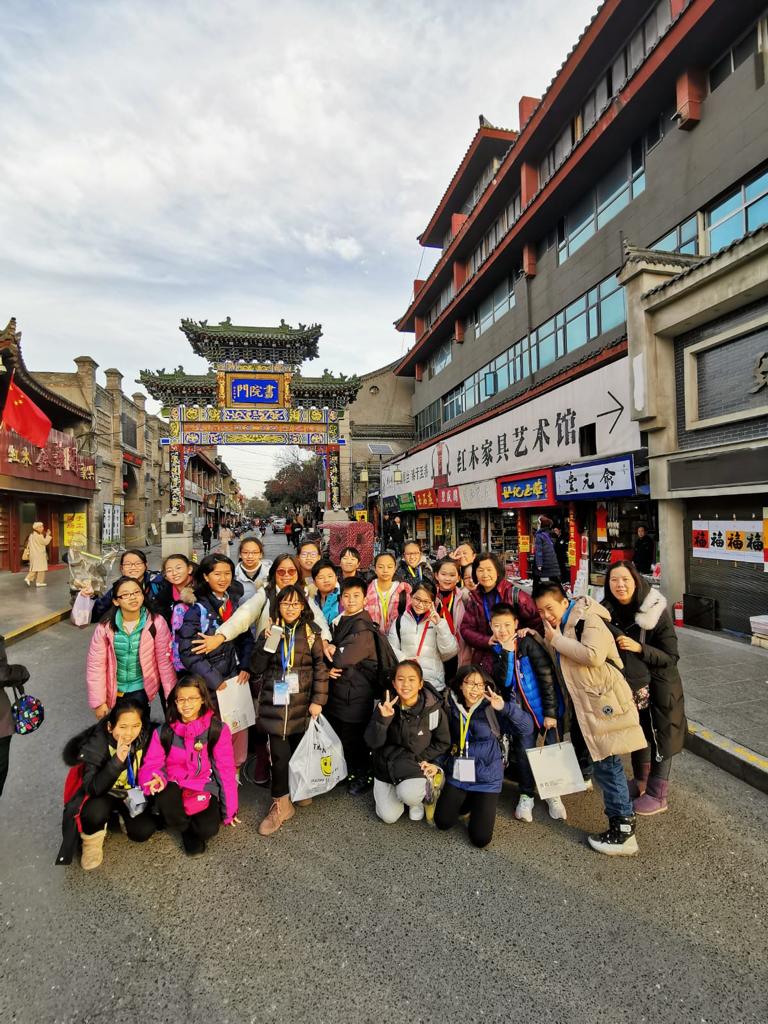
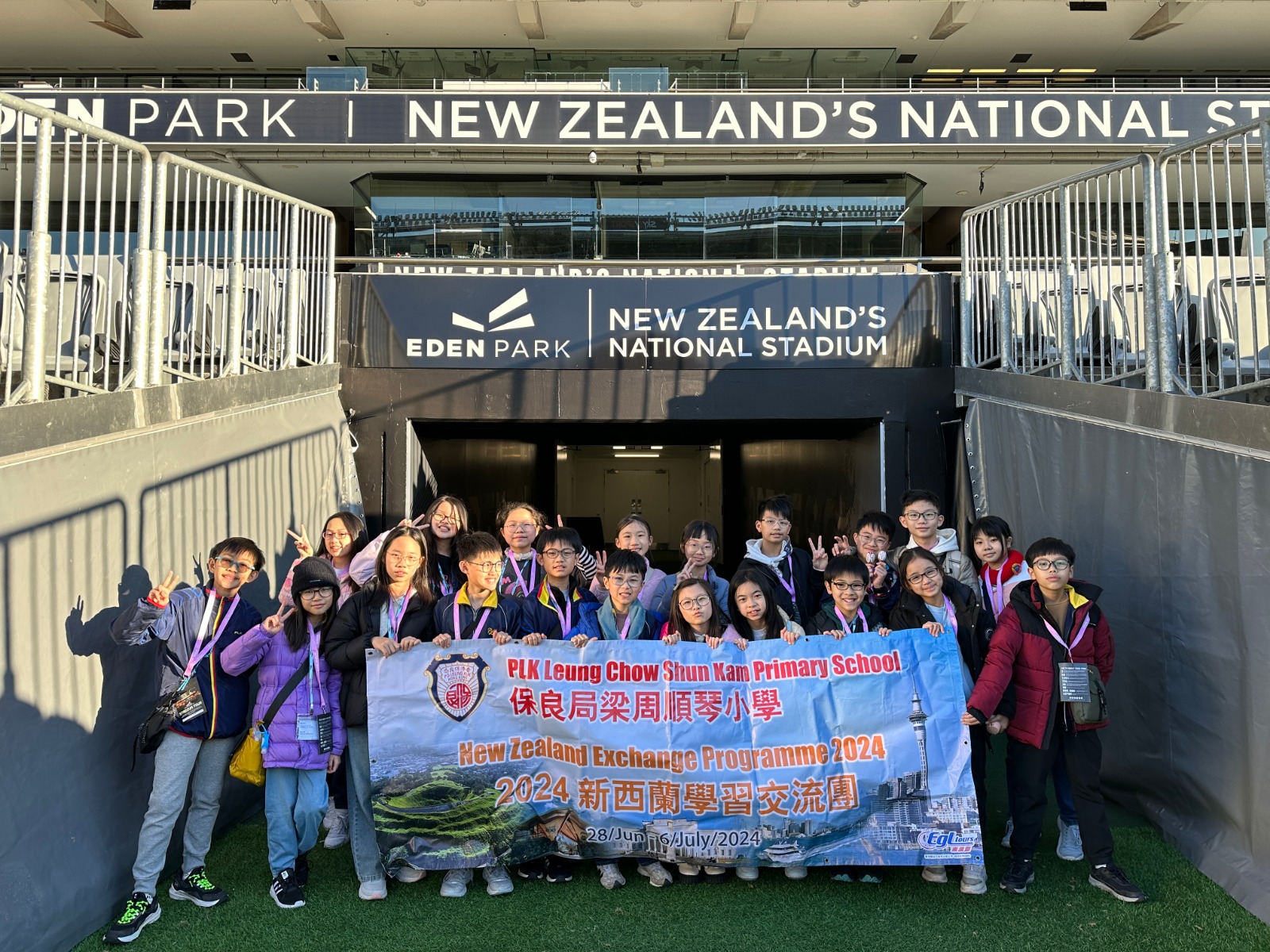
| Others | : | 1. The school has been striving to provide students with exchange opportunities in Xi'an, Sichuan, Singapore, Greater Bay Area or New Zealand to enhance their knowledge, expand their horizons and enrich their learning experience. 2. Mainland Exchange Program and other complementary learning activities have long been organized that aim to help students gain a comprehensive understanding of the motherland from different perspectives. |
 School Map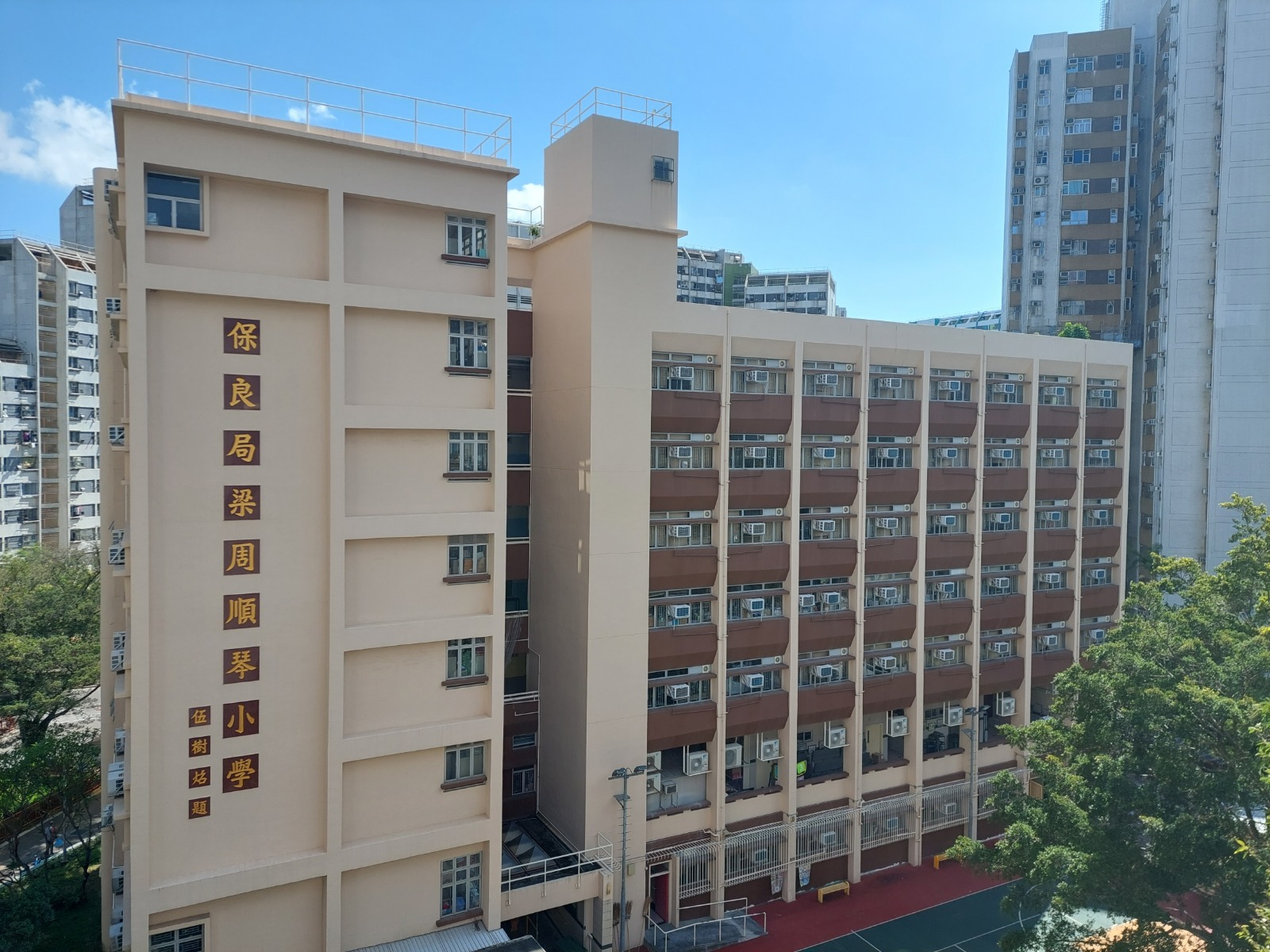
Last revision date:01 September 2026


