 Primary School Profiles 2026


 Primary School Profiles 2026

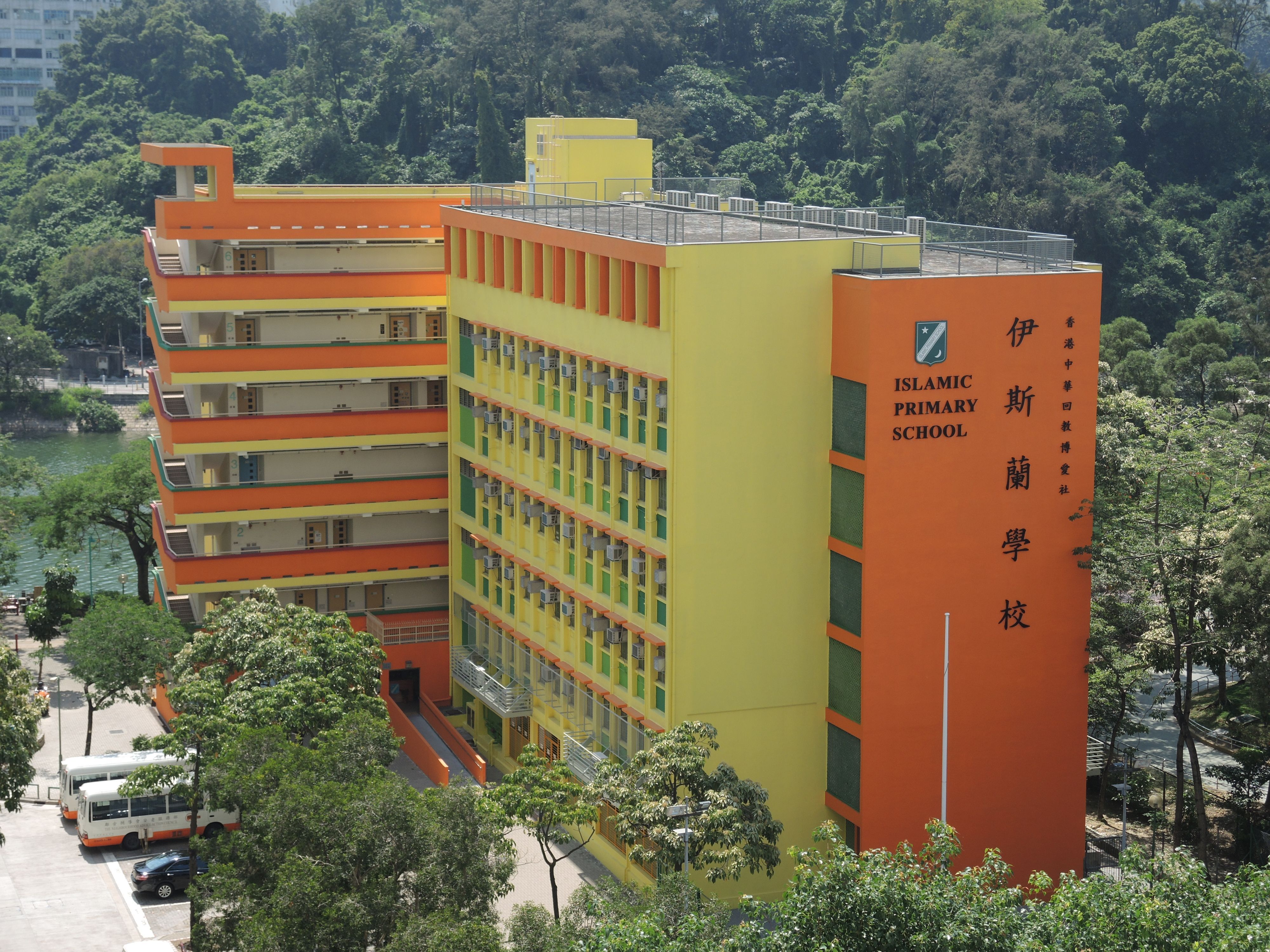
| Address: | 2 Oi Tak Lane, Yau Oi Estate, Tuen Mun, N.T. | |||
| Phone: | 24502270 | Email: | mail@islamps.edu.hk | |
| Fax: | 26186424 | Website: | http://www.islamps.edu.hk | |
 School Information
| Supervisor/ Chairman of Management Committee | : | Mr. Chui Yun Cheung |
| School Head | : | Ms. Ko Tak Yin |
| Incorporated Management Committee been established? | : | Established |
| Percentage of School Supervisor and Managers / Chairperson and Members of School Management Committee (SMC) of Government Schools Fulfilling the Training Targets | : | Not Applicable |
| School Type | : | Aided Whole Day |
| Student Gender | : | Co-ed |
| Sponsoring Body | : | Chinese Muslim Cultural and Fraternal Association |
| Religion | : | Islam |
| Year of Commencement of Operation | : | 1980 |
| School Motto | : | Promoting harmony among different ethnic groups by creating an ideal learning environment. |
| Area Occupied by the School | : | About 4800 Sq. M |
| Through-train Secondary School | : | - |
| Feeder Secondary School | : | - |
| Nominated Secondary School | : | - |
| Medium of Instruction | : | English |
| School Bus Service | : | Nanny van |
| Parent-Teacher Association | : | Yes |
| Past Students' Association/Alumni Association | : | Yes |
| 4Rs Mental Health Charter | : | Yes |
| Whole School Health Programme | : | Action School |
 2026/2027 Annual School Charges
| School Fee | : | - |
| Tong Fai | : | - |
| PTA Fee | : | - |
| Approved Charges for non-standard items | : | Miscellaneous fee $300 |
| Other Charges | : | - |
 School Facilities
| Number of Classroom(s) | : | 24 |
| Number of School Hall(s) | : | 1 |
| Number of Playground(s) | : | 2 |
| Number of Library(ies) | : | 1 |
| Special Rooms | : | CoolThink@JC Studio, Computer Room, Library, Visual Arts Room, Multi-Purpose Activities Centre, English Room, Music Room, Counselling Room, Student Activity Centre, Mental Health Station. |
| Facility(ies) for Supporting Students with Special Educational Needs | : | Ramp, Accessible lift, Accessible toilet and Accessible public information / service counter. |
| Others | : | - |
 Teaching Staff Information (Including School Head) in the 2025/2026 school year
| Number of teaching posts in the approved establishment | : | 31 |
| Total number of teachers in the school | : | 37 |
| Qualifications and professional training (%) | ||
| Had Received Teacher Training | : | 95% |
| Bachelor Degree | : | 100% |
| Master/ Doctorate Degree or above | : | 30% |
| Special Education Training | : | 90% |
| Years of Experience (%) | ||
| 0 - 4 years | : | 16% |
| 5 - 9 years | : | 11% |
| 10 years or above | : | 73% |
 Class Structure
| 2025/26 school year | ||
| P1 Number of classes | : | 2 |
| P2 Number of classes | : | 2 |
| P3 Number of classes | : | 2 |
| P4 Number of classes | : | 3 |
| P5 Number of classes | : | 3 |
| P6 Number of classes | : | 3 |
| Total | : | 15 |
| 2026/27 school year (Based on the number of classes approved by EDB in 2026) | ||
| P1 Number of classes | : | 2 |
| P2 Number of classes | : | 2 |
| P3 Number of classes | : | 2 |
| P4 Number of classes | : | 2 |
| P5 Number of classes | : | 3 |
| P6 Number of classes | : | 3 |
| Total | : | 14 |
| Mode of teaching at different levels | ||
| In order to enhance learning and teaching, small class teaching is adopted. Special classes with tailor-made curriculum are provided for students in need. Diverse activities and interactive teaching are provided to cater to students of different learning styles. Homework assistance in the last lesson and after-school homework tutorial classes are provided. | ||
| Remarks | ||
| A mainstream Chinese language curriculum is provided for Chinese speaking students. Non-Chinese speaking students are arranged to take mainstream Chinese language curriculum or adapted Chinese language curriculum according to their Chinese language abilities. | ||
 Performance Assessment
| Applicable to P1 only | ||
| Number of test(s) per year | : | 0 |
| Number of exam(s) per year | : | 2 |
| Replace tests and examinations with diversified assessments in the first term of P1 | : | No |
| Applicable to P2 to P6 only | ||
| Number of test(s) per year | : | 0 |
| Number of exam(s) per year | : | 2 |
| Applicable to P1 to P6 | ||
| Formulate appropriate school-based assessment and assignment policies, inform parents of related arrangements, and collect views from teachers, students and parents regularly (at least once per school year) for ongoing review and optimisation of the school assessment and assignment policies | : | Yes |
| Upload the school-based assessment policy onto the school webpage for information of the public and stakeholders | : | Yes |
| Upload the school-based assignment policy onto the school webpage for information of the public and stakeholders | : | Yes |
| Diversified Assessment for Learning | : | Different modes of assessment are implemented in subjects, such as class observation, assignment performance, written assessment, project learning, authentic assessment, parents' & peer evaluate and etc. Cross-subject project learning is conducted. |
| Avoid arranging tests or examinations immediately after long holidays in order to let students take more rest during the holidays | : | Yes |
| Arrange the timetable flexibly according to the school context, with a tutorial session provided in the afternoon as far as possible for students to finish some of their homework under teachers’ guidance | : | Yes |
| Streaming arrangement | : | Streamed according to learning needs. |
 School Life
| Number of school days per week | : | 5 |
| Number of periods per day | : | 9 |
| Duration of each normal period | : | 35 |
| School starts at | : | 8:05 AM |
| School ends at | : | 3:30 PM |
| Lunch break | : | 12:40 - 1:35 |
| Lunch arrangement | : | Provided by designated supplier, arranged by parents and students bring their own lunch. |
| Healthy school life | : | Specific programmes are designed to cultivate pupils' positive values and encourage pupils to have good social behaviour. Morning exercise is held in the morning for all students. Students are encouraged to join Joyful Fruit Month to develop a healthy eating habit. Sports activity sections during recess are provided to cultivate students' exercise habit. |
| Remarks | : | We arrange homework tutoring sessions during the ninth period from Monday to Thursday. The sessions are conducted by teachers from the school to assist students in completing their assignments. Each class has a designated reading corner that provides various categories of reading materials, including English and Chinese storybooks, magazines, and journals. Students are encouraged to borrow and read these materials. |
 Life-wide Learning
| To help pupils to have all-round development, co-curricular activities and post-lesson activities are arranged. Co-curricular activities are organised every Wednesday. The activities covered sports, arts, uniformed teams, STEAM and academics. Post-lesson activities including pop band, choir, cultural dance, handchime, African drum, mini-tennis, and debate are arranged to develop pupils' self-esteem and confidence. Students are given various chances to enter intra-school performance and inter-school competitions for better exposure and confidence. |
 School Mission
| Our school mission is to promote harmony among different ethnic groups by creating an ideal learning environment supported and complemented by professional teachers. By guiding students with patience and competence, and by providing individual counselling and care, the school nurtures a cohort of young people who are self-confident. Through offering a school-based curriculum, support programs and a wide variety of learning opportunities, the school helps students to develop their potential as they learn to become a part of the wider learning community in the school and the world. |
 School Characteristics
| School Management | ||
| School Management Organisation | : | The school is headed by the Incorporated Management Committee. There are different school level committees responsible for curriculum development, student support, school improvement and administrative affairs. |
| Incorporated Management Committee / School Management Committee/ Management Committee | : | Incorporated Management Committee include the supervisor, headmistress and 13 managers. (The participants include representatives of teachers, parents, alumni, and independent individuals.) |
| School Green Policy | : | Each class has an Environmental Ambassador for promoting environmental protection. Environmental education is implemented into our curriculum to enhance students' awareness of conserving resources and curing the Earth. The school joined the “Jockey Club BEAM Plus in Schools Project 2.0” to assist the school in reducing its carbon footprint and to instil the concept of green building, educating the importance of carbon reduction to tackle climate change and promote green-building concepts for the students. |
| School's Major Concerns | : | 1. Catering to learning diversity. 2. Accepting ourselves and others. |
| Learning and Teaching Plan | ||
| Learning & Teaching Strategies | : | Diversified teaching strategies adapted, e.g. group learning activities, differentiated tasks. Various themes employing different activities (project learning, seminars, workshops, visits and group activities), cross border Study Trip, are used to implement cross-curricular learning and learning across subjects. |
| Development of Major Renewed Emphases of the Primary Education Curriculum | : | Emphasis is placed on values education, life education, national education and national security education. Through diverse learning activities, students are enriched with all-round learning experiences. STEAM education is continuously developed to cultivate students' computational thinking ability and apply comprehensive knowledge through scientific exploration activities. Students' information literacy is cultivated, cross-curricular learning and reading activities are promoted, and their lifelong learning ability is developed. Assessment literacy is enhanced to promote teaching and learning effectiveness. |
| Development of Generic Skills | : | Includes students' self-learning skills (e-learning platform), collaboration skills, critical thinking skills, and communicative and cooperative abilities. |
| Cultivation of Proper Values, Attitudes and Behaviours | : | The school sets up a positive learning environment to promote love and care, a growth mindset and well-being. With the support of the Joyful@school campaign, a series of learning materials were added to civic education to enhance appreciation of oneself and others. We also employ a team of caring ambassadors and provides training for them, allowing students to get along with each other positively, respect others, cherish life and help others in need. |
| Student Support | ||
| Whole School Approach to Catering for Learner Diversity | : | 'Whole school approach' in supporting student diversity and SEN: Adopt the support mode of a whole-school approach, create a harmonious and pleasant learning environment, establish an inclusive campus, and help each student to have an all-round development. Our school implements effective teaching strategies by integrating and flexibly deploying resources of the school. Provide appropriate services to students who need additional support to enable them to meet their expected learning targets. |
| Whole School Approach to Integrated Education | : | Support Strategies for the 3-Tier Support Model: Our school has after school tutorial class, small remedial class, small class teaching, enhanced school-based speech therapy service, teaching assistant co-teaching in class, Early Identification and Intervention Programme for P1 Students with Learning Difficulties, various types of study groups supported by the second level, and individual support for students who accept Individual Education Plan. In addition, accommodations are provided in curriculum, homework, dictation and assessment. |
| Education Support for Non-Chinese Speaking(NCS) Students | : | Our school provides additional support for NCS students to facilitate their learning of Chinese: providing after-school support programmes in learning Chinese; appointing additional teacher(s)/teaching assistant(s) to support NCS students' learning of Chinese; arranging intensive Chinese learning and teaching mode(s), e.g. pull-out learning if necessary, split-class/group learning, etc; developing school-based Chinese Language curriculum and/or adapting learning and teaching materials; organising activities to create an inclusive learning environment in the school; and hiring additional manpower and/or translation/interpretation services to facilitate the communication with parents of NCS students. The Bridging Programme will be arranged for non-Chinese-speaking students during the summer holiday. Please refer to our school website for information regarding the educational support provided for non-Chinese speaking students. |
| Curriculum Tailoring and Adaptation | : | Our school uses English as the medium of instruction, allowing students of different nationalities to learn in a multicultural environment. Our school cooperates with the Education Bureau and universities, and external professionals are hired to optimize the school-based courses in Chinese, English, Mathematics and General Studies who produce unit booklets to help students learn. Our school uses the grant flexibly and provides more than ten free interest classes after school, including: Chinese and English Little MC training classes, Cambridge English classes, English phonics classes and a number of physical training classes to facilitate students balanced development. |
| Home-school Co-operation and School Ethos | ||
| Home-School Co-operation | : | All parents are members of the Parent-teacher Association. Each year the committee organises the Annual General Meeting, interest classes, workshops, talks and Day Tour for all members. Different programmes and workshops are provided for parents to enhance their parenting skills and build up network among parents. Parents are encouraged to take an active role in serving the school. |
| School Ethos | : | To maintain a harmonious school culture, a school-based whole school approach is implemented to reinforce pupils' good behavior. Students are willing to love, to respect and to help each other. |
| Future Development | ||
| School Development Plan | : | 1. To enhance students' learning motivation; 2. To foster students' self-directed learning attitude; 3. To develop students' self-directed learning abilities; 4. To enhance students' learning performance; 5. Students are able to manage themselves in various aspects; 6. Students are capable of initiating self-reflection; 7. Students can set up a self-improvement scheme after self-reflection. |
| Teacher Professional Training & Development | : | Encourage teachers to join relevant seminars and workshops to enhance professional development in knowledge and skills, and to meet the need for school development. Through regular collaborative lesson planning, lesson observation & professional sharing, sharing culture is formed to enhance teaching pedagogy. |
| Others | : | Scholarships from the Chinese Muslim Cultural and Fraternal Association for Academic, Outstanding Physical, and Artistic Performance, Harmony scholarship, "We Did It!" Award Scheme, Award of the Politest Students |
 School Map
Last revision date:01 September 2026


