 Primary School Profiles 2026

 Primary School Profiles 2026

| Address: | Estate Primary School No. 3, On Ting Estate, Tuen Mun, N.T. | |||
| Phone: | 24503833 | Email: | info@wsk.edu.hk | |
| Fax: | 26183132 | Website: | http://www.wsk.edu.hk | |
 School Information
 | Supervisor/ Chairman of Management Committee | : | Mr. Liu Hong Fai |
| School Head | : | Mr. Kao Ping Suen |
| Incorporated Management Committee been established? | : | Established |
| Percentage of School Supervisor and Managers / Chairperson and Members of School Management Committee (SMC) of Government Schools Fulfilling the Training Targets | : | Not Applicable |
| School Type | : | Aided Whole Day |
| Student Gender | : | Co-ed |
| Sponsoring Body | : | Shun Tak Fraternal Association |
| Religion | : | Not Applicable |
| Year of Commencement of Operation | : | 1982 |
| School Motto | : | Please refer to the Chinese version. |
| Area Occupied by the School | : | About 2000 Sq. M |
| Through-train Secondary School | : | - |
| Feeder Secondary School | : | - |
| Nominated Secondary School | : | STFA Leung Kau Kui College, STFA Tam Pak Yu College |
| Medium of Instruction | : | Chinese |
| School Bus Service | : | Nanny van |
| Parent-Teacher Association | : | Yes |
| Past Students' Association/Alumni Association | : | Yes |
| 4Rs Mental Health Charter | : | Yes |
| Whole School Health Programme | : | Pledged School |
 2026/2027 Annual School Charges
| School Fee | : | - |
| Tong Fai | : | - |
| PTA Fee | : | $20 |
| Approved Charges for non-standard items | : | $450 |
| Other Charges | : | Replacement of student card: $40 |
 School Facilities
 | Number of Classroom(s) | : | 27 |
| Number of School Hall(s) | : | 1 |
| Number of Playground(s) | : | 2 |
| Number of Library(ies) | : | 1 |
| Special Rooms | : | Holistic Learning Space, Computer Room, Activity Room, Visual Arts Room, Music Room, Library, Dancing Room. |
| Facility(ies) for Supporting Students with Special Educational Needs | : | Ramp and Accessible lift. |
| Others | : | The school classrooms are equipped with air conditioners and computers. |
 Teaching Staff Information (Including School Head) in the 2025/2026 school year
 | Number of teaching posts in the approved establishment | : | 51 |
| Total number of teachers in the school | : | 53 |
| Qualifications and professional training (%) | ||
| Had Received Teacher Training | : | 100% |
| Bachelor Degree | : | 98% |
| Master/ Doctorate Degree or above | : | 50% |
| Special Education Training | : | 82% |
| Years of Experience (%) | ||
| 0 - 4 years | : | 3% |
| 5 - 9 years | : | 12% |
| 10 years or above | : | 85% |
 Class Structure
 | 2025/26 school year | ||
| P1 Number of classes | : | 4 |
| P2 Number of classes | : | 5 |
| P3 Number of classes | : | 5 |
| P4 Number of classes | : | 5 |
| P5 Number of classes | : | 4 |
| P6 Number of classes | : | 4 |
| Total | : | 27 |
| 2026/27 school year (Based on the number of classes approved by EDB in 2026) | ||
| P1 Number of classes | : | 4 |
| P2 Number of classes | : | 4 |
| P3 Number of classes | : | 5 |
| P4 Number of classes | : | 5 |
| P5 Number of classes | : | 5 |
| P6 Number of classes | : | 4 |
| Total | : | 27 |
| Mode of teaching at different levels | ||
| Small-class teaching. | ||
| Remarks | ||
| - | ||
 Performance Assessment
 | Applicable to P1 only | ||
| Number of test(s) per year | : | 0 |
| Number of exam(s) per year | : | 0 |
| Replace tests and examinations with diversified assessments in the first term of P1 | : | Yes |
| Applicable to P2 to P6 only | ||
| Number of test(s) per year | : | 0 |
| Number of exam(s) per year | : | 3 |
| Applicable to P1 to P6 | ||
| Formulate appropriate school-based assessment and assignment policies, inform parents of related arrangements, and collect views from teachers, students and parents regularly (at least once per school year) for ongoing review and optimisation of the school assessment and assignment policies | : | Yes |
| Upload the school-based assessment policy onto the school webpage for information of the public and stakeholders | : | Yes |
| Upload the school-based assignment policy onto the school webpage for information of the public and stakeholders | : | Yes |
| Diversified Assessment for Learning | : | Formative Assessment is used to replace tests and examinations in Primary One. Pen and paper assessment (examinations); parent-evaluations are incorporated in selected subjects. |
| Avoid arranging tests or examinations immediately after long holidays in order to let students take more rest during the holidays | : | Yes |
| Arrange the timetable flexibly according to the school context, with a tutorial session provided in the afternoon as far as possible for students to finish some of their homework under teachers’ guidance | : | Yes |
| Streaming arrangement | : | Streaming according to academic results. |
 School Life
 | Number of school days per week | : | 5 |
| Number of periods per day | : | 10 |
| Duration of each normal period | : | 30 |
| School starts at | : | 8:00 AM |
| School ends at | : | 2:55 PM |
| Lunch break | : | 12:55 - 1:55 |
| Lunch arrangement | : | Provided by designated supplier and arranged by parents. |
| Healthy school life | : | Participating in the Hong Kong Healthy School Award Scheme; School-based Fitness Exercises during recesses. |
| Remarks | : | - |
 Life-wide Learning
 | Chinese Calligraphy, Chinese Painting, English Drama, Drama, Table-tennis, Football, Badminton, Dancing, Chinese Orchestra, Choir, Athletics, Swimming, Skipping, Dragon Dance, Dodgeball, Robotics, Fencing, Cub Scouts, Brownies, Community Youth Club, Junior Police Call. |
 School Mission
 | In order to achieve our quality education mission, we aim to provide a friendly and excellent learning environment for pupils to learn through a balanced development in all areas: moral, intellectual, physical, social and aesthetic. |
 School Characteristics
 | School Management | ||
| School Management Organisation | : | A School Development Committee is formed under the Incorporated Management Committee (IMC) to manage the school affairs. |
| Incorporated Management Committee / School Management Committee/ Management Committee | : | The school is managed by the Incorporated Management Committee (IMC). There are 18 managers in the committee, including sponsoring body managers, school principal, teacher manager, parent managers, alumni manager and independent manager. |
| School Green Policy | : | Positive values in protecting the environment are instilled to encourage pupils to adopt a green life. We maintain a good relationship with some environmental protection organisations to promote the principle to save the Earth. Saving paper, Computerization of administrative work, electronic notices, the intranet, e-mails, used uniform recycling and bring own utensils, etc. |
| School's Major Concerns | : | We enhance teaching and learning, develop our students' positive values. |
| Learning and Teaching Plan | ||
| Learning & Teaching Strategies | : | 1) Implement small-class teaching; promote reading to learn and child-centered education theory; encourage pupils to pre-read and finish pre-lesson tasks to initiate and promote self-autonomy in learning. 2) Develop school-based gifted education curriculum to enhance pupils learning ability. 3) Implement Small Group Remedial Teaching Programme, organize after-school remedial teaching classes to assist pupils' learning. 4) Use IT to support teaching and learning. 5) Use Putonghua in Chi. Language Learning in selected classes in each level to upgrade pupils' language ability. 6) Implement English Drama curriculum to elicit and enhance pupils' language ability and various generic skills. 7) Adopt various kinds of assessment methods i.e. parent evaluation, self-evaluation, peer evaluation and project learning. Use assessments to assist and improve teaching and learning strategies and to evaluate the teaching and learning performance. 8) Provide opportunities for pupils to apply their knowledge. |
| Development of Major Renewed Emphases of the Primary Education Curriculum | : | Department of Culture and Education leads the Department of Administration and subject departments to examine the curriculum framework of National Security Education. It ensures that National Security Education is fully implemented systematically through assemblies, territory-wide competitions and parent education, etc. Department of Curriculum leads STEAM Education Team to design cross-curricular curriculum with values education. It cultivates students' innovative thinking, information literacy, sense of national identity, positive values and attitudes. Subject departments participate in support programmes. Knowledge-sharing culture optimises teaching and establishes professional learning communities. Through activities promoting Reading across the Curriculum, including creating picture books, extended reading, e-reading and school-based reading schemes, students' learning and interest are enhanced. |
| Development of Generic Skills | : | Develop various generic skills through the key learning areas and extra-curricular activities. |
| Cultivation of Proper Values, Attitudes and Behaviours | : | "Happiness is my own choice" is our visions that we hope our students to pursue and have good mental state. Students learn and apply different routes to a flourishing life. "Happiness slogans" shows different perspectives of virtues, strength and growth mindset elements. They learn and practise them through diverse means. Students' experiences to derive well-being from "Engagement", "Meaning" and "Accomplishment" throughout multidimensional learning processes. The theme for the Values Education this year is optimism. Teachers and parents join related training programs to enhance positive psychology application. We want to nurture our students to strive for flourish together. |
| Student Support | ||
| Whole School Approach to Catering for Learner Diversity | : | 1. Enrichment courses are provided or nominated for more able and gifted students. 2. Students are nominated to participate in various competitions (e.g. academic, P.E., Art etc. ) to broaden their horizons and demonstrate their talents. Subject remedial lessons are provided for students with different needs. 3. Professional support for students with special educational needs is provided by a school-based educational psychologist and a speech therapist. 4. 'Understanding Growth and Adolescence Project' by EDB is implemented to provide counselling on personal growth. |
| Whole School Approach to Integrated Education | : | The Students Support Team is led by the Special Educational Needs Coordinator, and consists of the vice principal(administration), the discipline mistress, Student Guidance Teacher, the vice team head of the academic team and Special Educational Needs Support Teacher, etc. Support Programmes focusing upon individual needs and competencies. They plan and provide services in different areas including school-based educational psychology service, enhanced school-based speech therapy service, subject remedial programme, homework and assessment accommodation for cater the learning needs of students. |
| Education Support for Non-Chinese Speaking(NCS) Students | : | Our school provides additional support for NCS students to facilitate their learning of Chinese: providing after-school support programmes in learning Chinese; appointing additional teacher(s)/teaching assistant(s) to support NCS students' learning of Chinese; developing school-based Chinese Language curriculum and/or adapting learning and teaching materials; and organising activities to create an inclusive learning environment in the school. |
| Curriculum Tailoring and Adaptation | : | Use various modes in formative assessment to find out pupils' strengths and weaknesses. Teachers then use different teaching strategies to ensure easy adaptation and design tailor-made curriculum for the gifted and the less able ones. |
| Home-school Co-operation and School Ethos | ||
| Home-School Co-operation | : | The school has established a close parent-school relationship in various ways through lesson observations, parent's days, workshops and talks for parents in different levels on selected themes. The PTA has held interest classes and activities like Annual PTA Picnic Day and etc. to enhance home-school collaboration and relations. The PTA has set up a team of parent volunteers to help the implementation of some school activities as well. The Teaching and Learning Development Department and the PTA has co-organized STEAMS Parent-child Workshop and family fun days to strengthen family relationships and promote students’ diverse intelligence development. |
| School Ethos | : | We put our emphasis on all-round education and promoting positive values of pupils. We are dedicated to equip our pupils with skills to grow in a warm atmosphere through regular personal growth lessons; we organize visits to the elderly's homes and social services to teach pupils how to care for others. All P.5-P.6 pupils are selected for different teams such as perfects and mentoring schemes to build up a harmonious and helpful spirit in school. |
| Future Development | ||
| School Development Plan | : | 1. Use Putonghua in Chinese Language Learning in selected classes in each level; deploy an additional NET to support NET Scheme from P.1 - P.6. 2. Implement small-class teaching, based on child-centred education theory, to enhance self-learning skills. 3. Values education is incorporated among all subjects to promote the idea of "to love our country, our family, others and oneself". 4. Implement e-Learning in school and use IT to assist pupils' learning, i.e. Campus TV, Distance learning classroom. 5. Promote school-based curriculum, gifted education and STEAMS Education across subjects by providing relevant learning experience. 6. Through the cooperation among local teachers, the mainland teacher and NETs on Putonghua and English Speaking Days, to improve their speaking skills. |
| Teacher Professional Training & Development | : | 1. Organise school-based and subject-based teacher professional development. 2. Attend teacher professional development meetings, talks and seminars. 3. Organise and participate in Exchange and Collaborative Projects to visit schools in Mainland for competitions and cultural exchange. |
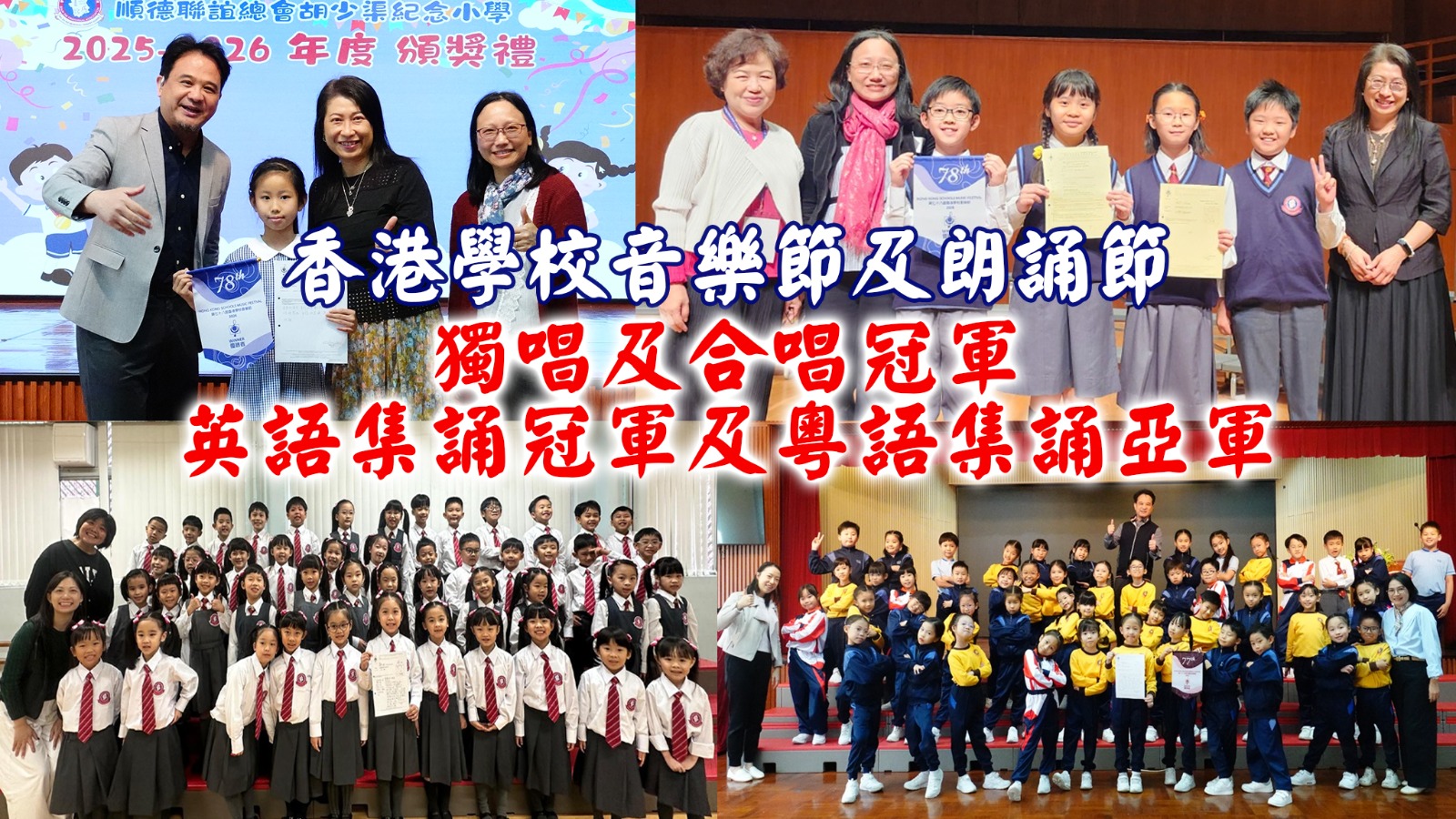
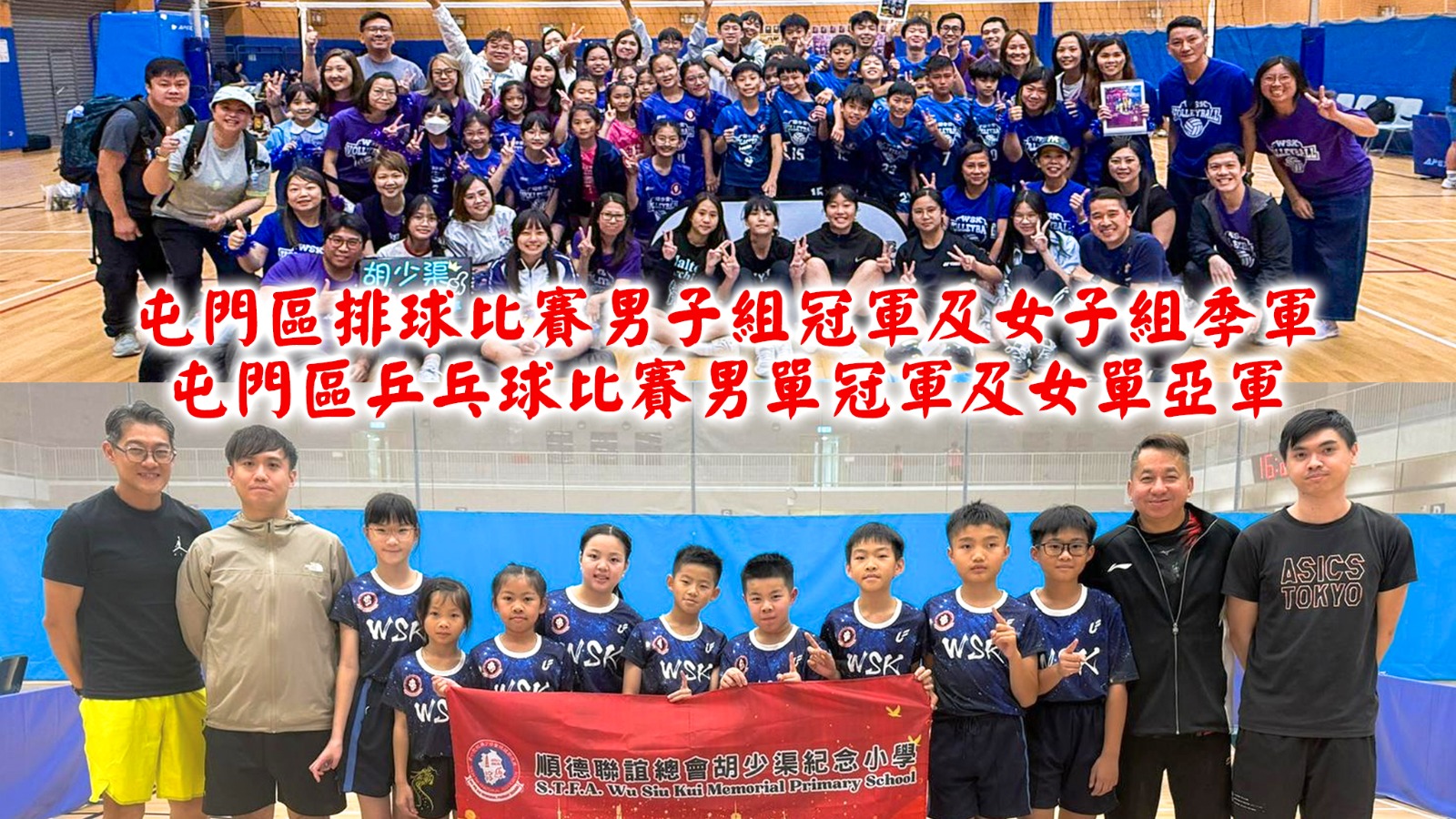
| Others | : | Our students participate in different competitions such as Hong Kong Speech and Music Festival, Dance Festival, inter-school sports competitions and Mathematics contests every year and have achieved good results. |
 School Map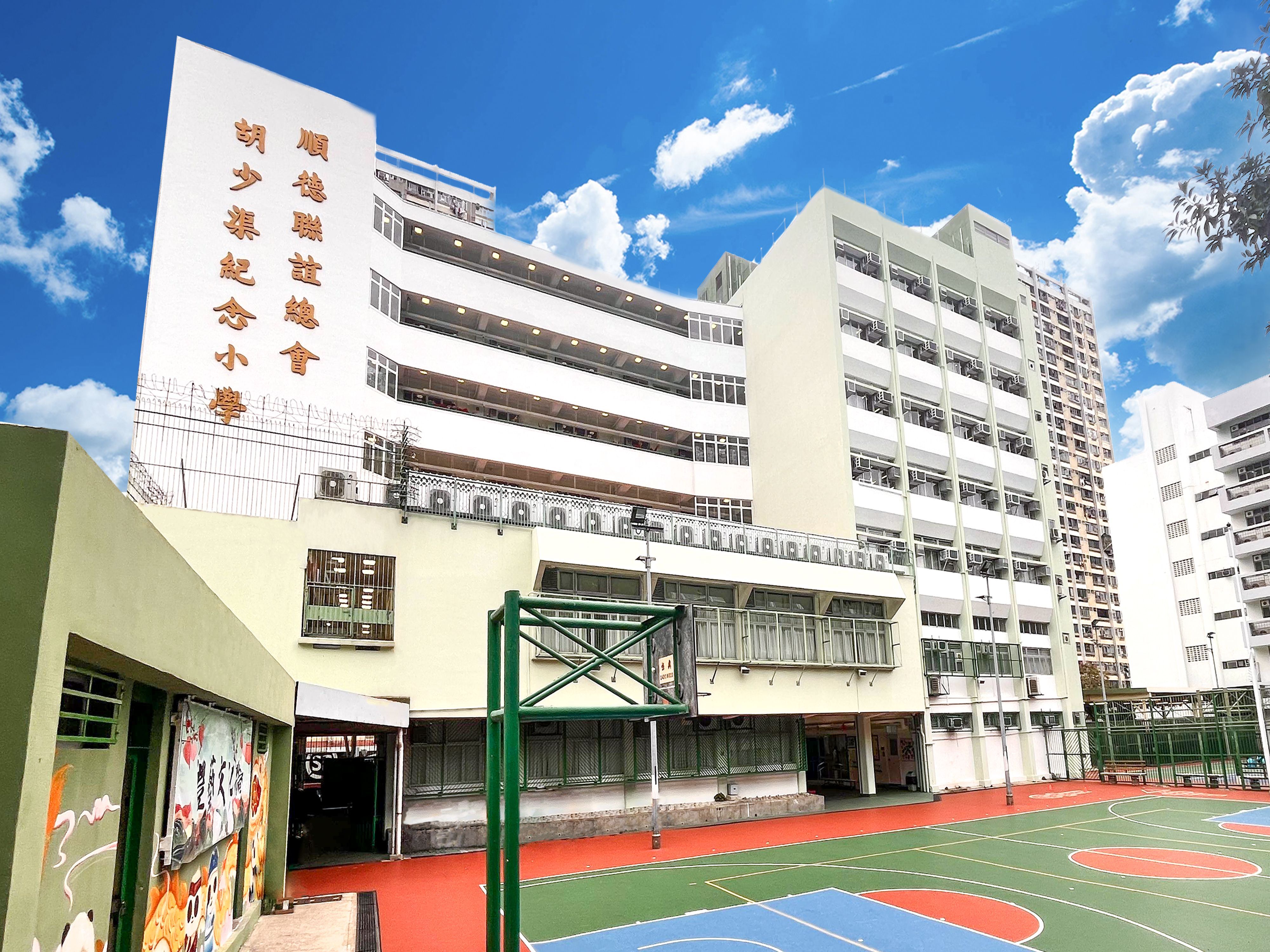
Last revision date:01 September 2026


