 Primary School Profiles 2026


 Primary School Profiles 2026
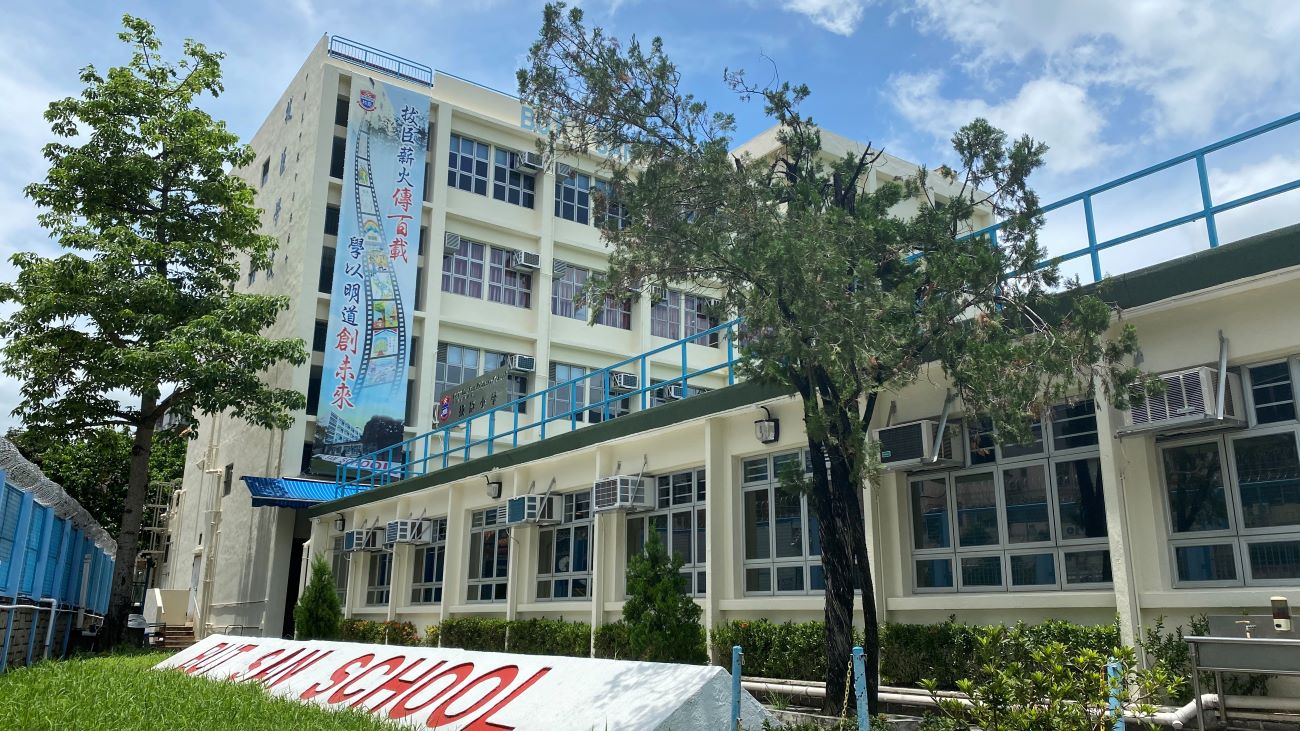
| Address: | 28 Castle Peak Road, San Hui, Tuen Mun, N.T. | |||
| Phone: | 24596221 | Email: | cccbs@butsan.edu.hk | |
| Fax: | 24400266 | Website: | http://www.butsan.edu.hk | |
 School Information
| Supervisor/ Chairman of Management Committee | : | Rev. Ko Kwok Hung |
| School Head | : | Ms. Chung Wai Kuen |
| Incorporated Management Committee been established? | : | Established |
| Percentage of School Supervisor and Managers / Chairperson and Members of School Management Committee (SMC) of Government Schools Fulfilling the Training Targets | : | 100% |
| School Type | : | Aided Whole Day |
| Student Gender | : | Co-ed |
| Sponsoring Body | : | The Hong Kong Council of the Church of Christ in China |
| Religion | : | Protestantism / Christianity |
| Year of Commencement of Operation | : | 1920 |
| School Motto | : | Enlightenment through education |
| Area Occupied by the School | : | About 3900 Sq. M |
| Through-train Secondary School | : | - |
| Feeder Secondary School | : | - |
| Nominated Secondary School | : | - |
| Medium of Instruction | : | Chinese |
| School Bus Service | : |
- |
| Parent-Teacher Association | : | Yes |
| Past Students' Association/Alumni Association | : | Yes |
| 4Rs Mental Health Charter | : | Yes |
| Whole School Health Programme | : | Action School |
 2026/2027 Annual School Charges
| School Fee | : | - |
| Tong Fai | : | - |
| PTA Fee | : | 30 |
| Approved Charges for non-standard items | : | - |
| Other Charges | : | School Alumni Association Permanent membership fee $100 |
 School Facilities
| Number of Classroom(s) | : | 12 |
| Number of School Hall(s) | : | 1 |
| Number of Playground(s) | : | 2 |
| Number of Library(ies) | : | 1 |
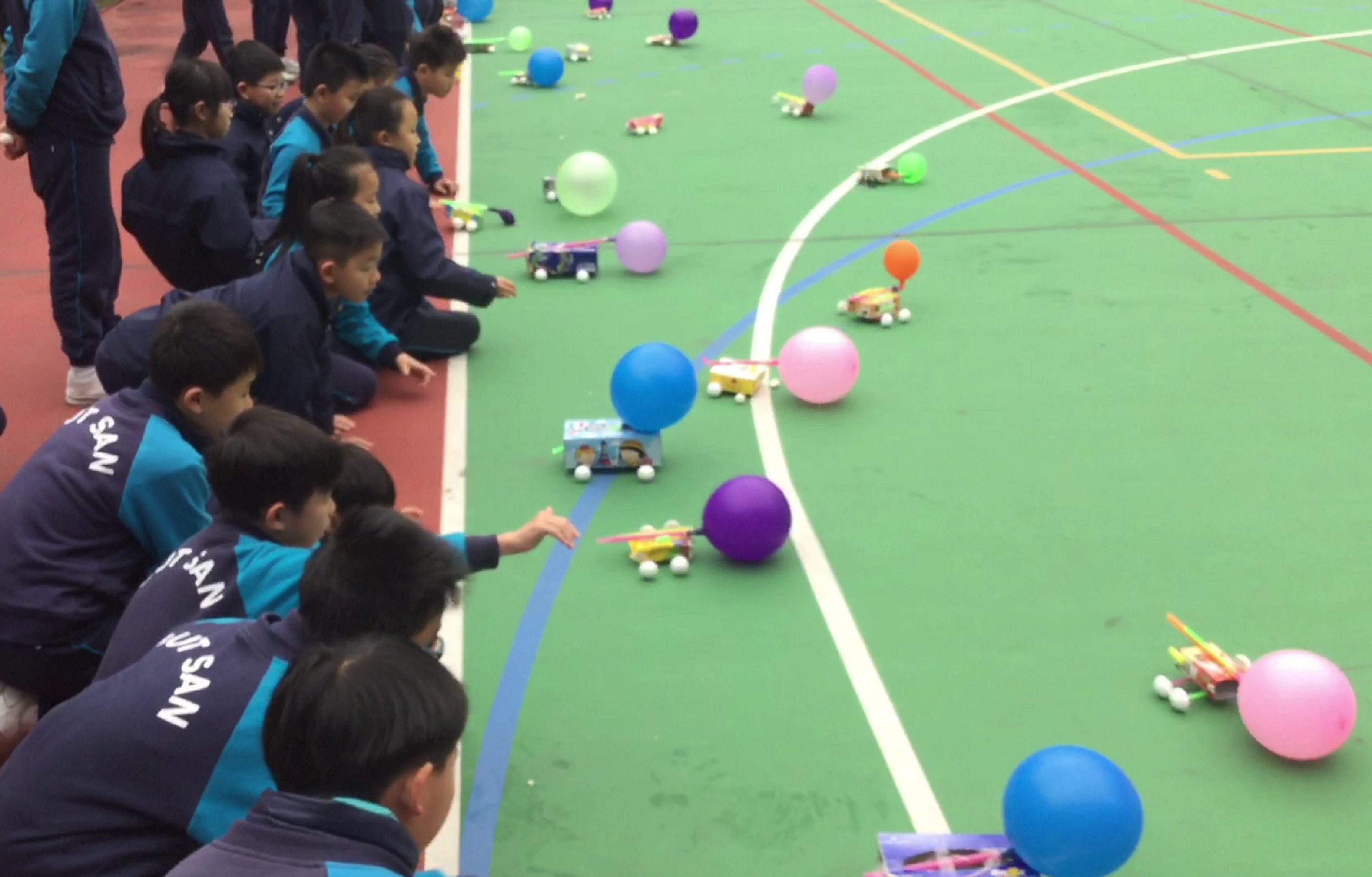
| Special Rooms | : | 5 rooms (computer room (STREAM room), music room, visual arts room, and 2 multi-purpose rooms). |
| Facility(ies) for Supporting Students with Special Educational Needs | : | Ramp, Accessible lift and Accessible toilet. |
| Others | : | 2 staff rooms, a teaching resources room, a social worker’s room, a reception room, a general office, and a principal’s office. |
 Teaching Staff Information (Including School Head) in the 2025/2026 school year
| Number of teaching posts in the approved establishment | : | 27 |
| Total number of teachers in the school | : | 30 |
| Qualifications and professional training (%) | ||
| Had Received Teacher Training | : | 97% |
| Bachelor Degree | : | 100% |
| Master/ Doctorate Degree or above | : | 38% |
| Special Education Training | : | 63% |
| Years of Experience (%) | ||
| 0 - 4 years | : | 19% |
| 5 - 9 years | : | 22% |
| 10 years or above | : | 59% |
 Class Structure
| 2025/26 school year | ||
| P1 Number of classes | : | 2 |
| P2 Number of classes | : | 2 |
| P3 Number of classes | : | 2 |
| P4 Number of classes | : | 2 |
| P5 Number of classes | : | 2 |
| P6 Number of classes | : | 2 |
| Total | : | 12 |
| 2026/27 school year (Based on the number of classes approved by EDB in 2026) | ||
| P1 Number of classes | : | 1 |
| P2 Number of classes | : | 2 |
| P3 Number of classes | : | 2 |
| P4 Number of classes | : | 2 |
| P5 Number of classes | : | 2 |
| P6 Number of classes | : | 2 |
| Total | : | 11 |
| Mode of teaching at different levels | ||
| 1. An inclusive whole-school approach is adopted to cater for students’ individual differences. Enrichment classes and remedial classes are also provided through pull-out sessions, co-teaching, or after-school groups. 2. P.1 – P.6 classes: Putonghua as a medium of instruction in Chinese language teaching. |
||
| Remarks | ||
| - | ||
 Performance Assessment
| Applicable to P1 only | ||
| Number of test(s) per year | : | 0 |
| Number of exam(s) per year | : | 2 |
| Replace tests and examinations with diversified assessments in the first term of P1 | : | Yes |
| Applicable to P2 to P6 only | ||
| Number of test(s) per year | : | 0 |
| Number of exam(s) per year | : | 3 |
| Applicable to P1 to P6 | ||
| Formulate appropriate school-based assessment and assignment policies, inform parents of related arrangements, and collect views from teachers, students and parents regularly (at least once per school year) for ongoing review and optimisation of the school assessment and assignment policies | : | Yes |
| Upload the school-based assessment policy onto the school webpage for information of the public and stakeholders | : | Yes |
| Upload the school-based assignment policy onto the school webpage for information of the public and stakeholders | : | Yes |
| Diversified Assessment for Learning | : | 1. Written assessment 2. Online assessment 3. Oral assessment 4. Project learning 5. Parent-child reading 6. In-class performance 7. Self-learning assessment 8. Coding Education |
| Avoid arranging tests or examinations immediately after long holidays in order to let students take more rest during the holidays | : | Yes |
| Arrange the timetable flexibly according to the school context, with a tutorial session provided in the afternoon as far as possible for students to finish some of their homework under teachers’ guidance | : | Yes |
| Streaming arrangement | : | Average in abilities. |
 School Life
| Number of school days per week | : | 5 |
| Number of periods per day | : | 9 |
| Duration of each normal period | : | 35 |
| School starts at | : | 8:15 AM |
| School ends at | : | 3:15 PM |
| Lunch break | : | 12:40 - 1:30 |
| Lunch arrangement | : | Provided by designated supplier and arranged by parents. |
| Healthy school life | : | 1. Participate in green campaign (such as One Person One Flower Scheme). 2. Setup "Sports Corner" at recess. 3. Performances at recess. 4. Morning runs. 5. Joyful Fruit Month |
| Remarks | : | - |
 Life-wide Learning
| Academic: Debate Team, English Fun Class, English Creative Writing, English Drama, Putonghua Drama, Choral Speaking Team, Mathematics Olympiad Class, Abacus Arithmetic, Go (Weiqi), Robot Assembly Course etc. Art and Music: Art and Craft, Creative Painting, Super Light Weight Modeling Clay, Pencil Sketch, Chinese Calligraphy and Painting, Choir, Violin, Chinese Dancing, Recorder, Instrumental Music Class, Ceramics. Uniformed Groups: Community Youth Club, Brownies, Boy Scouts, The Boys' Brigade. Sports: Swimming, Running, Table Tennis, Soccer, Mini Tennis, Basketball, Volleyball, Rope Skipping Class, Fencing etc. |
 School Mission
| "To Minister and Service through Schools", coupled with the teachings of Jesus Christ, to provide youths with a "Holistic Education" through school curriculum and activities with great emphasis on the values of Morality, Intelligence, Physique, Sociability, Aesthetics and Spirit. With a happy and harmonious learning environment, to inculcate students with core life values for the preparation of being a responsible and self-disciplined citizen to serve our society in the future. |
 School Characteristics
| School Management | ||
| School Management Organisation | : | 1. School Organization - The School IMC and the School Sustainable Development sub-group. 2. Regular executive teacher meeting. 3. Regular staff meeting. |
| Incorporated Management Committee / School Management Committee/ Management Committee | : | There are 12 managers in the committee including 1 school supervisor, 6 sponsoring body managers, 1 principal, 1 teacher manager, 1 parent manager, 1 alumni manager and 1 independent manager. |
| School Green Policy | : | 1. Greening school. 2. Saving energy, recycling waste. |
| School's Major Concerns | : | 1. To optimise diversified learning and teaching strategies, promote students’ self-directed learning, and enhance their learning confidence. 2. To develop positive education, nurture students’ proper civic attitudes, and help them build a positive and healthy life. |
| Learning and Teaching Plan | ||
| Learning & Teaching Strategies | : | 1. Cross-subject / KLAs Learning. 2. Theme Learning and Collaborative Learning. 3. Construction of students' pre-learning. 4. Enhancing teachers' assessment literacy as feedback for teaching and learning. |
| Development of Major Renewed Emphases of the Primary Education Curriculum | : | strengthening values education; enriching life-wide learning experiences and promoting whole-person development; reinforcing, STEAM education, and nurturing students' media and information literacy; strengthening cross-curricular learning and reading across the curriculum for developing lifelong learning capabilities; and enhancing assessment literacy for promoting learning and teaching effectiveness. |
| Development of Generic Skills | : | Through nine types of generic skills and independent learning skill to enable students to face the future needs of the community. |
| Cultivation of Proper Values, Attitudes and Behaviours | : | Promote values education and cultivate students' positive thinking and attitudes. |
| Student Support | ||
| Whole School Approach to Catering for Learner Diversity | : | 1. Hold support and guidance classes, emotional / social training groups and assessments. 2. Give extra assistance to students of special attention, especially in assignment and assessment. 3. Support for transition from Primary Six to Secondary One and from kindergarten to Primary One. |
| Whole School Approach to Integrated Education | : | 1. Have Special Educational Needs Co-ordinator. 2. Additional resources like Learning Support Grant and School-based Speech Therapist. 3. Core members of student support team including SENCO, discipline master, student guides personnel and SBEP. 4. Have teaching adaptation and assessment accommodation, remedial learning groups, training on social skills, school-based speech therapy service, individual education plan. |
| Education Support for Non-Chinese Speaking(NCS) Students | : | Our school provides additional support for NCS students to facilitate their learning of Chinese: appointing additional teacher(s)/teaching assistant(s) to support NCS students' learning of Chinese; organising activities to create an inclusive learning environment in the school; and our school uses Putonghua to teach Chinese in all classes / groups at all levels with extra support as appropriate, e.g. pull-out/small-group classes, learning and teaching resources with Pinyin, etc. |
| Curriculum Tailoring and Adaptation | : | Organize specific classes and activities to further release the potential of the gifted students (e.g. Mathematical Olympiad class, Maths in life course); as well as classes to motivate those less able students in learning (e.g. home-work tuition class, remedial class, and emotion support team). |
| Home-school Co-operation and School Ethos | ||
| Home-School Co-operation | : | 1. To organise regular functions with the assistance of P.T.A. e.g. parents' workshops and seminars, picnics and visits and parents helping scheme, to enhance the home-school co-operation and mutual communications. 2. The volunteers (parents) give their great efforts in the school, e.g. lunch time, outing, teaching Chinese with Putonghua, reading dad/mum, assist in theme week activities and English lessons etc. |
| School Ethos | : | 1. With simplified school ethos, the school is intent to preach the love of Christ, to promote cultural interest and to maintain a harmonious teacher-student / home-school co-operation relationship. 2. For students to have an all-round balanced development, students are encouraged to take part actively in community services. 3. School management is keen to facilitate teachers to enhance their professional knowledge and development, whereby providing effectively a qualitative education to our students. |
| Future Development | ||
| School Development Plan | : | 1. To develop students' reading strategies. 2. To enrich students' experience and cultivate students' ability of multi-direction thinking by combining of reading, STEM theory and civil science into project learning. 3. To enhance the teachers' assessment literacy for teaching and learning. |
| Teacher Professional Training & Development | : | 1. Promoting cross-curriculum lesson observation and learning. 2. Sharing the school-based lesson studies. |
| Others | : | Scholarships. |
 School Map
Last revision date:01 September 2026


