 Primary School Profiles 2026

 Primary School Profiles 2026
| Address: | 4641 Tai Po Road, Tai Po Kau, Tai Po, N.T. | |||
| Phone: | 26505551 | Email: | info@plktkpmps.edu.hk | |
| Fax: | 26522608 | Website: | http://www.plktkpmps.edu.hk | |
 School Information
 | Supervisor/ Chairman of Management Committee | : | Mr. Kwok Ho Chuen |
| School Head | : | Ms. Chan Po Ling |
| Incorporated Management Committee been established? | : | Established |
| Percentage of School Supervisor and Managers / Chairperson and Members of School Management Committee (SMC) of Government Schools Fulfilling the Training Targets | : | 67% |
| School Type | : | Aided Whole Day |
| Student Gender | : | Co-ed |
| Sponsoring Body | : | Po Leung Kuk |
| Religion | : | Not Applicable |
| Year of Commencement of Operation | : | 2002 |
| School Motto | : | Love, Respect, Diligence and Sincerity |
| Area Occupied by the School | : | About 9370 Sq. M |
| Through-train Secondary School | : | - |
| Feeder Secondary School | : | - |
| Nominated Secondary School | : | - |
| Medium of Instruction | : | Chinese(incl.: Putonghua) and English |
| School Bus Service | : | School Bus |
| Parent-Teacher Association | : | Yes |
| Past Students' Association/Alumni Association | : | Yes |
| 4Rs Mental Health Charter | : | Yes |
| Whole School Health Programme | : | Action School |
 2026/2027 Annual School Charges
| School Fee | : | - |
| Tong Fai | : | - |
| PTA Fee | : | 80 |
| Approved Charges for non-standard items | : | $450 |
| Other Charges | : | - |
 School Facilities
 | Number of Classroom(s) | : | 30 |
| Number of School Hall(s) | : | 1 |
| Number of Playground(s) | : | 3 |
| Number of Library(ies) | : | 1 |
| Special Rooms | : | Visual Arts Room, Music Room, Star Lab, Star Paradise, DREAM Studio, Cocoon, TKPMTV Studio, HORIZONS Studio, Language Room, ENGLISH Dreamland, etc.) |
| Facility(ies) for Supporting Students with Special Educational Needs | : | Accessible lift and Accessible toilet. |
| Others | : | Basketball court, volleyball court, football field, Tree Hub, Smart Garden, Star Deck, Smart Green House, Star track, TKPM Eco-Wonderland, LITTLE Shellhouse. |
 Teaching Staff Information (Including School Head) in the 2025/2026 school year
 | Number of teaching posts in the approved establishment | : | 56 |
| Total number of teachers in the school | : | 60 |
| Qualifications and professional training (%) | ||
| Had Received Teacher Training | : | 97% |
| Bachelor Degree | : | 100% |
| Master/ Doctorate Degree or above | : | 33% |
| Special Education Training | : | 40% |
| Years of Experience (%) | ||
| 0 - 4 years | : | 26% |
| 5 - 9 years | : | 19% |
| 10 years or above | : | 55% |
 Class Structure
 | 2025/26 school year | ||
| P1 Number of classes | : | 5 |
| P2 Number of classes | : | 5 |
| P3 Number of classes | : | 5 |
| P4 Number of classes | : | 5 |
| P5 Number of classes | : | 5 |
| P6 Number of classes | : | 5 |
| Total | : | 30 |
| 2026/27 school year (Based on the number of classes approved by EDB in 2026) | ||
| P1 Number of classes | : | 5 |
| P2 Number of classes | : | 5 |
| P3 Number of classes | : | 5 |
| P4 Number of classes | : | 5 |
| P5 Number of classes | : | 5 |
| P6 Number of classes | : | 5 |
| Total | : | 30 |
| Mode of teaching at different levels | ||
| Different modes of remedial teaching are adopted. Diverse pedagogic strategies are used to raise students' learning effectiveness. Small group teaching will be provided for lower-performing students to cater for diverse learning needs. | ||
| Remarks | ||
| - | ||
 Performance Assessment
 | Applicable to P1 only | ||
| Number of test(s) per year | : | 0 |
| Number of exam(s) per year | : | 1 |
| Replace tests and examinations with diversified assessments in the first term of P1 | : | Yes |
| Applicable to P2 to P6 only | ||
| Number of test(s) per year | : | 0 |
| Number of exam(s) per year | : | 3 |
| Applicable to P1 to P6 | ||
| Formulate appropriate school-based assessment and assignment policies, inform parents of related arrangements, and collect views from teachers, students and parents regularly (at least once per school year) for ongoing review and optimisation of the school assessment and assignment policies | : | Yes |
| Upload the school-based assessment policy onto the school webpage for information of the public and stakeholders | : | Yes |
| Upload the school-based assignment policy onto the school webpage for information of the public and stakeholders | : | Yes |
| Diversified Assessment for Learning | : | The academic year is divided into 3 semesters. Students’ learning performance is assessed through various modes of formative and summative assessment on each semester. P.1 students undertake our STAR Assessment, though no marks are recorded for them throughout the year. At the end of the school year, an OLE record of students’ performance in extracurricular activities and service is also issued. |
| Avoid arranging tests or examinations immediately after long holidays in order to let students take more rest during the holidays | : | Yes |
| Arrange the timetable flexibly according to the school context, with a tutorial session provided in the afternoon as far as possible for students to finish some of their homework under teachers’ guidance | : | Yes |
| Streaming arrangement | : | Mixed ability classes. |
 School Life
 | Number of school days per week | : | 5 |
| Number of periods per day | : | 10 |
| Duration of each normal period | : | 35 |
| School starts at | : | 8:25 AM |
| School ends at | : | 3:35 PM |
| Lunch break | : | 1:10 - 2:05 |
| Lunch arrangement | : | Provided by designated supplier and arranged by parents. |
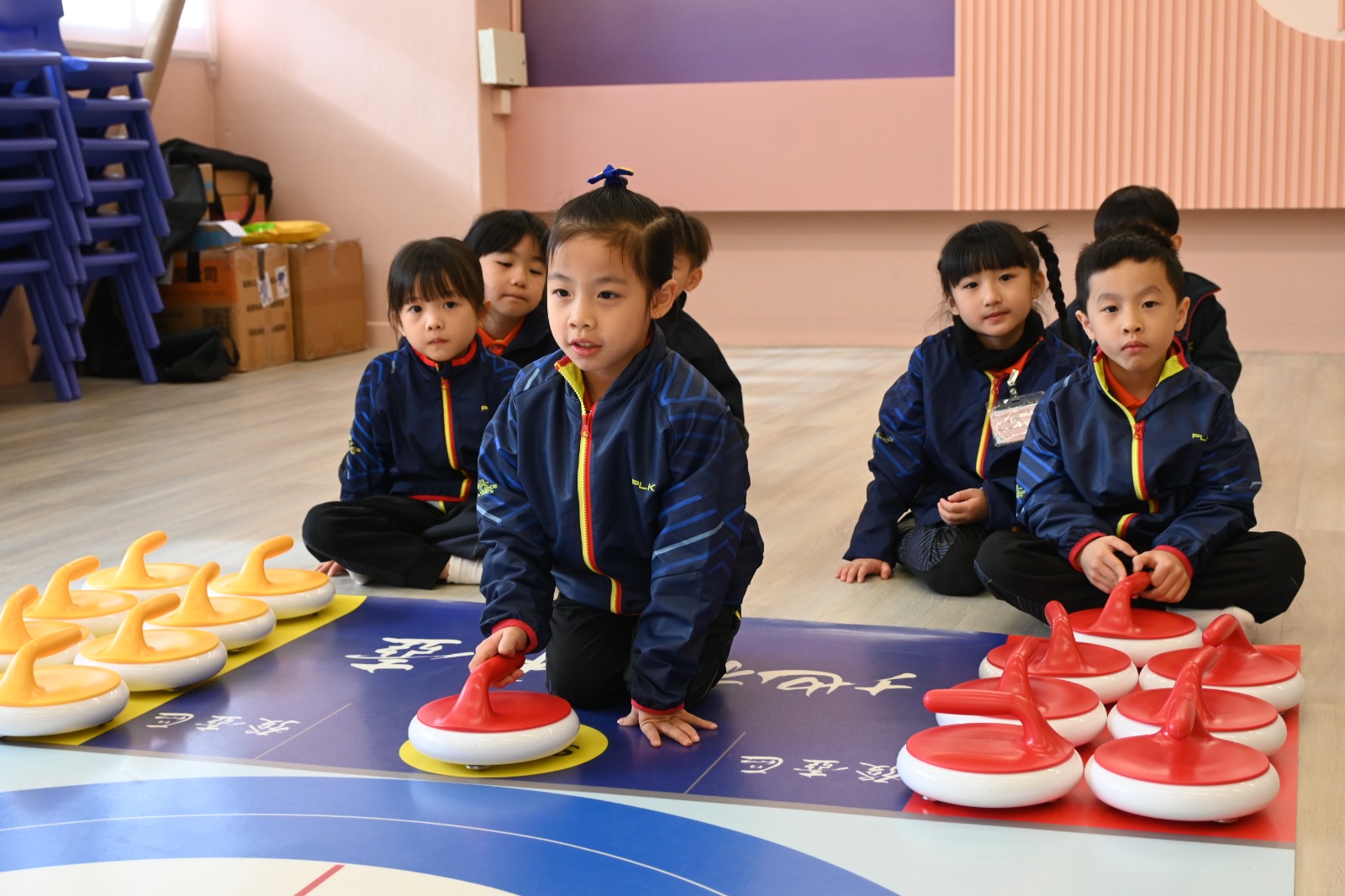
| Healthy school life | : | We have received awards for achieving the highest honour of Healthy Lunch Quality Accreditation and Healthy Snack Quality Accreditation. Students and teachers are encouraged to do sports everywhere; we are a participating school of the School Physical Fitness Award Scheme and MVPA60 to raise students' awareness of living a healthy life and to help them build a habit of doing sports. |
| Remarks | : | Student's whole-person development is fostered in diverse activities. Every day, students can unleash their energy and improve their social skills during the Joyful Recess, which features various indoor and outdoor activities organized by different groups and subject departments. |
 Life-wide Learning
 | Athletics, Swimming, Fencing, Basketball, Football, Volleyball, Rope Skipping, Western Dance, Cycling, Rugby, Table-tennis, Biathlon, Long Distance Running, STEAM Group, Mathematical Olympiad, TKPM TV, Flag Raising Team, Scout, Junior Police Call, Creative Arts Group, Ceramic Art, Calligraphy, Sketching, Chinese Choral Speaking, Debating, Musical, English Drama, Lion dance, Choir, Music Instrument Groups, Chinese Drums, Handbell, Board Games, etc. |
 School Mission
 | To nurture our students with Value Education and foster their Whole-person Development. |
 School Characteristics
 | School Management | ||
| School Management Organisation | : | Our Administrative Board is led by the Principal, Vice Principals, and board members (PSM). The three management bodies are School Management Committee, Teaching and Learning Committee, School Ethos and Student Support Committee, in which our school's policies and development are planned, implemented, and reviewed collectively. |
| Incorporated Management Committee / School Management Committee/ Management Committee | : | The IMC of Po Leung Kuk Tin Ka Ping Millennium Primary School |
| School Green Policy | : | We are a participating PLK school of Low Carbon Living Scheme, a scheme launched by Environment and Ecology Bureau. Solar panels and a smart energy-saving systems are installed at our campus. Our Star Curriculum features curriculum and activities related to environmental protection and technology. This allows our students to make good use of the school's resources and environment, gain a deeper understanding of environmental conservation, and put what they have learned into practice. A Project Learning Scheme on Technology and Environmental Protection has been implemented to broaden students’ generic skills. We have also taken systematic energy-saving measures, participated in Food for Good@Campus and installed solar panels at our campus. |
| School's Major Concerns | : | 1. To enhance teaching and learning quality and nurturing students to become independent learners. 2. Create a positive campus environment to nurture joyful and well-rounded students. |
| Learning and Teaching Plan | ||
| Learning & Teaching Strategies | : | By providing a quality language-rich environment, adapting diverse teaching approaches and activities, we guide our students to think creatively, critically and independently. Our cross-curriculum programme and project learning programme aim at nurturing students' multiple intelligence and their integration skills across different subjects which aim at nurturing students' multiple intelligences are conducted across different departments. |
| Development of Major Renewed Emphases of the Primary Education Curriculum | : | We adopt the approaches such as "organic integration" and "natural connection" to create space to foster students' whole-person development. Their well-being is also well taken care of with the implementation of Joyful Recess and Joyful Lunch Recess. We enrich students' life-wide learning experiences and cater for learning diversity. We reinforce STEAM education and nurture students' media and information literacy. We strengthen cross-curricular learning and reading across the curriculum for developing students' lifelong learning capabilities. Last but not least, we enhance assessment literacy for promoting learning and teaching effectiveness. |
| Development of Generic Skills | : | Our "Star Tour" help students develop Ethical Qualities, 21st Century Skills, Digital Competence and Literacy Skills, which equip them for leading a fruitful and healthy life, fulfilling their dreams, and making our world a better place. They will be a joyful and loving person. |
| Cultivation of Proper Values, Attitudes and Behaviours | : | Our school implements a school-based values education curriculum to foster a positive school culture and nurture students' character development. Through a range of values education programmes and class-based activities, students are encouraged to develop the virtues of respect, integrity, responsibility, commitment, love, empathy, perseverance, diligence, gratitude, forgiveness, unity and filial piety. In addition, Moral and Civic Education lessons are provided to strengthen students' skills and competencies in personal growth, social development, emotional management and learning, empowering them to become caring, responsible and well-rounded individuals. |
| Student Support | ||
| Whole School Approach to Catering for Learner Diversity | : | Under the 3-tier Intervention Model, students' learning diversity are catered for quality teaching, with graded in-class tasks and assignments, after-school enhancement classes, School Team Training and outside-school Gifted/ More Able student training. |
| Whole School Approach to Integrated Education | : | Our Student Support Team, with the resources from the Education Bureau, provides assessment arrangements, counselling support, social skill training groups, Enhanced School-based speech therapy service, individual education plan, etc., to support our students’ growth and cater for learner diversity. |
| Education Support for Non-Chinese Speaking(NCS) Students | : | Our school provides additional support for NCS students to facilitate their learning of Chinese: providing after-school support programmes in learning Chinese; appointing additional teacher(s)/teaching assistant(s) to support NCS students' learning of Chinese; arranging intensive Chinese learning and teaching mode(s), e.g. pull-out learning if necessary, split-class/group learning, etc; developing school-based Chinese Language curriculum and/or adapting learning and teaching materials; and organising activities to create an inclusive learning environment in the school. |
| Curriculum Tailoring and Adaptation | : | The curriculum of each subject has been tailored and integrated with e-Learning to cater for learner diversity. Assignments consisting of questions varying in level of difficulty also ensure both high-flyers and low achievers are engaged. |
| Home-school Co-operation and School Ethos | ||
| Home-School Co-operation | : | Our school has always placed great importance on parent-school collaboration and has established close bonding. The Parent-Teacher Association organizes various activities (such as parent talks, workshops, parents award schemes and Principal’s Chatroom) to strengthen the cooperation between parents and the school, working together to support students' growth. |
| School Ethos | : | At TKPM, we are committed to providing a joyful and caring learning environment where students enjoy school life and are encouraged to discover and develop their unique potential. We also nurture students' character and aspire for every graduate to embody the twelve core virtues of respect, integrity, responsibility, commitment, love, empathy, perseverance, diligence, gratitude, forgiveness, unity and filial piety. |
| Future Development | ||
| School Development Plan | : | 1. To enhance teaching and learning by conducting teaching study and lesson study for our teachers, and developing school-based curriculum. 2. To promote Chinese and English literature to students while instilling moral values in them. 3. To develop students' ethics and values in our core subjects' school-based curriculum, Moral and Civic Education Curriculum and lessons on Emotional Regulation. 4. To enhance our curriculum across different subjects sustainably. 5. To develop students' multiple intelligences with diverse learning experiences in our newly introduced Star Curriculum, which features Leadership Training, Life Education, Physical and Aesthetic Development. 6. To provide students with a spacious natural learning environment in our TKPM Eco-Wonderland, which is adjacent to Tai Po Kau Nature Trail. |
| Teacher Professional Training & Development | : | Our teachers' professional training and development is aligned with our school development. In-school programs include New Teacher Induction, Peer Lesson Observation, Teaching Study and Lesson Study. Teachers, as our ever-learning team members, are also encouraged to further their professional training to fulfil their individual needs. |
| Others | : | 1. To develop students' creativity, collaborative skills, and problem-solving skills, our STEAM curriculum has adopted the 3Ps approach – Problem-based Learning, Project-based Learning, and Proactive Learning. 2. To familiarize parents of P.1 with our curriculum and help them better prepare for their child's new school life, Parent Orientation and Star Tour Jr. are organized during the summer break. |
 School Map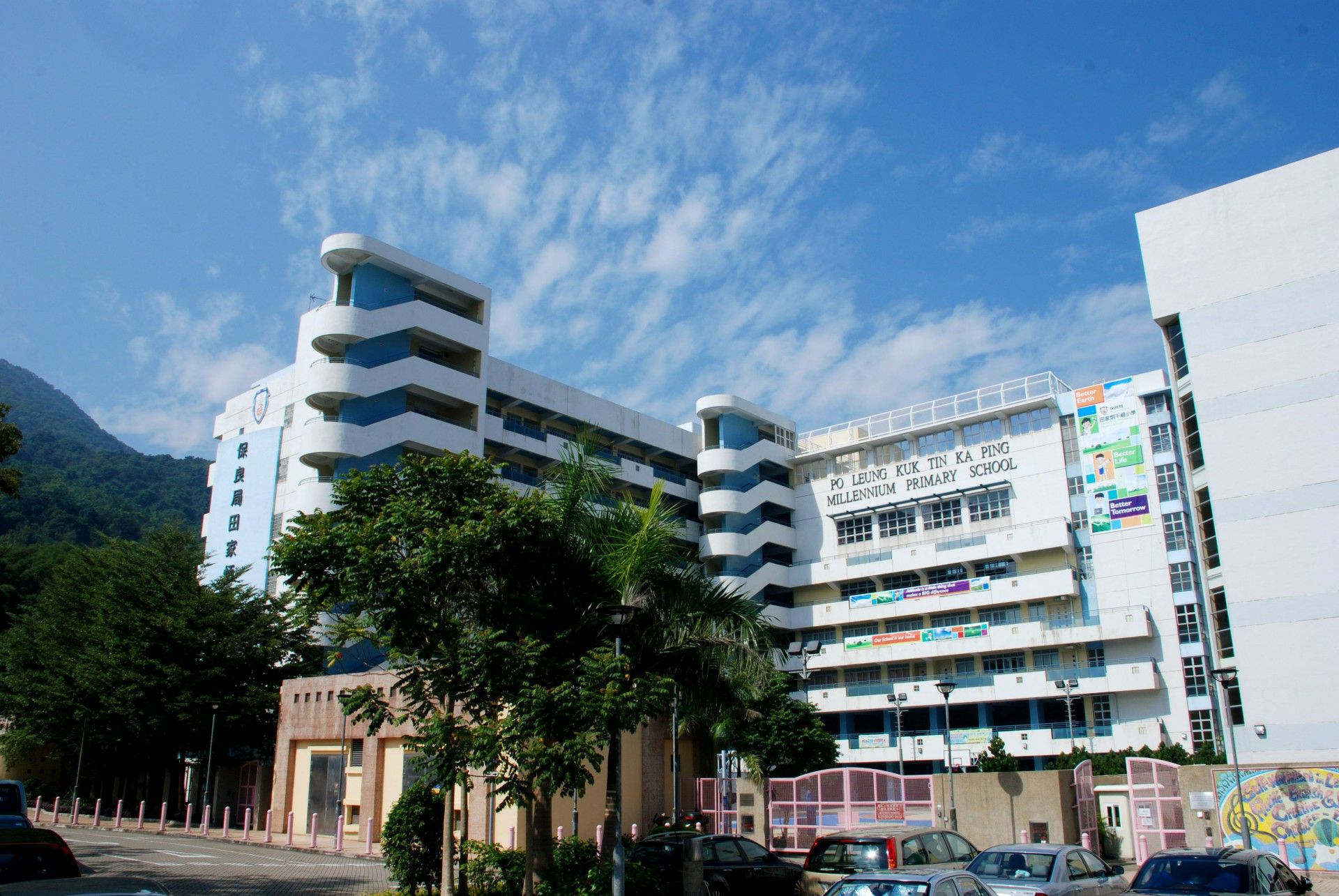
Last revision date:01 September 2026


