 Primary School Profiles 2026

 Primary School Profiles 2026
| Address: | Wan Tau Tong Estate, Area 6, Tai Po, N.T. | |||
| Phone: | 26566116 | Email: | admin@ychchtps.edu.hk | |
| Fax: | 26578298 | Website: | http://www.ychchtps.edu.hk | |
 School Information
 | Supervisor/ Chairman of Management Committee | : | Mr. CHOI SIU CHOW TONY, JP |
| School Head | : | Principal Tsui Kim |
| Incorporated Management Committee been established? | : | Established |
| Percentage of School Supervisor and Managers / Chairperson and Members of School Management Committee (SMC) of Government Schools Fulfilling the Training Targets | : | 93% |
| School Type | : | Aided Whole Day |
| Student Gender | : | Co-ed |
| Sponsoring Body | : | Yan Chai Hospital |
| Religion | : | Not Applicable |
| Year of Commencement of Operation | : | 1992 |
| School Motto | : | Serving the Community in the Spirit of Benevolence |
| Area Occupied by the School | : | About 8000 Sq. M |
| Through-train Secondary School | : | - |
| Feeder Secondary School | : | - |
| Nominated Secondary School | : | - |
| Medium of Instruction | : | Chinese(incl.: Putonghua) and English |
| School Bus Service | : | Nanny van |
| Parent-Teacher Association | : | Yes |
| Past Students' Association/Alumni Association | : | Yes |
| 4Rs Mental Health Charter | : | Yes |
| Whole School Health Programme | : | Action School |
 2026/2027 Annual School Charges
| School Fee | : | - |
| Tong Fai | : | - |
| PTA Fee | : | 50 |
| Approved Charges for non-standard items | : | Special purposes: online platforms and STEM education development $350 |
| Other Charges | : | - |
 School Facilities
 | Number of Classroom(s) | : | 26 |
| Number of School Hall(s) | : | 1 |
| Number of Playground(s) | : | 1 |
| Number of Library(ies) | : | 1 |
| Special Rooms | : | General Studies Room, Arts & Crafts Room, Music Room, STEM Room, MMLC, Student Activity Centre, English Room, Exergaming & Fitness Centre, Counselling Room. |
| Facility(ies) for Supporting Students with Special Educational Needs | : | Ramp, Accessible lift and Accessible toilet. |
| Others | : | Ecology Lab, Immersive Room, Historical Corridor, Holistic Art Zone, Reading Zone, Space Zone, Sports Climbing Wall, Campus TV and organic garden. |
 Teaching Staff Information (Including School Head) in the 2025/2026 school year
 | Number of teaching posts in the approved establishment | : | 39 |
| Total number of teachers in the school | : | 50 |
| Qualifications and professional training (%) | ||
| Had Received Teacher Training | : | 100% |
| Bachelor Degree | : | 100% |
| Master/ Doctorate Degree or above | : | 48% |
| Special Education Training | : | 81% |
| Years of Experience (%) | ||
| 0 - 4 years | : | 22% |
| 5 - 9 years | : | 32% |
| 10 years or above | : | 46% |
 Class Structure
 | 2025/26 school year | ||
| P1 Number of classes | : | 2 |
| P2 Number of classes | : | 2 |
| P3 Number of classes | : | 3 |
| P4 Number of classes | : | 4 |
| P5 Number of classes | : | 4 |
| P6 Number of classes | : | 4 |
| Total | : | 19 |
| 2026/27 school year (Based on the number of classes approved by EDB in 2026) | ||
| P1 Number of classes | : | 1 |
| P2 Number of classes | : | 2 |
| P3 Number of classes | : | 2 |
| P4 Number of classes | : | 3 |
| P5 Number of classes | : | 4 |
| P6 Number of classes | : | 4 |
| Total | : | 16 |
| Mode of teaching at different levels | ||
| 1. Bring Your Own Device (BYOD) Scheme in Primary 4 to Primary 6 classes fosters students' self-learning skill and teaching effectiveness. 2. Co-teaching is arranged to cater for learner diversity. 3. Multi-perspective thinking skills are infused in curriculum to enhance students' learning. |
||
| Remarks | ||
| The small class teaching mode is adopted with a class size of 25 students from primary one to primary three. | ||
 Performance Assessment
 | Applicable to P1 only | ||
| Number of test(s) per year | : | 1 |
| Number of exam(s) per year | : | 1 |
| Replace tests and examinations with diversified assessments in the first term of P1 | : | Yes |
| Applicable to P2 to P6 only | ||
| Number of test(s) per year | : | 1 |
| Number of exam(s) per year | : | 2 |
| Applicable to P1 to P6 | ||
| Formulate appropriate school-based assessment and assignment policies, inform parents of related arrangements, and collect views from teachers, students and parents regularly (at least once per school year) for ongoing review and optimisation of the school assessment and assignment policies | : | No |
| Upload the school-based assessment policy onto the school webpage for information of the public and stakeholders | : | No |
| Upload the school-based assignment policy onto the school webpage for information of the public and stakeholders | : | No |
| Diversified Assessment for Learning | : | Summative assessment is arranged for all subjects at the end of each school term, whereas formative assessment is arranged for the Chinese Language, English Language and Mathematics subjects. For General Studies, assessment includes project work and scientific investigations. Students also participate in self-assessment and peer assessment for reflection on learning progress. |
| Avoid arranging tests or examinations immediately after long holidays in order to let students take more rest during the holidays | : | Yes |
| Arrange the timetable flexibly according to the school context, with a tutorial session provided in the afternoon as far as possible for students to finish some of their homework under teachers’ guidance | : | Yes |
| Streaming arrangement | : | Primary one to four students can choose to enroll in the school-based SPARK English classes. All classes are in mixed mode to prevent labelling. To promote e-learning, BYOD classes are arranged in Primary 4 to 6. |
 School Life
 | Number of school days per week | : | 5 |
| Number of periods per day | : | 9 |
| Duration of each normal period | : | 35 |
| School starts at | : | 8:00 AM |
| School ends at | : | 3:15 PM |
| Lunch break | : | 12:30 - 1:30 |
| Lunch arrangement | : | Provided by designated supplier and with a centralised on-campus dining arrangement provides students with freshly cooked vegetables. |
| Healthy school life | : | We foster holistic student growth by having morning academics and afternoon hands-on activities. To boost fitness, we offer morning exercise and team training. Harmony Campus Week, mindfulness talks and parent-child seminars help physical and mental well-being. Counselling builds a kind campus, instils good values, and aids students to balance academics and well-being, nurturing future talent. |
| Remarks | : | We blend life education with career planning, offering themed activities covering mindfulness, values discovery and career paths. We also include Business-School Partnership Scheme, arts education and civic practice. Hands-on activities like overseas study tours, charity sales and volunteering, deepen the link between knowledge and life, nurture social responsibility, foster moral values and achieve holistic growth. |
 Life-wide Learning
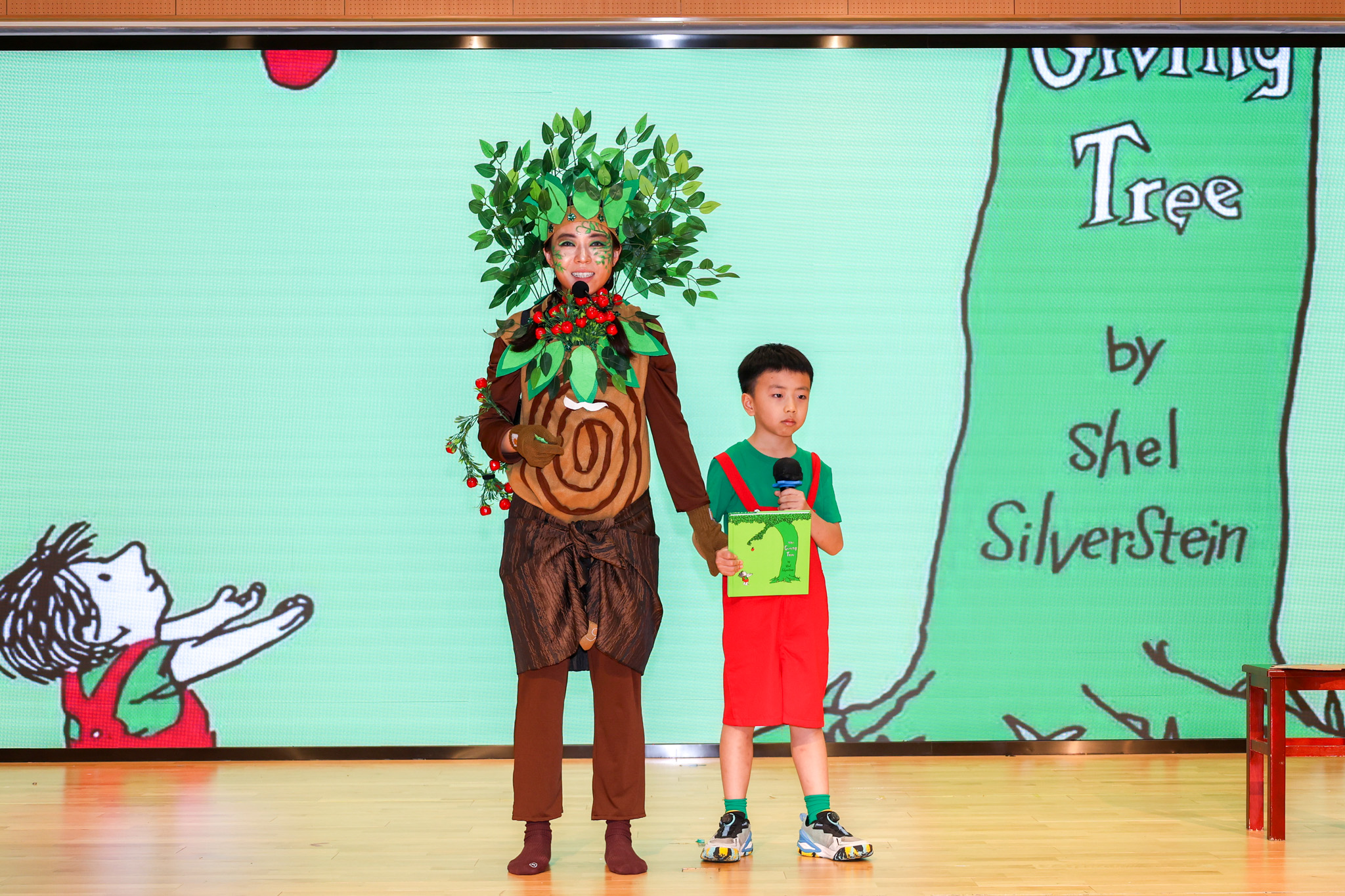
 | Diversified extra-curricular activities including school teams of choirs, track and field, choral speaking, Chinese dance, judo, Cub Scouts, Brownies, drama, Mathematical Olympiad, campus TV, gardening, drum band and basketball. Saturday interest classes include taekwondo, phonics, musical instruments. |
 School Mission
 | We pledge to carry out the principle of "Serving the Community in the Spirit of Benevolence". We aim to provide quality holistic education to our students, and hope that our students have a balanced development in the domains of ethics, intellect, physique, social skills and aesthetics. |
 School Characteristics
 | School Management | ||
| School Management Organisation | : | The IMC represents the highest authority in the school management structure. Daily operation is managed by the principal and department heads. |
| Incorporated Management Committee / School Management Committee/ Management Committee | : | Our School IMC Board was established in 2006 with 17 members at present, including sponsoring body manager, independent manager, parent manager, alumni manager, ex-officio manager (principal) and teacher manager. |
| School Green Policy | : | We are a healthy green school. We have launched environmental education campaigns and recycling programmes including the installation of inverter air-conditioners and LED lights. We have set up a central kitchen. The food waste residue we collect at lunchtime is converted to compost to create a soil supplement for organic gardening at school. Students also join the school-based ambassador programme, and participate in organic gardening and collect waste regularly such as paper and plastic bottles for recycling. |
| School's Major Concerns | : | 1. To Enhance Learning Effectiveness 2. To Promote Healthy Living and Reinforce Whole-person Development |
| Learning and Teaching Plan | ||
| Learning & Teaching Strategies | : | 1. The interdisciplinary learning mode with various assessment tools is introduced in order to cultivate 21st century skills. 2. Adopt the overseas learning mode and develop student-oriented teaching and learning approaches through high-order-thinking questioning and discussion to fully cater for learning diversity. 3. Positive values and core competencies are infused in the school-based curriculum and school learning environment. |
| Development of Major Renewed Emphases of the Primary Education Curriculum | : | We make full use of school hours to create space for students to gain opportunities for learning and growth. In the mornings, we focus on academic subjects, and in the afternoons, we offer various courses, such as language classes taught by foreign teachers, Life Education Programmes, Culture Day, and Team Training Activities to enrich students' learning experiences. We provide diverse learning opportunities to cater to different learning styles and multiple intelligences while also considering diversity. We are committed to enhancing students' I.T. literacy to equip them with essential skills for the 21st century. We cultivate independent learners to become the future leaders. |
| Development of Generic Skills | : | Self-directed learning strategies, reading strategies, computational thinking skills and presentation skills are introduced in regular classes to enhance students' generic skills. Such skills are further enhanced in life-wide learning week, STEAM activity week, project learning, outdoor visits, study tours, voluntary services and charitable activities. |
| Cultivation of Proper Values, Attitudes and Behaviours | : | The school is well aware of the importance of environmental education for students. Our school is committed to promoting environmental education, allowing students to learn about ecology, cherish the environment, and value life from an early age. We achieve this by building ecological classrooms, promoting a green campus, and implementing energy-saving measures, etc., to let students experience the importance of environmental protection in practice. Meanwhile, through environmental education courses, we cultivate students' awareness and knowledge of environmental protection, believing that they can become future environmental advocates and leaders. We adhere to this philosophy and action, enabling students to learn to cherish life and protect the environment from an early age, and contribute to creating a better environmental future. |
| Student Support | ||
| Whole School Approach to Catering for Learner Diversity | : | 1. Co-teaching and Remedial classes are provided to cater for learner diversity. 2. English online reading platform. 3. Challenging questions included in assignments: to enhance the learning ability of higher academic achievers. 4. Afternoon streamed learning: to enhance students’ performance in core subjects. 5. Pre-S1 bridging courses: equip students for secondary school life both academically and mentally. |
| Whole School Approach to Integrated Education | : | The school-based educational psychologist, the special educational needs coordinator, special educational needs support teachers, special educational needs support assistants as well as school-based speech therapist help students with special educational needs. |
| Education Support for Non-Chinese Speaking(NCS) Students | : | Our school provides additional support for NCS students to facilitate their learning of Chinese: providing after-school support programmes in learning Chinese; appointing additional teacher(s)/teaching assistant(s) to support NCS students' learning of Chinese; arranging intensive Chinese learning and teaching mode(s), e.g. pull-out learning if necessary, split-class/group learning, etc; developing school-based Chinese Language curriculum and/or adapting learning and teaching materials; organising activities to create an inclusive learning environment in the school; hiring additional manpower and/or translation/interpretation services to facilitate the communication with parents of NCS students; and our school uses Putonghua to teach Chinese in all classes / groups at certain levels with extra support as appropriate, e.g. pull-out/small-group classes, learning and teaching resources with Pinyin, etc. |
| Curriculum Tailoring and Adaptation | : | 1. The school-based curriculum is tailored for students' learning needs. 2. Students with outstanding academic performance are pulled out for additional training. 3. Tuition classes are provided for lower academic achievers after school. |
| Home-school Co-operation and School Ethos | ||
| Home-School Co-operation | : | 1. The Parent-Teacher Association organises annual gatherings, parent workshops, weekend interest classes and parent-child and teacher-student local and Mainland trips. 2. ‘Saturday Parent-child gathering’ is held every month and activities are held to motivate P.5 and P.6 students to study hard for the standardized assessments. 3. Parents have a high participation rate in school voluntary work including services for Yan Chai Hospital. |
| School Ethos | : | 1. Our students are courteous and modest. 2. The school has been accredited "Honourable Caring Campus" in the Caring School Award Scheme over ten years. 3. Our caring teachers act as role models to educate students to be responsible, courageous, conscientious, caring and respectful. |
| Future Development | ||
| School Development Plan | : | 1. Enhancing students' technological and creative abilities, developing immersive education, and strengthening the cultivation of information literacy. 2. Promoting environmental education, students learn about ecology, cherish the environment, and value life from an early age. This is achieved through activities such as building an ecological lab, promoting a green campus, and implementing energy-saving measures. 3. From first to fourth grade, English, general knowledge, art, and life education courses are integrated to provide students with a better English language environment. 4. During morning classes, subject learning is the main focus, while afternoon sessions are dedicated to talent cultivation and moral education to train students' communication and problem-solving abilities and build their confidence. |
| Teacher Professional Training & Development | : | 1. All teachers attend school-based training workshops organised by the school. Teachers are also encouraged to further study according to individual needs. 2. Collaborative lesson planning, peer observation and lesson study are carried out to sharpen teaching skills. 3. Demonstration classes are arranged to increase teaching and learning professional capability. |
| Others | : | Different award schemes help students build up their self-confidence including Yanchai Student Excellence Award and ABC Award Scheme. Students are awarded for their outstanding performances in study, conduct, service and extra-curricular activities. |
 School Map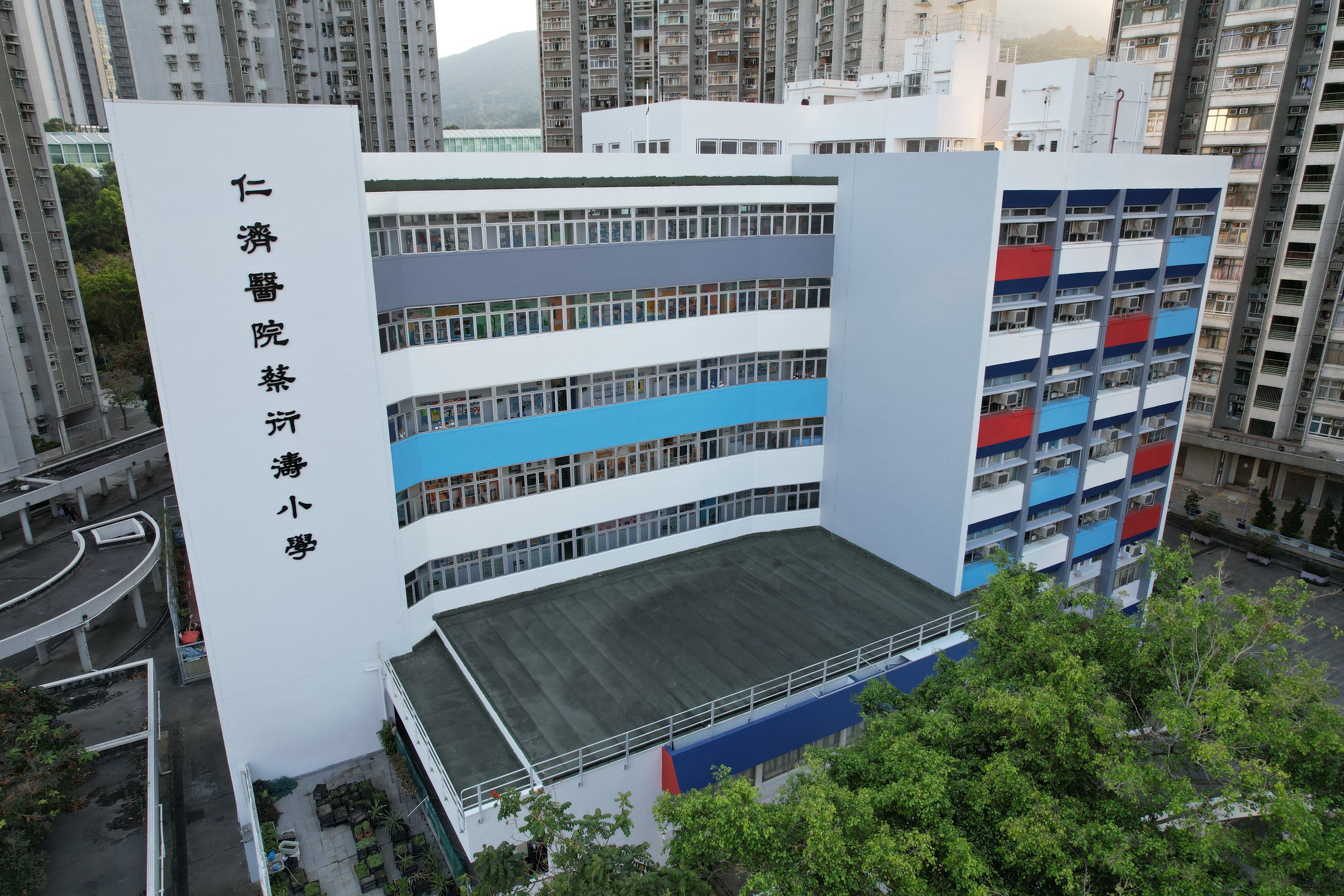
Last revision date:01 September 2026


