 Primary School Profiles 2026

 Primary School Profiles 2026

| Address: | Tai Yuen Estate, Tai Po, N.T. | |||
| Phone: | 26641223 | Email: | info@taipolst.edu.hk | |
| Fax: | 26651012 | Website: | http://www.taipolst.edu.hk | |
 School Information
 | Supervisor/ Chairman of Management Committee | : | Supervisor Lee Christina Maisenne |
| School Head | : | Principal Yiu Wai Yu |
| Incorporated Management Committee been established? | : | Established |
| Percentage of School Supervisor and Managers / Chairperson and Members of School Management Committee (SMC) of Government Schools Fulfilling the Training Targets | : | 100% |
| School Type | : | Aided Whole Day |
| Student Gender | : | Co-ed |
| Sponsoring Body | : | New Territories Women & Juveniles Welfare Association Ltd. |
| Religion | : | Not Applicable |
| Year of Commencement of Operation | : | 1981 |
| School Motto | : | Loyal, Filial Piety, Diligence, Honesty |
| Area Occupied by the School | : | About 4000 Sq. M |
| Through-train Secondary School | : | - |
| Feeder Secondary School | : | - |
| Nominated Secondary School | : | - |
| Medium of Instruction | : | Chinese |
| School Bus Service | : | Nanny van |
| Parent-Teacher Association | : | Yes |
| Past Students' Association/Alumni Association | : | Yes |
| 4Rs Mental Health Charter | : | Yes |
| Whole School Health Programme | : | Action School |
 2026/2027 Annual School Charges
| School Fee | : | - |
| Tong Fai | : | - |
| PTA Fee | : | 30 |
| Approved Charges for non-standard items | : | $350 |
| Other Charges | : | Replacement Charge: Student transcript $20; Library card $20; Student pick up card for parents $10 |
 School Facilities
 | Number of Classroom(s) | : | 24 |
| Number of School Hall(s) | : | 1 |
| Number of Playground(s) | : | 3 |
| Number of Library(ies) | : | 1 |
| Special Rooms | : | Innovative Technology Centre, Science Discovery Room, The Play Therapy Room, Inno-Tech Room, Campus TV studio, Music Room, Chinese Music Instrument Room, Chinese Learning Room, English Room, Maths Learning Room, Green kitchen, Social Worker Room, PTA office, etc. |
| Facility(ies) for Supporting Students with Special Educational Needs | : | Ramp, Accessible lift, Tactile guide path and Railings. |
| Others | : | AI Sports Station, botanical promenade, a koi pond, a track, horizontal rock-climbing wall, Speech Therapy Rm, Tuck Shop, Medical Room. |
 Teaching Staff Information (Including School Head) in the 2025/2026 school year
 | Number of teaching posts in the approved establishment | : | 42 |
| Total number of teachers in the school | : | 46 |
| Qualifications and professional training (%) | ||
| Had Received Teacher Training | : | 94% |
| Bachelor Degree | : | 100% |
| Master/ Doctorate Degree or above | : | 36% |
| Special Education Training | : | 81% |
| Years of Experience (%) | ||
| 0 - 4 years | : | 15% |
| 5 - 9 years | : | 29% |
| 10 years or above | : | 56% |
 Class Structure
 | 2025/26 school year | ||
| P1 Number of classes | : | 2 |
| P2 Number of classes | : | 3 |
| P3 Number of classes | : | 4 |
| P4 Number of classes | : | 4 |
| P5 Number of classes | : | 4 |
| P6 Number of classes | : | 4 |
| Total | : | 21 |
| 2026/27 school year (Based on the number of classes approved by EDB in 2026) | ||
| P1 Number of classes | : | 1 |
| P2 Number of classes | : | 2 |
| P3 Number of classes | : | 3 |
| P4 Number of classes | : | 4 |
| P5 Number of classes | : | 4 |
| P6 Number of classes | : | 4 |
| Total | : | 18 |
| Mode of teaching at different levels | ||
| We adopt Cooperative Learning in classroom teaching, with interactive e-learning elements, we aim to strengthen students' problem-solving skills and cultivate higher-order thinking. | ||
| Remarks | ||
| 1. The school offers a curriculum with student development, enrichment, extension, and interdisciplinary courses, emphasizing values education and cultivating diverse potential. 2. After-school intensive and consolidation classes plus small-group teaching are adopted to address learner diversity. |
||
 Performance Assessment
 | Applicable to P1 only | ||
| Number of test(s) per year | : | 0 |
| Number of exam(s) per year | : | 0 |
| Replace tests and examinations with diversified assessments in the first term of P1 | : | Yes |
| Applicable to P2 to P6 only | ||
| Number of test(s) per year | : | 0 |
| Number of exam(s) per year | : | 3 |
| Applicable to P1 to P6 | ||
| Formulate appropriate school-based assessment and assignment policies, inform parents of related arrangements, and collect views from teachers, students and parents regularly (at least once per school year) for ongoing review and optimisation of the school assessment and assignment policies | : | Yes |
| Upload the school-based assessment policy onto the school webpage for information of the public and stakeholders | : | Yes |
| Upload the school-based assignment policy onto the school webpage for information of the public and stakeholders | : | Yes |
| Diversified Assessment for Learning | : | Diversified modes of assessment, like P.1 Comprehensive Assessment Activities, Formative Assessment, Project learning, Performance Assessment, students' self-evaluation and parents' assessment. Multimedia productions, like videos, audio-recordings and programming work, are used for assessing learning performance. Students keep Learning Logs and set Self-directed Learning Plans. |
| Avoid arranging tests or examinations immediately after long holidays in order to let students take more rest during the holidays | : | Yes |
| Arrange the timetable flexibly according to the school context, with a tutorial session provided in the afternoon as far as possible for students to finish some of their homework under teachers’ guidance | : | Yes |
| Streaming arrangement | : | There is no streaming for P.1 to P.2 classes (Students with mixed learning abilities) whereas in P.3 to P.6 streaming according to students' needs and learning abilities. |
 School Life
 | Number of school days per week | : | 5 |
| Number of periods per day | : | 10 |
| Duration of each normal period | : | 35 |
| School starts at | : | 8:00 AM |
| School ends at | : | 3:20 PM |
| Lunch break | : | 12:50 - 1:45 |
| Lunch arrangement | : | Provided by designated supplier and arranged by parents. |
| Healthy school life | : | 1. EACT Jockey Club Active School and Physical Fitness Scheme are carried out. We initiate SportACT Award Scheme, Health Education and Jump rope for heart, Urban Sports Funding Scheme together with school based health education. 2. We have 3 recesses every day. |
| Remarks | : | 1. In order to have good use of learning time and suggested time allocation as suggested by PECG, we design new curriculum like Growth Education, Trans-disciplinary and Enrichment & Extension in everyday afternoon session. 2. There is homework tutorial after lunch for P.1-P.6 students. 3. On Fridays, school ends at 12:50pm and there are optional OLE activities for students to join. |
 Life-wide Learning
 | More than seventy groups, involving academic, arts and sports activities are organized. They include Olympiad Math, Cambridge classes, Phonic class, Track and field, Basketball, Badminton, Table Tennis, Football, Dodgeball, Hockey, Sport Stacking, Rope skipping, Taekwondo, The Chinese Orchestra, String instruments, Wind instruments, Percussion, Latin Dance Class. Besides these, the school authority organizes Outdoor Learning Day. Students are always encouraged to join interschool competitions and performances, as well as annual school activities, such as Cross Curricular Day, Chinese Culture Day, Stem Day, Overseas Study Tours. |
 School Mission
 | Our mission is rooted in the principle of "Family-based Education and Moral Character Building." Guided by the school motto "Loyalty, Filial Piety, Diligence, and Integrity," We embrace the philosophy of "Achievement for Every Child." We strive to nurture students' growth in character, academics, and multiple intelligences. By providing diverse activities, we empower students to reach their full potential and excel in their strengths, ultimately achieving holistic development. |
 School Characteristics
 | School Management | ||
| School Management Organisation | : | The Incorporate Management Committee monitors the routine operation of the school. The Principal supervises different administrative groups in their collaborative planning and execution of various policies, as well as promotes the school development. |
| Incorporated Management Committee / School Management Committee/ Management Committee | : | This comprises the Incorporated Management Committee, the School Management Committee and the Management Committee. The Incorporated Management Committee was established in 2008. It includes the sponsoring body managers, teacher manager, alumni manager, parent manager and independent manager. |
| School Green Policy | : | We aim at initiating the 'Green Living' education, developing students' environmental protection awareness, guiding them to conserve energy and love plants, helping students to practise the Green Living. Green Lunch policy requires lunch suppliers to prepare meals on-site in the school's "Green Kitchen", which facilitates on-site meal portioning. Meals are served with reusable lunch containers to reduce the amount of waste generated. |
| School's Major Concerns | : | 1. Optimize diversified teaching and learning strategies to cater for learner diversity, enhance their learning motivation, and foster autonomous learning skills. 2. Promote Values Education to nurture students' physical, mental, and spiritual well-being. |
| Learning and Teaching Plan | ||
| Learning & Teaching Strategies | : | Guided by the "4E Learning Framework," we build interactive classrooms with high engagement and daily gamified learning to inspire motivation. A strong reading culture is nurtured through reward schemes, Reading Bus, and Reading Days. The Morning session of school emphasizes academics, while afternoon's features STEAM, heritage, growth, and E&E courses with supervised study. Diverse assessments and "My Homework, My Choice Rewarding Scheme" enhance self-management. Subject Fortnights and on‑off campus activities, supported by e‑learning and inquiry, optimize authentic exploration and lifelong learning effectiveness. |
| Development of Major Renewed Emphases of the Primary Education Curriculum | : | We renew our curriculum by optimizing lesson time and supervised study to promote balanced growth. Values Education is deepened through Life Education and National Security Education in Growth Classes and life-wide learning. Cross-curricular learning is strengthened via Intangible Cultural Heritage and STEAM, fostering cultural confidence and innovation. Precision teaching supports diverse learners through small groups, remedial and gifted classes. Digital learning enhances literacy, while multi-modal assessment, feedback, and authentic experiences enrich holistic performance and empower students to "read to learn." |
| Development of Generic Skills | : | Our school cultivates core generic skills through diverse experiences such as Outdoor Learning Days, cross-disciplinary activities, Enrichment and Extension (E&E) courses, and Subject Fortnights to strengthen communication, collaboration, and problem-solving skills. We emphasize "Learning to Learn" with daily gamified lessons, guided reading schemes, Life Education, and students' tutorial class to foster critical thinking and self-learning. Together, these initiatives empower students with essential tools for lifelong learning, personal growth, and adaptability in a rapidly changing global environment. |
| Cultivation of Proper Values, Attitudes and Behaviours | : | Cultivation of Proper Values education is integrated into academic subjects to help students distinguish right from wrong and put these values into practice. Elements of National and National Security Education are incorporated to cultivate students' sense of nationhood, national identity, and their awareness and responsibility to safeguard national security. Furthermore, a wide range of learning experiences is provided, including student growth education, school-based life education, overseas study tours, seminars, experiential learning and community service. |
| Student Support | ||
| Whole School Approach to Catering for Learner Diversity | : | 1. Pull-out classes and after-school remedial classes are organized to cater for students learning diversity in English, Chinese and Maths learning. 2. School-based speech therapist provides services to students who are in need. 3. Different support programs and training groups are introduced to students who are in needs. These include programs such as "The Early Identification and Intervention Programme for P.1 Students with Learning Difficulties", "The Student Mental Health Support Scheme" as well as social groups, play therapy services, literacy training groups, and sports, music, art play groups to address students' needs. 4. School-based educational psychologist provides services and trainings to meet the needs of students and their parents. 5. Parent seminars or workshops are organized enhance parents' skills in supporting their children. |
| Whole School Approach to Integrated Education | : | The Student Support Team has been established to draw up plans and measures for helping students with special educational needs (SEN). A "three-tiered support model" is used to address individual differences among students: Tier-1 support focuses on optimizing classroom teaching and assisting students with mild learning difficulties. Tier-2 support involves providing additional assistance to students with special educational needs, including learning support groups, small learning groups and subject tutoring. Tier-3 support caters for students with severe learning difficulties, offering enhanced individual support such as the implementation of "Individual Education Plans". |
| Education Support for Non-Chinese Speaking(NCS) Students | : | Our school provides additional support for NCS students to facilitate their learning of Chinese: providing after-school support programmes in learning Chinese; appointing additional teacher(s)/teaching assistant(s) to support NCS students' learning of Chinese; arranging intensive Chinese learning and teaching mode(s), e.g. pull-out learning if necessary, split-class/group learning, etc; organising activities to create an inclusive learning environment in the school; and hiring additional manpower and/or translation/interpretation services to facilitate the communication with parents of NCS students. |
| Curriculum Tailoring and Adaptation | : | Each subject adapts and tailors courses according to students of different levels and designs tiered assignments for different levels. For students with special educational needs, accommodations are provided in homework, dictation and examinations, along with after-school homework support. |
| Home-school Co-operation and School Ethos | ||
| Home-School Co-operation | : | 1. Elect representatives to be one of the school managers in IMC to provide advice on the development of school. 2. The school has a parent-teacher association office. 3. Various parent-child activities are organized throughout the year. 4. Parent volunteer Team is established to help in carrying out schools' daily affairs. |
| School Ethos | : | 1. Strengthen positive education to help students develop their personal character strengths, cultivate positive responsibility, practice holistic development, nurture and leverage their strengths and motivation, and create a positive and caring atmosphere. 2. Through growth education classes, systematic school-based counseling activities, and moral guidance courses, cultivate students' ability to actively solve problems, bravely face challenges, and enhance their resilience. 3. Establish an incentive program to comprehensively emphasize values education. |
| Future Development | ||
| School Development Plan | : | 1. Optimize teaching to develop students' self-directed learning and strengthen their performance. 2. Stimulate intrinsic motivation through gamification and interdisciplinary learning. 3. Integrate community and technology to cultivate creativity and empathy. 4. Provide personalized assistance with AI, enabling every child to develop strengths. 5. Use digital platforms to extend learning beyond time and space. 6. Carry out Positive Education to nurture optimism and initiate Gifted Education to realize potential. |
| Teacher Professional Training & Development | : | 1. The school strengthens teachers' professional expertise by arranging collaboration among teachers in school, through co-planning and peer observation, as well as curriculum research, participating in programmes in partnership with various Tertiary Institutions. 2. The school enhances the professional development of teaching staff in their respective disciplines. 3. To fulfill the areas of concern in the school development plan, the school encourages teachers to join professional development activities. 4. Professional sharing is emphasized to enhance the professional development of teachers. |
| Others | : | 1. Students go beyond Hong Kong to join overseas competitions and study tours, in order to widen their personal perspectives and understanding of the world. 2. The school has set up awards and scholarships to reward students who excel in the moral, academic, arts and sports aspects, with a view to promoting students' all-round development which is an aim of the 'Student-centred' teaching ideology. 3. The School Sponsoring Body has established a Student Support Fund to sponsor low-income families, enabling their children to participate in activities and providing academic support or enhancement classes, ensuring that all students have equal learning and growth opportunities. 4. Joint-school activities, such as inter-school sports days and visual arts exhibitions, are organized in collaboration with schools and organizations under the same sponsoring body. |
 School Map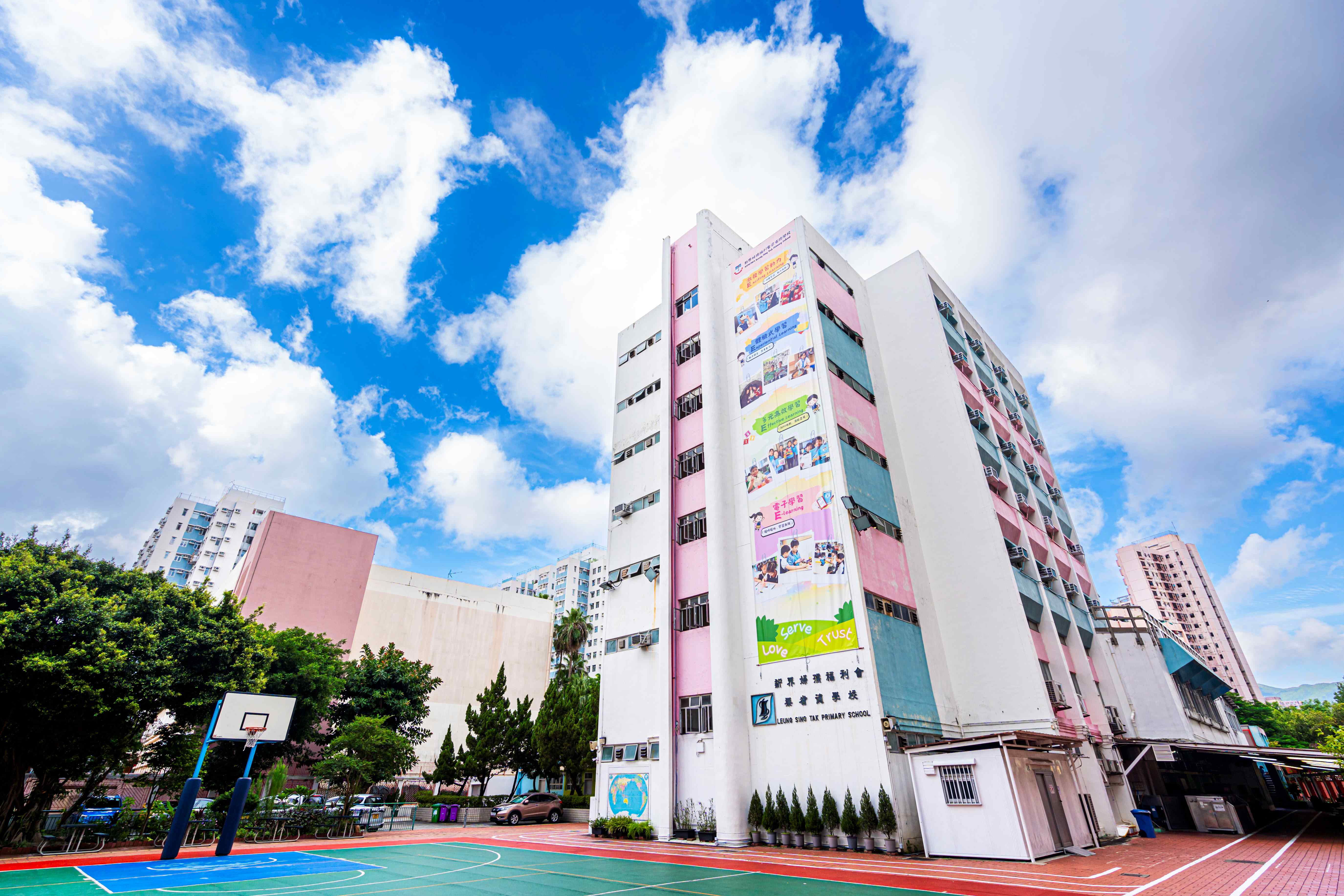
Last revision date:01 September 2026


