 Primary School Profiles 2026


 Primary School Profiles 2026
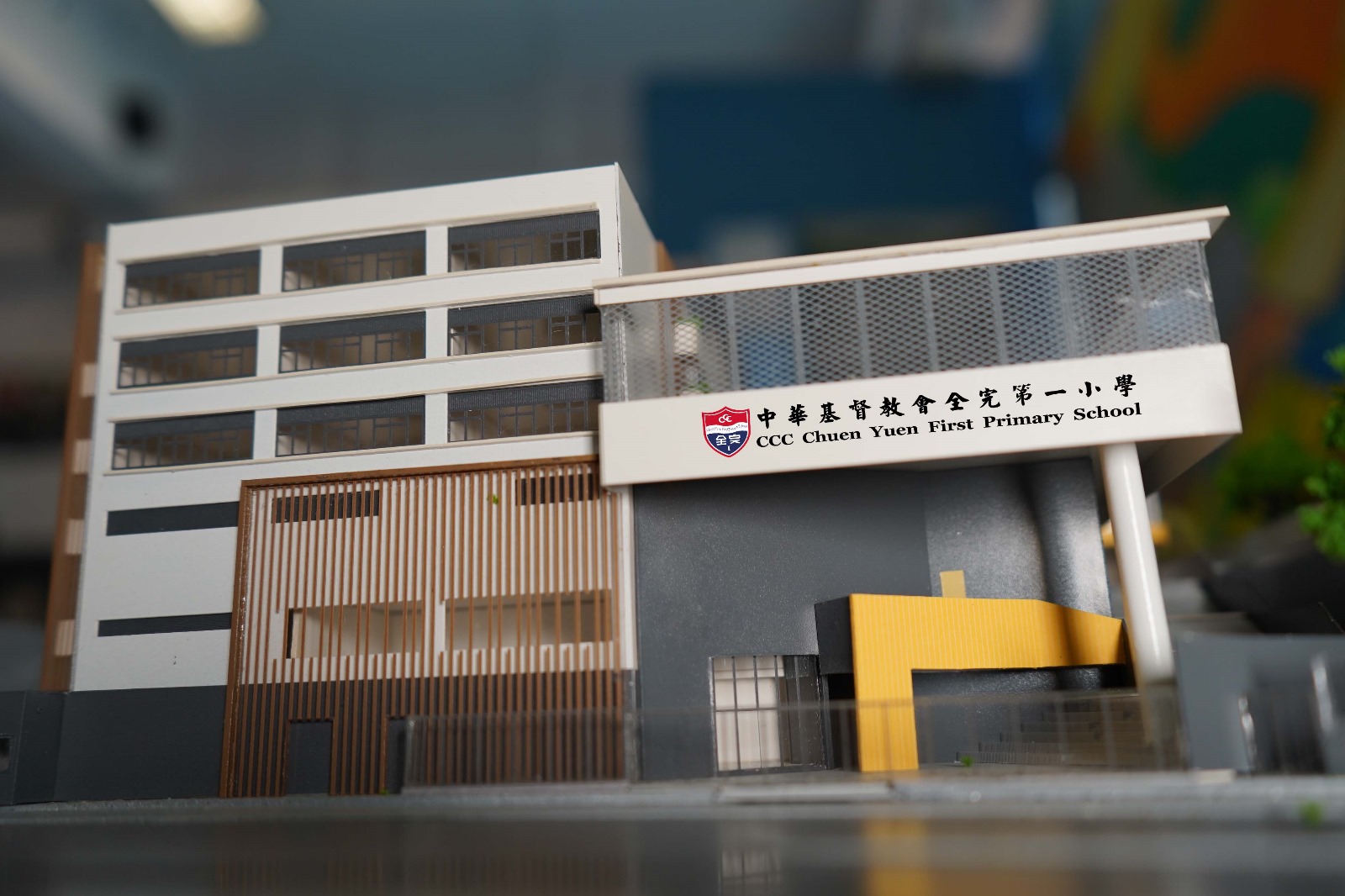
| Address: | 36 WING SHUN STREET, TSUEN WAN, N.T. | |||
| Phone: | 24900336 | Email: | info@cyf.edu.hk | |
| Fax: | 24158627 | Website: | http://www.cyf.edu.hk | |
 School Information
| Supervisor/ Chairman of Management Committee | : | Ms. Chan Yin Hung Kuby |
| School Head | : | Mr. Tam Kwong Tak Dicky |
| Incorporated Management Committee been established? | : | Established |
| Percentage of School Supervisor and Managers / Chairperson and Members of School Management Committee (SMC) of Government Schools Fulfilling the Training Targets | : | 100% |
| School Type | : | Aided Whole Day |
| Student Gender | : | Co-ed |
| Sponsoring Body | : | The Hong Kong Council of the Church of Christ in China |
| Religion | : | Protestantism / Christianity |
| Year of Commencement of Operation | : | 1905 |
| School Motto | : | Please refer to the Chinese version. |
| Area Occupied by the School | : | About 5800 Sq. M |
| Through-train Secondary School | : | - |
| Feeder Secondary School | : | - |
| Nominated Secondary School | : | - |
| Medium of Instruction | : | Chinese |
| School Bus Service | : | School Bus |
| Parent-Teacher Association | : | Yes |
| Past Students' Association/Alumni Association | : | Yes |
| 4Rs Mental Health Charter | : | Yes |
| Whole School Health Programme | : | Pledged School |
 2026/2027 Annual School Charges
| School Fee | : | - |
| Tong Fai | : | - |
| PTA Fee | : | $20 |
| Approved Charges for non-standard items | : | Supplementary School Based booklets $480 |
| Other Charges | : | Grwth & eClass APP $250 |
 School Facilities
| Number of Classroom(s) | : | 30 |
| Number of School Hall(s) | : | 1 |
| Number of Playground(s) | : | 3 |
| Number of Library(ies) | : | 1 |
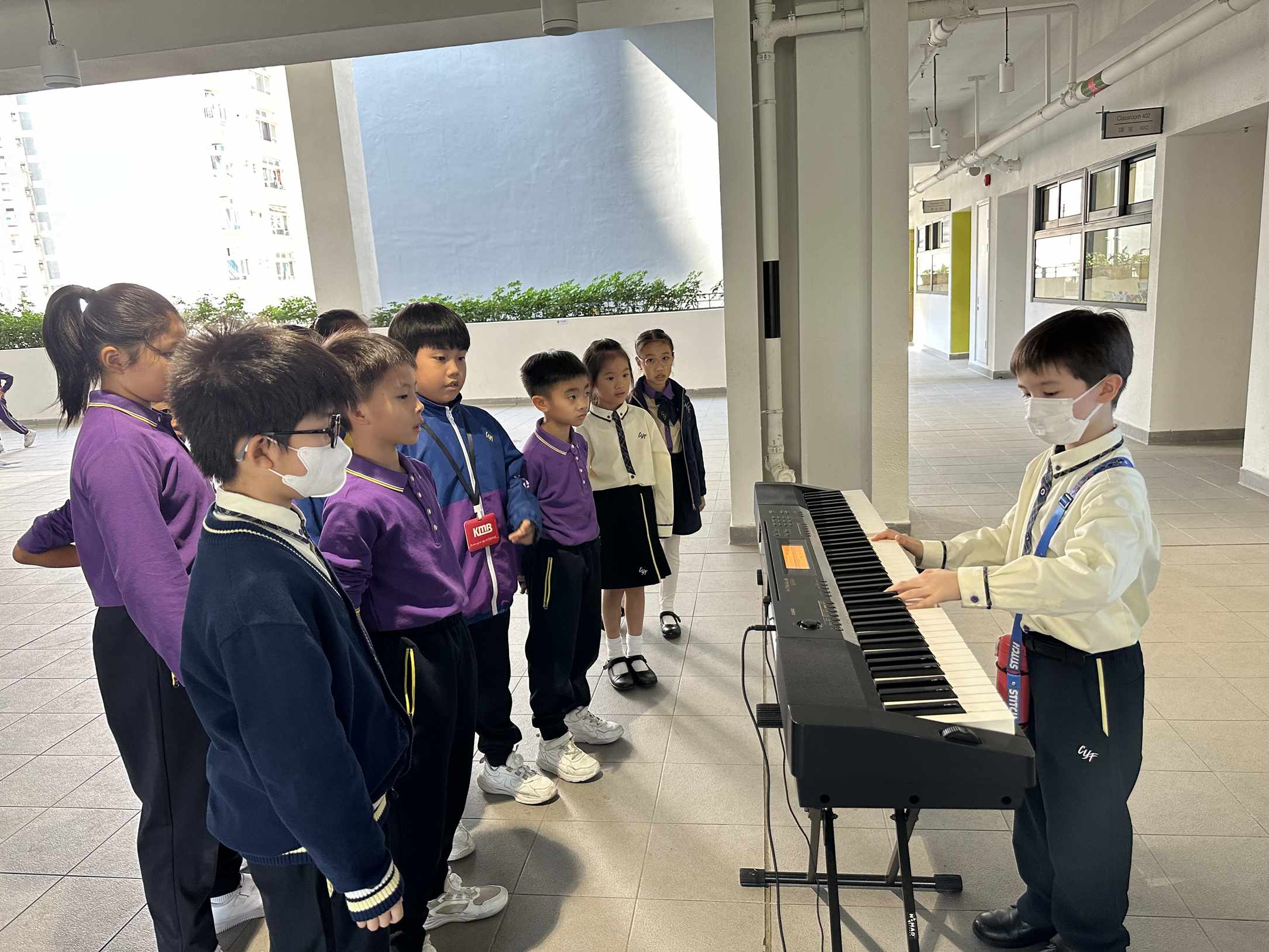
| Special Rooms | : | 2 (Music Room), Multi-Purpose Room, Student Activity Centre, Language Room, Visual Art Room, Reptile Room, Steam Room |
| Facility(ies) for Supporting Students with Special Educational Needs | : | Ramp, Accessible lift, Accessible toilet, Braille and tactile floor plan, Tactile guide path, Visual fire alarm system and 1 student counseling room, 1 student recreation room. |
| Others | : | 1 track and field track |
 Teaching Staff Information (Including School Head) in the 2025/2026 school year
| Number of teaching posts in the approved establishment | : | 26 |
| Total number of teachers in the school | : | 34 |
| Qualifications and professional training (%) | ||
| Had Received Teacher Training | : | 100% |
| Bachelor Degree | : | 100% |
| Master/ Doctorate Degree or above | : | 24% |
| Special Education Training | : | 72% |
| Years of Experience (%) | ||
| 0 - 4 years | : | 41% |
| 5 - 9 years | : | 14% |
| 10 years or above | : | 45% |
 Class Structure
| 2025/26 school year | ||
| P1 Number of classes | : | 4 |
| P2 Number of classes | : | 2 |
| P3 Number of classes | : | 2 |
| P4 Number of classes | : | 1 |
| P5 Number of classes | : | 2 |
| P6 Number of classes | : | 1 |
| Total | : | 12 |
| 2026/27 school year (Based on the number of classes approved by EDB in 2026) | ||
| P1 Number of classes | : | 3 |
| P2 Number of classes | : | 4 |
| P3 Number of classes | : | 2 |
| P4 Number of classes | : | 2 |
| P5 Number of classes | : | 1 |
| P6 Number of classes | : | 2 |
| Total | : | 14 |
| Mode of teaching at different levels | ||
| Use Learning Support Grant (LSG) to implement small group tutorial and small group Chinese, English & Math class. | ||
| Remarks | ||
| - | ||
 Performance Assessment
| Applicable to P1 only | ||
| Number of test(s) per year | : | 0 |
| Number of exam(s) per year | : | 2 |
| Replace tests and examinations with diversified assessments in the first term of P1 | : | Yes |
| Applicable to P2 to P6 only | ||
| Number of test(s) per year | : | 0 |
| Number of exam(s) per year | : | 3 |
| Applicable to P1 to P6 | ||
| Formulate appropriate school-based assessment and assignment policies, inform parents of related arrangements, and collect views from teachers, students and parents regularly (at least once per school year) for ongoing review and optimisation of the school assessment and assignment policies | : | Yes |
| Upload the school-based assessment policy onto the school webpage for information of the public and stakeholders | : | Yes |
| Upload the school-based assignment policy onto the school webpage for information of the public and stakeholders | : | Yes |
| Diversified Assessment for Learning | : | In addition to summative assessments, formative assessments are also conducted to monitor student progress. These are followed by remedial teaching and assessment activities to consolidate learning outcomes. The school actively develops diversified assessment methods, including practical assessments, student’s self-evaluations, peer evaluations, and parent evaluations. |
| Avoid arranging tests or examinations immediately after long holidays in order to let students take more rest during the holidays | : | Yes |
| Arrange the timetable flexibly according to the school context, with a tutorial session provided in the afternoon as far as possible for students to finish some of their homework under teachers’ guidance | : | Yes |
| Streaming arrangement | : | Mixed ability class. |
 School Life
| Number of school days per week | : | 5 |
| Number of periods per day | : | 9 |
| Duration of each normal period | : | 30 |
| School starts at | : | 8:00 AM |
| School ends at | : | REMARKS |
| Lunch break | : | 12:30 - 1:30 |
| Lunch arrangement | : | Provided by designated supplier and arranged by parents. |
| Healthy school life | : | Regularly coordinate with the lunch supplier, besides providing "high three one low" healthy lunch. Participate in projects of 'Joyful Fruit Day' to develop and strengthen students' eating habits. |
| Remarks | : | School ends at 3:00 in the afternoon from Mondays to Thursdays and 4:00 in the afternoon on Fridays. |
 Life-wide Learning
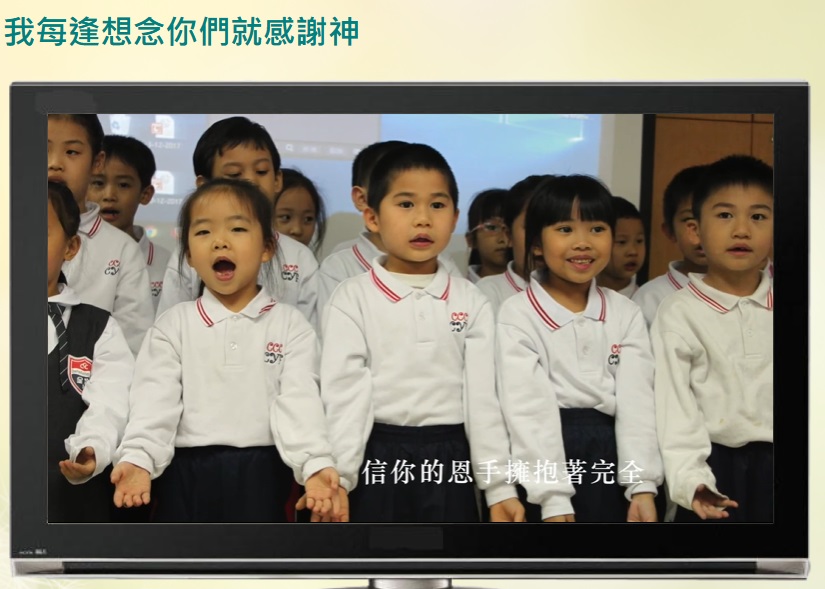
| Christian Fellowship, A Team for Everyone, Swimming Team, Tennis Club, Pickle Ball Club , Fencing Team, Fitness Club, Athletic Team, Basketball Team, Gymnastics Team, Taekwondo Club, Badminton Team, Volleyball Team, Table-tennis Team, Indoor Archery Club, Little Actors and Actresses, Rope Skipping Team, Chinese Dance Team, Chinese Martial Arts Club, K-pop Dance Team, Programming Club, Handbell Team, Choir, Ukulele Club, Cantonese Opera Club, Djembe Club, Harmonica Club, Kalimba Club, Morin Khuur Club, Lyre Harp Club, Cambridge English, Cooking Papa, Painting Club, Air-Dry Clay Club, Magic Club and Photography Club etc. |
 School Mission
| Our education philosophy is "whole person development education". It affirms that the meaning of education is related to the inspiration of life and personality development. Apart from cultivating high-quality of morality and mentality in youngsters and stretching of extensive knowledge, we also put emphasis on exploring students' potentials and interests. In addition, we aim to establish positive values and attitude towards their lives and build up a strong sense of social commitment. Following Jesus as their light to pursue justice and righteousness, students would obtain a fruitful life. |
 School Characteristics
| School Management | ||
| School Management Organisation | : | The school is managed by incorporated management committee. Administrative group contains the principal, vice-principal and assistant master to manage schools' administration, curriculum development, student support, academy, public relationship, IT, discipline, guidance and activities. |
| Incorporated Management Committee / School Management Committee/ Management Committee | : | In September 2011, the IMC was established. Its members include the school supervisor, principal, school board members, teachers and parents. |
| School Green Policy | : | We implement green policy and launch a series of conservation activities at our school in order to educate students the importance of energy-saving in their daily life context and create an environmentally-friendly school. |
| School's Major Concerns | : | 1. Strengthen administrative leadership training for middle management to reinforce their leadership roles. 2. Utilize diversified teaching strategies to enhance learning effectiveness for students with different learning needs. 3. Optimizing the positive values (engagement, accomplishment, positive emotions) of school stakeholders. |
| Learning and Teaching Plan | ||
| Learning & Teaching Strategies | : | 1. Cultivating students to become active learners by teaching students different learning strategies so that they can choose appropriate strategies for learning and making self-reflection in classroom activities. 2. Cultivating students to become brilliant presenters by strategically creating opportunities for students to learn speaking skills, offering chances for students to give presentations or speeches in different occasions. 3. Cultivating students to become creative makers by designing assignments using inquiry-based and design thinking approaches to enhance students' creativity. 4. Cultivating habits of self-directed learning by implementing the 'Elite Student Award Scheme' and 'Self-Directed Learning Portfolio', which allow students to set their own learning goals, self-monitor, improve their weaknesses, and enhance learning performance on their own. 5. Promoting reading by conducting different forms of sharing, such as 'Story Dads and Mums', book sharing by both teachers and students. |
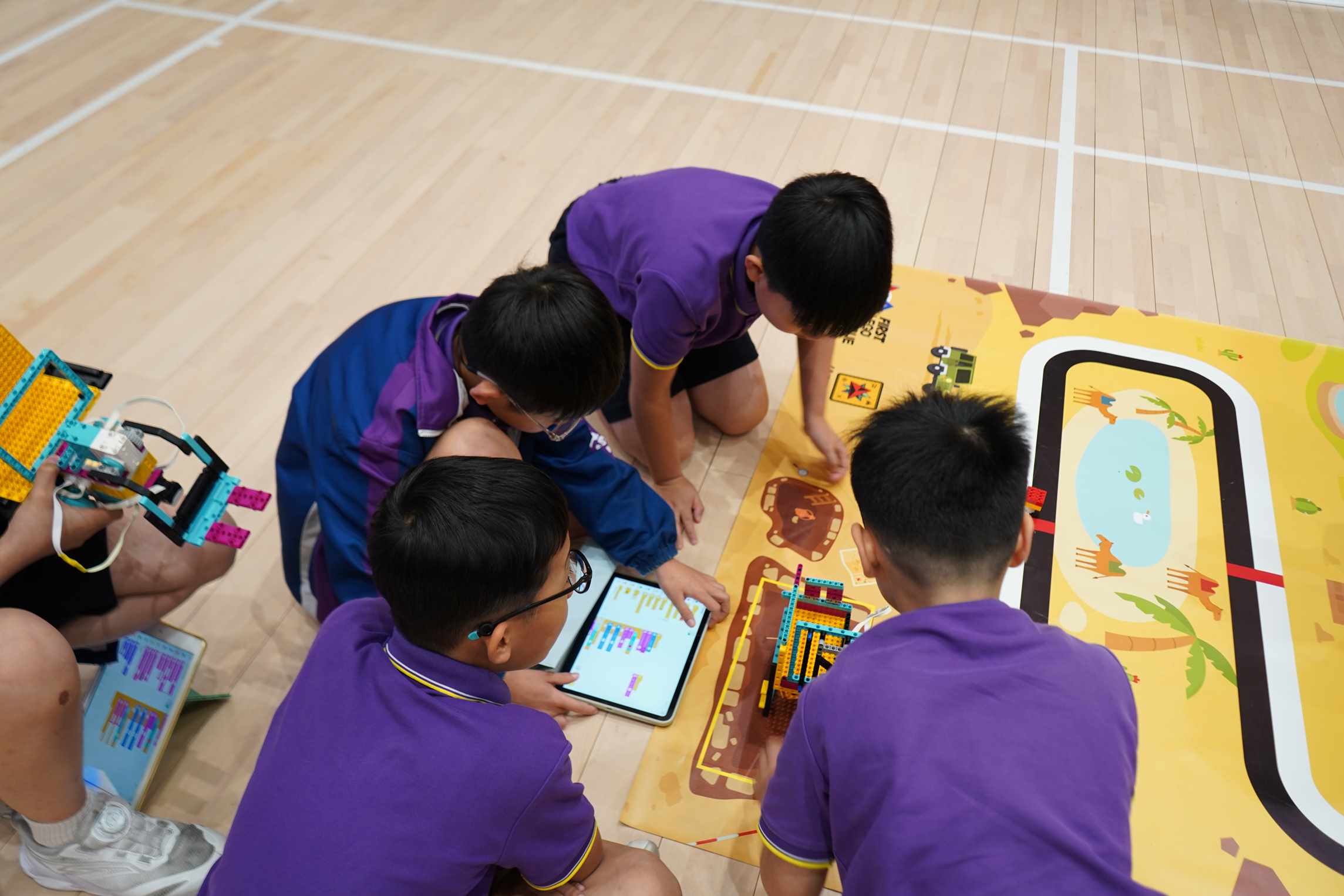
| Development of Major Renewed Emphases of the Primary Education Curriculum | : | 1. Providing students with meaningful 'learning hours' by organizing various visits, a wide range of competitions, and overseas expeditions 2. Developing school-based curricula for Humanities, Moral and Civic Education, and Personal Development to implement a comprehensive framework of Value Education. 3. Integrating knowledge across multiple learning domains through STEAM education to develop students' generic skills and inquiry-based thinking abilities. 4. Optimizing our Reading across Curriculum (RaC): Our English Department collaborates with other Departments including Humanities, Science and Visual Arts to develop school-based RaC projects in order to develop students' lifelong learning abilities. |
| Development of Generic Skills | : | 1. Encouraging students' engagement and unleashing students' potentials by conducting different school-wide activities organized by various subject groups. 2. Enhancing students' generic skills and empathetic abilities by implementing the ‘A Team for Everyone' scheme. |
| Cultivation of Proper Values, Attitudes and Behaviours | : | 1. Establishing a positive campus atmosphere by decorating different areas of the campus with positive slogans, student works and activity photos, and setting up a hall of fame for students with exemplary performances. 2. Fostering students' holistic development by implementing year-round learning activities related to national education and national security education. |
| Student Support | ||
| Whole School Approach to Catering for Learner Diversity | : | To cater for learner' diversity, students are grouped according to learning abilities. To cater for students' special educational needs, peer interaction, curriculum adaptation, homework adaption, assessment adaptation and remedial lessons are implemented throughout their school life. |
| Whole School Approach to Integrated Education | : | Our school has implemented the Whole School Approach to cater for student differences effectively and enhance the effectiveness of education as a whole. The core members of student support team are including principal, Special Educational Needs Coordinator (SENCO), Curriculum development leaders, school social workers, senior teachers and guidance teachers. We also deploy Learning Support Grant and School-based Speech Therapy Service related resources to provide more comprehensive services for the students, such as School-based Speech Therapy Service, IEP and School-based Educational Psychology Service. |
| Curriculum Tailoring and Adaptation | : | Curricula for different subjects are modified based on students' abilities. In addition, school-based curricula and interdisciplinary project-learning is emphasized to cater for students' educational needs and unleash their potentials. |
| Home-school Co-operation and School Ethos | ||
| Home-School Co-operation | : | To foster a close and harmonious relationship between parents and students, our school organizes talks for parents and holds Parent-Teacher Association meetings regularly. In addition, there are parent-student activities every year, including workshops, picnics and booths. To develop an inter-supportive relationship, our school also has invited parents to join our Parent Volunteer Team and Parents’ Group. |
| School Ethos | : | The school has been awarded the title 'Caring Campus' for several years. We uphold a caring culture at school, aiming to nurture positive life values in students and encouraging them to serve the community. To this end, we hold holistic programmes such as Pre-Primary One Induction Courses, Academic Awarding Scheme, Positive Energy Ambassadors, and other religious activities. |
| Future Development | ||
| School Development Plan | : | Our mission is to provide holistic education, dedicated to fostering the balanced development of students in the moral, intellectual, physical, social, aesthetic, and spiritual domains. In accordance with Hong Kong’s educational goals and the seven learning goals of the Curriculum Development Council, we establish annual development themes that align with the latest educational trends and our school’s strategic priorities. We actively promote digital education and integrate cross-curricular STEAM learning to design a broad and balanced curriculum for all departments, catering to the diverse learning needs of our students. Through inquiry-based learning, we guide students to explore actively and construct knowledge independently, helping them develop effective self-regulated learning habits. Simultaneously, we equip students with digital literacy and a global perspective, nurturing their creative problem-solving skills to meet the challenges of the future. |
| Teacher Professional Training & Development | : | 1. Honing teachers' teaching abilities and fostering a culture of sharing and collaboration by organizing professional developments activities for teachers. 2. Establishing core groups to develop appropriate school-based diversified teaching strategies and strengthen teachers' abilities to implement these strategies effectively. 3. Transforming the school into a professional learning community by actively promoting a culture of professional exchange in the management level. |
| Others | : | We offer scholarships and study tours outside Hong Kong every year. |
 School Map
Last revision date:24 September 2026


