 Primary School Profiles 2026

 Primary School Profiles 2026

| Address: | Estate School No. 2, Lei Muk Shue Estate, Tsuen Wan, N.T. | |||
| Phone: | 24263333 | Email: | lmscps@lmscps.edu.hk | |
| Fax: | 24226654 | Website: | http://www.lmscps.edu.hk | |
 School Information
 | Supervisor/ Chairman of Management Committee | : | Ms. Wong Yi Ha |
| School Head | : | Ms. Dai Hin Ching |
| Incorporated Management Committee been established? | : | Established |
| Percentage of School Supervisor and Managers / Chairperson and Members of School Management Committee (SMC) of Government Schools Fulfilling the Training Targets | : | 100% |
| School Type | : | Aided Whole Day |
| Student Gender | : | Co-ed |
| Sponsoring Body | : | The Catholic Diocese of Hong Kong |
| Religion | : | Catholicism |
| Year of Commencement of Operation | : | 1975 |
| School Motto | : | Serving with God's Glory, Cultivate Values and Nurture Talent |
| Area Occupied by the School | : | About 3570 Sq. M |
| Through-train Secondary School | : | - |
| Feeder Secondary School | : | - |
| Nominated Secondary School | : | - |
| Medium of Instruction | : | Chinese |
| School Bus Service | : | Nanny van |
| Parent-Teacher Association | : | Yes |
| Past Students' Association/Alumni Association | : | Yes |
| 4Rs Mental Health Charter | : | Yes |
| Whole School Health Programme | : | Action School |
 2026/2027 Annual School Charges
| School Fee | : | - |
| Tong Fai | : | - |
| PTA Fee | : | 30 |
| Approved Charges for non-standard items | : | $340 (Including School Development, enhancing Teaching Aids and School Environment costs) |
| Other Charges | : | - |
 School Facilities
 | Number of Classroom(s) | : | 24 |
| Number of School Hall(s) | : | 1 |
| Number of Playground(s) | : | 2 |
| Number of Library(ies) | : | 1 |
| Special Rooms | : | Arts Room, Music Room, Language Learning Lab, Praying Room, English Wonderland, Students' Activity Centre, LMSCPS Maker Space (Computer Room), TV Station and Chinese Cultural Centre. |
| Facility(ies) for Supporting Students with Special Educational Needs | : | Ramp, Accessible lift and Accessible toilet. |
| Others | : | Garden of Holy Mary and Planting Plot. |
 Teaching Staff Information (Including School Head) in the 2025/2026 school year
 | Number of teaching posts in the approved establishment | : | 38 |
| Total number of teachers in the school | : | 41 |
| Qualifications and professional training (%) | ||
| Had Received Teacher Training | : | 100% |
| Bachelor Degree | : | 100% |
| Master/ Doctorate Degree or above | : | 47% |
| Special Education Training | : | 33% |
| Years of Experience (%) | ||
| 0 - 4 years | : | 14% |
| 5 - 9 years | : | 20% |
| 10 years or above | : | 66% |
 Class Structure
 | 2025/26 school year | ||
| P1 Number of classes | : | 2 |
| P2 Number of classes | : | 2 |
| P3 Number of classes | : | 3 |
| P4 Number of classes | : | 4 |
| P5 Number of classes | : | 4 |
| P6 Number of classes | : | 4 |
| Total | : | 19 |
| 2026/27 school year (Based on the number of classes approved by EDB in 2026) | ||
| P1 Number of classes | : | 2 |
| P2 Number of classes | : | 2 |
| P3 Number of classes | : | 2 |
| P4 Number of classes | : | 3 |
| P5 Number of classes | : | 4 |
| P6 Number of classes | : | 4 |
| Total | : | 17 |
| Mode of teaching at different levels | ||
| Through e-learning and group learning, students are able to learn interactively. Enrichment language classes are offered in P.1, supported by native English teachers or advisors. In P.2 and P.3, language lessons are conducted in small groups to address diverse learning needs. P.4 to P.6 students are divided into different classes according to their learning needs. | ||
| Remarks | ||
| - | ||
 Performance Assessment
 | Applicable to P1 only | ||
| Number of test(s) per year | : | 0 |
| Number of exam(s) per year | : | 1 |
| Replace tests and examinations with diversified assessments in the first term of P1 | : | Yes |
| Applicable to P2 to P6 only | ||
| Number of test(s) per year | : | 0 |
| Number of exam(s) per year | : | 3 |
| Applicable to P1 to P6 | ||
| Formulate appropriate school-based assessment and assignment policies, inform parents of related arrangements, and collect views from teachers, students and parents regularly (at least once per school year) for ongoing review and optimisation of the school assessment and assignment policies | : | Yes |
| Upload the school-based assessment policy onto the school webpage for information of the public and stakeholders | : | Yes |
| Upload the school-based assignment policy onto the school webpage for information of the public and stakeholders | : | Yes |
| Diversified Assessment for Learning | : | Both Summative Assessments and Formative Assessments are used to assess students' performance. Diversified modes of assessment are used to assess the performance of students in different areas. |
| Avoid arranging tests or examinations immediately after long holidays in order to let students take more rest during the holidays | : | Yes |
| Arrange the timetable flexibly according to the school context, with a tutorial session provided in the afternoon as far as possible for students to finish some of their homework under teachers’ guidance | : | Yes |
| Streaming arrangement | : | Streaming is applied to students from P.4 - P.6 according to their academic performances. P.1 - P.3 students are evenly distributed in each class. |
 School Life
 | Number of school days per week | : | 5 |
| Number of periods per day | : | 9 |
| Duration of each normal period | : | 35 |
| School starts at | : | 7:55 AM |
| School ends at | : | 3:30 PM |
| Lunch break | : | 12:35 - 1:35 |
| Lunch arrangement | : | Provided by designated supplier and arranged by parents. |
| Healthy school life | : | To enhance healthy lifestyle, we have participated in "Joyful Fruit Month", "Straighten Up Campus Campaign", "School Physical Fitness Award Scheme "and the "SportACT Scheme" sponsored by the Leisure and Cultural Services Department. The school also use sport AI Mobile App "RoboCoach" to enhance students' exercise habit. |
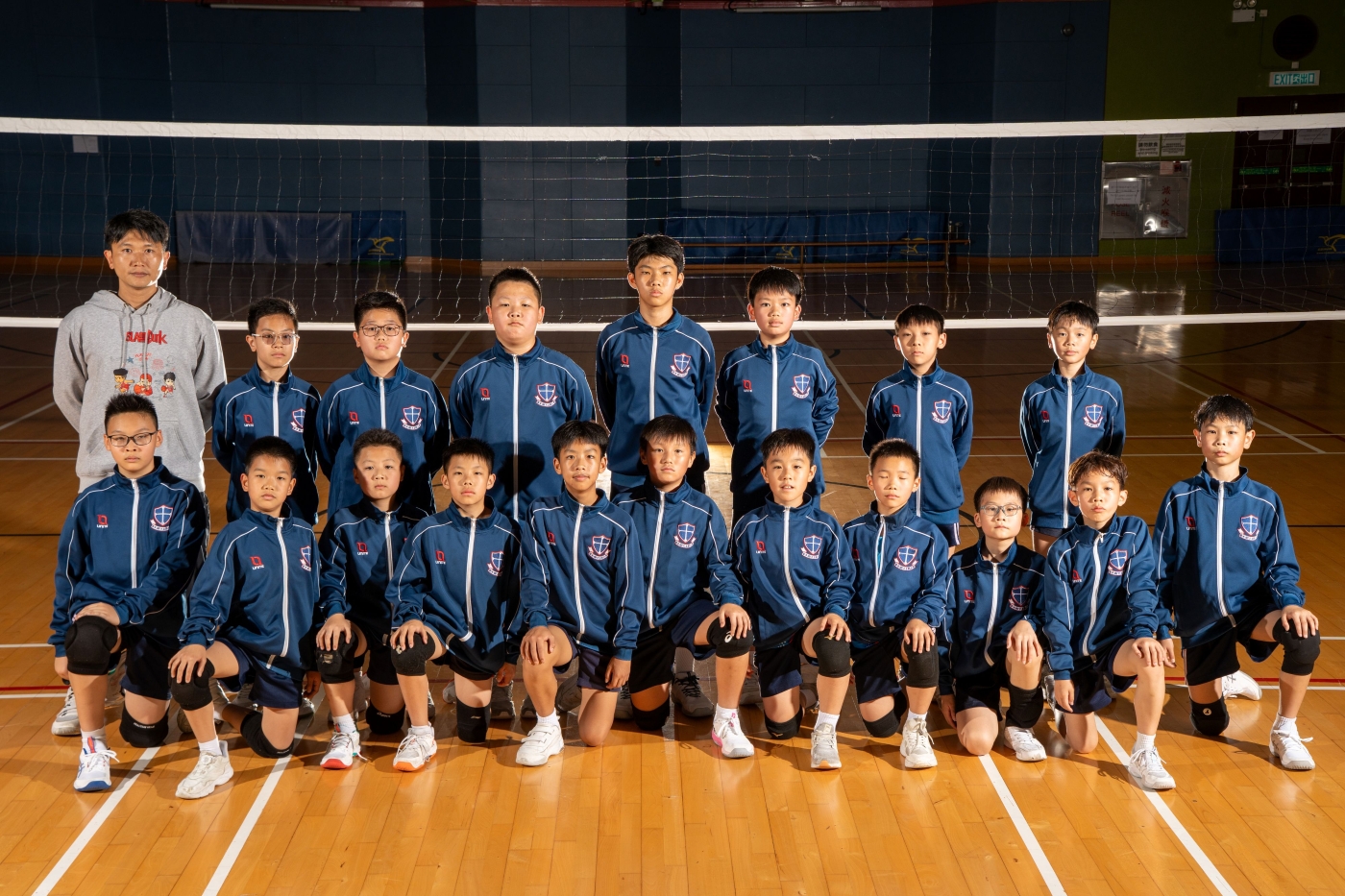
| Remarks | : | School ends at 2:30 p.m. every Friday. School team training sessions are held after school from Monday to Friday. On Saturdays, various activities are offered for students to enroll in voluntarily. The school participates in "School-based After School Care Service Scheme" provide after-school care and learning support on weekdays, and even during holidays. (The service provider for the current school year is Caritas Jockey Club Integrated Service for Young People – Lei Muk Shue.) |
 Life-wide Learning
 | Through local and overseas exchange and learning activities and whole-school cross-curricular activity days, enriching students’ learning experiences. To nurture students’ individual potential, the school has established various service teams and organizes a wide range of cross-curricular activity days throughout the year. A diverse selection of extracurricular activities is provided by schoolteachers as well as external coaches and professional organizations from academic, sports, arts, and cultural domains. (Most activities are government-funded, and parents may apply for fee remission.) |
 School Mission
 | Through holistic education, we preach the spirit of the gospel and enable students to understand "The Value of Life and Love" in order to establish a positive outlook on life. We strive to develop students' Spiritual, Moral, Intellectual, Physical, Social and Aesthetic qualities and teach them to become good citizens and leaders who contribute to the society in the future. |
 School Characteristics
 | School Management | ||
| School Management Organisation | : | Under the Incorporated Management Committee, the Supervisor, Principal, Vice- Principals and the Head of different Committees form the School Management Team that plan, coordinate and monitor the School's Management and Organisation, Learning and Teaching, School Ethos and Student Support, Student Performance. |
| Incorporated Management Committee / School Management Committee/ Management Committee | : | Incorporated Management Committee of Lei Muk Shue Catholic Primary School. |
| School Green Policy | : | We develop students' environmental awareness and living habits through different activities such as gardening, Environmental Ambassadors' voluntary work, paper recycling, energy, water and paper saving and arrange related seminars or workshops for students. |
| School's Major Concerns | : | 1. Learn and Think Inspire Wisdom 2. Practice Benevolence and Righteousness manifest the Lord's Grace |
| Learning and Teaching Plan | ||
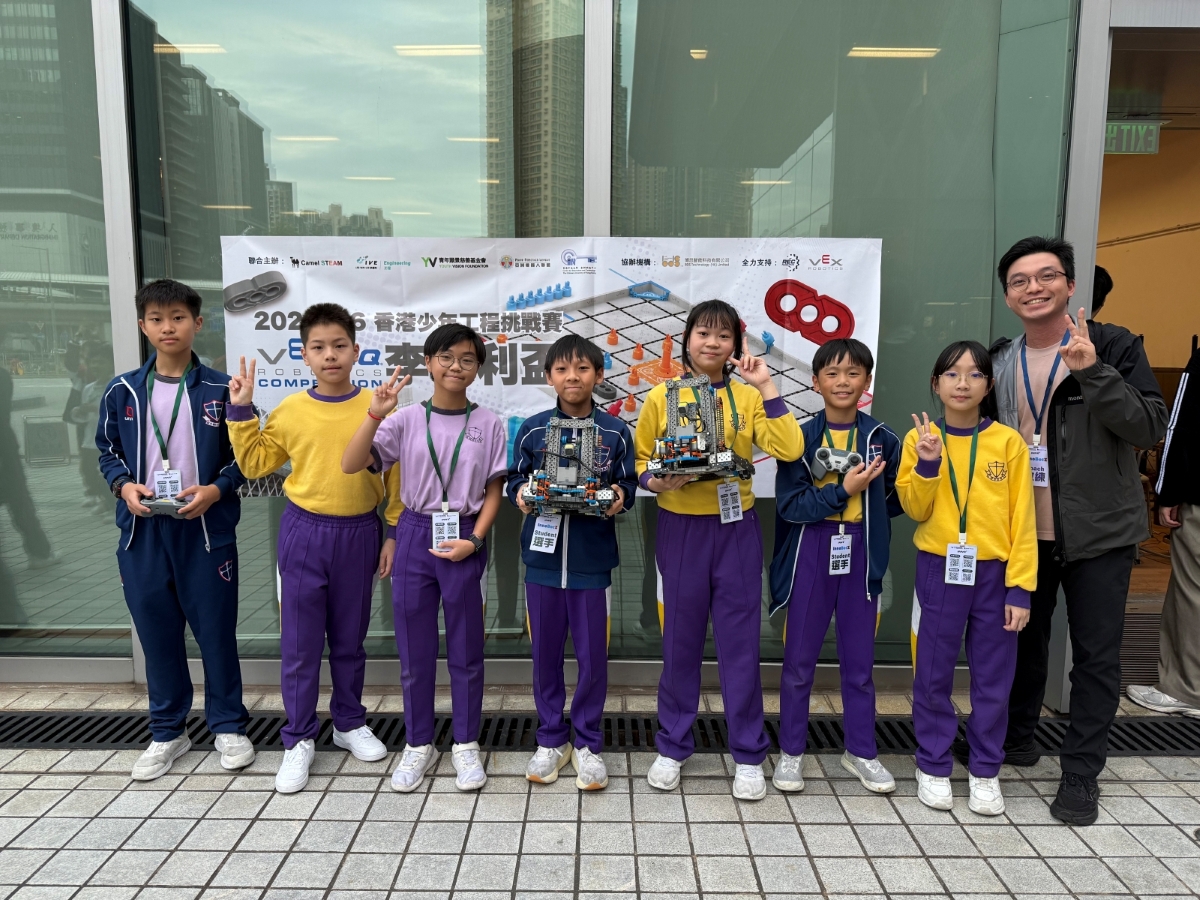
| Learning & Teaching Strategies | : | 1. Ability of bi-literacy and tri-lingualism: READ AND WRITE project, Drama education, school-based English curriculum and language-rich environment to enhance students' ability to use different languages. 2. Ability of High-order thinking and self-directed learning: Through Thinking booklet, problem-solving, Math. Olympiad training, self-learning booklet of G.S, helping students to develop their abilities in thinking and learning. 3. Inquiry learning: Students explore knowledge through reading articles, observations, experiments, etc. 4. Creative Education: Incorporate creative teaching strategies into the learning activities to enable students to develop their creativity. 5. Thematic Learning, Life-wide Learning and STEAM Project: Enrich students' learning experiences and enhance their generic skills through various activities. 6. Participate in various QTN projects to enhance the effectiveness of teaching and learning. |
| Development of Major Renewed Emphases of the Primary Education Curriculum | : | Cultivate positive values and attitudes through strengthening values education, including life education, national education and national security education; making good use of learning time and creating space to promote a balanced physical and mental development; enriching life-wide learning experiences and promoting whole-person development; better catering for learner diversity; reinforcing school-based STEAM education, and nurturing students’ media and information literacy; strengthening cross-curricular learning and reading across the curriculum for developing lifelong learning capabilities; enhancing assessment literacy for promoting learning and teaching effectiveness. |
| Development of Generic Skills | : | Strengthen the development of students' generic skills through group learning, project learning, different subject-based curriculum and interdisciplinary activities. |
| Cultivation of Proper Values, Attitudes and Behaviours | : | Through various strategies such as School-based Learning Theme, to encourage students to be grateful and positive, and face the opportunities and challenges of life bravely. |
| Student Support | ||
| Whole School Approach to Catering for Learner Diversity | : | Implement the Chinese tiered support program for P.1-3 to consolidate students' language foundation. Support students with learning difficulties with the ‘Early Identification and Intervention Programme for Primary One Students with Learning Difficulties’ (EII Programme), School-based Educational Psychology Service, School-based Speech Therapy Service, After-school tutorials, NAC adaptation classes, Big Brothers & Big Sisters Program, Reading & Writing Project and Companion Concentration classes are offered to help students with SEN. |
| Whole School Approach to Integrated Education | : | Support the students with SEN by "3-Tier Support Model" Through the formulation and coordination of various strategies, students will have appropriate and diversified support in their growth and learning. The school will provide appropriate counseling to the students concerned based on their individual differences and special educational needs. |
| Education Support for Non-Chinese Speaking(NCS) Students | : | Our school provides additional support for NCS students to facilitate their learning of Chinese: providing after-school support programmes in learning Chinese; appointing additional teacher(s)/teaching assistant(s) to support NCS students' learning of Chinese; arranging intensive Chinese learning and teaching mode(s), e.g. pull-out learning if necessary, split-class/group learning, etc.; developing school-based Chinese Language curriculum and/or adapting learning and teaching materials; organising activities to create an inclusive learning environment in the school; hiring additional manpower and/or translation/interpretation services to facilitate the communication with parents of NCS students; and our school uses Putonghua to teach Chinese in all classes / groups at certain levels with extra support as appropriate, e.g. pull-out/small-group classes, learning and teaching resources with Pinyin, etc. To provide assistance to NCS students learning Chinese through "Big Brothers & Big Sisters Program". |
| Curriculum Tailoring and Adaptation | : | The Chinese and English curriculum for the small group learning classes is specially designed to consolidate students' basic vocabulary learning. Learning and assessment are adapted for dyslexic students to enhance their academic performance and self-confidence. |
| Home-school Co-operation and School Ethos | ||
| Home-School Co-operation | : | PTA annual general meeting, talks and workshops for parents, volunteer services in school enhance parents' understanding and establish the parent support network. |
| School Ethos | : | Through diverse learning experiences, let students know that we all are the children of God and understand their own talents, Uphold the five core values of Catholicism so that they know how to love God, love themselves and others. Thus students will eager to learn and devote themselves to create better families and communities. |
| Future Development | ||
| School Development Plan | : | 1. Develop students' problem-solving ability in line with the living and further education needs. 2. Through situational learning, develop students' resilience and leadership qualities. |
| Teacher Professional Training & Development | : | 1. To encourage teachers to attend professional development activities which aligned with the school and subject development and meet the core training requirements. 2. To promote professional reflection and teaching effectiveness through collaborative lesson planning, peer observation, teaching and resources sharing. 3. To develop the abilities of designing school-based curriculum and diversified teaching strategies of teachers by joining various school-based supporting programs continuously. |
| Others | : | 1. Parents Teachers Association, School Alumni Association and other generous people provide scholarships to award students with remarkable academic improvement and outstanding performance respectively. 2. After-school supporting programs enhance students' academic achievement and potential development. 3. Improve students' English Language competency. 4. Develop students' sports and information technology performance, and cultivate students' perseverance and team spirit. 5. Interface between Kindergarten and Secondary School: School visit, parents' talks, orientation programs and interest groups. |
 School Map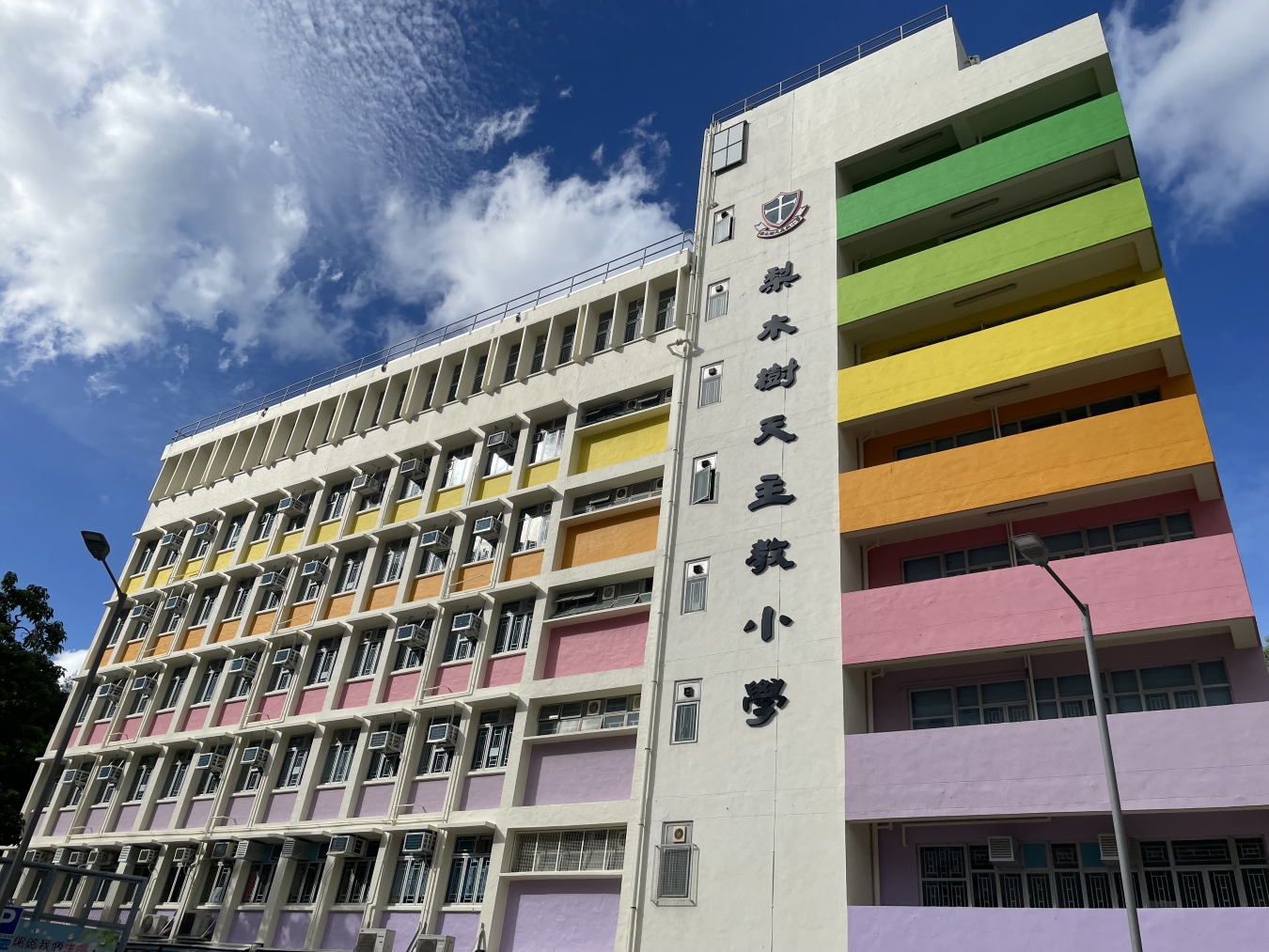

Last revision date:01 September 2026


