 Primary School Profiles 2026

 Primary School Profiles 2026

| Address: | 11 Eastern Hospital Road, Causeway Bay, HK | |||
| Phone: | 25762638 | Email: | mail@bwcups.edu.hk | |
| Fax: | 28824449 | Website: | https://www.bwcups.edu.hk | |
 School Information
 | Supervisor/ Chairman of Management Committee | : | Ven. Sik Yin Chi |
| School Head | : | Ms. Ho Sin Yee Cindy |
| Incorporated Management Committee been established? | : | Established |
| Percentage of School Supervisor and Managers / Chairperson and Members of School Management Committee (SMC) of Government Schools Fulfilling the Training Targets | : | 50% |
| School Type | : | Aided Whole Day |
| Student Gender | : | Co-ed |
| Sponsoring Body | : | The Hong Kong Buddhist Association |
| Religion | : | Buddhism |
| Year of Commencement of Operation | : | 1959 |
| School Motto | : | Realizing equilibrium; Sensing compassion |
| Area Occupied by the School | : | About 2000 Sq. M |
| Through-train Secondary School | : | Buddhist Wong Fung Ling College |
| Feeder Secondary School | : | - |
| Nominated Secondary School | : | - |
| Medium of Instruction | : | Chinese |
| School Bus Service | : | School Bus; Nanny van |
| Parent-Teacher Association | : | Yes |
| Past Students' Association/Alumni Association | : | Yes |
| 4Rs Mental Health Charter | : | Yes |
| Whole School Health Programme | : | Action School |
 2026/2027 Annual School Charges
| School Fee | : | - |
| Tong Fai | : | - |
| PTA Fee | : | $50 |
| Approved Charges for non-standard items | : | $380 |
| Other Charges | : | - |
 School Facilities
 | Number of Classroom(s) | : | 12 |
| Number of School Hall(s) | : | 1 |
| Number of Playground(s) | : | 1 |
| Number of Library(ies) | : | 1 |
| Special Rooms | : | Library, Music and Dance Room, English Room, Visual Art Room, STREAM Room, Multi-purpose Room, Sensory Wonderland, Play Therapy Room, Campus TV Studio, Astronomy Room, Rooftop garden. |
| Facility(ies) for Supporting Students with Special Educational Needs | : | Ramp, Accessible lift, Visual fire alarm system and Purchase wireless FM systems for hearing-impaired students. |
| Others | : | Aquaponics system, Wi-Fi, Interactive electronic screen, Book wall, Astrology Gallery, Digital Planetarium, AI Robot, FLEXI Immersive portable system |
 Teaching Staff Information (Including School Head) in the 2025/2026 school year
 | Number of teaching posts in the approved establishment | : | 19 |
| Total number of teachers in the school | : | 21 |
| Qualifications and professional training (%) | ||
| Had Received Teacher Training | : | 86% |
| Bachelor Degree | : | 100% |
| Master/ Doctorate Degree or above | : | 29% |
| Special Education Training | : | 29% |
| Years of Experience (%) | ||
| 0 - 4 years | : | 23% |
| 5 - 9 years | : | 10% |
| 10 years or above | : | 67% |
 Class Structure
 | 2025/26 school year | ||
| P1 Number of classes | : | 1 |
| P2 Number of classes | : | 1 |
| P3 Number of classes | : | 1 |
| P4 Number of classes | : | 1 |
| P5 Number of classes | : | 2 |
| P6 Number of classes | : | 1 |
| Total | : | 7 |
| 2026/27 school year (Based on the number of classes approved by EDB in 2026) | ||
| P1 Number of classes | : | 1 |
| P2 Number of classes | : | 1 |
| P3 Number of classes | : | 1 |
| P4 Number of classes | : | 1 |
| P5 Number of classes | : | 1 |
| P6 Number of classes | : | 2 |
| Total | : | 7 |
| Mode of teaching at different levels | ||
| "Lessons auxiliary triple" and Small Class Teaching are basic concepts for teachers to operate everyday classroom. In order to develop students' generic skills and personal development, there are Multi-talent Classes, Integrated Classes, Enrichment Classes, PGE, Elite Classes, Speech Therapies, Social Classes and Sensory integration Training for students in need. | ||
| Remarks | ||
| - | ||
 Performance Assessment
 | Applicable to P1 only | ||
| Number of test(s) per year | : | 0 |
| Number of exam(s) per year | : | 1 |
| Replace tests and examinations with diversified assessments in the first term of P1 | : | Yes |
| Applicable to P2 to P6 only | ||
| Number of test(s) per year | : | 0 |
| Number of exam(s) per year | : | 3 |
| Applicable to P1 to P6 | ||
| Formulate appropriate school-based assessment and assignment policies, inform parents of related arrangements, and collect views from teachers, students and parents regularly (at least once per school year) for ongoing review and optimisation of the school assessment and assignment policies | : | Yes |
| Upload the school-based assessment policy onto the school webpage for information of the public and stakeholders | : | Yes |
| Upload the school-based assignment policy onto the school webpage for information of the public and stakeholders | : | Yes |
| Diversified Assessment for Learning | : | Diversified Assessment namely the traditional assessment, cross-curriculum projects, group discussion, presentations, performance in class, experiments, discipline observation chart, parents' evaluation, etc. |
| Avoid arranging tests or examinations immediately after long holidays in order to let students take more rest during the holidays | : | Yes |
| Arrange the timetable flexibly according to the school context, with a tutorial session provided in the afternoon as far as possible for students to finish some of their homework under teachers’ guidance | : | Yes |
| Streaming arrangement | : | According to Student support needs. |
 School Life
 | Number of school days per week | : | 5 |
| Number of periods per day | : | 9 |
| Duration of each normal period | : | 35 |
| School starts at | : | 7:55 AM |
| School ends at | : | 3:15 PM |
| Lunch break | : | 1:00 - 1:50 |
| Lunch arrangement | : | Provided by designated supplier and arranged by parents. |
| Healthy school life | : | 1. Implement healthy eating policies and is accredited as Eat Smart School by the Department of Health. 2. Implement school-based Green Policies and is awarded Hong Kong Green School Award for more than 10 years. 3. Adventure-based training courses are organized to help develop students' body and mind. |
| Remarks | : | With the theme of "Fun to Learn, Fun to play", morning lessons are taught to strive academic excellence while afternoon lessons are designed to enhance innovations and stretch students' generic skills through learning groups such as multi-intelligence classes (MI), reading, STREAM, Individual Growth Program; School-based Integrated Program to encourage students to make dreams come true. |
 Life-wide Learning
 | 1. Organize Multiple-intelligence Lessons; 2. Organize Extra-curricular Activities; 3. Organize Life-wide Learning Activities and Outdoor Learning Days; 4. Organize exchange programs with schools. |
 School Mission
 | The school aims at the five virtues of education: ethical, intellectual, physical, social skills and aesthetic. Through extra-curricular activities, students are given opportunities to know their strengths, to enhance knowledge and skills, to build up proper values to make contribution to the world. |
 School Characteristics
 | School Management | ||
| School Management Organisation | : | Set up Committee for school policies; the committee include school administration, curriculum, discipline and counseling, and school activities. |
| Incorporated Management Committee / School Management Committee/ Management Committee | : | Incorporated Management Committee (IMC) is established in 2008. The board of directors includes representatives from HKBA, teaching staff, parents, alumni and an independent member. |
| School Green Policy | : | Implement Green School Project. Set Green Policies that covers teaching, saving energy, decreasing rubbish, recycling and buying eco-friendly products. The school has been rewarded the Green School Award and The Hong Kong Awards for Environmental Excellence for over 10 years. |
| School's Major Concerns | : | 1. Arouse students’ motivation in learning and nurture whole-person development 2. Foster well-being through Positive Education |
| Learning and Teaching Plan | ||
| Learning & Teaching Strategies | : | Implement Co-operative Learning to cater for learner diversity and enhance classroom management. Co-teaching is practised to extend the quality of teaching. Self-directed learning is infused in our school curriculum design. Peer lesson observation and co-planning are valued to strengthen teachers' professionalism in teaching and learning. |
| Development of Major Renewed Emphases of the Primary Education Curriculum | : | 1. Civic and Social Education: The school implements Moral and Value Education and Buddhism to equip students with the ability to distinguish right from wrong, care and respect. 2. Reading to Learn: 'Afternoon Reading Time' is set for students to develop reading habits. The curriculum of reading is developed as cross-curricular practice. Moral stories are used in assemblies. 3. Project Learning: The school is infusing STEM education into project learning. 4. Information Technology for Interactive Learning: The school is effectively infusing e-Learning into learning and teaching in order to engage students to learn. |
| Development of Generic Skills | : | 1. Implement curriculum tailor-making to create a rich learning environment for students to develop generic skills. 2. Implement Individual Portfolio for students to reflect at times. 3. Nurturing students' critical thinking, creativity, problem-solving, communication and co-operative skills is of high importance. |
| Cultivation of Proper Values, Attitudes and Behaviours | : | Promote positive thinking education, appreciation culture, Mindfulness. |
| Student Support | ||
| Whole School Approach to Catering for Learner Diversity | : | Assign different learning tasks. Organize after-school study groups to cater for learner diversity. Students with different talents are selected to take part in special art classes and leadership training programmes to stretch their abilities further. |
| Whole School Approach to Integrated Education | : | 1. Early Identification and Intervention of Learning Difficulties Programme for Primary One Pupils. 2. Teacher assistants are assigned to support students with special educational needs. 3. Emotional and behavioural workshops are designed for students with special needs. 4. Provide appropriate personal or group training for students with Speech and Language Impairment. 5. Assessment adaptation is provided for students with special needs. 6. Individual Education Plans are designed for students with special needs. 7. Social-skill groups are organized for students with autism. 8. Study groups are organized to pre-teach students skills and knowledge before the day starts to help students gain confidence when learning. |
| Education Support for Non-Chinese Speaking(NCS) Students | : | Our school provides additional support for NCS students to facilitate their learning of Chinese: providing after-school support programmes in learning Chinese; appointing additional teacher(s)/teaching assistant(s) to support NCS students' learning of Chinese; arranging intensive Chinese learning and teaching mode(s), e.g. pull-out learning if necessary, split-class/group learning, etc; developing school-based Chinese Language curriculum and/or adapting learning and teaching materials; organising activities to create an inclusive learning environment in the school; and hiring additional manpower and/or translation/interpretation services to facilitate the communication with parents of NCS students. Teachers set learning targets, progress and expected learning outcomes for NCS students, and adapt the curriculum and teaching strategies to cater for their needs and ensure the teaching quality. |
| Curriculum Tailoring and Adaptation | : | 1. Study Group for students in need. 2. Expertise training courses for high achievers to further develop their learning abilities. 3. IEP group for evaluating students in need. 4. Various tutoring classes for students with special needs. |
| Home-school Co-operation and School Ethos | ||
| Home-School Co-operation | : | 1. Parents Days are held yearly. 2. PTA organizes different activities to ensure enough communication. 3. Use APPS to facilitate Home-school communication. 4. Parent representatives are part of the IMC empowered to make school policies. 5. University Professional Support. |
| School Ethos | : | 1. Value both discipline and counseling; establish clear rewarding system; students can accumulate merits and take School Service Order to teach students right from wrong. 2. Students are educated to respect and tolerate each other. 3. A counseling officer is stationed at school. She organizes social skill groups and trains older students to help younger students. 4. Caring School Award. |
| Future Development | ||
| School Development Plan | : | 1. Make good use of learning time to enrich students' learning experiences. 2. Adopt different and diversified learning and teaching strategies to cater for learner diversity. 3. Formulate the planning of Positive Education to nurture good character. 4. Concern with students' physical, mental and spiritual health; Help students know oneself, develop interest, potential and healthy life through career planning. |
| Teacher Professional Training & Development | : | 1. Co-planning is included in the time-table. 2. The school joins in various support services from EDB and universities. 3. Teachers share good teaching ideas and practices through peer lesson observation. |
| Others | : | Sister School Scheme; Micro:bit Champion School. |
 School Map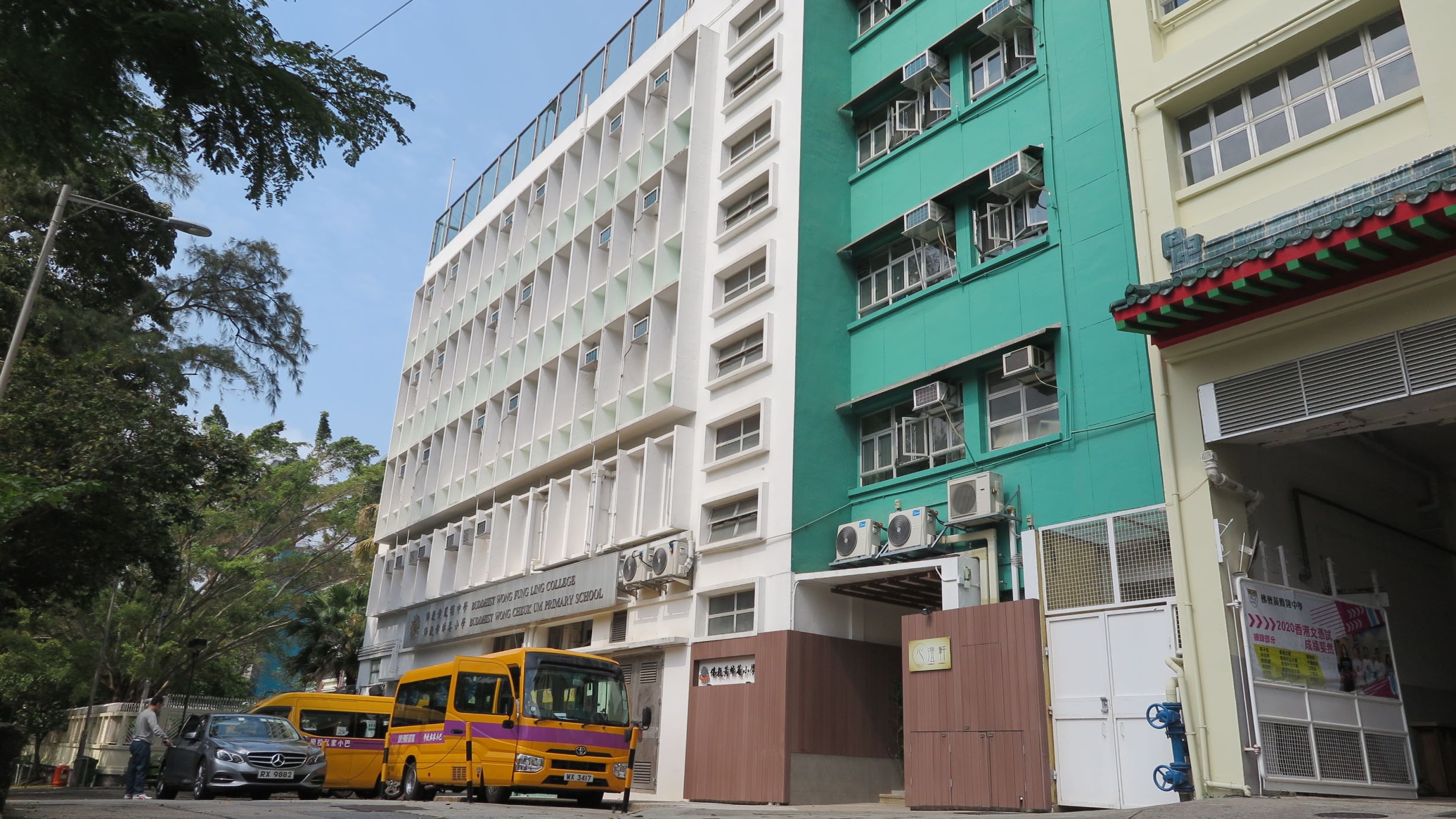

Last revision date:01 September 2026


