 Primary School Profiles 2026

 Primary School Profiles 2026
| Address: | 12 Link Road, Causeway Bay, HK | |||
| Phone: | 28908131 | Email: | pershing@plkgspts.edu.hk | |
| Fax: | 28824516 | Website: | http://www.plkgspts.edu.hk | |
 School Information
 | Supervisor/ Chairman of Management Committee | : | Ms. Chan Laverna Jun Lin |
| School Head | : | Ms. Lee Sze Wai |
| Incorporated Management Committee been established? | : | Established |
| Percentage of School Supervisor and Managers / Chairperson and Members of School Management Committee (SMC) of Government Schools Fulfilling the Training Targets | : | 89% |
| School Type | : | Aided Whole Day |
| Student Gender | : | Co-ed |
| Sponsoring Body | : | Po Leung Kuk |
| Religion | : | Not Applicable |
| Year of Commencement of Operation | : | 1946 |
| School Motto | : | Love, Respect, Diligence and Integrity |
| Area Occupied by the School | : | About 2212 Sq. M |
| Through-train Secondary School | : | - |
| Feeder Secondary School | : | - |
| Nominated Secondary School | : | - |
| Medium of Instruction | : | Chinese & English |
| School Bus Service | : | Nanny van |
| Parent-Teacher Association | : | Yes |
| Past Students' Association/Alumni Association | : | Yes |
| 4Rs Mental Health Charter | : | Yes |
| Whole School Health Programme | : | Action School |
 2026/2027 Annual School Charges
| School Fee | : | - |
| Tong Fai | : | - |
| PTA Fee | : | $30 |
| Approved Charges for non-standard items | : | $400 (Subsidies for printing costs and student activities) |
| Other Charges | : | - |
 School Facilities
 | Number of Classroom(s) | : | 16 |
| Number of School Hall(s) | : | 2 |
| Number of Playground(s) | : | 3 |
| Number of Library(ies) | : | 1 |
| Special Rooms | : | Multi-media Teaching Room, Student Activity Room, Science Room, Visual Arts Room, Music Room, Multi-purpose Room and Guidance Activity Room. |
| Facility(ies) for Supporting Students with Special Educational Needs | : | - |
| Others | : | Computers, visualizers, interactive whiteboard and IP phones are equipped in classrooms. Wireless network using fiber broadband for internet access. |
 Teaching Staff Information (Including School Head) in the 2025/2026 school year
 | Number of teaching posts in the approved establishment | : | 24 |
| Total number of teachers in the school | : | 28 |
| Qualifications and professional training (%) | ||
| Had Received Teacher Training | : | 82% |
| Bachelor Degree | : | 100% |
| Master/ Doctorate Degree or above | : | 39% |
| Special Education Training | : | 87% |
| Years of Experience (%) | ||
| 0 - 4 years | : | 41% |
| 5 - 9 years | : | 22% |
| 10 years or above | : | 37% |
 Class Structure
 | 2025/26 school year | ||
| P1 Number of classes | : | 2 |
| P2 Number of classes | : | 2 |
| P3 Number of classes | : | 1 |
| P4 Number of classes | : | 2 |
| P5 Number of classes | : | 2 |
| P6 Number of classes | : | 2 |
| Total | : | 11 |
| 2026/27 school year (Based on the number of classes approved by EDB in 2026) | ||
| P1 Number of classes | : | 2 |
| P2 Number of classes | : | 2 |
| P3 Number of classes | : | 2 |
| P4 Number of classes | : | 1 |
| P5 Number of classes | : | 2 |
| P6 Number of classes | : | 2 |
| Total | : | 11 |
| Mode of teaching at different levels | ||
| Small class teaching is implemented in all levels. Pull-out learning is arranged for students with special educational needs and non-Chinese speaking students, if necessary. | ||
| Remarks | ||
| In Primary 1 to 3, classes are divided into Chinese and English classes. Subjects in the Chinese class (except for English) are taught in Chinese, while Mathematics, Primary Humanities & Primary Science (or General Studies) in the English class are taught in English. | ||
 Performance Assessment
 | Applicable to P1 only | ||
| Number of test(s) per year | : | 0 |
| Number of exam(s) per year | : | 0 |
| Replace tests and examinations with diversified assessments in the first term of P1 | : | Yes |
| Applicable to P2 to P6 only | ||
| Number of test(s) per year | : | 0 |
| Number of exam(s) per year | : | 2 |
| Applicable to P1 to P6 | ||
| Formulate appropriate school-based assessment and assignment policies, inform parents of related arrangements, and collect views from teachers, students and parents regularly (at least once per school year) for ongoing review and optimisation of the school assessment and assignment policies | : | Yes |
| Upload the school-based assessment policy onto the school webpage for information of the public and stakeholders | : | Yes |
| Upload the school-based assignment policy onto the school webpage for information of the public and stakeholders | : | Yes |
| Diversified Assessment for Learning | : | There are no exams for P1-P2 while there is one exam for each school term for P3-P6. Listening, speaking, reading and writing skills are assessed in language subjects examinations. Performance assessment is included in Mathematic, Humanities & Science examinations. Formative and summative assessments are adopted in non-academic subjects such as Music, Visual Arts, P.E. and Information Technology. |
| Avoid arranging tests or examinations immediately after long holidays in order to let students take more rest during the holidays | : | Yes |
| Arrange the timetable flexibly according to the school context, with a tutorial session provided in the afternoon as far as possible for students to finish some of their homework under teachers’ guidance | : | Yes |
| Streaming arrangement | : | P.1-P.6: Mixed ability classes. Streaming is based on students' annual academic performance. There are no EXAMs for P.1 & P.2. |
 School Life
 | Number of school days per week | : | 5 |
| Number of periods per day | : | 9 |
| Duration of each normal period | : | 35 |
| School starts at | : | 8:00 AM |
| School ends at | : | 3:15 PM |
| Lunch break | : | 12:45 - 1:35 |
| Lunch arrangement | : | Provided by designated supplier and arranged by parents. |
| Healthy school life | : | Implement the Healthy School Policy. Through comprehensive activities such as talks, visits, booth games and plays to promote and maintain students' physical and mental health. Conduct the school-based sports award scheme. Carry out the physical fitness test every year. |
| Remarks | : | Morning reading session is carried out before assembly and various learning activities are organised at lunch recess. Weekday afternoons focus on multi-intelligent learning sessions, allowing students to enhance their knowledge across subjects through different activities. Friday afternoons feature extracurricular activity classes, enabling students to relax, develop various interests, and improve their well-being. |
 Life-wide Learning
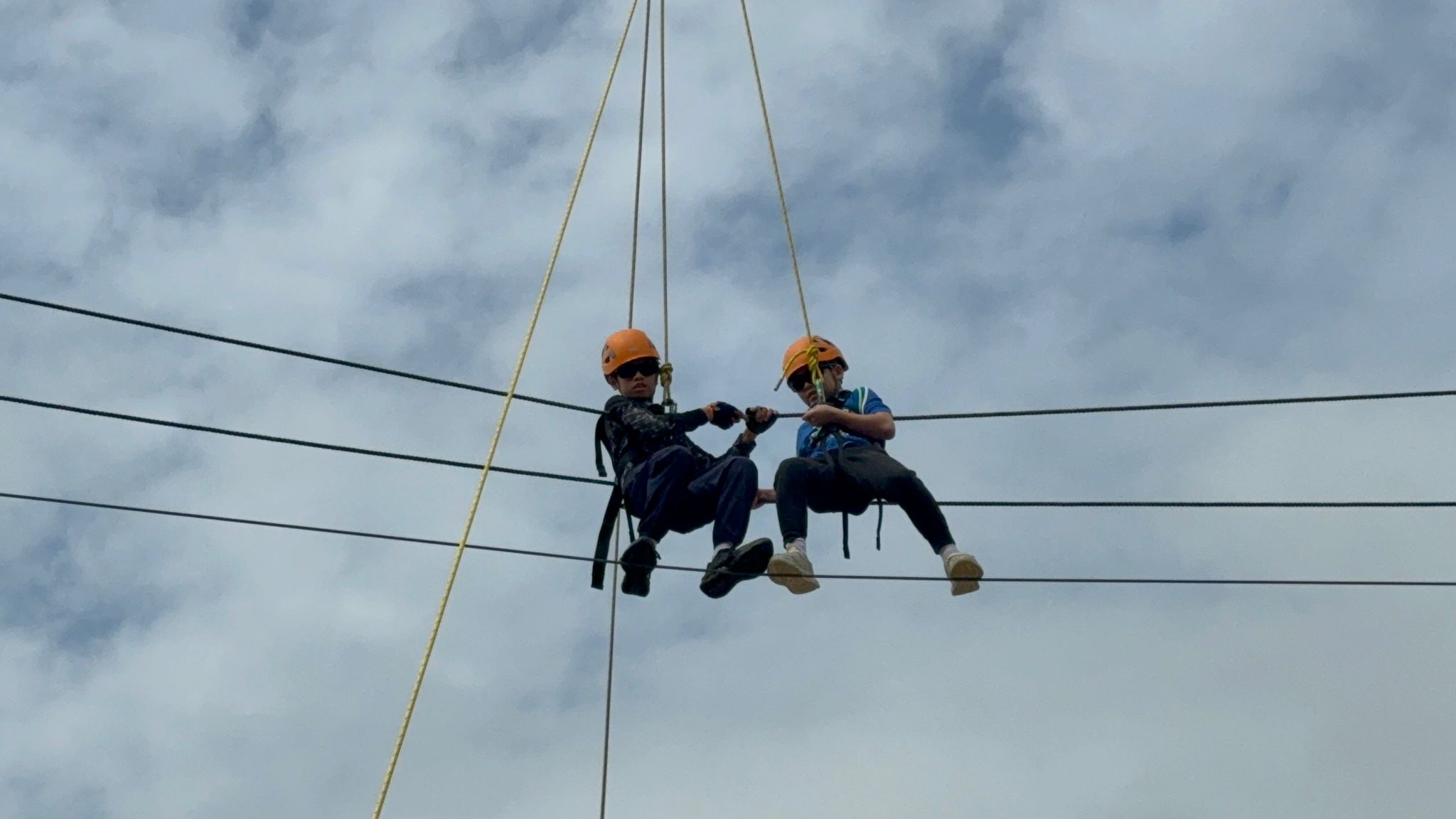
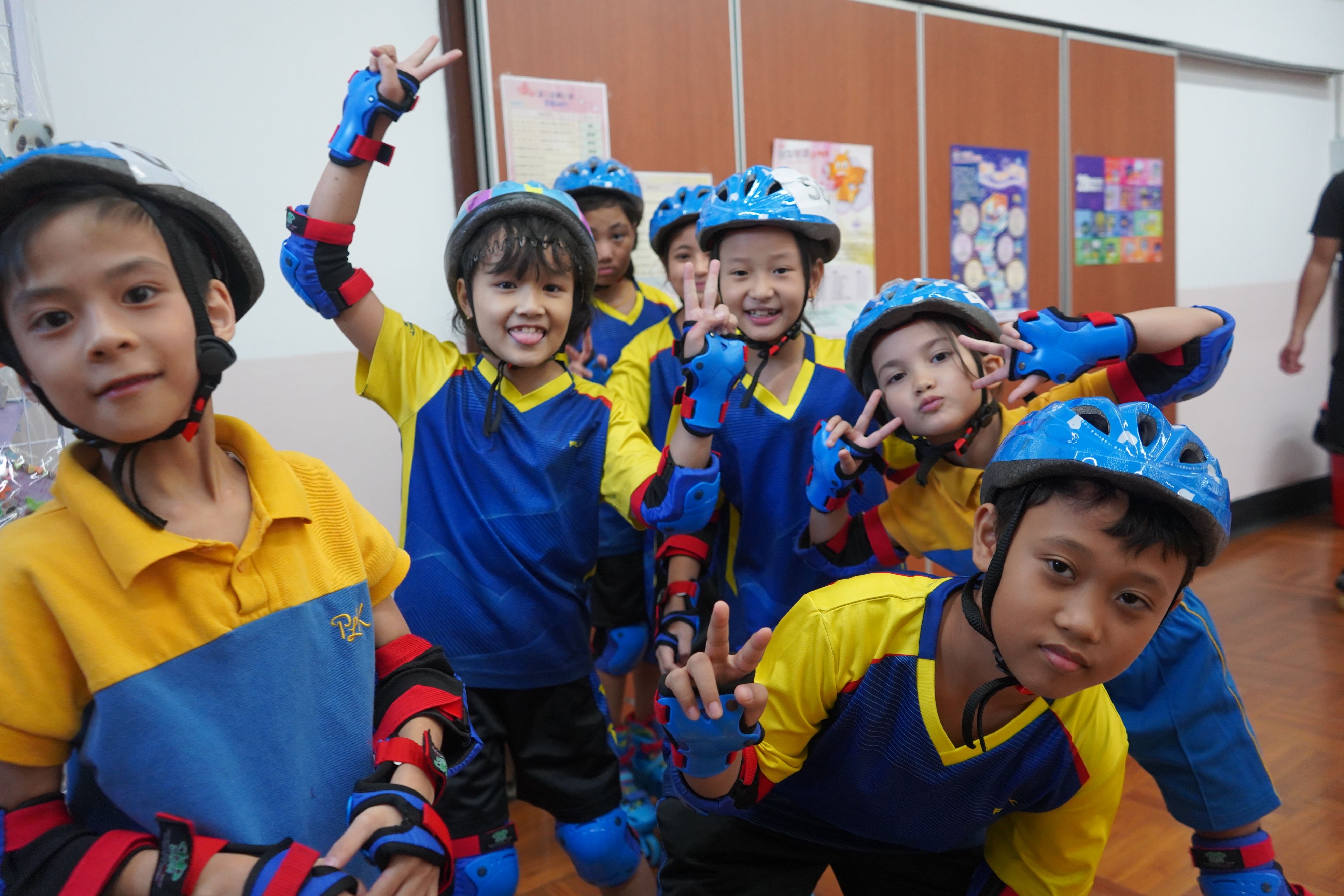
 | Extra-curricular activities: picnics, visits, educational camps, cultural exchange trips, student development activities; Speech Festival, Dance Festival & Music Festival. Activity groups: Cub Scouts, CYC, JPC, Clay Club, Zentangle, K-pop, Breakdance, Magic, Taekwondo, Football, Skateboard, Basketball, Rugby, Rope skipping, Roller skating, Fencing, Little Chef, VR coding, LEGO, etc. |
 School Mission
 | Our school aim is to deliver education for all and create an environment where each student learns happily. Our students receive an education that ensures a balanced development in their moral, intellectual, physical, social and aesthetic characteristics. We aim to ensure that each student will make a positive contribution to society. |
 School Characteristics
 | School Management | ||
| School Management Organisation | : | The school is administered by the IMC and the sponsoring body - Po Leung Kuk. The school functional committees are supervised by the principal and the middle managers. Suggestions from all stakeholders are welcome. |
| Incorporated Management Committee / School Management Committee/ Management Committee | : | The Incorporated Management Committee has been established in the academic year 2007-08. It consists of 20 members. The sponsoring body managers include the representatives of Po Leung Kuk and Chinese Gold and Silver Exchange Society. |
| School Green Policy | : | 1. Establish energy-saving measures and promote environmental education. 2. Join the Student Environmental Protection Ambassador Scheme, Greening School Scheme, Cherish Water Campus Integrated Education Programme, HK Electric Happy Green Campaign and PLK 'Little Green Angels' Scheme. |
| School's Major Concerns | : | 1. Continuous curriculum development to strengthen students' sense of national identity and deepen their awareness of safeguarding national security. 2. Continue character education to cultivate students into good citizens with positive values and attitudes. |
| Learning and Teaching Plan | ||
| Learning & Teaching Strategies | : | 1. Implementing learning and thinking strategies training in all levels. 2. Implementing the "Read & Write" Project, "Primary Literacy Programme - Reading and Writing" and the school-based Chinese and English writing curriculum to enhance students' reading and writing skills. 3. Constructing mathematics concept through practical learning activities. |
| Development of Major Renewed Emphases of the Primary Education Curriculum | : | 1. Re-adjust the school timetable so as to make good use of learning time and creating space to promote a balanced physical and mental development. Arrange all subject classes before lunch and organise diverse learning activities after lunch, including language activities, Mathematics games, reading class, scientific investigation, sport and art activities, STEAM education and coding. 2. Strengthen values education (including life education, national education and national security education), so as to enrich students' learning experiences and promote whole-person development. 3. Provide diversified group activities after lesson time to cater for learner diversity, including homework tutorial class, Chinese Reading and Writing Enhancement Programme, parent-child activities and a variety of interest classes. 4. Enhance learning effectiveness by providing personalised e-learning during time after class. |
| Development of Generic Skills | : | Students' generic skills are developed through diverse activities such as shared reading, music activity, personal growth education, project learning and CoolThink@JC Programme. |
| Cultivation of Proper Values, Attitudes and Behaviours | : | 1. The Positive Education Coordination Group, which aims to promote positive values and attitudes for creating a positive learning atmosphere, has been set up. 2. Integrate character education into the formal curriculum. Implement the 'Po Leung Kuk Positive Education Movement in Primary Schools'. In personal growth education lessons, the Happy Master Programme, Journey to Positive Character and Positive Education (Growth Mindset Programme) are introduced. 3. Organise activities such as the emotional health talk, Positive Education Activity Day, parent-child activities and positive education parent workshops. |
| Student Support | ||
| Whole School Approach to Catering for Learner Diversity | : | 1. Cooperative learning strategies and heterogeneous groupings are adopted to facilitate students' collaborative learning. 2. Remedial teaching classes and tutorial classes are conducted before and after school respectively. 3. Various extra-curricular activities are conducted to develop students' potentials by hiring outside instructors with the school development grant, donations and community resources. 4. Experiential secondary school activities and interview workshops are organised for P.6 students. 5. Teachers attend relevant special education teacher training courses. |
| Whole School Approach to Integrated Education | : | 1. Headed by the SENCO, the student support team has been set up to devise support policy and evaluate the effectiveness. The 3-Tier Support Model is adopted, with the participation and support of the school-based educational psychologist, Assistant Social Work Officer, teachers and parents. 2. Utilization of the learning support grant and additional resources to recruit additional teachers and teaching assistants; and provide training services such as sensory integration training, expressive arts assisted training, social skills training, reading and writing training and enhanced school-based speech therapy service. 3. Join the 'Jockey Club Autism Support Network' and 'Jockey Club Keen and Active Kids Project'. |
| Education Support for Non-Chinese Speaking(NCS) Students | : | Our school provides additional support for NCS students to facilitate their learning of Chinese: providing after-school support programmes in learning Chinese; appointing additional teacher(s)/teaching assistant(s) to support NCS students' learning of Chinese; arranging intensive Chinese learning and teaching mode(s), e.g. pull-out learning if necessary, split-class/group learning, etc.; developing school-based Chinese Language curriculum and/or adapting learning and teaching materials; and organising activities to create an inclusive learning environment in the school. Various scholarships are established to honour NCS students with outstanding performance. Our school was awarded ‘ Racially Friendly Campus Recognition’ for 4 years and was awarded ‘ Racially Friendly Star Campus Recognition’ for the previous 2 years. |
| Curriculum Tailoring and Adaptation | : | 1. Classroom activities and assignments are designed to cater for learners' diversity. 2. Adapt the curriculum, homework, and assessment methods for students with special educational needs. |
| Home-school Co-operation and School Ethos | ||
| Home-School Co-operation | : | The PTA organises a wide range of activities, such as picnic, barbecue and festival celebration activities. Our school organises two Parents' Days, various seminars and workshops for parents throughout the year. |
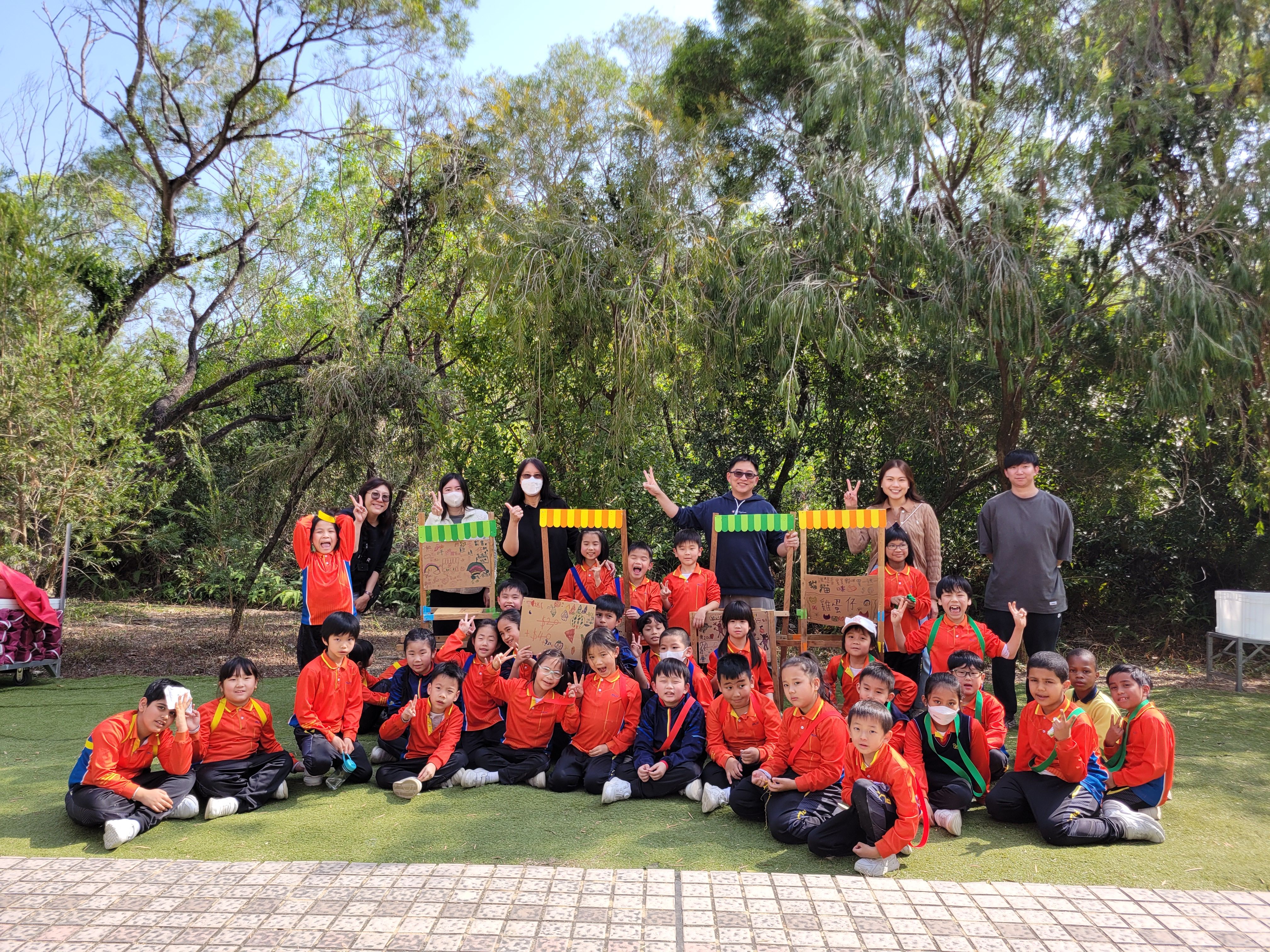
| School Ethos | : | 1. Develop a caring and inclusive school culture. Our school has been awarded the 'Love & Concern Excellent Award' for three years and the ‘Love & Concern Award’ for seventeen years. We are honoured to have been awarded the 'Sustainable Caring Award' this year. 2. Our school's Moral and Civic Education Curriculum has continuously received the Excellence Award from the Yan Chai Hospital's Moral Education and Civic Education Award Scheme for twenty-four years. 3. Our school has been awarded the 'Honorary Award' in the 'Hi-Five Student Engagement Award Scheme', and the 'Caring School' Certificate of Commendation, which is awarded by the Hong Kong Youth Association. 4. Our school has been commended by the Equal Opportunities Commission as a 'Supportive Racially Friendly Campus'. 5. Upper primary students serve as little teachers to assist lower primary students in their learning. 6. Establish healthy campus policies to create a healthy campus environment and cultivate healthy lifestyle habits. |
| Future Development | ||
| School Development Plan | : | 1. Promote STEAM education. 2. Enrich students' learning experiences. 3. Strengthen parental education. |
| Teacher Professional Training & Development | : | Teachers participate in teaching support programmes, engage in educational research activities, and share their experiences. They also attend training based on their individual needs. |
| Others | : | Our school has established multiple scholarships and sponsorships to recognize students who excel in academic performance, service, and sports. |
 School Map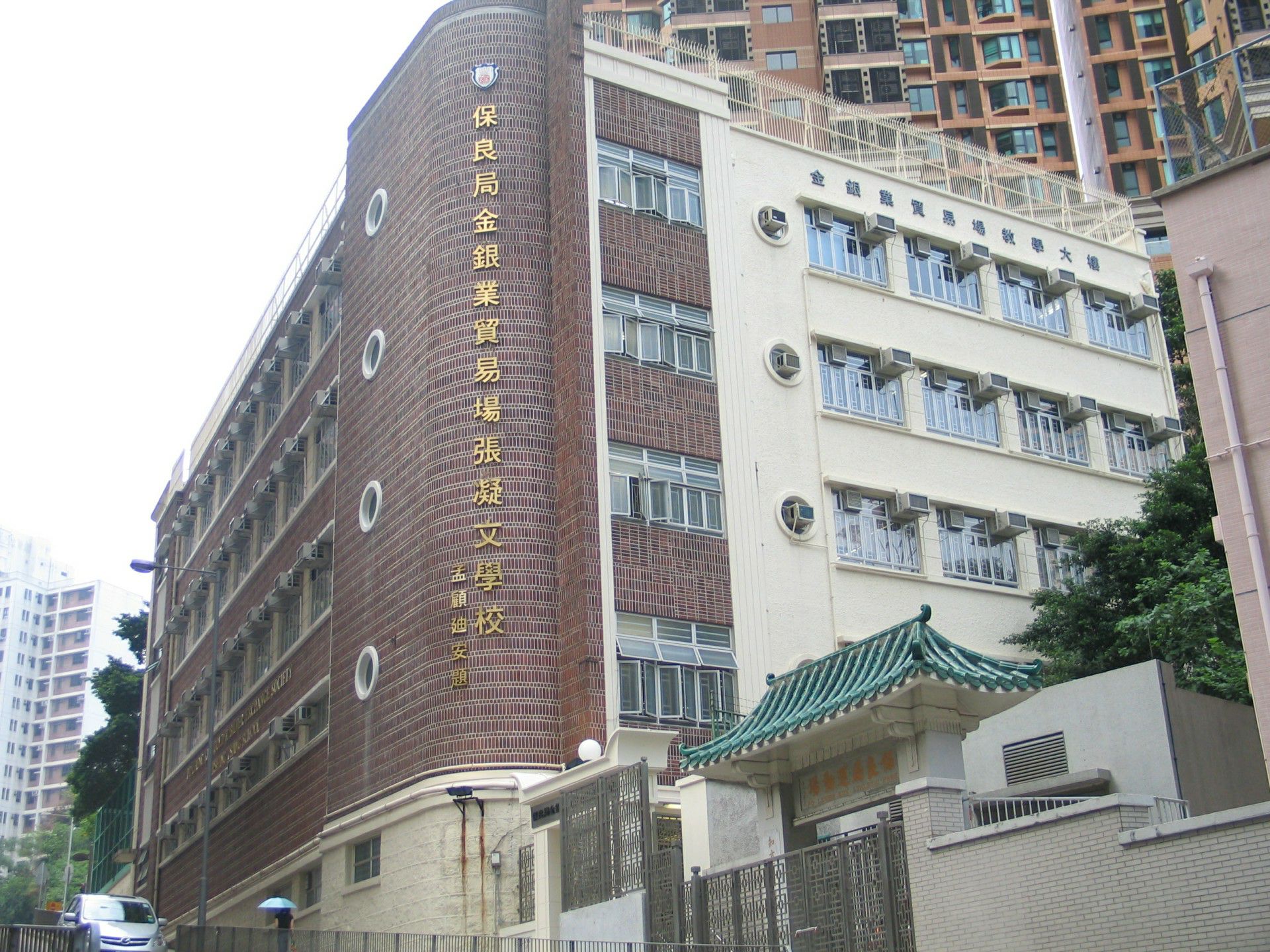
Last revision date:01 September 2026


