 Primary School Profiles 2026

 Primary School Profiles 2026

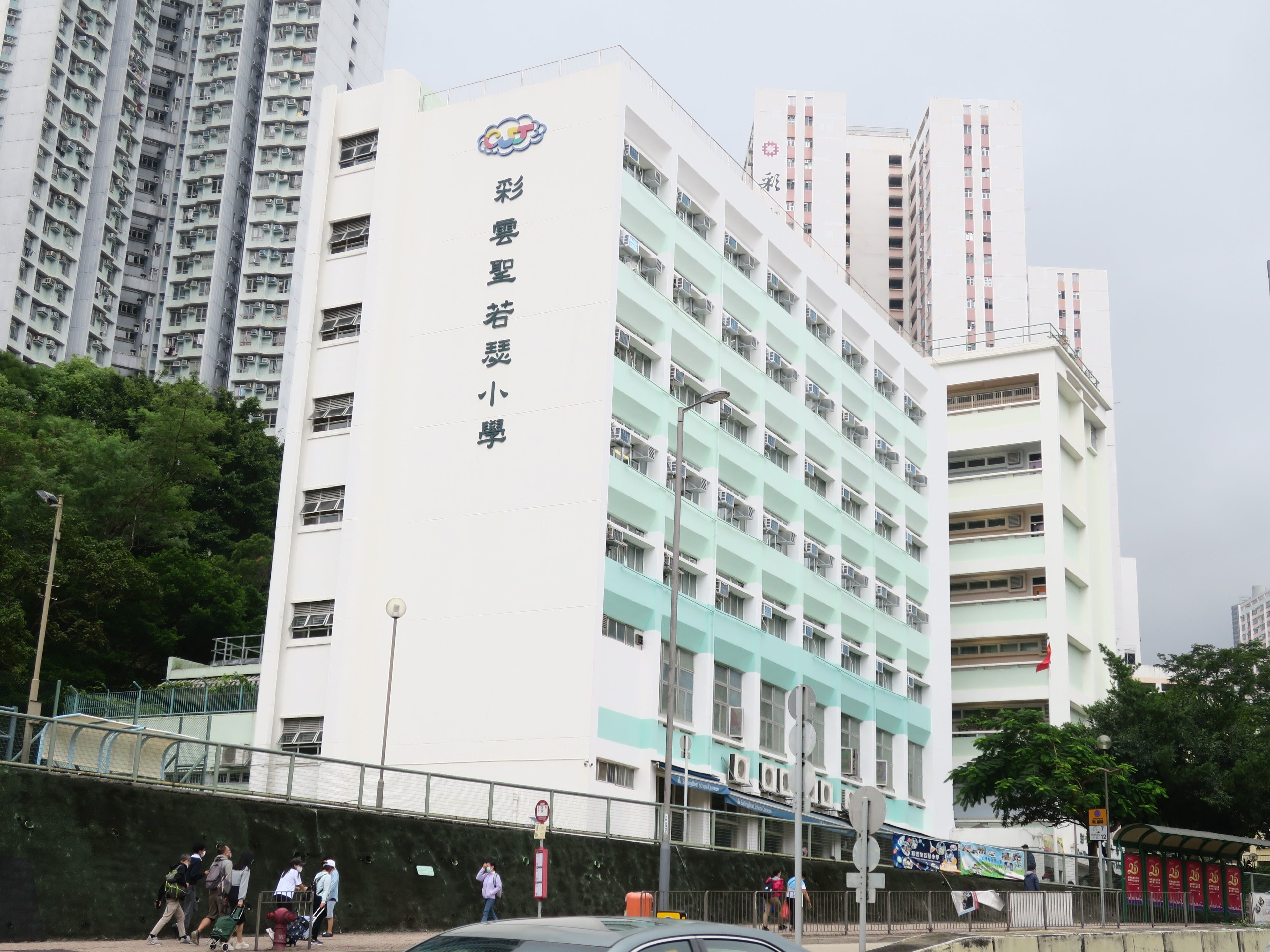
| Address: | Estate School No. 2, Choi Wan Estate, Kowloon | |||
| Phone: | 27557180 | Email: | info@cwsj.edu.hk | |
| Fax: | 23050067 | Website: | http://www.cwsj.edu.hk | |
 School Information
 | Supervisor/ Chairman of Management Committee | : | Mr. Leung Cheung Choi |
| School Head | : | Mr. Chu Ka Leung |
| Incorporated Management Committee been established? | : | Established |
| Percentage of School Supervisor and Managers / Chairperson and Members of School Management Committee (SMC) of Government Schools Fulfilling the Training Targets | : | 53% |
| School Type | : | Aided Whole Day |
| Student Gender | : | Co-ed |
| Sponsoring Body | : | The Catholic Diocese of Hong Kong |
| Religion | : | Catholicism |
| Year of Commencement of Operation | : | 1982 |
| School Motto | : | Striving for excellence through 'Faith', 'Diligence' and 'Love' |
| Area Occupied by the School | : | About 4305 Sq. M |
| Through-train Secondary School | : | - |
| Feeder Secondary School | : | - |
| Nominated Secondary School | : | - |
| Medium of Instruction | : | Chinese |
| School Bus Service | : | Nanny van |
| Parent-Teacher Association | : | Yes |
| Past Students' Association/Alumni Association | : | Yes |
| 4Rs Mental Health Charter | : | Yes |
| Whole School Health Programme | : | Action School |
 2026/2027 Annual School Charges
| School Fee | : | - |
| Tong Fai | : | - |
| PTA Fee | : | $100 |
| Approved Charges for non-standard items | : | $400 |
| Other Charges | : | - |
 School Facilities
 | Number of Classroom(s) | : | 24 |
| Number of School Hall(s) | : | 1 |
| Number of Playground(s) | : | 1 |
| Number of Library(ies) | : | 1 |
| Special Rooms | : | Prayer room, STEM Room, Music Room, Visual Arts Room, Student Activity Room, Chinese Culture Room, Chinese Orchestra Room, Computer Room, Counselling Room, English Language room and library. |
| Facility(ies) for Supporting Students with Special Educational Needs | : | - |
| Others | : | Conference Room, Teaching Aids Room, Medical Room, Teaching Resources Room. |
 Teaching Staff Information (Including School Head) in the 2025/2026 school year
 | Number of teaching posts in the approved establishment | : | 38 |
| Total number of teachers in the school | : | 41 |
| Qualifications and professional training (%) | ||
| Had Received Teacher Training | : | 91% |
| Bachelor Degree | : | 100% |
| Master/ Doctorate Degree or above | : | 32% |
| Special Education Training | : | 72% |
| Years of Experience (%) | ||
| 0 - 4 years | : | 24% |
| 5 - 9 years | : | 15% |
| 10 years or above | : | 61% |
 Class Structure
 | 2025/26 school year | ||
| P1 Number of classes | : | 2 |
| P2 Number of classes | : | 3 |
| P3 Number of classes | : | 3 |
| P4 Number of classes | : | 4 |
| P5 Number of classes | : | 3 |
| P6 Number of classes | : | 4 |
| Total | : | 19 |
| 2026/27 school year (Based on the number of classes approved by EDB in 2026) | ||
| P1 Number of classes | : | 2 |
| P2 Number of classes | : | 2 |
| P3 Number of classes | : | 3 |
| P4 Number of classes | : | 3 |
| P5 Number of classes | : | 4 |
| P6 Number of classes | : | 3 |
| Total | : | 17 |
| Mode of teaching at different levels | ||
| Small class teaching is promoted in P.1 to P.6. Incorporate Putonghua into P.1-P.6 Chinese learning. | ||
| Remarks | ||
| P.1:Co-homeroom Teacher System | ||
 Performance Assessment
 | Applicable to P1 only | ||
| Number of test(s) per year | : | 2 |
| Number of exam(s) per year | : | 1 |
| Replace tests and examinations with diversified assessments in the first term of P1 | : | Yes |
| Applicable to P2 to P6 only | ||
| Number of test(s) per year | : | 0 |
| Number of exam(s) per year | : | 3 |
| Applicable to P1 to P6 | ||
| Formulate appropriate school-based assessment and assignment policies, inform parents of related arrangements, and collect views from teachers, students and parents regularly (at least once per school year) for ongoing review and optimisation of the school assessment and assignment policies | : | Yes |
| Upload the school-based assessment policy onto the school webpage for information of the public and stakeholders | : | Yes |
| Upload the school-based assignment policy onto the school webpage for information of the public and stakeholders | : | Yes |
| Diversified Assessment for Learning | : | Formative assessment is used in different subject areas. We use multiple assessments & encourage students to carry out self assessment and peer assessment in project learning, subject activities and we have curriculum integration. |
| Avoid arranging tests or examinations immediately after long holidays in order to let students take more rest during the holidays | : | Yes |
| Arrange the timetable flexibly according to the school context, with a tutorial session provided in the afternoon as far as possible for students to finish some of their homework under teachers’ guidance | : | Yes |
| Streaming arrangement | : | One elite class in P.4, P.5 and P.6. |
 School Life
 | Number of school days per week | : | 5 |
| Number of periods per day | : | 9 |
| Duration of each normal period | : | 35 |
| School starts at | : | 8:00 AM |
| School ends at | : | 3:30 PM |
| Lunch break | : | 12:55 - 1:50 |
| Lunch arrangement | : | Provided by designated supplier and arranged by parents. |
| Healthy school life | : | Food Control Committee supervises the food supplied by the lunch supplier and the tuck shop. |
| Remarks | : | Extra-curricular activities / Value Education are held from 2:30p.m. to 5:30p.m. on Monday to Thursday, from 1:40p.m. to 4:50p.m. on Friday. Enhancement lessons (3:30-4:15p.m.) are held for P.1 - P.4 after school. Enrichment / enhancement lessons (1:50-2:30p.m.) are held for P.5 - P.6. |
 Life-wide Learning
 | Pioneers of Christ, Little Joseph, Community Youth Club, Cub Scouts, Brownies, Red Cross Junior Units, Eco-ambassadors, Choi Wan Ambassadors, Mathematics Class, Science class, Cambridge English Class, Art Class, English Drama, Hymns Choir, Chinese Orchestra, Violin, Chinese Dancing Club, Latin American Dancing, Martial Arts Club, Ball Games Club, Athletics Team. |
 School Mission
 | We aim at providing "whole-person" education for students based on core values of Catholic education which cultivate students' moral, intellectual, social and aesthetic values as well as encourage students to achieve academic excellence. We help to develop individual potential and foster the spirit of self-learning. We encourage a positive and a healthy attitude towards life and promote a keen sense of responsibility and commitment to the community. |
 School Characteristics
 | School Management | ||
| School Management Organisation | : | Under the Incorporated Management Committee, the Supervisor and the Principal are responsible to guide all administrative groups to carry out the development of school. |
| Incorporated Management Committee / School Management Committee/ Management Committee | : | The Incorporated Management Committee is formed by educational experts and community members, teachers and alumni. |
| School Green Policy | : | It cultivates the concept and skill of respecting and caring for the environment. Eco-ambassadors help promote the messages of loving the Earth. |
| School's Major Concerns | : | 1. Implement the core values of the Catholic Education and Positive Education, develop an environment to help students build a flourishing life. 2. Promote self-directed learning and develop their proactive and initiative attitude. 3. Widen students’ life-wide-learning experiences in developing students’ potential. |
| Learning and Teaching Plan | ||
| Learning & Teaching Strategies | : | Lesson time is scheduled flexibly. Our pupils learn through joyful and effective learning experiences in class and outside classroom by means of various thematic learning days. A range of inter-class and inter-school competitions provide chances for our pupils to strive for excellence. Cross-subject learning, project learning and inquiry-based learning approach enable pupils to monitor their own learning and develop self-learning ability. Small class teaching and co-operative learning are adopted in P.1-P.6. |
| Development of Major Renewed Emphases of the Primary Education Curriculum | : | 1. National Identity: Cultivate a sense of belonging and national identity towards our country through lessons and learning activities. 2. Positive Values and Attitudes: Emphasis is placed on life education and value education lessons. 3. Knowledge of Key Learning Areas (KLAs): Students are equipped with a solid knowledge base and perspectives across the eight KLAs; cross-curricular activities enhance knowledge of KLAs. 4. Language skills: English Speaking Tuesday and Putonghua Wednesday fostered language-rich environment. 5. Generic Skills: Develop students' generic skills and team spirit through cooperative learning award schemes, project works and STEAM Education. 6. Reading and Information Literacy: Reading across curricular activities develop reading habit; Information literacy talks and lessons promoted students to use IT rationally and responsibly. 7. Healthy Lifestyle: Diversified aesthetic and physical activities lead students to achieve a balanced physical and mental development. |
| Development of Generic Skills | : | Creativity, numeracy skill, social skill, self-study skill, critical-thinking skill and self-management skill are penetrated through different activities organized by various subjects. |
| Cultivation of Proper Values, Attitudes and Behaviours | : | Implement Positive Education curriculum and different activities to promote PERMA: Positive Emotion, Engagement, Relationship Meaning and Achievement. |
| Student Support | ||
| Whole School Approach to Catering for Learner Diversity | : | Intensive learning support such as remedial classes (after-school programmes) for low-achievers in Chinese, English and Mathematics, Newly-arrived Children (English Class), Enhancement Class for elite groups, different types of classes are provided to learners with different needs. Primary one and six will be involved in 'Bridging Activities' which are special programmes for students to deal with different challenges. |
| Whole School Approach to Integrated Education | : | Our school adopts "Whole School Approach" to Integrated Education. With the support of Learning Support Grant, Capacity Enhancement Grant, professionals such as School-based Educational Psychologists and School-based Speech Therapist include remedial learning groups, training on social skills, School-based Speech Therapy Service and Individual Education Plans etc. provide to our school. |
| Education Support for Non-Chinese Speaking(NCS) Students | : | Our school provides additional support for NCS students to facilitate their learning of Chinese: providing after-school support programmes in learning Chinese; appointing additional teacher(s)/teaching assistant(s) to support NCS students' learning of Chinese; developing school-based Chinese Language curriculum and/or adapting learning and teaching materials; organising activities to create an inclusive learning environment in the school; and hiring additional manpower and/or translation/interpretation services to facilitate the communication with parents of NCS students. |
| Curriculum Tailoring and Adaptation | : | To adjust assessments, curriculum and homework policy for learners who have special learning needs. |
| Home-school Co-operation and School Ethos | ||
| Home-School Co-operation | : | To strengthen home-school co-operation, parents are able to express their opinions through Parents' day, or school visits. Parents are kept informed about the school through newsletters, leaflets, circular, school web-site or talking to teachers. Various parent seminars and experience-sharing sessions are organised to support parents in handling children's needs and promote better family relationships. |
| School Ethos | : | 'Merit Award Scheme' encourages students' positive living attitude. School special teams and Volunteer groups help to strengthen students' sense of responsibility and 'caring and serving others' attitude. Parents voluntary group helps primary one learners to adapt to the new life in school. Peers counselling for low primary is offered through 'Volunteer Group'. Equip "Ambassador of Love" with skills in building rapport and positive relationship with peers. |
| Future Development | ||
| School Development Plan | : | 1. Promote the Core Values of Catholic Education and Positive Education develop students' character strengths. 2. Promote STREAM Education to develop students’ computational thinking concepts, learning motivation and creativity. 3. Promote Drama in Education to stimulate students' interest and motivation for learning. 4. Develop school-based curriculum to cater learning diversity. 5. Promote connections between Curriculum, Learning and Teaching and Assessment to enhance teaching and learning effectiveness. 6. Develop positive education which help arouse students' emotional management skills. 7. Develop gifted education for all. 8. Enhance strong Parent-child-teacher relationship. |
| Teacher Professional Training & Development | : | Teacher Learning Circle: Teachers participate actively in collaborative lesson preparations, peer lesson observations and carry out post-lesson conference. Organize teacher training workshops run by EDB, institutions or educational expertise. |
| Others | : | Rev. Bro. Paul Sun Education Foundation. |
 School Map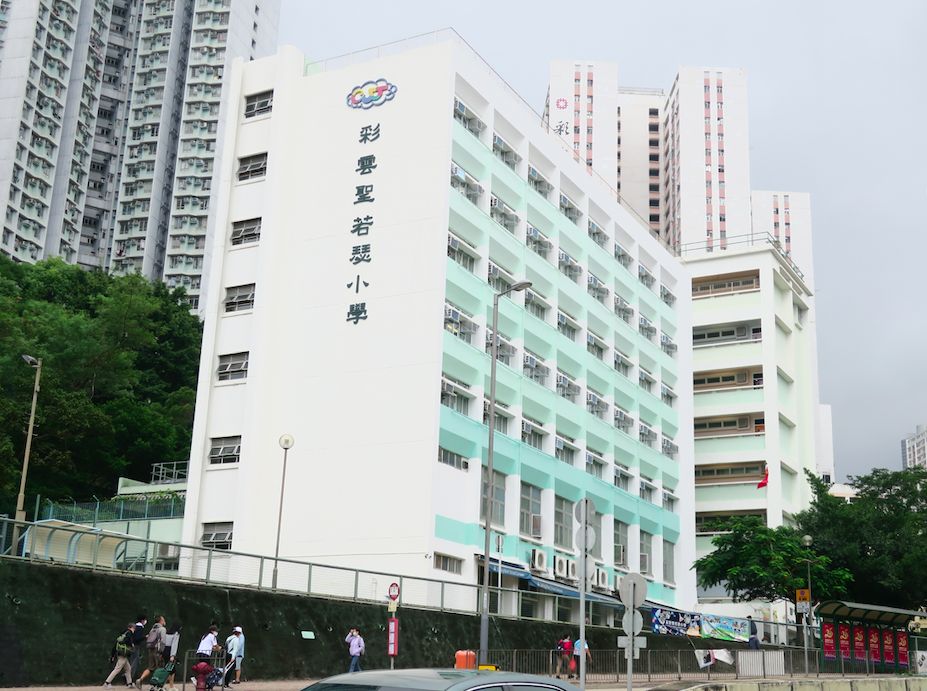
Last revision date:01 September 2026


