 Primary School Profiles 2026

 Primary School Profiles 2026
| Address: | 3 Wong Kuk Avenue, Choi Hung Estate, Wong Tai Sin, Kowloon | |||
| Phone: | 23200683 | Email: | keiwa@keiwa.edu.hk | |
| Fax: | 23259035 | Website: | http://www.keiwa.edu.hk | |
 School Information
 | Supervisor/ Chairman of Management Committee | : | Rev. Ko Kwok Hung |
| School Head | : | Mr. Chan Cheung Wah |
| Incorporated Management Committee been established? | : | Established |
| Percentage of School Supervisor and Managers / Chairperson and Members of School Management Committee (SMC) of Government Schools Fulfilling the Training Targets | : | 100% |
| School Type | : | Aided Whole Day |
| Student Gender | : | Co-ed |
| Sponsoring Body | : | The Hong Kong Council of the Church of Christ in China |
| Religion | : | Protestantism / Christianity |
| Year of Commencement of Operation | : | 1964 |
| School Motto | : | Enlightenment through learning |
| Area Occupied by the School | : | About 2000 Sq. M |
| Through-train Secondary School | : | - |
| Feeder Secondary School | : | - |
| Nominated Secondary School | : | - |
| Medium of Instruction | : | Chinese |
| School Bus Service | : | Nanny van |
| Parent-Teacher Association | : | Yes |
| Past Students' Association/Alumni Association | : | Yes |
| 4Rs Mental Health Charter | : | Yes |
| Whole School Health Programme | : | Pledged School |
 2026/2027 Annual School Charges
| School Fee | : | - |
| Tong Fai | : | - |
| PTA Fee | : | $35 |
| Approved Charges for non-standard items | : | $400 |
| Other Charges | : | - |
 School Facilities
 | Number of Classroom(s) | : | 24 |
| Number of School Hall(s) | : | 1 |
| Number of Playground(s) | : | 1 |
| Number of Library(ies) | : | 1 |
| Special Rooms | : | Five special rooms which include music room, art room, STEAM maker room, counselling room and activity room. |
| Facility(ies) for Supporting Students with Special Educational Needs | : | Ramp, Accessible lift and Accessible toilet. |
| Others | : | Air-conditioners and electronic teaching equipment are installed in the school hall and classrooms. There is an ocean world and campus TV studio. |
 Teaching Staff Information (Including School Head) in the 2025/2026 school year
 | Number of teaching posts in the approved establishment | : | 46 |
| Total number of teachers in the school | : | 48 |
| Qualifications and professional training (%) | ||
| Had Received Teacher Training | : | 98% |
| Bachelor Degree | : | 100% |
| Master/ Doctorate Degree or above | : | 46% |
| Special Education Training | : | 98% |
| Years of Experience (%) | ||
| 0 - 4 years | : | 4% |
| 5 - 9 years | : | 23% |
| 10 years or above | : | 73% |
 Class Structure
 | 2025/26 school year | ||
| P1 Number of classes | : | 4 |
| P2 Number of classes | : | 4 |
| P3 Number of classes | : | 4 |
| P4 Number of classes | : | 4 |
| P5 Number of classes | : | 4 |
| P6 Number of classes | : | 4 |
| Total | : | 24 |
| 2026/27 school year (Based on the number of classes approved by EDB in 2026) | ||
| P1 Number of classes | : | 3 |
| P2 Number of classes | : | 4 |
| P3 Number of classes | : | 4 |
| P4 Number of classes | : | 4 |
| P5 Number of classes | : | 4 |
| P6 Number of classes | : | 4 |
| Total | : | 23 |
| Mode of teaching at different levels | ||
| Small class teaching is implemented. Enrichment and support programmes are provided for Chinese, English and Mathematics. After‑school tutorial classes for P.5 and homework support classes for P.1-5 are also offered. | ||
| Remarks | ||
| - | ||
 Performance Assessment
 | Applicable to P1 only | ||
| Number of test(s) per year | : | 0 |
| Number of exam(s) per year | : | 2 |
| Replace tests and examinations with diversified assessments in the first term of P1 | : | Yes |
| Applicable to P2 to P6 only | ||
| Number of test(s) per year | : | 0 |
| Number of exam(s) per year | : | 3 |
| Applicable to P1 to P6 | ||
| Formulate appropriate school-based assessment and assignment policies, inform parents of related arrangements, and collect views from teachers, students and parents regularly (at least once per school year) for ongoing review and optimisation of the school assessment and assignment policies | : | Yes |
| Upload the school-based assessment policy onto the school webpage for information of the public and stakeholders | : | Yes |
| Upload the school-based assignment policy onto the school webpage for information of the public and stakeholders | : | Yes |
| Diversified Assessment for Learning | : | Project-based learning accounts for 10% of the assessment in General Studies. Oral, drawing, and practical assessments are included in Primary Science. Diverse modes of assessment like self assessment, peer assessment and parent assessment are adopted. |
| Avoid arranging tests or examinations immediately after long holidays in order to let students take more rest during the holidays | : | Yes |
| Arrange the timetable flexibly according to the school context, with a tutorial session provided in the afternoon as far as possible for students to finish some of their homework under teachers’ guidance | : | Yes |
| Streaming arrangement | : | P.1 & P.2 classes are of mixed ability. P.3-P.6 students are streamed according to students' needs. |
 School Life
 | Number of school days per week | : | 5 |
| Number of periods per day | : | 8 |
| Duration of each normal period | : | 30 |
| School starts at | : | 8:00 AM |
| School ends at | : | 3:15 PM |
| Lunch break | : | 12:55 - 1:55 |
| Lunch arrangement | : | Provided by designated supplier and arranged by parents. |
| Healthy school life | : | 1. Lunch boxes provided by the supplier are monitored by teacher and parent representatives. 2. Activity zones, lunch-time activities, enrichment sessions, and English dance lessons for P.1-2 students are arranged to promote healthy living habits. 3. Life education lessons, themed assemblies, worship groups and pre-examination activities are held to support students' well-being. |
| Remarks | : | 1. Formal lessons are held before lunch, followed by enrichment sessions. 2. On Fridays, students are dismissed at 1:00 pm to allow time for learning, teacher development and family activities. 3. After‑school care services (until 6:30 p.m.) and homework support groups (until 4:45 p.m.) are provided to support family needs. 4. Saturday English learning groups and secondary school transition programmes are arranged. After‑school tutorial classes in Chinese, English and Mathematics are also provided. |
 Life-wide Learning
 | Whole‑person development is emphasised through a wide range of learning experiences. A Life-wide Learning Week is organised, with cross‑curricular learning and field studies for P.1-P.3 students, and outdoor education camps or overseas study visits for P.4-P.6 students. Fun enrichment sessions and life skills lessons are arranged in the afternoons. Over 40 extra‑curricular activities including sports, dance, music, academics and STEAM, are also offered to develop students' potential and enhance their confidence and problem‑solving skills. |
 School Mission
 | Together we nurture fullness of life; Hand in hand we witness the love of Christ. With the love of Christ, compassion for humanity and a positive attitude, we strive to deliver quality education to develop students’ potential to the fullest, to share with them the Gospel, and to cultivate in them a sense of good citizenship which will benefit our society and nation. |
 School Characteristics
 | School Management | ||
| School Management Organisation | : | Under IMC, school policies are managed by School Management Team. |
| Incorporated Management Committee / School Management Committee/ Management Committee | : | IMC is formed by different stakeholders which includes teachers, parents and alumnus. |
| School Green Policy | : | Green Concept is incorporated into different activities and Kei Wa Ocean World. |
| School's Major Concerns | : | 1. Promote self-directed learning. 2. Foster positive values and attitudes. |
| Learning and Teaching Plan | ||
| Learning & Teaching Strategies | : | 1. English language teaching and training is emphasized. Two NETs are employed to provide different learning activities for students. 2. STEAM programmes and enhancement classes for elite students are held to cater for students' interests and strengths, and to train students for inter-school competitions. 3. There is a 25-minute tutorial lesson every day, 15-minute morning reading lessons on Wednesdays and Thursdays, and a themed reading lesson on Tuesday afternoons. 4. A school-based curriculum on Kei Wa Ocean World is developed to promote conservation and environmental protection. 5. Civic education is incorporated into different subjects. Study tours to Mainland and overseas countries are organized. 6. An annual talent show is organised to showcase students' talents and learning outcomes. 7. Life-wide learning is adopted in the Visual Arts curriculum. Creativity is cultivated by immersing in the community, paying visits and having hands-on experiences. |
| Development of Major Renewed Emphases of the Primary Education Curriculum | : | 1. The regular curriculum is completed before lunch (12:55 pm). In the afternoon, students engage in a range of diversified courses, including Life Education, Life Skills, Reading, Theme-based Learning, and Self-directed Enrichment Activities. 2. Moral, social, and values education is strengthened. 3. Learning time is optimised to promote balanced physical and mental development. |
| Development of Generic Skills | : | 1. Thematic learning sessions (four topics each year) and Life Skills classes are arranged for Primary 1 to Primary 6 classes. 2. STEAM learning days and theme learning weeks are arranged to cultivate students' collaborative problem-solving and holistic thinking abilities. 3. Module teaching, problem-solving tasks, project learning, self-directed learning and information literacy are incorporated in the school-based curriculum to enhance students' generic skills. |
| Cultivation of Proper Values, Attitudes and Behaviours | : | Christian education forms the core of the school's ethos. Through life education lessons, thematic assemblies, formal and informal curricula, school‑wide participation is fostered to nurture students' moral values. Opportunities are also provided for students to practise positive attitudes and behaviours, contributing to a caring and positive school environment. |
| Student Support | ||
| Whole School Approach to Catering for Learner Diversity | : | 1. P.3 to P.5 students are streamed into different classes to cater for learner diversity. Various support groups, homework support classes and after‑school care services are provided to support students with individual differences. 2. Gifted education is developed to nurture high‑achieving students through programmes such as English drama, Olympiad Mathematics, and young artists training. 3. A prize-giving ceremony is held monthly to recognize students' achievements in different learning aspects. 4. Mini talent shows are held regularly at lunch time to let students perform on stage. 5. Secondary school transition and interview preparation classes are conducted on Saturdays for P.6 students. 6. Birthday parties are held regularly. Birthday presents are given out by the principal. |
| Whole School Approach to Integrated Education | : | 1. We adopt the "Whole School Approach to Integrated Education" to cater for students with special educational needs. 2. Student Support Team would arrange suitable teaching and learning strategies. We also provide different support for students according to their needs, such as training on emotional management, programmes about communication skills, occupational therapy training, individual education plan, etc. 3. School-based educational psychologist and school-based speech therapist provide extra support to cater for students' needs and conduct teacher training. |
| Education Support for Non-Chinese Speaking(NCS) Students | : | Our school provides additional support for NCS students to facilitate their learning of Chinese: providing after-school support programmes in learning Chinese; appointing additional teacher(s)/teaching assistant(s) to support NCS students' learning of Chinese; and organising activities to create an inclusive learning environment in the school. |
| Curriculum Tailoring and Adaptation | : | Graded worksheets, homework and assessment accommodation and after-school support groups are adopted to cater for learner diversity. |
| Home-school Co-operation and School Ethos | ||
| Home-School Co-operation | : | The Parent-teacher Association organizes a variety of parent-child activities such as PTA outings and parent-child interest groups to enhance parent-child relationships. The huge group of parent volunteers have always been a source of support for school activities. Parents' Days, parenting workshops, lesson observations are held and messages from the principal are regularly sent to enhance home-school co-operation. |
| School Ethos | : | 1. The school adopts a caring culture with good teacher-student relationships. Students are kind-hearted, willing to help and eager to learn. 2. An empathetic campus culture is promoted, with Compassionate Communication and Social‑Emotional Learning (SEL) introduced from an early age to support students' well‑being. 3. Positive teacher‑student and student-student relationships are strengthened through classroom management activities. |
| Future Development | ||
| School Development Plan | : | 1. Develop a school that is both technologically and culturally sound by combining the school's fine traditions and strengths to lay the foundation for the new school after the redevelopment of Choi Hung Estate. 2. Positive thinking skills are fostered among teachers, students, and parents to enhance students' interpersonal relationships and resilience. 3. Professional consultants from universities are invited to conduct workshops for students to strengthen their self-learning skills and reinforce the use of diverse self-learning techniques. 4. Cultivate students' patriotism and love for their families by integrating national education into the curriculum, taking part in flag-raising ceremonies, life-wide learning activities and exchanges with sister schools in the Mainland. |
| Teacher Professional Training & Development | : | Enhance teaching and learning effectiveness through teachers' professional development programmes, co-plan meetings, peer observation, lesson evaluation and experience sharing. Mentor programmes and school-based training for new teachers. |
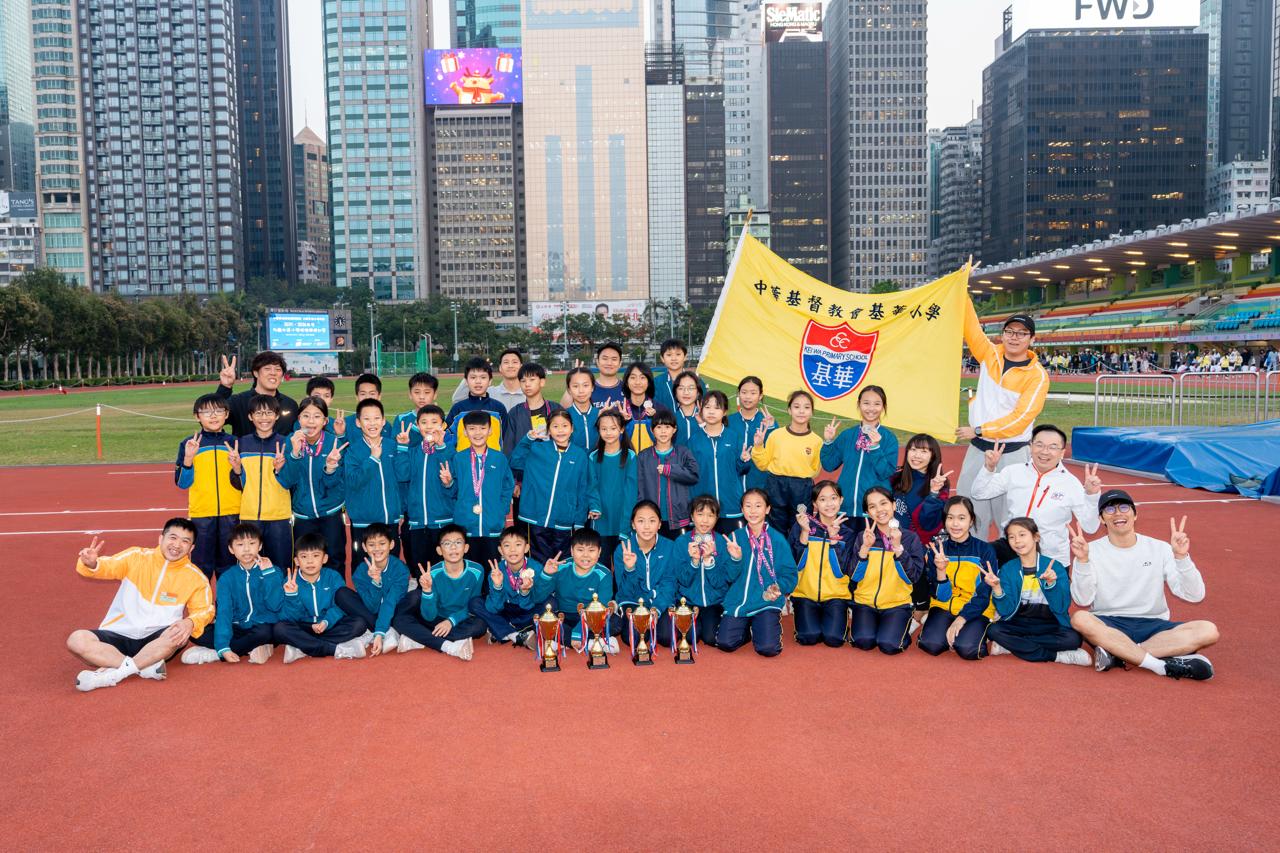
| Others | : | Students take part in different inter-school competitions. They have won awards and prizes in sports, dancing, rope skipping, speech, music and drama. Scholarships are awarded to students who have outstanding achievements in academic, service, art and sports., |
 School Map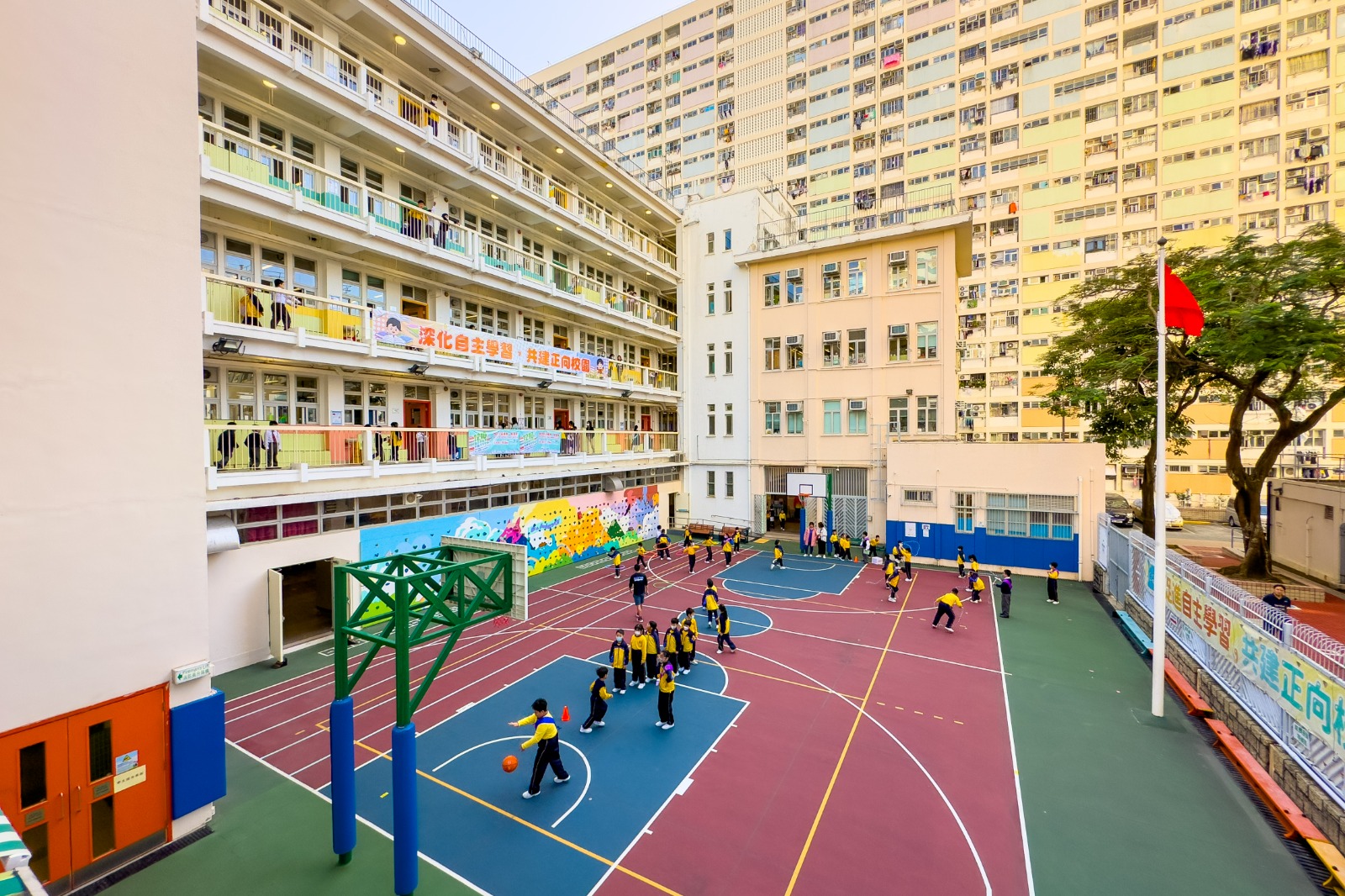
Last revision date:21 September 2026


