 Primary School Profiles 2026


 Primary School Profiles 2026
| Address: | 12 Fu Yee Road, Siu Sai Wan, Chai Wan, Hong Kong | |||
| Phone: | 28977866 | Email: | puikiu@pkps.edu.hk | |
| Fax: | 28977883 | Website: | http://www.pkps.edu.hk | |
 School Information
| Supervisor/ Chairman of Management Committee | : | Mr. Chau Sai Yiu |
| School Head | : | Ms. Ng Kai Kwan |
| Incorporated Management Committee been established? | : | Established |
| Percentage of School Supervisor and Managers / Chairperson and Members of School Management Committee (SMC) of Government Schools Fulfilling the Training Targets | : | 100% |
| School Type | : | Aided Whole Day |
| Student Gender | : | Co-ed |
| Sponsoring Body | : | Pui Kiu Education Foundation Limited |
| Religion | : | Not Applicable |
| Year of Commencement of Operation | : | 2000 |
| School Motto | : | Please refer to the Chinese version. |
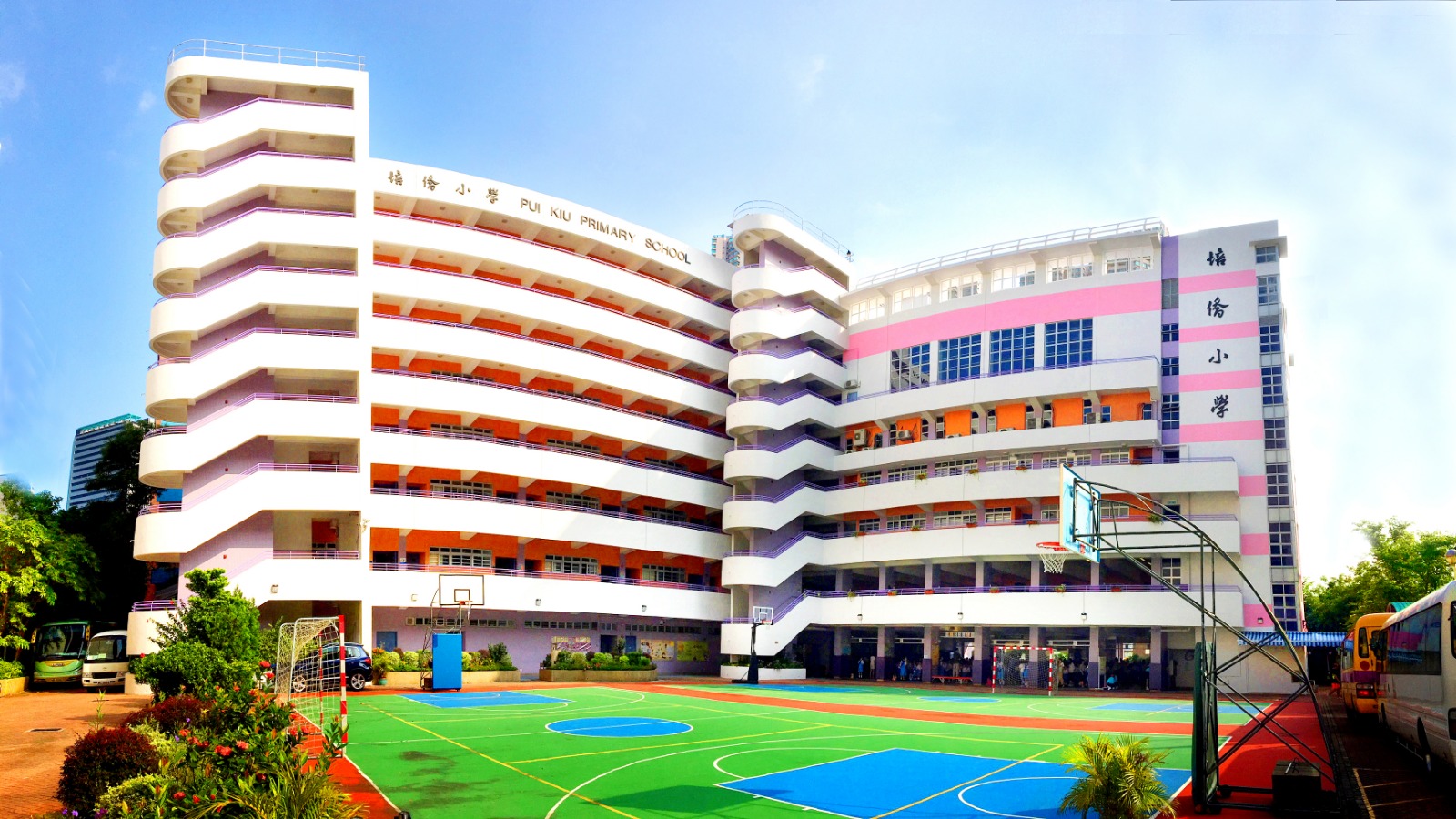
| Area Occupied by the School | : | About 4515 Sq. M |
| Through-train Secondary School | : | - |
| Feeder Secondary School | : | - |
| Nominated Secondary School | : | - |
| Medium of Instruction | : | Chinese |
| School Bus Service | : | School Bus |
| Parent-Teacher Association | : | Yes |
| Past Students' Association/Alumni Association | : | Yes |
| 4Rs Mental Health Charter | : | - |
| Whole School Health Programme | : | - |
 2026/2027 Annual School Charges
| School Fee | : | - |
| Tong Fai | : | - |
| PTA Fee | : | 30 |
| Approved Charges for non-standard items | : | $200 |
| Other Charges | : | Replacement of student card: $40 |
 School Facilities
| Number of Classroom(s) | : | 30 |
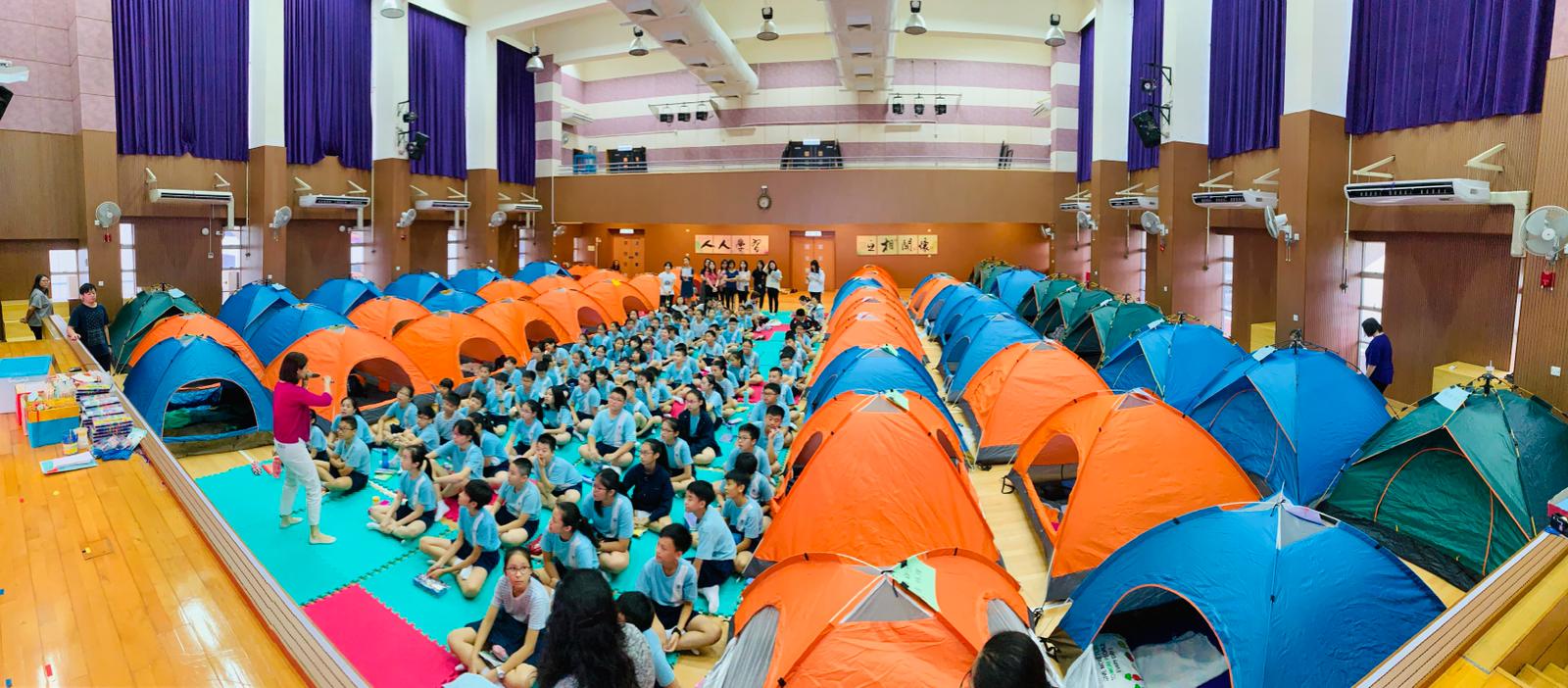
| Number of School Hall(s) | : | 1 |
| Number of Playground(s) | : | 3 |
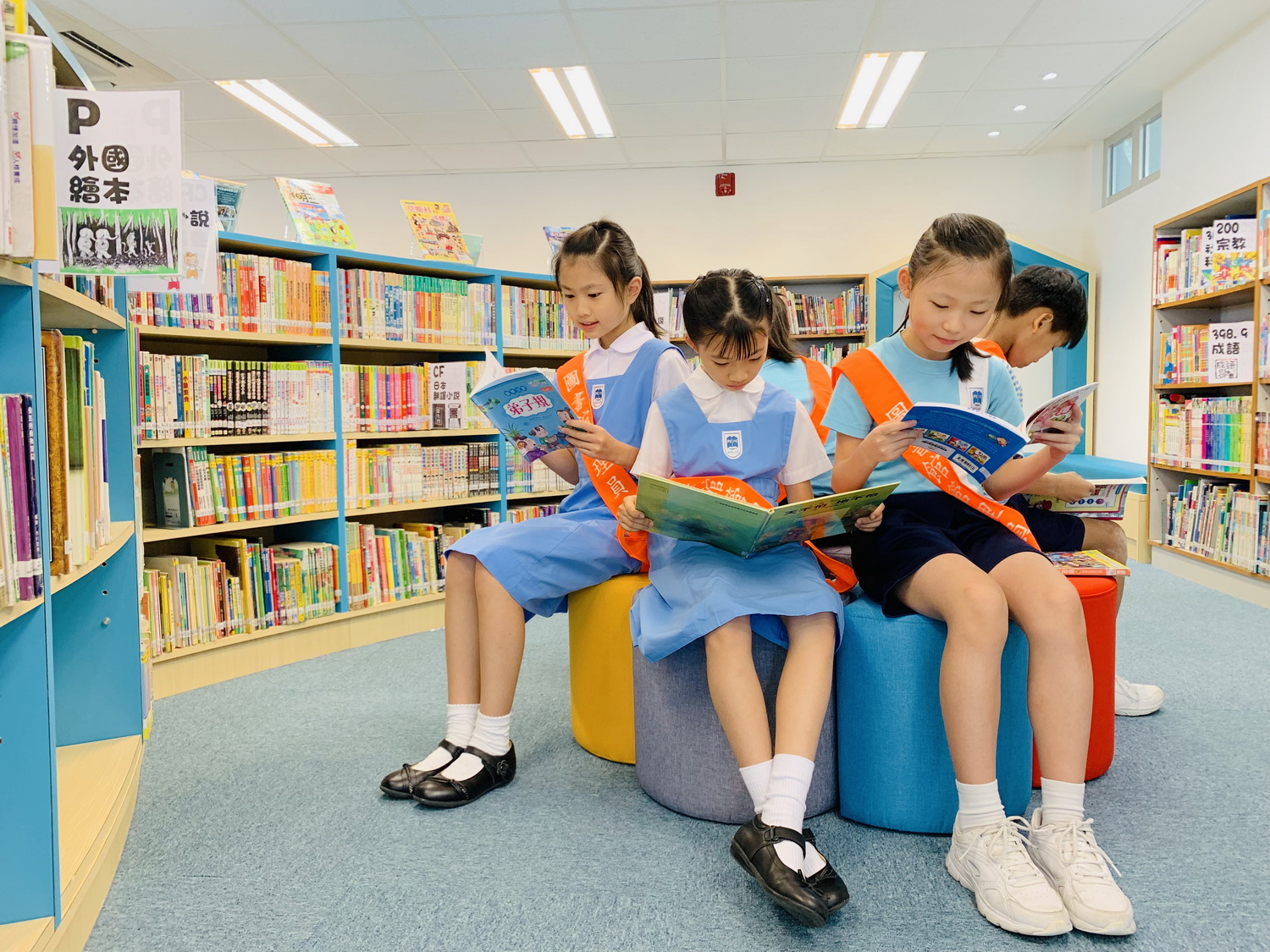
| Number of Library(ies) | : | 1 |
| Special Rooms | : | 11 special rooms (music rooms, group activity rooms, computer room, playroom, art room, general studies room, STEAM room, English room) |
| Facility(ies) for Supporting Students with Special Educational Needs | : | Accessible lift and Accessible toilet. |
| Others | : | 2 Reading Corners |
 Teaching Staff Information (Including School Head) in the 2025/2026 school year
| Number of teaching posts in the approved establishment | : | 56 |
| Total number of teachers in the school | : | 57 |
| Qualifications and professional training (%) | ||
| Had Received Teacher Training | : | 100% |
| Bachelor Degree | : | 98% |
| Master/ Doctorate Degree or above | : | 44% |
| Special Education Training | : | 93% |
| Years of Experience (%) | ||
| 0 - 4 years | : | 5% |
| 5 - 9 years | : | 20% |
| 10 years or above | : | 75% |
 Class Structure
| 2025/26 school year | ||
| P1 Number of classes | : | 5 |
| P2 Number of classes | : | 5 |
| P3 Number of classes | : | 5 |
| P4 Number of classes | : | 5 |
| P5 Number of classes | : | 5 |
| P6 Number of classes | : | 5 |
| Total | : | 30 |
| 2026/27 school year (Based on the number of classes approved by EDB in 2026) | ||
| P1 Number of classes | : | 4 |
| P2 Number of classes | : | 5 |
| P3 Number of classes | : | 5 |
| P4 Number of classes | : | 5 |
| P5 Number of classes | : | 5 |
| P6 Number of classes | : | 5 |
| Total | : | 29 |
| Mode of teaching at different levels | ||
| From first to sixth grade, the school implements a school-based curriculum to enhance students' learning motivation and assist them in their studies through diversified teaching methods. In 2009, small-class teaching was introduced. | ||
| Remarks | ||
| - | ||
 Performance Assessment
| Applicable to P1 only | ||
| Number of test(s) per year | : | 0 |
| Number of exam(s) per year | : | 2 |
| Replace tests and examinations with diversified assessments in the first term of P1 | : | Yes |
| Applicable to P2 to P6 only | ||
| Number of test(s) per year | : | 0 |
| Number of exam(s) per year | : | 2 |
| Applicable to P1 to P6 | ||
| Formulate appropriate school-based assessment and assignment policies, inform parents of related arrangements, and collect views from teachers, students and parents regularly (at least once per school year) for ongoing review and optimisation of the school assessment and assignment policies | : | Yes |
| Upload the school-based assessment policy onto the school webpage for information of the public and stakeholders | : | Yes |
| Upload the school-based assignment policy onto the school webpage for information of the public and stakeholders | : | Yes |
| Diversified Assessment for Learning | : | Assess students' learning and reading attitudes, general abilities, creativity, artistic talents, activities, and service performances. Use descriptive comments to facilitate students' self-improvement. Encourage multi-party participation, including student peer assessment, involvement of teachers, students, and parents. Adopt diverse modes of assessment. |
| Avoid arranging tests or examinations immediately after long holidays in order to let students take more rest during the holidays | : | Yes |
| Arrange the timetable flexibly according to the school context, with a tutorial session provided in the afternoon as far as possible for students to finish some of their homework under teachers’ guidance | : | Yes |
| Streaming arrangement | : | Classes are not streamed according to ability. |
 School Life
| Number of school days per week | : | 5 |
| Number of periods per day | : | 8 |
| Duration of each normal period | : | 40 |
| School starts at | : | 8:15 AM |
| School ends at | : | 3:05 PM |
| Lunch break | : | 12:25 - 1:15 |
| Lunch arrangement | : | Provided by designated supplier and arranged by parents. |
| Healthy school life | : | ● Has established a Life and Affective Education Committee to plan and implement various educational activities, aiming to cultivate healthy habits in students. ● A Lunch Committee was formed to monitor the quality of food provided by suppliers. |
| Remarks | : | - |
 Life-wide Learning
| 43 items in total: Mandarin, music (rhythm, flute, choir, violin, handbells, percussion, etc., a total of 10 teams), drama, STEAM, programming, English, math Olympiad, computer, taekwondo, dance troupe, lion dance, fine arts, calligraphy, scouting, soccer, table tennis, athletics, and volleyball, etc. |
 School Mission
| Pui Kiu is a learning community that constantly reflects, explores, innovates, and strives for excellence. Our learning community includes students, teachers and parents. We also strive to make it a place where learners can learn from each other and care for one another. |
 School Characteristics
| School Management | ||
| School Management Organisation | : | ● The school implements school-based management, allowing various stakeholders to participate in the formulation of school policies. |
| Incorporated Management Committee / School Management Committee/ Management Committee | : | ● A School Incorporated Management Committee (IMC) has been established. |
| School Green Policy | : | 1. Energy-saving policy 2. School uniform recycling 3. Use of eco-friendly food containers and utensils 4. Recycling of old books and waste paper |
| School's Major Concerns | : | 1. Students can continuously enhance their literacy skills in the new curriculum. 2. Students can demonstrate curiosity and a desire for knowledge in innovation and technology. 3. Students can understand and embrace the Chinese virtue of ""diligent learning"" and practice it in their daily lives. 4. Students can understand, respect, and practice proper etiquette, becoming courteous individuals. |
| Learning and Teaching Plan | ||
| Learning & Teaching Strategies | : | ● Our teaching team is highly professional and continuously strives for improvement. They have been honored with nine Chief Executive's Awards for Teaching Excellence. ● We develop school-based interdisciplinary learning curricula to provide students with richer cross-disciplinary learning experiences, enabling them to integrate and apply their learning across different subjects. ● We offer diverse learning experiences that allow students to actively learn and apply their knowledge, showcasing their individual talents. ● Instructional designs are connected to students' life experiences, employing diverse teaching strategies such as problem-based learning, group collaboration, hands-on activities, and the use of technology. ● We place a strong emphasis on promoting student reading, with various reading activities. ● We implement a comprehensive system of diverse assessments that reflect students' performance and abilities in different learning areas. |
| Development of Major Renewed Emphases of the Primary Education Curriculum | : | ● Strengthening values education (including life education, national education and national security education); making good use of learning time and creating space to promote a balanced physical and mental development; enriching life-wide learning experiences and promoting whole-person development; better catering for learner diversity; reinforcing, STEAM education, and nurturing students’ media and information literacy; strengthening cross-curricular learning and reading across the curriculum for developing lifelong learning capabilities; and enhancing assessment literacy for promoting learning and teaching effectiveness. |
| Development of Generic Skills | : | ● Course design is student-centered and incorporates diverse learning experiences: - It provides students with more opportunities to step out of the classroom for field trips, exchanges, talent performances, and service learning, aiming to offer a diverse range of experiential learning activities, broaden their horizons, and develop different potentials. - From the third to sixth grade, students have personal learning portfolios, educational camps from the fourth to sixth grade, and outdoor learning days at all levels. Through in-school and out-of-school services, students learn responsibility, collaboration, contribution, and communication skills. |
| Cultivation of Proper Values, Attitudes and Behaviours | : | ● The school-based curriculum is designed to impart students with correct moral perspectives and core values. |
| Student Support | ||
| Whole School Approach to Catering for Learner Diversity | : | ● The school designs diverse teaching materials and assessment activities to cater to the learning needs of different students and allow them to showcase their strengths. ● The depth and complexity of the materials cater to the needs of students with different abilities. ● A student support team is established to maintain communication with various stakeholders. ● Homework tutoring, small-group teaching, counseling activities, and the "Early Bird Team" are implemented to address the differences in students' growth and academic performance. |
| Whole School Approach to Integrated Education | : | ●The school adopts a "whole-school approach" to implement inclusive education and has a Student Support Team in place to develop various support policies for students with special educational needs. The support team regularly schedules meetings to listen to parents' opinions and discuss students' progress. |
| Education Support for Non-Chinese Speaking(NCS) Students | : | Our school provides additional support for NCS students to facilitate their learning of Chinese: providing after-school support programmes in learning Chinese; appointing additional teacher(s)/teaching assistant(s) to support NCS students' learning of Chinese; arranging intensive Chinese learning and teaching mode(s), e.g. pull-out learning if necessary, split-class/group learning, etc; developing school-based Chinese Language curriculum and/or adapting learning and teaching materials; and organising activities to create an inclusive learning environment in the school. |
| Curriculum Tailoring and Adaptation | : | ●The Chinese and English subjects have designed school-based curricula to cater to the appropriate development of students. |
| Home-school Co-operation and School Ethos | ||
| Home-School Co-operation | : | ● Establish school collaboration teams dedicated to handling parent-school collaboration affairs and coordinating with the parent volunteer team. A "Successful Parents School" is also set up to promote parent education and organize parent-child learning activities in collaboration with the Parent-Teacher Association. ● The school organizes events such as Curriculum Day, Parent Observation Day, and Learning Achievement Sharing Sessions annually, fostering close collaboration between teachers and parents. ● Parents actively participate and even initiate parent education activities for the school, adding value and pursuing continuous improvement. |
| School Ethos | : | ● The campus is filled with a positive and caring atmosphere, fully reflecting the campus culture of "Everyone learns, cares for each other." ● Teachers actively cultivate in students five good habits (cleanliness, respect, responsibility, self-discipline, gratitude) and twenty-four character strengths, while strengthening students' positive behavior through an integrated approach of guidance and counseling. |
| Future Development | ||
| School Development Plan | : | ● Continuously develop character education, optimize the national education curriculum, and cultivate a new generation that possesses both emotional and intellectual intelligence. ● Continuously promote STEAM education to foster students' interdisciplinary thinking, global perspectives, media and information literacy, problem-solving, and innovation abilities. ● Advocate values education by integrating the cultivation of prioritised values and attitudes into curriculum and teaching. ● Implement career planning education in primary schools to help students gain a better understanding of their aspirations, needs, interests and abilities. |
| Teacher Professional Training & Development | : | ● The professional development culture of teachers is solidly grounded, with teachers constantly seeking to improve their skills and knowledge. Regular activities such as collaborative lesson preparation, research lessons, and open classes are consistently held, fostering a culture of professional exchange. |
| Others | : | 1. Establish scholarships to encourage academically outstanding or morally excellent students. 2. Organize internal and inter-school competitions covering various areas such as academics, arts, and sports, allowing students to showcase their potential and promoting their motivation to learn and teamwork skills. 3. Establish exchange programs with other schools in our country to promote mutual learning of culture and knowledge. |
 School Map
Last revision date:01 September 2026


