 Primary School Profiles 2026


 Primary School Profiles 2026
| Address: | 152 Tsz Wan Shan Road, Kowloon | |||
| Phone: | 23225122 | Email: | info@keitsz.edu.hk | |
| Fax: | 23286489 | Website: | http://www.keitsz.edu.hk | |
 School Information
| Supervisor/ Chairman of Management Committee | : | Mr. Au Yeung Ka Keung |
| School Head | : | Ms. Chiu Kit Wa |
| Incorporated Management Committee been established? | : | Established |
| Percentage of School Supervisor and Managers / Chairperson and Members of School Management Committee (SMC) of Government Schools Fulfilling the Training Targets | : | Not Applicable |
| School Type | : | Aided Whole Day |
| Student Gender | : | Co-ed |
| Sponsoring Body | : | The Hong Kong Council of the Church of Christ in China |
| Religion | : | Protestantism / Christianity |
| Year of Commencement of Operation | : | 1968 |
| School Motto | : | With our Lord's strength and unremitting efforts to improve ourself, we are serving people to glorify Him. |
| Area Occupied by the School | : | About 10000 Sq. M |
| Through-train Secondary School | : | - |
| Feeder Secondary School | : | - |
| Nominated Secondary School | : | - |
| Medium of Instruction | : | Chinese |
| School Bus Service | : | Nanny van |
| Parent-Teacher Association | : | Yes |
| Past Students' Association/Alumni Association | : | Yes |
| 4Rs Mental Health Charter | : | Yes |
| Whole School Health Programme | : | Pledged School |
 2026/2027 Annual School Charges
| School Fee | : | - |
| Tong Fai | : | - |
| PTA Fee | : | $30 |
| Approved Charges for non-standard items | : | Fees for Specific Purposes $310 (to be paid in two installments) |
| Other Charges | : | Student card $20 |
 School Facilities
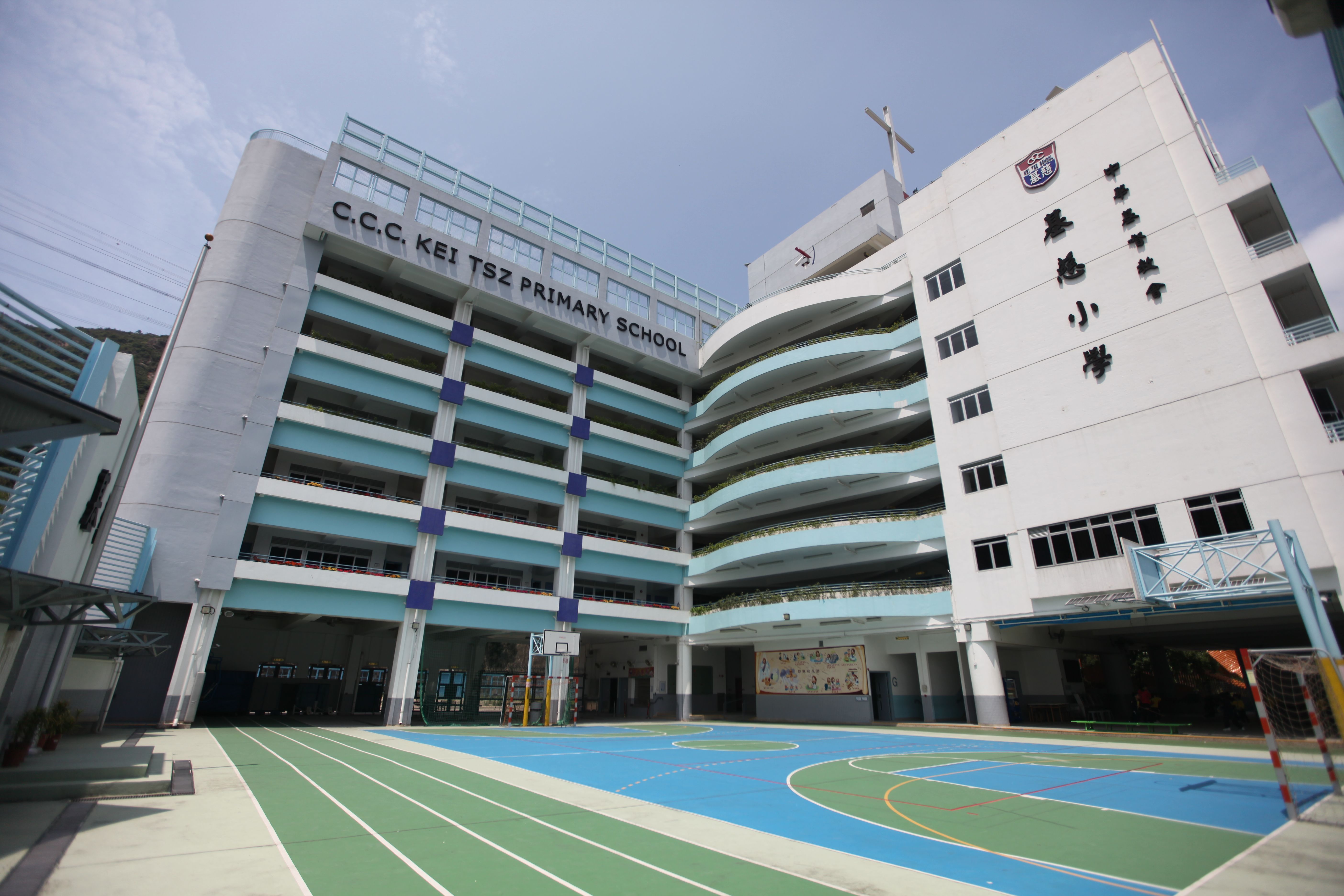
| Number of Classroom(s) | : | 24 |
| Number of School Hall(s) | : | 1 |
| Number of Playground(s) | : | 4 |
| Number of Library(ies) | : | 1 |
| Special Rooms | : | English Room, Pottery Room, Dancing Room, Music Room, INNO LAP, Library, Computer Room, Chinese Culture Room, SMART Classroom, Game Therapy Room. |
| Facility(ies) for Supporting Students with Special Educational Needs | : | Ramp, Accessible lift, Accessible toilet and Tactile guide path plan. |
| Others | : | Stargazing Platform, Rock-climbing Wall, Noah's Ark Mosaic Mural, Bible Stories Gallery, Fruit of the Holy Spirit Mural, Jesus Trail Mural. |
 Teaching Staff Information (Including School Head) in the 2025/2026 school year
| Number of teaching posts in the approved establishment | : | 37 |
| Total number of teachers in the school | : | 43 |
| Qualifications and professional training (%) | ||
| Had Received Teacher Training | : | 100% |
| Bachelor Degree | : | 100% |
| Master/ Doctorate Degree or above | : | 34% |
| Special Education Training | : | 100% |
| Years of Experience (%) | ||
| 0 - 4 years | : | 13% |
| 5 - 9 years | : | 28% |
| 10 years or above | : | 59% |
 Class Structure
| 2025/26 school year | ||
| P1 Number of classes | : | 2 |
| P2 Number of classes | : | 2 |
| P3 Number of classes | : | 2 |
| P4 Number of classes | : | 4 |
| P5 Number of classes | : | 4 |
| P6 Number of classes | : | 4 |
| Total | : | 18 |
| 2026/27 school year (Based on the number of classes approved by EDB in 2026) | ||
| P1 Number of classes | : | 1 |
| P2 Number of classes | : | 2 |
| P3 Number of classes | : | 2 |
| P4 Number of classes | : | 2 |
| P5 Number of classes | : | 4 |
| P6 Number of classes | : | 4 |
| Total | : | 15 |
| Mode of teaching at different levels | ||
| 1. English classes (P.1-P.3) are taught by a NET and subject teachers (4 lessons per cycle). 2. English speaking classes (P.4-P.6) are taught by a NET. 3. Chinese is taught in Putonghua. 4. Afternoon lessons include tutorial lessons and specialized training in Sports, Music and Arts. |
||
| Remarks | ||
| 1. Innovation Technology in Kei Tsz; 2. QAMAS; 3. Teachers were mentors to students from HKU, CUHK and EdUHK; 4. JC@CoolScience by HK Jockey Club and EdUHK; 5. "STEM In PE" QE Fund; 6. New Era Dream Building Project - Shaping the Future: Youth Innovation and Development Programme (Artificial Intelligence). |
||
 Performance Assessment
| Applicable to P1 only | ||
| Number of test(s) per year | : | 0 |
| Number of exam(s) per year | : | 0 |
| Replace tests and examinations with diversified assessments in the first term of P1 | : | Yes |
| Applicable to P2 to P6 only | ||
| Number of test(s) per year | : | 0 |
| Number of exam(s) per year | : | 3 |
| Applicable to P1 to P6 | ||
| Formulate appropriate school-based assessment and assignment policies, inform parents of related arrangements, and collect views from teachers, students and parents regularly (at least once per school year) for ongoing review and optimisation of the school assessment and assignment policies | : | Yes |
| Upload the school-based assessment policy onto the school webpage for information of the public and stakeholders | : | Yes |
| Upload the school-based assignment policy onto the school webpage for information of the public and stakeholders | : | Yes |
| Diversified Assessment for Learning | : | 1. No exam or dictation will be given to P.1 students. Instead, a mock assessment training will be given. 2. A variety of assessment approaches: field trips, experiments, art and techniques, fitness testing, information literacy, project learning. 3. Character assessment: health, care, etiquette, discipline, diligence, services. |
| Avoid arranging tests or examinations immediately after long holidays in order to let students take more rest during the holidays | : | Yes |
| Arrange the timetable flexibly according to the school context, with a tutorial session provided in the afternoon as far as possible for students to finish some of their homework under teachers’ guidance | : | Yes |
| Streaming arrangement | : | 1. Assign students into classes by their all-rounded performance. There are no elite classes. 2. Different languages learning groups are provided for P.4-6 students. 3. Different consolidation lessons of Chinese, English and Mathematics subjects are provided for students after lunch. |
 School Life
| Number of school days per week | : | 5 |
| Number of periods per day | : | 8 |
| Duration of each normal period | : | 35 |
| School starts at | : | 8:00 AM |
| School ends at | : | 3:15 PM |
| Lunch break | : | 12:20 - 1:20 |
| Lunch arrangement | : | Provided by designated supplier, arranged by parents and pupils bring their lunch boxes or deliver by their parents before lunch time. |
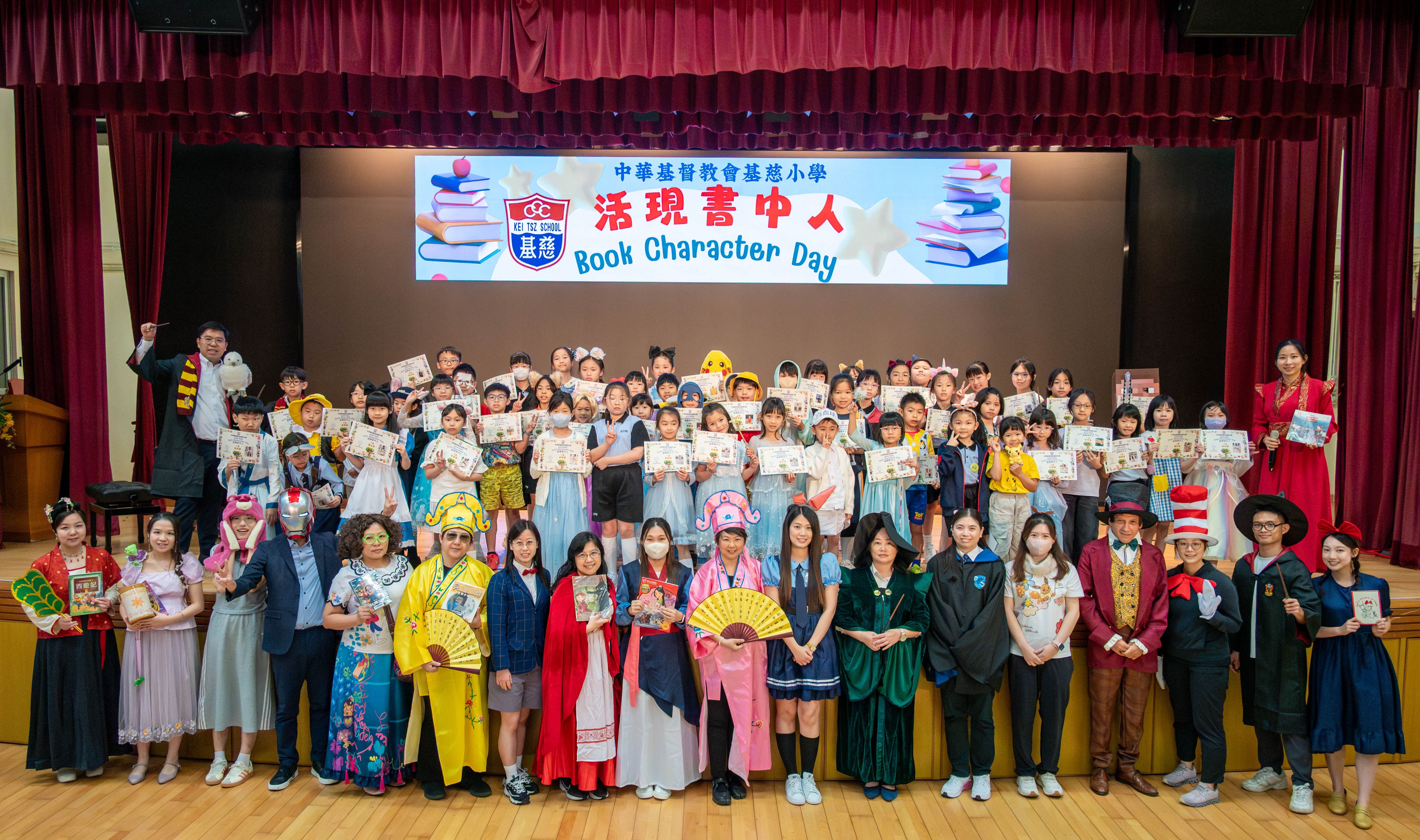
| Healthy school life | : | 1. Life Education (Growth Class, Worship and Praise, Fellowship, Gospel activity). 2. Fruitful Recess: LEGO world, English and Putonghua i-cafe, Chess Corner, Science Corner, active recess, Mini Stage. |
| Remarks | : | 1. Two class teachers system for P.1, P.2 and P.6. 2. After tutorial classes school teachers. 3. School library is opened after school and after-school care program till 7:15 p.m. |
 Life-wide Learning
| 1. Mainland and overseas cultural exchange programmes. 2. Over 30 ECAs, we have outstanding performance in Information Technology, Dancing, Touch Rugby, Dodgebee, Rope Skipping, Mathematical Olympiad, Ocarina. 3. UG: Boys Brigade, Girl Guides, Flag Raising Team. 4. Students at all levels will participate in simple sports experience classes to build confidence and endurance. |
 School Mission
| Developing meaningful lives in the love of the Lord is our mission. In the strength of our Lord, we provide quality education which will help pupils positively develop their potential to the fullest. We preach the Gospel. We also develop a sense of citizenship, which benefits our society and nation. |
 School Characteristics
| School Management | ||
| School Management Organisation | : | Headed by specialists in education. Our management committee consists of primary and secondary school principals, education specialists and professionals. |
| Incorporated Management Committee / School Management Committee/ Management Committee | : | The Incorporated Management Committee of The Church of Christ in China Kei Tsz Primary School was established in 2007. |
| School Green Policy | : | Healthy School and Green Campus. |
| School's Major Concerns | : | 1. Enhance interdisciplinary curriculum to promote innovative education 2. Foster correct values and pass on Chinese culture |
| Learning and Teaching Plan | ||
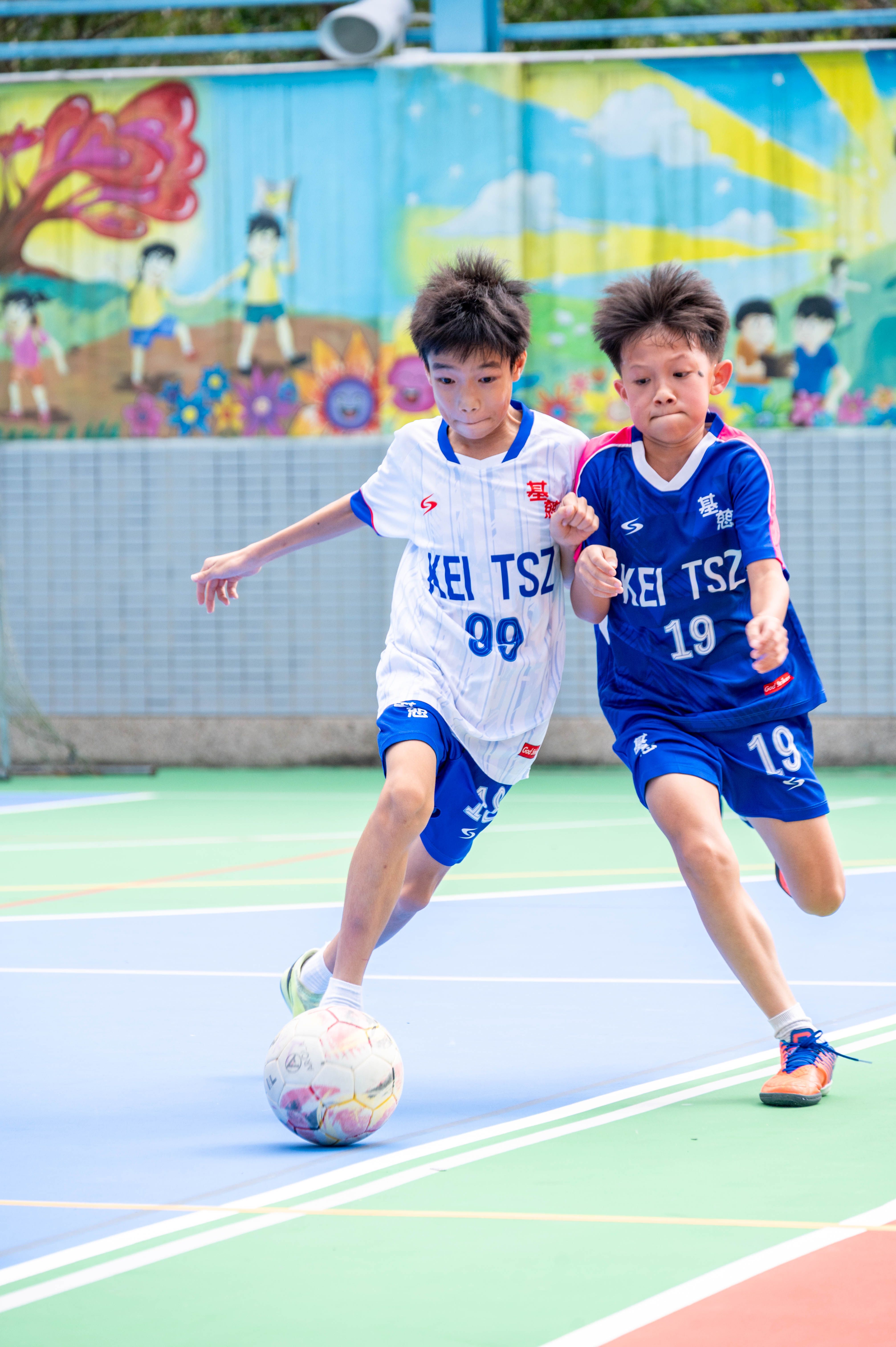
| Learning & Teaching Strategies | : | 1. Putonghua is the medium of instruction in teaching Chinese Language. 2. Morning lessons (Chinese, English, Mathematics, General Studies and Humanities/Science lessons mainly). 3. Afternoon lessons & Extra-curriculum activities (Music: celesta, ocarina, guitar, recorder, hand-chime, choir; PE: dodgebee, tag rugby, martial arts, Latin dance, football, table tennis, badminton, rope skipping, baseball, track and field, skateboard, dragon dance ; Visual Arts: sculpting, painting, sketching, Chinese Painting, electric painting ; Others: Mathematical Olympiad, English Ambassador, Frag-Guards, Brownies Guide, The Boys' Brigade, Puppet class, LEGO activities, fellowship, STEAM activities, magic class, reading activities, master of ceremonies training). |
| Development of Major Renewed Emphases of the Primary Education Curriculum | : | 1. Through interdisciplinary curriculum integration and theme-based learning strategies, provides students with life-wide learning and experiential learning. For example, students have experiential learning of taking care of animals (theme-based learning) in Ocean Park. 2. Making good use of learning time to expose students to unique physical and arts projects, e.g. pottery, celesta and touch rugby, to promote balanced physical and mental development. 3. Subject ability group learning is planned to construct students' knowledge in a targeted manner; multi-talented training enables gifted students to be well-trained. 4. Integrate STEAM learning themes with programming courses to develop students' computational thinking skills. 5. The school-based self-directed learning plan allows students to set their own goals and promote self-directed learning. 6. Effectively utilizing assessment data to enhance student learning; awarded QAMAS by the HKEAA for eight consecutive years. |
| Development of Generic Skills | : | 1. Cooperative learning: group activities, training students in communication and collaboration. 2. Life-wide learning: curriculum with outdoor activities, learning through life experiences. 3. Inquiry-based learning: Classroom inquiry-based learning, develop self-learning spirit, problem-solving skills, creativity. |
| Cultivation of Proper Values, Attitudes and Behaviours | : | 1. Strengthen and consolidate values education, including life education, national education and national security education. 2. We give weight to positive education. By organizing a variety of activities, students can develop positive emotions, devote full efforts in their learning and growth, develop positive relationships, recognize the meaning of lives and gain a sense of accomplishment from their works. |
| Student Support | ||
| Whole School Approach to Catering for Learner Diversity | : | 1. Whole School Approach has been adapted. 2. Resident expert support (Chaplain, school-based educational psychologist, school-based speech therapist, play therapist, school social worker, occupational therapist). 3. Being Positive scheme (academic, character, service). |
| Whole School Approach to Integrated Education | : | Deployment of resources (e.g. Learning Support Grant) in supporting students with SEN (e.g. teaching adaptation and assessment accommodation, remedial learning groups, training on social skills, enhanced school-based speech therapy services, individual education plan), meeting with parents to evaluate students' progress. |
| Education Support for Non-Chinese Speaking(NCS) Students | : | Our school provides additional support for NCS students to facilitate their learning of Chinese: providing after-school support programmes in learning Chinese; appointing additional teacher(s)/teaching assistant(s) to support NCS students' learning of Chinese; developing school-based Chinese Language curriculum and/or adapting learning and teaching materials; organising activities to create an inclusive learning environment in the school; and our school uses Putonghua to teach Chinese in all classes / groups at all levels with extra support as appropriate, e.g. pull-out/small-group classes, learning and teaching resources with Pinyin, etc. |
| Curriculum Tailoring and Adaptation | : | 1. Pre-P.1 classes: simulation classes, recess. 2. Unit-themed Learning: Comprehensive Learning, Hands-on Experiments, Outdoor Learning, Project Research and Collection 3. Afternoon classes include arts, music and sports lessons; homework tutorials, Chinese, English and Mathematics consolidation lessons. |
| Home-school Co-operation and School Ethos | ||
| Home-School Co-operation | : | 1. Monday morning tea gathering (includes the school principal, all levels of group communication, prayer and special lectures); bible study group for parents every week. 2. Classroom observation activities (held regularly at all levels). 3. Sunshine phone call and home visit (P.1, P.3, P.6). 4. Parental storytelling, parental participation in school planning (school uniforms, lunch, school picnic, Respect our Teachers Campaign) and parent volunteers. 5. After-school Care. |
| School Ethos | : | 1. Help children cultivate their love for the Lord. 2. Attention to students' unique personalities. 3. Harmonious relationship between teachers and students. |
| Future Development | ||
| School Development Plan | : | 1. Nurture our students with positive values. 2. Cultivate students' capabilities in information literacy and self-directed learning. 3. Deepen the application of cooperative learning teaching strategies to enhance student collaboration and communication skills. |
| Teacher Professional Training & Development | : | 1. Emphasis on professional training and team building, the pursuit of excellence in teaching. 2. Teachers participate in the Teacher Secondment Scheme of EDB to share successful experiences and to assist other schools' development programs. 3. Teachers went to Mainland, Singapore, Taiwan and New Zealand on behalf of the school for teaching exchange. 4. Some teachers finished and passed the Neuro-linguistic programming course. 5. Accredited school of Quality Assessment Management Accreditation Scheme (QAMAS), which enhancing the standards of assessment management in our school. |
| Others | : | Member of the following Secondary School Associations: CCC Heep Woh College, Rotary School, Kei Heep Secondary School. Please refer to our school website. |
 School Map
Last revision date:01 September 2026


