 Primary School Profiles 2026


 Primary School Profiles 2026

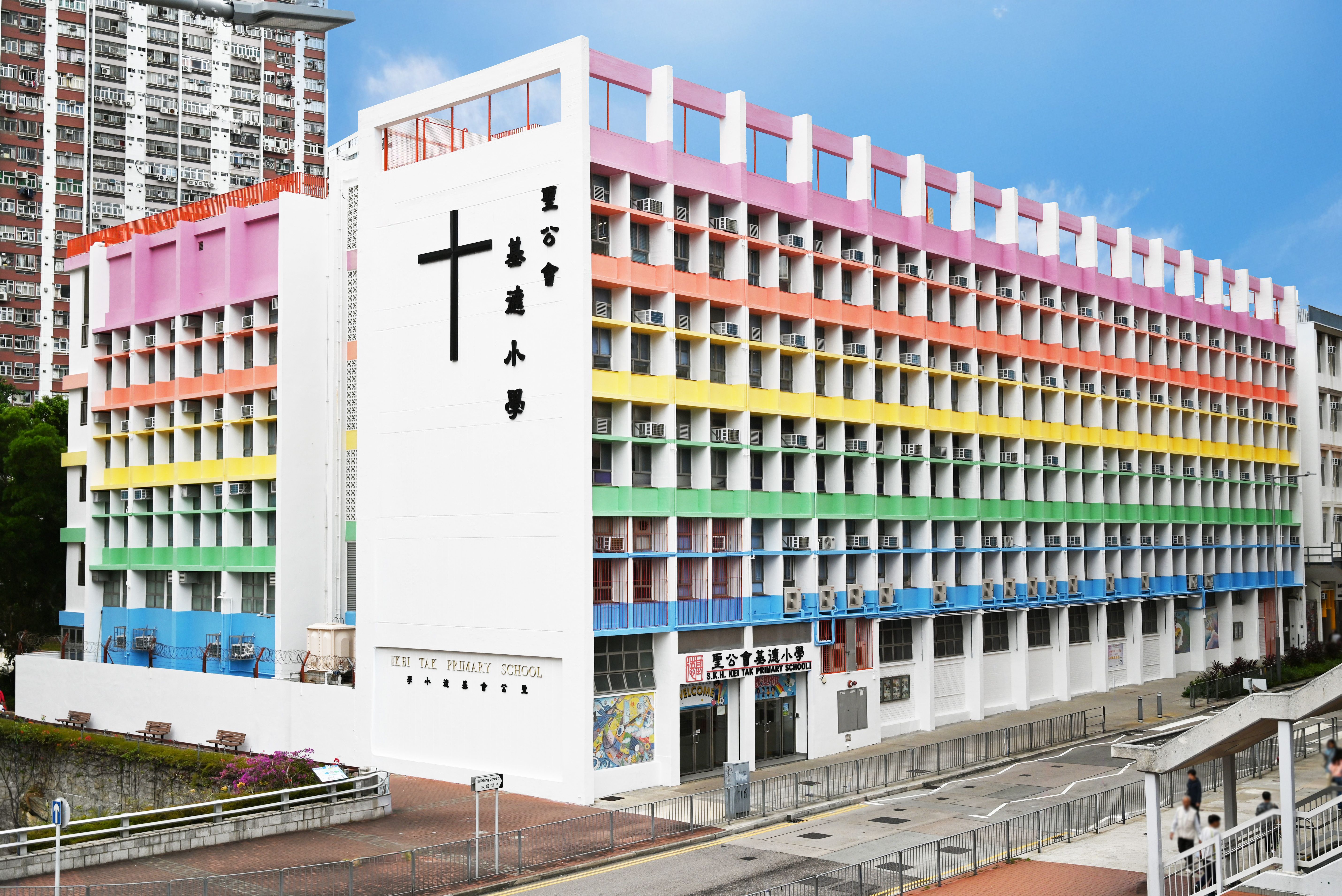
| Address: | Tai Shing Street, Wong Tai Sin, Kowloon | |||
| Phone: | 23203077 | Email: | skhkt@skhkt.edu.hk | |
| Fax: | 23202449 | Website: | http://www.skhkt.edu.hk | |
 School Information
| Supervisor/ Chairman of Management Committee | : | Rev. Lau Wing Kai |
| School Head | : | Ms. Fok Yin Ling |
| Incorporated Management Committee been established? | : | Established |
| Percentage of School Supervisor and Managers / Chairperson and Members of School Management Committee (SMC) of Government Schools Fulfilling the Training Targets | : | 100% |
| School Type | : | Aided Whole Day |
| Student Gender | : | Co-ed |
| Sponsoring Body | : | Anglican (Hong Kong) Primary Schools Councils Limited |
| Religion | : | Protestantism / Christianity |
| Year of Commencement of Operation | : | 1962 |
| School Motto | : | Not to be served but to serve |
| Area Occupied by the School | : | About 3400 Sq. M |
| Through-train Secondary School | : | - |
| Feeder Secondary School | : | - |
| Nominated Secondary School | : | - |
| Medium of Instruction | : | Chinese |
| School Bus Service | : |
- |
| Parent-Teacher Association | : | Yes |
| Past Students' Association/Alumni Association | : | Yes |
| 4Rs Mental Health Charter | : | Yes |
| Whole School Health Programme | : | Action School |
 2026/2027 Annual School Charges
| School Fee | : | - |
| Tong Fai | : | - |
| PTA Fee | : | $20 |
| Approved Charges for non-standard items | : | $300 Art Portfolio Case, Reading record booklet, A-Plus learning platform. |
| Other Charges | : | - |
 School Facilities
| Number of Classroom(s) | : | 24 |
| Number of School Hall(s) | : | 1 |
| Number of Playground(s) | : | 1 |
| Number of Library(ies) | : | 1 |
| Special Rooms | : | 9 special rooms (computer room, STEM learning centre, two music rooms, art room, student counselling room, English room, teachers' common room , prayer room and Campus TV.) |
| Facility(ies) for Supporting Students with Special Educational Needs | : | Ramp, Accessible lift, Accessible toilet and Tactile guide path plan. |
| Others | : | All the classrooms and special rooms are equipped with air-conditioners, computers and an interactive whiteboard. |
 Teaching Staff Information (Including School Head) in the 2025/2026 school year
| Number of teaching posts in the approved establishment | : | 45 |
| Total number of teachers in the school | : | 45 |
| Qualifications and professional training (%) | ||
| Had Received Teacher Training | : | 98% |
| Bachelor Degree | : | 98% |
| Master/ Doctorate Degree or above | : | 33% |
| Special Education Training | : | 13% |
| Years of Experience (%) | ||
| 0 - 4 years | : | 7% |
| 5 - 9 years | : | 8% |
| 10 years or above | : | 85% |
 Class Structure
| 2025/26 school year | ||
| P1 Number of classes | : | 4 |
| P2 Number of classes | : | 4 |
| P3 Number of classes | : | 4 |
| P4 Number of classes | : | 3 |
| P5 Number of classes | : | 4 |
| P6 Number of classes | : | 4 |
| Total | : | 23 |
| 2026/27 school year (Based on the number of classes approved by EDB in 2026) | ||
| P1 Number of classes | : | 4 |
| P2 Number of classes | : | 4 |
| P3 Number of classes | : | 4 |
| P4 Number of classes | : | 4 |
| P5 Number of classes | : | 3 |
| P6 Number of classes | : | 4 |
| Total | : | 23 |
| Mode of teaching at different levels | ||
| Starting from Primary 3, students are streamed according to their learning abilities, and the lessons are tailor-made for different classes. Three Native English teachers train P.1-P.3 students in reading and writing skills. P.4-P.6 students are trained in the aspects of speaking and listening skills. | ||
| Remarks | ||
| Different academic activities are implemented. | ||
 Performance Assessment
| Applicable to P1 only | ||
| Number of test(s) per year | : | 0 |
| Number of exam(s) per year | : | 2 |
| Replace tests and examinations with diversified assessments in the first term of P1 | : | Yes |
| Applicable to P2 to P6 only | ||
| Number of test(s) per year | : | 0 |
| Number of exam(s) per year | : | 3 |
| Applicable to P1 to P6 | ||
| Formulate appropriate school-based assessment and assignment policies, inform parents of related arrangements, and collect views from teachers, students and parents regularly (at least once per school year) for ongoing review and optimisation of the school assessment and assignment policies | : | Yes |
| Upload the school-based assessment policy onto the school webpage for information of the public and stakeholders | : | Yes |
| Upload the school-based assignment policy onto the school webpage for information of the public and stakeholders | : | Yes |
| Diversified Assessment for Learning | : | 1. summative assessments a year for P.1 2. summative assessments a year for P.2-P.6. 3. Formative assessments are carried out in different subjects. |
| Avoid arranging tests or examinations immediately after long holidays in order to let students take more rest during the holidays | : | Yes |
| Arrange the timetable flexibly according to the school context, with a tutorial session provided in the afternoon as far as possible for students to finish some of their homework under teachers’ guidance | : | Yes |
| Streaming arrangement | : | Starting from Primary 3, students are streamed according to their academic achievements. There are English Remedial classes for Primary 2 to Primary 5 students. |
 School Life
| Number of school days per week | : | 5 |
| Number of periods per day | : | 9 |
| Duration of each normal period | : | 35 |
| School starts at | : | 8:10 AM |
| School ends at | : | 3:20 PM |
| Lunch break | : | 1:05 - 2:00 |
| Lunch arrangement | : | Provided by designated supplier and arranged by parents. |
| Healthy school life | : | 1. Weight management plan. 2. Morning exercises every Friday. 3. A variety of recreational activities, such as: basketball, steppter, Cornhole and basketball shooting machine are provided to students during lunch break. |
| Remarks | : | 1. Flag Raising Ceremony is held on every Wednesday morning; 2. English prayer and English weather forecast on every Tuesday and Thursday morning; 3. Mandarin prayer and weather forecast on every Wednesday and Friday morning; 4. Worship on Tuesdays afternoon; 5. Civic lessons and personal growth education classes are held on Wednesday afternoon; 6. Multi-intellectual classes are held on Friday afternoon. |
 Life-wide Learning
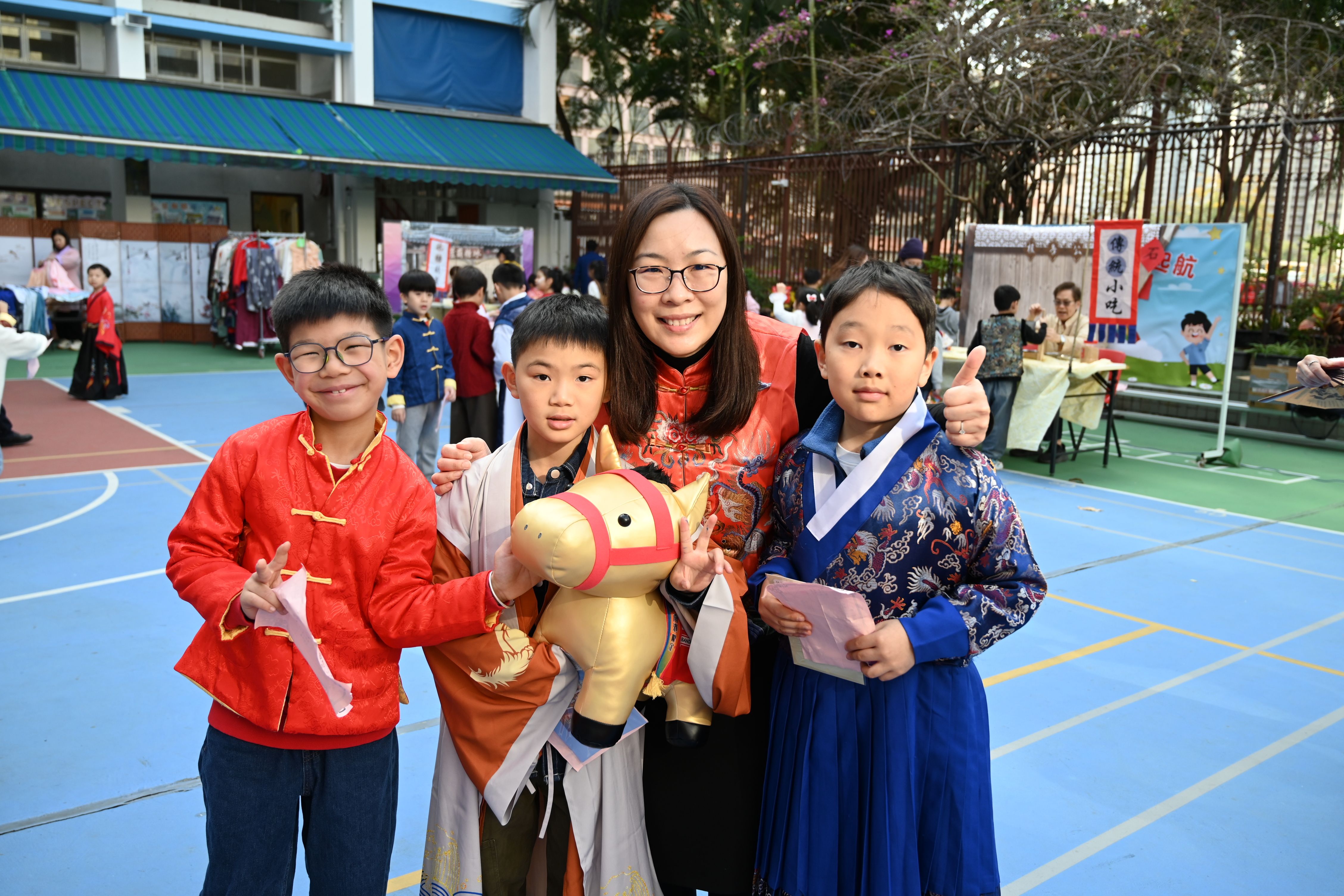
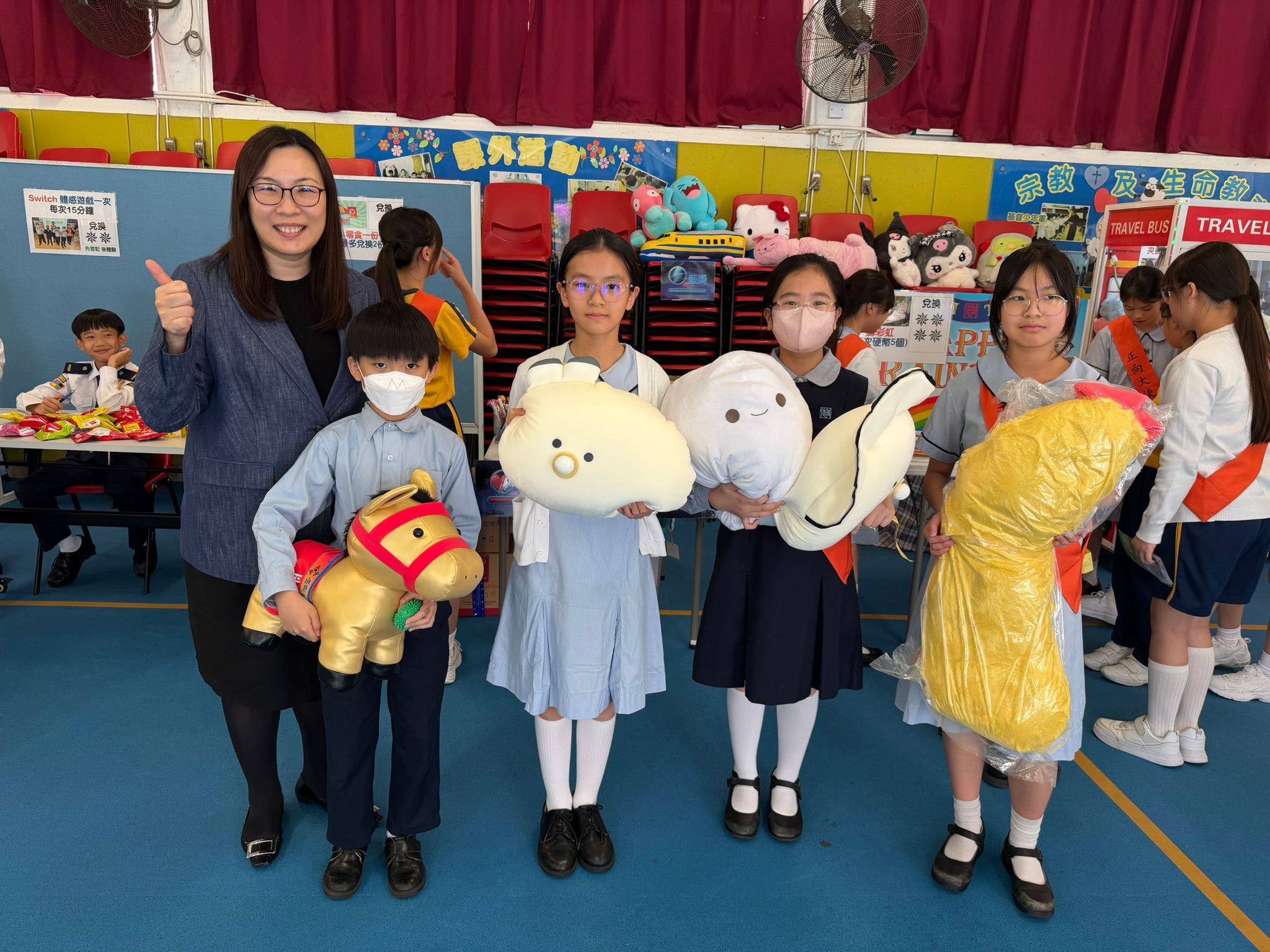
| Multi-intellectual classes are held every Friday afternoon with over 20 interest groups like English Elite class, Flag Raising Team, Boy Scout, STEM course, cooking class, the Boys Brigade etc. On Saturdays, we have musical instruments classes, English groups, Mathematical Olympiad classes, Art and Craft class etc. We have sports day, open day, educational camp, exchange tours and volunteer services every year. We also organize regular visits and educational activities for P.1-P.6 students. |
 School Mission
| Our school is dedicated to nurturing kids with the spirit of Jesus Christ. We aim to provide an all-round education for students. We strive to establish a learning organization to provide a balanced and diversified school education. |
 School Characteristics
| School Management | ||
| School Management Organisation | : | The Anglican (Hong Kong) Primary Schools Council Limited supervises the School Management Board. The members of the School Management Board includes the school supervisor, sponsoring body managers, school principal, parent managers, teacher managers, an alumni manager and independent manager. Various functional groups are formed according to the four key dimension areas in the School Performance Indicators. |
| Incorporated Management Committee / School Management Committee/ Management Committee | : | The IMC shall meet at least 3 times in a school year. |
| School Green Policy | : | 1. 'Save energy' scheme; 2. 'Waste paper recycle' scheme; 3. 'Green school' scheme. |
| School's Major Concerns | : | 1. Promoting a positive education-based campus culture; 2. A STEM curriculum is implemented to enhance students' creativity and problem solving skills. |
| Learning and Teaching Plan | ||
| Learning & Teaching Strategies | : | Diversified learning activities are provided. The school Curriculum leaders plan and implement the school-based curriculum. 1. "Love by post' Scheme to encourage students to communicate with teachers and classmates by mail and enhance students' language skills; 2. Primary Literacy Programmes in Reading and Writing for P.1 to P.3; 3. An extra NET to train P.4-P.6 students' English speaking and listening abilities; 4. Small class strategies are practised to enhance students' learning interests and abilities; 5. Develop interdisciplinary courses in conjunction with STEM teaching. |
| Development of Major Renewed Emphases of the Primary Education Curriculum | : | 1. Strengthen values education (including life education, national education and national security education) through courses, activities and competitions; 2. Enriching life-wide learning experiences and promoting whole-person development; 3. Better catering for learner diversity through different modes of grouping/diversity activities and assessments; 4. Reinforcing STEAM education, and nurturing students' media and information literacy through interdisciplinary life-wide learning activities; 5. Enhancing assessment literacy for promoting learning and teaching effectiveness. |
| Development of Generic Skills | : | To develop the generic skills of the students through daily learning, project learning, STEM activities and multi-dimensional learning. |
| Cultivation of Proper Values, Attitudes and Behaviours | : | To instill students' positive thinking and optimistic attitudes to life through various activities. |
| Student Support | ||
| Whole School Approach to Catering for Learner Diversity | : | 1. To cater for students with special needs such as attentive problems by offering training courses for both students and parents. 2. Provide after class tutorials for the needy children. |
| Whole School Approach to Integrated Education | : | The members of the Student Support Team include the principal, vice-principal, Special Education Needs Coordinator, Special Education Needs Support Teachers, and school social workers, among others. Depending on the needs, parents and the School-based Educational Psychologists may also be invited to attend meetings. The school makes good use of internal and community resources by establishing various groups, such as the Attention Focus Group, Reading and Writing Group, Social and Communication Skills Group, and Emotional Support Group, to assist students with specific needs. Additionally, the school has School-based Speech Therapist who provides speech therapy services for students in need. |
| Education Support for Non-Chinese Speaking(NCS) Students | : | Our school provides additional support for NCS students to facilitate their learning of Chinese: providing after-school support programmes in learning Chinese; appointing additional teacher(s)/teaching assistant(s) to support NCS students' learning of Chinese; and organising activities to create an inclusive learning environment in the school. Help the non-Chinese speaking students to enhance their Chinese proficiency. |
| Curriculum Tailoring and Adaptation | : | 1. Mathematics and English classes for academically gifted students; 2. Starting from Primary 3, students are streamed according to their abilities. School based curriculum are designed to cater for learner differences. 3. Promote multi-dimensional classes for elite students. |
| Home-school Co-operation and School Ethos | ||
| Home-School Co-operation | : | 1. Parents give supports to school activities, e.g., Sports Day, lunch time; 2. Organise seminars and group activities for parents. |
| School Ethos | : | 1. Whole-school approach to Guidance and Discipline to hold seminars and civic education activities frequently to raise students' civic awareness; 2. Adaptation measures for P.1 students; 3. Hold parents' meeting for P.1-P.6 in order to develop close relationship between parents and the school; 4. Carry out 'Buddy Reading Scheme' and the 'Best Student Election' in order to build up the self-esteem and the adversity quotient; 5. Participate in the 'Understanding Adolescent Project (UAP)' and hold 'School mates Teacher' scheme. |
| Future Development | ||
| School Development Plan | : | 1. Continuous Positive Education, cultivating student’s positive values. 2. Enhance students' common skills |
| Teacher Professional Training & Development | : | Teacher professional training & development were designed according to the school development and teachers' personal needs so as to develop a learning-oriented-organization. |
| Others | : | 15 types of scholarship are awarded to the excellent students of different aspects at the end of each school year. Scholarship is awarded to students of P.4-P.6 who have made great progress in Chinese, English and Mathematics. |
 School Map
Last revision date:25 September 2026


