 Primary School Profiles 2026

 Primary School Profiles 2026

| Address: | 30 Hong Keung Street, San Po Kong, Kowloon | |||
| Phone: | 27599365 | Email: | info@plkcnc.edu.hk | |
| Fax: | 27999830 | Website: | http://www.plkcnc.edu.hk | |
 School Information
 | Supervisor/ Chairman of Management Committee | : | Ms. Ho Tsz Wan |
| School Head | : | Ms. Chan Suet Kwan Peggy |
| Incorporated Management Committee been established? | : | Established |
| Percentage of School Supervisor and Managers / Chairperson and Members of School Management Committee (SMC) of Government Schools Fulfilling the Training Targets | : | Not Applicable |
| School Type | : | Aided Whole Day |
| Student Gender | : | Co-ed |
| Sponsoring Body | : | Po Leung Kuk |
| Religion | : | Not Applicable |
| Year of Commencement of Operation | : | 1978 |
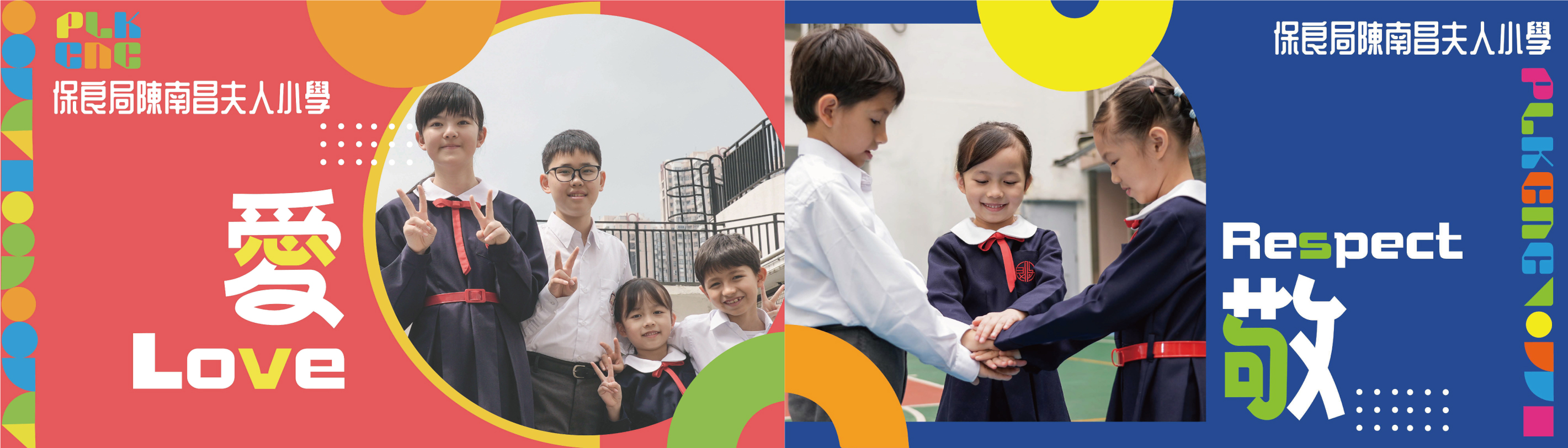
| School Motto | : | Love, Respect, Diligence, Honesty |
| Area Occupied by the School | : | About 2210 Sq. M |
| Through-train Secondary School | : | - |
| Feeder Secondary School | : | - |
| Nominated Secondary School | : | Po Leung Kuk No.1 W.H.Cheung College |
| Medium of Instruction | : | Chinese |
| School Bus Service | : | School Bus |
| Parent-Teacher Association | : | Yes |
| Past Students' Association/Alumni Association | : | Yes |
| 4Rs Mental Health Charter | : | Yes |
| Whole School Health Programme | : | Action School |
 2026/2027 Annual School Charges
| School Fee | : | - |
| Tong Fai | : | - |
| PTA Fee | : | $20 |
| Approved Charges for non-standard items | : | $300 |
| Other Charges | : | - |
 School Facilities
 | Number of Classroom(s) | : | 24 |
| Number of School Hall(s) | : | 1 |
| Number of Playground(s) | : | 2 |
| Number of Library(ies) | : | 1 |
| Special Rooms | : | Visual Arts Room, Music Room, Dance Room, Stem Room, Computer Room, Table Tennis Room, Activity room, English Activity room, CNC Chill Zone, Billiard Room and AI Lab. |
| Facility(ies) for Supporting Students with Special Educational Needs | : | Accessible lift. |
| Others | : | Guidance room, Speech Therapy room, PTA Centre, Alumni Association Centre, Science Gallery, Visual Arts Gallery, Home-School Garden. |
 Teaching Staff Information (Including School Head) in the 2025/2026 school year
 | Number of teaching posts in the approved establishment | : | 35 |
| Total number of teachers in the school | : | 37 |
| Qualifications and professional training (%) | ||
| Had Received Teacher Training | : | 100% |
| Bachelor Degree | : | 100% |
| Master/ Doctorate Degree or above | : | 33% |
| Special Education Training | : | 85% |
| Years of Experience (%) | ||
| 0 - 4 years | : | 14% |
| 5 - 9 years | : | 24% |
| 10 years or above | : | 62% |
 Class Structure
 | 2025/26 school year | ||
| P1 Number of classes | : | 2 |
| P2 Number of classes | : | 2 |
| P3 Number of classes | : | 3 |
| P4 Number of classes | : | 3 |
| P5 Number of classes | : | 3 |
| P6 Number of classes | : | 4 |
| Total | : | 17 |
| 2026/27 school year (Based on the number of classes approved by EDB in 2026) | ||
| P1 Number of classes | : | 2 |
| P2 Number of classes | : | 2 |
| P3 Number of classes | : | 2 |
| P4 Number of classes | : | 3 |
| P5 Number of classes | : | 3 |
| P6 Number of classes | : | 3 |
| Total | : | 15 |
| Mode of teaching at different levels | ||
| In order to support diverse learning needs, students are divided into groups of less than 25 in P.1 - P.6 classes. Also, English, Chinese and Mathematics Fun Learning & Assignment Guidance classes are provided. |
||
| Remarks | ||
| - | ||
 Performance Assessment
 | Applicable to P1 only | ||
| Number of test(s) per year | : | 0 |
| Number of exam(s) per year | : | 1 |
| Replace tests and examinations with diversified assessments in the first term of P1 | : | Yes |
| Applicable to P2 to P6 only | ||
| Number of test(s) per year | : | 0 |
| Number of exam(s) per year | : | 3 |
| Applicable to P1 to P6 | ||
| Formulate appropriate school-based assessment and assignment policies, inform parents of related arrangements, and collect views from teachers, students and parents regularly (at least once per school year) for ongoing review and optimisation of the school assessment and assignment policies | : | Yes |
| Upload the school-based assessment policy onto the school webpage for information of the public and stakeholders | : | Yes |
| Upload the school-based assignment policy onto the school webpage for information of the public and stakeholders | : | Yes |
| Diversified Assessment for Learning | : | Apart from the three examinations in each year, diversified assessment for different subjects will be assigned to students. Assessment includes the evaluation of students' daily performance, quantity of book reading, involvement of activities and attitudes. |
| Avoid arranging tests or examinations immediately after long holidays in order to let students take more rest during the holidays | : | Yes |
| Arrange the timetable flexibly according to the school context, with a tutorial session provided in the afternoon as far as possible for students to finish some of their homework under teachers’ guidance | : | Yes |
| Streaming arrangement | : | According to ranking and conduct. |
 School Life
 | Number of school days per week | : | 5 |
| Number of periods per day | : | 9 |
| Duration of each normal period | : | 35 |
| School starts at | : | 8:15 AM |
| School ends at | : | 3:35 PM |
| Lunch break | : | 12:30 - 1:30 |
| Lunch arrangement | : | Provided by designated supplier and arranged by parents. |
| Healthy school life | : | Lunch Monitoring Committee, Fruit Day, Morning Exercise. |
| Remarks | : | The Computer room and library are opened to students during lunch time and after school hours. |
 Life-wide Learning
 | Recitation, Visual Arts, Painting, Cantonese Opera, Drone Training, Coding, Mathematics Training, English Science, Handbell, Dance, Pop Dance, Lion Dance, Fancy Rope Skipping, Juggling, Ball Games, Athletics, Hong Kong Army Cadets Association, Cub Scouts, Brownies, and Junior Police Call, etc. In addition, outdoor learning and study activities for all levels are arranged to complement the curriculum. |
 School Mission
 | Based on the objectives "Cater n Care", the school provides education for all who come, through a balanced curriculum and in a free and pleasant environment; we develop personal potential; and help cultivate good citizens with values of virtue, positive mind, independent thinking and a sense of responsibility. |
 School Characteristics
 | School Management | ||
| School Management Organisation | : | Leading by the Incorporated Management Committee, Principal and teachers, school development meetings are held on regular basis. Participants contribute and share their thoughts as a result, to provide quality education to our students. |
| Incorporated Management Committee / School Management Committee/ Management Committee | : | An Incorporated Management Committee was set up to lead and to manage the school. |
| School Green Policy | : | Implement energy saving policies and activities. |
| School's Major Concerns | : | Catering for individual differences, enhancing students' potential and creating a healthy, loving and caring learning environment. |
| Learning and Teaching Plan | ||
| Learning & Teaching Strategies | : | We create a reading atmosphere and self-learning environment. Diverse break activities are set up to enrich students' learning experience. We will arrange personal growth education, seminars and outdoor visits for students. Project Learning upon different subjects can enhance students' independent learning capabilities. |
| Development of Major Renewed Emphases of the Primary Education Curriculum | : | - National Identity - Positive Values and Attitudes - Knowledge of Key Learning Areas - Language Skills, Generic Skills - Reading and Information Literacy - Healthy Lifestyle |
| Development of Generic Skills | : | We develop students' generic skills through project learning, group work, outgoing visits and activities. |
| Cultivation of Proper Values, Attitudes and Behaviours | : | Through formal and informal lessons and activities, students establish positive values and cultivate a positive attitude towards life. |
| Student Support | ||
| Whole School Approach to Catering for Learner Diversity | : | Small-group Chinese teaching is provided for Primary 3, 4, and 6 students, maintaining a teacher-to-student ratio of 1:8–10 to better cater to individual needs. For Primary 4 students, "Fun Learning" classes in Chinese, English, and Mathematics are organized to boost learning interests through interactive and game-based approaches. Additionally, "Just English" coaching groups are offered to Primary 5 and 6 students. For the junior levels (Primary 1 and 2), the school provides graded growth groups as well as paired reading, writing, and mathematics programs. Beyond early identification of students with Special Educational Needs (SEN), the school also arranges Primary 1 adaptation and Primary 6 secondary school bridging programs. Homework tutorial classes are also available to provide comprehensive learning support for all students. |
| Whole School Approach to Integrated Education | : | To cater for individual differences, the school uses a variety of curricula, teaching approaches and assessment practices, both internal and community resources to accommodate different learning targets and focuses in order that students of diversified abilities can have the opportunities to stretch their potential. |
| Education Support for Non-Chinese Speaking(NCS) Students | : | Our school provides additional support for NCS students to facilitate their learning of Chinese: providing after-school support programmes in learning Chinese; appointing additional teacher(s)/teaching assistant(s) to support NCS students' learning of Chinese; arranging intensive Chinese learning and teaching mode(s), e.g. pull-out learning if necessary, split-class/group learning, etc; and organising activities to create an inclusive learning environment in the school. The school has also provided literacy enhancement and after-school Chinese remedial classes to provide additional Chinese training for non-Chinese speaking (NCS) students. |
| Curriculum Tailoring and Adaptation | : | Homework accommodation and Examination adaptations for Special Educational Needs students. |
| Home-school Co-operation and School Ethos | ||
| Home-School Co-operation | : | There is a good rapport between the school, teachers, students and parents. Parents are elected to different committees to discuss and evaluate the implementation of school administrative policies. Parent volunteer team is established to help organising activities. |
| School Ethos | : | Our ultimate goal at PLKCNC is to educate students in a caring environment where they can learn effectively and achieve their full potential at school. Our efforts have proven to be a success as we have been given the 'Caring School' award every year since 2006 by H.K. Christian Services. We have high expectations on students' self-respect, self-discipline and strict obedience of rules. Placing a high emphasis on sports, we not only value academic results but also the whole-person development of students. Furthermore, we strive to engender awareness on mental health and personal well-being of students at PLKCNC. |
| Future Development | ||
| School Development Plan | : | - Enhance students' morality; - Promote reading; - Enhancing students' digital literacy; - Develop a good school spirit and excellent student support; - Reinforce the communication and coordination with parents, nurture positive children. |
| Teacher Professional Training & Development | : | Teachers' professional continual education is encouraged; Lesson co-planning and peer lesson observations are implemented. |
| Others | : | - Scholarship from Sponsoring Body (Po Leung Kuk) - Healthy and Harmonious and Caring Campus Award - Sister School Scheme - Exchange activities to broaden students' horizons |
 School Map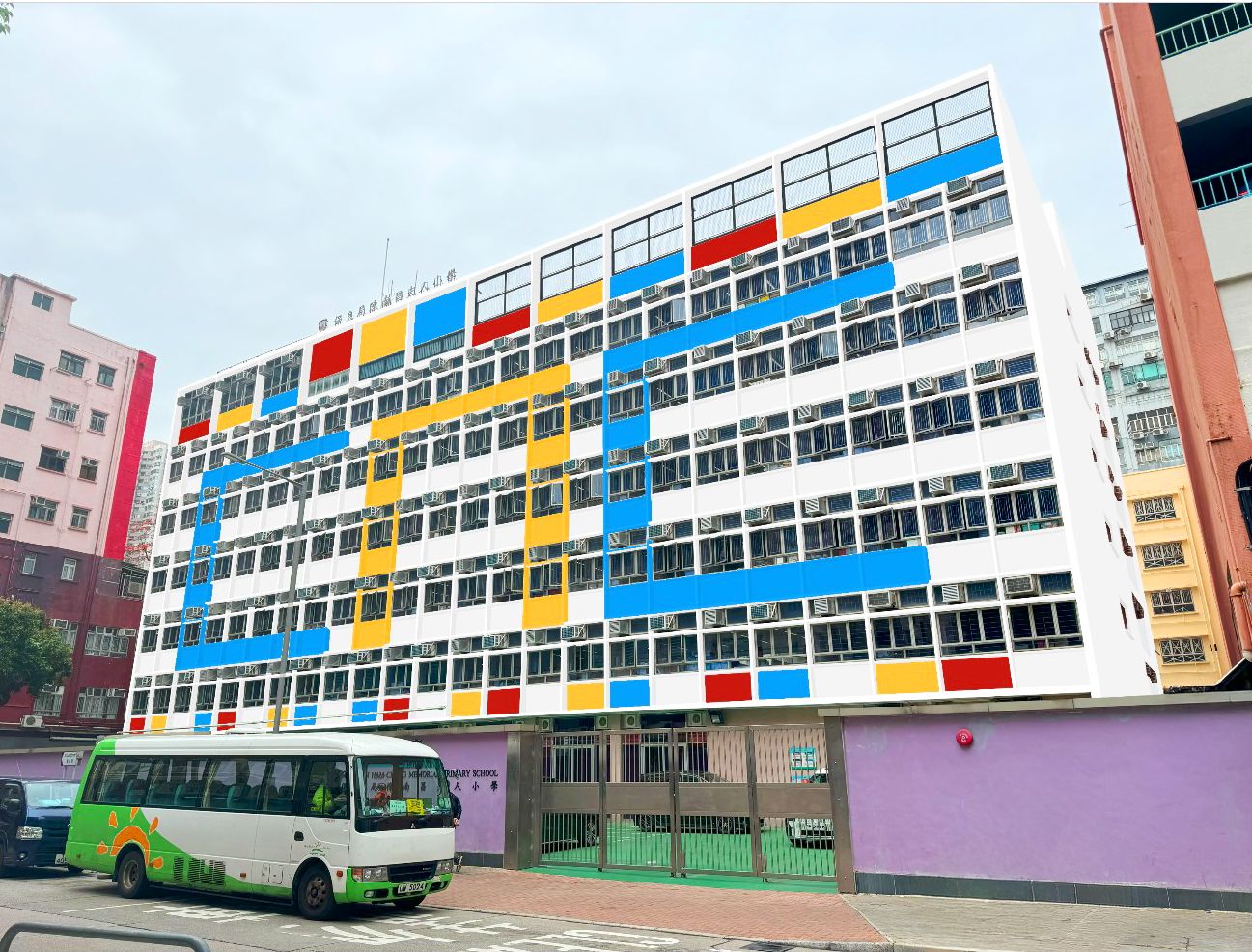

Last revision date:01 September 2026


