 Primary School Profiles 2026

 Primary School Profiles 2026
| Address: | Shui Pin Wai Estate, Yuen Long, N.T. | |||
| Phone: | 24762616 | Email: | info@kms.edu.hk | |
| Fax: | 24746722 | Website: | http://www.kms.edu.hk/ | |
 School Information
 | Supervisor/ Chairman of Management Committee | : | Mr. Leung Man Man |
| School Head | : | Mr. Ying Ngai |
| Incorporated Management Committee been established? | : | Established |
| Percentage of School Supervisor and Managers / Chairperson and Members of School Management Committee (SMC) of Government Schools Fulfilling the Training Targets | : | 100% |
| School Type | : | Aided Whole Day |
| Student Gender | : | Co-ed |
| Sponsoring Body | : | Kwong Ming School Limited |
| Religion | : | Not Applicable |
| Year of Commencement of Operation | : | 1981 |
| School Motto | : | Virtue, Diligence, Erudition, Aesthetics, Innovation |
| Area Occupied by the School | : | About 5000 Sq. M |
| Through-train Secondary School | : | - |
| Feeder Secondary School | : | - |
| Nominated Secondary School | : | - |
| Medium of Instruction | : | Chinese |
| School Bus Service | : | Nanny van |
| Parent-Teacher Association | : | Yes |
| Past Students' Association/Alumni Association | : | Yes |
| 4Rs Mental Health Charter | : | Yes |
| Whole School Health Programme | : | Pledged School |
 2026/2027 Annual School Charges
| School Fee | : | - |
| Tong Fai | : | - |
| PTA Fee | : | $30 |
| Approved Charges for non-standard items | : | Fee for non-standard items $480 (Maintenance and improvement of school premises) |
| Other Charges | : | - |
 School Facilities
 | Number of Classroom(s) | : | 25 |
| Number of School Hall(s) | : | 1 |
| Number of Playground(s) | : | 3 |
| Number of Library(ies) | : | 1 |
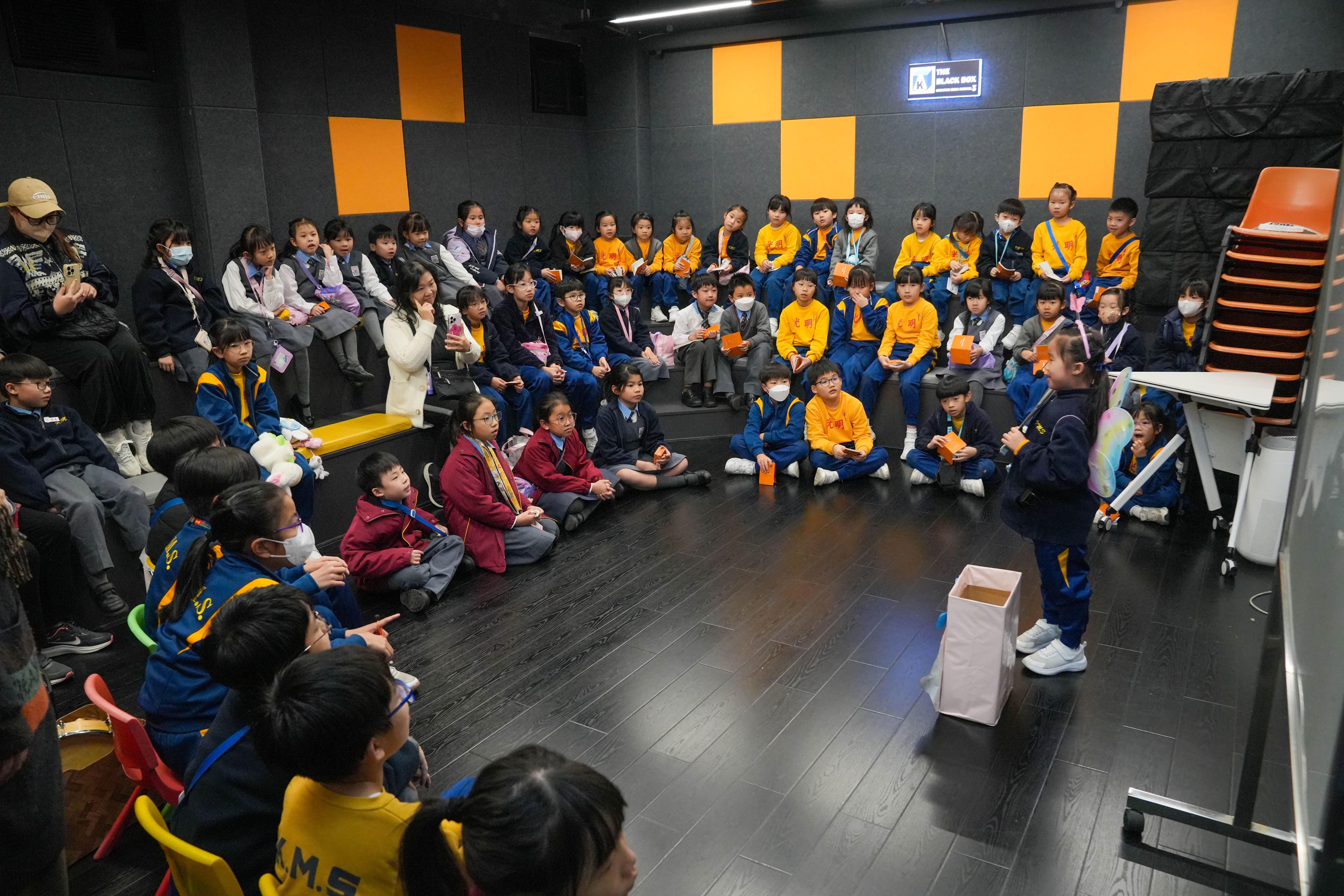
| Special Rooms | : | STEM Room, KMS Broadcast Room, The Black Box, Multi Function Room, Computer Room, Library, Atelier, Fitness Room, Chinese Literature Room, English /Puppetry Room, Mathematics Club, Music Room, PTA Parents Resource Centre, Conference Room, Play Therapy Room. |
| Facility(ies) for Supporting Students with Special Educational Needs | : | Accessible lift. |
| Others | : | Butterfly Garden, Performance area, Athletic track, Flowerbed. All rooms and cover playground are air-conditioned. |
 Teaching Staff Information (Including School Head) in the 2025/2026 school year
 | Number of teaching posts in the approved establishment | : | 47 |
| Total number of teachers in the school | : | 50 |
| Qualifications and professional training (%) | ||
| Had Received Teacher Training | : | 100% |
| Bachelor Degree | : | 100% |
| Master/ Doctorate Degree or above | : | 40% |
| Special Education Training | : | 64% |
| Years of Experience (%) | ||
| 0 - 4 years | : | 18% |
| 5 - 9 years | : | 20% |
| 10 years or above | : | 62% |
 Class Structure
 | 2025/26 school year | ||
| P1 Number of classes | : | 4 |
| P2 Number of classes | : | 4 |
| P3 Number of classes | : | 4 |
| P4 Number of classes | : | 4 |
| P5 Number of classes | : | 5 |
| P6 Number of classes | : | 4 |
| Total | : | 25 |
| 2026/27 school year (Based on the number of classes approved by EDB in 2026) | ||
| P1 Number of classes | : | 4 |
| P2 Number of classes | : | 4 |
| P3 Number of classes | : | 4 |
| P4 Number of classes | : | 4 |
| P5 Number of classes | : | 4 |
| P6 Number of classes | : | 5 |
| Total | : | 25 |
| Mode of teaching at different levels | ||
| 1. Implementing Small Class Teaching in P.1 to P.6. 2. P.2-P.4 Small Group Teaching (SEN). 3. P.5-P.6 Remedial Teaching. 4. Remedial teaching, school-based after-school learning and support programme to cater for learner diversity. |
||
| Remarks | ||
| - | ||
 Performance Assessment
 | Applicable to P1 only | ||
| Number of test(s) per year | : | 0 |
| Number of exam(s) per year | : | 0 |
| Replace tests and examinations with diversified assessments in the first term of P1 | : | Yes |
| Applicable to P2 to P6 only | ||
| Number of test(s) per year | : | 1 |
| Number of exam(s) per year | : | 2 |
| Applicable to P1 to P6 | ||
| Formulate appropriate school-based assessment and assignment policies, inform parents of related arrangements, and collect views from teachers, students and parents regularly (at least once per school year) for ongoing review and optimisation of the school assessment and assignment policies | : | Yes |
| Upload the school-based assessment policy onto the school webpage for information of the public and stakeholders | : | Yes |
| Upload the school-based assignment policy onto the school webpage for information of the public and stakeholders | : | Yes |
| Diversified Assessment for Learning | : | Primary 1 has no tests or examinations throughout the year. Primary 2 has one test and one examination throughout the year. Primary 3 to Primary 6 have one test and two examinations throughout the year. In addition, through progressive assessments in various subjects and physical and aesthetic education, students’ all-round development will be fostered. |
| Avoid arranging tests or examinations immediately after long holidays in order to let students take more rest during the holidays | : | Yes |
| Arrange the timetable flexibly according to the school context, with a tutorial session provided in the afternoon as far as possible for students to finish some of their homework under teachers’ guidance | : | Yes |
| Streaming arrangement | : | Mixed ability classes from P.1 to P.4.P.5-P.6 pupils are divided into different classes based on their learning abilities. |
 School Life
 | Number of school days per week | : | 5 |
| Number of periods per day | : | 10 |
| Duration of each normal period | : | 30 |
| School starts at | : | 8:00 AM |
| School ends at | : | 3:05 PM |
| Lunch break | : | 1:00 - 2:00 |
| Lunch arrangement | : | Provided by designated supplier and arranged by parents. |
| Healthy school life | : | Our school has attained The Hong Kong Healthy School Award Scheme. Items that go with healthy school life are as follows: Fruit Day, School 'NutriAgent' Project, Foot Examination, School Physical Fitness Award Scheme, Sexual-Abuse Preventive Programme and Environmental Protection Recycling Programme etc. |
| Remarks | : | 'Talent Show Stage' takes place before school begins. School assembly, co-curricular activities or multiple intelligences activities are carried out alternately every Thursday afternoon. |
 Life-wide Learning
 | Various activities and interest groups are conducted after school, e.g. Sports Day, Swimming Gala, Christmas Party, STEAM Day, Life-wide Learning Day, Educational Camp, and School Picnic, to enhance the enjoyment of school life. Our school also offers a variety of ECA for students: English Drama Team, English Puppetry Team, Cubs and Brownies, CYC, JPC, Track and Field athletic team, ball games teams, swimming team, ukulele, handbell, African drum, choir, dancing, Bouldering, Cambridge English, phonics, conversation, Mathematical Olympiad, Chinese ink painting, calligraphy, gardening, computer graphics, Lego Mindstorms, IT-coordinator and Campus TV. The K·Ovation cultivates a culture of appreciation by showcasing student achievements every year. |
 School Mission
 | We pledge to prepare pupils to contribute to an increasingly international and interdependent world. Recognising a diversity of values and traditions, we strive to establish an atmosphere conducive to building interpersonal relationships and global awareness. We are committed to working closely with students and their families to attain academic excellence and inspire the growth of well-rounded individuals. |
 School Characteristics
 | School Management | ||
| School Management Organisation | : | Kwong Ming School is managed by Incorporated Management Committee (IMC). School Development and administrative works are implemented by principal and different administrative groups. School-based management is implemented and all stakeholders share common visions and goals. School development committee oversees the development of curriculum and all subject sections to ensure an ongoing development and improvement. |
| Incorporated Management Committee / School Management Committee/ Management Committee | : | The Incorporated Management Committee of Kwong Ming School was established on 30th August, 2008. |
| School Green Policy | : | 1. Implement environmental education to enhance students' understanding of the importance of environmental protection: develop a group of Green Prefects and Little Green Gardeners, and organize environmental talks and workshops. 2. Recycle crayons, old books, and school uniforms. 3. Launch a set of guidelines for energy saving and decarbonisation, water conservation and waste reduction. 4. Install automatic sensor water taps and solar panels. 5. Community Promotion: potted plant giveaway, community food waste recycling programme. |
| School's Major Concerns | : | 1. Enhance students' reading skills and create a reading atmosphere on campus. 2. Boost students' confidence through diverse learning experiences. |
| Learning and Teaching Plan | ||
| Learning & Teaching Strategies | : | 1. Place strong emphasis on reading, encouraging students to conduct lesson preparation and lesson extension through reading diverse materials, thereby fostering positive self-directed learning abilities and attitudes. 2. Adopt diversified teaching strategies to enhance students' self-directed learning and higher-order thinking skills. 3. Promote STEAM education and computational thinking programmes to cultivate students' creativity and problem-solving abilities. 4. Implement gifted education and thinking skills teaching strategies, while catering for learner diversity, to develop students' creativity, collaboration skills and generic skills. 5. Through life-wide learning activities and service learning, provide authentic platforms to enrich students' learning experiences, nurture proper values and attitudes, and equip them to adapt flexibly to the rapidly changing society. |
| Development of Major Renewed Emphases of the Primary Education Curriculum | : | 1. Adopt Chinese culture as the backbone to design diversified learning activities, strengthening values education (including life education, national education and national security education). 2. Reinforce STEAM education with AI elements to cultivate students' higher-order information technology skills and enhance their media and information literacy. 3. Continuously optimise cross-curricular reading to develop students' life long learning capabilities and nurture them to become highly effective self-directed learners. 4. Enrich life-wide learning experiences to promote whole-person development. 5. Make good use of learning time to create space for promoting balanced physical and psychological development. 6. Strengthen catering for learner diversity by formulating support plans according to students' learning needs. 7. Make effective use of assessment data to optimise teaching design, enhance assessment literacy and promote the effectiveness of learning and teaching. |
| Development of Generic Skills | : | 1. Implement the school-based "Marine Science Curriculum" at all levels, enabling students to master scientific knowledge and STEAM skills through field exploration and hands-on creation. This helps students understand the close relationship between humans and nature, cultivate a sense of responsibility to protect the ecosystem, and equip them with AI, creative, technological and engineering thinking to tackle real-life environmental challenges. 2. Through cross-curricular reading and inquiry activities, create diverse learning contexts to enhance students' abilities in analysis, problem-solving and critical thinking, while developing their generic skills. |
| Cultivation of Proper Values, Attitudes and Behaviours | : | 1. The school promotes values education with Chinese culture as the backbone. We integrate it organically across different cross-curricular domains and naturally permeate it into various learning areas and life-wide learning experiences, helping students develop proper values and attitudes. 2. The school adopts the "knowledge-emotion-action" affective teaching infusion model. Through school-based curriculum and various activities, we strengthen the practical dimension of values education, guiding students to transform cognition into behavioural practice and internalise it as good character. |
| Student Support | ||
| Whole School Approach to Catering for Learner Diversity | : | The 'Whole School Approach to Guidance Services' grant from the Education Bureau is used by our school to establish a whole-school, student-centered student assistance policy. We have established a clear mechanism to strategically and early identify students with special educational needs. We assist children in achieving holistic development, integrating into school life, and growing up healthily by offering them support. To ensure that every student has equal access to education, the school offers SEN students small-group instruction, remedial classes and examination support. |
| Whole School Approach to Integrated Education | : | The stakeholders in inclusive education include our principal, teachers, school social workers, school-based educational psychologist, school-based speech therapist, non-teaching staff, students, and parents. Student Support Team effectively utilise the grants and resources to implement the following programs: curriculum and teaching adaptation, small group teaching, training on social skills, Enhanced School-based Speech Therapy Service, School-based Educational Psychology Service, Individual Education Plans, etc. |
| Curriculum Tailoring and Adaptation | : | Through regular collaborative lesson planning focused on learning difficulties, we design instructional plans and implement curriculum adaptations based on students' interests, needs, and abilities. We create diverse teaching strategies, activities, and tiered worksheets, as well as enrichment (gifted) and remedial support groups, to accommodate specific student variances. |
| Home-school Co-operation and School Ethos | ||
| Home-School Co-operation | : | Parent-Teacher Association is committed to fostering effective communication and collaboration between parents and teachers. It organizes a range of activities, workshops and meetings to encourage parents’ active participation in school affairs. Parents are also invited to support learning visits, school events and classroom activities. Such involvement enhances their understanding of students’ learning. It also strengthens trust between teachers and parents and helps build a caring and inclusive school environment. |
| School Ethos | : | Our school places positive values at the core of the school-based framework for values education and strives to create a joyful and supportive learning environment. We nurture students through twelve priority values, fostering positive and optimistic attitudes. We emphasize harmonious teacher–student relationships built on care, mutual support and respect. Students are encouraged to take initiative, embrace challenges with courage and demonstrate their strengths through diverse learning experiences. Through a wide range of teaching and learning activities, we provide a holistic education that balances moral, intellectual, physical, social and aesthetic development. Our mission is to cultivate confident, joyful students of Kwong Ming School with a strong sense of happiness and well-being. |
| Future Development | ||
| School Development Plan | : | 1.Continuously develop cross-curricular learning to strengthen students’ ability to integrate and apply knowledge and skills, thereby enhancing their competence in solving real-life problems. 2. Continuously optimise the school-based curriculum through organic integration with subject knowledge, while making good use of campus environment and community resources to create life-wide learning contexts and enrich students’ learning experiences. 3. Sustain reading as the core of learning, enabling students to enjoy extensive and in-depth reading, and develop lifelong learning capabilities. 4. Reinforce STEAM education with AI elements to inspire creative thinking and nurture innovative talents. 5.ake effective use of e-learning platforms and artificial intelligence tools to enhance classroom interaction and personalised learning experiences, thereby promoting self-directed learning. 6. Deepen values education to cultivate proper values and attitudes, good character, as well as balanced physical and psychological development. |
| Teacher Professional Training & Development | : | 1. Collaborative lesson preparation. 2. Lesson observation and Lesson analysis. 3. In-service training. |
| Others | : | 1. PTA scholarship. 2. Alumni Association scholarship. 3. Multiple intelligences scholarship. |
 School Map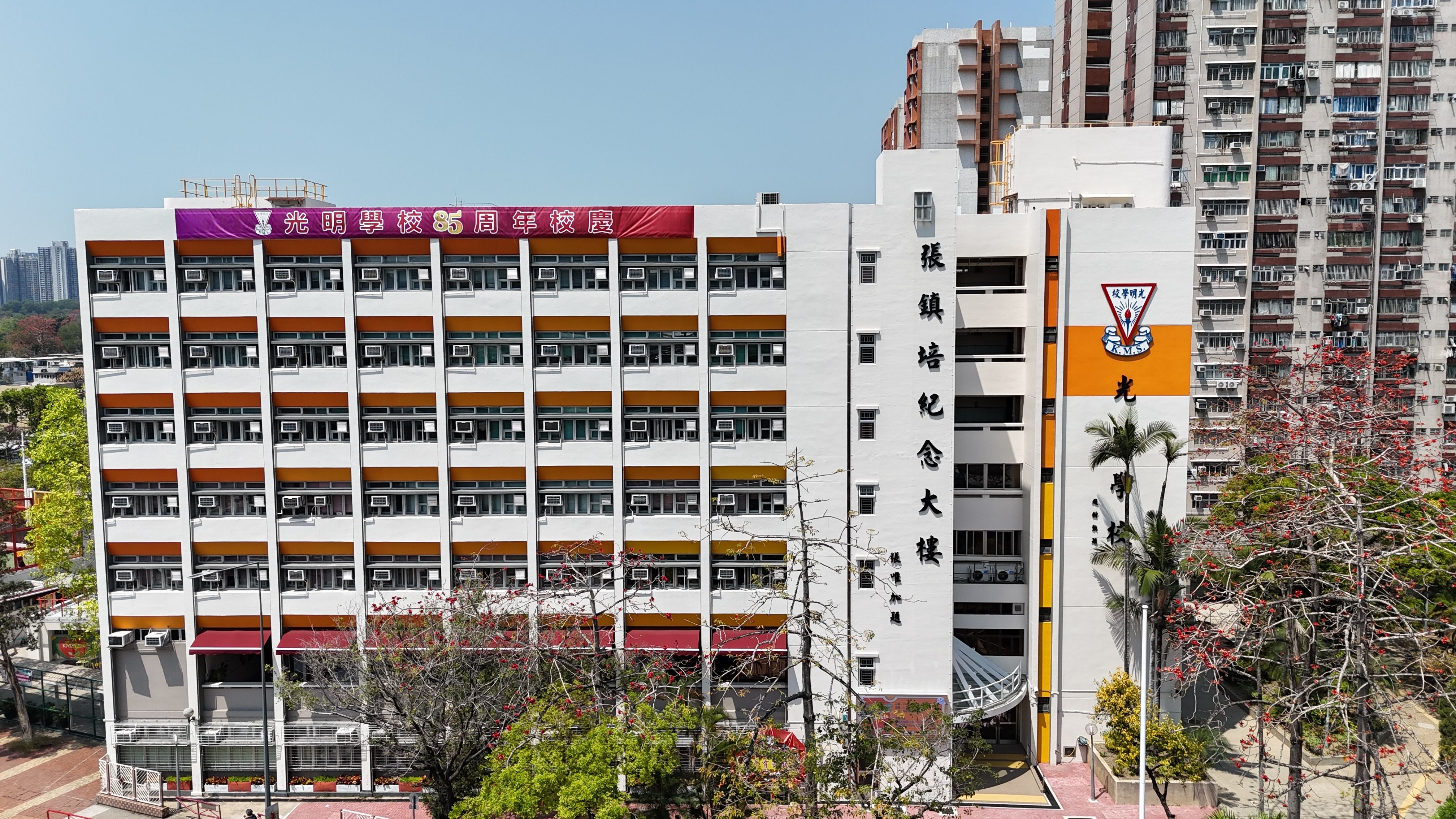
Last revision date:01 September 2026


